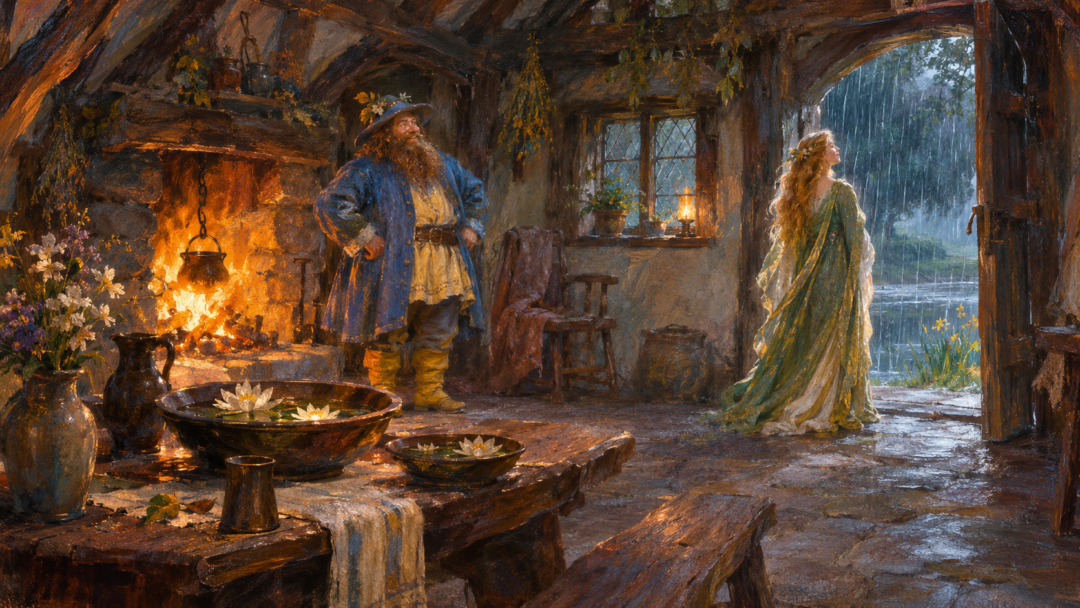
In the Old Forest, Tom Bombadil turns up singing in a blue jacket and yellow boots, with water-lilies gathered for Goldberry. At his house, another voice sings from the doorway. Inside, Goldberry sits among bowls of floating lilies, dressed in green and silver like the riverbanks below. Two extraordinary hosts, two songs, one refuge. But does that make them equal counterparts—beings of the same order, possessing equivalent powers? No. <em>The Fellowship of the Ring</em> offers a marriage full of harmony without giving its partners matching identities. Tom calls himself Eldest, while Goldberry is the River-daughter. Their closeness is plain; their natures remain uncertain. What each actually does is more interesting than any theory making them two halves of a tidy system.
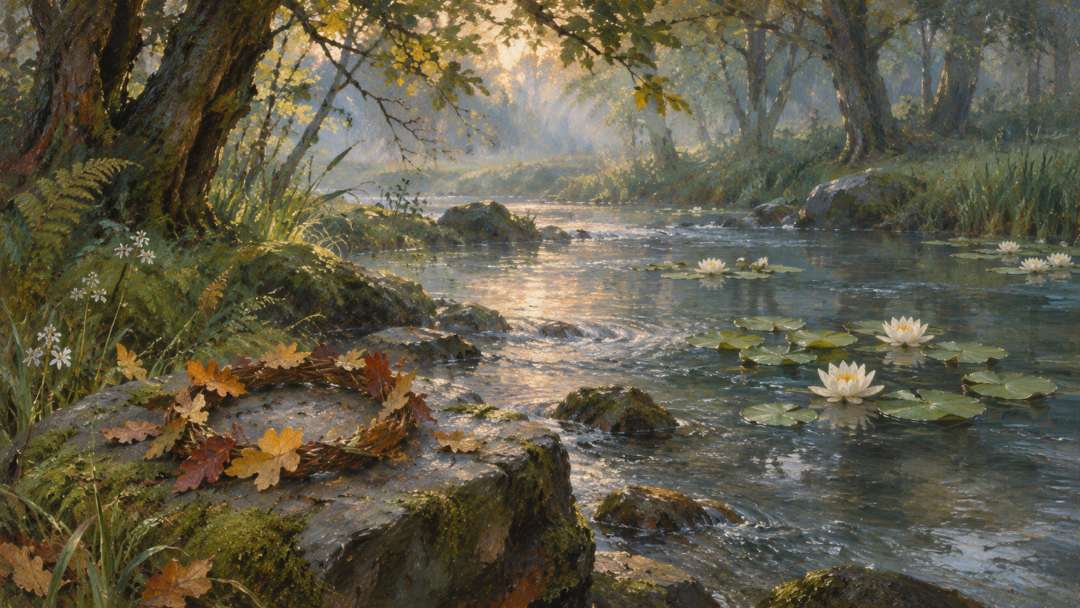
The House by the River Gives Each of Them a Voice
Goldberry greets Frodo, Sam, Merry, and Pippin before Tom even enters the room. She closes the door against night and recognizes an Elf-friend in Frodo. He can barely find words, then unexpectedly breaks into verse, comparing her with clear water, reeds, and the return of spring. She is no silent ornament in Tom's house.
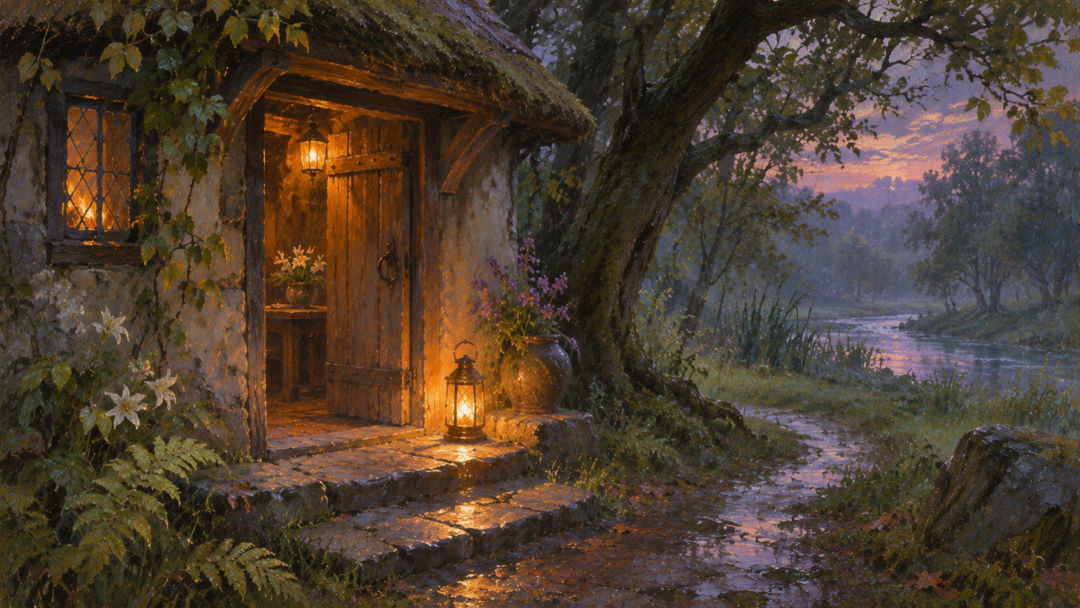
Tom has already told the lost hobbits that Goldberry is waiting for them. Meanwhile, he tends their ponies. He returns crowned with autumn leaves, eager for supper. Goldberry has prepared the table, but the hospitality is shared. They sit at opposite ends of the meal; afterward, both clear away. Later the hobbits watch them arrange another supper so gracefully that their different movements seem part of one dance. Their partnership is coordinated without being identical.
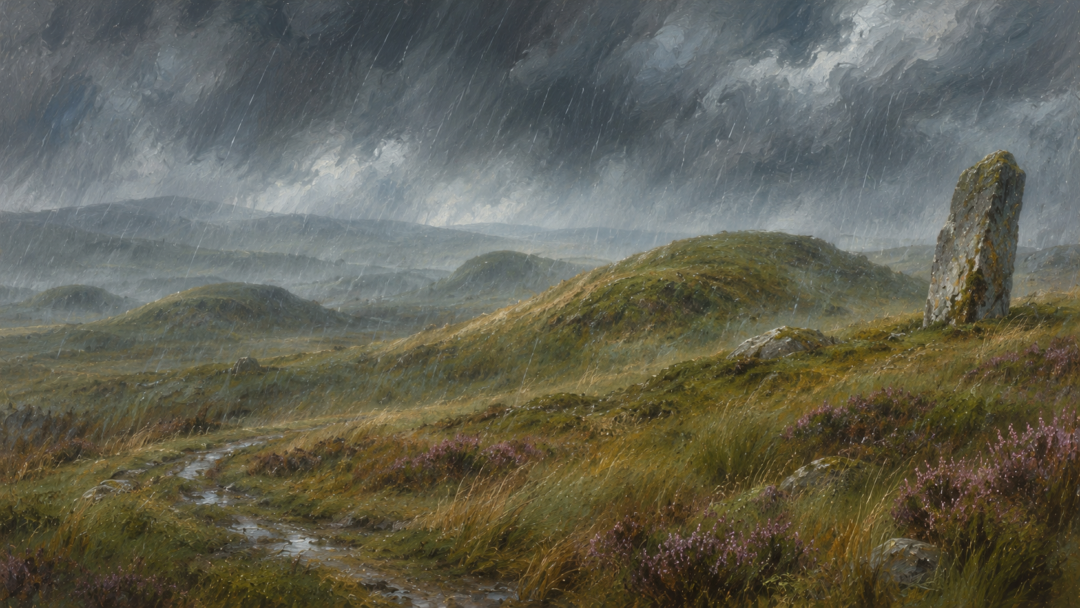
Rain changes the house's rhythm the following day. Goldberry sings upstairs, and the hobbits hear a song that seems to follow a river from its upland spring toward the sea. Tom calls the wet day her autumn cleaning, then fills the hours with stories of the Old Forest, ancient kingdoms, and the Barrow-downs. When the rain ends, she announces fresh water running downhill beneath the stars. The scene does not establish that she commands the weather; it links her voice with changing waters. Tom has stories that reach backward through ages. Goldberry makes the passing of a particular day feel alive.
Eldest and River-daughter Are Not Matching Names
When Frodo asks who Tom is, Goldberry answers, "He is." She then describes him as master of wood, water, and hill. Frodo wonders whether that means the land belongs to him. Goldberry rejects the suggestion: its living things belong to themselves. Mastery here is not ownership. He moves freely through a country he does not possess, unafraid of its wild inhabitants.
Tom's own answer is even stranger. Asked directly who he is, he calls himself "Eldest" and says he remembers the first raindrop and first acorn. He claims to have been present before the river and trees, before the people and graves that now mark the land. His claim does not assign him to a known race. At the Council of Elrond, the Elves' name for him, Iarwain Ben-adar, is explained as oldest and fatherless. Other peoples have other names, none defining his nature.
Goldberry's title points in another direction. Tom introduces her as the River-woman's daughter, and she calls herself daughter of the River. The Withywindle, its pools, reeds, and lilies are never far from her imagery. That suggests relationship and origin, though the book explains neither the River-woman's nature nor her daughter's birth. Calling Goldberry a water-spirit is a plausible reader's interpretation, not an identified species supplied by the narrative.
The difference is especially striking because Tom says he was there before the river, while Goldberry is named through it. That proves no measurable difference in age or rank. It means the text presents one figure through an almost unthinkable antiquity and the other through a recognizable living landscape. One name pushes beyond familiar categories; the other draws our attention to water close enough to hear.
The Ring Tests Tom, Not Goldberry
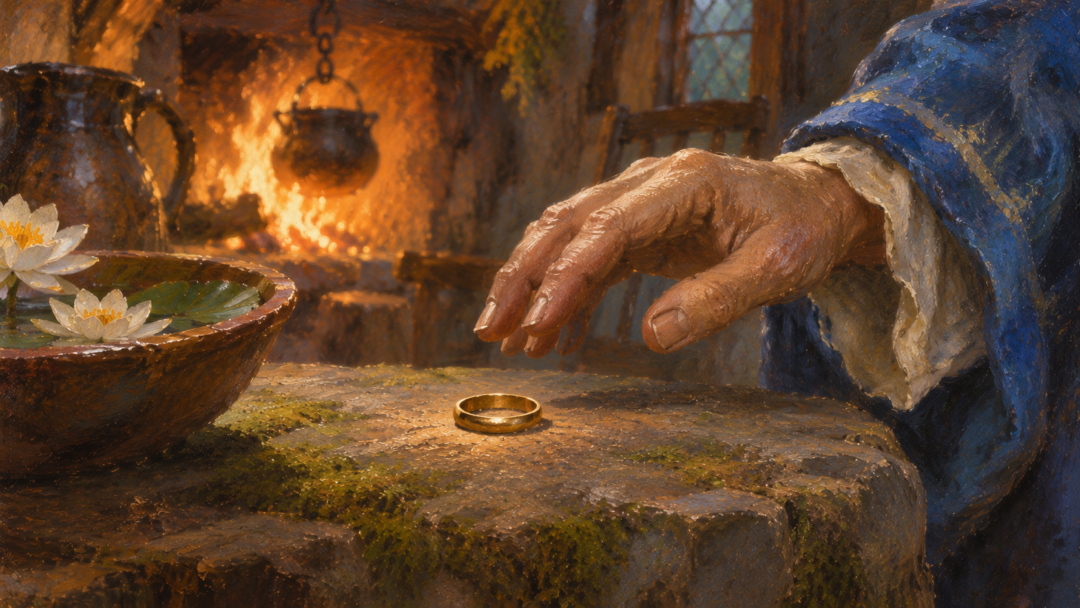
After supper, Tom asks Frodo to show him the One Ring. Frodo hands it over with surprising readiness. Tom peers through it, puts it on his little finger, and remains visible. He even makes it vanish briefly before returning it, like a playful conjurer. When Frodo later wears the Ring, Tom can still see him. The hobbits, knowing the Ring's danger, are unsettled by Tom's amusement.
Goldberry is not put through the same test. She has already left the fireside when Tom begins questioning the hobbits about their journey and asks for the Ring. There is no scene in which she wears it, resists its temptation, detects an invisible wearer, or tries to alter its power. Her absence establishes neither immunity nor vulnerability. An argument that she must share Tom's relationship to the Ring because they share a home adds a fact the book never supplies.
The Council of Elrond makes Tom's exceptional position clearer—and narrower. When Erestor wonders whether he has power over the Ring, Gandalf corrects the idea: "the Ring has no power over him." Tom cannot undo what it does to other people or destroy its force. Nor would he guard it safely; Gandalf thinks he might forget it or discard it. Glorfindel fears even Bombadil would fall if Sauron conquered everything else.
Notice what the Council does not do. Elrond recalls the many names given to Bombadil, while the debate concerns whether <em>he</em> could protect the Ring. Nobody offers Goldberry as an alternative keeper or examines her nature. The silence reflects the Council's practical problem, not a verdict on her strength. Measuring Goldberry against Tom by an event she never participates in would mistake a gap in the evidence for a definite answer.
The Temptation to Make a Perfect Pair
It's easy to see why readers want symmetry. Goldberry's river imagery suggests an elemental presence, while Tom seems almost as old as the world. Their voices mingle, their house stands apart from ordinary danger, and both are associated with a freedom the frightened hobbits badly need. From there it is tempting to imagine a male and female embodiment of nature, matched in power and purpose. It is an elegant explanation for elusive characters.
The older poem <em>The Adventures of Tom Bombadil</em> supplies more images, not a neat classification. Goldberry rises from the water, catches Tom by his beard, and later becomes his bride after Tom catches her among the rushes. The poem's startling fairy-tale encounters differ from the hobbits' peaceful visit. The collection's preface frames the verses as hobbit-associated traditions. They illuminate the names, the river, and the relationship, but they do not turn either character into a formally defined member of a supernatural order.
Tolkien's letters make caution worthwhile. In Letter 144 he calls Bombadil an intentional enigma and discusses his refusal to seek control. In Letter 153 he resists treating Goldberry's short answer to Frodo as a theological formula, and describes Tom in terms of curiosity about things independent of himself. That helps distinguish Tom from rivals seeking power. Neither letter identifies Goldberry's origin or declares her his counterpart in nature. Nor do they make Tom a named Vala or the creator Eru.
Equal counterparts can also mean equal in worth rather than identical in nature. The book gives no reason to dismiss Goldberry as lesser merely because Tom receives the dramatic rescues and Ring scene. But equal dignity is a different question from matching abilities. Neither differences nor harmonies dictate their nature.
One Named River, One Unnameable Identity
Goldberry's farewell offers a final way to see her importance. Leaving the house, the hobbits find her on a hill, hair bright in the sun. She has them look across the country: the forest behind, the downs ahead, the distant shapes toward which they must travel. She blesses their footsteps and urges them to keep their purpose. Her parting gift is orientation. The landscape that has sheltered them becomes a place they can now leave.
Tom's last appearance works differently. After rescuing the hobbits from a Barrow-wight, he scatters the mound's treasure, gives them blades from an older kingdom, and rides with them to the road. But he refuses to go farther. His country has a border, and he says Goldberry is waiting at home. Tom is deeply attentive to his territory. Yet no known category contains his identity, even while his choices keep him within that territory's bounds.
Those choices have limits. At Rivendell, Gandalf explains that Tom has withdrawn into his own land and will not go beyond it. A refuge outside the struggle for mastery cannot replace the struggle undertaken by others. The hobbits must carry its gifts—rest, courage, and perspective—eastward themselves.
Goldberry belongs to the river in the language of song; Tom belongs to no species or order the story names. Together they make a home without requiring a matching explanation. The last image worth keeping is not a pair of balanced powers, but Goldberry on the sunlit hill, watching the travelers go where she and Tom will not follow.
Sources & Notes
- Goldberry - Tolkien Gateway — https://tolkiengateway.net/wiki/Goldberry
- Tom Bombadil - Tolkien Gateway — https://tolkiengateway.net/wiki/Tom_Bombadil
- Letter 153 - Tolkien Gateway — https://tolkiengateway.net/wiki/Letter_153
See The Fellowship of the Ring, ‘In the House of Tom Bombadil’ and ‘The Council of Elrond’, alongside Letters 144 and 153. Shared hospitality does not establish identical origins or Ring immunity; the proposed symmetry is interpretation.