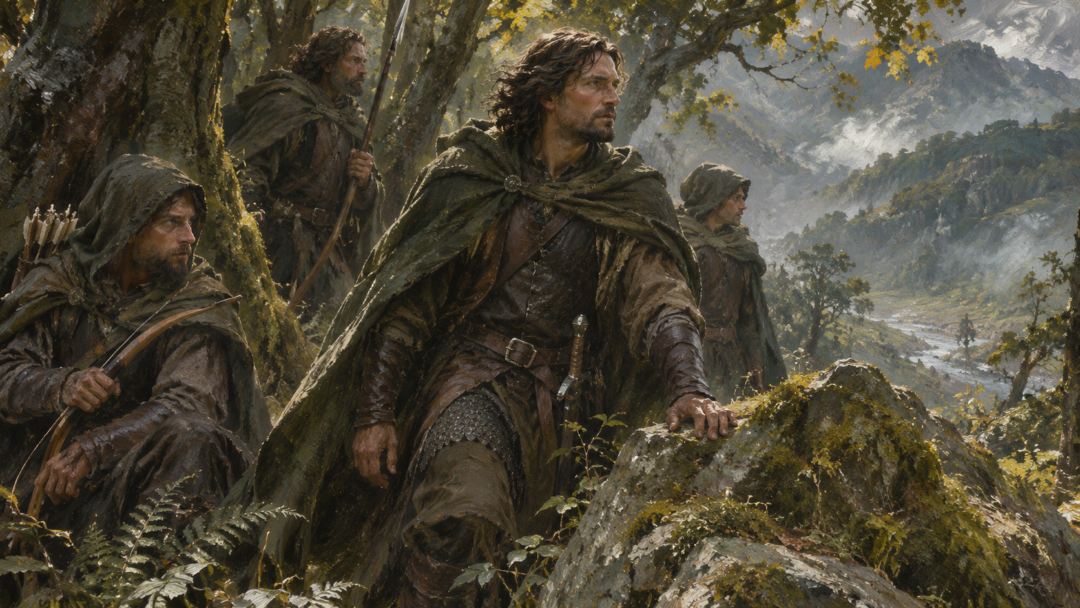
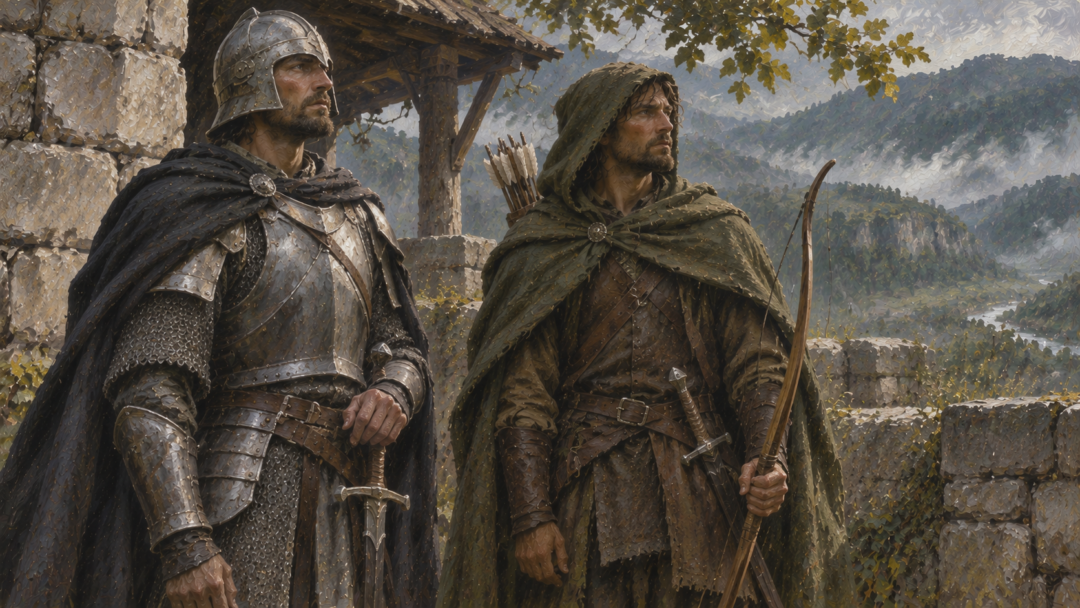
Faramir's Rangers among the trees of Ithilien look nothing like the soldiers lining Minas Tirith's walls. They wear muted greens and browns, with cloaks and leather rather than prominent shining armor. Against the trees, the Rangers almost seem part of the landscape; a line of gleaming city soldiers would create an entirely different impression. Put Faramir beside an armored soldier of the White City, and the difference is striking. Put him beside Boromir, their father's celebrated elder son, and it becomes tempting to see a family grievance written into the costumes.
But the stronger explanation is military, not financial. Faramir commands woodland Rangers who rely on concealment. Wētā Workshop connects their clothing to camouflage, and production commentary confirms that Rangers and armored Gondorians were meant to look different. Denethor's favoritism is real; a decision to deny Faramir armor money is not established.
A Captain Dressed for Ithilien
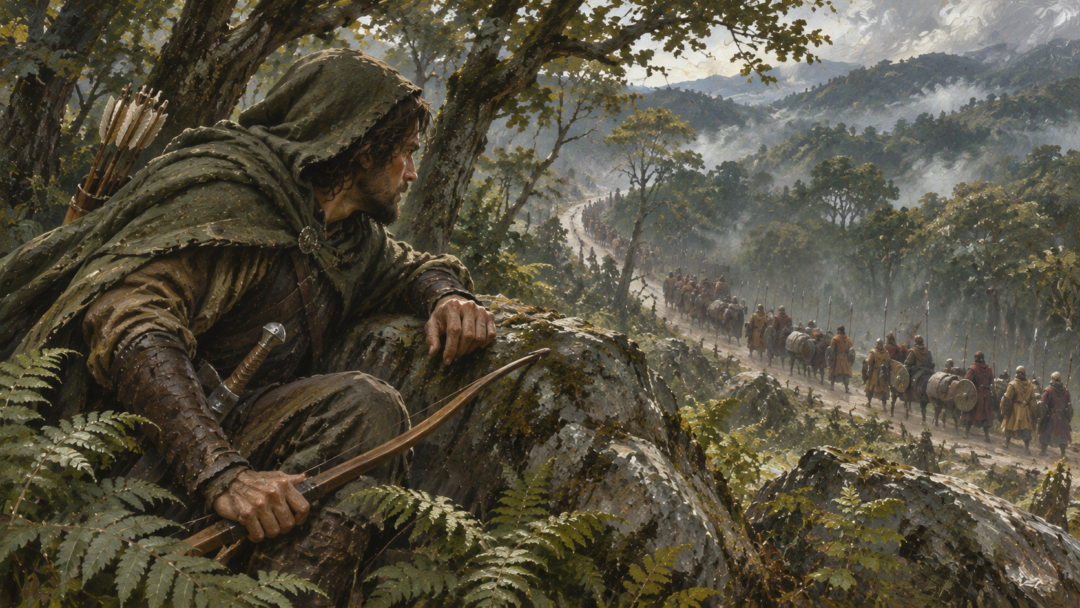
Ithilien lies east of the Anduin, facing Mordor across wooded slopes, old roads, and abandoned places. It is Gondorian land, but hardly a province where soldiers can patrol openly. Enemy forces pass through, and the Rangers watch their movements and strike when circumstances favor surprise. Green-and-brown clothing makes sense in that setting. They are not trying to resemble the men guarding Minas Tirith's gates. Their task is to challenge the use of Ithilien's roads by enemies who can send fresh troops through the region.
Wētā Workshop's costume description comes from a company involved in creating the films' physical world, not a fan theory about symbolism. It identifies Faramir as captain of a stealth-oriented force and explains: “Finessed in both close and ranged combat, they bore green and brown leathers to blend into their forested surroundings.” Camouflage is an explicit purpose, not merely a viewer's guess.
That evidence offers no verified weight for Faramir's equipment, inventory of protective layers, or comparison of resistance to weapons. On screen, a leather-clad figure may appear less armored than one covered in plate. That impression is fair to discuss, but it does not establish exactly how much protection either man had. The question begins with a visible difference, not a documented shortage. Nor can one captain's outfit establish how every Ranger or every regular soldier of Gondor was equipped.
Nor must one outfit be better in every fight. Armor is useful because battle is dangerous; concealment matters when fighting can be chosen, delayed, or avoided. A lookout among ferns must remain unnoticed as an enemy column passes. A defender at an exposed gateway faces another problem. Different assignments call for different dress without making one group inferior or less valued.
What the Rangers Actually Did in the Books
The literary foundation appears in The Two Towers, when Frodo and Sam encounter men of Gondor in Ithilien. They are an organized force operating in dangerous territory under Faramir's command, not wandering adventurers. Their clothing is green and brown, with hoods and masks for concealment; their weapons include bows, spears, and swords. The novel establishes the force's character without a technical breakdown of its armor.
The hobbits soon witness why the Rangers are there. Southrons move through Ithilien toward Mordor, and Faramir's men ambush them. The attack demonstrates their purpose: observing hostile movement, exploiting terrain, and striking troops passing through Gondor's former lands. A great mûmak makes the scene memorable, but the military work is just as revealing. These men fight away from the open ranks of an army. An ambush need not destroy the entire enemy force to interfere with its progress, and the Rangers do not control the country simply because they can strike within it.
Henneth Annûn, the hidden refuge behind a waterfall, adds another piece. The Rangers need somewhere to withdraw, report, and shelter without advertising their presence. Tolkien Gateway's summary notes their secret retreats and attacks on enemy forces. That is book-lore background, not a costume-design statement. It helps explain a captain's practical clothing without treating it as a substitute for armor. Gondor has not forgotten Ithilien, even when it can no longer hold the province as ordinary, securely governed territory.
Faramir's dealings with Frodo, Sam, and Gollum show command broader than spotting enemies. He questions strangers, assesses their danger, learns of the Ring, and allows the travelers to continue. Such decisions require authority and judgment where an error might endanger Gondor. Calling him a scout captures part of his assignment but misses its scale. He leads soldiers who gather intelligence, raid enemy movements, and exercise independent judgment.
The Film Actually Reshot a Charge to Keep the Uniforms Distinct
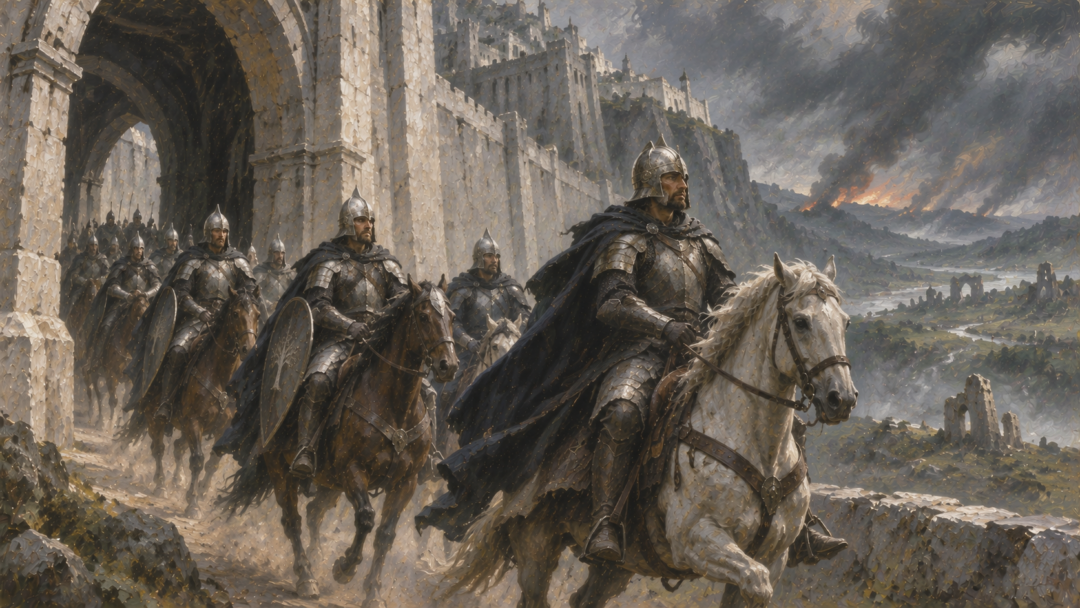
The Return of the King commentary offers an unusually revealing detail. Footage of a mounted Gondorian charge included men dressed as Faramir's green-and-brown Rangers alongside armor-plated soldiers. That mixture did not give the desired appearance, so the charge was filmed again with shining, silver-armored riders. It is concrete evidence that the groups were deliberately distinguished on screen.
That anecdote tells us more than comparing screenshots. The filmmakers wanted identifiable Gondorian knights, not a gathering of units dressed for separate duties. Yet it does not follow that each Ranger had a different armor allowance, or that Faramir received a particular suit because of the reshoot. This was a production decision about the appearance of troops in one sequence. The commentary even acknowledges occasional figures from other groups in the background: the desired impression was an armored charge, not an absolute ban on mixed costumes.
Viewers can read the contrast quickly. Earth-colored figures against trees suggest men who disappear into Ithilien; armored riders advancing in the open suggest another kind of fighting. Clothing distinguishes assignments before anyone explains a chain of command. This is cinematic storytelling, not evidence that Denethor selected or paid for one son's equipment while refusing the other's.
The same commentary does not portray Faramir as merely an observer. At Osgiliath he defends a position against overwhelming numbers. His order to retreat is explained as an effort to preserve his men when the position cannot be held. He is a field commander using his troops responsibly, not a scout accidentally promoted into battle. His wider duties coexist with his woodland experience.
Why Denethor's Favoritism Makes the Theory Appealing
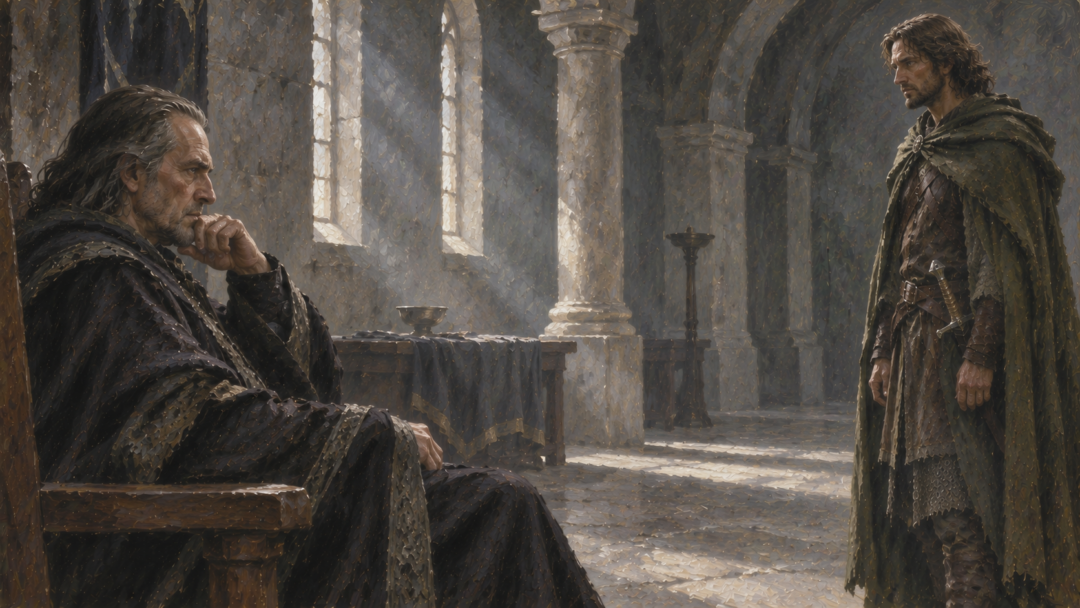
The money explanation has an emotional hook. Boromir is the elder brother, renowned warrior, and Denethor's favorite. Faramir is capable and loyal, yet his father treats him as though he cannot measure up. In The Return of the King, Denethor compares him unfavorably with his dead brother and sends him into a perilous attempt to recover Osgiliath. It is easy to imagine such unfairness extending to equipment.
The brothers' costumes strengthen that suspicion. Boromir appears as an eminent Gondorian warrior; Faramir is associated with muted woodland clothing. Costume critic Spencer Williams reads Faramir's earthy appearance against Boromir's more conspicuous one and connects the contrast to their father's treatment. It is a plausible interpretation of what the films communicate, not testimony from the costume designers.
The leap from Denethor's preference to a refusal to buy armor is where the evidence runs out. Neither the novels nor the production material establishes a refused purchase, reduced allowance, or punishment through missing protection. A family relationship can explain why audiences notice a contrast without proving that it caused one. Nor would a reference to armor associated with Faramir's childhood establish the budget for his adult equipment.
Faramir is still the Steward's son and a military captain with an important, dangerous mission. Denethor's harshness does not mean Faramir lacks authority or resources. The story shows Denethor wounding him through words, comparisons, and commands. There is no need to add an undocumented quarrel with a quartermaster. The cruelty we actually see is serious enough without an imaginary bill for armor.
His Appearance Changes Meaning When the Battlefield Changes
Follow Faramir beyond the trees. In Ithilien, earthy clothing suits secret approaches and ambushes. At Osgiliath, battle becomes a desperate defense of ruined streets and river crossings. In the film's later mounted assault, Gondor's forces advance toward enemy-held ground in plain view. These are different situations within one war, and Faramir serves in more than one. His role cannot be captured by a single piece of equipment. Nor must his original Ranger appearance determine what every soldier under his command wears when their assignment changes.
A film costume is not a technical manual for Gondorian warfare. Cameras show fabrics, leather, and metal armor to communicate an impression, not measured performance. The book and films need not specify identical equipment in every detail. The reliable conclusion concerns visible dress and military roles; precise claims about armor quality or protective properties would require evidence not found in these accounts.
There is room for a quieter reading without turning it into invented history. Against Boromir's public image and Denethor's expectations, Faramir's subdued appearance suits a man whose worth his father struggles to recognize. That symbolism can coexist with a practical Ranger uniform. Faramir's conduct earns it: he protects his men, rejects the temptation of the Ring, and continues to serve a city whose ruler scarcely understands him.
Wētā supports the camouflage explanation; production commentary confirms the deliberate visual distinction; Ithilien's history explains the Rangers' tactics. Nothing establishes financial punishment by Denethor. Faramir's green and brown need not be another insult from his father. In the woods east of the Anduin, they are the colors of a captain whose men can disappear among the trees while an enemy column passes below.
Sources & Notes
This article is based on close reading and interpretation of Tolkien's published works and related source material where relevant.