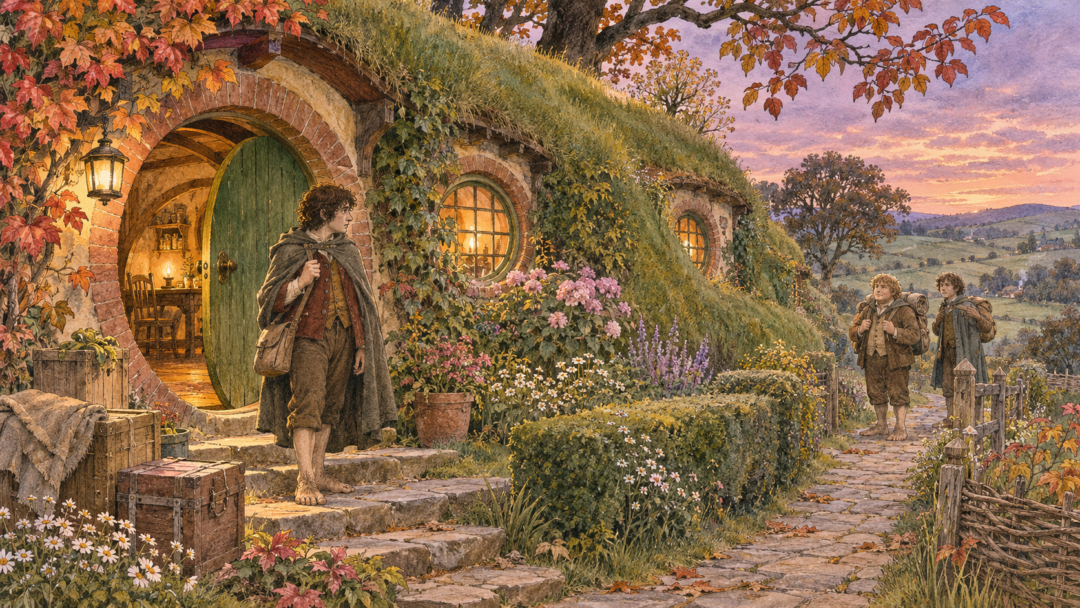
Frodo Baggins sold his beloved Bag End to the Sackville-Bagginses and invented a story about retiring to Crickhollow in Buckland. Yet before he reached his supposed new home, Black Riders were already following his trail. Within days, they would discover Crickhollow itself.
As a scheme to conceal Frodo’s movements entirely, the deception seems extraordinarily expensive. But Crickhollow was a delaying operation, not an attempt to make Frodo permanently untraceable. It explained his departure from Hobbiton, concealed his intention to leave the Shire, and eventually directed enemy attention toward a house he had abandoned.
The evidence in The Fellowship of the Ring and Unfinished Tales supports a qualified verdict: the deception was worth attempting, although Tolkien never establishes that selling Bag End was indispensable. Discovering Frodo’s trail was not the same as discovering his ultimate intentions.
The Real Secret Was Not Frodo’s Departure, but His Destination
After Gandalf’s revelations in ‘The Shadow of the Past’, Frodo understands that keeping the Ring at Bag End endangers the Shire. Gandalf advises him to leave discreetly. An unexplained disappearance by an established, wealthy hobbit would invite curiosity; an ordinary move to a smaller home near relatives would not.
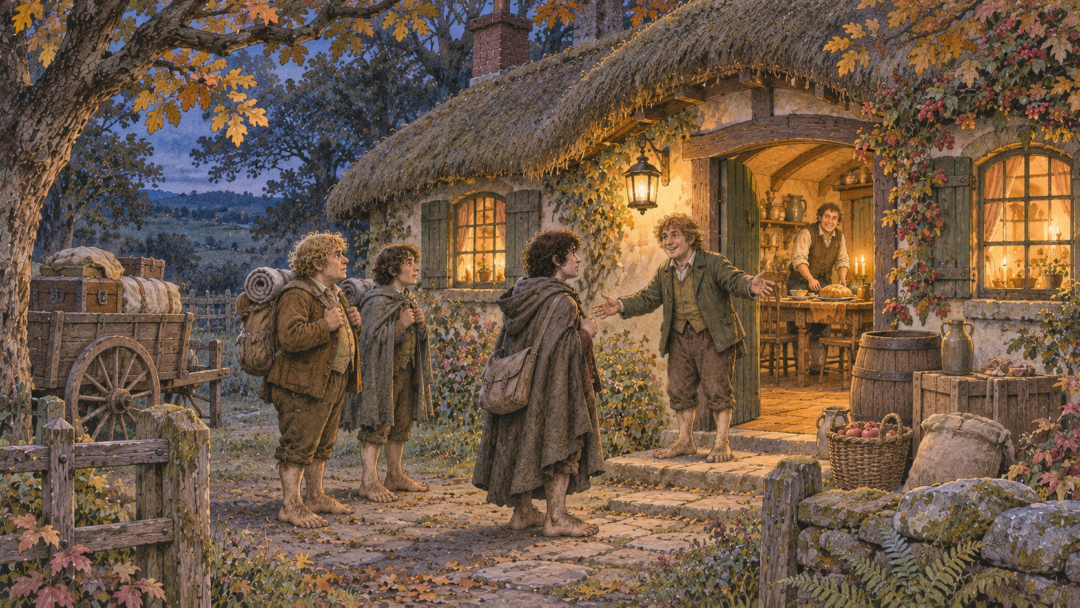
Crickhollow is convincing because Frodo has genuine connections to Buckland, where he spent part of his youth among the Brandybucks. In ‘Three Is Company’, Tolkien explains that Frodo spreads the impression that his resources have diminished and he intends to retire modestly. Selling Bag End to Lobelia Sackville-Baggins and her son Lotho makes the explanation tangible: possessions are packed, arrangements completed, and ownership transferred.
Frodo’s age strengthens the appearance of an eccentric but comprehensible decision. At fifty, he has reached the age at which Bilbo departed on his extraordinary adventure. The Baggins family’s reputation makes another unusual departure less surprising.
The concealed fact is that Crickhollow is not Frodo’s intended permanent destination. His supposed retirement disguises his departure from ordinary Shire life altogether.
The scheme therefore does not require people to believe Frodo remains at Bag End. It requires them to accept an apparently harmless explanation for leaving. Against casual observers, that is useful deception. Against supernatural hunters searching for the Ring, it offers only limited protection.
Selling Bag End Made the Cover Story Believable, but Painfully Expensive
Bag End represents more than valuable property. It is Bilbo’s ancestral home, the centre of Frodo’s adult life, and an embodiment of the peace he hopes to protect.
Selling it to the Sackville-Bagginses makes the sacrifice particularly bitter. In The Hobbit, ‘The Last Stage’, Bilbo returns to find his possessions being auctioned and relatives benefiting from his presumed death. Their frustrated desire for Bag End persists into The Fellowship of the Ring. Frodo eventually surrenders what Bilbo resisted losing.
In ‘A Conspiracy Unmasked’, Merry identifies Frodo’s pretended financial difficulties and genuine sale of his beloved home as signs of a hidden purpose. The cover story works as public behaviour but raises suspicions among those who know Frodo best.
That weakness proves unexpectedly helpful. Merry, Pippin, Sam, and Fredegar Bolger organize their own conspiracy, becoming practical and emotional allies when Frodo is increasingly reluctant to depart. His secret is exposed to friends rather than enemies.
Was selling Bag End necessary? Tolkien does not say. A prolonged visit, rented cottage, or alternative domestic explanation might conceivably have worked, but these are speculative possibilities, not demonstrated improvements.
Permanent relocation does explain the removal of belongings and closure of an established household more persuasively than temporary absence. Frodo’s actions visibly match his explanation, lending credibility that mere assurances could not provide.
The sacrifice purchases plausibility, not security. Whether Frodo paid more than strictly necessary remains impossible to determine from the published narrative.
The Black Riders Found the Trail Before Crickhollow: The Strongest Objection
The most serious objection is chronological: the Nazgûl are already close before Frodo completes his first journey.
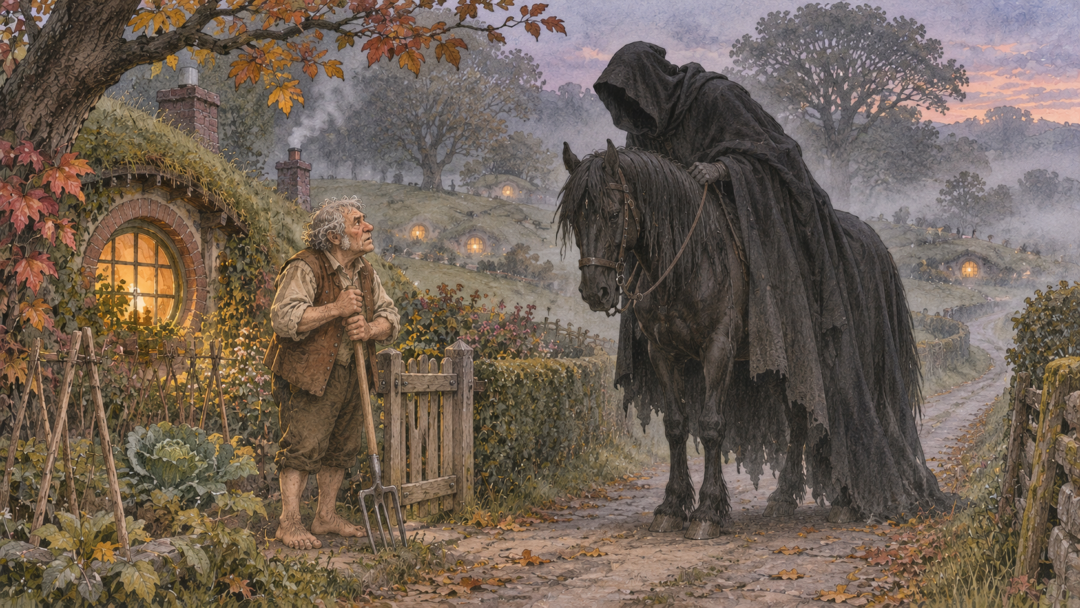
Appendix B, ‘The Tale of Years’, dates his departure from Bag End to 23 September 3018. That evening, a Black Rider questions Hamfast Gamgee in Hobbiton. In ‘Three Is Company’, the Gaffer reveals that Frodo has moved toward Buckland. The travellers have barely escaped their former neighbourhood.
The following day, Frodo, Sam, and Pippin encounter a Rider and hide. Frodo feels an impulse to put on the Ring, introducing another immediate danger. Later, Gildor’s company of Elves interrupts another Rider’s approach.
In ‘A Short Cut to Mushrooms’, Farmer Maggot reports that a frightening stranger has questioned him about Baggins. When Frodo crosses the Brandywine at Bucklebury Ferry on 25 September, the pursuit has already followed his general direction.
‘ The Hunt for the Ring’ in Unfinished Tales supplies further perspective on the Nazgûl’s movements, including Khamûl’s role. It confirms the pursuit’s proximity while showing that the Riders encountered difficulties maintaining contact with their quarry.
Consequently, the narrow objection is correct: the Nazgûl discovered Frodo’s trail before he reached Crickhollow. What does not follow is that they had defeated the entire deception.
Knowing Baggins has gone toward Buckland differs from knowing he intends to enter the Old Forest, reach Bree, and continue beyond the Shire. Frodo himself has not fully settled his ultimate route. The Riders possess dangerous information, but their continued searching and questioning demonstrate incomplete knowledge of his whereabouts.
Nor could an ordinary domestic fiction guarantee safety against servants of Sauron hunting the One Ring. The Nazgûl’s ability to sense the Ring and their relentless pursuit make permanent concealment through social deception unrealistic.
The relevant test is therefore whether Crickhollow obscured Frodo’s onward movements and gained time, not whether it prevented every encounter.
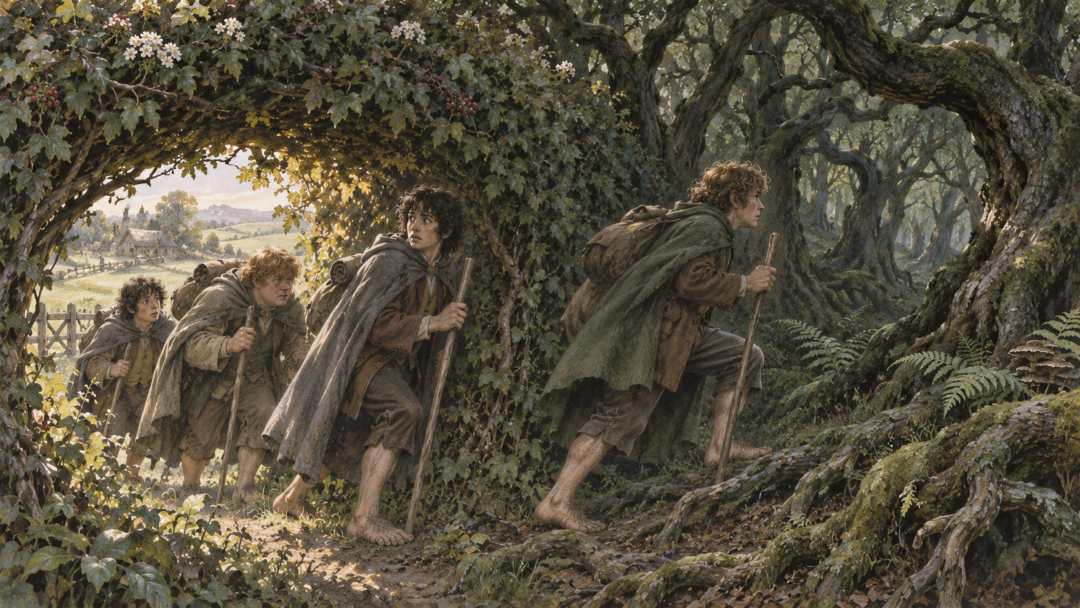
Crickhollow Worked Because Frodo Did Not Stay There
Frodo reaches Crickhollow on the evening of 25 September. Merry has prepared the house to resemble a genuine new residence. Yet the conspirators have already planned its abandonment.
On 26 September, Frodo, Sam, Merry, and Pippin enter the Old Forest while Fredegar Bolger remains behind to maintain the appearance that Frodo is still living there.
This gives the fiction a second function. The original story explains why Frodo left Hobbiton; the occupied house suggests that his journey has ended.
The timing is decisive. Appendix B records the hobbits’ entry into the Old Forest on 26 September. The attack on Crickhollow, described in ‘A Knife in the Dark’, occurs before dawn on 30 September. By then, Frodo has travelled for several days beyond his supposed residence.
The Riders ultimately find the house, exposing the limitations of a fixed decoy. But they attack a place where they expect their quarry might remain, when he is already elsewhere. An accurate report of Frodo’s announced destination has become an outdated assumption about his location.
How much delay did this produce? Tolkien provides no counterfactual departure without Crickhollow and does not establish that the Riders spent every intervening hour investigating the house. Its precise contribution to the pursuit’s timetable cannot be measured.
Nevertheless, the attack establishes that Crickhollow remained an operational target. Following Frodo toward Buckland had not rendered the deception irrelevant.
A decoy need not remain undiscovered indefinitely. It can succeed by remaining credible after its intended occupant has escaped. Crickhollow achieved that narrower result, although the search continued elsewhere.
Fredegar Bolger Bore the Plan’s Most Immediate Risk
The scheme’s sharpest moral cost falls on Fredegar Bolger, who remains at Crickhollow as the apparent occupant while his companions escape.
‘A Conspiracy Unmasked’ acknowledges the danger of his assignment. The Black Riders might investigate the house, leaving him exposed to enemies against whom he has little defence.
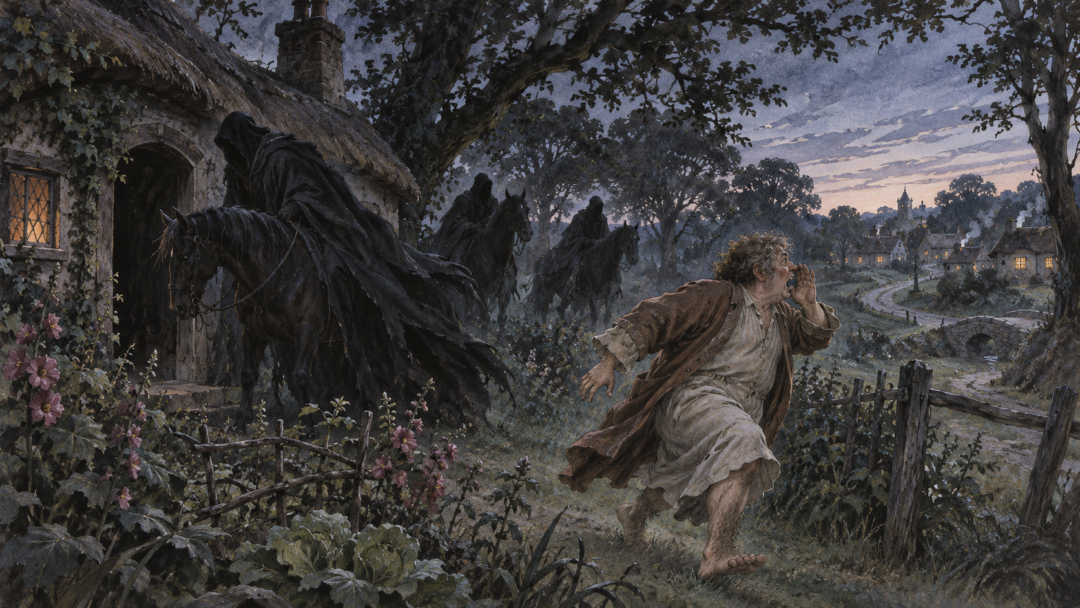
That danger materializes in ‘A Knife in the Dark’. When the Riders assault Crickhollow, Fredegar escapes and raises the alarm. Buckland’s ancient horn-call sounds, rousing its inhabitants, and the Riders depart without capturing Frodo.
Fredegar survives, but the episode reveals how nearly the deception could have cost an ally his life. It transfers some danger from the Ring-bearer to someone who does not possess the Ring and cannot confront the Nazgûl on equal terms.
Yet Fredegar is not an unwitting victim. He participates voluntarily in the conspiracy, understands the secrecy of Frodo’s departure, and agrees to stay, although his knowledge of the enemy’s nature is incomplete.
The danger also extends to Buckland itself. Maintaining the illusion of an occupied house draws the Riders into an ordinary community, bringing fear and violence to people Frodo hopes to protect.
Crickhollow was therefore no inexpensive diversion. Nor, however, does Tolkien suggest that Fredegar was deliberately offered as a sacrifice or that the conspirators intended to lure the Nazgûl into battle. Those interpretations exceed the evidence. Concealment was the intention; the assault followed when that concealment failed at the house.
The Deception Also Had Limits That No House Sale Could Repair
Crickhollow neither explains every successful escape nor causes every subsequent danger.
Frodo repeatedly survives through assistance beyond the deception itself. Gildor’s Elves interrupt a dangerous encounter; Farmer Maggot helps the travellers; Tom Bombadil assists their escape from the Old Forest and Barrow-downs; and Aragorn becomes their guide and protector at Bree.
These interventions matter more to immediate survival than Bag End’s ownership. A convincing property transaction offers no defence against Old Man Willow, the Barrow-wight, or dangers beyond the Shire.
Nor does the cover prevent further exposure. At the Prancing Pony, Frodo accidentally puts on the Ring, compromising secrecy. The subsequent attack on the inn in ‘A Knife in the Dark’ demonstrates that the pursuit extends well beyond Crickhollow.
Gandalf’s absence further undermines Frodo’s position. He fails to return as expected before the departure. ‘The Council of Elrond’ explains his captivity and delay, while ‘Strider’ reveals that Barliman Butterbur failed to deliver Gandalf’s warning letter.
Frodo consequently travels without important guidance. Domestic arrangements cannot replace that missing intelligence, nor can they counter every danger posed by enemies whose movements and powers he understands imperfectly.
Tolkien never presents the Crickhollow fiction as a complete solution. It is one imperfect safeguard within a journey where secrecy repeatedly fails and outside help proves essential.
Was the Tradeoff Justified? Yes, but Not Because the Trick Fooled Everyone
Three objectives must be distinguished.
First, the deception provides a plausible departure. Selling Bag End, moving possessions, and announcing retirement make Frodo’s withdrawal from Hobbiton publicly comprehensible.
Second, it fails to prevent the Nazgûl from finding his trail. They reach Hobbiton almost immediately, learn his direction, and encounter signs of his passage before he reaches Crickhollow. Calling this complete misdirection would contradict the narrative.
Third, it helps conceal his intention to continue beyond Buckland. Frodo leaves Crickhollow the morning after arriving, and the Riders attack an empty target several days later. The pretence survives long enough to make the house worth investigating after it has ceased to be useful for intercepting him.
Could Frodo have escaped equally well without selling Bag End? Possibly. Tolkien offers no comparison proving that the transaction was essential. The defensible claim is that it contributed to secrecy, not that it single-handedly saved the Quest.
The loss itself is ultimately reversed. In ‘The Scouring of the Shire’ and ‘The Grey Havens’, Bag End’s ownership returns to the story: Frodo regains it, and Sam eventually inherits it. But this restoration does not diminish Frodo’s original sacrifice. When he departed, he had no assurance of survival, return, or recovery of his home.
That uncertainty gives the decision its moral significance. Frodo relinquishes the security he loves so that others might continue enjoying it. Protecting the Shire means accepting the possibility of losing his own place within it.
The Crickhollow deception was therefore justified as a limited, hazardous strategy. Its expensive realism made departure believable; its false destination obscured Frodo’s onward escape; and its discovery came too late to capture him there. Yet it exposed Fredegar and Buckland to danger without stopping the wider pursuit.
The Riders finding Frodo’s trail before Crickhollow does not make the plan worthless. It proves that the plan could only buy time. During the opening days of the Quest, when even hours could separate escape from capture, that was a meaningful achievement, purchased at considerable cost.
Sources & Notes
This article is based on close reading and interpretation of Tolkien's published works and related source material where relevant.