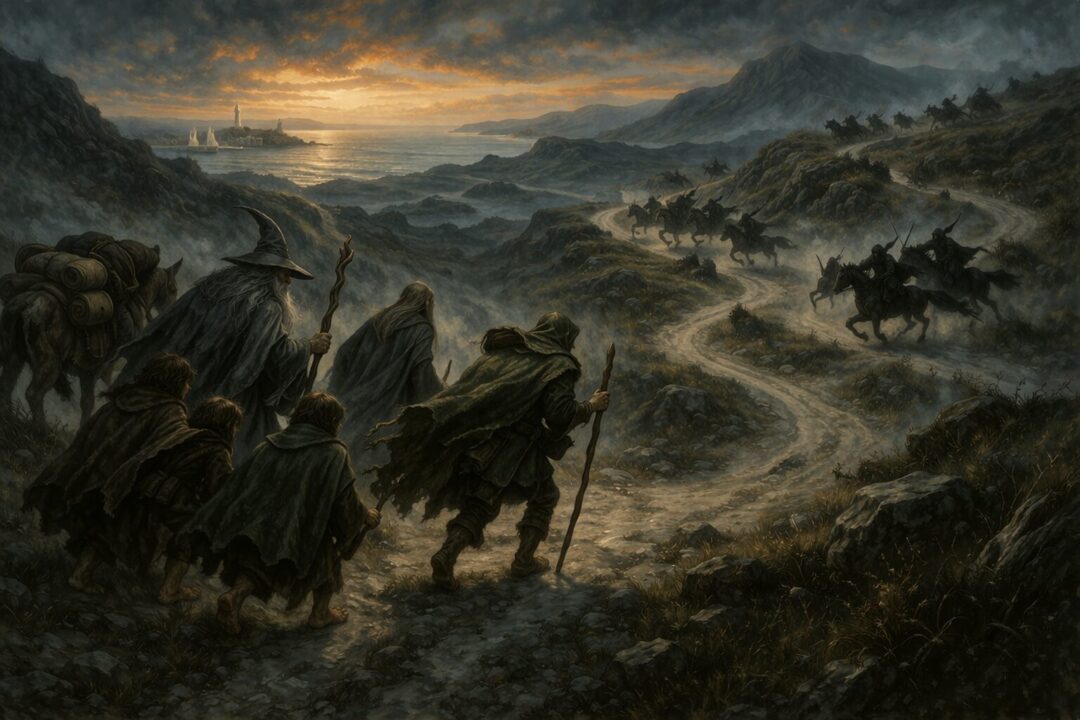
When people look for an easier answer to the War of the Ring, one idea returns again and again:
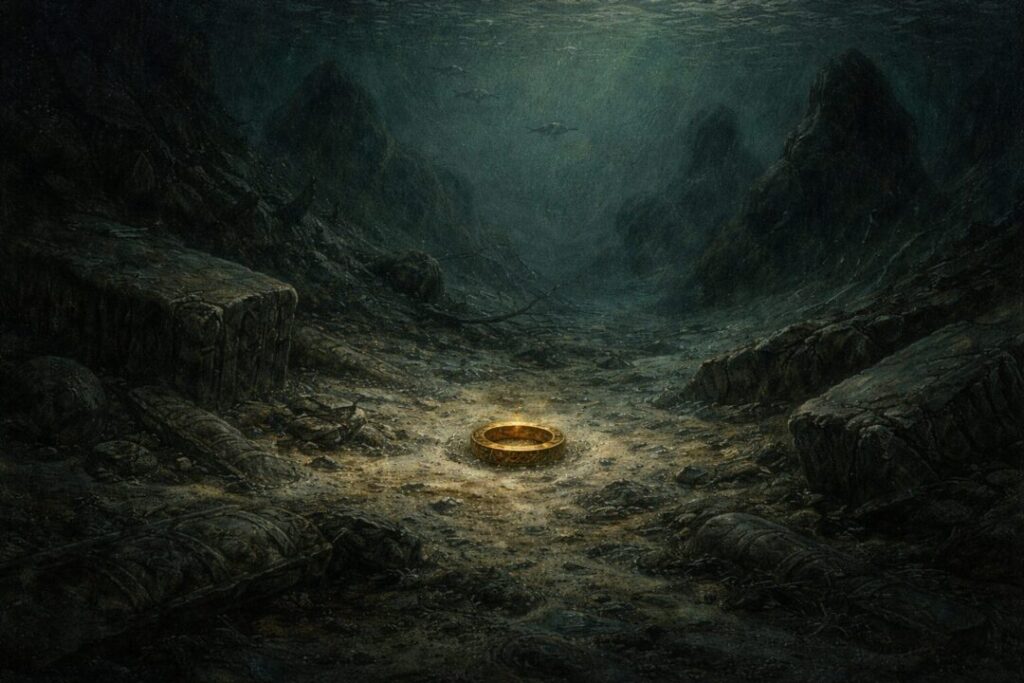
Why not throw the One Ring into the Sea?
On the surface, it seems reasonable. The world is vast. The deeps are dark. Countless things have been lost beneath the waters of Middle-earth and never seen again. If the Ring could not be used safely, and if carrying it into Mordor looked close to impossible, then why not cast it into some abyss and let the Sea keep it?
The problem is that the story itself already considers that logic.
And rejects it.
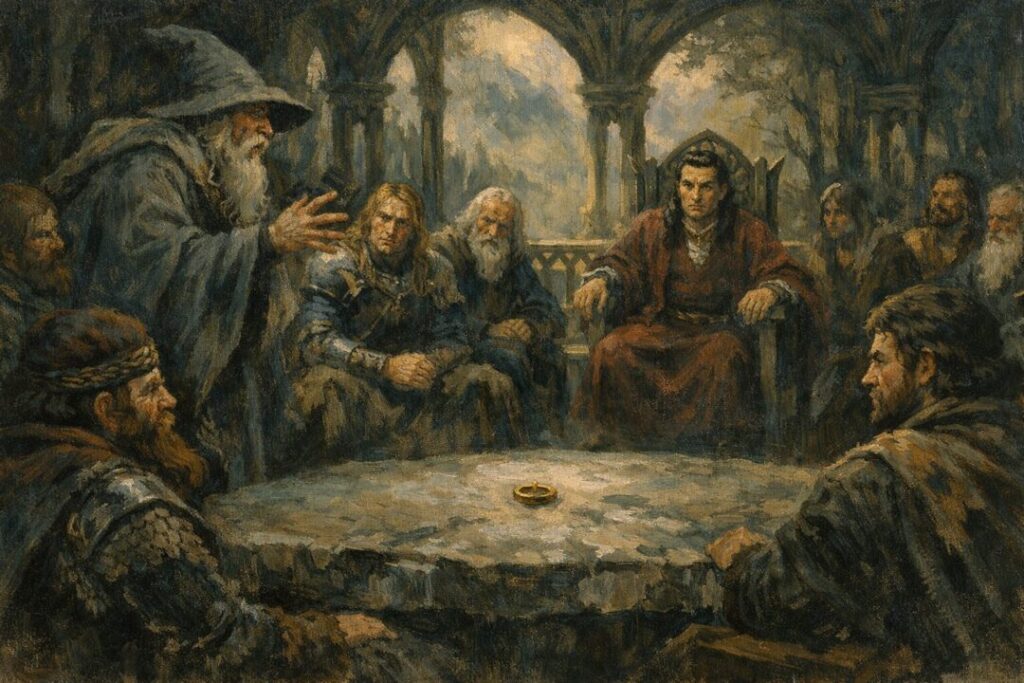
Not as a dramatic flourish. Not as a throwaway line. But as part of the central reasoning of the Council of Elrond, where the Wise strip away one false solution after another until only the true one remains. There, the Ring is discussed not as an object that merely needs better storage, but as an evil that must be ended completely.
The Ring Was Never Just Something to Hide
The first mistake in the sea argument is assuming that the Ring behaves like ordinary treasure.
It does not.
Long before the Council meets, the narrative has already shown that the Ring does not rest harmlessly where it is placed. Gandalf tells Frodo that it was the Ring itself that left Gollum. It did not remain hidden under the mountains forever. It passed out of darkness when its own chance of returning increased. The broader pattern is the same throughout the story: the Ring passes from Isildur to the river, from the river to Déagol, from Déagol to Sméagol, from Gollum to Bilbo, and from Bilbo to Frodo, never in a way that suggests stable containment. The texts strongly imply that concealment delays the crisis, but does not resolve it.
That matters.
If the Ring can work its way back into history after centuries of loss, then throwing it into the Sea is not the same as destroying it. It is only hiding it in a place where no one can predict the next stage of its return.
And that is exactly the kind of uncertainty the Wise are trying to avoid.
The Council of Elrond Explicitly Rejects the Sea
This is not merely a modern fan objection. The text addresses it directly.
At the Council, after other possibilities have failed, Glorfindel reduces the matter to two options: send the Ring over Sea, or destroy it. Elrond rejects sending it West, because those in Valinor will not accept responsibility for an evil that belongs to Middle-earth. The peoples of Middle-earth must deal with it themselves. Glorfindel then proposes casting it into the Sea instead. Gandalf answers that creatures of the deep might recover it, or that the changing of the seas might one day return it to the surface. Galdor adds another practical problem: reaching the Sea at all would be extremely difficult with the Enemy watching the western roads.
That single exchange destroys the entire theory.
The sea proposal fails on three levels at once.
It is not permanent.
It is not secure.
It is not even strategically feasible.
The Wise are not saying, “That might be less ideal.” They are saying it does not solve the problem that actually matters.
The Sea Would Delay the Danger, Not End It
This is the heart of the issue.
The Ring’s continued existence is itself the danger.
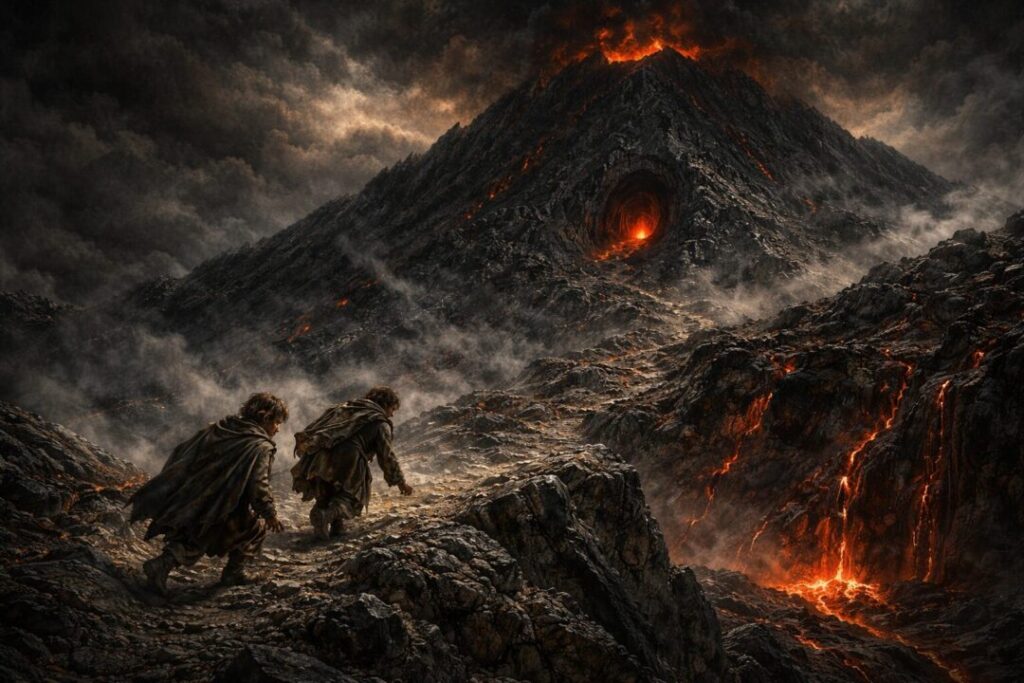
As long as it remains in the world, Sauron’s final defeat has not been achieved. The Ring contains so much of his own power that its destruction alone can put it beyond his grasp forever. Gandalf states this plainly to Frodo: there is only one way to destroy it, and that is to cast it into the Cracks of Doom where it was made. The Council reaches the same conclusion. The debate is not over which hiding place is best. It is over whether Middle-earth will choose delay or finality.
That is why the sea is never a true answer.
Even if the Ring were lost for an age, that would still leave the central threat unresolved. Sauron would remain a power in the world so long as the Ring endured. He might lack it for a time, but his enemies would still live under the shadow of its survival. The war might lengthen. Kingdoms might fall. Search might continue. And some future chance, however remote, would still remain open.
The Sea offers postponement.
Orodruin offers conclusion.
Saruman’s Error Shows Why This Idea Is Dangerous
There is another quiet layer to this.
Before the Council, Gandalf recounts Saruman’s earlier claim that the Ring had likely rolled down the Anduin and into the Sea. That belief encouraged passivity. It helped delay decisive action against Sauron. Gandalf later sees that Saruman’s words had lulled the Wise and bought the Enemy time.
This matters because it reveals the moral danger inside the sea theory.
It sounds realistic.
It sounds moderate.
It sounds like the prudent alternative to a desperate quest.
But within the logic of the story, it belongs to the same family of thought that repeatedly misjudges the Ring: the belief that distance, obscurity, or delay are enough.
They are not.
The Ring is not neutralized by being misplaced. The Wise have already learned the cost of believing that. By the time the Council gathers in Rivendell, they are no longer willing to gamble Middle-earth on the hope that lost things stay lost forever.
Even the West Would Not Take It
Some versions of this idea try to improve the argument by shifting it from “throw it into the Sea” to “send it West and let the Blessed Realm deal with it.”
The Council closes that door too.
Elrond says plainly that those in the West will not receive the Ring. It is an evil of Middle-earth, and Middle-earth must answer it. This is important because it prevents the story from escaping its own moral burden. No higher realm steps in to remove the danger while the peoples of Middle-earth remain passive. They must bear the cost of confronting the evil that threatens them.
That refusal also deepens the meaning of the quest.
The road to Mordor is not chosen because help from elsewhere failed to arrive by accident.
It is chosen because the burden cannot rightly be handed away.
The Western Road Was Also the Expected Road
There is also a practical military reason the sea plan collapses.
Galdor warns that the roads west are watched, and that the Nazgûl would soon expect the Ring to travel that way. Elrond agrees that the western paths are too obvious and must be avoided. By contrast, Gandalf argues that Sauron cannot easily imagine his enemies attempting to destroy the Ring at all. He expects them to use it, hide it, or defend it. That blindness becomes the one strategic opening available to the Free Peoples.
This is one of the most important pieces of the whole debate.
Throwing the Ring into the Sea feels easier because it points away from Mordor.
But pointing away from Mordor is exactly what Sauron expects.
The true plan succeeds precisely because it chooses the path that appears least reasonable to the mind of power. The Enemy understands possession. He understands domination. He understands guarded retreat.
He does not understand renunciation.
That is why the road east, not west, becomes the only road with any real hope.
Why the Cracks of Doom Were Different
At last the argument becomes simple.
The Sea might conceal.
The West might refuse.
Fortresses might fall.
Guardians might weaken.
Chance might reverse any victory built only on hiding.
But the Cracks of Doom are different.
They are not a storage place.
They are not a prison.
They are not a postponement.
They are the one place in all Middle-earth where the Ring can be unmade utterly and put beyond the Enemy’s grasp forever. That is the standard the Council applies. Not “What can keep it from sight?” but “What ends this?”
Once that question is asked honestly, every alternative begins to collapse.
The sea is too uncertain.
The West is closed.
Use is corruption.
Hiding is temporary.
Only destruction remains.
The Real Choice Was Never Easy Versus Hard
In the end, the sea theory survives mostly because it sounds practical from outside the story.
Inside the story, it has already been weighed and refused.
And it is refused for reasons that go far beyond geography.
The Ring cannot be treated like a dangerous heirloom to be buried and forgotten. It is bound to Sauron, bound to return, and bound to remain a threat while it exists. The Wise understand that the question is not whether Middle-earth can hide from the Ring for a while, but whether it can accept living forever under the possibility of its return.
That is why the quest to Mordor is not chosen because no one thought of anything simpler.
It is chosen because every simpler answer fails.
Throwing the One Ring into the Sea was never a real solution.
It was only the most comforting form of delay.
And in the world of the Ring, delay was exactly what the Enemy needed.
Sources & Notes
- J.R.R. Tolkien, The Fellowship of the Ring, "The Shadow of the Past" — Gandalf explains that the Ring left Gollum and that it can be unmade only in the fire where it was forged.
- J.R.R. Tolkien, The Fellowship of the Ring, "The Council of Elrond" — Glorfindel, Elrond, Gandalf, and Galdor directly weigh sending the Ring over Sea or casting it into the Sea and reject both ideas.
- J.R.R. Tolkien, The Fellowship of the Ring, "The Council of Elrond" — the Council’s final strategy rests on destroying the Ring, not hiding it, because Sauron cannot imagine his enemies choosing renunciation.
- J.R.R. Tolkien, The Silmarillion, "Of the Rings of Power and the Third Age" — Sauron’s power is bound up with the One Ring, so its destruction is what brings his final overthrow.