When people think about light in The Silmarillion, they often think of it in the simplest possible way.
Light is the good side.
Darkness is the bad side.
The pattern seems obvious.
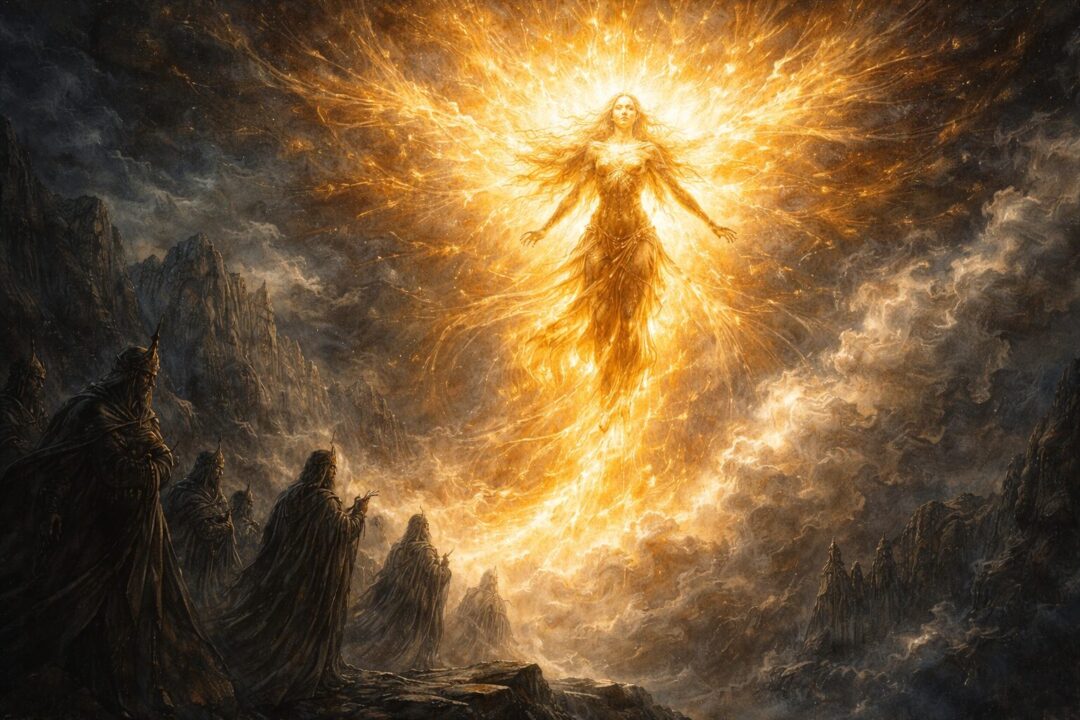
And at first glance, the text encourages that instinct. The light of the Two Trees is one of the holiest and most beautiful things in the Elder Days. The stars awaken wonder in the Elves. Eärendil’s light becomes a sign of hope. Again and again, light is linked with memory, beauty, blessing, and the presence of something higher than ordinary life.
But the deeper you go into the book, the harder it becomes to treat light as a simple moral shortcut.
Because in The Silmarillion, light is not always soft.
It is not always safe.
And it does not always function as comfort.
Sometimes it burns.
Sometimes it exposes.
Sometimes it becomes the very thing that draws hidden pride, greed, and destruction into the open.
That does not mean light is evil.
It means the book is doing something more interesting than that.
Light in the Elder Days Is Holy, but Not Harmless
The first thing to understand is that light in these stories is usually presented as something real and weighty.
It is not just decoration.
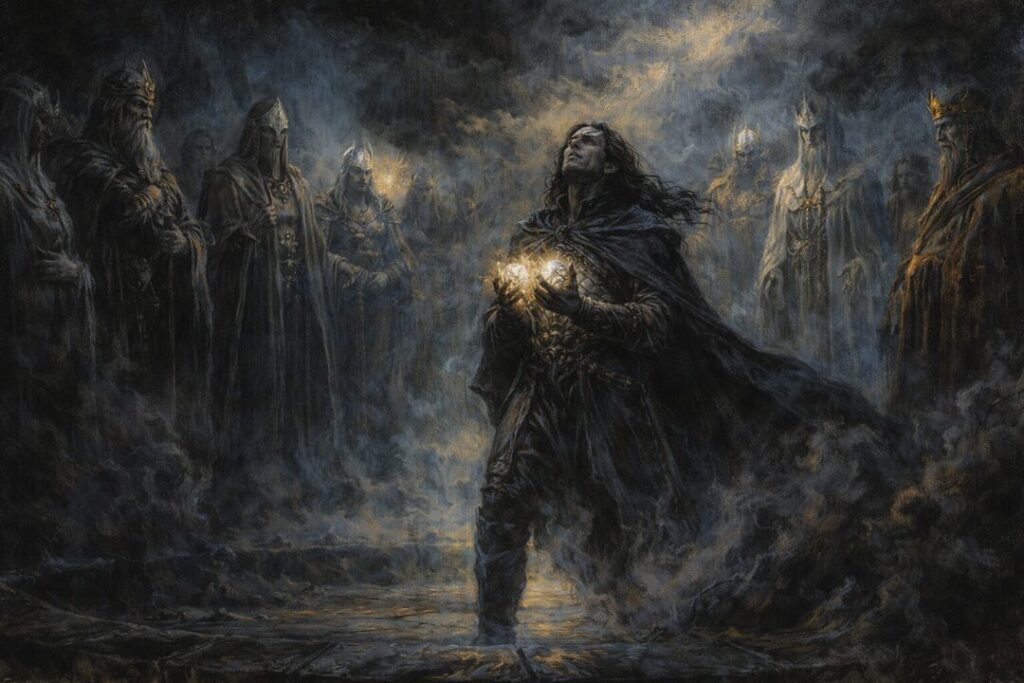
The light of the Two Trees is not a pleasant background glow in Valinor. It is a living radiance bound up with the ordered beauty of the Blessed Realm. The Silmarils do not merely sparkle. They preserve within themselves the last unsullied light of the Trees. Eärendil’s star is not only beautiful to behold from afar. It carries the memory of one of the great jewels and becomes a sign that hope has not wholly failed.
So the problem is not that light is false.
The problem is that readers often assume holiness must also mean ease.
The Silmarillion does not make that assumption.
Again and again, the book presents what is highest and fairest as something that can overwhelm those who come near it in the wrong spirit. The light of Aman can be beloved, but it is not cheap. The holy can nourish, but it can also judge. Beauty can awaken reverence, but it can also awaken possessiveness.
That distinction matters.
Because many of the worst tragedies in the Elder Days do not begin with hatred of beauty.
They begin with the desire to claim it.
The Silmarils Are the Clearest Example
Nothing proves this more clearly than the Silmarils themselves.
They contain the last light of the Trees. They are hallowed. They are among the most beautiful works in the entire history of Arda. On the level of origin, they are not corrupt objects.
And yet almost every hand that closes around them becomes entangled in grief.
This is one of the great paradoxes at the center of the book.
The jewels themselves are not presented as evil in the way the One Ring is evil. They do not corrupt by design. They are not instruments forged for domination. But the history around them becomes catastrophic. The desire to possess them helps drive suspicion among the Noldor, sharpens Fëanor’s pride, and eventually stands at the center of oath, rebellion, kinslaying, exile, and long war.
That is a crucial difference.
The danger is not that holy light secretly turns bad.
The danger is that created beings do bad things when they try to master, hoard, or own what should have inspired humility instead.
This is why the story feels so severe.
The brighter the treasure, the more terrible the moral test around it becomes.
Fëanor Does Not Simply Love Light. He Clings to It
Fëanor is not tragic because he is drawn to ugliness.
He is tragic because he loves something genuinely beautiful and cannot bear to relinquish it.
That makes his fall much more unsettling.
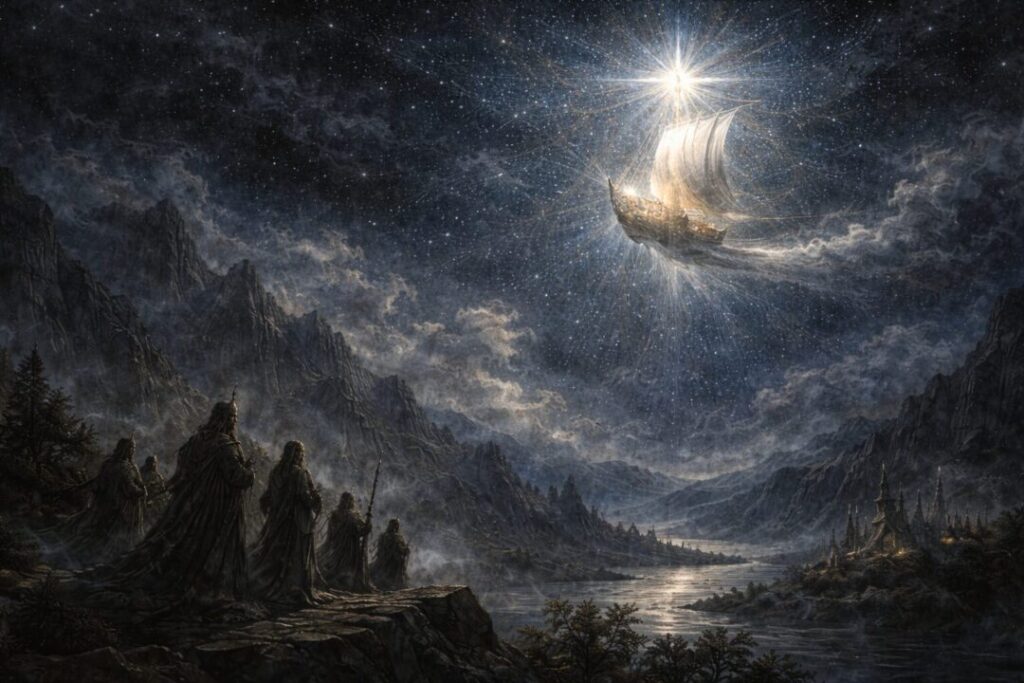
If the Silmarils were wicked things from the beginning, the moral pattern would be simple. But they are not. They preserve something lost and radiant. They are the greatest work of his hands. When the Trees are destroyed and the Valar ask that the jewels be surrendered so their light may be used for healing, Fëanor refuses.
That moment matters far beyond the immediate scene.
It reveals that even a rightful love of beauty can become disordered when possession matters more than restoration. Fëanor would rather keep the light locked in his own work than allow it to be broken open for the remaking of what was lost.
And from there the logic darkens.
The jewels are stolen.
His father is slain.
His love becomes vengeance.
Vengeance becomes oath.
Oath becomes inherited ruin.
The light remains holy.
But the story surrounding it becomes drenched in blood.
Ungoliant Reveals Something Even Stranger
Ungoliant makes the pattern darker still.
She does not merely flee the light.
She desires it and hates it at the same time.
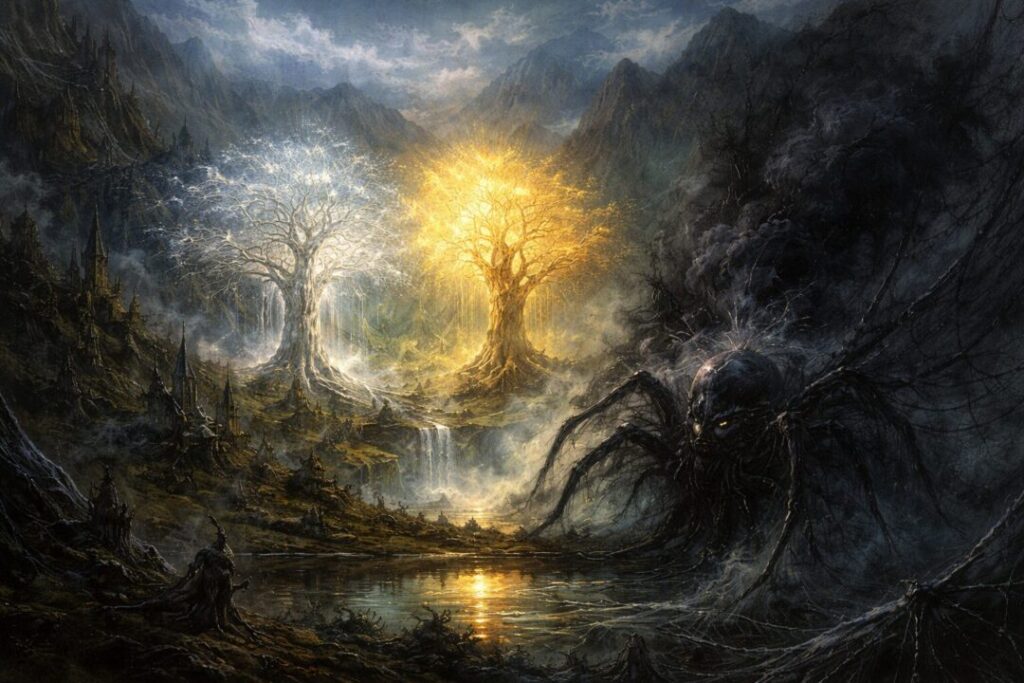
That tension is one of the most disturbing images in the whole legendarium. She comes toward the radiance of Valinor not to rejoice in it, but to consume it. She drinks light and gives back darkness. She takes in brightness only to smother and invert it.
This is not the same as simple opposition.
It is parasitic hunger.
And that matters, because it shows that even the holiest light in the world can become the object of monstrous appetite. Light here is not “bad.” The point is almost the opposite. It is so rich, so desirable, so full of created goodness, that beings twisted by emptiness try to seize it in the only way they know how: by devouring it.
So again the text refuses simplification.
Darkness is not just the absence of light.
Sometimes it is what remains after light has been violated.
The Light of the Sun Is Not Gentle Either
Even when light appears as a force opposed to darkness, it is not always described in comforting terms.
When Arien takes up the guidance of the Sun, her brightness is not soft, domestic, or easy to endure. The text describes her in terms of flame and terrible splendor. Her radiance is so intense that even the Eldar cannot easily look on her.
That detail is easy to pass over, but it matters.
It means light in these tales is not merely a symbol for pleasant feelings. It can be fierce. It can be overwhelming. It can reveal the smallness of those who behold it. There is majesty in it, but also danger.
In other words, goodness in The Silmarillion is not always mild.
Sometimes it arrives with the force of fire.
The Silmaril Becomes Hope Only at a Distance
One of the most revealing transformations in the book happens with Eärendil.
A Silmaril that had already stood at the center of grief, oath, murder, and ruin is finally borne across the sea and set in the heavens. There it becomes a sign of hope to those below.
This is not accidental.
A jewel that brought strife when claimed as possession becomes hope when it is no longer something others can seize and own. From the sky, it can guide. In the hand, it so often brought disaster.
That is one of the deepest patterns in the entire story.
Some forms of light are rightly received only as gift, sign, or distant orientation.
The moment someone tries to drag them downward into private ownership, the damage begins.
The problem is not the light.
The problem is the will that says: this must be mine.
Even the Blessed Light Can Judge
There is another reason light in The Silmarillion is not morally simple.
It does not only comfort the worthy. It can also expose the unworthy.
The hallowing of the Silmarils makes this explicit. Their light is not neutral to every touch. Evil cannot lay hold of them without pain. Morgoth himself bears the torment of that contact. Much later, even those who believe they have a claim upon the jewels find that claim shattered by what they have become.
That is not corruption flowing out from the light.
It is judgement revealed by contact with it.
And this is why light in the legendarium often feels more like holiness than symbolism.
Holiness is not evil.
But neither is it automatically pleasant to those who approach it wrongly.
Why This Matters for Reading The Silmarillion
If we reduce light in this book to “good vibes,” we miss what gives the Elder Days their strange moral power.
The stories are not telling us that beauty is suspect.
They are telling us that beauty is serious.
The greatest lights in the book do bring hope.
They do preserve memory.
They do stand against darkness.
But they also test hearts.
They expose motives.
They reveal whether love will remain reverent or collapse into possession.
That is why so many catastrophes gather around radiant things.
Not because the light itself turns wicked, but because the nearer people come to what is most beautiful, the less room there is for pride, greed, and self-claiming to hide.
And many do not survive that exposure well.
Light in The Silmarillion Is Good, but It Is Not Safe
That may be the real answer.
Light in The Silmarillion is often good in origin, good in meaning, and good in opposition to darkness.
But it is not tame.
It can be too bright to endure.
Too holy to handle casually.
Too beautiful to possess without cost.
Sometimes it heals.
Sometimes it burns.
Sometimes it can only be received from afar.
And some of the worst grief in the Elder Days begins the moment someone mistakes holy light for a treasure that exists to satisfy desire.
That is why the book feels so different from simpler fantasy.
It does not ask whether light is better than darkness.
It asks what happens when beings who were meant to love the light begin trying to own it.
And in The Silmarillion, that is where ruin enters.
Sources & Notes
- J.R.R. Tolkien, The Silmarillion, “Of the Beginning of Days” — establishes the Two Trees as the chief holy light of Valinor, and shows light in the Elder Days as powerful, ordered, and sacred rather than merely decorative.
- J.R.R. Tolkien, The Silmarillion, “Of the Silmarils and the Unrest of the Noldor” — describes the Silmarils as containing the blended light of the Trees, hallowed by Varda, and already bound up with Fëanor’s possessive pride.
- J.R.R. Tolkien, The Silmarillion, “Of the Darkening of Valinor” — gives the central contrast of Ungoliant devouring the Trees’ light and Fëanor refusing to surrender the Silmarils for the healing of the Trees.
- J.R.R. Tolkien, The Silmarillion, “Of the Flight of the Noldor” — follows Fëanor’s oath and the Noldorin rebellion, showing how desire to recover the jewels turns holy light into the occasion of exile, kinslaying, and war.
- J.R.R. Tolkien, The Silmarillion, “Of the Sun and Moon and the Hiding of Valinor” — presents Arien and the first rising of the Sun in terms of flame and overpowering radiance, supporting the article’s point that good light is not always gentle.
- J.R.R. Tolkien, The Silmarillion, “Of the Voyage of Eärendil and the War of Wrath” — completes the pattern: the Silmaril becomes a star of hope when set beyond possession, while the remaining jewels burn Maedhros and Maglor after their oath-driven claim.