
Middle-earth is often remembered as a world shaped by the great and the glorious: the immortal Elves, the mighty kingdoms of Men, and the Ainur—those angelic powers who entered Arda at its beginning and guided its fate from beyond the circles of the world. Kings rise and fall, armies clash, and ancient prophecies unfold across Tolkien’s legendarium.
Yet this familiar image hides a deeper truth.
Again and again, Tolkien shows that the course of history is altered not only by those who seek power, but by peoples who appear rarely, act reluctantly, and often wish to remain unseen. These are not the rulers of realms nor the architects of grand designs. They are the watchers, the guardians, and the overlooked—those who step onto the stage of destiny only when the world itself demands it.
Below are five of the rarest peoples to meaningfully influence the fate of Middle-earth, drawn strictly from Tolkien’s writings. Their rarity lies not merely in numbers, but in presence, restraint, and the immense weight of their choices.
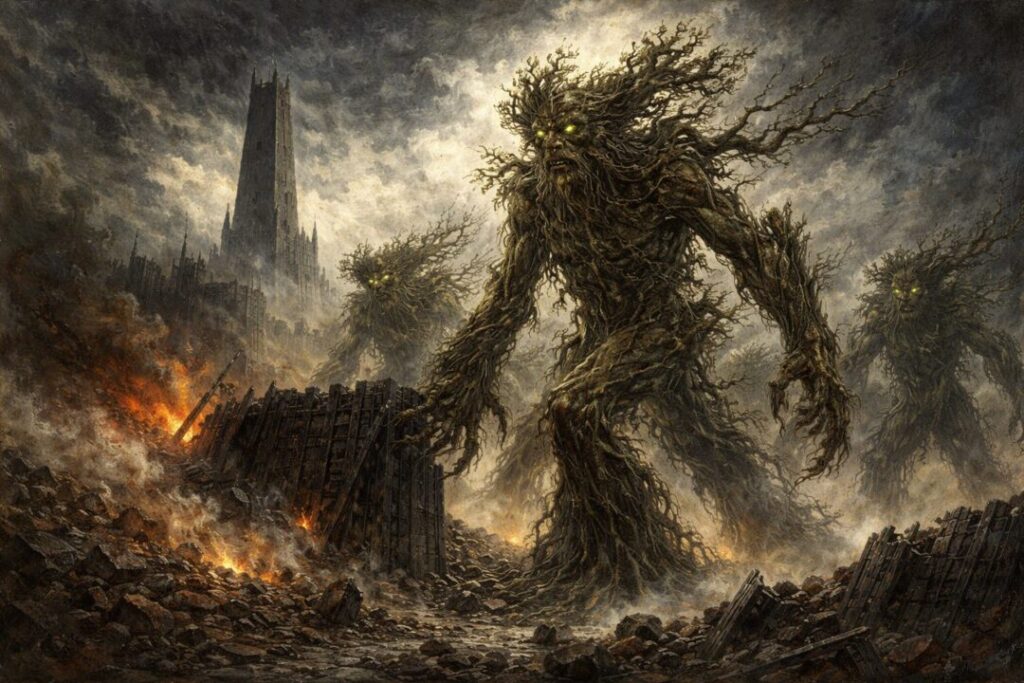
1. Ents – The Shepherds Who Finally Moved
The Ents are among the most ancient living beings in Arda, awakened long before the rising of the Sun and Moon. Created to guard the forests from the destructiveness of Elves and Men alike, they embody patience, memory, and the slow passage of time. For most of history, they stood apart from the struggles of the world, content to tend trees and speak in their long, winding speech.
Their defining trait was not strength—though they possessed immense power—but hesitation. Ents did not rush to judgment. They believed the affairs of the Younger Children were fleeting, while forests endured.
That changed with Treebeard.
Through Treebeard, the Ents were drawn at last into the War of the Ring. Saruman’s industrial destruction of Fangorn Forest forced Entkind to confront a truth they had long avoided: isolation was no longer possible. The Entmoot, one of the most significant gatherings of Ents ever recorded, culminated in a decision that reshaped the war.
The march on Isengard was not merely an attack—it was the only recorded large-scale military action undertaken by Entkind in the Third Age. Stone walls crumbled, iron was torn from the earth, and Saruman’s power was broken not by armies, but by the living force of nature itself.
After this moment, the Ents faded once more into obscurity. Their brief intervention stands as a reminder that when the oldest beings in the world finally act, the consequences are irreversible.
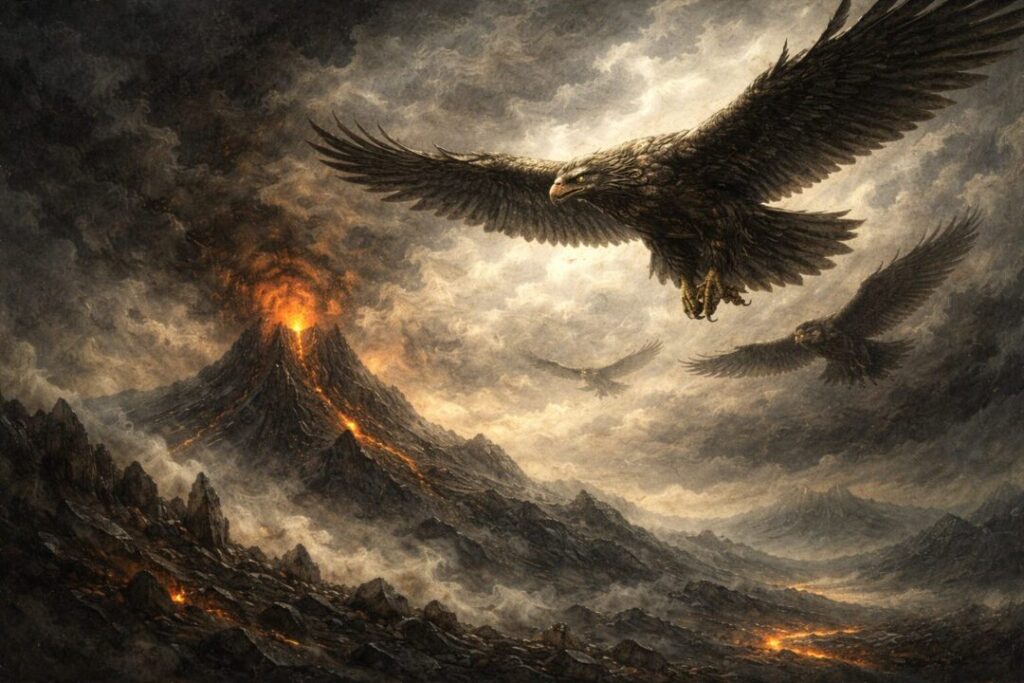
2. The Great Eagles – Watchers of the West
The Great Eagles are often misunderstood as convenient rescuers, appearing at moments of triumph or disaster. Tolkien, however, was explicit: the Eagles were not servants to be summoned, nor were they bound to the will of Elves or Men.
They were sentient beings allied with the Valar, acting according to higher purposes and ancient laws. Their rarity is not simply physical—few ever saw them—but philosophical. They intervened only when events reached a critical threshold, when all other paths had narrowed to a single point.
One of the most prominent among them was Gwaihir, who rescued Gandalf from Orthanc and later carried him to safety after his battle with the Balrog. The Eagles’ final intervention—rescuing Frodo and Sam from Mount Doom—came only after the Ring was destroyed, when their presence could no longer alter the moral balance of the world.
This restraint is essential. Had the Eagles acted more freely, the struggle against Sauron would have lost its meaning. Their power was immense, but it was deliberately withheld.
Their rarity lies in knowing when not to act.
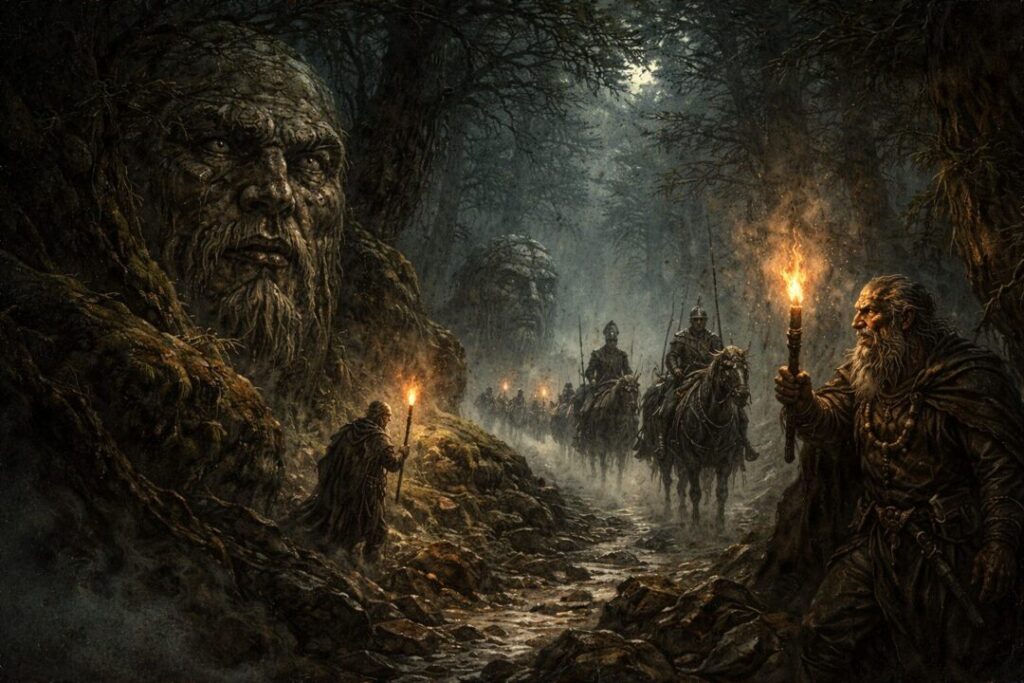
3. The Drúedain (Woses) – The Hidden Folk of Stone and Forest
Among the most misunderstood peoples of Middle-earth are the Drúedain, also called the Woses. Short, broad, and strange to the eyes of Men, they were often dismissed as primitive or even monstrous. In truth, they were among the most ancient inhabitants of the lands later settled by Númenóreans and Rohirrim.
The Drúedain possessed an uncanny understanding of the natural world. They moved silently through forests and hills, carved stone likenesses that served as warnings or guardians, and maintained traditions older than the kingdoms that surrounded them.
Their pivotal moment came during the War of the Ring. As the Rohirrim rode toward Gondor, they faced ambush and delay along the main road. It was the Drúedain who revealed secret paths through the forest, guiding the Riders unseen to the Pelennor Fields.
This act cannot be overstated in its importance. Without their guidance, the Rohirrim may have arrived too late—or not at all. Minas Tirith could have fallen before aid ever reached it.
The Drúedain asked for no reward. True to their nature, they faded back into the wilds, leaving behind only the echo of their quiet heroism.
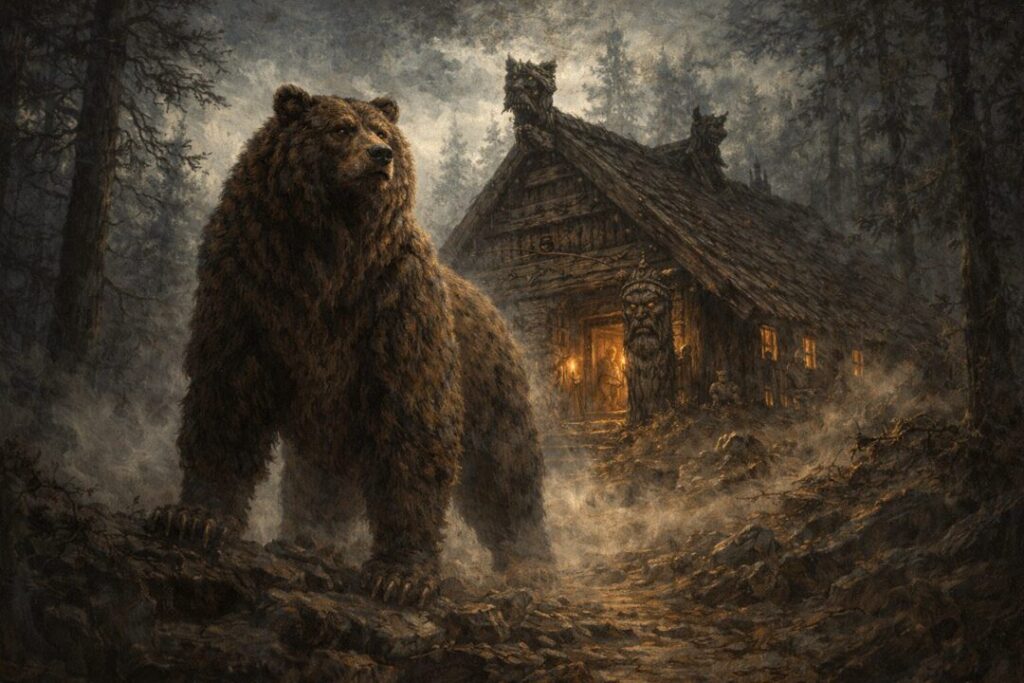
4. Beornings – Skin-Changers of the Anduin Vale
The Beornings were a small and fiercely independent people who lived along the borders of Mirkwood and the Anduin. They descended from Beorn, a man capable of transforming into a great bear.
Neither subjects of kings nor servants of dark powers, the Beornings existed in a careful balance between civilization and wilderness. They guarded vital crossings of the Anduin, keeping Orcs and wolves at bay, and ensured that trade and travel between regions remained possible.
Their role in Middle-earth was rarely celebrated, yet it was essential. Without their vigilance, the lands east of the Misty Mountains would have fallen deeper into shadow. During the Battle of Five Armies, Beorn’s intervention turned the tide, scattering enemies and saving countless lives.
Few outsiders ever encountered the Beornings, and fewer still earned their trust. Their rarity lay in their refusal to dominate or be dominated—a quiet strength that shaped the world without seeking recognition.
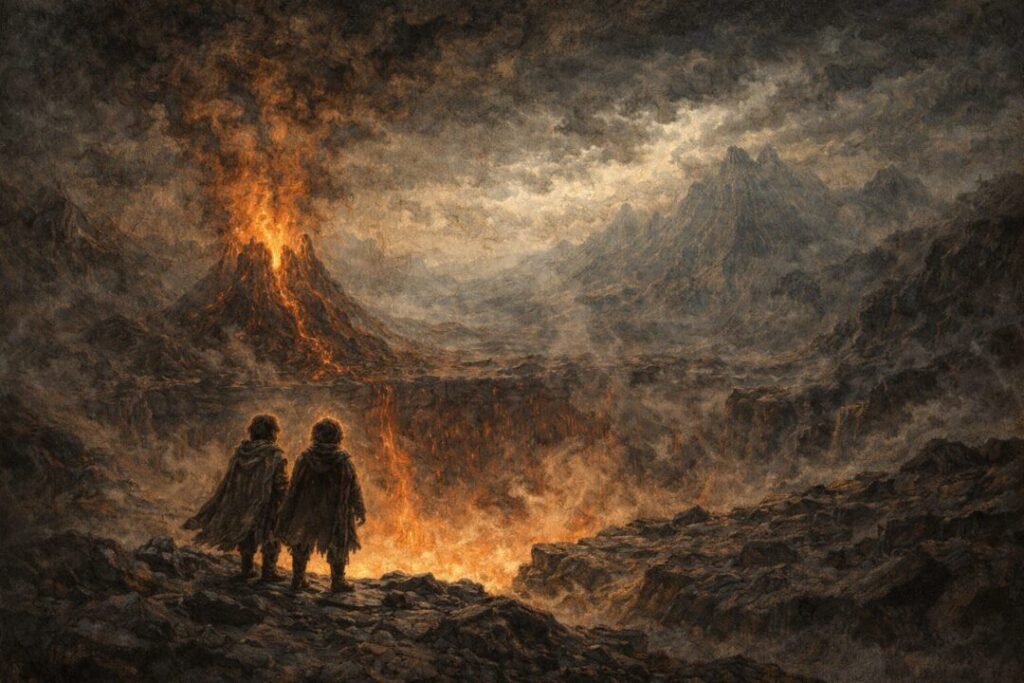
5. Hobbits – The Least Likely Bearers of Fate
No people were more underestimated than Hobbits. To Elves, they were curious. To Men, barely worth notice. Hobbits avoided war, shunned ambition, and measured life in meals and seasons rather than glory and conquest.
That is precisely why they succeeded.
Through figures such as Frodo Baggins, Hobbits demonstrated a unique resistance to domination. They did not seek power, and therefore power struggled to take hold of them. Their strength was endurance, loyalty, and an unyielding sense of home.
The destruction of the One Ring was not achieved by armies or sorcery, but by persistence in the face of despair. The fate of all free peoples rested on shoulders no one thought capable of bearing such a burden.
In Tolkien’s world, this was no accident. It was the culmination of a theme woven throughout his legendarium: greatness often arrives disguised as smallness.
Why Rarity Matters in Tolkien’s World
Tolkien did not believe that history belonged solely to kings, generals, or immortals. Again and again, he shows that restraint can be more powerful than force, humility more enduring than pride, and mercy more transformative than might.
The rare peoples of Middle-earth embody this philosophy. They stand apart from the great designs of the world, stepping forward only when all other options have failed. Their actions are few—but decisive.
Middle-earth was not saved by the mighty alone.
It was saved by those who did not seek to rule it.
Sources & Notes
- J.R.R. Tolkien, The Lord of the Rings, Book III, Chapter 4, “Treebeard” — Treebeard explains the Ents’ ancient shepherding of trees, the loss of the Entwives, and why Saruman’s damage to Fangorn finally draws them into the war.
- J.R.R. Tolkien, The Lord of the Rings, Book III, Chapter 8, “The Road to Isengard” — Merry and Pippin recount the Ents’ march and the breaking of Isengard, the clearest example of Entkind acting decisively in the Third Age.
- J.R.R. Tolkien, The Lord of the Rings, Book V, Chapter 5, “The Ride of the Rohirrim” — Ghân-buri-Ghân and the Drúedain guide Théoden by hidden roads, allowing the Rohirrim to reach Minas Tirith in time.
- J.R.R. Tolkien, The Hobbit, Chapter 18, “The Return Journey” — Beorn’s arrival in bear-form at the Battle of Five Armies turns the fighting against Bolg and the goblins, supporting the article’s Beorning example.
- J.R.R. Tolkien, The Lord of the Rings, Book VI, Chapter 4, “The Field of Cormallen” — the Eagles rescue Frodo and Sam after the Ring’s destruction, while the chapter’s praise of the Ring-bearers underlines the unlikely role of Hobbits in saving Middle-earth.