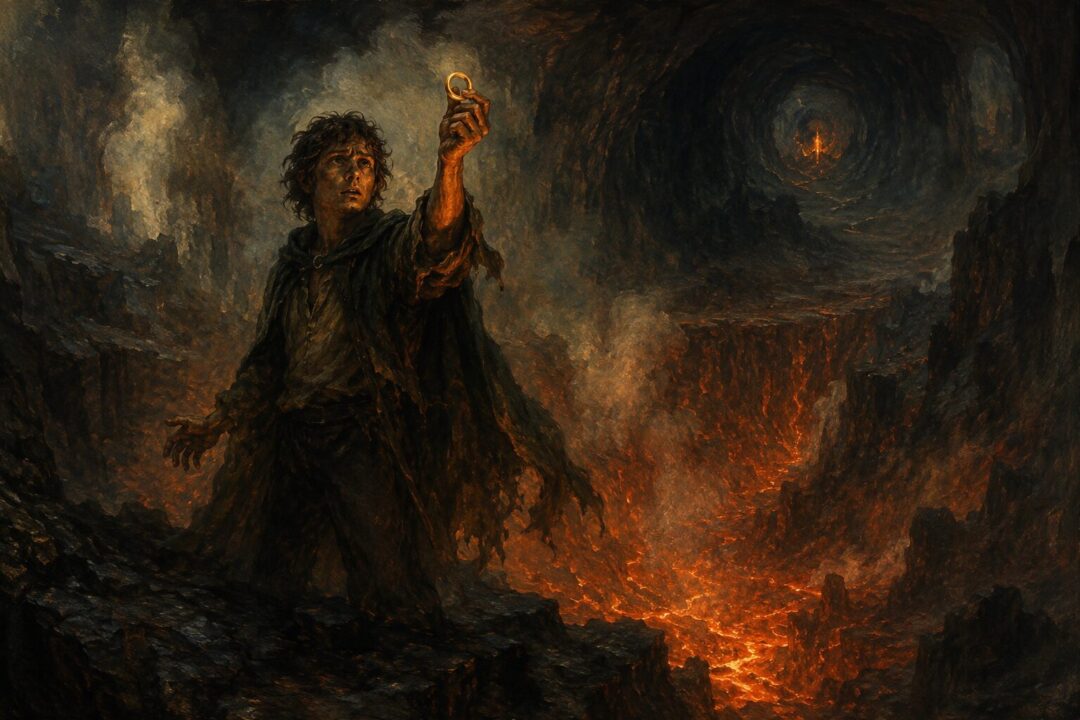
At the very edge of the Cracks of Doom, after carrying the One Ring farther than anyone else in Middle-earth could have managed, Frodo Baggins finally failed.
He did not throw the Ring away.
Instead, he claimed it.
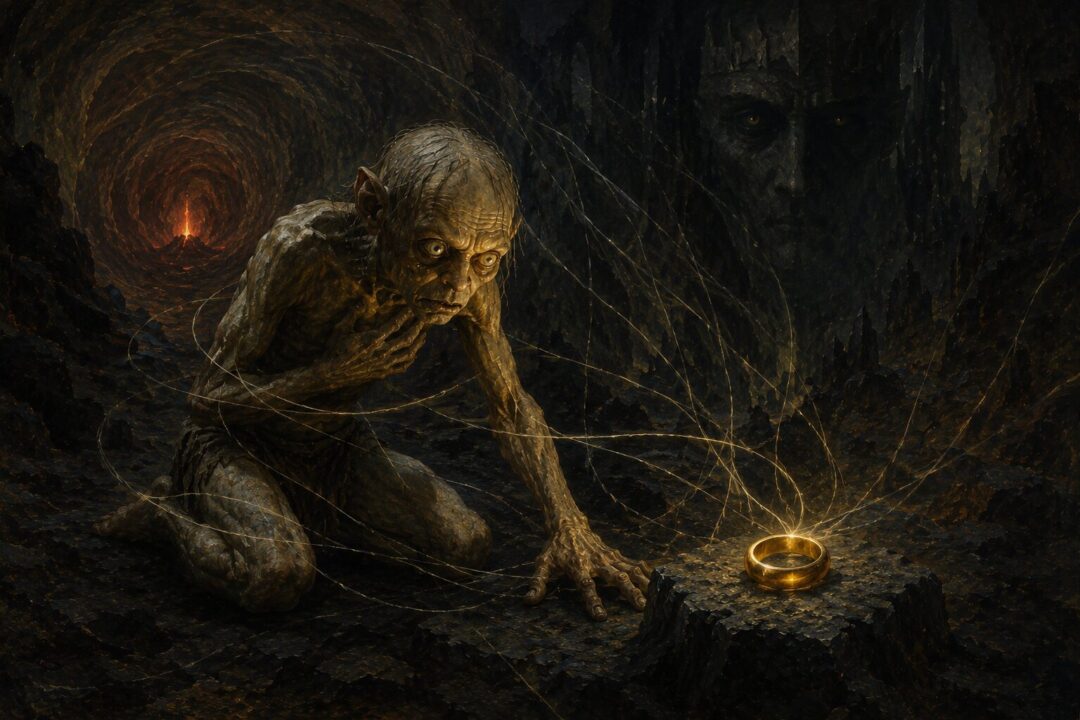
For many readers, what happens next can feel like a sudden narrative rescue. Gollum attacks, bites the Ring from Frodo’s hand, dances in triumph, loses his footing, and falls into the fire. The Ring is destroyed, Sauron is defeated, and the story ends.
Yet the closer one looks at the text, the harder it becomes to see Gollum’s fall as a convenient accident. The destruction of the Ring is not presented as luck arriving at the last possible moment. Rather, it emerges from themes, choices, warnings, and acts of mercy that have been building throughout the story.
The remarkable thing is not that Gollum falls.
The remarkable thing is that the Ring is destroyed through the consequences of choices made long before anyone reached Mount Doom.
The Problem of Frodo’s Failure
A common misunderstanding is that Frodo succeeds in his quest.
Strictly speaking, he does not.
Standing inside Sammath Naur, Frodo says:
“I do not choose now to do what I came to do. I will not do this deed. The Ring is mine!”
The Ring-bearer finally claims the Ring for himself.
This moment is crucial because it reveals one of the central truths of the story: nobody is shown successfully surrendering the Ring at the very point of ultimate temptation.
Throughout the narrative, the Ring's power grows stronger as it approaches Mordor. Frodo has endured wounds, fear, exhaustion, and psychological pressure beyond anything experienced by the other members of the Fellowship. By the time he reaches Mount Doom, he is carrying a burden that has consumed much of his strength and identity.
The text does not portray his failure as weakness or cowardice. Instead, it demonstrates the terrible power of the Ring itself.
In a sense, Frodo achieves something even more extraordinary than physically destroying the Ring. He brings it to the only place where destruction is possible despite the fact that no one appears capable of willingly casting it away there.
This distinction matters because it changes how we understand the ending.
The story is not about a hero who overcomes temptation through sheer willpower. It is about the limits of willpower in the face of corrupting power.
Gandalf Saw the Importance of Mercy
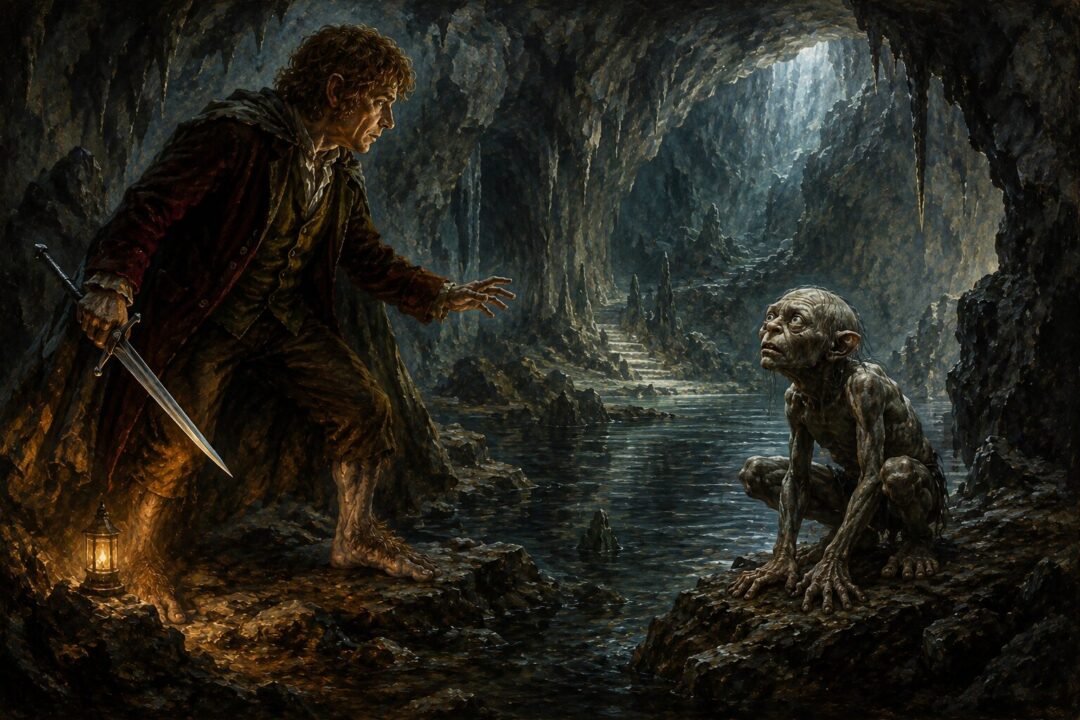
Long before the journey reaches Mordor, Gandalf speaks words that seem merely compassionate but later become essential.
When Frodo wishes Bilbo had killed Gollum years earlier, Gandalf warns him against being too eager to deal out death in judgment.
More importantly, he says that Bilbo's pity may rule the fate of many.
At the time, this sounds like wisdom about mercy.
Later, it becomes something more.
Had Bilbo killed Gollum beneath the Misty Mountains, the Ring would likely never have been destroyed. Had Frodo killed Gollum later, the same outcome becomes difficult to imagine.
The survival of Gollum is directly tied to acts of mercy.
This is not hindsight imposed on the story. The narrative repeatedly draws attention to the importance of pity, forgiveness, and restraint. Readers are encouraged to remember Gandalf’s words because the fate of Gollum remains unresolved for much of the tale.
The destruction of the Ring eventually depends upon the continued existence of a creature whom nearly every rational calculation would have eliminated.
Frodo Himself Repeats Bilbo’s Choice
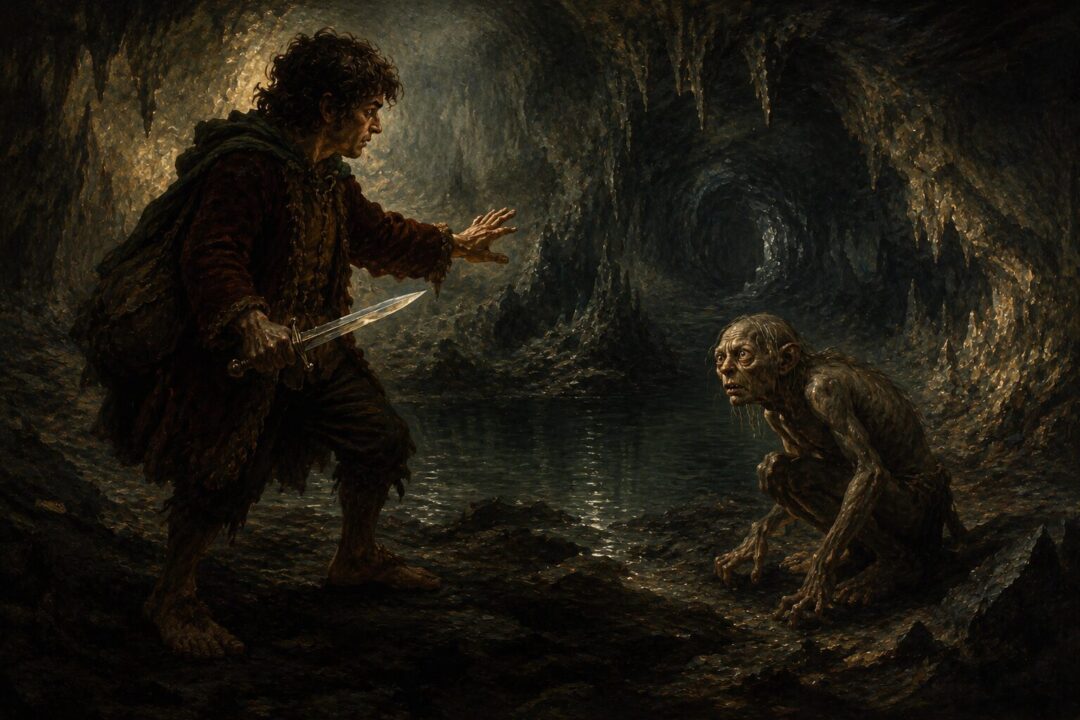
One of the most overlooked patterns in The Lord of the Rings is that Frodo repeatedly has opportunities to destroy Gollum and repeatedly chooses not to.
These decisions are not easy.
Frodo knows Gollum has betrayed others. He knows Gollum desires the Ring. He suspects Gollum may become dangerous.
Yet Frodo also recognizes something deeply uncomfortable.
Gollum is, in many ways, a possible future version of himself.
Both are Ring-bearers.
Both have been shaped by the Ring's influence.
Both are engaged in a struggle between freedom and obsession.
This recognition creates a bond that many of the other characters do not fully share.
When Frodo spares Gollum, he is not simply being kind. He is acknowledging a shared vulnerability to corruption.
The consequences of that mercy echo all the way to Mount Doom.
The Oath Gollum Swears
One detail that becomes increasingly important near the end of the story is Gollum’s oath.
Gollum swears by the Precious itself that he will serve the master of the Ring.
This is not treated lightly.
Throughout Tolkien's legendarium, oaths carry real weight. They are morally and spiritually significant acts. Characters who swear great oaths often find themselves bound by consequences they did not foresee.
Frodo even warns Gollum about the danger.
He tells him that the Ring may hold him to his promise.
This warning later becomes one of the most significant pieces of foreshadowing in the entire story.
The oath is not merely symbolic. The narrative repeatedly encourages readers to view it as meaningful and potentially binding.
When the final confrontation arrives, that earlier promise has not been forgotten.
The Curse on the Slopes of Mount Doom
One of the strongest pieces of evidence that Gollum’s fate is not random occurs shortly before the Ring's destruction.
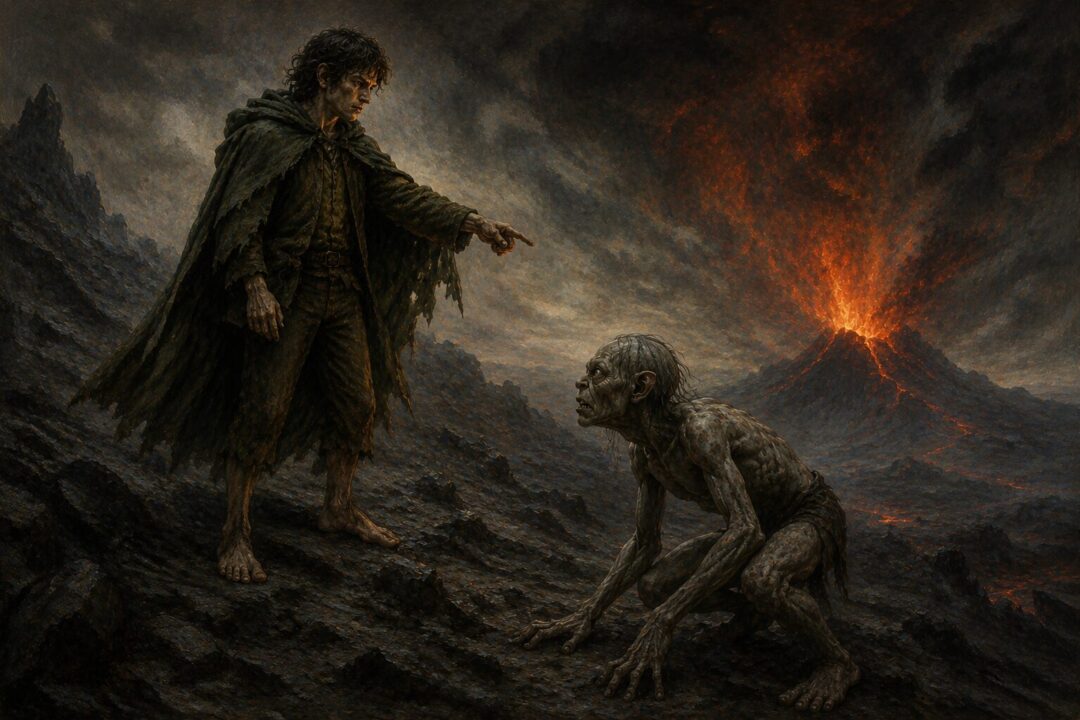
After Gollum attacks Frodo on the slopes of Mount Doom, Frodo speaks with unusual authority. He warns Gollum that if he touches him again, Gollum himself will be cast into the Fire of Doom.
This scene is easy to overlook because readers are focused on the approaching climax.
Yet the warning is remarkably specific.
Later, after seizing the Ring, Gollum attacks Frodo again.
Moments afterward, he falls into the fire.
Interpretations differ regarding exactly how this works. Tolkien never provides a mechanical explanation. The text does not describe an invisible force physically pushing Gollum.
However, the sequence is clearly presented in a way that invites readers to connect Frodo’s earlier words, Gollum’s broken oath, and the final outcome.
The destruction of the Ring appears linked to moral and spiritual forces already operating within the story rather than mere chance.
Providence Rather Than Coincidence
The deeper theme underlying the ending is the idea of providence.
Earlier in the narrative, Gandalf tells Frodo that Bilbo was meant to find the Ring and that there was more than one power at work.
This does not mean characters become puppets.
Every major choice remains real.
Bilbo chooses mercy.
Frodo chooses mercy.
Sam chooses mercy, despite moments when he is tempted not to.
Gollum chooses betrayal.
Frodo chooses to claim the Ring.
Each decision matters.
Yet the story also suggests that events can be guided toward purposes greater than the understanding of the individuals involved.
The destruction of the Ring emerges from this interaction between free will and providence.
The ending is therefore neither pure fate nor pure accident.
It is the culmination of countless moral choices operating within a world where grace still exists.
Why No One Else Could Have Done It
One reason the ending feels surprising is that readers expect heroic stories to conclude with a final triumph of will.
The Lord of the Rings deliberately resists this expectation.
If Aragorn had stood at the Cracks of Doom, the text gives no reason to assume he would have succeeded where Frodo failed.
If Gandalf had taken the Ring, he feared becoming something terrible.
Even Galadriel admits the temptation would be overwhelming.
The story repeatedly dismantles the idea that great power can safely defeat great power.
Instead, victory comes through humility, endurance, mercy, and sacrifice.
The Ring is not defeated by a stronger claimant.
It is defeated because acts of compassion created circumstances in which evil ultimately destroys itself.
Gollum's obsession leads him to seize his prize. His triumph lasts only seconds before becoming the instrument of the Ring's destruction.
The irony is profound. The Ring survives every assault from its enemies only to perish through the actions of its most devoted servant.
The Real Meaning of Gollum’s Fall
Seen from a distance, Gollum slips.
Seen within the full structure of the story, much more is happening.
His fall is connected to Bilbo’s pity, Frodo’s mercy, the burden of the Ring, the weight of oaths, the warnings given on Mount Doom, and the recurring suggestion that providence is quietly at work throughout the narrative.
The ending does not erase Frodo’s failure.
In fact, it depends upon it.
The story acknowledges that even the noblest person may reach a point where strength alone is not enough.
Yet it also suggests that mercy can accomplish what power cannot.
That is why Gollum’s final fall matters so much. It is not a last-minute accident inserted to solve an impossible plot problem. It is the final consequence of choices made over years by characters who repeatedly chose compassion when judgment would have seemed easier.
The Ring is destroyed because Bilbo spared Gollum.
Because Frodo spared Gollum.
Because mercy remained alive even in the shadow of Mordor.
And in the end, that mercy proved stronger than the Ring itself.
Sources & Notes
- J.R.R. Tolkien, The Lord of the Rings, Book I, Chapter 2, “The Shadow of the Past” — Gandalf frames Bilbo’s pity, Gollum’s survival, and the “meant” finding of the Ring as central to the fate of Middle-earth.
- J.R.R. Tolkien, The Lord of the Rings, Book IV, Chapter 1, “The Taming of Sméagol” — Gollum swears by the Precious, and Frodo warns that the Ring may hold him to his promise.
- J.R.R. Tolkien, The Lord of the Rings, Book VI, Chapter 3, “Mount Doom” — Frodo claims the Ring, Gollum attacks, and his fall into the Fire completes the destruction Frodo cannot will himself to perform.
- J.R.R. Tolkien, The Lord of the Rings, Book VI, Chapter 3, “Mount Doom” — Frodo’s warning that Gollum will be cast into the Fire if he touches him again links the ending to oath, curse, and consequence rather than simple accident.
- J.R.R. Tolkien, The Letters of J.R.R. Tolkien, Letter 246 — Tolkien discusses Frodo’s failure at the Sammath Naur, the limits of will under the Ring, and the role of pity and providence in the final outcome.