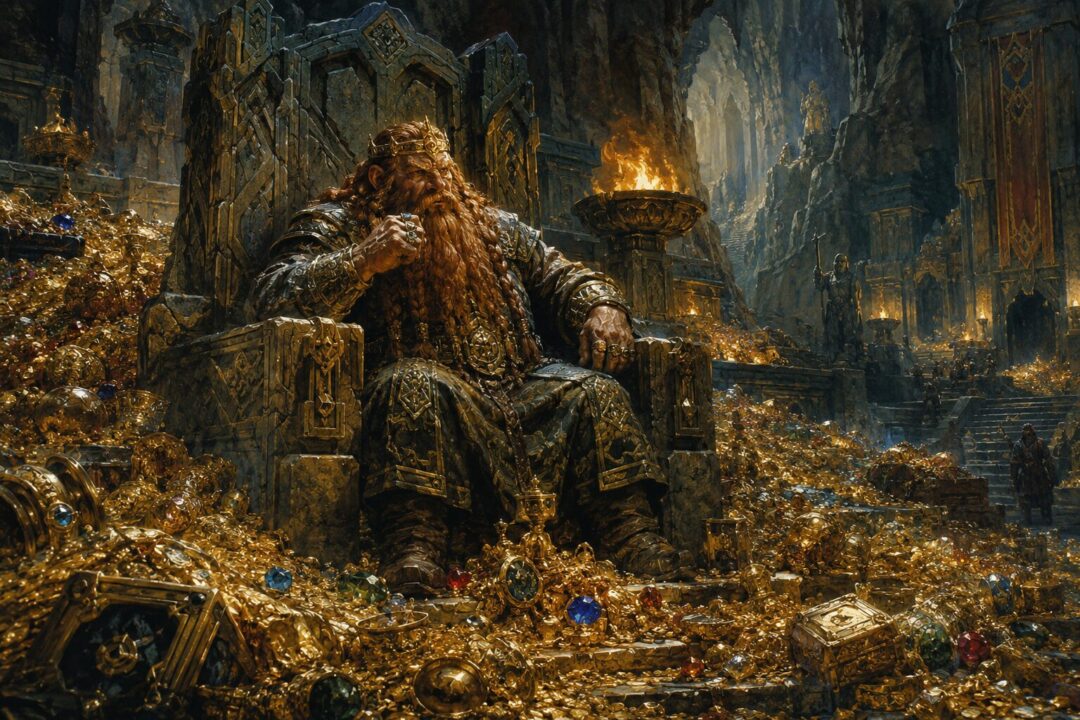
The Rings of Power changed nearly everyone who possessed them. Men became wraiths. Sauron sought domination through them. Even the Wise treated them with caution. Yet one detail often surprises readers: the Dwarves who received Rings of Power did not fade from the visible world.
The Nine Rings given to Men eventually transformed their bearers into the Nazgûl, enslaved shadows who could no longer be seen by ordinary eyes. The Seven Rings given to the Dwarves certainly brought corruption and misfortune, but their bearers never vanished. They remained physically present, ruled kingdoms, amassed treasure, and fought wars. Why?
The answer reveals one of the most fascinating differences between the races of Middle-earth. The Rings affected Dwarves, but not in the same way they affected Men. Their resistance was real, yet it came with its own tragic cost.
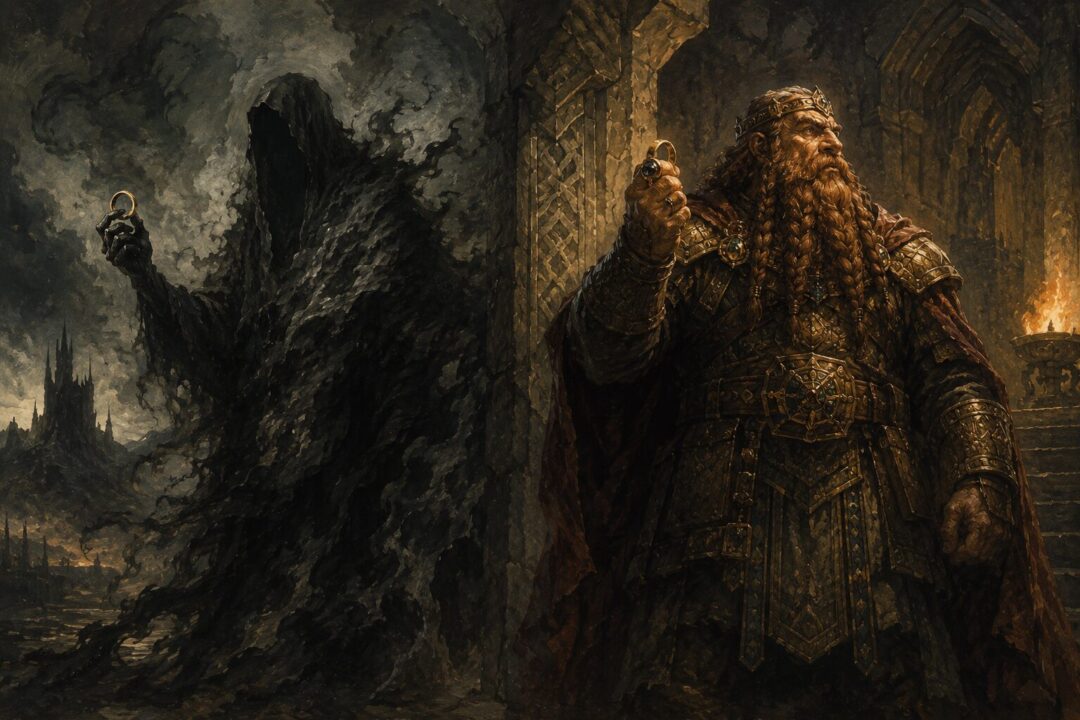
The Power to Preserve and Dominate
To understand why Dwarves did not vanish, it helps to understand what the Rings were designed to do.
The Rings of Power were created through the lore taught by Sauron to the Elven-smiths of Eregion. Their powers varied, but they shared a connection to preservation, enhancement, and influence over the natural world. More importantly, they were linked to the One Ring, through which Sauron intended to dominate other wills.
The process that eventually overtook the bearers of the Nine Rings was not merely magical invisibility. The texts suggest a gradual transition into the Unseen world. As the Ring's power increasingly consumed its bearer, the boundary between the Seen and Unseen realms weakened. Mortal Men proved especially vulnerable to this effect.
The Nazgûl represent the final result. Their bodies endured, but they became permanently invisible except when clothed or otherwise revealed. Their wills were completely enslaved to Sauron.
The Dwarves, however, followed a different path.
A Race Made to Resist
The key explanation appears in the account of the Rings in Appendix A of The Lord of the Rings and is reinforced elsewhere in Tolkien's writings.
The Dwarves were unusually resistant to domination.
Unlike Men and Elves, the Dwarves were created by Aulë before the awakening of the Children of Ilúvatar. Though Ilúvatar accepted and blessed them, their origin remained unique. The traditions of the Dwarves consistently emphasize endurance, stubbornness, and an extraordinary strength of will.
When discussing the Seven Rings, Tolkien states that the Dwarves proved tough and difficult to tame. The Rings could not turn them into shadows under another's control.
This is one of the great ironies of Middle-earth. The very trait that protected the Dwarves from becoming Ringwraiths also exposed them to a different form of corruption.
Sauron could not dominate their wills completely.
But he could still exploit their weaknesses.
What the Seven Rings Actually Did
The Seven Rings did not fail.
This is an important distinction.
Sometimes readers assume the Dwarven Rings were ineffective because their bearers never became Nazgûl. The texts suggest the opposite. The Rings worked—but in a way shaped by Dwarven nature.
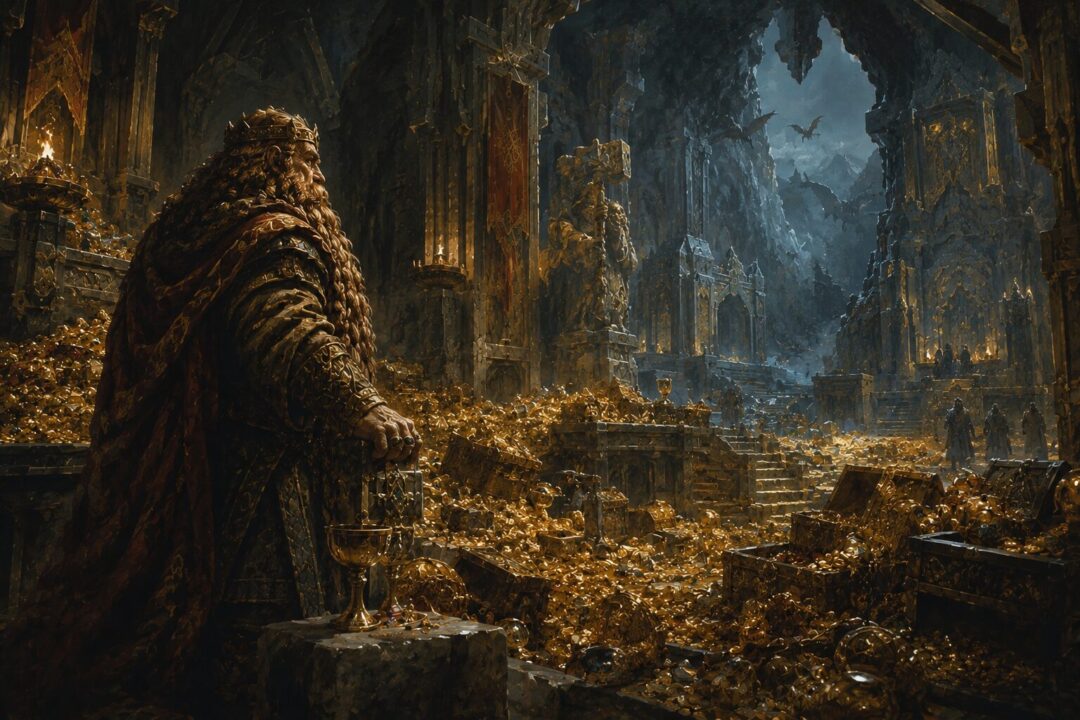
According to The Silmarillion and The Lord of the Rings, the Rings amplified traits already present within their bearers. For Dwarves, this meant an increase in their desire for wealth and treasure.
The Rings helped their owners accumulate great riches. Hoards expanded. Kingdoms flourished economically. Precious metals and gems gathered in extraordinary quantities.
Yet prosperity brought consequences.
As wealth increased, so did possessiveness, pride, and greed. Great treasures attracted enemies. Dragons were drawn to immense hoards. Rivalries intensified. Violence followed.
The Rings did not transform Dwarves into obedient servants of Sauron. Instead, they magnified desires that often produced chaos on Sauron's behalf.
In practical terms, this outcome still benefited the Dark Lord. A people consumed by wealth, feuds, and treasure-hoarding were easier to weaken than a united and disciplined nation.
Why Men Faded but Dwarves Did Not
The difference ultimately comes down to how each race responded to Ring-power.
Men were mortal in a particular way. Their fate after death lay beyond the circles of the world, a mystery even to the Wise. The Rings interfered with this condition, unnaturally extending life and drawing their bearers toward the Unseen realm.
The Nine Rings granted power and longevity, but at a terrible price. Over time, the bearers lost their independence and became increasingly subject to Sauron's will.
Dwarves experienced neither result to the same degree.
The texts do not indicate that Dwarven Ring-bearers became immortal in the manner of the Nazgûl. Nor do they show Dwarves fading into invisibility. Their physical existence remained intact.
Tolkien directly notes that the Dwarves were not turned into wraiths.
This resistance appears connected to their inherent nature and toughness of spirit. Whatever mechanism caused Men to pass gradually into the Unseen world could not fully overcome the Dwarves.
The Rings could inflame their desires, but they could not erase what they fundamentally were.
The Tragedy of Dwarven Resistance
At first glance, the Dwarves seem to have received the better bargain.
They kept their bodies.
They kept their identities.
They avoided becoming immortal slaves.
Yet the story is more complicated.
The corruption experienced by Men is dramatic and visible. The corruption experienced by Dwarves is slower and often easier to overlook.
A Ringwraith is obviously fallen.
A king consumed by greed may appear successful for years.
The Dwarven Rings encouraged the accumulation of treasure on a massive scale. While wealth itself was not evil, the obsession it could create became dangerous. The history of several Dwarven realms shows how treasure repeatedly attracted disaster.
The texts stop short of claiming that every Dwarven catastrophe resulted directly from a Ring of Power. Such a conclusion would go beyond the evidence. However, Tolkien explicitly connects the Seven Rings to the growth of hoards and the troubles that followed.
The result was a corruption that worked through appetite rather than submission.
The Dwarves remained free enough to choose, but their choices were increasingly influenced by desires the Rings intensified.
The Fate of the Seven Rings
Another overlooked detail strengthens this interpretation.
None of the Seven Rings ultimately produced a Dwarven equivalent of the Nazgûl.
Instead, the Rings themselves were gradually lost.
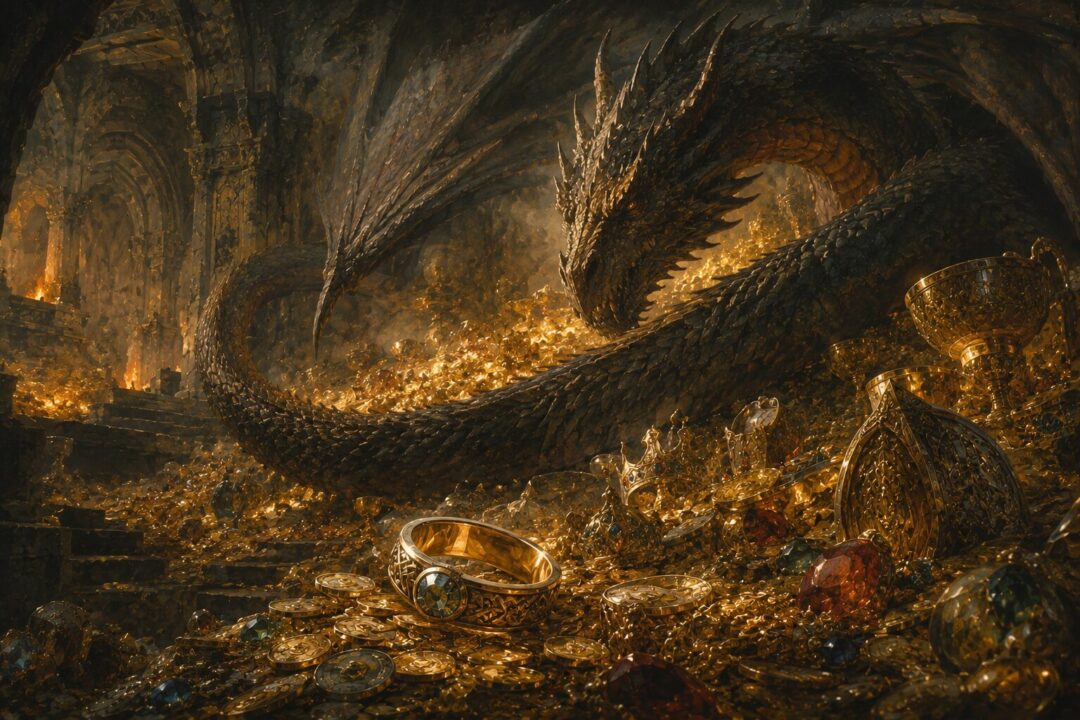
According to Gandalf's account in The Fellowship of the Ring, some were consumed by dragons. Others were recovered by Sauron.
This fate is significant.
Had the Rings been capable of transforming Dwarves into wraiths, centuries of use would presumably have produced such a result. Yet the historical record never presents one.
Instead, the Rings repeatedly generated wealth, conflict, and vulnerability.
Their effects remained tied to Dwarven characteristics rather than overriding them completely.
Even Sauron seems to have found this limitation frustrating. The Dwarves could be harmed through the Rings, but they could not be mastered as Men could.
The Example of Thrór and the Shadow of Greed
A useful illustration appears in the history leading to The Hobbit.
Thrór, grandfather of Thorin Oakenshield, possessed one of the Seven Rings. The Ring associated with Durin's line was said to have come into his possession through inheritance.
The texts do not claim that the Ring alone caused the later tragedy of Erebor. Such a claim would oversimplify the story. Dwarven pride, dragon greed, political circumstances, and many other factors contributed.
Yet the Ring's influence fits a broader pattern.
The wealth of Erebor became immense. The mountain's treasure attracted the attention of Smaug. The resulting disaster destroyed a kingdom, scattered a people, and reshaped the history of the North.
The Ring did not create a Ringwraith.
It helped create conditions in which catastrophe became more likely.
That distinction is crucial.
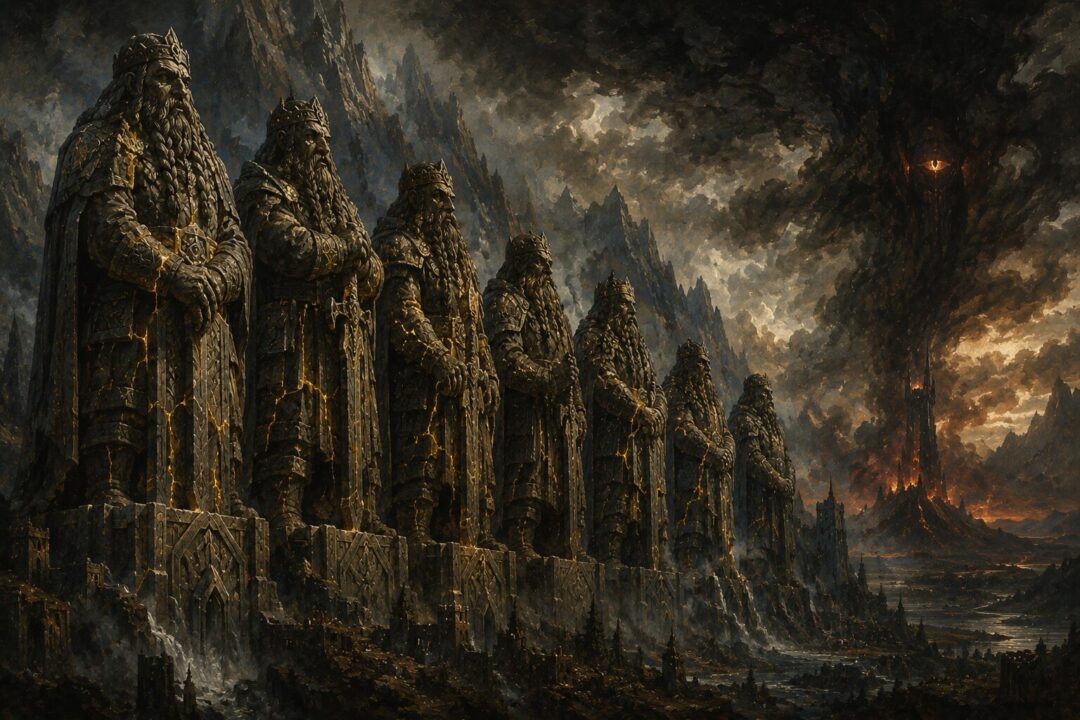
A Different Kind of Victory
The story of the Seven Rings reveals something profound about evil in Middle-earth.
Corruption is not always uniform.
Sauron preferred domination. He wanted obedient servants. The Nazgûl represent his greatest success among mortal Ring-bearers.
The Dwarves denied him that victory.
Their stubbornness, resilience, and strength of will prevented the complete conquest he achieved with Men.
Yet resistance did not mean immunity.
The Rings still found a way to wound them.
Instead of stealing their identities, they exploited existing desires. Instead of creating invisible slaves, they encouraged destructive obsessions. Instead of producing wraiths, they helped generate greed, rivalry, and vulnerability.
In one sense, the Dwarves won. They never vanished into the shadows.
In another sense, they paid dearly for that resistance. The Seven Rings could not make them servants, but they could still turn their greatest strengths into weaknesses.
That is why Dwarves could wear Rings of Power without vanishing. Their nature was too strong to be dissolved into wraithdom. Yet the Rings remained dangerous enough to twist that same strength toward ruin.
The tragedy of the Seven is not that the Dwarves became shadows.
It is that they remained themselves—and were corrupted through the very qualities that made them difficult to conquer.
Sources & Notes
- J.R.R. Tolkien, The Silmarillion, “Of the Rings of Power and the Third Age” — on Sauron’s role in the Rings of Power, the Seven and the Nine, and the Dwarves proving hard to tame.
- J.R.R. Tolkien, The Lord of the Rings, Appendix A, III, “Durin’s Folk” — states that the Seven did not make Dwarves invisible or enslave their wills, but inflamed greed and wrath and helped found treasure-hoards.
- J.R.R. Tolkien, The Fellowship of the Ring, Book I, Chapter 2, “The Shadow of the Past” — Gandalf’s explanation of Rings granting invisibility, drawing mortals toward fading, and the fate of the Nine as Ringwraiths.
- J.R.R. Tolkien, The Fellowship of the Ring, Book II, Chapter 2, “The Council of Elrond” — background on the One Ring’s purpose of ruling the other Rings and dominating their bearers.
- J.R.R. Tolkien, The Hobbit, Chapter 1, “An Unexpected Party” — Thorin’s account of Erebor’s growing wealth and Smaug’s attack, illustrating how great Dwarven hoards attracted disaster.
- J.R.R. Tolkien, Unfinished Tales, “The Quest of Erebor” — Gandalf’s account of Thrór, Thráin, Thorin, and the last of the Seven Rings of the Dwarves.