The Ring Did Not Simply Make People Invisible
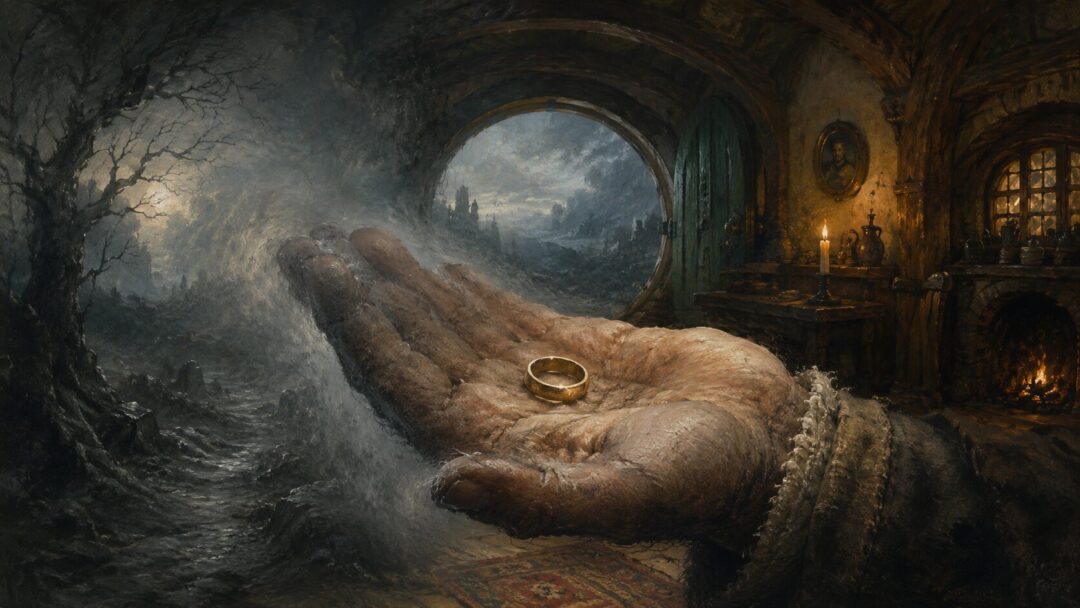
A plain gold ring, small enough to vanish in a pocket, should not have been more frightening than a sword, a dragon, or the gates of Mordor. Yet the One Ring’s most disturbing power is not that it makes a bearer disappear from sight. It is that invisibility is only the visible symptom of something deeper: a mortal being pulled out of the ordinary world of the living and toward the Unseen.
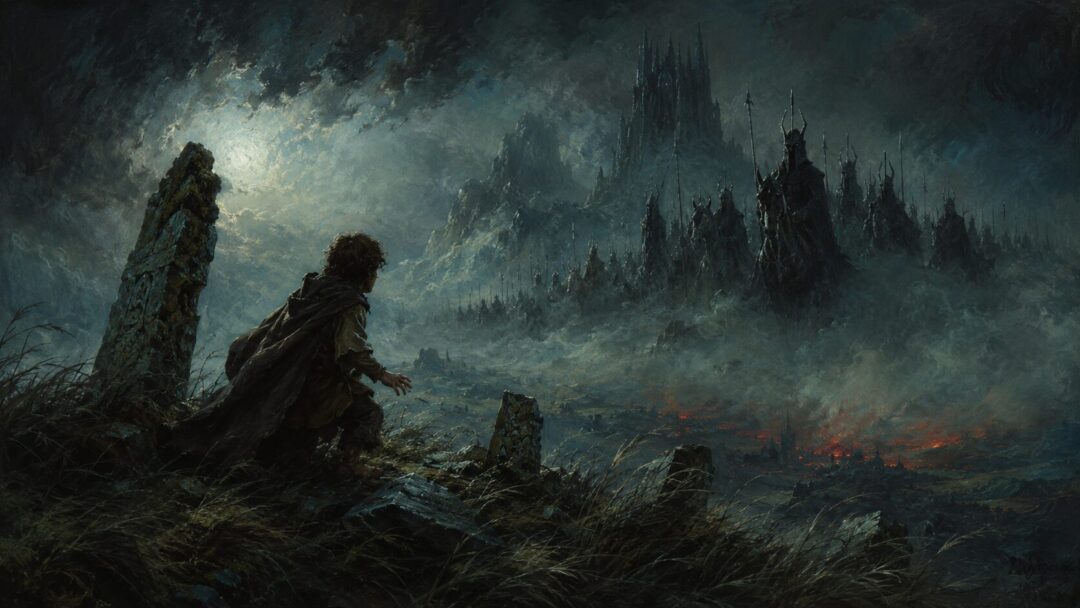
That is why Bilbo’s vanishing trick in The Hobbit is more dangerous than it first appears. It looks like luck. It saves him from goblins, spiders, and suspicious eyes. But in The Lord of the Rings, the same effect is revealed as a spiritual peril. When Frodo puts on the Ring at Weathertop, he does not merely hide from the Nazgûl. He becomes more available to them. He sees them more clearly, and they can perceive him more directly.
This creates the strange question: if the Ring can draw mortals toward the wraith-world, why did it not turn every mortal Ring-bearer into a Nazgûl? Why are Bilbo, Frodo, Sam, Isildur, Déagol, Sméagol, and the Nine not all the same kind of creature?
The answer lies in a hidden distinction Tolkien’s world keeps returning to: fading is not identical with becoming one of the Nazgûl. The Ring can make a mortal fade. But a Nazgûl is not merely a faded mortal. A Nazgûl is a mortal enslaved through a Ring of Power, drawn into shadow, and bound under Sauron’s domination.
Fading Means Being Drawn Toward the Unseen
In Middle-earth, invisibility is not treated as a simple optical trick. The One Ring does not just bend light around the wearer. It shifts the wearer’s relationship to reality. A mortal who wears it is drawn partly into the Unseen, the spiritual side of the world normally hidden from mortal eyes.
This is why Frodo’s experiences while wearing the Ring become so unsettling. At Weathertop, the Black Riders become more distinct to him, not less. Their hidden nature is revealed in a way that ordinary sight cannot manage. Later, after Frodo is wounded by the Morgul-knife, the danger is described not merely as death, but as a change of state: he is in peril of becoming a wraith.
That distinction matters. The Ring’s invisibility is connected to the wearer’s entrance into a realm where the Nazgûl already exist more fully. To wear the Ring is to step closer to the place where they are strong. For a mortal, repeated or prolonged exposure to that condition is spiritually corrosive. The body may continue, but the person begins to lose hold on the visible world.
The texts imply that this process is gradual. Bilbo does not become invisible forever after one use. Frodo does not instantly turn into a wraith at Bree or Weathertop. Sam wears the Ring briefly in Mordor and remains himself, though he feels its pressure and temptation. The Ring opens a door, but it does not always complete the passage.
The Nine Were Not Made by the One Ring Alone
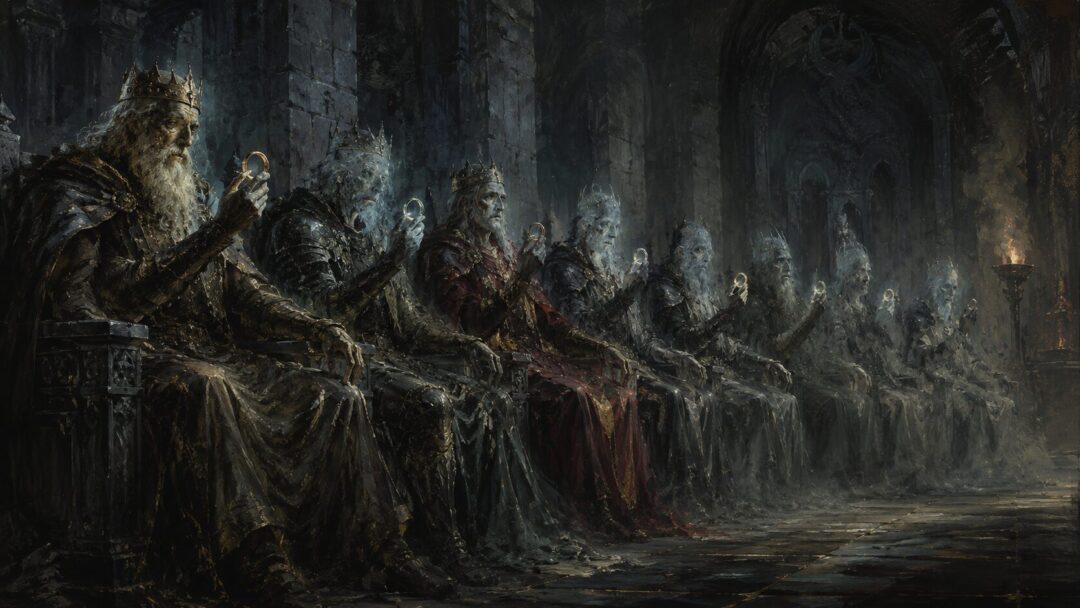
The Nazgûl were not ordinary people who happened to wear the One Ring too often. They were Men who received the Nine Rings. Those Rings gave them power, lengthened their lives, and made them great in their day: kings, sorcerers, and warriors. But the gift was a trap. Over time, they fell under the thraldom of the rings they bore and under the domination of the One, which belonged to Sauron.
This is the crucial difference. The Nine were not simply “invisible men.” They were Ringwraiths formed by long possession of Rings of Power designed within Sauron’s system of control. Their fading was tied to enslavement. They became permanently invisible to ordinary sight, but they did not become free spirits. They became servants.
The One Ring could draw its bearer toward the same shadowy condition, especially if the bearer was mortal. But it did not automatically reproduce the exact history of the Nine. The Nazgûl were the result of the Nine Rings working upon mortal Men over time, with Sauron’s will behind the whole design. Their fate was not just fading; it was subjugation.
That is why “fading” is a broader danger than “becoming a Nazgûl.” A mortal might become wraithlike without becoming one of the Nine. Frodo’s wound by the Morgul-knife points to this. Had the fragment reached his heart, the implication is not that he would have become a tenth Nazgûl equal to the Ringwraiths, but that he would have become a wraith under their power, especially under the power of the Witch-king.
Why Bilbo Did Not Become a Ringwraith
Bilbo is the most revealing case because he possessed the Ring for decades. By ordinary logic, he should have been the clearest candidate for fading. Yet he remains visible, social, humorous, irritable, generous, and deeply himself, even if unnaturally preserved.
The reason is not that the Ring was harmless to him. It clearly was not. It prolonged his life, preserved his appearance, and created possessiveness. Bilbo struggles to give it up. He calls it his “precious” in a moment that echoes Gollum. He feels stretched and thin, like butter scraped over too much bread — one of the most memorable images of Ring-weariness in the story.
But Bilbo did not use the Ring constantly. For much of his life in the Shire, he kept it secret and used it selectively. He was also not trying to dominate others through it. His most important moral act is that he had begun his ownership with pity: he spared Gollum when he had the chance to kill him. That mercy does not make Bilbo immune, but it shapes the moral atmosphere of his possession.
Bilbo is damaged by the Ring, but not consumed into wraithhood. He bears the marks of preservation without true renewal. He is kept going, not healed. He is extended, not fulfilled. That is the Ring’s cruelty: it can prevent an ending without giving real life.
Why Gollum Did Not Become a Nazgûl Either
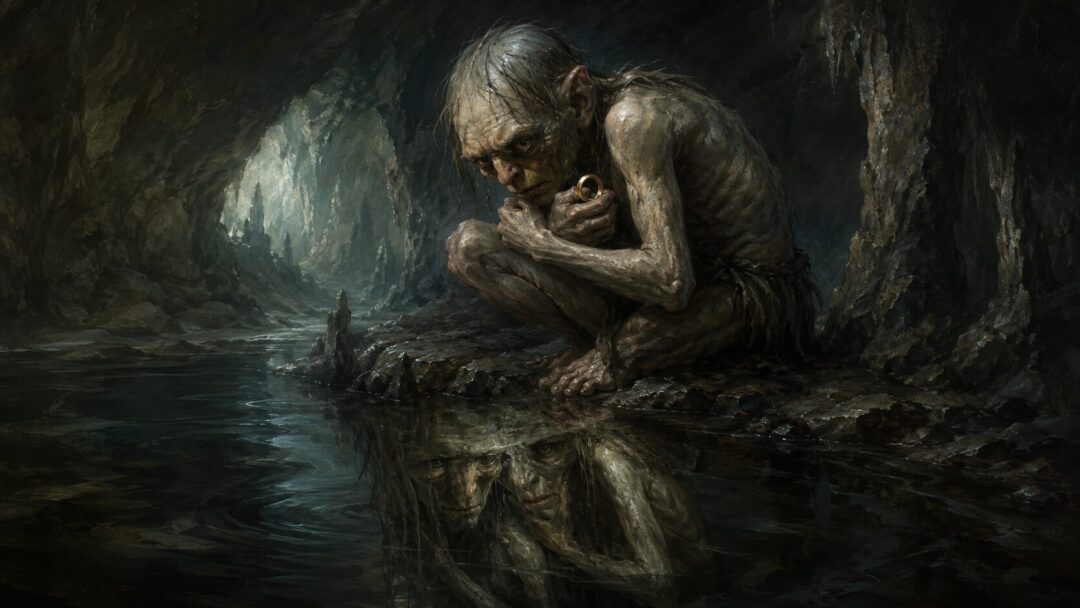
Sméagol, later Gollum, possessed the Ring for centuries, far longer than Bilbo or Frodo. If length of possession alone created Nazgûl, Gollum should be the obvious result. Yet he remains a physical creature: with hands, feet, hunger, pain, stealth, memory, and a body that can be hurt.
This is one of the strongest signs that Nazgûl-making requires more than mere ownership of the One Ring. Gollum is horribly altered. His life is unnaturally prolonged. His mind and desire are bent around the Ring. He becomes secretive, predatory, and divided against himself. But he is not one of the Nine, nor is he a servant in the same formal sense as the Ringwraiths.
The texts do not give a complete mechanical explanation for why Gollum does not become permanently invisible. A conservative reading is that his use of the Ring, though frequent in earlier days, was not the same as continuous wearing; that the Ring preserved him in a corrupted bodily existence; and that the specific enslavement of the Nazgûl belonged to the Nine Rings and Sauron’s domination through them. Gollum is a victim and servant of the Ring’s desire, but not a Nazgûl.
His tragedy is different. The Nazgûl are emptied into obedience. Gollum is split by craving. He is not majestic in terror; he is pitiful, dangerous, and ruined. His continued bodily existence allows the story’s final irony: the creature most enslaved by desire becomes the unwilling instrument by which the Ring is destroyed.
Why Frodo Came So Close
Frodo’s danger is more intense than Bilbo’s because he bears the Ring while Sauron is actively searching for it. He also suffers wounds and burdens that weaken him: the Morgul-knife, the long journey, the pressure of the Eye, and the increasing nearness of Mordor. The Ring grows heavier as it approaches the place of its making, not because its metal changes, but because its power and its master’s will are more immediate.
At Weathertop, Frodo’s use of the Ring places him half within the wraith-world. This makes him visible to the Nazgûl in a terrible sense. Then the Morgul wound attempts to pull him further across the boundary. The wound and the Ring work in related but not identical ways: both expose Frodo to the Unseen, but the knife is a direct weapon of wraith-making.
Even after Rivendell, Frodo is never fully restored to ordinary peace. He continues to feel the lasting cost of what happened to him. By the end, he has not become a Nazgûl, but he has been wounded in ways the Shire cannot heal. That is the subtler horror: one may resist the final transformation and still be permanently marked by proximity to it.
Frodo’s survival depends on mercy, endurance, friendship, and intervention beyond his own strength. He is not simply “stronger” than those who fell. In fact, the story repeatedly resists that easy reading. His victory is inseparable from help: Sam’s loyalty, Gollum’s role, Bilbo’s pity, Elrond’s healing, and the long chain of choices that prevent evil from having the final word in the way it expects.
Sam Shows the Difference Between Temptation and Transformation
Sam’s brief bearing of the Ring in Mordor is a useful contrast. He wears it, feels its power, and experiences temptation in a form suited to him. He imagines himself as a great hero and gardener, making the world ordered and fruitful. The temptation is not random; the Ring works through the bearer’s desires.
Yet Sam does not fade into a wraith because his contact is brief, his possessiveness does not have time to root deeply, and his love for Frodo remains stronger than the fantasy offered to him. His humility matters. He can still recognize the absurdity of the grand vision pressed upon him. He gives the Ring back.
Sam proves that the Ring’s danger is real even in a short time, but also that the stages of corruption are not identical. Temptation can begin almost immediately. Transformation takes time, repeated surrender, and deepening attachment. Enslavement requires the will to keep saying yes.
Mortality Is the Weak Point the Rings Exploit
The Rings of Power are especially dangerous to mortals because mortals are not meant to remain in Middle-earth indefinitely. Men are given death as part of their nature, though the meaning of that gift becomes clouded by fear. The Rings exploit that fear by offering extension without true life.
The Nine received prolonged existence, but it became a prison. Bilbo receives length of years, but not renewal. Gollum survives for centuries, but in degradation. Frodo lives, but cannot fully return to what he was. In every case, the pattern is consistent: the Ring can delay the natural end, but the cost is diminishment.
That is the strange reason the Ring makes mortals fade. It does not make them too spiritual in a holy sense. It stretches mortal life beyond its proper shape while drawing the bearer toward a mode of existence where the body’s ordinary presence becomes less secure. The bearer is not elevated. He is thinned.
The Nazgûl Are the Completed Warning
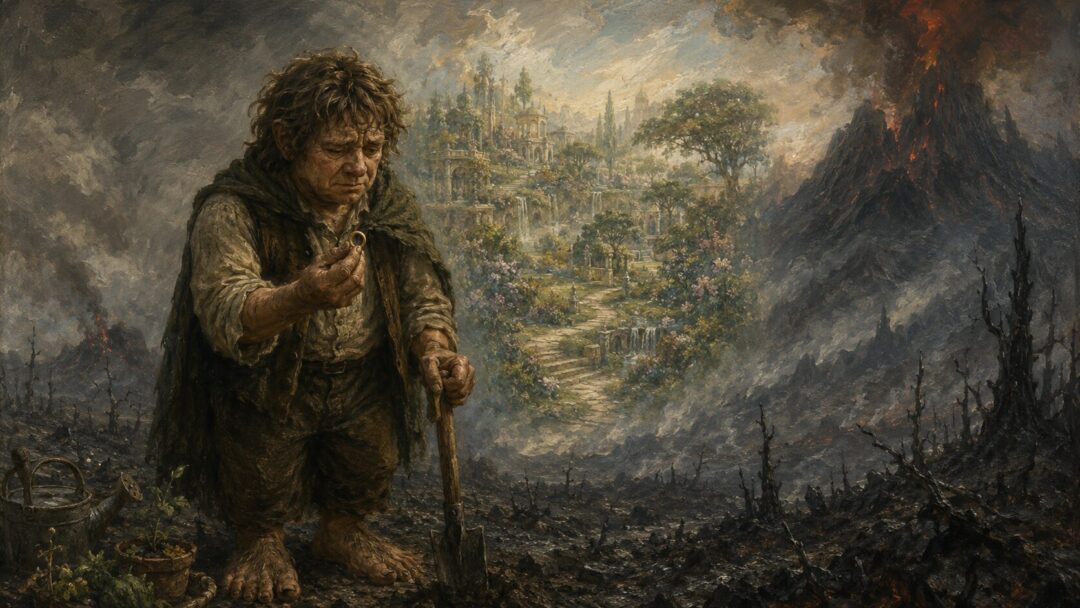
The Nazgûl show the end of one road: power accepted, life prolonged, identity consumed, will mastered. They are not simply dead, and not simply alive in the ordinary sense. They are a warning about what happens when the desire to continue, rule, and possess is captured by Sauron’s design.
But every Ring-bearer does not become a Nazgûl because every Ring-bearer does not walk the same road to the same end. Isildur possesses the Ring briefly before losing it and his life. Déagol barely possesses it at all. Gollum is preserved and ruined, but not remade into one of the Nine. Bilbo is wounded by long possession but saved from the worst by limited use, pity, and surrender. Sam bears it briefly and gives it up. Frodo comes closest, not because he is evil, but because he carries the Ring deepest into its own country and suffers wounds that bring him near the wraith-world.
The Ring’s danger is therefore more frightening than a simple rule like “wear it long enough and become a Nazgûl.” Its corruption is personal, gradual, and metaphysical. It works through desire. It exploits mortality. It pulls the wearer toward the Unseen. And when joined to Sauron’s domination, as with the Nine, it can end in utter enslavement.
The Nazgûl are not the automatic result of touching the Ring. They are the completed form of a particular corruption. The other bearers reveal different degrees of the same peril: the life that refuses to let go, the self that becomes thinner, the mercy that delays disaster, and the terrible truth that invisibility was never the real power of the Ring.
The real power was possession — and the slow fading of the one who thought he possessed it.
Sources & Notes
- Tolkien Gateway, “One Ring” — explains invisibility, fading, and the Ring’s spiritual effect on mortal bearers. https://tolkiengateway.net/wiki/One_Ring
- Tolkien Gateway, “Nazgûl” — describes how the Nine Rings gradually turned mortal lords into wraith-servants of Sauron. https://tolkiengateway.net/wiki/Nazg%C3%BBl
- Tolkien Gateway, “Rings of Power” — gives broader context for the different Rings and their differing effects on Elves, Dwarves, and Men. https://tolkiengateway.net/wiki/Rings_of_Power
Sources added for fading, Ring-bearing, and Nazgûl transformation.