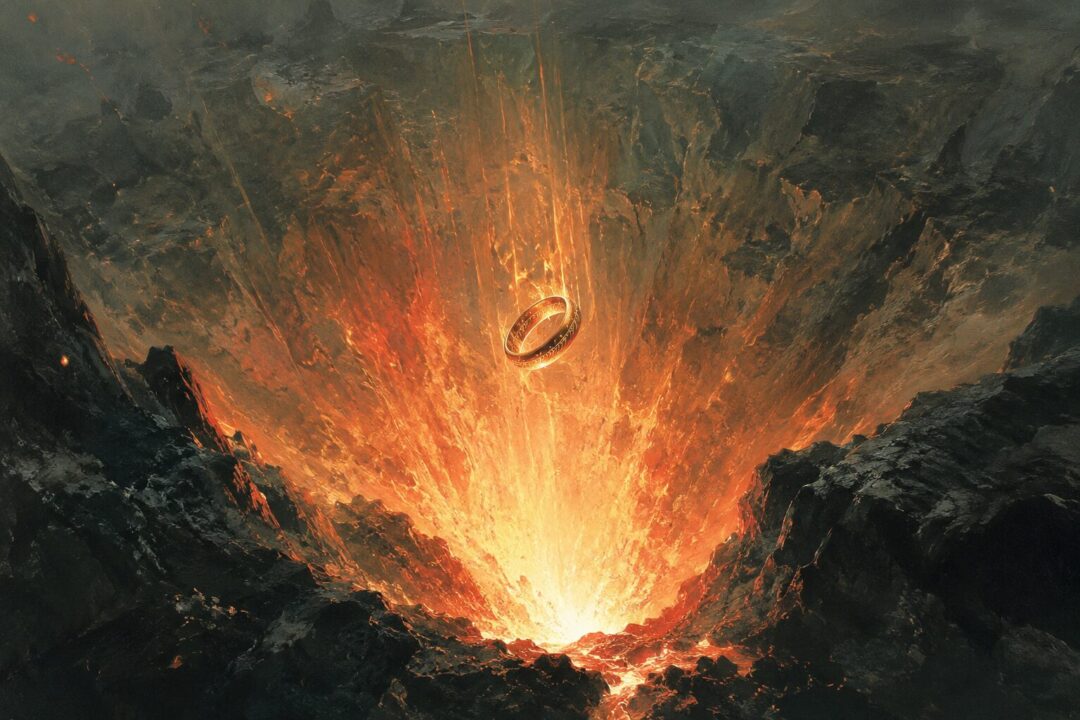
What did Sauron actually lose when the One Ring was destroyed?
Most fans know the immediate answer. The Dark Lord lost his Ring, his armies collapsed, and his age of terror ended. Yet Tolkien’s text points to something deeper and far more devastating. When the Ring perished in the fires of Orodruin, Sauron did not simply lose a powerful artifact. He lost the possibility of ever being what he had spent thousands of years trying to become.
The destruction of the Ring was not merely the defeat of a tyrant. It was the destruction of the foundation upon which his entire power had been rebuilt since the Second Age. To understand what Sauron truly lost, we have to look beyond armies, fortresses, and military defeat and examine the strange relationship between his own spirit and the Ring itself.
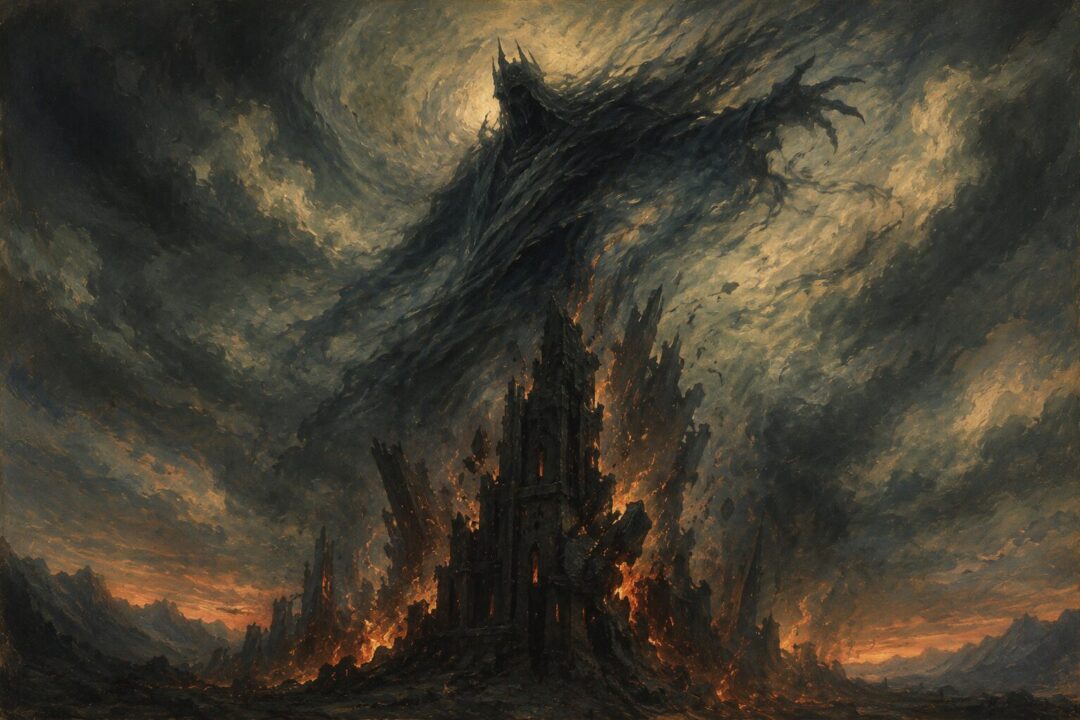
The Ring Was More Than a Weapon
A common misunderstanding is that the One Ring functioned like a magical tool that granted Sauron extra strength.
The truth is more profound.
During the forging of the Ring, Sauron invested a significant portion of his native power into it. This is explicitly why the Ring became uniquely dangerous. It contained part of his own being, allowing him to dominate the other Rings of Power and extend his influence far beyond what he could otherwise achieve.
This investment created both strength and vulnerability.
As long as the Ring existed, Sauron's power remained anchored in the world. Even after military defeats, even after the destruction of Númenor, even after the loss of his physical body, the Ring preserved the foundation of his strength.
This is why he could recover from catastrophes that would have permanently ruined lesser beings.
The Ring was not merely something he possessed.
In an important sense, it had become part of what he was.
Why Sauron Survived the Loss of the Ring in the Second Age
At the end of the War of the Last Alliance, Isildur cut the Ring from Sauron's hand. His physical form was destroyed, and his enemies believed they had achieved victory.
Yet Sauron was not truly finished.
The Ring still existed.
Because it endured, the power he had placed within it endured as well.
Over centuries, Sauron slowly rebuilt himself. His recovery was long and incomplete, but it happened. He first appeared as the mysterious power of Dol Guldur before eventually revealing himself openly once again.
This long recovery demonstrates a crucial point.
The loss of possession and the destruction of the Ring were not the same thing.
As long as the Ring survived, Sauron retained the possibility of restoration.
The entire strategy of the Wise rested on understanding this distinction.
The Greatest Fear Sauron Never Understood
One of the most remarkable aspects of The Lord of the Rings is that Sauron never seriously considers that his enemies might seek to destroy the Ring.
He assumes they will attempt to use it.
That assumption is rooted in his own nature.
Sauron understands domination. He understands ambition. He understands the desire to wield power. He cannot easily imagine someone willingly renouncing the greatest weapon in Middle-earth.
This misunderstanding becomes the foundation of his downfall.
The captains of the West march on the Black Gate not because they hope to defeat him militarily, but because they want him to focus all his attention on what appears to be a challenge for power.
Meanwhile, Frodo and Sam move toward Mount Doom.
Sauron sees rivals.
He does not see people attempting to destroy power itself.
This blindness proves fatal because the destruction of the Ring threatens something far greater than military defeat.
It threatens his very existence as a power in the world.
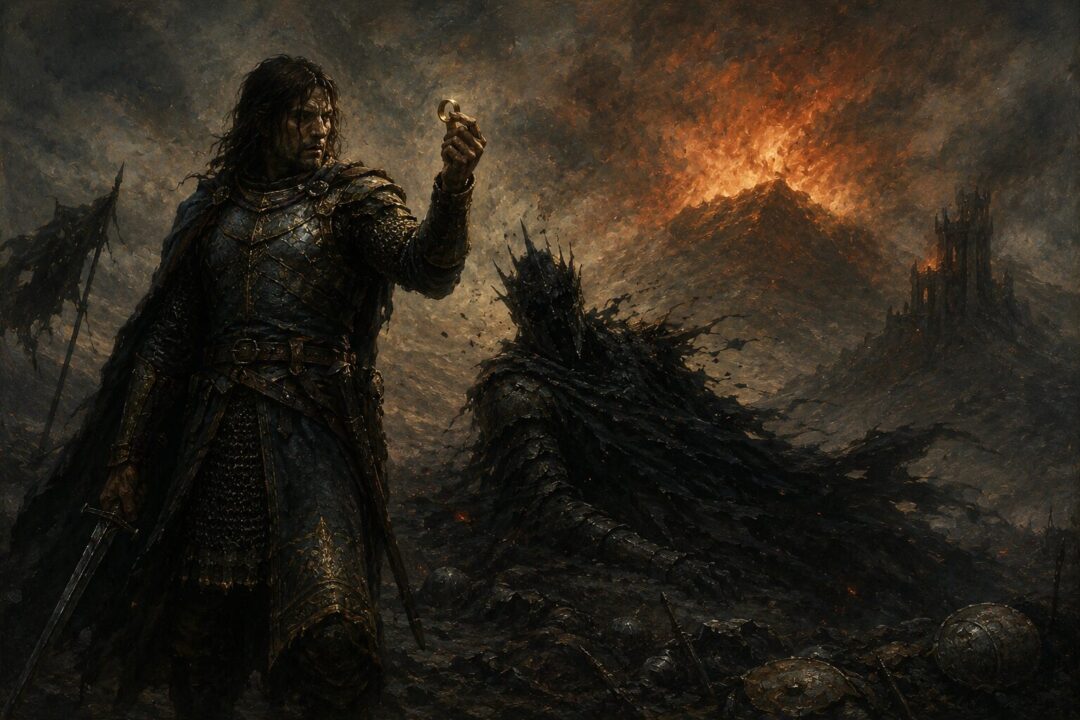
What Happened When the Ring Entered the Fire
The moment the Ring fell into the Crack of Doom, the relationship between Sauron and his greatest creation was severed forever.
Tolkien describes the immediate collapse of Sauron's realm in dramatic terms. Barad-dûr falls. His armies lose direction. The foundations of his power are broken.
Yet the physical destruction visible across Mordor is only the outward sign of a deeper catastrophe.
The power Sauron had transferred into the Ring was destroyed with it.
For ages he had concentrated part of his native strength into this object. Once the Ring ceased to exist, that invested power could not simply return to him.
The loss was permanent.
Unlike previous defeats, there would be no recovery.
Unlike the end of the Second Age, there would be no slow rebuilding.
Something essential had vanished.
Sauron Was Not Destroyed Completely
An important point often gets overlooked.
The destruction of the Ring did not annihilate Sauron's spirit.
As a Maia, Sauron belonged to the same order of beings as Gandalf and Saruman. Such spirits are not normally erased from existence through physical destruction.
After the Ring's destruction, Sauron still existed.
However, Tolkien indicates that he was reduced to a condition of extreme impotence.
A shadow remained, but one incapable of taking shape again or exercising meaningful power.
This distinction matters.
The victory at Mount Doom was not the extinction of Sauron as a spiritual being.
It was the destruction of his ability to dominate the world.
In practical terms, the Dark Lord ceased to be a force capable of shaping history.
The Loss of Physical Form
Sauron's history is marked by repeated losses of physical embodiment.
After the downfall of Númenor, he lost the ability to assume fair and beautiful forms. Thereafter, his appearances became associated with terror and domination rather than deception through beauty.
After the Last Alliance, he again lost bodily form.
Yet each time he eventually returned because enough of his power remained.
The destruction of the Ring changed that equation.
Without the Ring, the strength necessary to rebuild a body was gone.
Tolkien suggests that Sauron could never again take physical shape.
This was a devastating loss.
Throughout the Third Age, Sauron had worked relentlessly toward restoring his visible power. The Ring's destruction ended that effort forever.
The lord who sought mastery over all Middle-earth became incapable of even rebuilding himself.
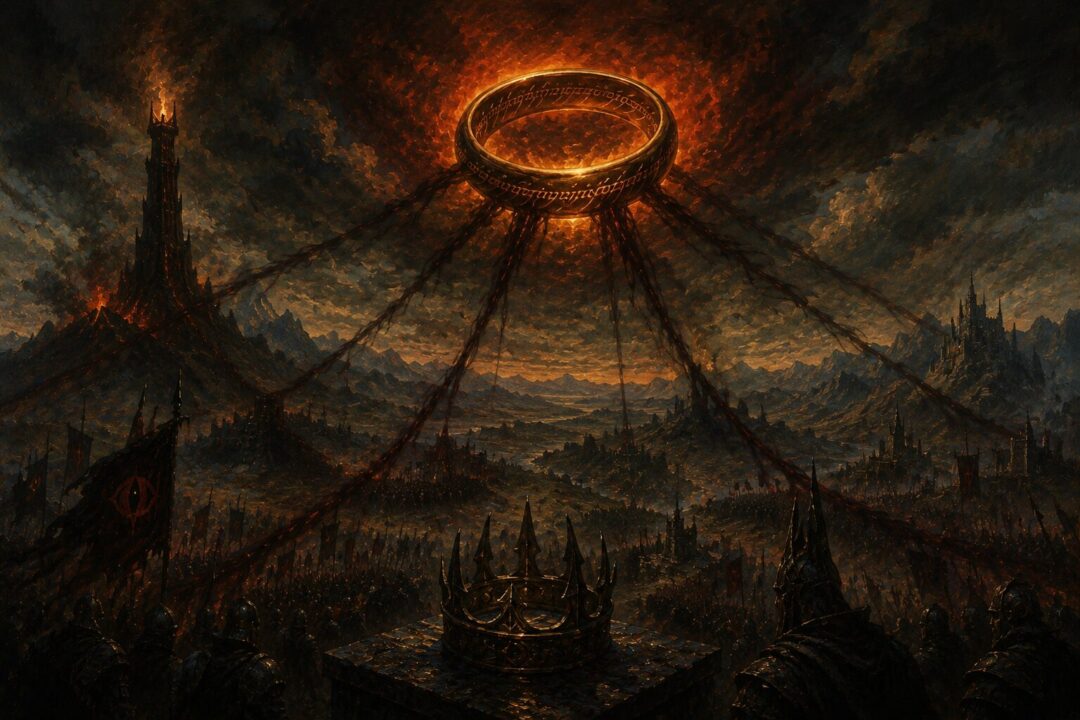
The Collapse of His Empire
The military consequences were immediate.
The forces of Mordor depended heavily on Sauron's will and organization. While not every servant was magically controlled, his authority held together an enormous and often unstable coalition.
Orcs, trolls, evil Men, and countless other servants fought under a unified purpose because Sauron directed them.
When he fell, that structure shattered.
The texts describe widespread panic and confusion among his armies.
Many fled.
Many lost heart.
Many were destroyed.
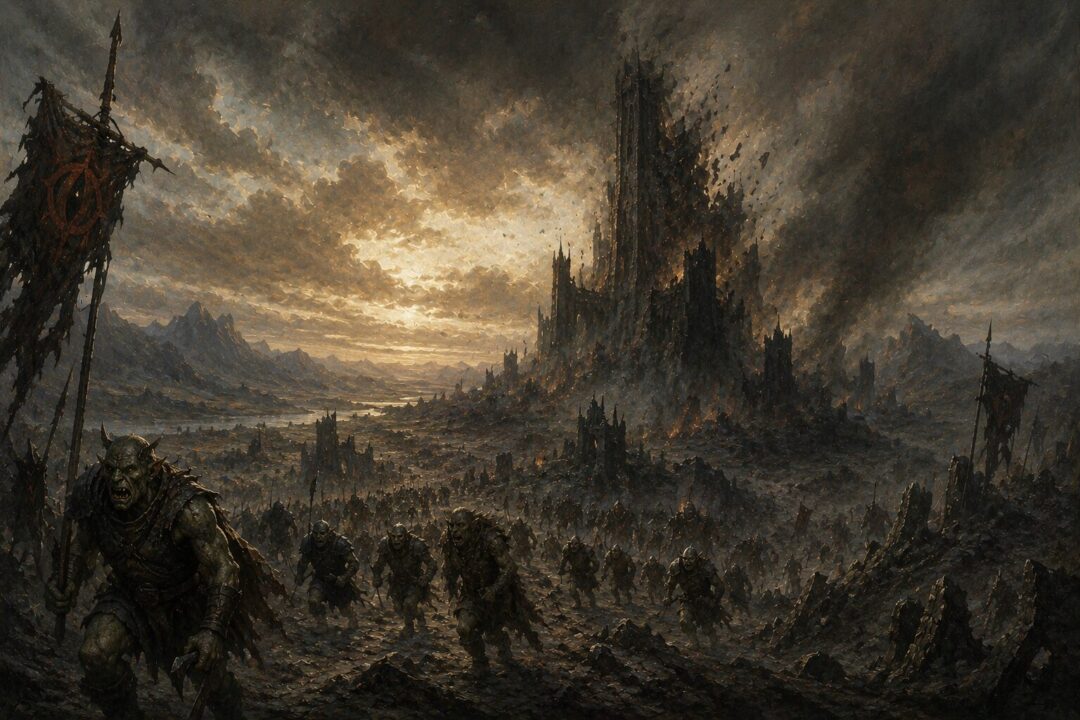
The Dark Tower itself collapsed because its foundations had been built with the power of the Ring.
The empire that had taken centuries to construct disintegrated almost instantly.
This reveals another layer of what Sauron lost.
He did not merely lose territory.
He lost the capacity to command.
The Failure of a Plan Thousands of Years Old
Perhaps the greatest loss was not military or even spiritual.
It was the destruction of his life's work.
For thousands of years, Sauron pursued a single objective: absolute order under his rule.
Even before becoming the Dark Lord, he was associated with a desire for structure, efficiency, and control. In his corruption, these impulses evolved into a belief that all freedom should ultimately yield to his authority.
The Ring represented the ultimate expression of that ambition.
Through it, he sought mastery over rulers, kingdoms, and eventually the entire world.
Every war, every deception, every fortress, and every alliance served this larger purpose.
When the Ring was destroyed, that project ended forever.
There was no alternative path.
No backup plan.
No second Ring.
The central mechanism of his domination was gone.
The Tragic Irony of Sauron's Defeat
There is a profound irony at the heart of Sauron's downfall.
The Ring was created to increase his power.
For centuries, it achieved exactly that.
It amplified his reach, preserved his strength, and helped him recover from disasters that would otherwise have ended him.
Yet the very act of investing so much of himself into the Ring made him vulnerable.
The object that elevated him ultimately became the means of his ruin.
Had he never poured his power into the Ring, he might have been less formidable.
But he also would not have been tied so completely to its fate.
His greatest achievement became his greatest weakness.
This pattern echoes one of the central themes of Middle-earth: the pursuit of domination often carries hidden costs that eventually destroy the dominator.
What Sauron Actually Lost
So what did Sauron actually lose when the Ring was destroyed?
He lost far more than a weapon.
He lost the portion of his power invested within the Ring.
He lost the ability to rebuild his physical form.
He lost his empire.
He lost the possibility of recovering from defeat.
He lost the instrument through which he intended to dominate Middle-earth.
Most importantly, he lost the future he had spent ages trying to create.
A diminished spirit survived, but the Dark Lord who sought to rule all peoples and all lands was finished.
The Ring's destruction did not merely defeat Sauron.
It reduced him from the greatest threat in Middle-earth to a powerless shadow, unable ever again to rise, rebuild, or command.
That was the true cost of Mount Doom.
Not death, but permanent diminishment.
For a being whose entire existence had become a quest for power, there could hardly have been a greater loss.
Sources & Notes
- Tolkien Gateway, “Sauron” — summarizes Sauron’s survival, dependence on the Ring, and final collapse after its destruction. https://tolkiengateway.net/wiki/Sauron
- Tolkien Gateway, “One Ring” — explains that Sauron invested much of his native power in the Ring and lost it when the Ring was unmade. https://tolkiengateway.net/wiki/One_Ring
- Tolkien Gateway, “Letter 246” — covers Tolkien’s comments on Sauron, the Ring’s destruction, and the consequences of its loss. https://tolkiengateway.net/wiki/Letter_246
Sources added for Sauron’s dependence on the Ring and final loss.