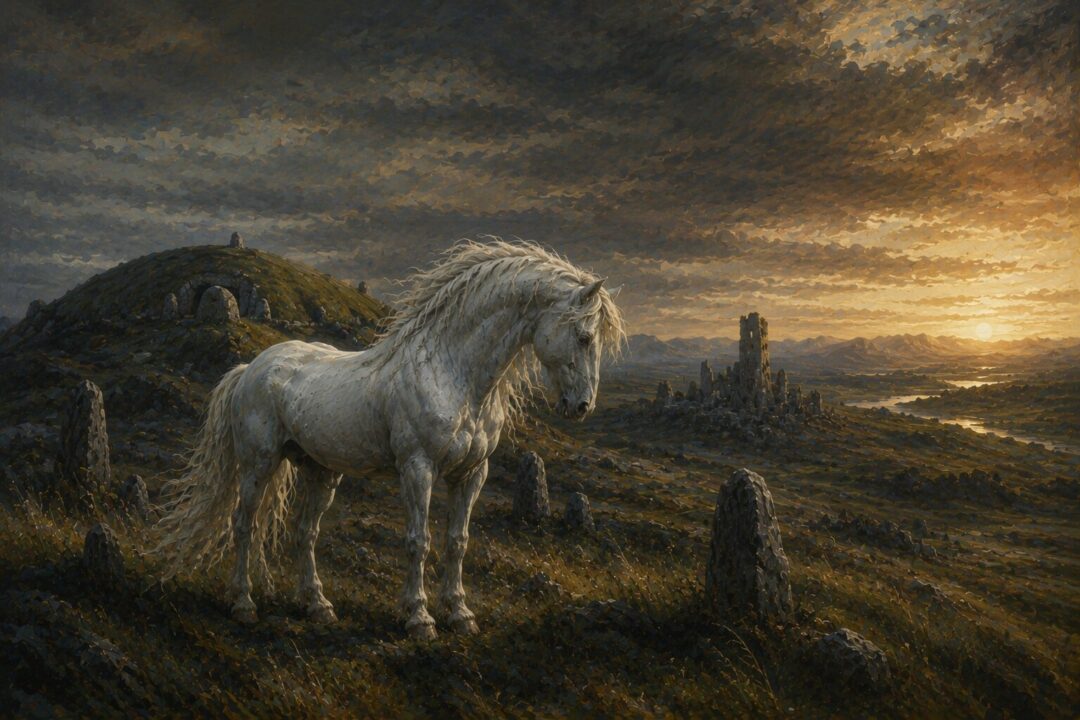
When most readers think of Rohan, they picture riders thundering across the plains, the golden hall of Meduseld, and the white horse upon the king's banner. Yet the greatest horses of that land were never simply prized animals. The Mearas stood apart from every other breed in Middle-earth, and the way the Rohirrim treated them reveals something deeper than military strength. They preserve a memory of an older kind of kingship—one built not merely on command, but on worthiness.
The contradiction is striking. Rohan is famous for horse-lords whose identity is bound to mastery in the saddle, yet its greatest horses could never truly be mastered by force. The Mearas obeyed only those they accepted. Their loyalty was not purchased, inherited automatically, or compelled. Instead, they expose an older ideal of nobility in which authority depended upon character as much as blood.
That makes the Mearas more than remarkable steeds. They become a measure of legitimate rule, reminding both kings and readers that power without honor cannot command true loyalty.
The Extraordinary Line of Felaróf
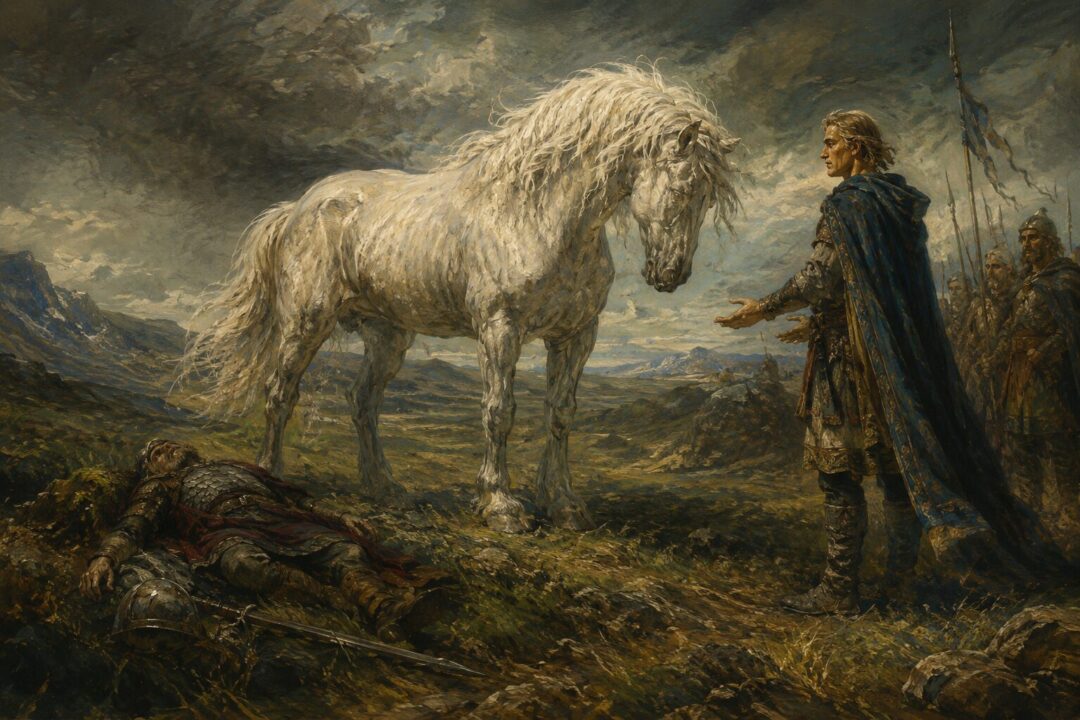
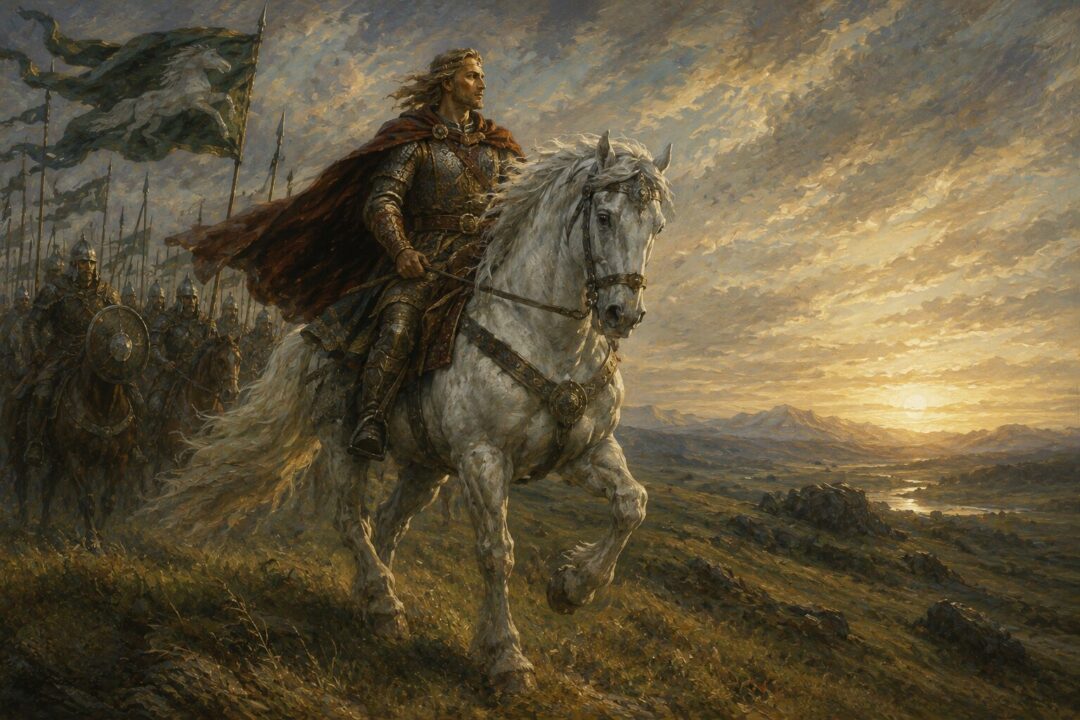
The story begins with Felaróf, ancestor of all the Mearas. Before Eorl the Young became the founder of Rohan, his father Léod attempted to ride the untamed horse. Felaróf threw him, and Léod died from the fall.
Rather than seeking revenge, Eorl demanded compensation according to the customs of Men. He claimed the horse itself as the weregild for his father's death. At first glance, this seems like an ordinary legal settlement, but what followed transformed both horse and rider into legends.
Felaróf allowed no one to mount him. Yet when Eorl approached and addressed him, the horse submitted willingly. The texts present this not as magical domination but as a recognition between worthy beings. From that moment onward, Felaróf carried Eorl, and from him descended the royal line of the Mearas.
The tradition that followed was remarkably strict. The Mearas served only the Kings of the Mark and their sons, with one famous exception. This exclusivity was not merely a privilege. It reinforced the belief that kingship itself carried obligations that only certain individuals could fulfill.
Some traditions among the Rohirrim also held that the Mearas ultimately descended from Nahar, the great horse of Oromë. This ancestry is presented as belief rather than historical certainty, but it explains why the Mearas appear almost unique among living creatures. Whether literally descended from Nahar or not, they occupy an almost mythic place in the imagination of Rohan.
Nobility Was Measured by Recognition, Not Possession
Many monarchies in Middle-earth rely upon inherited symbols. A crown, a sword, or a throne marks legitimate succession. The Mearas work differently.
A king could inherit the throne, but he still required the willing partnership of the horse.
This distinction matters. Nothing suggests that a Mearas could simply be handed over like armor or treasure. Their intelligence and independence are repeatedly emphasized. They chose whom they served.
The relationship therefore reflects an older understanding of authority. The king does not reduce the horse to property. Instead, horse and ruler enter into a partnership founded on mutual acceptance.
This mirrors a recurring pattern throughout Middle-earth. True authority often appears when powerful beings recognize virtue rather than submit to force. Eagles choose whom they rescue. Ents decide whom they trust. Even the loyalty of free peoples cannot be permanently secured through fear alone.
The Mearas fit naturally into this moral landscape.
Intelligence Beyond Ordinary Horses
The Mearas possess qualities that distinguish them sharply from ordinary horses. They are swifter, stronger, longer-lived, and notably more intelligent. They understand human speech, though they do not themselves speak.
Importantly, the narrative never presents them as ordinary animals enhanced through sorcery. Their remarkable nature simply exists as part of the world's order, where some living creatures stand closer to the ancient wonders of earlier ages.
This reflects one of Middle-earth's recurring themes: remnants of the elder world survive into later ages, though they become increasingly rare.
By the end of the Third Age, many extraordinary beings have faded or departed. The Elves diminish. The Entwives are lost. Dragons become scarce. The Mearas likewise survive as living echoes of a more enchanted past.
Because of this, their presence elevates the royal house of Rohan. They remind everyone that the kingdom's greatness rests not solely upon military success but upon a legacy stretching back to Eorl and beyond.
Eorl's Character Matters More Than His Victory
Eorl is often remembered for leading the Éothéod south to aid Gondor at the Field of Celebrant. That victory earned his people the land that became Rohan.
Yet his encounter with Felaróf occurs before his greatest military achievement.
This sequence is significant.
The horse accepts Eorl first. Only afterward does Eorl become the founder of a kingdom.
The texts never explicitly state that Felaróf foresaw Eorl's future. Instead, the order of events suggests that Eorl already possessed qualities worthy of kingship before history recognized them.
His legitimacy therefore begins with personal virtue rather than political success.
This reinforces an important theme throughout Middle-earth. External achievements often confirm inner character rather than create it.
Shadowfax Shows the Rule Is About Worthiness
The single great exception to the royal monopoly over the Mearas reveals even more about their deeper meaning.
Shadowfax does not remain with the kings of Rohan.
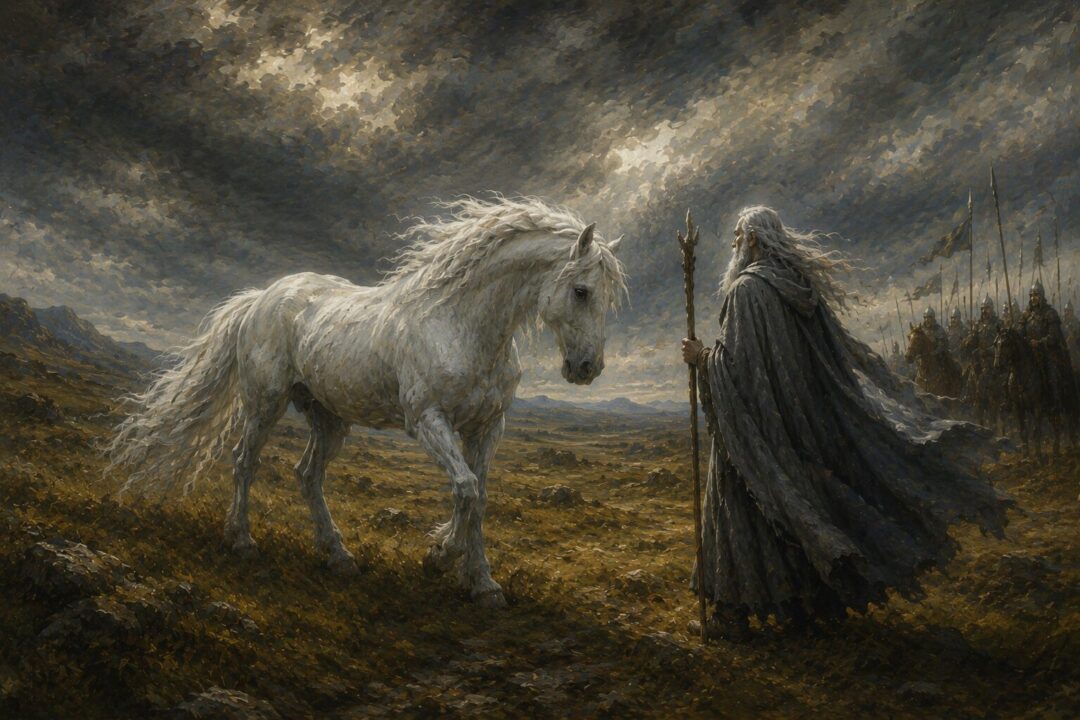
Instead, he accepts Gandalf.
King Théoden himself acknowledges that no lord of the Mark has ever possessed a horse equal to Shadowfax. Yet Gandalf explains that the horse came willingly and was not captured or broken.
This exception is profoundly revealing.
If the tradition were merely political, Shadowfax's departure would undermine royal authority.
Instead, it strengthens the principle behind it.
Gandalf occupies a unique place in Middle-earth. Though appearing as an old man, he bears immense wisdom, restraint, and moral authority. Shadowfax's acceptance of him reinforces the broader pattern that the Mearas respond to true nobility rather than social rank alone.
The exception therefore confirms the rule.
The Rohirrim's Culture Preserved Ancient Values
Rohan often appears simpler than Gondor.
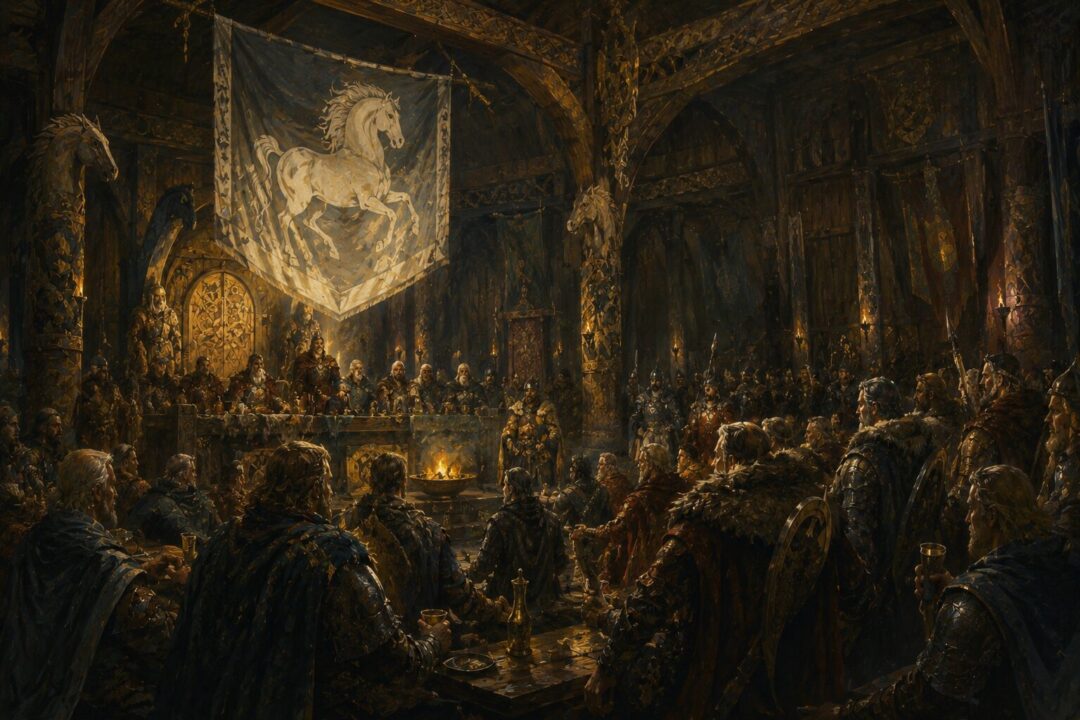
Its halls are built from timber rather than stone. Its songs celebrate riders instead of imperial history. Compared with Minas Tirith, the kingdom can appear almost rustic.
Yet this simplicity conceals remarkable cultural depth.
The Rohirrim preserve customs that seem older and more personal than many institutions elsewhere. Oaths matter deeply. Hospitality remains sacred. Kinship binds political life. Even legal customs, such as weregild, continue to shape justice.
The Mearas belong naturally within this cultural world.
They are not symbols of luxury.
They are symbols of continuity.
Every royal horse reminds the kingdom that its rulers inherit more than land. They inherit responsibilities established by Eorl's example and preserved across generations.
Why the Mearas Cannot Simply Be Replaced
Many armies can breed better horses.
None can create another line like the Mearas.
Their rarity reflects one of Middle-earth's central patterns: the greatest things cannot simply be manufactured or reproduced once lost.
This theme appears repeatedly.
The Silmarils cannot be remade.
The Two Trees cannot be restored exactly as before.
The great Númenórean kingdoms decline.
The Elves slowly depart.
The Mearas likewise represent an inheritance rather than an achievement.
This gives them emotional weight beyond their practical usefulness. Every generation that rides them participates in a diminishing inheritance from an older world.
Their existence reminds readers that history in Middle-earth generally moves toward loss rather than continual progress.
Kingship Without Humility Cannot Last
The Mearas also illuminate what separates rightful kingship from tyranny.
A tyrant seeks obedience through fear.
The rider of a Mearas receives willing loyalty.
That distinction echoes throughout the larger story.
Sauron commands through domination.
Saruman attempts control through manipulation.
Even Denethor struggles because authority increasingly becomes possession rather than stewardship.
The greatest rulers instead inspire trust.
Aragorn heals before he reigns.
Théoden regains wisdom before leading his people.
Eorl earns Felaróf's trust before founding a kingdom.
The Mearas quietly reinforce this pattern. Their loyalty cannot be seized. It must be deserved.
Living Memories of the Elder World
Perhaps the most remarkable aspect of the Mearas is that they function almost like living history.
Unlike monuments or songs, they carry memory forward through bloodline and living tradition.
Every royal rider experiences not only the strength of an exceptional horse but also a tangible connection to the founding of the kingdom.
This continuity matters because Middle-earth is filled with fading memories.
Ancient kingdoms fall.
Languages change.
Roads disappear beneath grass.
Even heroes become legends.
The Mearas resist that forgetting.
As long as one remains, the covenant between Eorl and Felaróf still lives.
Why the Mearas Matter Far Beyond Horses
It is tempting to view the Mearas simply as fantasy's finest horses, but that misses their deeper purpose.
They embody an older understanding of nobility in which birth alone is insufficient. Royal lineage matters, yet it is continually tested by wisdom, restraint, and moral worth. The greatest horse in Middle-earth cannot be compelled by violence or inherited like an object. It chooses.
That choice reveals the heart of Rohan's identity.
Its oldest nobility is not measured merely by ancestry or military victory. It rests upon a relationship between ruler and servant, king and people, authority and trust.
The Mearas stand as quiet witnesses to that ideal. Long after battles fade into history, they remind the reader that true greatness in Middle-earth is recognized rather than imposed, accepted rather than conquered, and preserved through honor rather than power alone.
Sources & Notes
- Tolkien Gateway, “Mearas” — explains the noble horses of Rohan, their descent from Felaróf, and their bond with the kings. https://tolkiengateway.net/wiki/Mearas
- Tolkien Gateway, “Shadowfax” — summarizes the greatest of the Mearas and his exceptional intelligence and freedom. https://tolkiengateway.net/wiki/Shadowfax
- Tolkien Gateway, “Rohan” — gives cultural context for the horse-lords and the importance of horses to Rohirric nobility. https://tolkiengateway.net/wiki/Rohan
Sources added for the Mearas, Shadowfax, and Rohirrim horse culture.