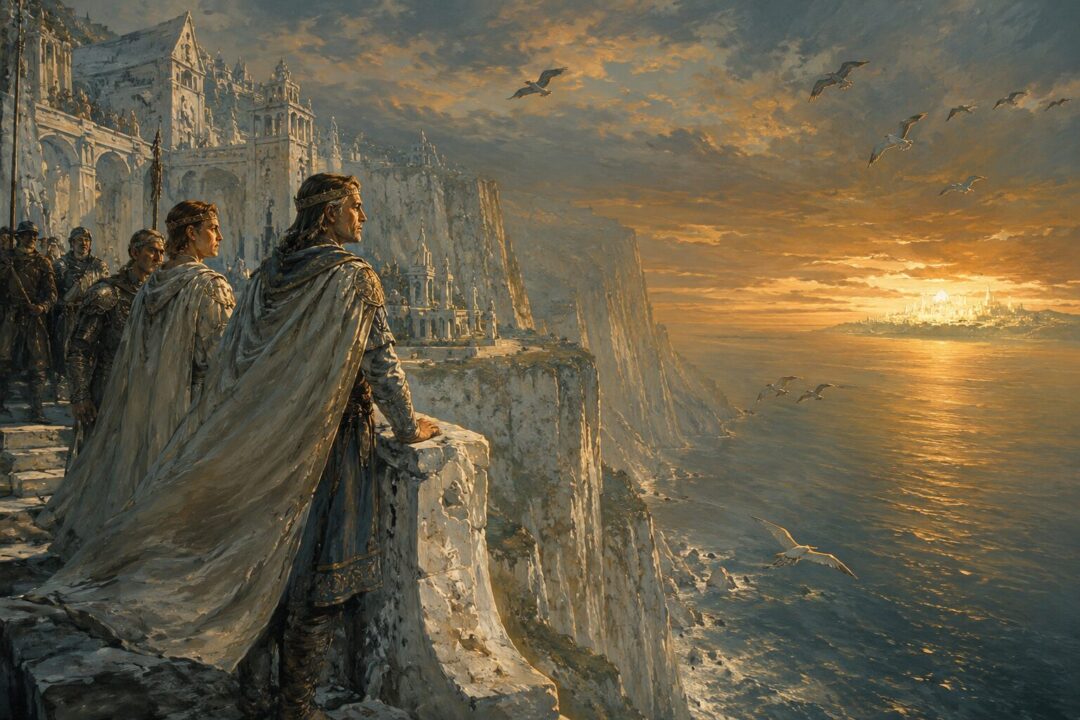
When the White Ship carried Frodo across the Sea, it fulfilled one of the most emotional moments in The Lord of the Rings. For many readers, the voyage seems like a journey toward immortality itself. Yet Tolkien's legendarium repeatedly insists on a surprising truth: Valinor could heal, but it could not make a mortal immortal.
That raises a deeper question. If the Blessed Realm could never remove death from Men, why did generations of mortals long for it so desperately? Why did the greatest kingdom of Men destroy itself trying to reach it?
The answer lies in something far more profound than a fear of dying. Throughout the history of Middle-earth, mortals who envied Valinor were often searching for certainty, permanence, justice, and escape from loss. They mistook a holy place for the solution to a condition built into their own nature.
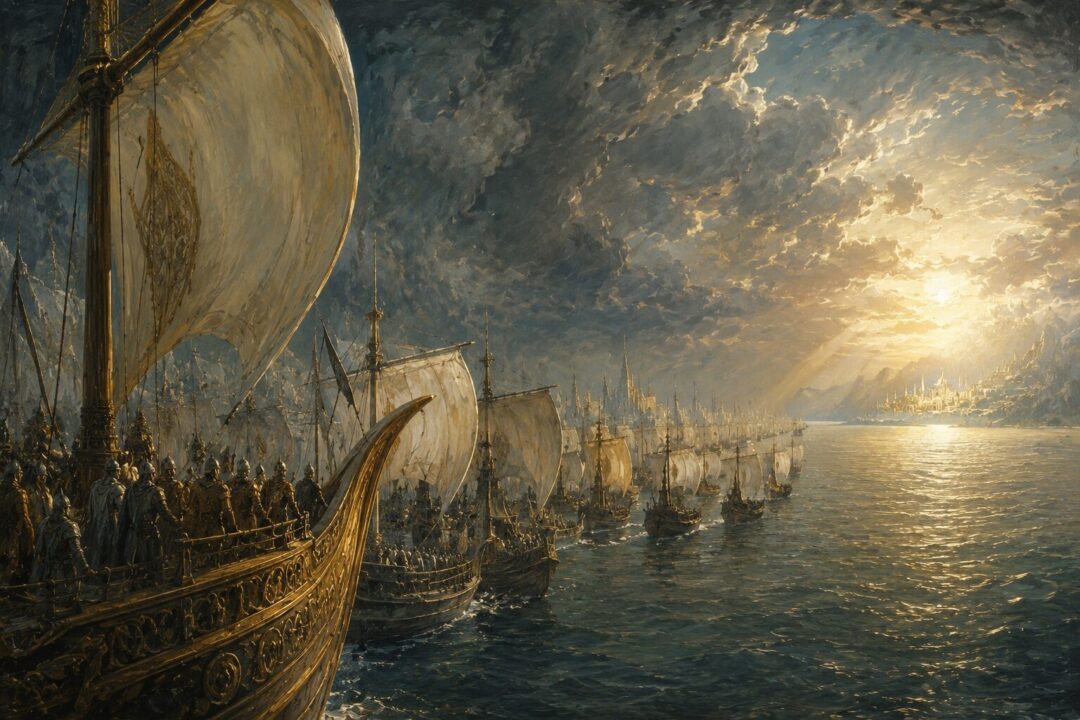
The Misunderstood Promise of the Undying Lands
One of the most persistent misunderstandings in Middle-earth concerns the name "Undying Lands."
The land itself does not grant immortality. The Blessed Realm is called "undying" because the immortal Valar dwell there, along with many of the Eldar. Their nature belongs to Arda until its end, not because Aman changes them, but because that is how they were created.
The texts consistently distinguish between the nature of the land and the nature of those who inhabit it. The Valar cannot simply remove the Doom—or Gift—of Men. Even their authority ends before that mystery.
This misunderstanding becomes central to the tragedy of Númenor. Its later kings increasingly believed that if only they could reach Aman physically, they could seize everlasting life. The belief was false, but it became politically and spiritually powerful because it appealed to a very human fear.
Death Was Not Originally Meant to Inspire Terror
The Silmarillion presents mortality in a striking way. Men are given a destiny different from the Elves.
Elves remain within the life of Arda until its ending. Even if slain, their spirits may go to the Halls of Mandos and, in many cases, eventually receive new bodies. They remain bound to the world.
Men do not.
Their spirits leave the Circles of the World entirely. Even the Valar do not know where they go. This departure is described as the Gift of Ilúvatar.
Yet the texts also explain that Morgoth's shadow darkened humanity's understanding of this gift. Instead of viewing death as a mysterious freedom, many Men came to see it only as loss, punishment, and extinction. What had been intended as a gift increasingly appeared to them as a cruel deprivation.
That change in perspective is essential. Mortals were not merely chasing eternal life. They were fleeing uncertainty.
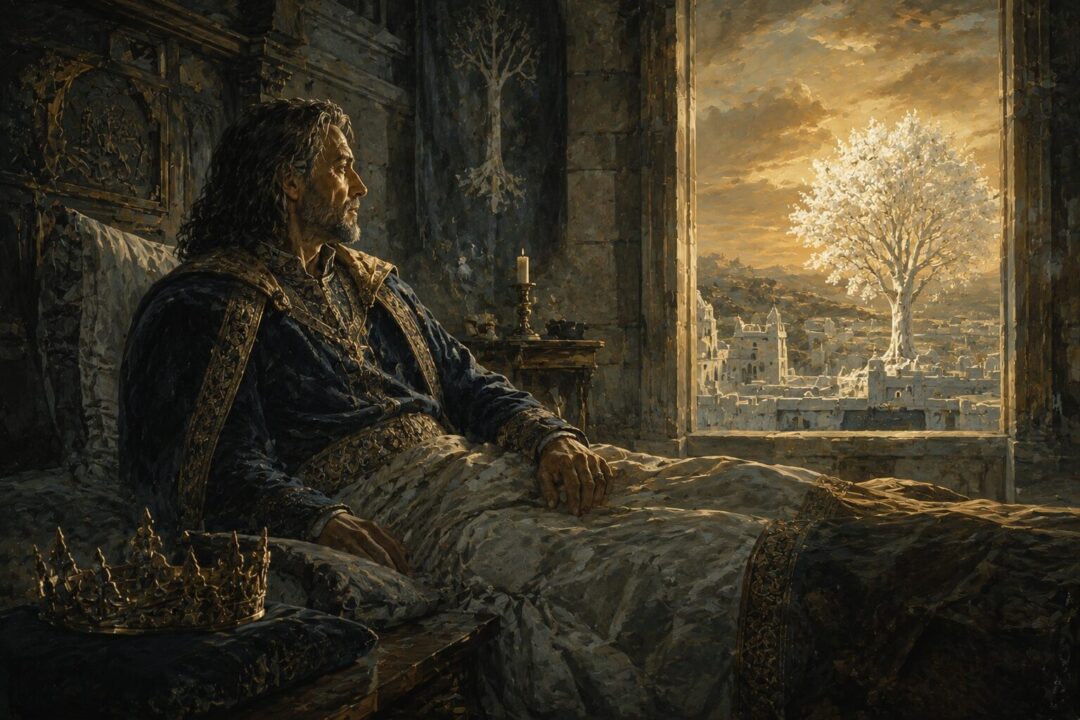
The True Object of Envy
The envy directed toward the Elves was never simply about longevity.
Elves possessed something that seemed even more desirable.
They belonged.
They knew where they came from. They could return to Valinor. Their history stretched across thousands of years. Their memories reached back toward the Two Trees, ancient kingdoms, and friendships lost only to time.
By comparison, Men lived brief lives filled with uncertainty.
Their destination after death remained hidden.
The Wise preserved traditions that death was a gift, but certainty was withheld.
This difference appears in the debates preserved during the history of Númenor. The King's Men repeatedly question why they should accept promises about an unseen destiny while the Elves visibly enjoyed centuries of life, beauty, and learning. Their complaint was not merely "We want to live forever."
It was closer to: "Why must we trust what we cannot see?" Eclectic Orthodoxy
Númenor's Long Decline Began with a Spiritual Question
The downfall of Númenor did not begin with Sauron.
It began centuries earlier through slow dissatisfaction.
The Númenóreans had received extraordinary blessings. Their lives were far longer than those of other Men. Their island prospered. They enjoyed friendship with the Eldar and could even glimpse Tol Eressëa from their shores.
Yet the very nearness of Aman intensified their longing.
Every white ship sailing west became a reminder of what they believed had been withheld.
The Ban of the Valar forbade them from sailing to the Undying Lands. The Ban was not presented as arbitrary jealousy. Rather, it acknowledged a truth about the nature of Men: Aman was not their appointed home.
The more Númenor flourished, the less satisfied many became.
Prosperity did not erase mortality.
Instead, it made mortality feel increasingly unfair.
Sauron Did Not Create Their Fear
When Sauron was brought to Númenor as a captive, he discovered that envy already existed.
His greatest achievement was not inventing a lie.
It was reshaping an existing fear into rebellion.
He argued that the Valar had deceived Men and selfishly withheld immortality. He portrayed the Ban as political oppression rather than recognition of different destinies.
This argument succeeded because it offered something emotionally satisfying.
It gave mortality a visible enemy.
Instead of accepting death as part of Ilúvatar's design, many Númenóreans came to believe someone else had stolen immortality from them.
That transformation turned spiritual dissatisfaction into imperial ambition.
The invasion of Aman became, in their minds, an act of liberation rather than defiance.
Aman Could Not Have Given Them What They Wanted
One of the quiet tragedies of the Akallabêth is that even success would have failed.
Had Ar-Pharazôn reached Valinor without divine intervention, he still could not have gained immortality merely by standing upon its shores.
Later writings discussing "Aman and Mortal Men" reinforce this principle. The Blessed Realm does not alter the nature of mortals. Indeed, its timeless character would make mortality feel even sharper. A mortal life would seem to pass with startling speed amid beings whose experience unfolded across ages. Tumblr
Their deepest desire therefore could never have been fulfilled by geography.
They were seeking a different relationship with death itself.
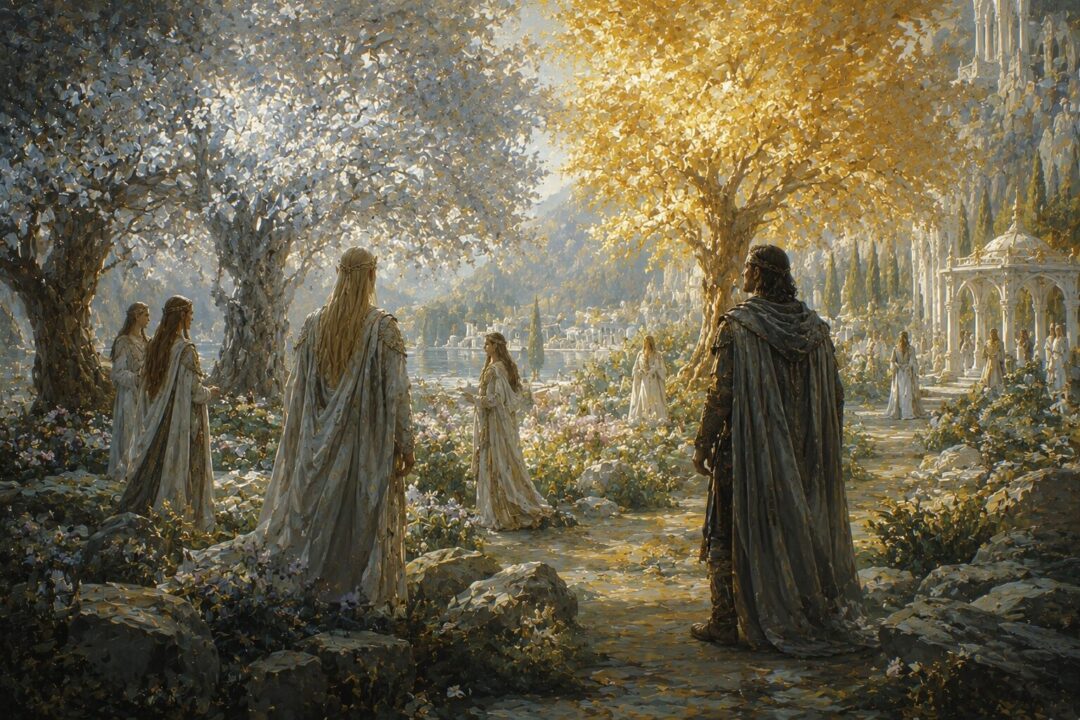
Frodo Shows the Difference Between Healing and Escape
Frodo's voyage west is sometimes misunderstood for the same reason.
He is permitted to sail because of extraordinary grace after enduring wounds that Middle-earth can no longer fully heal.
Nothing in the texts suggests he becomes immortal.
Instead, Aman offers peace during the remaining years of his mortal life.
Eventually, Frodo also dies.
His journey therefore illustrates exactly what Númenor misunderstood.
Valinor offers healing appropriate to one's nature.
It does not erase that nature.
The Gift of Men remains unchanged.
Aragorn Accepts What Númenor Rejected
If Ar-Pharazôn embodies envy, Aragorn represents acceptance.
At the end of his long reign, Aragorn chooses the time of his death according to the ancient grace once granted to the Númenórean kings.
He does not cling desperately to life.
Nor does he claim certainty about what lies beyond.
Instead, he expresses hope without demanding proof.
His final words to Arwen affirm that Men are "not bound for ever to the circles of the world."
The contrast could hardly be sharper.
Both Ar-Pharazôn and Aragorn are descendants of Númenor.
Both possess extraordinary lifespans.
Both know the stories of Valinor.
Only one accepts that the destiny of Men cannot be replaced with that of the Elves.
Even the Elves Envy Men
One of the most remarkable reversals in Tolkien's mythology is that envy runs both directions.
The Silmarillion records that the Gift of Men is something "which as Time wears even the Powers shall envy."
This does not mean the Valar or Elves suddenly desire death in a simple sense.
Rather, the texts imply that endless existence within a marred world carries its own burden.
Elves experience fading, loss, and the accumulation of grief across countless centuries.
They cannot finally leave Arda until its own history is complete.
Men, by contrast, possess a freedom denied to the Firstborn.
The mystery hidden from humanity is also hidden from the immortal races.
Neither destiny is presented as obviously superior.
Each carries both privilege and sorrow.
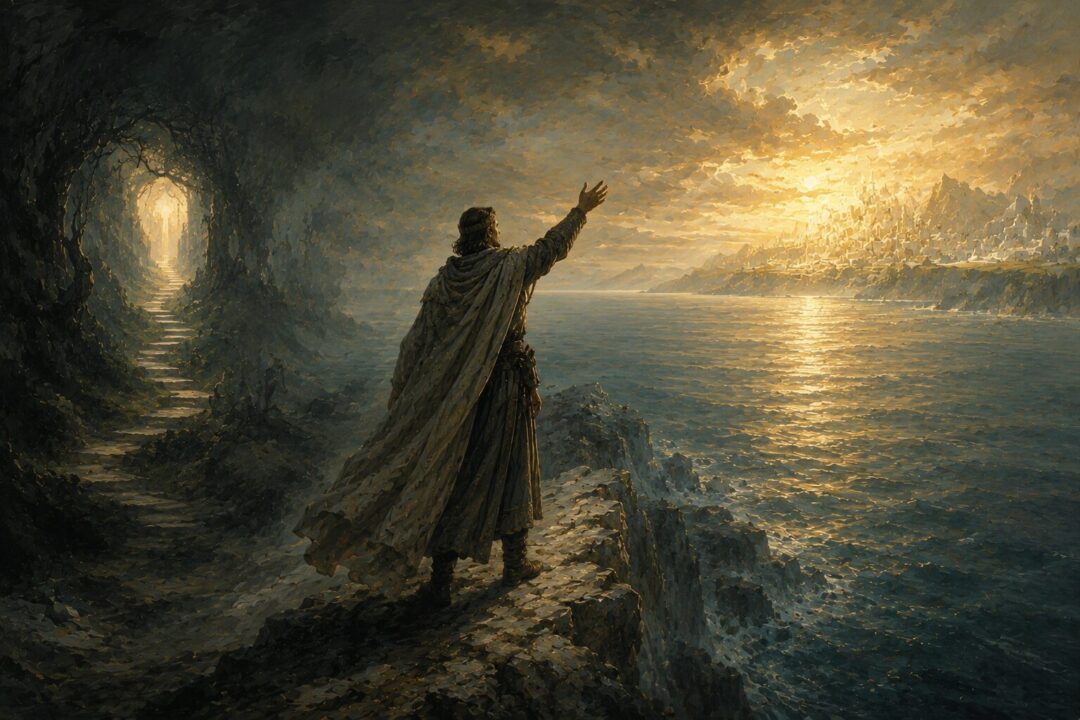
What Mortals Were Really Seeking
The deepest irony of the longing for Valinor is that most mortals were never truly seeking immortal biology.
They sought relief from fear.
They sought permanence in a changing world.
They sought assurance that love would survive death.
They sought justice against time.
They sought a place where loss no longer ruled every generation.
Valinor appeared to embody all those hopes because it visibly displayed beauty untouched by ordinary decay.
Yet the legendarium carefully separates appearance from destiny.
Aman was never humanity's final home.
Its peace belonged to another calling.
The real challenge facing Men was not discovering a road to Valinor but learning to trust that their own road, hidden though it remained, had been given with purpose.
That is why the greatest catastrophe in the history of Men came not from crossing the Sea, but from believing that another race's destiny must be better than their own. The tragedy of Númenor reveals that envy was never truly about reaching the Blessed Realm. It was about refusing the mystery that lay beyond it.
Sources & Notes
- https://tolkiengateway.net/wiki/Valinor — background on the Blessed Realm/Undying Lands, its inhabitants, and why Aman itself is not a mechanism for making mortals immortal.
- https://tolkiengateway.net/wiki/Gift_of_Men — explains mortality as Ilúvatar’s gift to Men and the uncertainty surrounding their fate beyond the Circles of the World.
- https://tolkiengateway.net/wiki/Akallab%C3%AAth — summary of Númenor’s envy of the Undying Lands, Sauron’s corruption of the Númenóreans, and the disastrous attempt to seize Aman.
- https://tolkiengateway.net/wiki/Ban_of_the_Valar — details the prohibition on Númenórean sailing to Aman and the theological reason the Blessed Realm was not the appointed home of Men.
Sources document Valinor, the Gift of Men, the Ban of the Valar, and the Númenórean envy that drives the article.