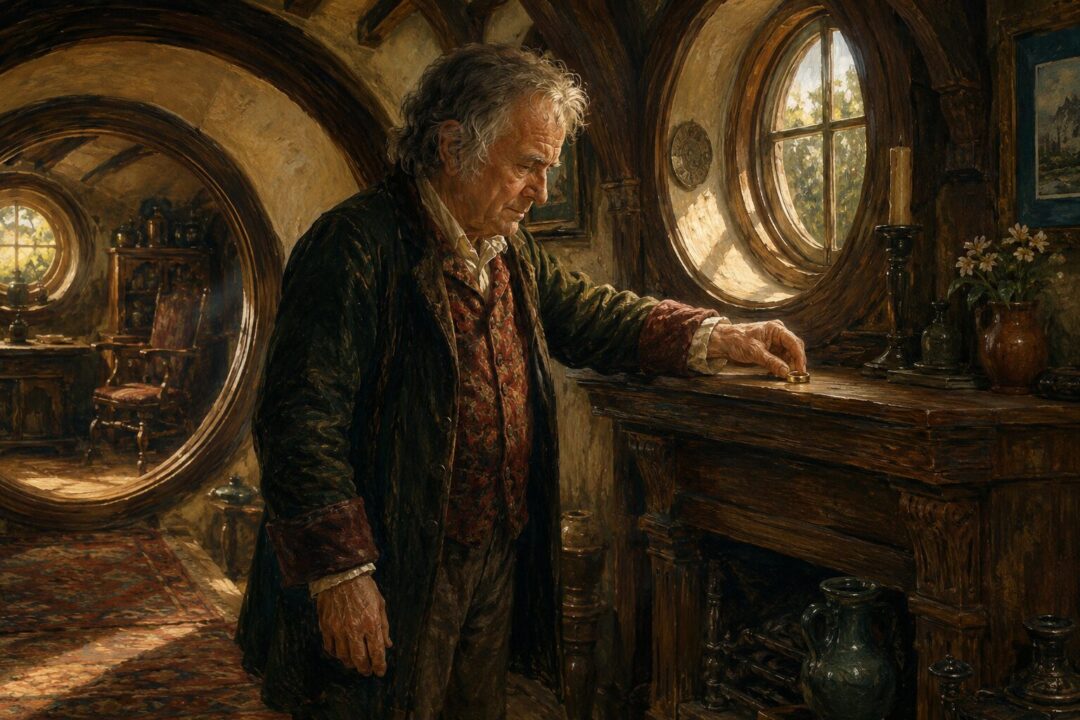
Bilbo Baggins walked out of Bag End with a walking stick, a cheerful song, and one impossible act already behind him: he left the One Ring on his mantelpiece.
For anyone who understands what the Ring truly is, that moment is astonishing. The Ring had already consumed Gollum for centuries. It had corrupted kings, seduced warriors, and would eventually overwhelm Frodo himself at the very edge of Mount Doom. Yet Bilbo, after possessing it for roughly sixty years, became the first known Ring-bearer to surrender it willingly.
The remarkable part is not that Bilbo found the strength to leave it behind. The remarkable part is that Frodo—whose courage may have been even greater—ultimately could not.
At first glance, this seems like a contradiction. But the texts reveal that the two hobbits were carrying very different burdens. Their stories are not examples of one succeeding where the other failed. Rather, they reveal how the Ring's power depended on circumstance, intention, mercy, and proximity to the place of its making.
Bilbo Did Not Escape the Ring Easily
It is tempting to remember Bilbo's farewell party as a light-hearted departure, but the chapter quickly becomes darker.
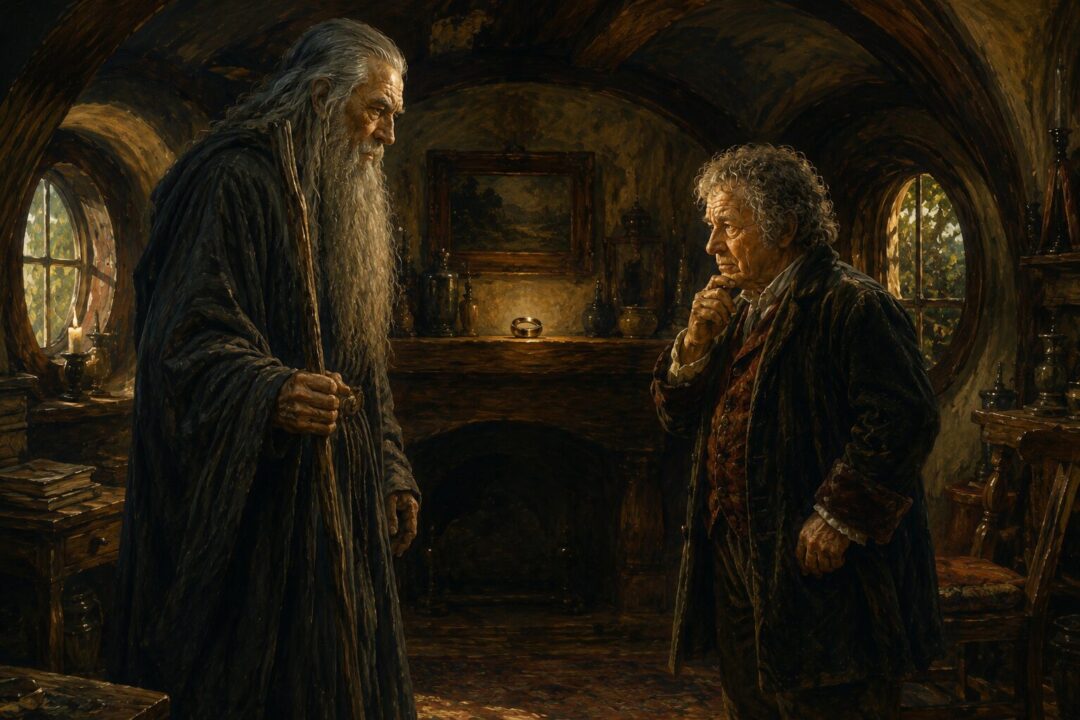
When Gandalf insists that Bilbo leave the Ring for Frodo, Bilbo hesitates. His language changes. He calls it "my Ring" and even "my precious." His mood shifts from generosity to suspicion. For a brief but disturbing moment, Gandalf sees something almost Gollum-like in his old friend.
This scene matters because it proves Bilbo was not immune.
The Ring had already begun to possess him emotionally. Letting go required effort, encouragement, and a painful internal struggle. Gandalf refuses to seize it by force. Instead, he reminds Bilbo of the promise he had already decided to keep.
Only after that struggle does Bilbo laugh, relax, and finally place the Ring on the mantelpiece before walking away.
His victory was real—but it was not effortless.
Bilbo's Decision Began Long Before the Moment Came
One overlooked detail is that Bilbo had already made his decision before Gandalf challenged him.
His birthday party, his carefully prepared inheritance, and his intention to leave the Shire had all been planned in advance. He wanted to begin a final journey to Rivendell and leave his estate to Frodo.
The Ring fought against that decision at the last moment.
This distinction is important.
Bilbo was not suddenly asked to abandon the thing he loved most. He had already concluded that it was time to leave it behind. Gandalf's role was to help him remain faithful to a decision the Ring desperately wanted him to break.
The struggle was therefore brief in time, though profound in significance.
Bilbo Used the Ring Differently
The Ring's corruption is not presented as a simple countdown that affects every bearer equally.
How it is used matters.
Bilbo certainly used the Ring for invisibility during his adventures and occasionally afterward. Yet after returning to the Shire he lived quietly for decades. The Ring became something treasured rather than an instrument of domination.
This does not mean it was harmless.
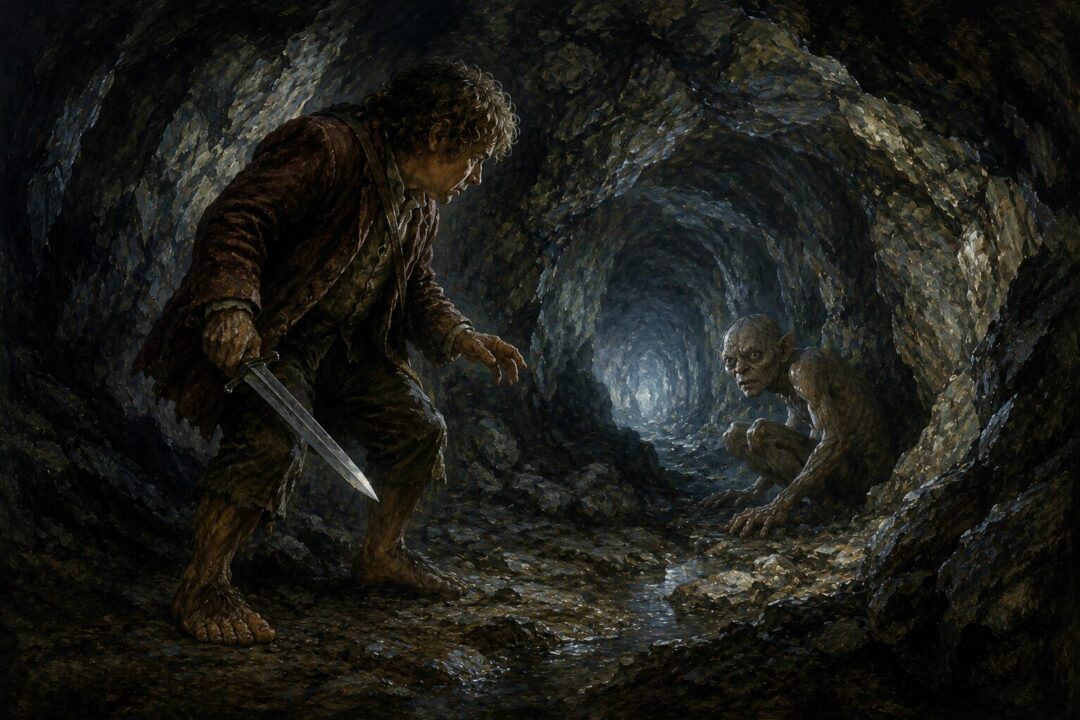
Gandalf later explains that Bilbo escaped with comparatively little damage because his ownership began with pity. Bilbo found Gollum helpless and chose not to kill him, even though doing so might have secured his own escape more easily.
That act of mercy did not make the Ring good.
Instead, it meant Bilbo's relationship with it began without murder, conquest, or the desire to rule. This stands in sharp contrast to Sméagol, who gained the Ring by killing Déagol almost immediately after seeing it.
The texts repeatedly connect mercy with resistance to evil, even though mercy never guarantees complete protection.
Frodo Inherited More Than a Ring
When Bilbo left the Shire, the Ring had not yet reached the height of its influence over Frodo.
In fact, Frodo repeatedly shows a willingness to part with it.
He offers it to Gandalf.
He offers it at the Council of Elrond by accepting that another bearer could theoretically be chosen.
He later offers it freely to Galadriel.
These moments demonstrate that Frodo, early in the journey, had not yet become incapable of surrendering it.
The decisive difference comes later.
Unlike Bilbo, Frodo accepts not merely possession but responsibility.
The Ring is no longer simply an inheritance.
It becomes a burden that no one else is willing to carry.
The Weight Grew as the Journey Continued
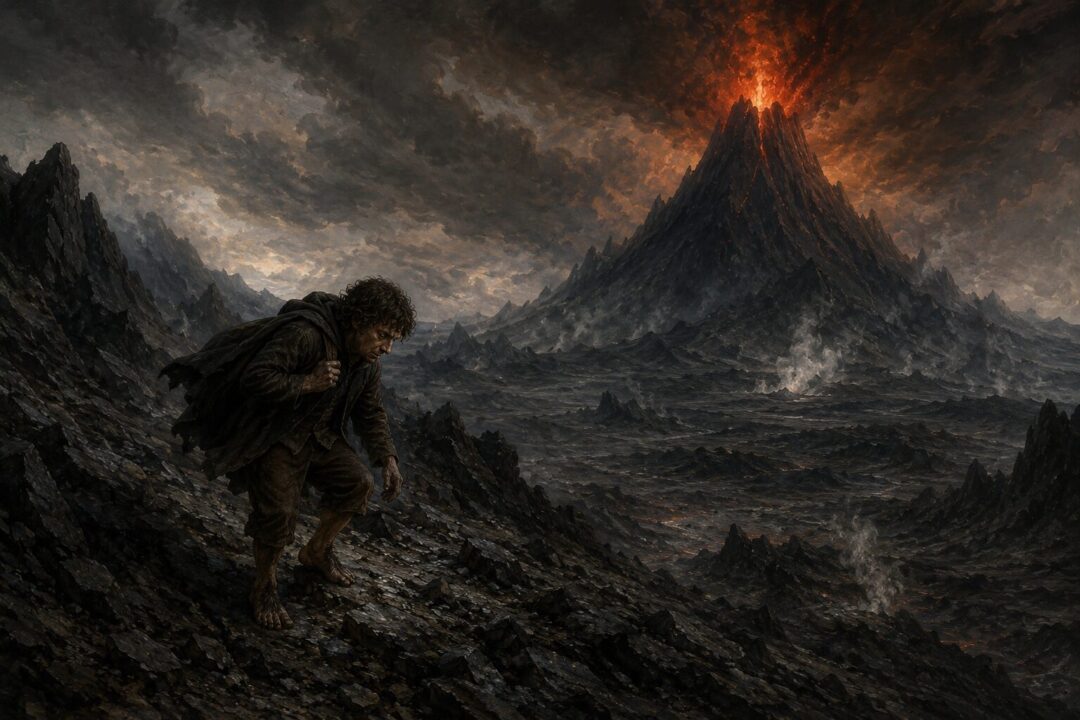
One of the clearest patterns throughout The Lord of the Rings is that the Ring becomes increasingly oppressive as Frodo approaches Mordor.
Its pull strengthens.
Its burden becomes heavier.
Its demands become more personal.
Frodo repeatedly speaks of its growing weight, while others increasingly notice the physical and emotional strain it places upon him.
The closer the Ring comes to the place where it was forged, the greater its power becomes.
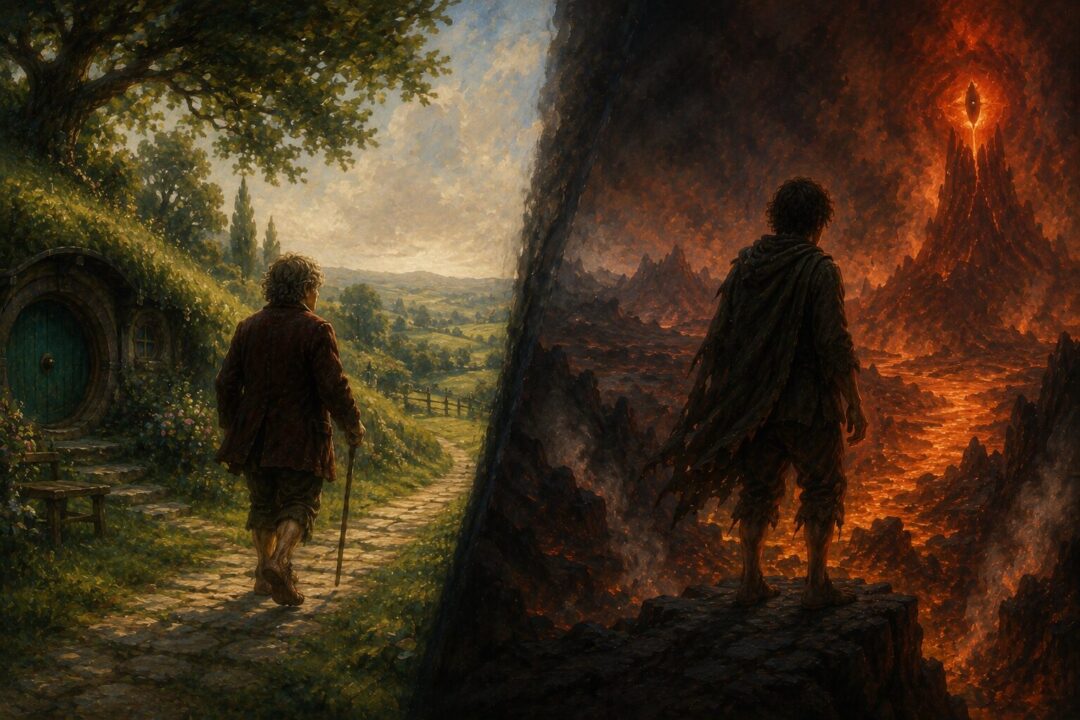
This is why comparing Bag End with the Cracks of Doom is misleading.
Bilbo surrendered the Ring in the peaceful heart of the Shire.
Frodo confronted it at the center of its own power.
Those situations are fundamentally different.
Gandalf Never Expected the Final Test to Be Easy
Another common misunderstanding is that Frodo failed where Bilbo succeeded.
The narrative itself does not support that conclusion.
Long before the Quest reaches its end, Gandalf warns that the Ring cannot simply be ignored or mastered. Elrond refuses to wield it. Galadriel rejects it despite immense temptation. Gandalf himself will not accept it because he fears what he would become.
These are among the wisest and greatest beings remaining in Middle-earth.
If they dare not claim the Ring, expecting Frodo to defeat it entirely by his own will becomes a very different proposition.
One of Tolkien's letters even explains that at the Cracks of Doom the Ring had become effectively irresistible for any mortal. Frodo's inability to cast it away is therefore not presented as a moral collapse but as the culmination of an impossible burden.
Mercy Protected Frodo Too
Bilbo's pity toward Gollum echoes throughout the entire story.
Frodo inherits that same mercy.
Again and again he spares Gollum despite fear, betrayal, and frustration.
Sam struggles to understand these decisions, yet Frodo refuses to abandon compassion completely.
Ironically, this mercy ultimately accomplishes what Frodo himself cannot.
When Frodo finally claims the Ring at Mount Doom instead of destroying it, Gollum attacks, bites off his finger, and takes the Ring back.
Moments later, in his joy, Gollum falls into the Fire.
The Quest succeeds not because Frodo proves stronger than the Ring, but because mercy had preserved the one chain of events through which the Ring could still be destroyed.
Bilbo's earlier act of pity becomes one of the great turning points in the history of Middle-earth.
Bilbo's Long Healing Shows the Ring Was Never Truly Gone
Although Bilbo surrendered the Ring willingly, he was not entirely free of its influence.
When Frodo meets him again in Rivendell, Bilbo asks to see the Ring once more.
For an instant, his face appears frighteningly altered before the desire passes.
The scene demonstrates that surrendering the Ring did not erase its effects.
Even years later, the longing remained.
This reinforces an important point.
Bilbo won an extraordinary victory by giving the Ring away.
He did not erase sixty years of possession with one generous act.
The scars remained, though they were gentler than those suffered by Frodo.
Why Frodo Could Never Simply Do What Bilbo Did
The central difference between the two hobbits is not strength of character.
It is the nature of the task.
Bilbo gave up ownership.
Frodo had to destroy the Ring itself.
Those are profoundly different acts.
Giving something away still allows it to exist somewhere in the world.
Destroying it requires rejecting every promise it offers forever.
By the time Frodo reached Mount Doom, the Ring had spent months concentrating all its power upon a single exhausted bearer who had endured wounds, fear, starvation, grief, and constant temptation.
Bilbo never faced that final confrontation.
Nor was he ever asked to.
The Greater Victory Was Shared
It is easy to frame the story as Bilbo succeeding and Frodo failing.
The legend tells a subtler truth.
Bilbo's willingness to spare Gollum allowed the Quest to remain possible.
His surrender of the Ring made Frodo's mission possible.
Frodo's endurance carried the Ring farther than anyone else could have managed.
Sam's loyalty kept Frodo alive.
Gollum's obsession completed what no mortal could finish alone.
Each part depended upon the others.
Bilbo's achievement remains astonishing because almost no Ring-bearer ever surrendered the Ring willingly.
Frodo's achievement remains greater still because he bore it into the heart of Mordor despite knowing it might destroy him.
The final irony is that both hobbits, in different ways, accomplished what was asked of them.
Bilbo proved the Ring could be relinquished.
Frodo proved it could be brought to the only place where it might be unmade.
Neither victory was complete by itself.
Together, they reveal one of the deepest themes in Middle-earth: evil is overcome not by flawless heroes, but by courage joined to mercy, humility, and grace working through choices whose importance is often understood only at the very end.
Sources & Notes
- https://tolkiengateway.net/wiki/The_Shadow_of_the_Past — Tolkien Gateway, ‘The Shadow of the Past’: summarizes Gandalf’s account of the Ring, Bilbo’s reluctance to leave it, and the importance of pity in the Ring’s later history.
- https://tolkiengateway.net/wiki/Riddles_in_the_Dark — Tolkien Gateway, ‘Riddles in the Dark’: covers Bilbo’s first possession of the Ring and his merciful refusal to kill Gollum, a key contrast with darker claims of ownership.
- https://tolkiengateway.net/wiki/Mount_Doom — Tolkien Gateway, ‘Mount Doom’: details Frodo’s final failure to surrender the Ring at the Cracks of Doom, grounding the article’s Bilbo/Frodo comparison.
- https://tolkiengateway.net/wiki/One_Ring — Tolkien Gateway, ‘One Ring’: background on the Ring’s corrupting power, its bond to Sauron, and why its burden intensifies as the Quest approaches Mordor.
Sources selected for Ring ownership, Bilbo’s mercy, and Frodo’s failure at Mount Doom.