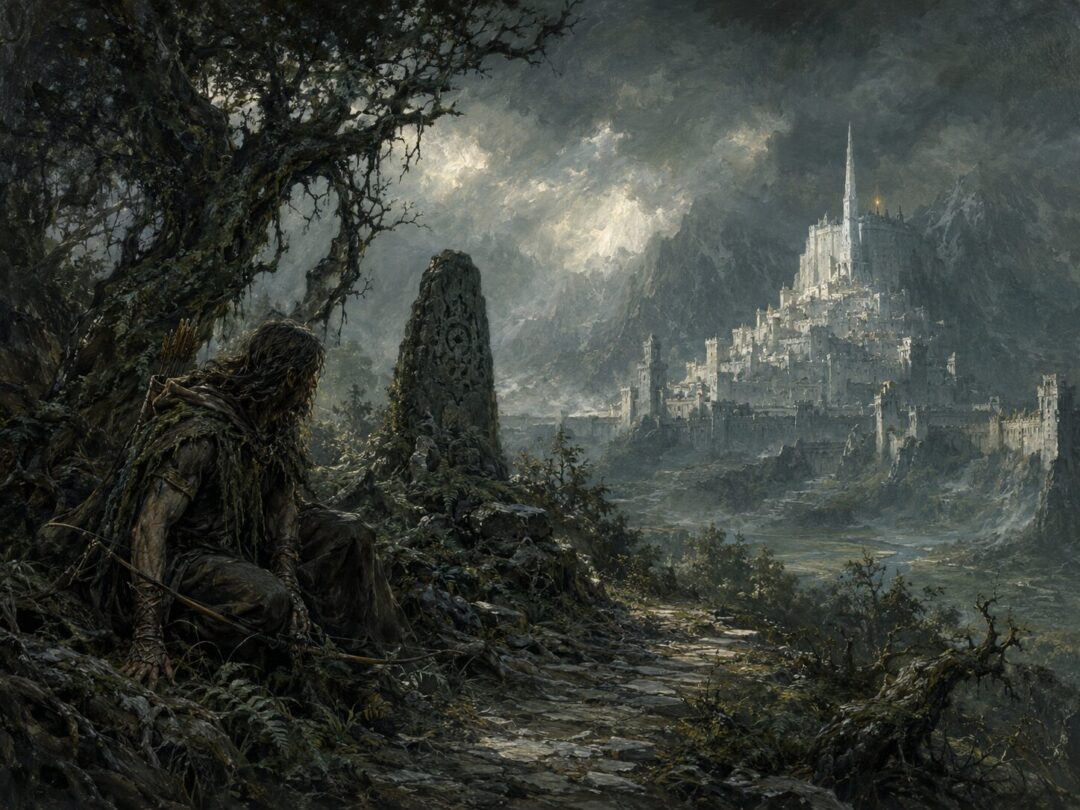
The great stone city of Minas Tirith looked almost impossible to break. It stood in seven circles beneath the White Mountains, guarded by walls, towers, gates, soldiers, and the long memory of Númenor. To its friends, Gondor was the last high kingdom of Men in the West. To its enemies, it was the chief obstacle before Sauron’s victory.
But one of the clearest judgments on Gondor during the War of the Ring does not come from a lord, captain, wizard, or prince.
It comes from Ghân-buri-Ghân.
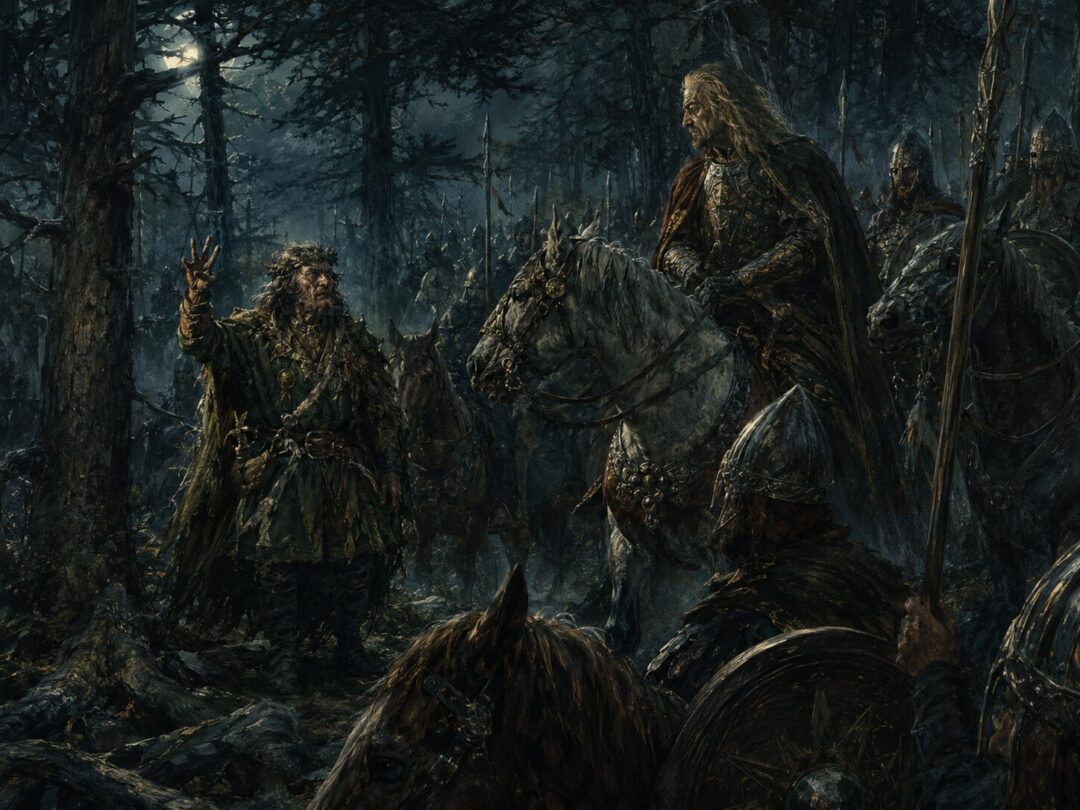
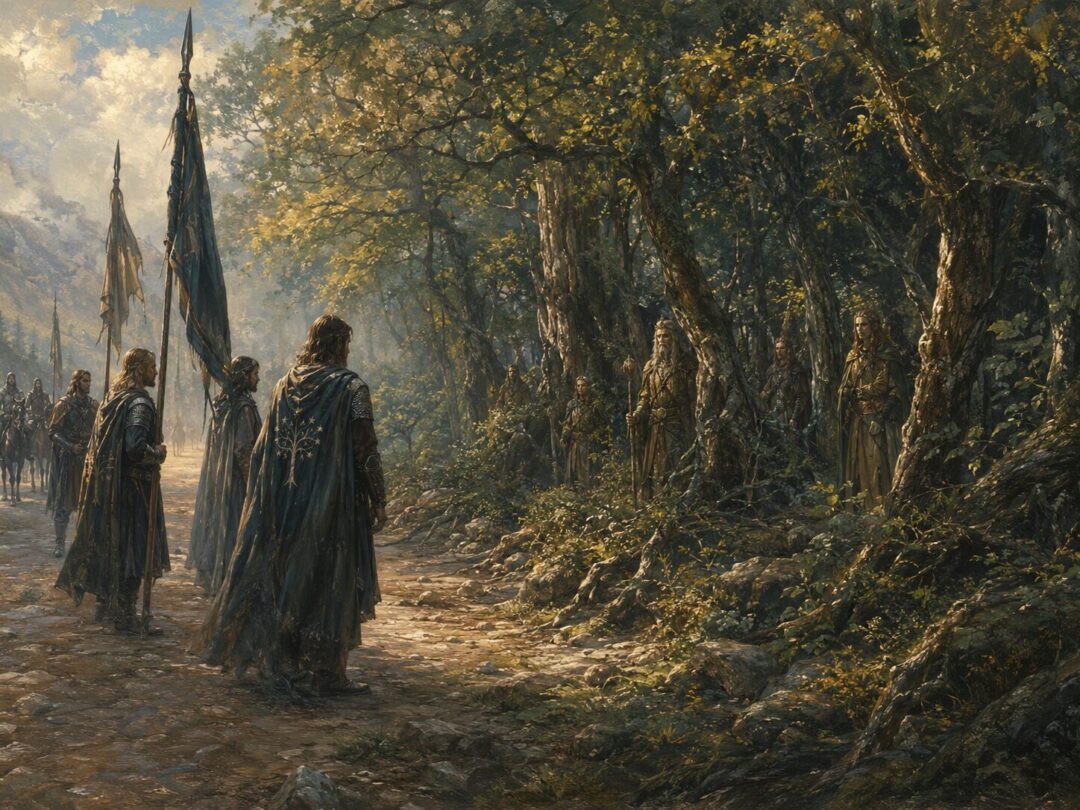
He appears only briefly in The Return of the King, yet his scene in Drúadan Forest changes the fate of Minas Tirith. The Rohirrim are riding to Gondor’s aid, but the road ahead is watched. A force of Orcs and Men has been placed to block them. The beacons have been lit, the oath between Rohan and Gondor has been answered, and still the great rescue almost fails before it reaches the battlefield.
Then Ghân-buri-Ghân steps out of the forest.
He is not impressed by Stone-houses. He is not dazzled by kings. He is not fooled by Gondor’s image of strength. He sees the thing that Gondor’s own allies nearly miss: a kingdom may have walls, banners, and ancient claims, but if it cannot see the people beneath its trees and beside its roads, it does not truly understand its own land.
The Forgotten People Beside the Great Road
Ghân-buri-Ghân is the headman of the Drúedain, also called Woses by the Rohirrim. In the late Third Age, his people live in Drúadan Forest in Anórien, north of the eastern White Mountains, in a place close to Gondor’s roads and warning beacons. The forest lies near Nardol, Eilenach, and Amon Dîn, which makes the Drúedain not a distant curiosity but a hidden people living beside the machinery of Gondor’s war-watch.
That detail matters. Ghân does not come from outside the story like a random helper inserted at the last moment. His people have been there, inside the landscape that Gondor and Rohan pass through but do not fully know.
The texts never suggest that Ghân understands Gondor through court politics or formal diplomacy. His insight is more practical and more severe. He knows the roads. He knows the forest. He knows how many enemies are moving in the dark. He knows what the proud armies do not know: the obvious way to Minas Tirith is no longer safe.
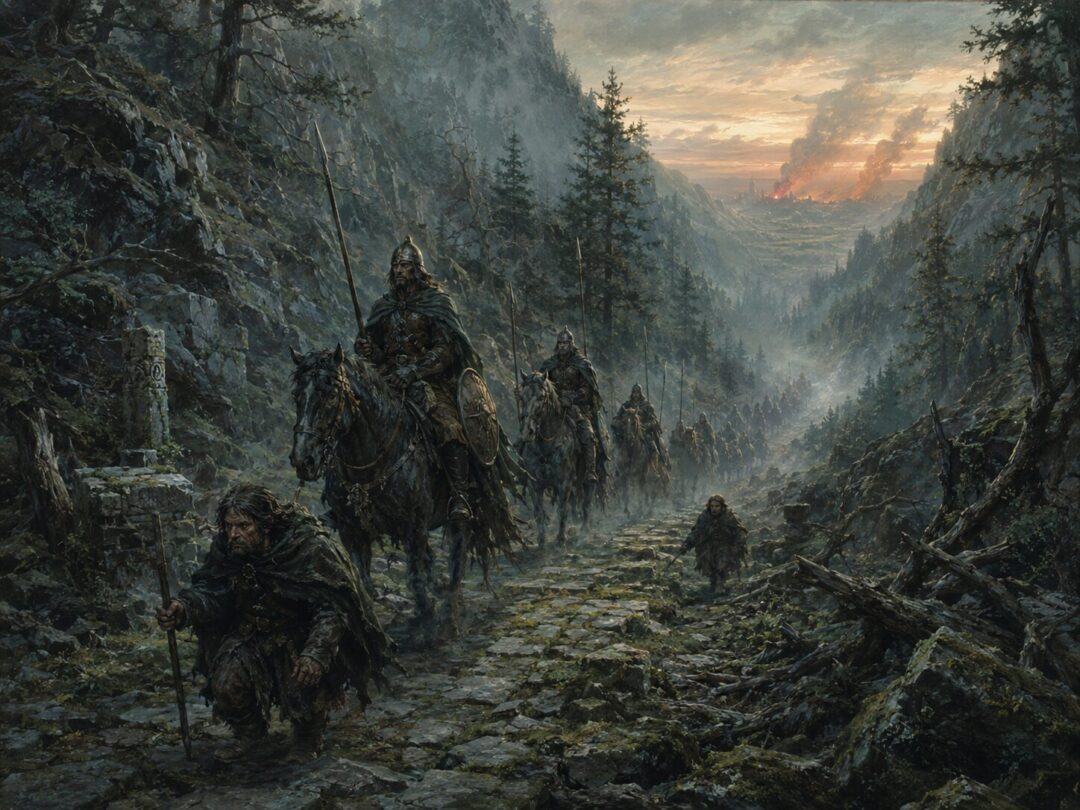
When he meets Théoden, he reveals the existence of an old route through Stonewain Valley, a road once made by Gondor for the movement of stone from the quarries beneath Min-Rimmon toward Minas Anor. By the War of the Ring, that road is overgrown and nearly forgotten. Ghân’s people remember what the kingdoms have allowed to vanish.
Gondor’s Strength Had Become Partly Blind
Gondor is not foolish. Its warning beacons work. Its armies fight with courage. Its captains understand siege, defense, sacrifice, and command. But the episode of Ghân-buri-Ghân exposes a different kind of blindness.
Gondor’s power is monumental. Ghân’s knowledge is local.
That contrast is the heart of the scene. Minas Tirith depends on roads, signals, supply lines, and allies. Yet the decisive path into the Pelennor is not found by the captains of Gondor or the riders of Rohan. It is shown by a forest people whom both realms have treated as strange, marginal, and frightening.
The Stonewain Valley is especially symbolic. It was once part of Gondor’s own working world: a practical road for carrying stone. But in the crisis, Gondor’s forgotten infrastructure becomes useful only because a forgotten people remember it.
One reading is that Ghân sees through Gondor better than its allies do because he sees Gondor from below. Rohan sees the beacon-call, the old alliance, the noble city in need. Ghân sees the vulnerable body of the kingdom: its roads, blind spots, neglected edges, and the people it failed to honor.
He does not need a throne room to understand the truth. He has watched the land.
The Man Who Counts What Kings Miss
Ghân’s most striking quality is not magic. It is attention.
He presents himself as one who counts many things: stars, leaves, and men in darkness. That language makes him seem strange to the Rohirrim, but it also reveals the practical intelligence that saves them. He has counted the danger on the road. He knows that the enemy has more forces. He knows that a direct clash would be costly and perhaps disastrous.
The Rohirrim are brave enough to ride to Minas Tirith. Ghân is wise enough to know bravery alone may arrive too late.
This is where he sees through the heroic surface of the war. Rohan’s answer to Gondor is a magnificent act of loyalty, but the ride still needs secrecy, timing, and knowledge of the ground. Without Ghân, Théoden’s host may have been delayed, weakened, or forced into battle before ever reaching the Pelennor.
The text is careful not to turn the Drúedain into battlefield replacements for Rohan. Their role is not to win glory in the open plain. They guide, scout, and enable passage by hidden ways. Tolkien Gateway summarizes that Ghân-buri-Ghân revealed the old route and guided the Rohirrim so they could avoid the force blocking the main road and reach Minas Tirith in time.
That makes Ghân’s contribution strategically enormous but socially quiet. He does not seek a song. He seeks survival.
His Bargain Reveals the Moral Cost
When Théoden offers reward and friendship, Ghân does not ask for treasure, rank, weapons, horses, or a place in the songs of Rohan. He asks that the Wild Men be left alone and no longer hunted like beasts.
That request changes the whole scene.
Until that moment, the reader may see Ghân mainly as an unexpected guide. But his bargain reveals a history of fear and mistreatment. The text does not give a full legal record of who hunted whom, how often, or under what circumstances. It should not be exaggerated beyond what is stated. But Ghân’s words imply that his people have suffered at the hands of other Men, and that survival—not reward—is the first thing they need.
This makes his aid morally astonishing. Ghân helps the riders not because the great kingdoms have earned his loyalty, but because he hates the Orcs and sees the larger darkness clearly. In return, he asks for a future in which his people are not treated as prey. esl-bits.eu
Here he sees through Gondor and Rohan in another way. He understands that noble kingdoms can fight evil while still carrying their own injustices. The fact that Rohan rides against Sauron does not erase the fear the Woses have of being hunted. The West is better than Mordor, but it is not automatically innocent in every relationship beneath its own trees.
That is a very Tolkien-native tension: the fight against the Shadow does not cancel the need for mercy, humility, and repair.
The Alliance Gondor Needed Was Not Only Royal
Gondor’s great alliance with Rohan is one of the central political bonds of The Lord of the Rings. It is ancient, honorable, and crucial. Yet Ghân’s episode shows that the survival of the West depends on more than formal oaths between kings.
It also depends on whether the great can listen to the small.
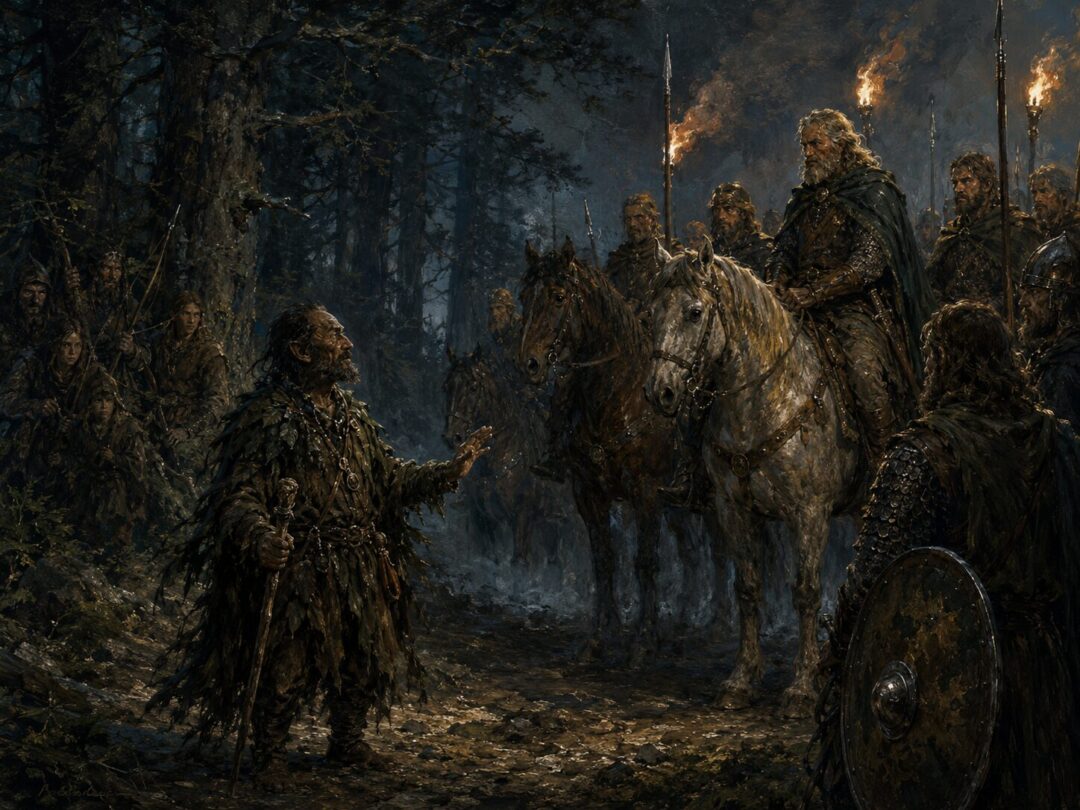
Théoden does listen. That should not be missed. He does not dismiss Ghân as a savage obstacle or a forest superstition. He accepts guidance from a man outside the usual hierarchy of honor. In doing so, he becomes wiser than he would have been by courage alone.
Ghân’s clarity exposes the limits of official maps. Gondor can light beacons across the mountains, but it cannot command the hidden paths if it has forgotten the people who know them. Rohan can muster riders, but horses do not solve every problem. The Drúedain possess the missing kind of knowledge: intimate, old, unglamorous, and indispensable.
This is why Ghân’s scene feels larger than its page-count. It is not only a tactical shortcut. It is a rebuke to the arrogance of civilization when civilization forgets dependence.
Minas Tirith is saved by cavalry, yes. It is saved by Théoden’s courage, Éomer’s fury, Merry’s pity and courage, Éowyn’s defiance, Aragorn’s arrival, and many other acts. But before those moments can fully unfold, it is also saved by a forest headman who knows a road the proud have forgotten.
Elessar Understands the Lesson
The end of Ghân’s story matters as much as the meeting in the forest.
After the War of the Ring, King Elessar grants Drúadan Forest to Ghân-buri-Ghân and his people, and no one is to enter without their leave. This is not merely a generous reward. It is a correction. The hidden people are no longer just tolerated in the margins of a kingdom. Their relationship to their own land is publicly recognized.
That decree also shows that Aragorn’s kingship is not only about restoring old Númenórean greatness. It is about governing with a justice that old greatness had not always achieved. The Reunited Kingdom does not simply absorb the Drúedain as useful subjects. It protects their separateness.
This is easy to overlook because the scene is quiet. There is no coronation splendor around Ghân’s reward, no long speech explaining its philosophy. Yet it is one of the clearest signs that the Fourth Age, at its best, must not simply rebuild the past. It must heal what the past left wounded.
Ghân saw the truth before the kings declared it: his people did not need to be improved, conquered, displayed, or folded into someone else’s glory. They needed to be left in peace.
The Real Meaning of Seeing Through Gondor
So why did Ghân-buri-Ghân see through Gondor better than its allies did?
Not because he despised Gondor. Not because he was wiser in every matter than Denethor, Théoden, or Aragorn. The texts do not make him a hidden master of statecraft. His wisdom is narrower, but in the moment, it is exactly the wisdom everyone needs.
He sees that stone walls are not enough. He sees that roads decide wars. He sees that forgotten peoples may hold the key to famous kingdoms. He sees that the West can oppose Sauron and still owe mercy to those it has feared or mistreated. He sees that survival without justice is not a true victory.
Gondor’s allies looked toward Minas Tirith and saw the White City needing rescue.
Ghân-buri-Ghân looked at the same crisis and saw the land beneath the city, the dark between the trees, the enemy on the road, and the old debt owed to the people no one had cared to know.
That is why his brief appearance matters so much. In a war of kings, wizards, captains, and armies, the road to hope passes through the memory of the overlooked.
And for one decisive night, Middle-earth is saved not by a greater wall, but by someone who knew the way around it.
Sources & Notes
- Tolkien Gateway, “Ghân-buri-Ghân” — summarizes Ghân as the Drúedain headman who guided Théoden and the Rohirrim through Drúadan Forest by the Stonewain Valley road, matching the article’s central scene. https://tolkiengateway.net/wiki/Gh%C3%A2n-buri-Gh%C3%A2n
- Tolkien Gateway, “Drúedain” — gives background on the Drúedain/Woses, their place in Tolkien’s legendarium, and their marginal relationship to other peoples of Middle-earth. https://tolkiengateway.net/wiki/Dr%C3%BAedain
- Tolkien Gateway, “Drúadan Forest” — locates Ghân’s people in Anórien near Gondor’s beacon hills and explains the forest setting where the Rohirrim receive his aid. https://tolkiengateway.net/wiki/Dr%C3%BAadan_Forest
- Tolkien Gateway, “Stonewain Valley” — identifies the old Gondorian road through Stonewain Valley that Ghân reveals to bypass the enemy blocking the main route to Minas Tirith. https://tolkiengateway.net/wiki/Stonewain_Valley
Sources cover Ghân-buri-Ghân, the Drúedain/Woses, Drúadan Forest, and the Stonewain Valley route that lets the Rohirrim bypass the blocked road.