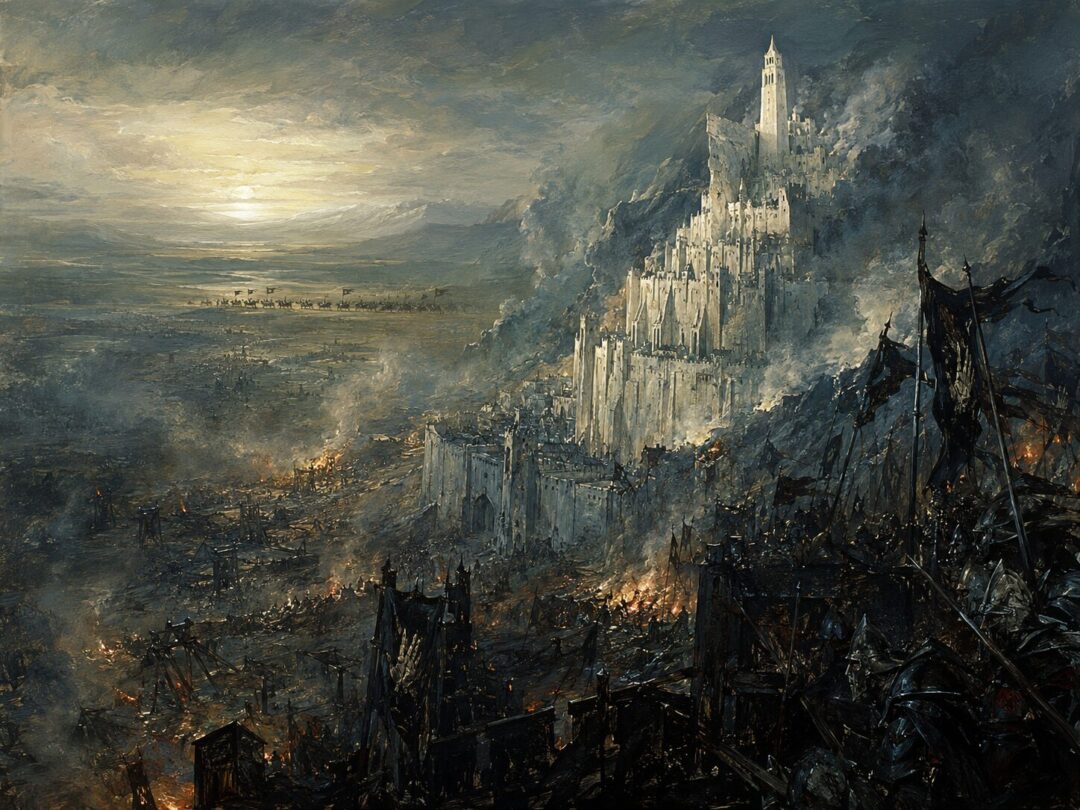
Minas Tirith did not survive because its walls were untouched. They were not. It did not survive because its ruler remained steadfast. Denethor broke before the city did. It did not even survive because one army simply defeated another in clean heroic fashion. The Battle of the Pelennor Fields was far more fragile than that: a sequence of late arrivals, nearly failed choices, hidden roads, desperate courage, and moments when doom was already inside the gate.
The White City endured because Rohan came when hope had become unreasonable.
That is the deeper force behind the Ride of the Rohirrim. It was not merely a cavalry charge. It was an act of faith across distance, darkness, political strain, military impossibility, and almost certain death. Minas Tirith was saved not by certainty, but by a people who chose their oath even after the world had given them every excuse to turn back.
The City Was Already Breaking
By the time the Rohirrim reached the Pelennor, Minas Tirith was not simply “under threat.” It was being crushed.
Sauron’s assault on Gondor had been carefully prepared. Minas Morgul’s host crossed into Gondor, the outer defenses were overwhelmed, Osgiliath fell, the Rammas Echor was breached, and the Pelennor itself became enemy ground. The siege of Minas Tirith was part of Sauron’s larger campaign to take Gondor’s chief city during the War of the Ring, and the siege was broken only by the Battle of the Pelennor Fields.
The terror was not only military. The Nazgûl were weapons of despair. Their presence weakened courage before blades even met. Faramir was carried back wounded and fevered. Denethor, who had long borne the burden of Gondor’s defense, looked into ruin and chose death rather than endurance. The Steward’s failure matters because it shows how close Minas Tirith came to collapse from within.
The city’s walls still stood, but its command was spiritually broken.
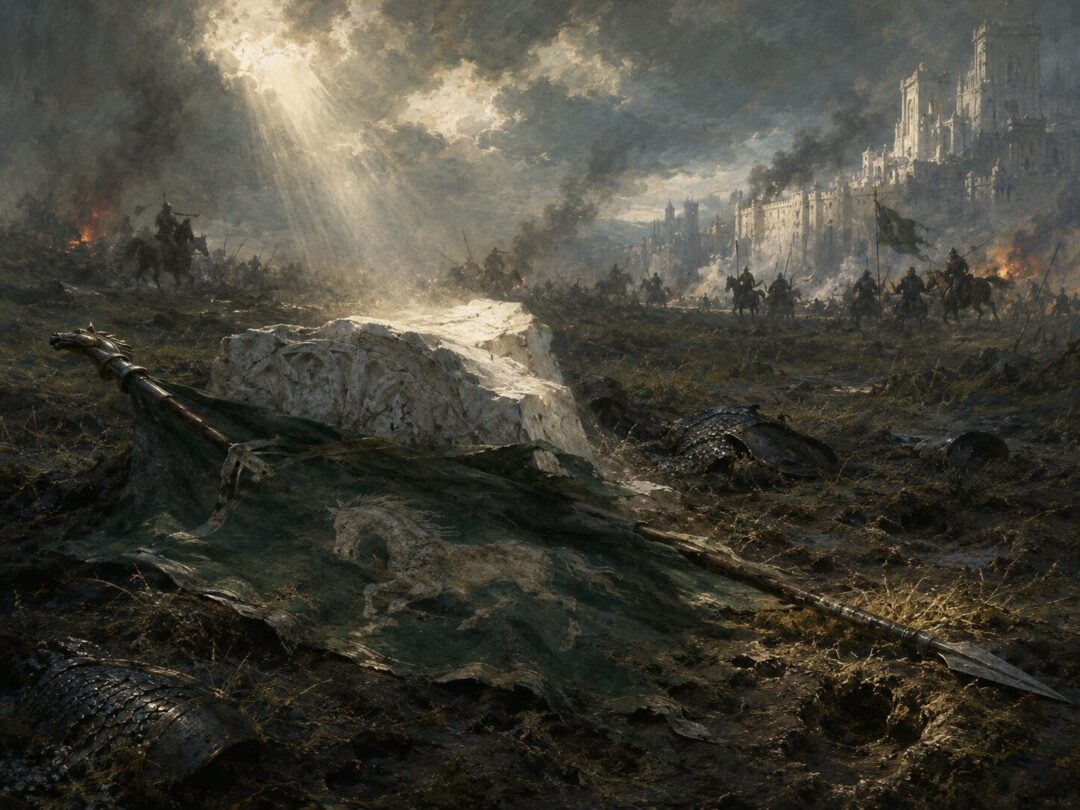
Then came Grond, the great battering ram of Mordor. The Gate of Minas Tirith was shattered. The Witch-king entered beneath the archway, and no enemy had passed there before in the city’s history. Gandalf stood against him, but the confrontation was interrupted before it could unfold. The horns of Rohan sounded from the north, and the battle changed shape.
That timing is crucial. Rohan did not arrive to a stable defense. It arrived at the edge of disaster.
Rohan Had Every Reason Not to Come
The ride to Minas Tirith is often remembered as inevitable because it feels inevitable in hindsight. In the story itself, it is anything but.
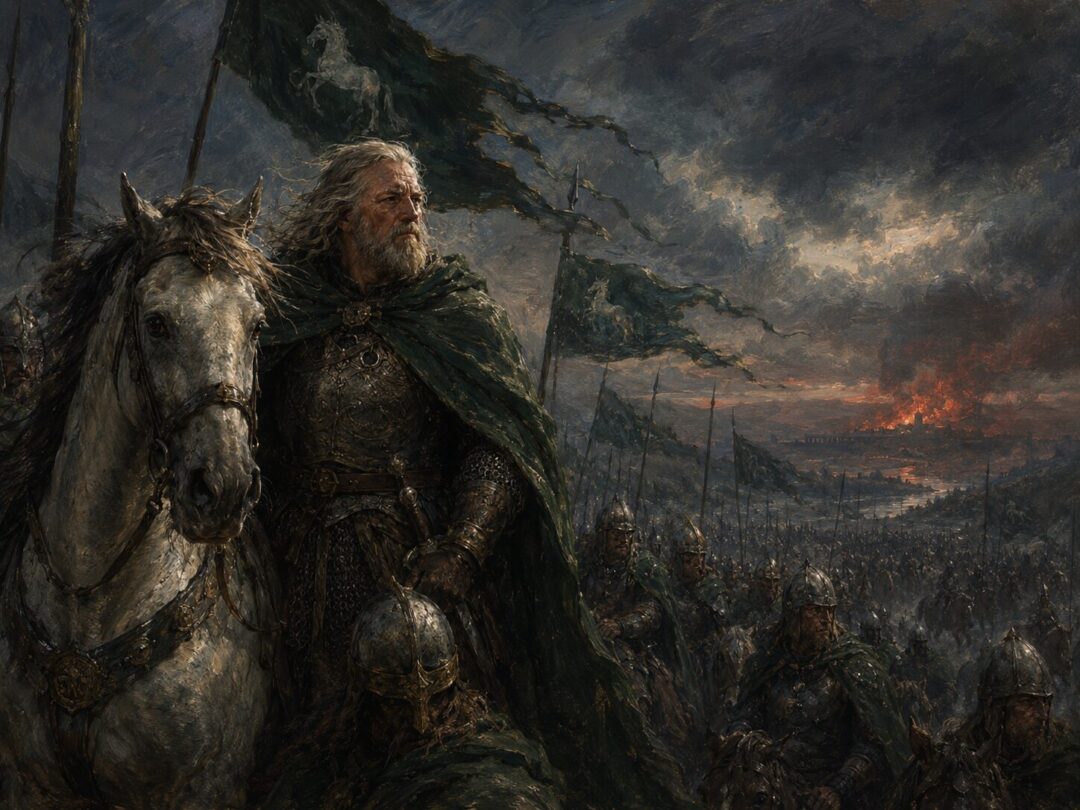
Rohan had just survived its own crisis. Saruman had attacked through Isengard. Théoden had been restored from weakness and manipulation, but his kingdom was wounded. Many of his people were dead. His strength was limited. The Rohirrim were not marching from comfort or abundance; they were riding from a land that had nearly fallen.
Even the muster was not enough for what they faced. Théoden states that six thousand Riders would set out for Minas Tirith, though he also knows they cannot arrive as quickly as Gondor needs. Six thousand horsemen are formidable, but against the armies gathering around Minas Tirith, they are not a guaranteed answer. They are a wager.
There is also a political shadow beneath the ride. Gondor and Rohan are allies, but their bond is maintained by memory, oath, and choice. Rohan is not magically compelled to answer. Théoden must decide. His people must follow. The Red Arrow and the beacons call for aid, but a call is not the same as obedience.
That is why the ride matters. It is not destiny acting like a machine. It is a free people choosing to spend themselves for another realm.
The Hidden Road Through Despair
The ride nearly fails before it reaches the battlefield.
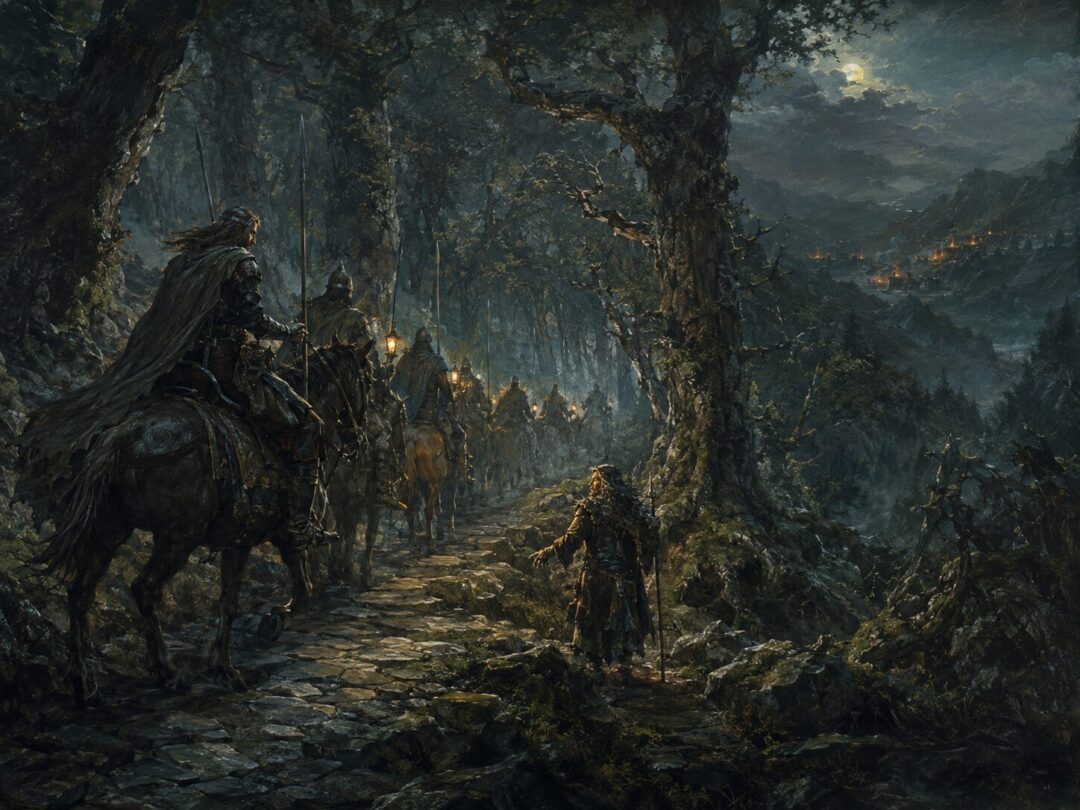
Sauron’s forces are not only before Minas Tirith. They have moved to block the way. The Enemy has taken positions that make the direct road dangerous, and the Rohirrim learn that forces from Mordor are watching for them. Without help, they may arrive too late, or not at all.
The overlooked turning point is the aid of the Drúedain. Ghân-buri-Ghân and his people guide the Rohirrim through the Stonewain Valley, allowing them to bypass the Enemy’s watchers. This is not a decorative episode. It is one of the hidden hinges of the battle. The greatest cavalry ride of the Third Age depends on people whom the proud realms of Men might easily ignore.
That detail gives the rescue of Minas Tirith a wider moral pattern. The city is not saved by kings alone. It is saved by the humble, the marginal, the overlooked, and the faithful: Pippin running for help, Beregond defying orders, Merry riding where he was not supposed to ride, Éowyn standing where no one expected her, the Drúedain opening a path through the dark woods.
Rohan’s impossible ride is therefore not only a feat of speed. It is a lesson in hidden providence. The road exists because the great are willing, at last, to accept help from the small.
The Horns at Dawn Changed More Than Strategy
When the Rohirrim arrive, they do not simply add numbers to Gondor’s side. They alter the emotional weather of the war.
The Witch-king’s assault is built on terror. Mordor’s armies are vast, but their deepest weapon is the certainty that resistance is pointless. Minas Tirith is meant to see itself surrounded, abandoned, and doomed. Denethor has already accepted that interpretation. Sauron wants the city to believe the story is over.
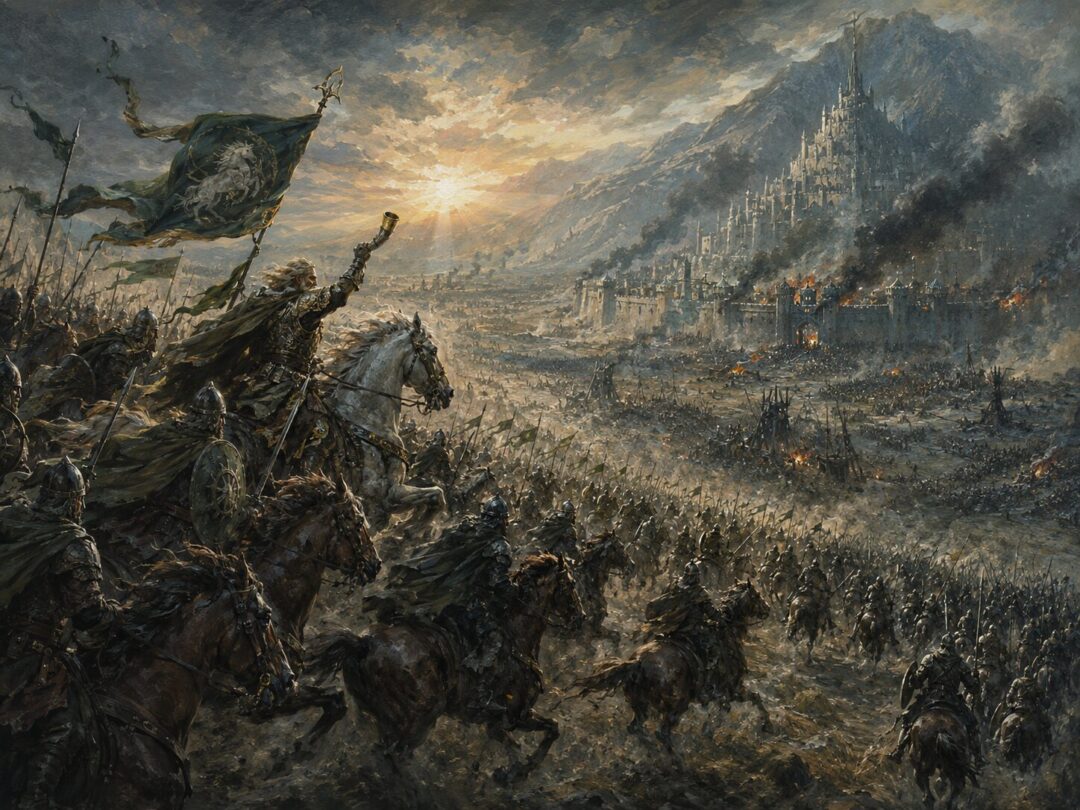
Then the horns of Rohan answer.
This is why the moment feels larger than tactics. The sound announces that Minas Tirith is not alone. A realm far away has come through night, danger, and near impossibility. The psychological effect is as important as the military one. The defenders receive proof that loyalty still exists. Mordor receives proof that its calculations are incomplete.
Théoden’s charge then cuts into the besieging forces with devastating force. The Rohirrim break into the Pelennor, drive through enemies and siege works, and throw the assault into confusion. Théoden himself rides in renewed kingly vigor before his death. The battle does not become easy, and the Rohirrim are not enough by themselves to guarantee final victory, but they prevent the city’s fall at the decisive instant.
They buy Minas Tirith the one thing it no longer had: time.
Théoden’s Ride Is Not a Simple Triumph
The cost is immediate.
Théoden dies beneath Snowmane after the Witch-king turns upon him. Many Riders fall. The charge that saves Minas Tirith also spends the strength of Rohan’s king and many of his people. The victory is never clean or painless.
That is part of its power. Théoden does not ride because victory is assured. He rides because the alternative is dishonor, abandonment, and the slow death of all free lands separately. His greatness at the Pelennor is not that he knows he will win. It is that he acts rightly without that knowledge.
His death also prevents the ride from becoming mere glory. Rohan’s choice has a moral beauty precisely because it is costly. The Rohirrim do not arrive like invincible saviors. They arrive as mortal allies, and their sacrifice makes room for others to act.
That room matters. Éowyn and Merry destroy the Witch-king, fulfilling a prophecy in a way the Enemy did not foresee. Imrahil and the men of Gondor continue the fight. Aragorn arrives by the Anduin with forces gathered after the defeat of the Corsairs. The battle is won through convergence, not one isolated miracle.
So a careful reading should not say, “Rohan alone saved Minas Tirith.” It should say something stronger and truer: without Rohan’s arrival at that moment, Minas Tirith likely would not have endured long enough for the rest of hope to arrive.
The City Survived Because Someone Kept Faith
The great irony of Minas Tirith is that stone alone could not save it. The city is built as a symbol of endurance, tier upon tier, white and ancient, facing the darkness from the east. But in its hour of need, its survival depends on motion: riders crossing leagues, messengers risking death, hidden guides opening paths, and allies refusing to let despair define reality.
Rohan’s ride is impossible because it is late, outmatched, exhausted, and strategically uncertain. Yet it is also necessary because Gondor cannot be saved as an isolated fortress. Middle-earth survives through fellowship at the level of kingdoms as well as companions.
That is the hidden rule of the Pelennor. The West does not win by matching Sauron’s strength. It wins by refusing his logic. Sauron assumes fear will divide his enemies, that distance will weaken oaths, that despair will make each people choose survival over sacrifice. Rohan disproves him.
The horns at dawn are therefore not only the sound of cavalry. They are the sound of an oath still alive.
Minas Tirith survives because Rohan rides when the ride seems useless. It survives because Théoden chooses the burden of alliance over the safety of delay. It survives because small peoples, wounded kings, hidden guides, and forbidden riders all become part of one answer to the Shadow.
The White City is not saved by walls alone.
It is saved because, at the edge of morning, someone came.
Sources & Notes
- Wikipedia overview of Minas Tirith and the siege in The Return of the King — https://en.wikipedia.org/wiki/Minas_Tirith
- Wikipedia overview of Rohan and its cavalry culture in Tolkien’s world — https://en.wikipedia.org/wiki/Rohan,_Middle-earth
- Wikipedia overview of The Return of the King for the Pelennor Fields narrative context — https://en.wikipedia.org/wiki/The_Return_of_the_King
Sources selected for Tolkien-lore context and reader verification.