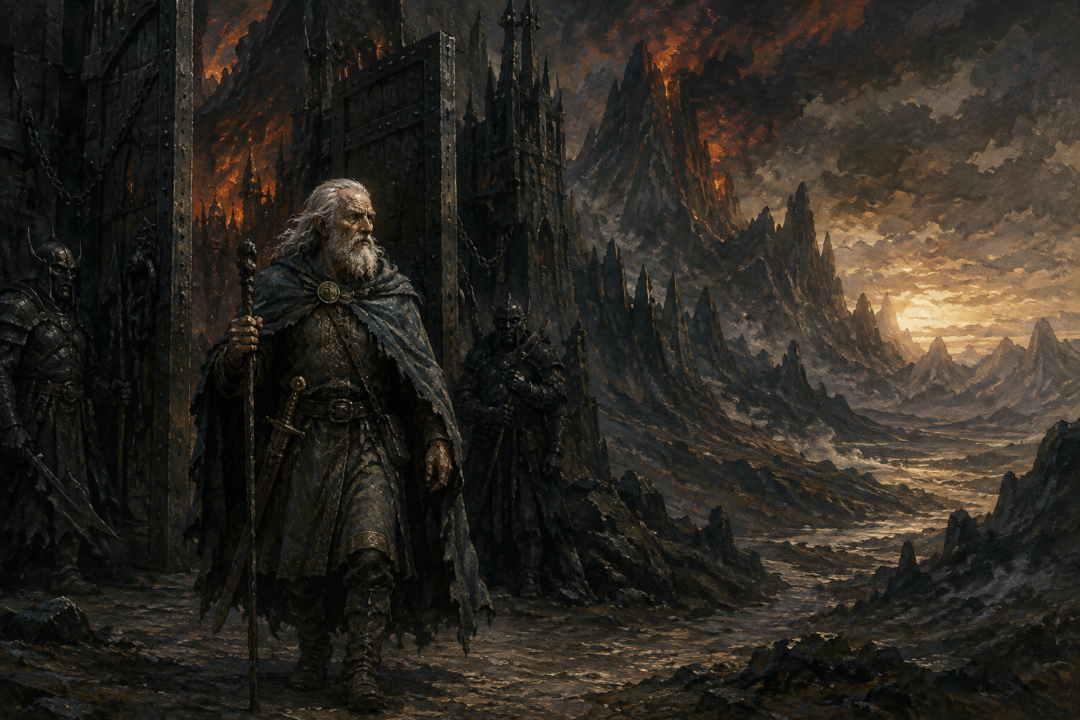
Húrin Thalion survives something almost no mortal Man could have endured. After the disaster of the Nirnaeth Arnoediad, he is captured alive and brought before Morgoth. He refuses to betray the location of Gondolin, defies the Dark Lord to his face, and is condemned to witness the ruin of his family under Morgoth’s curse.
Yet the strangest part of Húrin’s punishment comes at the end.
Morgoth lets him go.
On the surface, this can look like the exhaustion of a sentence: Húrin has suffered, his children are dead, and his captor finally releases him. But The Silmarillion explicitly strips away that interpretation. Morgoth pretends that pity motivates the release, while his real purpose is further malice against Elves and Men.
Húrin is no longer useful merely as a prisoner.
He has become useful as a free man.
That distinction reveals one of the darkest features of Morgoth’s power. He does not need to transform Húrin into a willing servant. Instead, he sends a traumatized, bereaved and embittered enemy back into a collapsing Beleriand, expecting Húrin’s wounds to spread damage wherever he goes.
Húrin Had Already Defeated Morgoth in One Important Sense
Húrin enters captivity after one of the greatest acts of defiance in the First Age.
At the Nirnaeth Arnoediad, Húrin and the Men of Dor-lómin hold the rearguard near the Fen of Serech so that Turgon can escape toward Gondolin. Húrin is eventually overwhelmed and captured, but his resistance helps preserve the Hidden Kingdom.
That matters because Morgoth desperately desires to discover Gondolin.
When Húrin is brought before him, Morgoth attempts to extract what Húrin knows. Húrin refuses. Morgoth therefore attacks him through something harder to defend than his own body: his family.
The curse upon Húrin’s house is not merely a declaration that bad things will happen. In the Narn i Hîn Húrin, Morgoth boasts of casting his shadow upon those Húrin loves, while Húrin challenges Morgoth’s claim to absolute mastery over Arda.
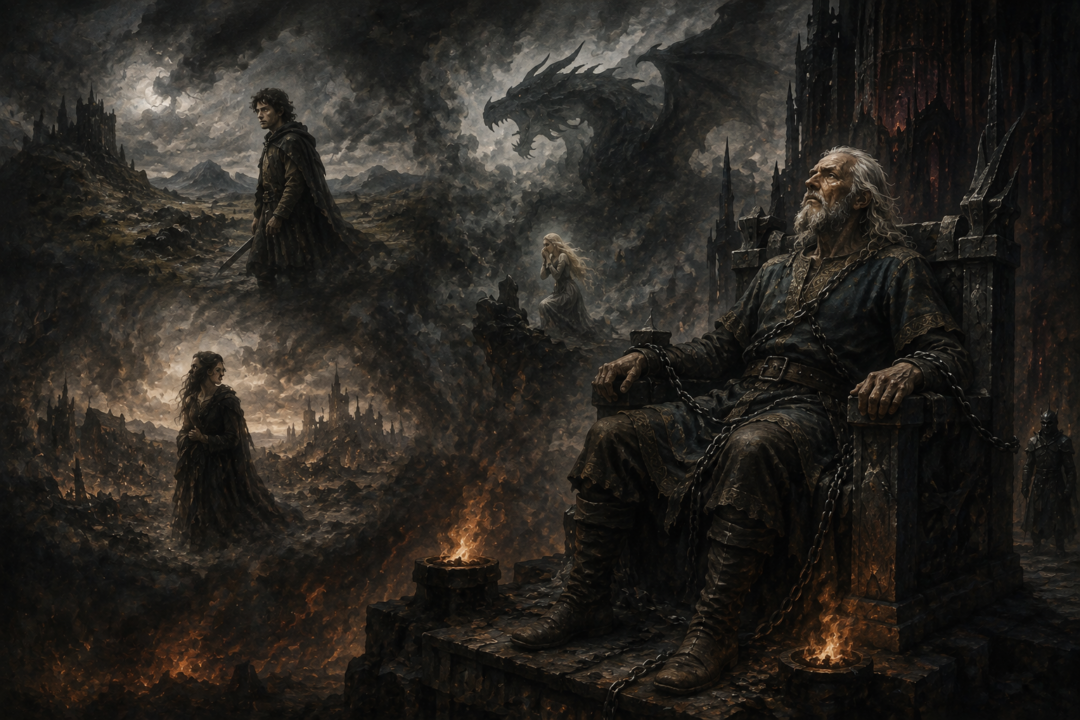
Morgoth then imprisons him and forces him to perceive the fate of his family through Morgoth’s power.
This creates a particularly cruel form of captivity. Húrin cannot intervene. He can neither warn Túrin nor protect Morwen and Niënor. He must watch events unfold while receiving them through the perspective of the being who hates him.
His physical resistance survives.
His understanding of the world is being poisoned.
Morgoth Does Not Release a Converted Servant
This is essential to understanding what happens next.
Húrin does not emerge from captivity as a conventional agent of Morgoth. There is no indication that he has secretly sworn allegiance to Angband or agreed to perform missions for the Enemy.
His danger lies precisely in the fact that he remains Húrin.
He still remembers his loyalties. He still hates Morgoth. He still possesses the pride and formidable will that once made him one of the greatest warriors among Men.
But those qualities now coexist with decades of captivity, the destruction of his house, and the knowledge of the terrible fates of Túrin and Niënor.
In The Silmarillion, Morgoth feigns pity when he releases Húrin, but the narrative states that his true purpose is that Húrin should further Morgoth’s hatred of Elves and Men.
The later material concerning Húrin’s wanderings develops the same basic idea. His release is an act of malice, not reconciliation.
Calling this the “weaponization” of Húrin’s grief is therefore an interpretation rather than Tolkien’s terminology, but it closely describes the strategy presented in the texts: Morgoth expects the damaged man’s freedom to produce consequences that imprisonment no longer can.
The First Trap Is Waiting in Hithlum
Morgoth does not simply open a door and allow Húrin to disappear unnoticed.
In the fuller account preserved in The War of the Jewels, Húrin is conducted back toward Hithlum. His return under such circumstances helps create suspicion around him.
The country he remembers is effectively gone. The House of Hador has been broken, its surviving people oppressed, and Easterlings dominate the land.
Húrin discovers that even freedom has been corrupted.
People have reason to wonder why Morgoth would release a prisoner who had resisted him for so long. The possibility that Húrin might now enjoy Morgoth’s favor isolates him further. Morgoth does not need Húrin actually to become a traitor if others can be induced to fear that he might be one.
That is psychological warfare operating through reputation.
Húrin has lost his children, his household and his former place in the world. Now even his identity as Morgoth’s enemy can no longer guarantee trust.
The prisoner has been released, but the prison follows him.
Gondolin Shows Morgoth’s Strategy Working
The most consequential immediate example comes when Húrin seeks Gondolin.
This is tragically appropriate. Long before, Húrin and his brother Huor had been brought secretly to Gondolin and later permitted to depart after swearing not to reveal its location. During the Nirnaeth, Húrin’s last stand helped Turgon escape.
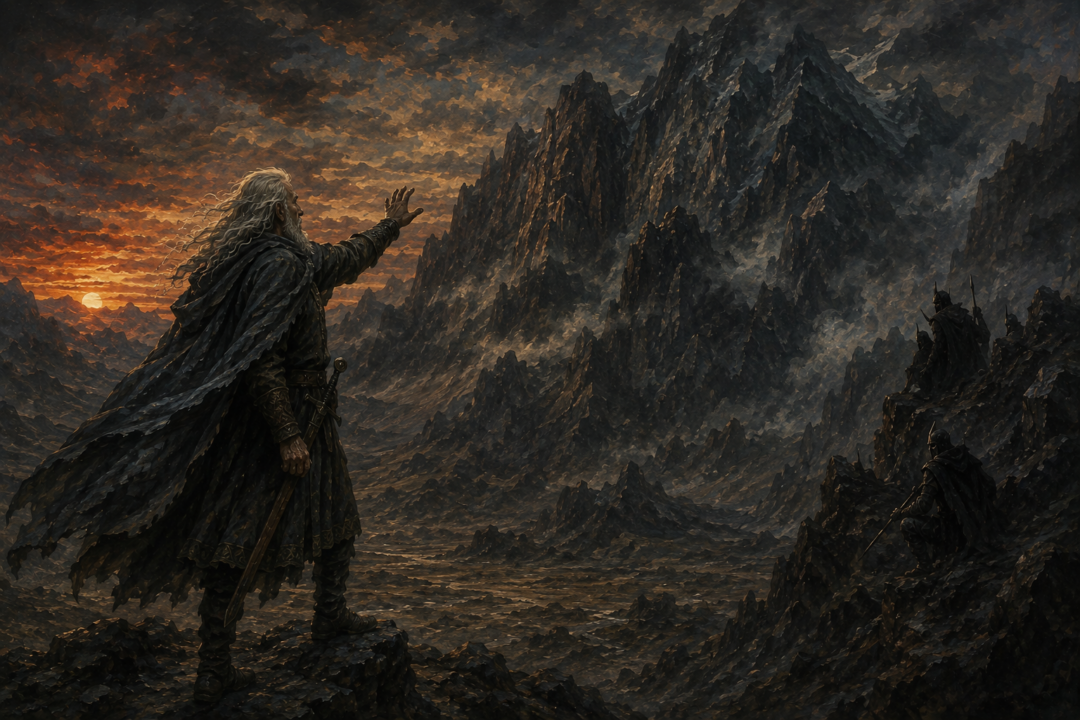
After his release, Húrin returns toward the Encircling Mountains hoping to find the hidden realm again.
But Gondolin has become intensely secretive, and the old approach is closed.
Turgon learns that Húrin is outside. He hesitates, fearing what Morgoth may have done to his former ally. Eventually pity and memory move him to send for Húrin, but the decision comes too late.
Before leaving, Húrin cries out to Turgon and invokes the Fen of Serech.
The tragedy is that Morgoth’s watchers are observing him.
Húrin does not knowingly betray Gondolin. He has kept its secret through torture and decades of captivity. Yet his desperate appeal tells Morgoth’s servants that the Hidden Kingdom must lie somewhere in that region.
The man who once saved Turgon has unintentionally helped narrow the Enemy’s search for Turgon’s refuge.
It is difficult to imagine a crueler victory for Morgoth.
Morgoth Exploits Virtues as Well as Weaknesses
Húrin’s tragedy is more disturbing because his destructive actions cannot simply be reduced to evil character.
His grief grows from love.
His bitterness grows partly from loyalty betrayed or apparently unanswered.
His anger grows from real losses.
His determination grows from the same strength that allowed him to withstand Morgoth.
The Enemy does not create these qualities from nothing. He works upon them.
This pattern appears elsewhere in the First Age. Morgoth repeatedly gains leverage by twisting desires and virtues until they become dangerous: fear becomes secrecy, loyalty becomes possessiveness, pride becomes refusal to retreat, and grief becomes wrath.
With Húrin, the process is unusually personal.
Morgoth had failed to obtain the secret of Gondolin directly from him. After years of torment, however, he can release Húrin into circumstances where Húrin’s own longing for Gondolin produces information indirectly.
Morgoth could not make Húrin speak as a captive.
He could make the world hurt Húrin until the free man cried out.
The Grave of His Children Does Not End the Torment
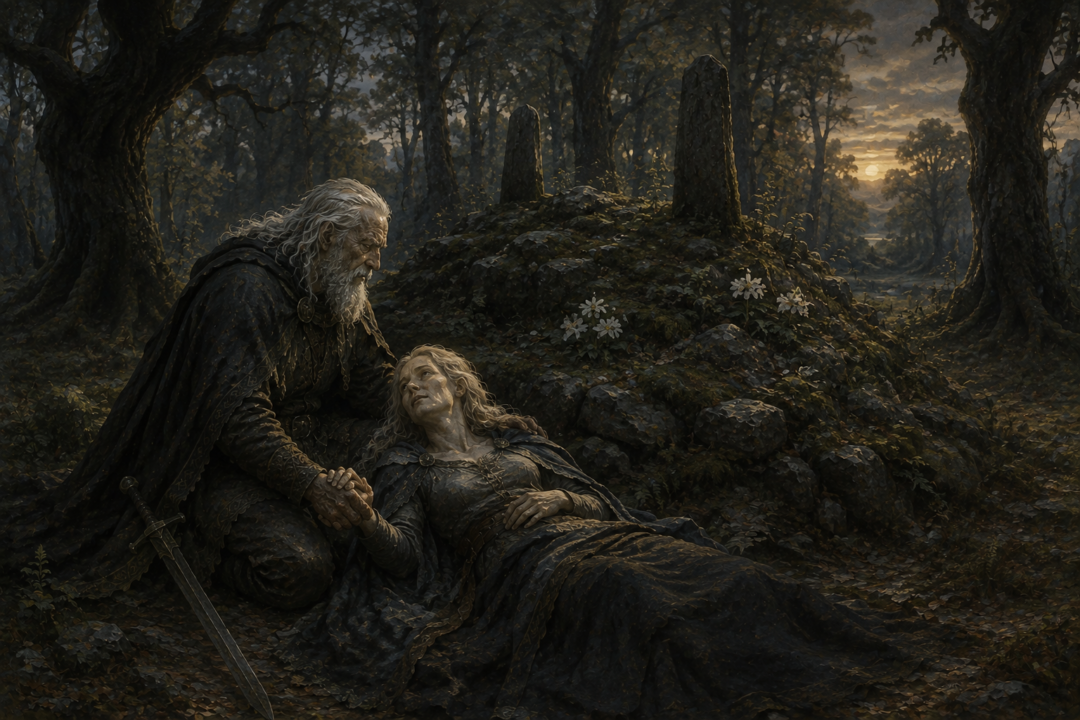
Húrin eventually reaches Brethil and Haudh-en-Elleth, the grave raised for Túrin and Niënor.
There he finds Morwen.
Their reunion is almost unbearably brief. Morwen dies with Húrin beside her, leaving him as the surviving member of the family whose destruction he has been forced to witness.
Nothing about this resembles mercy.
Morgoth has released Húrin only when freedom allows him to encounter personally what captivity had forced him to observe from afar.
The distinction matters. Knowledge of catastrophe is one kind of suffering. Walking through its remains is another.
Húrin can now visit the places where his family lived and died. He can confront people whom he believes failed them. He can act upon conclusions formed during years in which Morgoth controlled the conditions under which he perceived events.
Freedom gives grief hands.
His Later Wanderings Spread the Damage Further
The textual history of Húrin’s later wanderings is complicated, and some extended material was never brought into a final published narrative form. It should therefore be treated with appropriate caution.
But the broad tradition consistently makes Húrin’s release consequential.
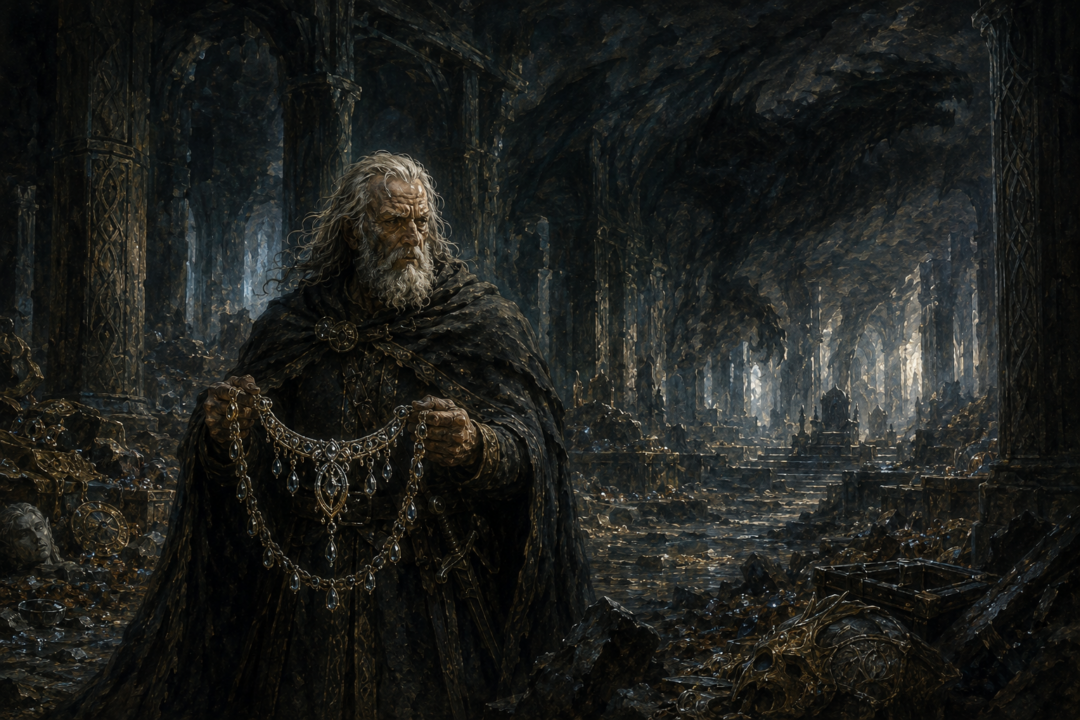
In the published Silmarillion, Húrin eventually comes to ruined Nargothrond, where he takes the Nauglamír, the Necklace of the Dwarves. He later brings it to Thingol in Doriath.
Húrin initially presents the treasure bitterly, connecting it with what he believes he owes Thingol for the keeping of his wife and children. Melian, however, is able to break through the darkness clouding his judgment. Húrin finally understands that his perception has been distorted and that Morgoth has deceived him.
That recognition comes devastatingly late.
The Nauglamír subsequently becomes entangled with the Silmaril in the events leading toward Thingol’s death and the ruin of Doriath, although it would be too simple to claim that Húrin alone causes that catastrophe. The choices of Thingol, the Dwarves, and others remain their own.
Morgoth’s method does not eliminate free will.
It poisons the circumstances in which people exercise it.
Morgoth’s Cruelest Weapon Is Often Consequence
This is why Húrin’s release deserves more attention than it usually receives.
Morgoth’s most obvious weapons are enormous: Orc armies, dragons, Balrogs and the fortress of Angband. But his subtler victories often depend upon damaged relationships, corrupted perception and mistrust.
Húrin is especially valuable because he is not one of Morgoth’s creatures.
He is a hero.
People have history with him. His words matter. His grief is legitimate. His anger has understandable causes. When such a person moves through a wounded society, the consequences can reach places where an Orc army could not easily enter.
And because Húrin still possesses agency, Morgoth can remain partly invisible behind those consequences.
That does not make Húrin morally identical with his tormentor, nor does the text absolve every destructive choice merely because Morgoth has influenced events. Instead, the tragedy depends upon the coexistence of manipulation and agency.
Morgoth creates the conditions for ruin and then allows wounded people to collide within them.
The Release Is the Final Stage of the Punishment
Húrin’s imprisonment can therefore be understood as having two phases.
First Morgoth forces him to watch.
Then Morgoth makes him walk.
During the first phase, Húrin is physically powerless while his family collapses. During the second, he regains physical freedom but carries the accumulated grief, suspicion and distorted understanding produced by the first.
The second phase is arguably more dangerous to everyone around him.
Morgoth’s false pity is therefore not an interruption of the curse. It is one of its most sophisticated expressions.
Húrin had resisted interrogation. He had survived captivity. He had refused consciously to surrender Gondolin.
Yet Morgoth discovers another way to use him.
The terrible irony is that Húrin never needs to become Morgoth’s servant. His hatred of Morgoth can remain completely genuine. His old loyalties can remain real. His grief can remain justified.
All Morgoth needs is for those things to become tangled together badly enough that Húrin’s passage through Middle-earth leaves new wounds behind him.
That is why the opening of Húrin’s prison is not an act of mercy.
It is Morgoth deciding that the broken world outside Angband has become a more useful prison than Angband itself.
Sources & Notes
- https://www.glyphweb.com/arda/h/hurin.html — The Encyclopedia of Arda: Húrin’s capture, long torment by Morgoth, release, and the disastrous consequences of his later journey
- https://www.glyphweb.com/arda/m/morgoth.html — The Encyclopedia of Arda: Morgoth’s methods of domination, malice, captivity, and manipulation in the First Age
- https://www.glyphweb.com/arda/t/turin.html — The Encyclopedia of Arda: Túrin’s curse-shadowed life and the family tragedies whose aftermath Húrin encountered
- https://www.glyphweb.com/arda/i/iluvatar.html — The Encyclopedia of Arda: Ilúvatar and the larger theological frame within which Morgoth can corrupt events but not become their ultimate author
Sources checked for relevance and availability.