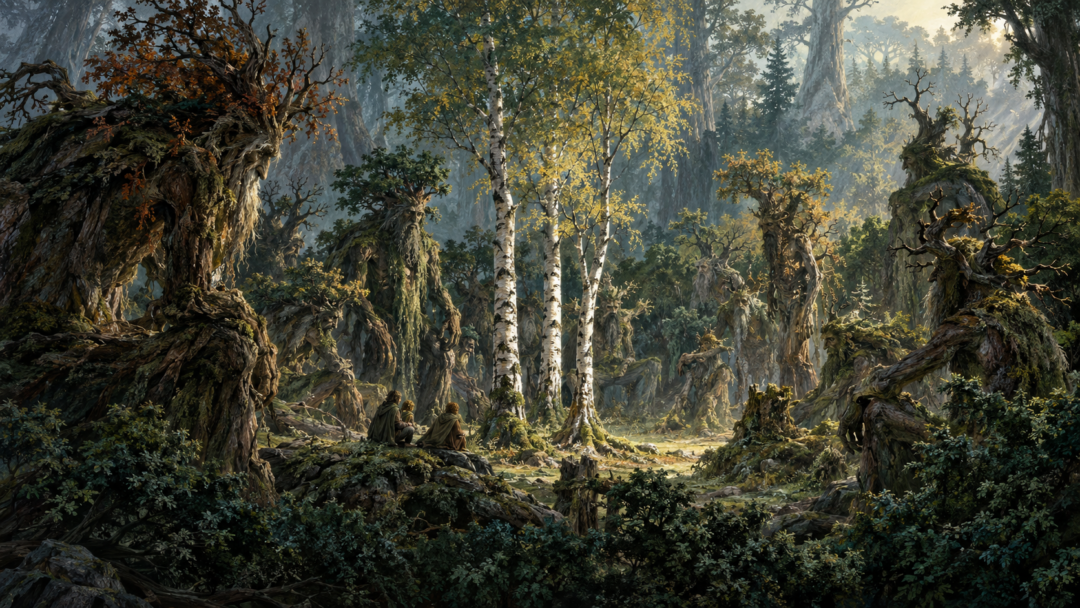
When Merry and Pippin enter Fangorn, Middle-earth is already running out of time.
Saruman has armed Isengard. Rohan is under attack. Orcs have been cutting trees on the borders of Fangorn, and the two hobbits themselves have only just escaped a company carrying them toward the wizard’s stronghold. Yet when Treebeard finally gathers the Ents to decide what should be done, they do not rush south.
They talk.
And they keep talking for days.
To a hobbit—or a reader watching armies move across the map—the Entmoot can seem almost absurdly slow. But the delay is not evidence that the Ents fail to understand the danger. It reveals something much stranger about them: their relationship with time, language, memory, and irreversible decisions is profoundly different from that of the younger peoples of Middle-earth.
The Entmoot takes so long precisely because once the Ents decide, they mean to act completely.
The War Has Already Reached Fangorn
The Ents are not debating an abstract threat.
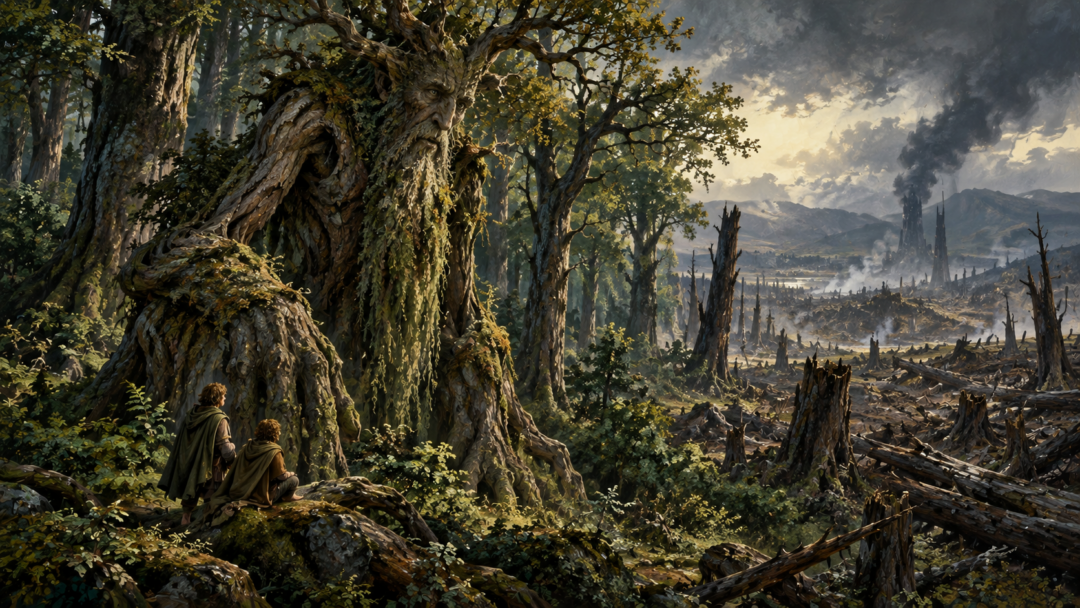
Before the Entmoot, Treebeard already knows that Saruman's servants have been damaging the forest. He tells Merry and Pippin of Orcs cutting trees, sometimes carrying the timber away and sometimes simply destroying trees and leaving them. His anger is especially personal because some of the trees harmed are trees he has known.
The hobbits therefore do not introduce Treebeard to Saruman's hostility. What they provide is additional news about the wider crisis and Saruman's role in it.
That distinction matters.
Treebeard has already become deeply suspicious of the wizard. Saruman once walked in Fangorn and spoke with him, but Treebeard has come to recognize an imbalance in those dealings: Saruman gathered knowledge while revealing little of his own purposes. Now his furnaces, Orcs, and expanding power have made the consequences visible.
Treebeard begins considering action before the Entmoot itself. The gathering is not called because he has suddenly discovered that Saruman is dangerous. It is called because the question has become too large for Treebeard alone.
The Ents must decide together.
Entish Speech Explains Part of the Delay
One of the clearest explanations for the length of the Entmoot is language.
Treebeard explains that Entish is not a language suited to hurried conversation. Ents have extraordinarily long lives, and their speech reflects their experience of the world. Their true names can themselves be long because those names grow with their histories.
For an Ent, describing something properly can require telling much of the story surrounding it.
This is why Treebeard finds shorter languages useful for everyday purposes but regards Entish as something very different. The implication is that an Entmoot is not simply a council in which everyone states a position and votes.
The Ents have to communicate the matter in an Entish way.
That means context.
History.
Identity.
Consequences.
Even the apparently simple problem of identifying Merry and Pippin requires discussion. The Ents must establish that the strange little creatures are not Orcs and account for them within their understanding of living beings.
Only then can the larger question of Saruman be fully considered.
What looks like inefficiency from outside is partly the natural speed of a people whose language resists abbreviation.
Ents Do Not Experience Urgency Like Hobbits
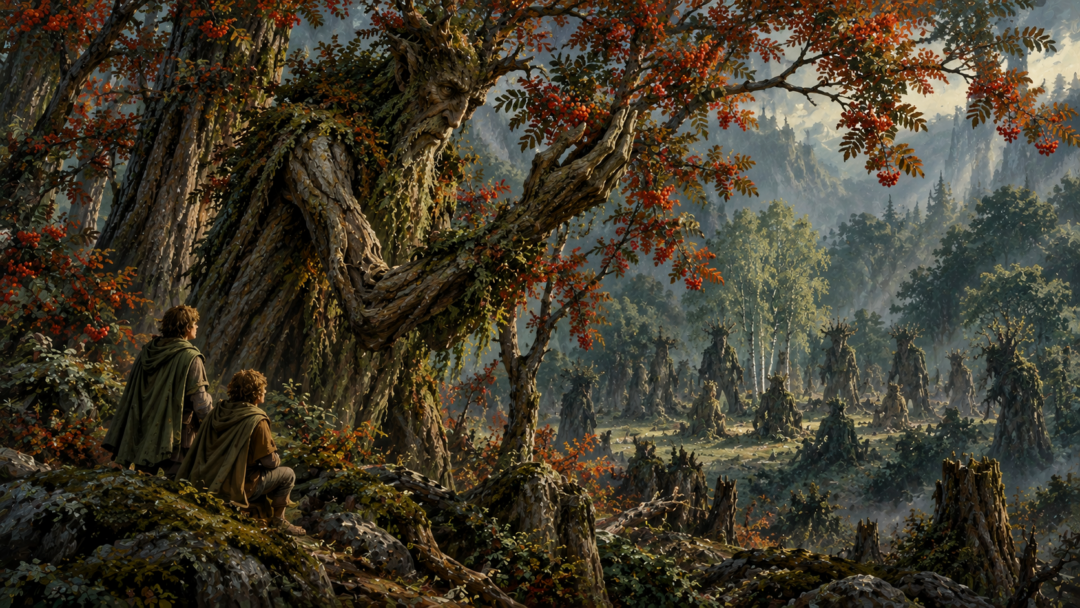
Merry and Pippin come from a world measured in breakfasts, birthdays, seasons, and ordinary mortal lifetimes.
Treebeard belongs to something far older.
He remembers landscapes and forests that have vanished. His recollections reach back toward the ancient world, and he describes himself as having walked beneath trees for an immense span of time. The Ents have watched kingdoms and peoples appear, change, and disappear.
Their patience therefore is not simply a personality trait.
It is built into their scale of existence.
A few hours can transform the fate of a mortal army. To beings who have lived through ages, several days of deliberation may still represent extraordinary speed.
Indeed, the narrative treats the eventual decision as remarkable precisely because Ents are normally so difficult to rouse. Their slowness should not be confused with stupidity or indifference. It is closer to tremendous inertia.
Moving an Ent politically is rather like moving an ancient tree physically.
But once it moves, stopping it is another matter.
Quickbeam Shows That Ents Are Not All Equally Slow
The most important counterexample is Bregalad, called Quickbeam.
His name reflects his unusual hastiness by Ent standards, and during the Entmoot he reaches his conclusion before the others. He therefore leaves the main deliberation and spends time with Merry and Pippin.
His reason is intensely personal.
Saruman's Orcs have harmed the rowan trees that Quickbeam cared for.
Quickbeam demonstrates that Entish slowness is not an absolute rule. An Ent can decide quickly when the matter is already settled in his own mind.
That helps explain what the Entmoot is actually doing.
It is not merely waiting for anger to appear. Different Ents possess different experiences and different degrees of knowledge about Saruman. Treebeard must communicate what he knows, and the gathered Ents must reach a common understanding sufficient for collective action.
Quickbeam has effectively reached that point already.
The others require longer.
The Decision Is Larger Than Joining Someone Else's War
The Ents are also not soldiers waiting for orders from Rohan or Gondor.
They are an ancient people making their own decision about their own enemy.
Saruman's actions have connected the wider War of the Ring with the fate of Fangorn, but the Ents' attack on Isengard emerges from their judgment that they can no longer remain passive while Saruman destroys trees and extends his power.
That distinction explains why the Entmoot cannot simply be bypassed because someone elsewhere urgently needs help.
Treebeard can call the Ents together, but the text does not present him as a king commanding subjects into battle. The Entmoot is a deliberative gathering.
And the decision they face may be fatal.
When the Ents finally march, Treebeard recognizes that they may be going toward their destruction. Their numbers have dwindled. The Entwives are lost to them, no Entings are being born, and their people have no obvious future of renewal.
War therefore threatens more than individual Ents.
It threatens what remains of an already diminishing people.
Their caution is easier to understand in that light.
Their Slowness Makes the Final Decision More Powerful
Then the mood changes.
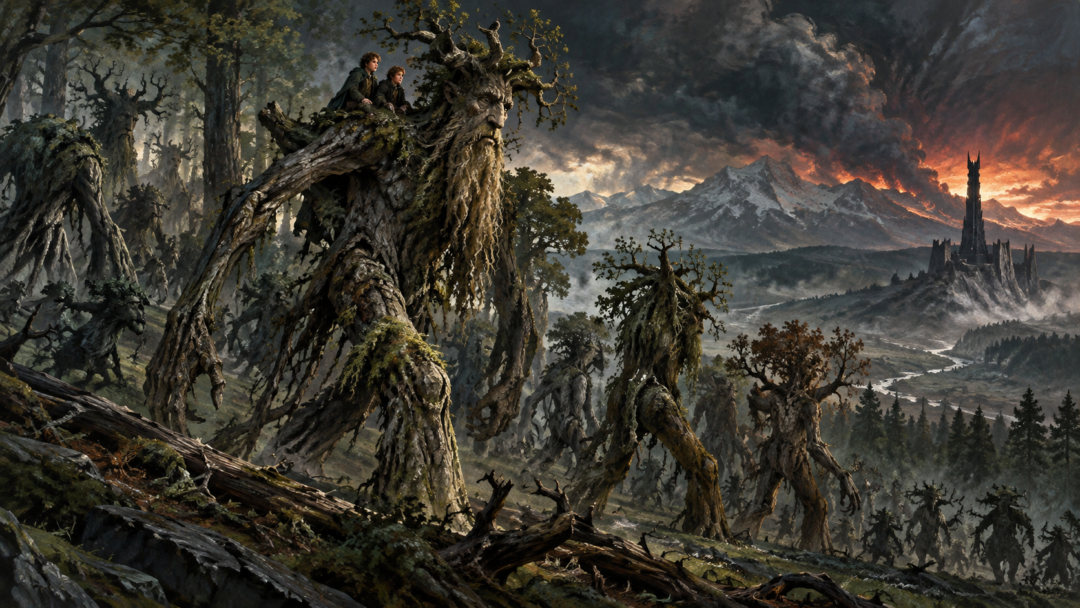
After days of voices rising and falling in Derndingle, the Ents reach agreement.
The transformation is dramatic because these are precisely the beings who do not make sudden decisions lightly.
They march south.
Their anger is no passing burst of temper. Treebeard makes clear that the Ents understand the possibility that this could be their last march. They go anyway.
The apparent contradiction at the heart of the episode now becomes clear: the slowest council produces one of the most decisive interventions in the war.
The Ents do not spend days debating because nothing matters to them.
They spend days debating because the decision matters enormously.
Once made, it requires no further persuasion.
And Their Timing Is Almost Unbelievably Important
The chronology makes the Entmoot even more striking.
According to the chronology in Appendix B, the Entmoot ends on March 2, Third Age 3019. That same day Théoden rides west from Edoras while Saruman's forces are moving against Rohan. The Ents head toward Nan Curunír and reach Isengard as Saruman's great army departs.
The timing could scarcely be more consequential.
Saruman has committed his strength to the assault on Rohan while leaving the machinery of his power behind him.
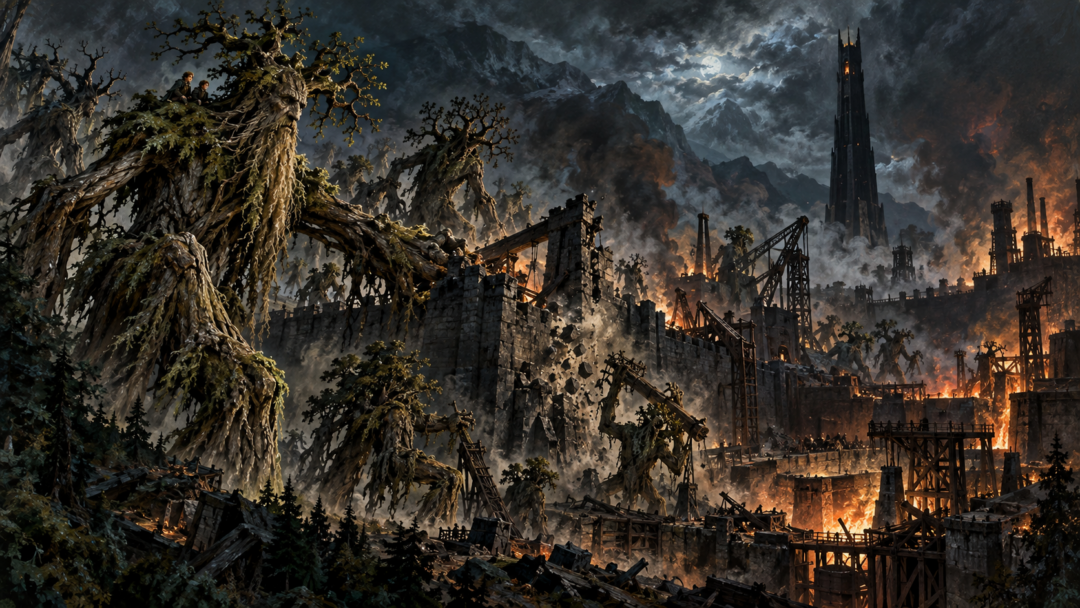
The Ents strike Isengard.
They break its gates and walls, tear apart much of the infrastructure within the Ring, and eventually bring water into the devastated valley, drowning the pits and quenching Saruman's fires. Orthanc itself withstands their attempts to damage it, leaving Saruman trapped rather than physically dragged from his tower.
Meanwhile, Huorns associated with Fangorn also play a terrible role around Helm's Deep.
The Ents had appeared late.
Yet they had not arrived too late.
The Entmoot Is Really About the Cost of Acting Too Late
There is still tragedy beneath their victory.
Treebeard knows that the Ents have been slow to respond to changes around them. He has watched the world diminish. Forests once far greater have retreated. The Entwives have disappeared from the lives of the Ents. Saruman has been allowed to grow dangerous on Fangorn's doorstep.
The attack on Isengard is therefore not the confident beginning of a new Entish age.
It is an awakening by an ancient people who recognize that waiting has finally become more dangerous than acting.
That is why the Entmoot needs its days.
The Ents are creatures of memory confronted by a crisis that demands immediate action. Everything about their nature pulls toward patience, recollection, and careful speech. Everything about Saruman's war demands speed.
The wonder of the episode is not that the Ents take so long.
It is that, by their standards, they move astonishingly fast.
And when they finally come out of Fangorn, the patience that seemed almost useless becomes something formidable. Saruman has built furnaces, walls, engines, and armies to impose his will rapidly upon the world.
Against him comes a people who can barely be hurried at all.
They think for days.
Then they tear his stronghold apart in a night.
Sources & Notes
- https://tolkiengateway.net/wiki/Entmoot — Tolkien Gateway, Entmoot (Tolkien primary-text references in article)
- https://tolkiengateway.net/wiki/Treebeard — Tolkien Gateway, Treebeard (Tolkien primary-text references in article)
- https://tolkiengateway.net/wiki/Derndingle — Tolkien Gateway, Derndingle (Tolkien primary-text references in article)
Relevant Tolkien text and chronology are referenced by the linked Tolkien Gateway entries; interpretive conclusions remain distinguished from canon.