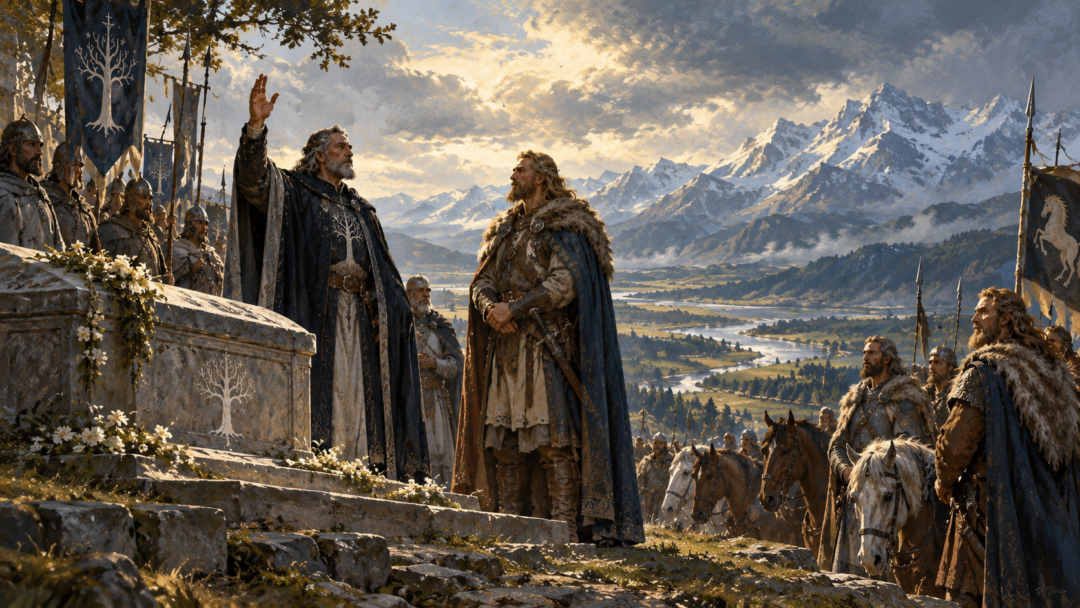
When the Riders of Rohan finally thunder toward Minas Tirith in the War of the Ring, their coming can look like a single heroic decision: Gondor calls, and Théoden rides.
But the roots of that ride lie more than five centuries earlier.
In the year 2510 of the Third Age, Gondor was nearly overwhelmed in the north. Eorl the Young and the Éothéod came unexpectedly to its rescue at the Field of Celebrant. What followed was not simply a reward for military service. Cirion, the Ruling Steward, offered Eorl the great province of Calenardhon as a homeland for his people.
Yet he joined that gift to something far more enduring.
The Éothéod would possess the land in freedom, but Gondor and Eorl’s new realm would become perpetual allies. Their enemies would be shared enemies. Their dangers would become shared dangers. And crucially, the obligation was reciprocal.
That combination—land, independence, and mutual obligation—is what makes the Oath of Cirion and Eorl one of the most consequential political settlements of the Third Age.
Gondor Was Giving Away Land It Could No Longer Secure
Cirion’s decision makes sense only against Gondor’s decline.
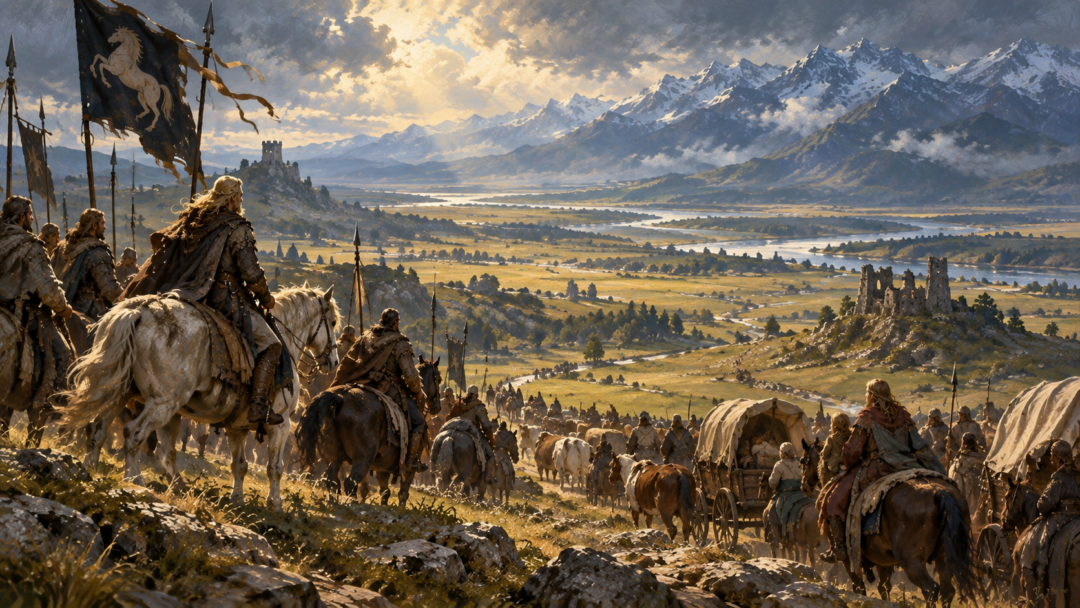
Calenardhon was an enormous territory lying north of the White Mountains, between Anduin and Isen. In earlier centuries it had belonged securely to Gondor, but by Cirion’s time its population had greatly diminished. Gondor itself had endured plague, invasion, civil war, and long military pressure.
Then came the Balchoth.
These hostile peoples from the East crossed the Anduin in great strength. Cirion sent messengers north to the Éothéod, descendants of Northmen who had long maintained friendship with Gondor.
The mission was desperate. Only Borondir succeeded in reaching Eorl.
Eorl answered.
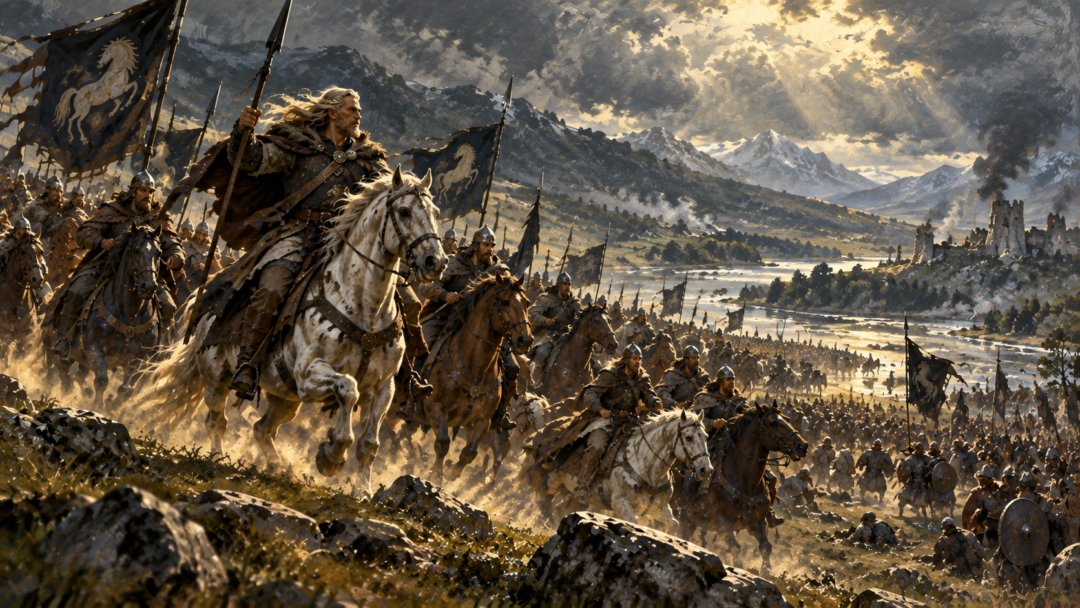
He brought a great force of riders south, and at the Field of Celebrant the Éothéod arrived when Gondor’s northern army was in extreme danger. Their intervention turned the battle and helped destroy the invading force.
Cirion therefore faced an unusual situation after the victory.
The man who had saved northern Gondor also ruled a people who needed room. Gondor, meanwhile, nominally possessed a vast territory that it was increasingly unable to populate and defend effectively.
Cirion’s solution was not to hire the Éothéod as frontier soldiers.
He offered them the frontier.
Calenardhon Was a Gift, Not a Province Governed Through Eorl
This distinction matters.
Cirion did not simply appoint Eorl as Gondor’s governor in Calenardhon. His proposed settlement gave the land to Eorl and his people on extraordinarily generous terms.
They would dwell there in freedom and live according to their own laws and customs. Eorl and his heirs would rule their own people.
There was, however, one great condition: perpetual friendship with Gondor.
Cirion’s formulation, preserved in Unfinished Tales, makes the political structure unusually clear. The people receiving Calenardhon were not being burdened with ordinary tribute or direct Gondorian administration. The essential bond was alliance.
Even more importantly, Cirion made the obligation mutual.
The enemies of Gondor were to be the enemies of Eorl’s people, but the same bond rested upon Gondor.
That transforms the meaning of the land grant.
If Cirion had merely exchanged territory for military service, the relationship could resemble payment: Gondor gives land, and Eorl supplies warriors.
Instead, the settlement creates two neighboring peoples whose security is deliberately joined.
Calenardhon becomes both homeland and strategic bond.
Cirion Turned Gondor’s Weakness Into a Defended Frontier
There is hard political wisdom behind the generosity.
Gondor had just learned what an underpopulated Calenardhon meant in wartime. The Balchoth had been able to enter the region in force, and Gondor struggled to stop them.
Cirion could not easily reverse centuries of demographic and military decline.
The Éothéod could.
They were a numerous horse-people seeking more suitable lands, and the plains of Calenardhon suited their way of life. By allowing them to settle there, Cirion placed a friendly and militarily formidable people across Gondor’s vulnerable northern approaches.
But reducing the arrangement to a buffer-state strategy misses something essential.
Eorl had already ridden hundreds of miles to help Gondor before he possessed Calenardhon.
The alliance therefore began with an act freely performed before the formal obligation existed.
Cirion’s gift answered Eorl’s aid; Eorl’s oath answered Cirion’s gift.
That reciprocity gives the settlement its unusual moral weight. Neither side begins the relationship merely by extracting something from the other.
Each has already given something difficult to recover.
Gondor has been rescued in battle.
The Éothéod are given a homeland.
Why the Oath Was Sworn at Elendil’s Tomb
Cirion could have concluded the agreement anywhere.
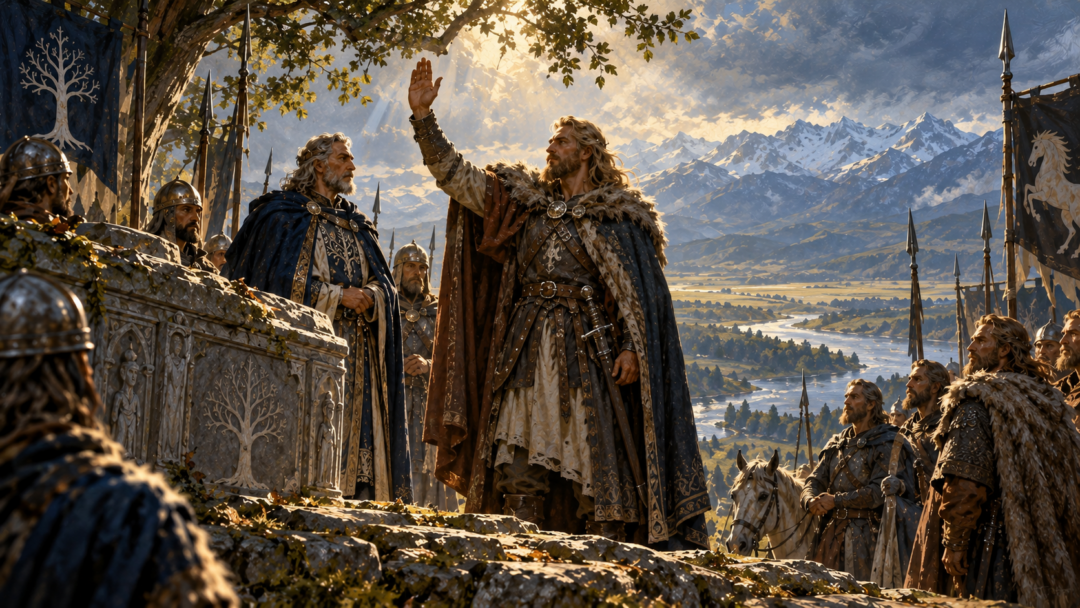
Instead, after revealing his proposal to Eorl, he led him to Amon Anwar, the Hill of Awe. At its summit lay one of Gondor’s deepest secrets: the tomb of Elendil.
Its presence transformed the agreement from practical diplomacy into something solemn.
Elendil was not merely an ancestor of Gondor’s royal house. He represented the founding memory of the Dúnedain kingdoms in Middle-earth and the resistance to Sauron that culminated in the Last Alliance.
Cirion was a Steward, not a king. Yet he deliberately connected the new bond with that ancient inheritance.
His oath was correspondingly extraordinary.
In his invocation he called upon the powers of the West and ultimately upon Eru, the One. The narrative emphasizes the exceptional gravity of this act and associates it with the authority Cirion exercised as Steward ruling in the King’s absence.
This was therefore not intended as a temporary agreement between two living commanders.
Cirion and Eorl were binding their successors.
The land might have been the immediate subject of the settlement, but its horizon was the future.
Eorl Accepted More Than Calenardhon
Eorl’s answering oath makes the connection explicit.
He vowed friendship between his people and Gondor and declared that Gondor’s enemies would be their enemies and Gondor’s need their need. He further bound his heirs to preserve that commitment.
That is the crucial point.
The grant creates a homeland, but the oath gives that homeland a continuing relationship with the realm that granted it.
Eorl’s people soon migrated south and became the Eorlingas of the Mark—the people Gondor called the Rohirrim, and whose country became known as Rohan.
They were not absorbed into Gondor.
Nor did Gondor simply abandon Calenardhon and forget it.
A new kingdom emerged beside Gondor whose independence and friendship existed together.
The settlement therefore avoided two extremes. Gondor did not insist on direct control over a land it could scarcely defend, while Eorl did not receive the land as an opportunity to become indifferent to Gondor’s fate.
Freedom was preserved, but isolation was rejected.
The Alliance Was Not a Guarantee of Instant Rescue
The later history of the two realms also shows what the oath did not mean.
It did not magically ensure that one kingdom could always save the other.
There were periods when both were under such severe pressure that effective aid was impossible. During the invasions surrounding the Long Winter, for example, Gondor and Rohan faced major enemies of their own. At other times assistance could be limited by military circumstances.
The oath created obligation, not unlimited power.
That distinction matters because it makes later acts of aid more meaningful rather than less.
Rohan sent forces to Gondor in later wars. At the Crossings of Poros in 2885, King Folcwine sent warriors under his twin sons Folcred and Fastred; both princes were killed.
And in the War of the Ring, the ancient alliance reached its most famous test.
Gondor sent the Red Arrow to Théoden.
Rohan answered.
The ride to Minas Tirith was therefore not an isolated burst of friendship invented during the crisis. It belonged to a relationship that had endured since Cirion and Eorl.
The Gift Changed Gondor Too
There is another consequence easily overlooked.
After the oath, Amon Anwar could no longer occupy exactly the place it once had within Gondor.
The tomb of Elendil had been established there when the hill stood near the center of the kingdom. But Cirion had now granted the surrounding lands to Eorl’s people. The geography—and political reality—of Gondor had changed.
Cirion eventually had Elendil’s remains removed from the hill and taken to the Hallows of Minas Tirith.
That act quietly reveals the scale of his decision.
The grant of Calenardhon was not presented as a fiction in which Gondor pretended nothing had changed. Cirion recognized that an old territorial order had ended.
Something new had taken its place.
A sacred site once hidden within Gondor now stood at the meeting point of two allied peoples.
The loss of direct territory had produced a different kind of strength.
Cirion Did Not Preserve the Past—He Built Around Its Decline
That may be the deepest significance of the settlement.
Cirion inherited a Gondor smaller and weaker than the kingdom of earlier ages. He could not restore its vanished population merely by decree, nor defend every old frontier by insisting that ancient borders must remain unchanged.
So he surrendered direct possession of a vast land.
On the surface, that could look like another stage in Gondor’s contraction.
Instead, he used that concession to create one of Gondor’s most durable alliances.
The Éothéod gained something they desperately needed: a broad and fertile homeland suited to their horses and their people.
Gondor gained something it desperately needed: a powerful friendly realm guarding lands through which enemies had just invaded.
Neither benefit existed separately from the other.
The land grant made the alliance practical because Eorl’s people now lived beside Gondor.
The alliance made the land grant strategically meaningful because the new inhabitants were pledged to Gondor’s defense.
And the reciprocal nature of the oath prevented the relationship, at least in principle, from becoming one of simple dependency.
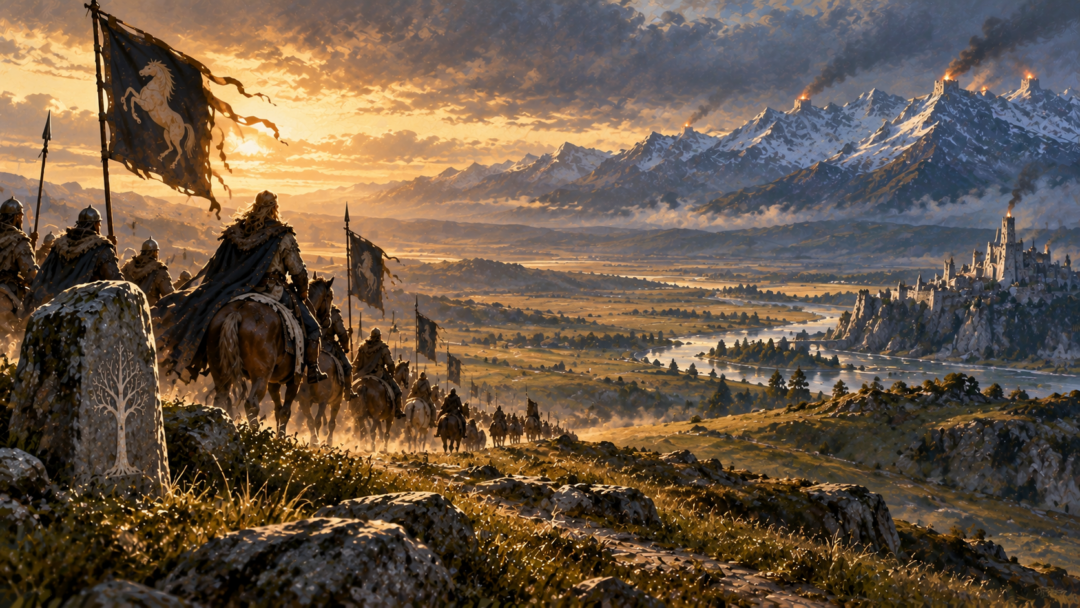
The Oath Endured Because the Gift and the Duty Were Joined
Centuries later, when Théoden must decide how Rohan will answer Gondor’s need, the past is still present.
The Rohirrim are not Gondorian subjects. They possess their own kings, laws, history, and interests.
Yet their kingdom itself arose from Cirion’s gift and Eorl’s oath.
That is why the founding of Rohan cannot be understood simply as Gondor rewarding Eorl after a battle. Cirion tied territory to memory, freedom to responsibility, and political necessity to a promise meant to outlive both men.
The alliance survived hardship precisely because its foundation was not merely strategic convenience.
Eorl had come when Gondor seemed lost.
Cirion responded by giving Eorl’s people a country.
Then, before the resting place of Elendil, both sides transformed those acts into an obligation inherited by their successors.
By the time the horns of Rohan sounded again in Gondor’s darkest hour, more than five hundred years had passed.
The riders were coming from their own kingdom.
But the road south still led back to the oath that had helped create it.
Sources & Notes
- Tolkien Gateway — Oath of Eorl (the reciprocal alliance sworn by Cirion and Eorl) https://tolkiengateway.net/wiki/Oath_of_Eorl
- Tolkien Gateway — Cirion (the Steward's grant and defense of Gondor) https://tolkiengateway.net/wiki/Cirion
- Tolkien Gateway — Calenardhon (the land granted to the Éothéod as Rohan) https://tolkiengateway.net/wiki/Calenardhon
These references document Cirion's grant of Calenardhon, Eorl's oath, and the formation of the alliance. The account of the settlement as reciprocal political design is interpretive synthesis; Tolkien's Unfinished Tales, Cirion and Eorl and the Friendship of Gondor and Rohan, is the primary text.