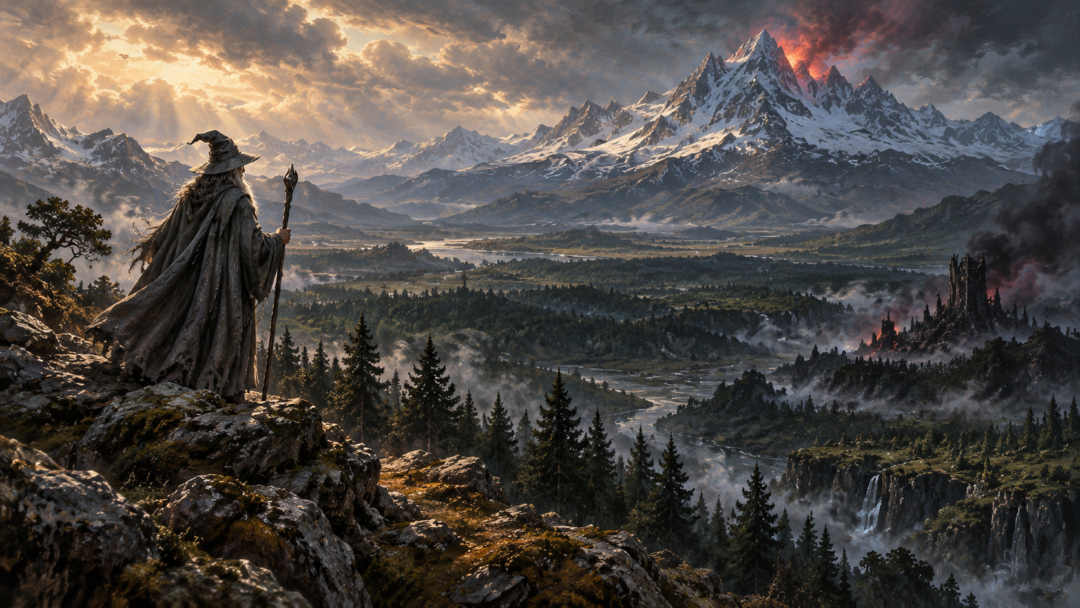
At the beginning of The Hobbit, Gandalf’s behavior is deliberately mysterious. He marks Bilbo’s door, brings thirteen Dwarves to Bag End, calls a bewildered hobbit a burglar, and produces a map and key connected to a kingdom lost generations earlier. Bilbo understands almost none of it. For much of the story, neither does the reader.
That is part of the design. The Hobbit follows the adventure at Bilbo’s level. Erebor is Thorin’s lost home and Smaug is the dragon sitting on his treasure. The great questions are immediate ones: Can Bilbo become the burglar Gandalf claims he is? Can the company reach the Mountain? Can anyone survive an encounter with Smaug?
The Quest of Erebor, preserved in Unfinished Tales, looks backward at those same beginnings from Gandalf’s perspective. It reveals that behind the domestic comedy of the unexpected party stood a much darker concern: Sauron was returning, the North was vulnerable, and Smaug could become a terrible asset to the Enemy.
That does not make The Hobbit an incomplete or false version of events. It changes the scale on which we understand them.
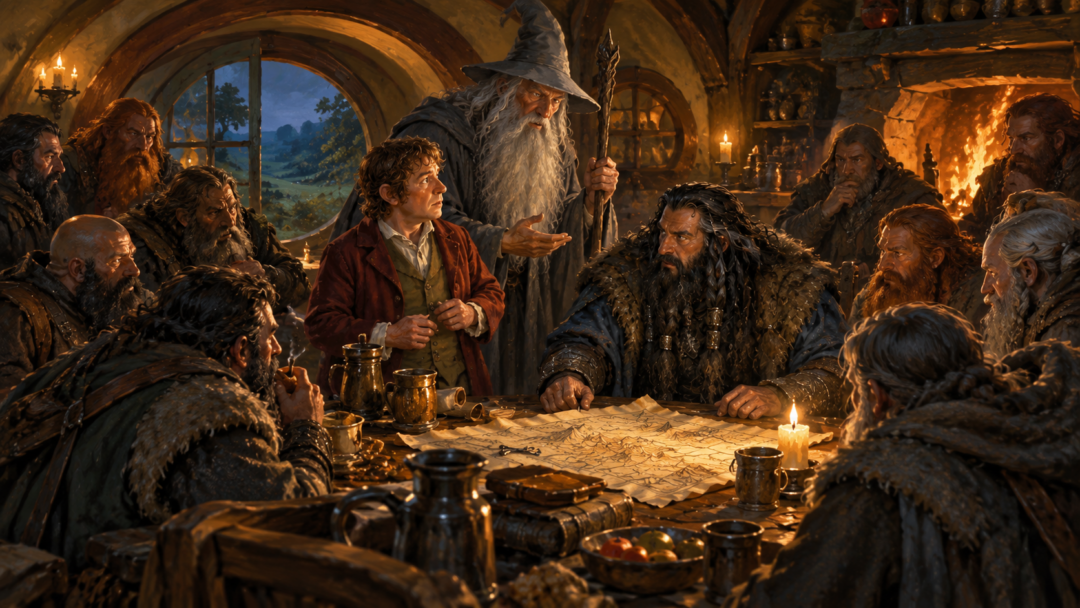
Gandalf Was Thinking About More Than Dwarven Treasure
Thorin wants Erebor because it belongs to his people. His motives are rooted in dispossession, inheritance, memory, treasure, and revenge against the dragon that destroyed the Kingdom under the Mountain.
Gandalf’s concern is different.
As related more briefly in “Durin’s Folk” in Appendix A of The Lord of the Rings, Gandalf had become deeply troubled by the strategic weakness of the North. Sauron was preparing for war. Smaug remained at Erebor, while the northern regions lacked the strength they had possessed in earlier ages.
The possibility that especially disturbed Gandalf was an alliance, or at least cooperation, between Sauron and Smaug.
This matters because Gandalf does not begin with a fully scripted plan for everything that later happens. He does not foresee Bard’s killing of Smaug, Bilbo’s discovery of the Ring, the Battle of Five Armies, or every consequence that follows.
Instead, he recognizes a danger and searches for a way to address it.
That distinction is crucial. The Quest of Erebor does not turn Gandalf into a mastermind secretly controlling the entire plot of The Hobbit. It presents him as someone trying to influence events whose outcomes remain uncertain.
The Meeting With Thorin Changes Everything
The decisive opening comes through Gandalf’s meeting with Thorin Oakenshield.
Thorin is already preoccupied with his ancestral kingdom and Smaug. Gandalf is already worried about the dragon and the security of the North. Their concerns overlap, but their purposes are not identical.
That coincidence gives Gandalf an opportunity.
A Dwarven attempt to recover Erebor might remove Smaug from the northern political landscape. But Thorin’s instincts create another problem. An open military expedition against the dragon would have little hope of success.
The strange solution is secrecy.
That is where the quest begins to resemble the adventure familiar from The Hobbit: not an army marching toward Erebor, but a small company attempting to reach the Mountain and discover what can be done.
And then Gandalf adds the most improbable element of all.
Bilbo Baggins.
Bilbo Was Not Random — But Neither Was His Future Predetermined
In The Hobbit, Gandalf’s insistence that Bilbo is a burglar is funny precisely because Bilbo appears so spectacularly unsuited to the title.
He has no experience stealing from dragons. He has no obvious reputation as an adventurer. Thorin and his companions have understandable reasons to doubt him.
The Quest of Erebor makes Gandalf’s choice more intelligible without removing its mystery.
Gandalf remembered Bilbo and believed there was more in him than his comfortable life suggested. He also saw practical value in using a hobbit. Smaug was unfamiliar with hobbits, including their scent, and stealth was essential to the sort of expedition Gandalf was trying to encourage.
But Gandalf’s confidence should not be confused with perfect foreknowledge.
He does not know exactly what Bilbo will become.
That uncertainty preserves one of the central achievements of The Hobbit. Bilbo’s courage still has to emerge through experience. His choices still matter. Gandalf can place him on the road, but he cannot make Bilbo spare Gollum, enter Smaug’s chamber, surrender the Arkenstone, or repeatedly risk himself for others.
The later account explains why Gandalf opened the door.
The Hobbit remains the story of what Bilbo did after walking through it.
The Map and Key Gain a Darker History
Another familiar object changes meaning when the larger history is known.
In The Hobbit, Gandalf possesses Thror’s map and the key to the secret door of Erebor. They are practical pieces of the quest: mysterious heirlooms that eventually make entry into the Mountain possible.
The wider legendarium explains how Gandalf obtained them.
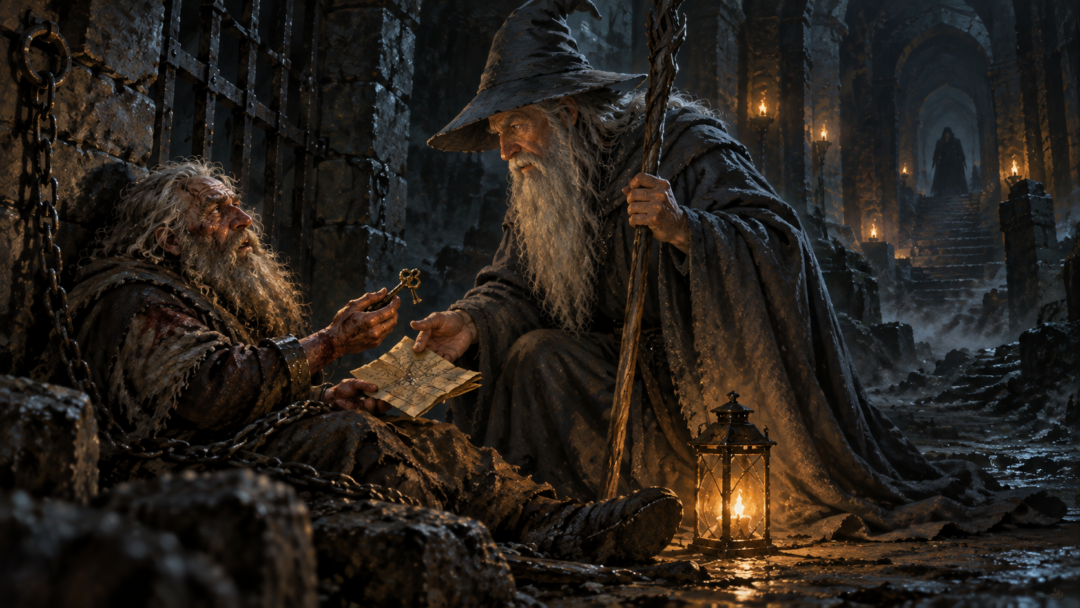
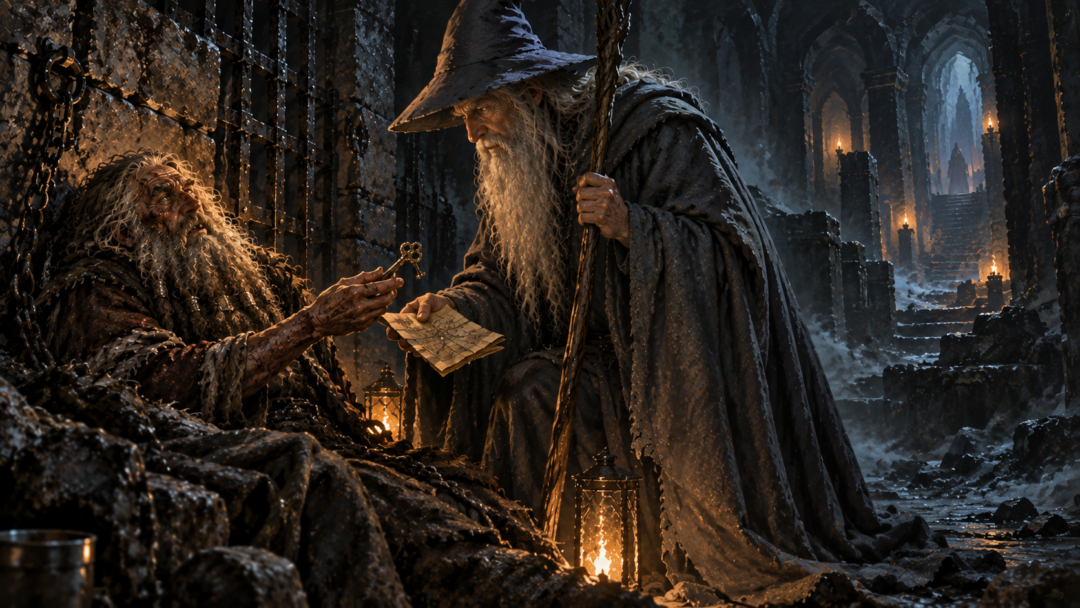
Years before the Quest of Erebor, Gandalf entered Dol Guldur while investigating the Necromancer. There he discovered that the power dwelling in the fortress was indeed Sauron. He also encountered a dying Dwarf imprisoned there, who gave him a map and key.
That prisoner was Thráin, Thorin’s father, though Gandalf did not initially know his identity.
Suddenly, the objects on Bilbo’s table carry far more history than The Hobbit needs to explain at that moment. They connect Erebor to Dol Guldur, Thorin’s family tragedy to Sauron’s return, and Gandalf’s investigation of the Shadow to the apparently separate adventure of a hobbit and thirteen Dwarves.
Nothing about the map’s function in The Hobbit changes.
Its context expands.
Gandalf’s Disappearance Also Looks Different
One of the clearest differences between the two perspectives concerns Gandalf’s departure from Thorin’s company.
From Bilbo’s point of view, Gandalf repeatedly seems to know more than he explains, and eventually leaves the company before the passage through Mirkwood.
The larger history reveals the competing crisis demanding his attention.
The White Council moved against Dol Guldur in the same year as the Quest of Erebor. Sauron abandoned the fortress, though this retreat was calculated rather than a final defeat; he later openly established himself again in Mordor.
The timing connects two events that feel largely separate when The Hobbit is read by itself: the journey toward Smaug and the struggle against the Necromancer.
Yet even here, the later material does not require us to reinterpret every stage of Bilbo’s adventure as a component in a precisely coordinated anti-Sauron operation.
The connection is broader.
Gandalf is fighting the same growing Shadow on more than one front. Removing Smaug as a potential danger in the North matters because Gandalf already understands that a much greater conflict is approaching.
The Real Payoff Comes During the War of the Ring
The strategic importance of Erebor becomes clearest only decades later.
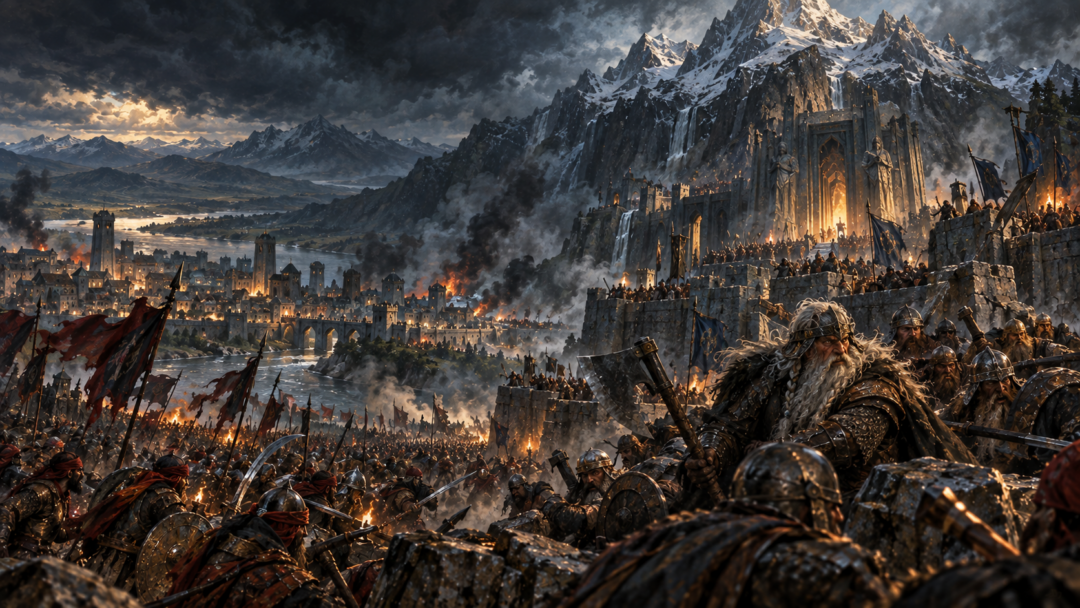
During the War of the Ring, Sauron’s forces did not attack only Gondor and Rohan. War also reached the North. Dale and Erebor were attacked by Easterlings allied to Sauron, and King Brand of Dale and King Dáin Ironfoot fell fighting before the Gate of Erebor.
The defenders eventually survived the siege and drove their enemies back after news of Sauron’s downfall.
That later battle gives Gandalf’s earlier fears real weight.
In Appendix A, his reflections connect the chance meeting with Thorin to the survival of the northern lands. The implication is not that the Quest of Erebor single-handedly won the War of the Ring. Rather, the restoration of the Kingdom under the Mountain and Dale meant that organized powers stood in the North when Sauron finally launched his war.
Without trying to calculate an alternate history too precisely, the text itself invites the reader to recognize how much worse the northern war might have been if Smaug had remained at Erebor.
The dragon Bilbo encounters as the final great obstacle of his adventure was therefore also a strategic danger whose continued existence could have changed the shape of a later war.
Why This Does Not Replace The Hobbit
It can be tempting to treat The Quest of Erebor as the “real” explanation behind The Hobbit: Gandalf’s mature account correcting a simpler children’s story.
That goes too far.
The two narratives answer different questions.
The Hobbit asks what happened to Bilbo Baggins when comfort collided with adventure. Its center is Bilbo’s transformation, his encounters, his moral choices, and his changing relationship with Thorin and the Dwarves.
The Quest of Erebor asks why Gandalf became involved and why, of all possible people, he insisted upon Bilbo.
One perspective is intimate. The other is strategic.
Neither perspective cancels the other.
In fact, their coexistence reflects something fundamental about Middle-earth: people rarely understand the full consequences of their actions while they are living through them.
Bilbo thinks he is helping some Dwarves reclaim treasure. Thorin thinks primarily of recovering his inheritance and kingdom. Gandalf sees a dangerous dragon occupying a strategically important region while Sauron gathers strength.
All of those perspectives can be true at once.
A Plan Built on Providence, Choice, and Chance
Perhaps the most important reframing is what The Quest of Erebor does not say.
Gandalf does not design every later victory.
He brings together Thorin’s desire, the map and key inherited from Thráin, his own fear concerning Smaug, and his conviction that Bilbo should accompany the company. After that, events repeatedly escape anyone’s control.
Bilbo finds the Ring through an apparently accidental sequence beneath the Misty Mountains. The company survives dangers Gandalf is not present to solve. Bilbo confronts Smaug but does not kill him. Bard does. Thorin regains his kingdom but dies shortly afterward. Dáin becomes King under the Mountain, and decades later he dies defending Erebor during Sauron’s final war.
The result is larger than Gandalf’s immediate design.
That is why his chance meeting with Thorin matters so much.
The Quest of Erebor does not reveal that The Hobbit was secretly a different story all along. It reveals that Bilbo’s story was happening inside a history much larger than Bilbo could see.
The unexpected party remains unexpected.
The burglar remains an unlikely hobbit.
The dragon remains terrifying.
But beyond the round door of Bag End, forces were already moving toward the War of the Ring. Gandalf understood enough to know that something had to be done about the dragon in the North.
What he could not know was just how much would follow from choosing Bilbo Baggins.
Sources & Notes
- Tolkien Gateway — The Quest of Erebor (Gandalf's retrospective account and publication context) https://tolkiengateway.net/wiki/The_Quest_of_Erebor
- Tolkien Gateway — Quest of Erebor (Thorin's company, Smaug, and Bilbo's role) https://tolkiengateway.net/wiki/Quest_of_Erebor
- Tolkien Gateway — Sauron (Gandalf's concern that Smaug might serve Sauron) https://tolkiengateway.net/wiki/Sauron
These references document Gandalf's retrospective account, Thorin and Bilbo's expedition, and the strategic danger posed by Smaug. The contrast between narrative perspectives is interpretive synthesis; consult Tolkien's The Hobbit, The Lord of the Rings Appendix A (Durin's Folk), and Unfinished Tales (The Quest of Erebor) for the primary texts.