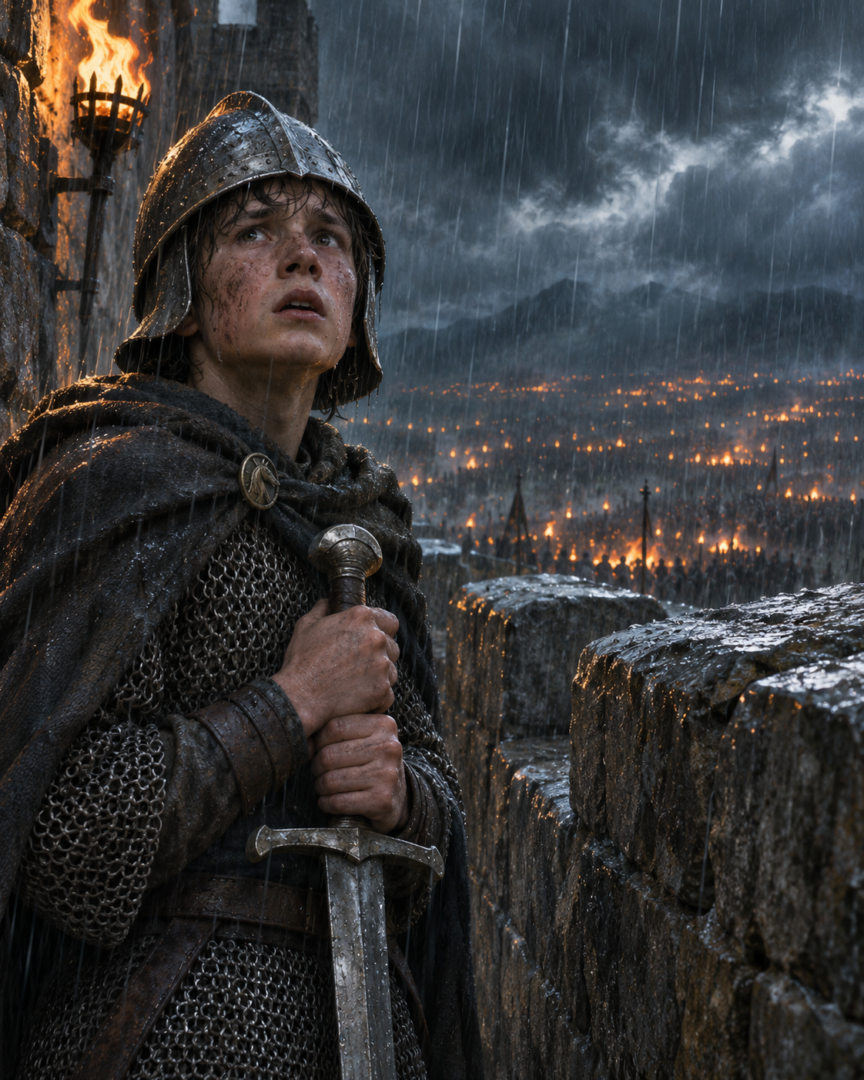
In Peter Jackson’s *The Lord of the Rings: The Two Towers*, one of the most unsettling moments before the Battle of Helm’s Deep involves no fighting. Aragorn meets a frightened young defender, examines his sword, and tries to give him courage as an overwhelming army approaches.
The boy is Haleth, son of Hama. He is young enough that his presence on the battlements feels wrong, but Rohan’s defenders need almost anyone capable of holding a weapon. Aragorn reassures him before the fighting begins. **Does Haleth survive?** The film identifies him and shows him preparing for battle, yet never clearly resolves his fate. His connection to Hama, appearances during the siege, and differences between Tolkien’s book and Jackson’s adaptation explain what we can—and cannot—know.
Who Is Haleth, Son of Hama?
Haleth is a character created for the film adaptation of *The Two Towers*. His father, Hama, is King Theoden’s guard and doorwarden at Meduseld. Earlier, Hama requires Gandalf and his companions to surrender their weapons before entering the Golden Hall.
When Rohan’s people evacuate toward Helm’s Deep, Hama accompanies the refugees. Warg riders attack, and he is killed. Aragorn also disappears in that attack after falling from a cliff, though he eventually returns. Thus, by the time Haleth encounters Aragorn at the fortress, the boy has already lost his father.
The film never establishes precisely how much Aragorn knows about Haleth’s circumstances. It would be unjustified to claim that he approaches the boy specifically because Hama died. Viewers who recognize Hama’s name, however, can connect Haleth’s fear to a family that has already suffered for Rohan’s war. He is more than an anonymous child placed among the soldiers to look frightened, which makes his later disappearance from the narrative especially noticeable.
What Does Aragorn Say to Him?
As the defenders ready weapons and take their positions, the vast army outside makes survival seem unlikely. Aragorn notices Haleth, asks his name, and examines his sword. Haleth says that the men believe they will not survive the night.
Aragorn returns the weapon and tells him, ‘There is always hope.’ He does not predict victory, claim the Hornburg is secure, or promise that Haleth personally will live. Instead, he offers a reason to stand firm despite the real prospect of death.
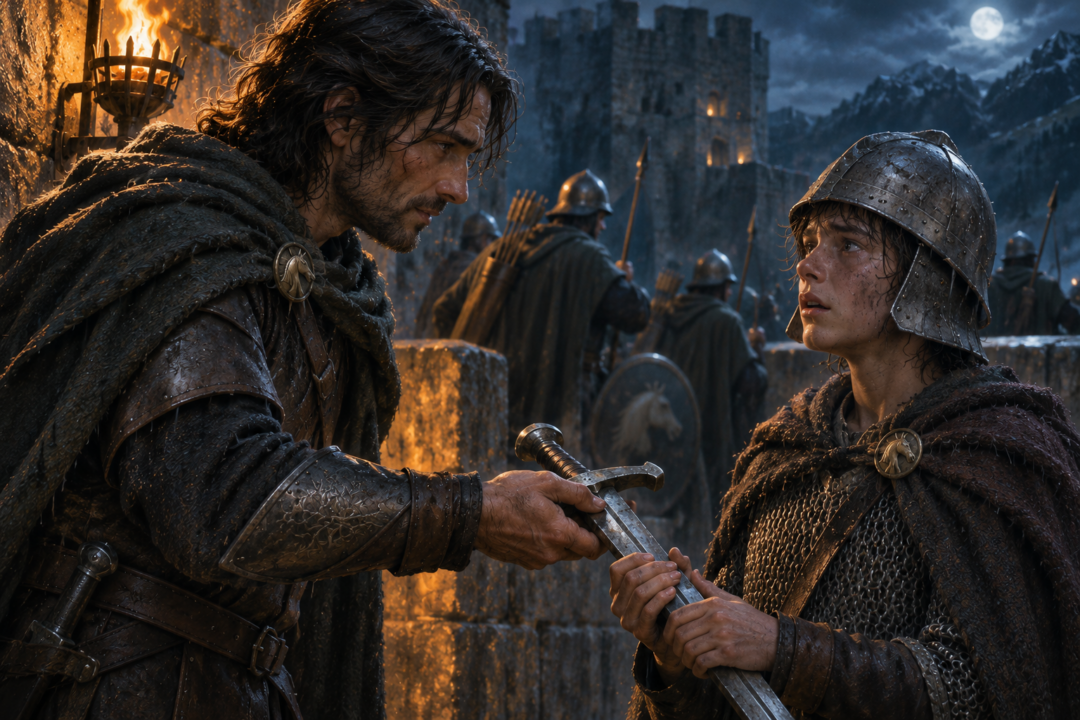
The sword gives the moment its force. An experienced warrior handles it briefly, then returns it to the inexperienced boy who must fight with it. Aragorn treats Haleth as a participant in the defense, not someone who can simply be sheltered elsewhere. Yet that recognition is painful: a child is preparing to fight Uruk-hai.
By giving a young defender a name, a father, and a conversation with Aragorn, the film makes him stand out among hundreds of soldiers. The audience consequently wants to know whether he lives.
Can We Spot Haleth in the Battle?
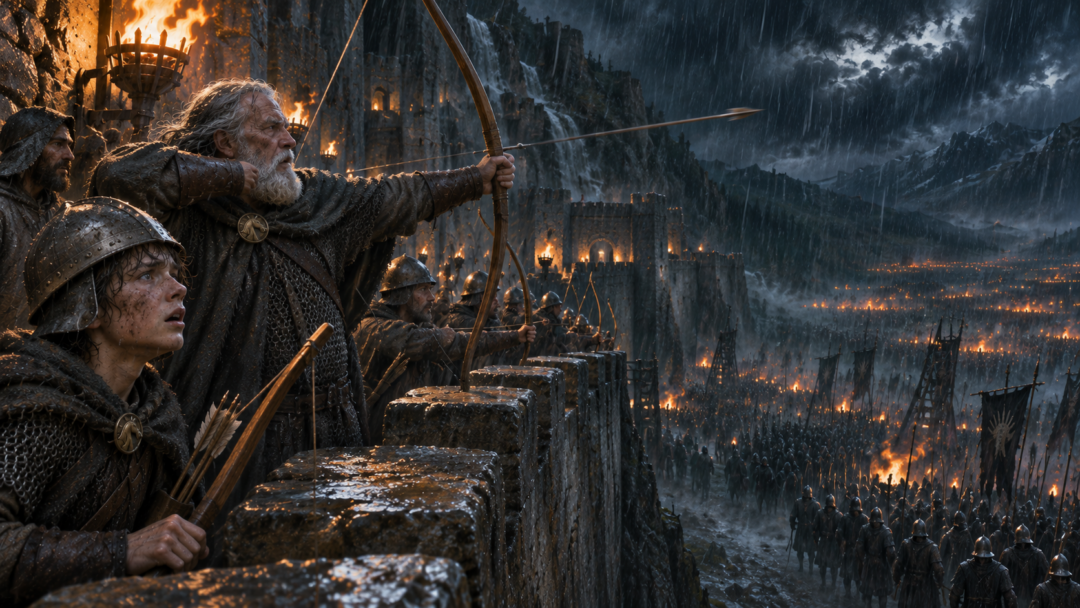
Haleth does not vanish immediately after speaking to Aragorn. He is identifiable among the defenders taking positions on the battlements while Saruman’s army assembles outside. A useful reference is his proximity to Aldor, the elderly archer whose premature arrow hits an Uruk-hai and sets the battle in motion. Haleth is therefore present when the confrontation begins, rather than being shown retreating to the caves or being removed from danger.
That establishes his initial position, not his whole experience. Once combat starts, rapid cuts follow archers firing from the walls, Uruk-hai climbing ladders, and defenders struggling to keep attackers off the battlements. Saruman’s forces assault the Deeping Wall, breach defenses, and threaten the Hornburg itself.
Viewers have tried identifying Haleth in wider battle shots by comparing clothing, weapons, and positions with his earlier appearance. Such comparisons can offer clues, but they cannot provide a continuous, unmistakable account of his movements. Similar Rohirrim clothing, darkness, crowds, and changing camera angles make it risky to identify every young soldier as Haleth.
Crucially, **there is no clearly established scene showing Haleth die**. There is also no unmistakable image of him safely standing among the victors. His presence at the beginning of the fighting is supported; his condition at its conclusion is not.
Does Rohan’s Victory Prove He Survived?
The conclusion of the Battle of Helm’s Deep provides an enormous emotional release. After the defenders suffer heavy losses and are driven back through a damaged fortress, Theoden rides out alongside Aragorn in a desperate charge. Gandalf arrives with mounted reinforcements, changing the course of the battle. The Uruk-hai army is defeated, and Rohan escapes a catastrophe that seemed inevitable during the night.
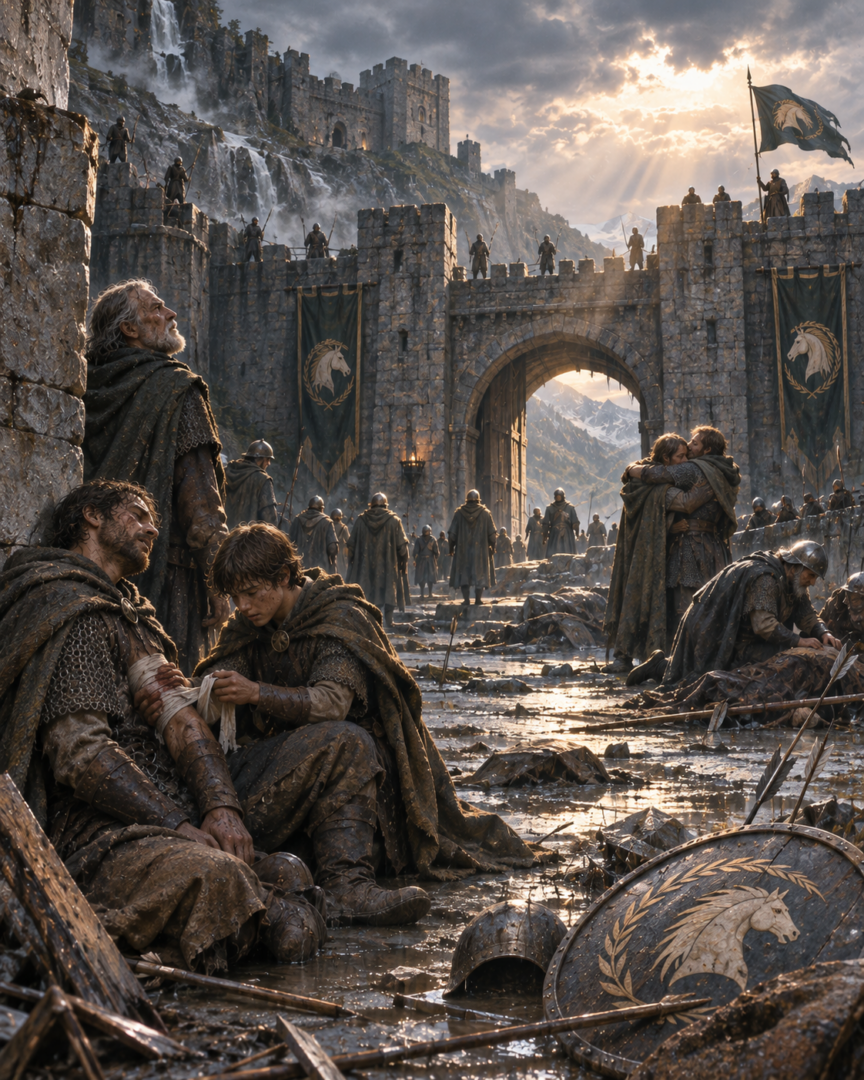
That victory does not mean every familiar defender survived. Many were killed or wounded before Gandalf arrived; others fought in sections of the fortress that the camera did not consistently follow. The survivors are not assembled for an individual roll call.
The aftermath never singles out Haleth. We see no identifiable reunion with his family, no further exchange with Aragorn, and no statement that he lived or died. But an absent survivor and an unseen casualty can look identical in a film that follows only selected characters.
**The strongest evidence-based conclusion is that Haleth’s fate remains unconfirmed on screen.** Treating the victory as proof of his survival, or his absence as proof of death, would add facts the film does not give us.
Is Haleth in Tolkien’s Original Novel?
Haleth, son of Hama, as depicted by Jackson, is not identified in Tolkien’s account of the Battle of the Hornburg. His conversation with Aragorn was written for the adaptation. Consequently, no later passage in the novel reveals the future of this particular film character.
The relevant source is Book III, Chapter 7, ‘Helm’s Deep’, in *The Two Towers*. Tolkien describes a desperate, mixed defending force, including men too old or too young for ideal military service. The films did not invent the idea of inexperienced youths being pressed into combat.
One revealing example involves Gamling, the elderly leader of the men guarding Helm’s Dike. He describes his grandson as having seen too few winters, suggesting that the younger generation must fight despite its inexperience. But Tolkien does not name that grandson Haleth, identify him as Hama’s son, or give him Aragorn’s sword conversation.
The unnamed grandson and the film’s Haleth serve similar dramatic purposes. They are not established as the same person, and combining them would manufacture continuity across two different versions of the story.
Tolkien supplies the larger circumstances: a threatened fortress, a desperate defense, and young people thrust into danger normally faced by trained warriors. Jackson makes that situation personal through a named boy speaking to a familiar hero. **The book cannot settle a fate belonging to a storyline it does not contain.**
What Happens to Hama in the Book?
Hama’s death also differs between versions. In Jackson’s film, he is killed when Warg riders attack the refugees on their way to Helm’s Deep, before the siege. In Tolkien’s novel, he survives that journey and dies during the Battle of the Hornburg itself. Theoden subsequently honors him, and his death becomes part of the battle’s remembered human cost.
The contrast matters. Tolkien records Hama’s death directly; the adaptation moves it earlier, then introduces his son without recording what happens to him. The new sequence lets viewers see some of the emotional consequences of Rohan’s losses through Haleth, even though his father is already gone by the time the siege starts.
This makes Haleth’s anxiety more specific than a general fear of the approaching army. Yet it gives no answer to the central question: does his father’s death precede another family tragedy, or does the boy live to witness Rohan’s victory? Both possibilities remain compatible with what the film shows.
Are Other Characters Named Haleth Relevant?
No. Tolkien reused the name Haleth, but those characters have separate identities and histories.
One is Haleth, daughter of Haldad, an important leader among the First Age people later known as the Haladin. Another is Haleth, a son of King Helm Hammerhand in Rohan’s earlier history. Helm’s son died during the conflict involving Wulf and the Dunlendings, long before the War of the Ring.
Neither is the frightened young soldier speaking with Aragorn in *The Two Towers*. Shared names in Tolkien’s extensive fictional history are not evidence of shared identity. The same applies to Hama: the name also appears in the older history of Helm Hammerhand’s family, but that figure should not be confused with Theoden’s doorwarden. Borrowing outcomes from unrelated characters would produce an apparent answer unsupported by either source.
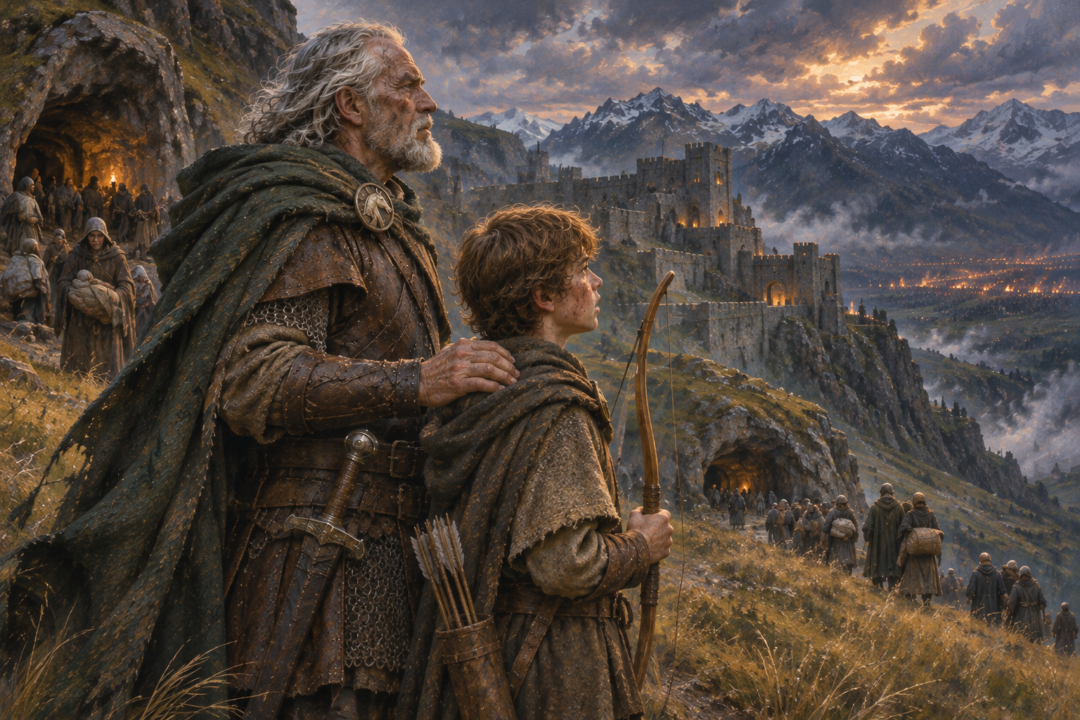
Why Is Such a Short Scene Memorable?
The exchange interrupts the enormous scale of a fantasy battle. Saruman’s army, with its weapons, armor, marching formations, and numerical advantage, makes the threat obvious; nevertheless, soldiers can become abstract when seen only as masses. Haleth gives that danger a recognizable human face.
Unlike a legendary swordsman, an immortal Elf, or a king, he is an inexperienced boy holding a weapon while frightened adults predict their destruction. His vulnerability exposes the cost of defending the fortress more directly than another panoramic shot of the enemy could.
The scene also clarifies Aragorn’s leadership. He cannot reduce the enemy’s numbers or guarantee anyone’s safety. He can recognize a frightened soldier, take his fear seriously, and respond with dignity. His encouragement presents courage not as confidence that danger is imaginary, but as willingness to act despite it.
There is an irony in the audience’s concern for Haleth: the question of his survival exists largely because Aragorn noticed him. Without that brief acknowledgment, viewers might never wonder what happened to one individual young defender. The film gives him a personal identity, then returns to a conflict too large to track every participant.
That can evoke something true about war: individual stories do not always receive neat conclusions. This is an interpretation of the scene’s effect, however, not evidence that the filmmakers intended a specific unseen outcome for Haleth.
So, Did Haleth Survive Helm’s Deep?
**There is no confirmed answer in the film or Tolkien’s novel.** We know who Haleth is, that his father dies before the film’s siege, that the boy stands with the defenders as combat begins, and that Rohan eventually wins. We do not know whether he personally survives to see that victory.
A hopeful reading imagines him among the surviving Rohirrim, carrying forward the courage Aragorn helped him find. A darker reading places him among the battle’s many unnamed casualties. Neither reading is confirmed. There is no verified hidden scene, quotation, or novel passage that establishes his ending.
The encounter matters without a guaranteed happy resolution. Aragorn offers courage to someone whose survival he cannot promise. Viewers are left in a similar position, hoping the young soldier who stood on the walls of Helm’s Deep was still alive when morning came.
Sources and Further Reading
• [The Two Towers screenplay](https://imsdb.com/scripts/Lord-of-the-Rings-The-Two-Towers.html) — Haleth’s dialogue with Aragorn and the battle sequences. • J.R.R. Tolkien, *The Two Towers*, Book III, Chapter 7, ‘Helm’s Deep’ — the Hornburg’s defense and its young soldiers. • [Tolkien Gateway: Hama](https://tolkiengateway.net/wiki/H%C3%A1ma) — Hama’s book history and film adaptation. • [Tolkien Gateway: Helm’s Deep](https://tolkiengateway.net/wiki/Helm%27s_Deep_%28chapter%29) — the novel’s events and defenders. • [ComicBook.com: The Unanswered Question About Helm’s Deep](https://comicbook.com/movies/news/lord-of-the-rings-fans-have-unanswered-question-about-helms-deep/) — discussion of Haleth’s battlefield appearances and unresolved fate.
Sources & Notes
This article is based on close reading and interpretation of Tolkien's published works and related source material where relevant.