Would Two Hobbit Films Really Have Been Better?
The easiest way to fix Peter Jackson’s *The Hobbit* trilogy seems obvious: remove one movie.
Three lengthy films adapted a relatively short novel, and the finished trilogy contains enough extended action, secondary plots, and repeated confrontations to make a two-film version sound immediately appealing.
But cutting a film is not the same as fixing a story.
**Two Hobbit films probably would have been better paced. Whether they would have been better adaptations depends entirely on what got cut.** The trilogy’s biggest weakness was not simply its length. It was the tendency to make Bilbo’s modest adventure compete with the enormous spectacle expected after *The Lord of the Rings*.
A shorter version could have corrected that imbalance. It could also have made it worse.
The Hobbit Was Never a Smaller Lord of the Rings
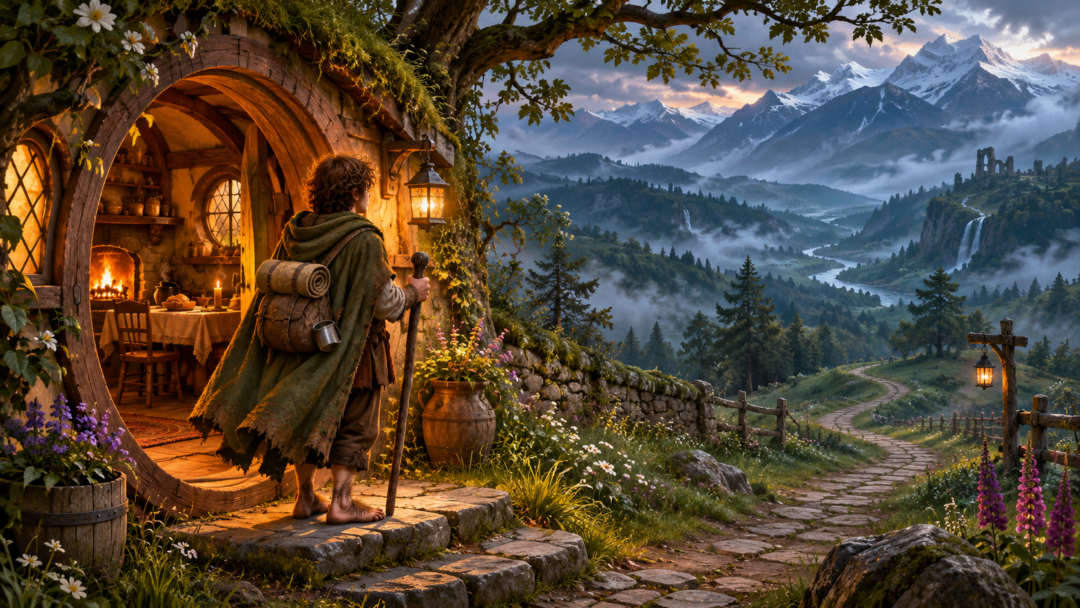
Tolkien’s *The Hobbit* is not an epic war story waiting to become one. It is an adventure about a comfortable, reluctant traveler discovering courage, judgment, and an unexpected capacity for mercy.
Its tone is unusual. The dwarves arrive at Bag End with songs, appetites, complaints, and little respect for Bilbo’s orderly household. Later, the journey involves trolls, goblins, spiders, imprisonment, a terrifying dragon, and a dispute over treasure that nearly destroys the expedition’s purpose.
These shifts work because Bilbo remains the story’s center.
His encounter with Gollum tests his intelligence and compassion. His victory over the spiders shows that he can act without Gandalf’s protection. His conversation with Smaug demonstrates courage through careful speech rather than physical strength.
Finally, his decision to surrender the Arkenstone reveals how far he has traveled morally. He values preventing bloodshed above satisfying Thorin’s claim to the treasure.
Jackson’s films retain these incidents, but repeatedly move attention toward Thorin’s royal destiny, Azog’s pursuit, Gandalf’s investigations, and the approaching darkness associated with Sauron.
Those additions do not automatically make the adaptation worse. Some deepen the characters and connect the adventure to Tolkien’s wider world. But they also compete with the story that gives the novel its identity.
Two films would only have helped if they restored that priority.
Where the Trilogy Actually Feels Stretched
The strongest argument for two films is the trilogy’s uneven momentum.
*An Unexpected Journey* needs time to introduce the company. The dinner at Bag End establishes the dwarves’ personalities, explains their ambitions, and makes Bilbo’s departure meaningful.
But the film repeatedly expands individual obstacles into elaborate action sequences.
The Stone Giants become a spectacular mountain confrontation. Goblin-town turns into a prolonged pursuit involving collapsing structures and extraordinary escapes. Azog supplies a recurring personal enemy whose attacks increasingly compete with the journey’s existing dangers.
Each sequence offers excitement. Together, they establish a rhythm in which almost every obstacle must become enormous.
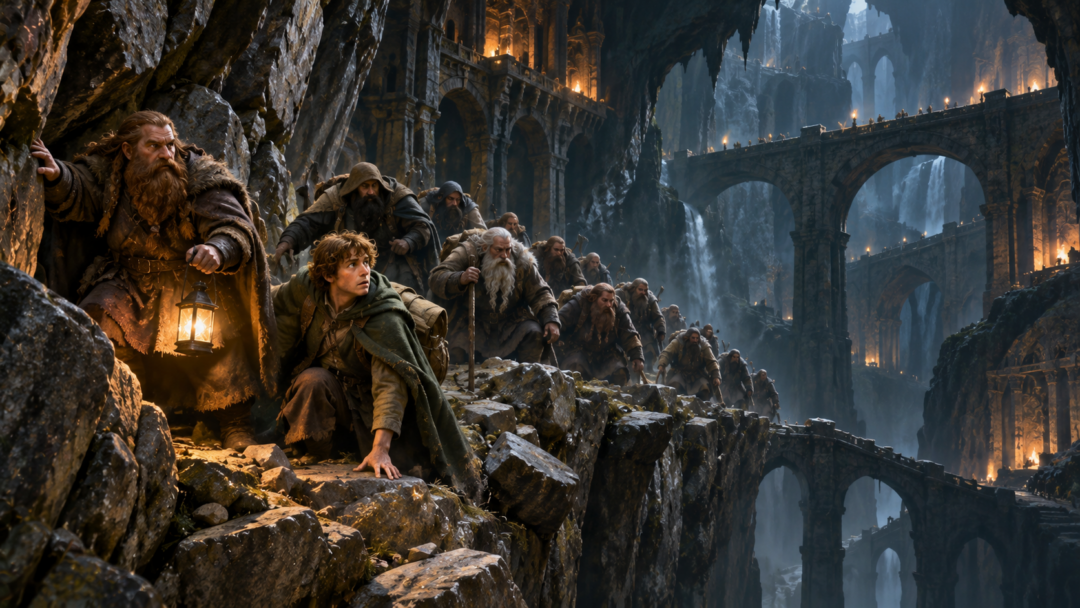
*The Desolation of Smaug* continues the pattern. The barrel escape, relatively straightforward in Tolkien’s novel, becomes an extended river battle. Inside Erebor, the dwarves confront Smaug through an elaborate sequence involving industrial machinery and molten gold.
These additions give the characters physical activity, but they also delay the story’s more important developments.
A two-film adaptation could have shortened these sequences substantially without losing their narrative purpose. The company would still escape the goblins, travel through Mirkwood, flee the Elvenking’s halls, and encounter the dragon.
The difference would be how much time each obstacle consumed.
And that matters because the adventure needs moments of quiet uncertainty between its dangers. Constant escalation can make the next enormous threat feel less threatening, not more.
Shorter Does Not Automatically Mean More Faithful
Here is where the two-film argument becomes less convincing.
Imagine removing a substantial amount of footage while leaving the filmmakers’ priorities unchanged. The most vulnerable scenes might not be the extravagant ones.
Beorn’s hospitality could become a brief stop. The journey through Mirkwood could move faster. Conversations between Bilbo and the dwarves could disappear. The political tensions surrounding Laketown could be simplified.
Meanwhile, the largest battles, major villains, and connections to *The Lord of the Rings* might remain.
That version would be shorter, but possibly less satisfying.
Beorn matters because his home provides temporary safety before Mirkwood’s oppressive wilderness. The contrast gives the journey texture. Similarly, the spider encounter matters because Bilbo takes responsibility for the company’s survival rather than waiting for someone more powerful to rescue them.
Neither episode needs endless screen time. Both need enough room to establish their significance.
The same applies to the dwarves themselves. Their personalities, frustrations, and growing respect for Bilbo help make the expedition feel like a company rather than a collection of armored figures.
A good two-film version would cut repetition before cutting development.
That is an editorial decision, not a mathematical consequence of having fewer films.
Thorin Needed Depth, Not More Enemies
One of Jackson’s most defensible changes was giving Thorin a larger emotional role.
In Tolkien’s novel, Thorin is proud, stubborn, frequently impressive, and sometimes deeply unreasonable. His desire to reclaim Erebor is understandable, but his behavior after recovering the treasure becomes increasingly difficult to defend.
The films emphasize his exile, wounded pride, royal inheritance, and developing friendship with Bilbo. Richard Armitage’s performance gives this material considerable emotional force.
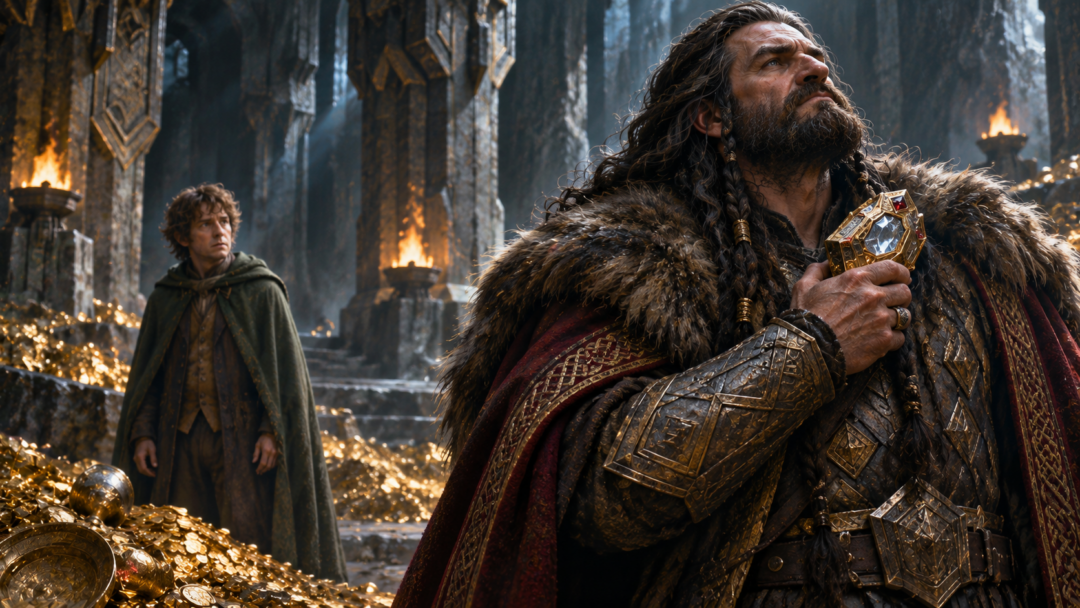
Removing most of it to make two films fit would be a mistake.
The problem is the number of additional conflicts surrounding him.
Thorin must confront Azog, defend his claim to leadership, contend with the inherited obsession over treasure, resist rival interests, and eventually face the consequences of his treatment of Bilbo.
Not every conflict carries equal dramatic weight.
Tolkien already provides a powerful confrontation through the Arkenstone. Bilbo secretly gives it to Bard and the Elvenking, hoping they can use it to negotiate and prevent a battle.
To Thorin, the act is betrayal. To Bilbo, it is the responsible choice.
Their disagreement exposes the moral distance that has opened between them. The dwarf who once doubted Bilbo’s courage now rejects the courage required to challenge him.
That conflict needs no spectacular duel to make it important.
A better adaptation could have devoted more attention to Thorin’s growing possessiveness and less to repeatedly proving that dangerous enemies wanted him dead.
Smaug Reveals the Structural Problem
Smaug demonstrates both what Jackson’s adaptation gets right and where its structure becomes awkward.
The conversation between Bilbo and the dragon is one of the trilogy’s strongest sequences. Smaug is intelligent, suspicious, vain, and manipulative. Bilbo cannot defeat him through strength. He survives by carefully choosing his words.
The scene works because character and danger reinforce each other.
Then the film expands the confrontation into an extended chase through Erebor’s industrial spaces, culminating in a failed attempt to destroy Smaug with molten gold.
*The Desolation of Smaug* ends as the dragon flies toward Laketown. His attack and death are postponed until the opening of *The Battle of the Five Armies*.
That division creates a strange dramatic arrangement. One film builds toward the dragon without resolving the immediate threat. The next begins by finishing that confrontation before establishing its main conflict.
A two-film adaptation could have presented Bilbo’s encounter, Smaug’s attack on Laketown, and Bard’s victory as a more continuous progression.
But there is a complication.
Smaug’s death is not Tolkien’s conclusion. It changes the entire nature of the story.
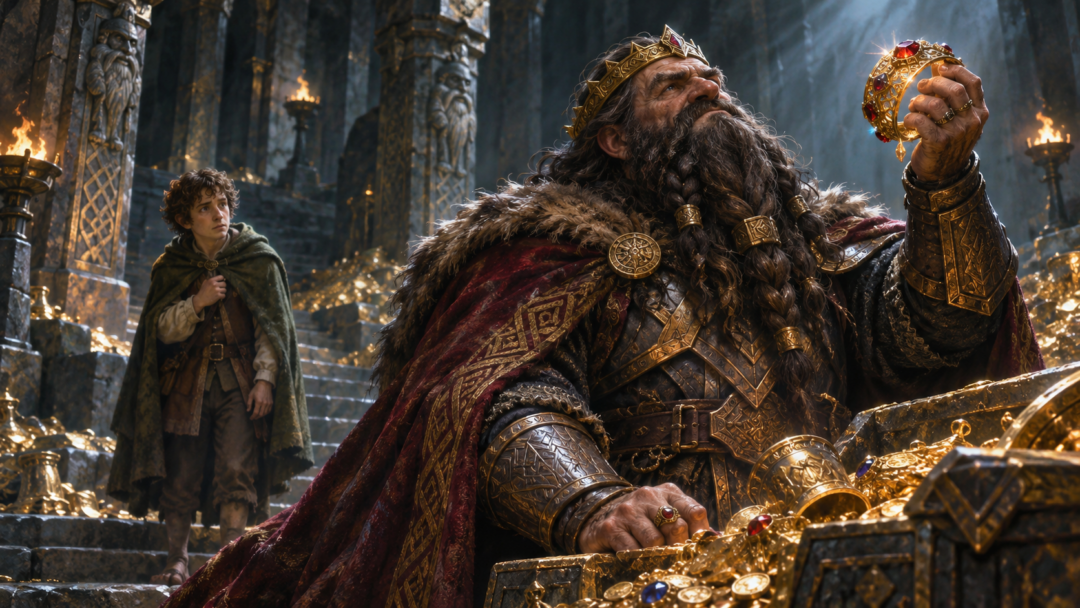
With the dragon gone, the treasure becomes accessible, and competing claims emerge. Bard represents Laketown’s survivors, the Elvenking has his own interests, and Thorin becomes increasingly determined to control the mountain’s wealth.
Compressing everything after Smaug into a rushed finale would weaken the novel’s most important moral conflict.
The dragon needed less spectacle around him. The consequences of his death needed room to breathe.
The Battle Was Never Supposed to Be Bilbo’s Greatest Fight
The third film makes the Battle of the Five Armies its central spectacle. Armies maneuver, individual heroes fight, and confrontations expand into elaborate action sequences.
Tolkien’s treatment is strikingly different.
Bilbo does not become a mighty battlefield champion. He puts on the Ring, witnesses part of the fighting, and is knocked unconscious by a stone. He learns much of what happened afterward.
This limited perspective serves the novel’s emotional design.
Bilbo’s achievement is not measured by how many enemies he defeats. His greatest contribution comes before the fighting, when he tries to prevent it through the Arkenstone.
The battle demonstrates the terrible cost of the conflict that follows.
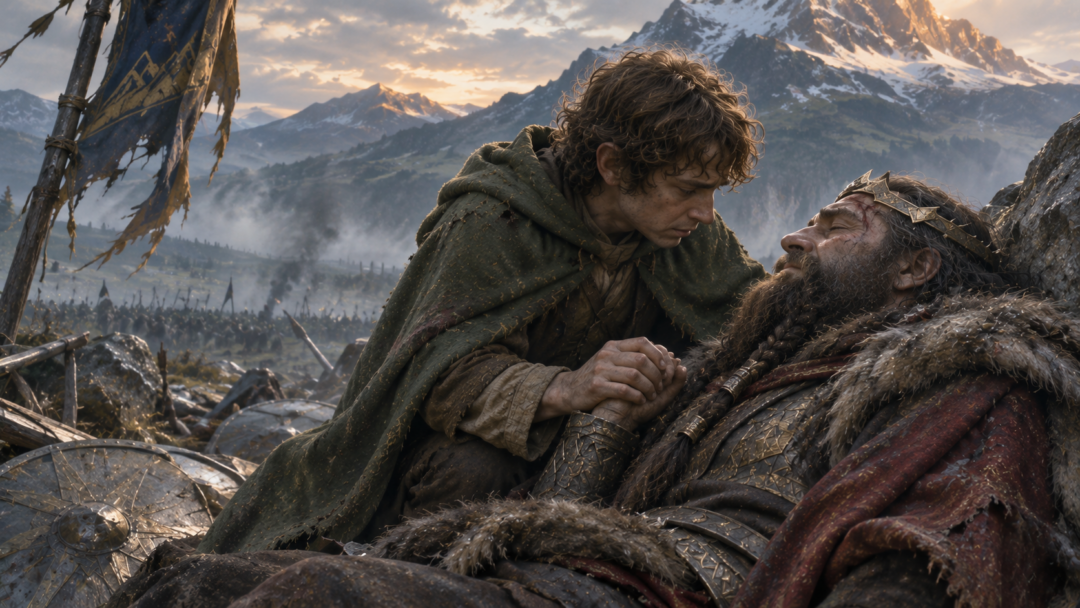
Thorin’s final reconciliation with Bilbo matters precisely because their relationship has been tested by pride, loyalty, greed, and disagreement.
Jackson preserves that emotional resolution, but surrounds it with an extensive battlefield narrative and several personal confrontations.
A two-film adaptation might have made the battle shorter and allowed Thorin’s final meeting with Bilbo to dominate the climax.
Or it might have preserved the enormous battle while rushing through its aftermath.
The latter would solve the running-time problem without solving the storytelling problem.
Dol Guldur and Tauriel Were Different Kinds of Additions
The expanded Gandalf storyline connects Bilbo’s adventure to the larger danger posed by Sauron.
That connection has a basis in Tolkien’s broader Middle-earth history, although *The Hobbit* keeps much of Gandalf’s separate business outside Bilbo’s immediate experience.
Showing Dol Guldur gives viewers a wider understanding of events. It also shifts attention toward a conflict whose full importance belongs to another story.
Tauriel serves a different purpose. Created for the films, she adds a perspective on the hostility between elves and dwarves, while her relationship with Kili introduces a romantic subplot absent from the novel.
Neither addition should be judged solely by whether it appears in the book. Adaptations can invent worthwhile material.
The stronger question is whether that material improves the central drama enough to justify its screen time.
In two films, the Dol Guldur investigation and Tauriel’s story would face greater pressure to earn their places.
That might have encouraged a cleaner narrative. It might also have produced awkwardly abbreviated subplots, which can be worse than omitting them entirely.
Finding the Right Break Would Have Been Difficult
A two-film adaptation also needs a convincing division between its halves.
Ending the first film after the Misty Mountains would leave most of the adventure for the second. Ending around Laketown could offer better balance, but it would require the first installment to move efficiently through Beorn, Mirkwood, and the Wood-elves’ imprisonment.
Ending after Smaug’s confrontation would create another problem: the second film’s remaining climax would have to accommodate the dragon’s fate, the treasure dispute, and the battle.
Each option has advantages and disadvantages.
The point is that a good two-film adaptation would require its own carefully designed structure. The existing trilogy cannot simply be shortened at convenient intervals and expected to become coherent.
What the Better Two-Film Version Might Have Been
The most promising structure would organize the adventure around Bilbo’s two major transformations.
The first film would follow his departure from comfort toward independence. Gollum, the dangerous wilderness, and the spiders would establish his developing intelligence, mercy, and courage.
The second would explore what happens when the company approaches its goal. Bilbo would confront Smaug, witness the consequences of the dragon’s death, and finally challenge Thorin over the treasure.
The climactic question would not be whether the company could win another spectacular fight. It would be whether friendship and judgment could survive the fulfillment of its original ambition.
Such a version could retain Thorin’s tragedy, the grandeur of Erebor, and the danger of the final battle while giving the story a clearer emotional progression.
It would still require difficult omissions. But those omissions would follow a consistent principle: preserve what changes Bilbo and what makes the treasure morally dangerous.
Final Verdict
Two films probably offered *The Hobbit* a better chance of becoming a disciplined adaptation. Less room for prolonged pursuits and secondary conflicts could have improved its pacing considerably.
But the trilogy’s fundamental problem was never simply that it had too many minutes.
Its most memorable material often involves a small hobbit making a difficult decision: sparing Gollum, facing Smaug, surrendering the Arkenstone, or accepting Thorin’s final reconciliation.
Those moments do not require three films. Yet squeezing them into two would not automatically strengthen them either.
**The better Hobbit was not necessarily the shorter Hobbit. It was the version that understood why Bilbo mattered more than the spectacle surrounding him.**
Sources & Notes
This article is based on close reading and interpretation of Tolkien's published works and related source material where relevant.