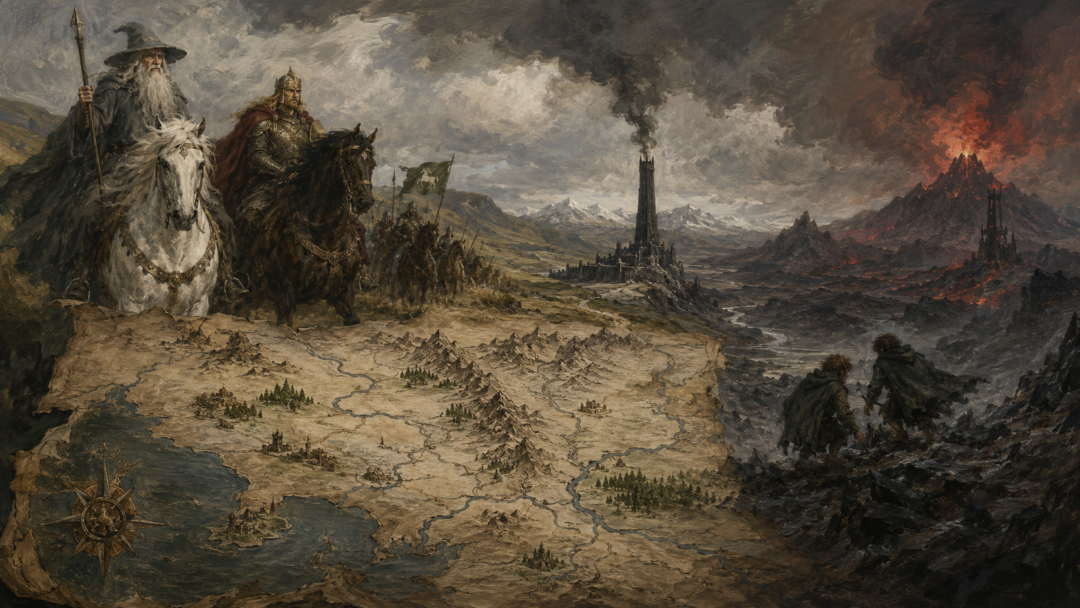
When the Rohirrim finally reach the Pelennor Fields, the reader has spent chapters feeling the approach of catastrophe. Minas Tirith has been darkened beneath Mordor’s shadow. Faramir has been wounded. Denethor has begun to despair. Gandalf stands before the broken Gate. Théoden’s riders have crossed Rohan, passed secretly through the Drúadan Forest, and arrived almost too late.
Appendix B can reduce much of this to a date.
That is not because the chronology considers these events unimportant. It is because The Tale of Years is doing something radically different from the narrative itself. The chapters of The Lord of the Rings make the reader experience uncertainty, distance, delay, and incomplete knowledge. Appendix B removes much of that uncertainty and lays the same history out as simultaneous events occurring on a calendar.
The result is one of the most revealing contrasts in the book. What feels enormous when lived by the characters can become a single entry in an annal. And events separated by hundreds of pages suddenly appear beside one another because, in Middle-earth, they were happening on the same day.
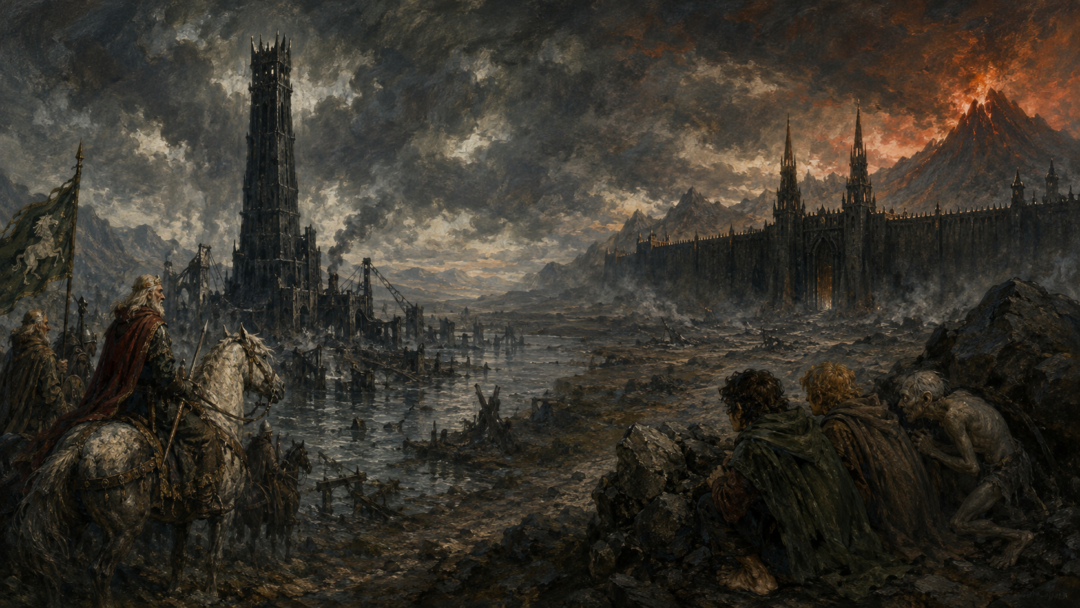
The Narrative Makes Time Feel Larger Than It Is
The War of the Ring occupies surprisingly little calendar time at its climax.
After the Fellowship breaks on 26 February 3019, the major military and personal crises accelerate dramatically. By 25 March, the One Ring is destroyed. Less than a month separates Boromir’s death and the scattering of the Fellowship from the downfall of Sauron.
Yet the narrative does not feel compressed.
That is partly because the story repeatedly attaches itself to particular groups. Aragorn, Legolas, and Gimli pursue the Orcs across Rohan. Merry and Pippin enter Fangorn. Gandalf returns. Théoden is restored. Isengard falls. Meanwhile Frodo and Sam are somewhere beyond the reader’s immediate sight.
Then the perspective changes.
Book IV returns to Frodo and Sam and follows their journey toward Mordor: Gollum, the Dead Marshes, the Black Gate, Faramir, Ithilien, Minas Morgul, and Shelob.
These are not simply two independent adventures occurring one after the other. Large portions are concurrent.
Appendix B exposes that immediately.
Appendix B Turns Chapters Into Simultaneous History
The section commonly called “The Great Years” assigns specific dates to the events of 3018 and 3019. Once the Fellowship has separated, individual dates often contain several unrelated-looking lines of action.
On 2 March, for example, Gandalf reaches Edoras and Théoden is healed. The Rohirrim ride west. The Entmoot ends, and the Ents march against Isengard. At roughly the same stage of the chronology, Frodo and Sam are completing their passage through the Dead Marshes.
In the narrative, these experiences belong to different books and completely different emotional worlds.
One is filled with horses, kingship, war, and the sudden return of hope. The other is a miserable crawl through drowned country under the threat of Mordor.
Appendix B places them on the same calendar.
That simple act changes how the story looks. Middle-earth stops resembling a sequence of adventures and begins to resemble a continent undergoing a crisis everywhere at once.
March 5 Shows the Difference Perfectly
Consider 5 March.
By this date Théoden has reached Isengard, where the confrontation with Saruman takes place. Gandalf later sets out with Pippin toward Minas Tirith after the dangerous encounter involving the palantír.
Frodo, meanwhile, is near the Morannon and abandons the attempt to enter Mordor through the Black Gate.
In the main narrative these moments carry enormous separate weight.
At Isengard, Saruman’s political power is exposed as broken even though Orthanc remains unconquered. The palantír then opens an entirely new danger: Sauron is no longer merely a distant Enemy but a will capable of reaching across enormous distances through the Stones.
Far away, Frodo faces another form of strategic defeat. The obvious road into Mordor is impossible. He must trust Gollum’s claim that another way exists.
The chronology quietly places these decisions together.
Both strands are narrowing.
The western war is moving toward Gondor. Frodo’s road is moving toward Cirith Ungol. Neither group fully understands the other’s situation.
The reader who consults Appendix B does.
The Siege of Gondor Is Happening Beside Frodo’s Disaster
This effect becomes even stronger in mid-March.
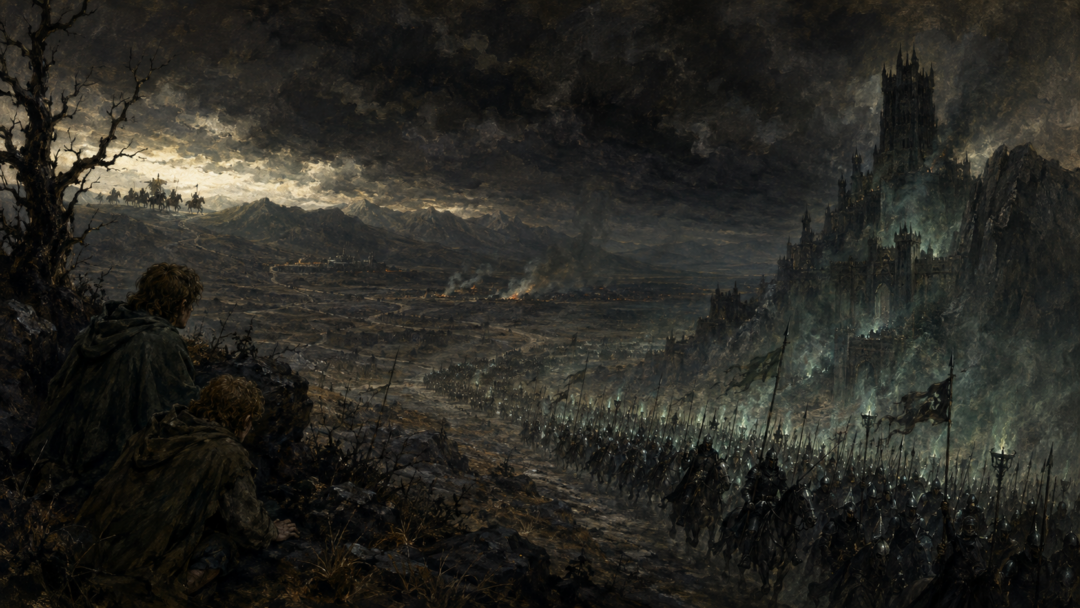
On 9 March Gandalf reaches Minas Tirith. Aragorn is moving through southern Gondor after taking the Paths of the Dead. Théoden reaches Dunharrow. Frodo reaches the Morgul-road. Darkness begins to flow out of Mordor.
From this point onward, the chronology becomes extraordinarily dense.
On 10 March, the Dawnless Day begins. Rohan musters and rides. Faramir is involved in the defense of Gondor. Enemy forces move through Anórien. Frodo passes the Cross-roads and witnesses the army of Minas Morgul setting out.
That last connection is especially important.
Frodo is not witnessing some separate Mordor campaign. The host he sees belongs to the same offensive whose consequences dominate Book V.
The narrative makes the connection possible to understand, but Appendix B makes the synchronization unmistakable.
The terror moving past Frodo is moving toward the characters whose story the reader follows elsewhere.
March 13–15 Reveal How Much One Date Can Contain
The entries around the Battle of the Pelennor Fields show the chronology at its most compressed.
On 13 March, Frodo is captured after the encounter with Shelob and carried into the Tower of Cirith Ungol. On the same date, the Pelennor is overrun, Faramir is wounded, and Aragorn reaches Pelargir and captures the Corsairs’ fleet.
Three completely different crises are therefore occurring nearly together.
One Ring-bearer appears lost.
Gondor’s defenses are collapsing.
Aragorn gains the means by which he can race north toward Minas Tirith.
Then comes 14 March. Sam finds Frodo in the Tower. Minas Tirith is under siege. The Rohirrim are being guided toward the battlefield.
And then 15 March.
The Gate of Minas Tirith is broken. Denethor dies. Rohan reaches the Pelennor. Théoden falls. Éowyn and Merry confront the Lord of the Nazgûl. Aragorn arrives. The battle turns.
Meanwhile Frodo and Sam escape from Cirith Ungol and begin the next stage of their journey through Mordor.
The narrative gives these events entire chapters filled with dialogue, fear, reversals, grief, and individual decisions.
The annal gives them a day.
That contrast is not a contradiction. It is the point.
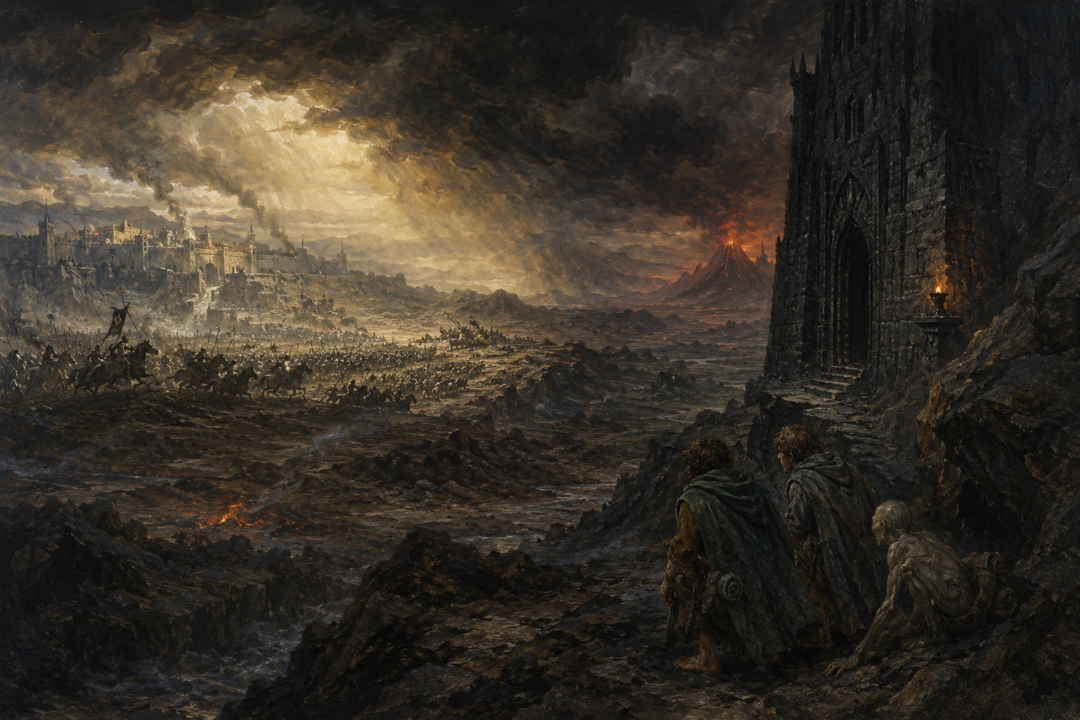
Appendix B Restores Knowledge the Characters Never Possessed
During the story, nobody has a complete map of events.
Gandalf cannot know precisely what Frodo is doing.
Frodo does not know whether Minas Tirith still stands.
Aragorn can make plans based only on the information available to him.
Even Sauron, despite his enormous intelligence and surveillance, repeatedly misreads his enemies’ intentions.
The reader is also kept partially ignorant. Perspective moves from one group to another, and the structure preserves uncertainty.
Appendix B operates from a later historical viewpoint.
Events that were once fragments of experience can now be placed beside one another.
This produces a strange emotional effect. The chronology knows that 15 March contains both the death of Théoden and Frodo’s escape. Théoden does not. Frodo does not. Neither event depends on the participants understanding the other.
History sees the pattern only afterward.
The Chronology Also Reveals a Larger War
Appendix B does more than synchronize the Fellowship.
It records fighting elsewhere during the War of the Ring, including assaults on Lothlórien and conflict in Mirkwood, as well as the Battle of Dale and the siege associated with Erebor.
These events are crucial to understanding the geographical scale of Sauron’s offensive.
The main narrative naturally concentrates on the Ring-bearer and the war surrounding Gondor and Rohan. That perspective can make the Battle of the Pelennor Fields seem like the single military center of everything happening in Middle-earth.
Appendix B corrects that impression.
Sauron’s power is being exerted across multiple fronts. The northern peoples are not merely waiting for news from Gondor. They face attacks of their own.
Their resistance also matters strategically. The text does not require us to imagine a detailed alternative campaign that is never stated, but the chronology makes clear that the War of the Ring was broader than the battles directly witnessed by the Fellowship.
Narrative Time and Historical Time Are Not the Same
This is the deeper function of Appendix B.
Narrative time measures experience.
A night in Shelob’s tunnels can feel endless because Frodo and Sam do not know what waits ahead. The ride of the Rohirrim feels desperate because every hour matters. The siege of Minas Tirith unfolds through successive moments of worsening danger.
Historical time measures occurrence.
March 12.
March 13.
March 14.
March 15.
The calendar does not slow for fear, courage, death, or revelation.
That is why Appendix B can initially seem dry while actually adding something profound to the story. It shows what the characters could never see while events were happening: the shape of the whole.
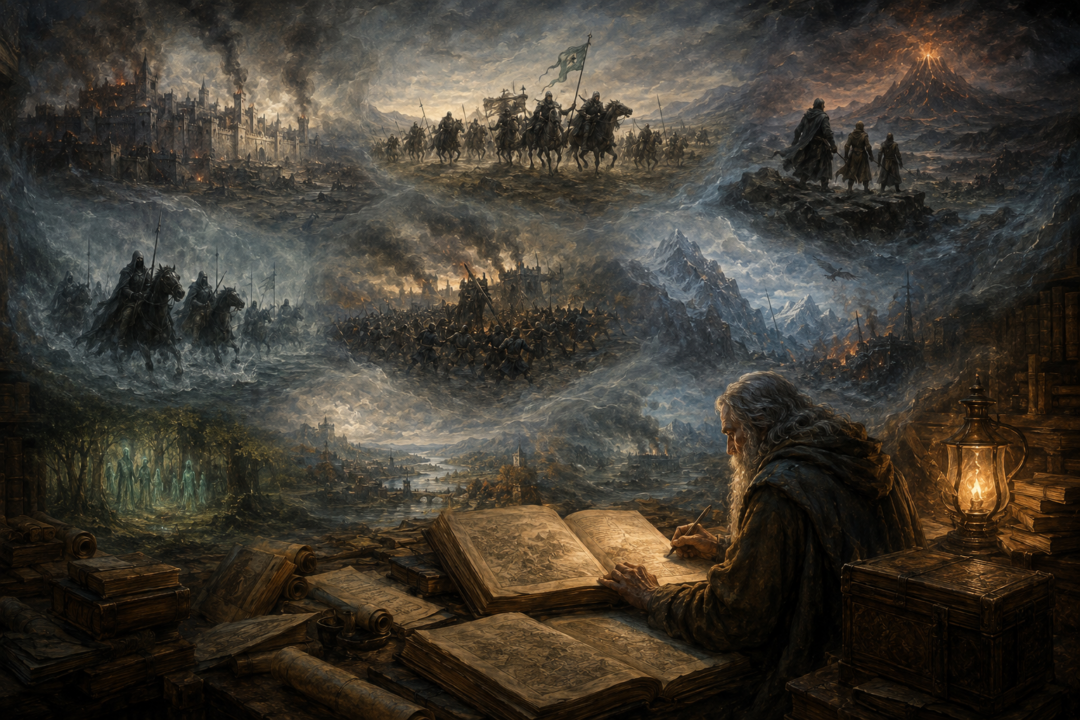
The Smallest Entries Can Contain the Largest Stories
There is something almost melancholy about reading The Tale of Years after finishing the narrative.
Whole chapters collapse into sentences.
Journeys become dates.
Battles become entries.
Deaths that permanently change the people who survive them occupy only part of a line beside events occurring hundreds of miles away.
Yet the compression does not diminish the story.
It demonstrates the difference between living through history and remembering it.
For Frodo, Sam, Merry, Pippin, Aragorn, Théoden, Éowyn, Faramir, and the others, those days arrive one uncertain moment at a time.
For the later chronicler, the same moments can finally be aligned.
And once they are, the reader sees something the characters rarely could: while one chapter seemed to contain the whole world, countless other stories were already happening beyond its edge.
Sources & Notes
- https://tolkiengateway.net/wiki/Appendix_B — Tolkien Gateway: Appendix B (The Tale of Years), its structure, sections, and role as the chronology of Middle-earth
- https://tolkiengateway.net/wiki/Timeline/Third_Age — Tolkien Gateway: Third Age timeline, including the dated and simultaneous events of the War of the Ring in 3019
- https://tolkiengateway.net/wiki/War_of_the_Ring — Tolkien Gateway: War of the Ring overview and chronology across its geographically separated campaigns
- https://tolkiengateway.net/wiki/25_March — Tolkien Gateway: 25 March chronology, including the destruction of the One Ring and Sauron’s fall
Sources cover Appendix B as The Tale of Years, the dated Third Age timeline, the concurrent campaigns of the War of the Ring, and the chronology of 25 March.