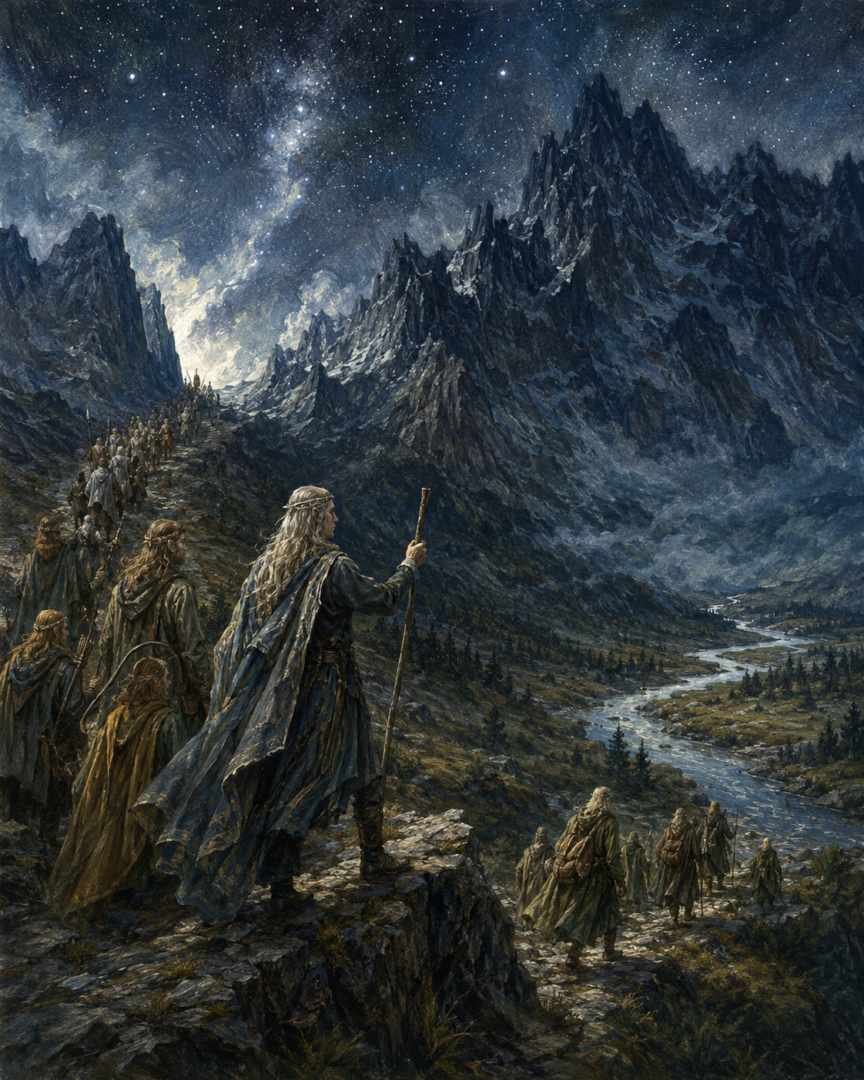
The Green-elves of Ossiriand seem, at first glance, like one of Middle-earth’s oldest woodland peoples: Elves dressed in the colours of leaves, hidden among rivers and trees, so difficult to see that strangers might pass through their country without ever knowing they were there.
But “Green-elves” was not the identity with which their story began.
They were Nandor first.
And the Nandor themselves existed because their ancestors had already abandoned the great westward journey of the Eldar. Denethor, son of Lenwë, then led only part of that scattered people westward again, crossing into Beleriand in what was effectively a second migration.
Only there, in Ossiriand, do Denethor’s followers become the people remembered as the Green-elves, the Laiquendi.
That distinction matters. Their history is not simply the story of an Elvish branch that stopped travelling. It is the story of a people who stopped, settled, scattered—and then chose to move west again.
The First Journey Broke the Teleri Apart
The deeper story begins with the Great Journey of the Elves from Cuiviénen toward Aman.
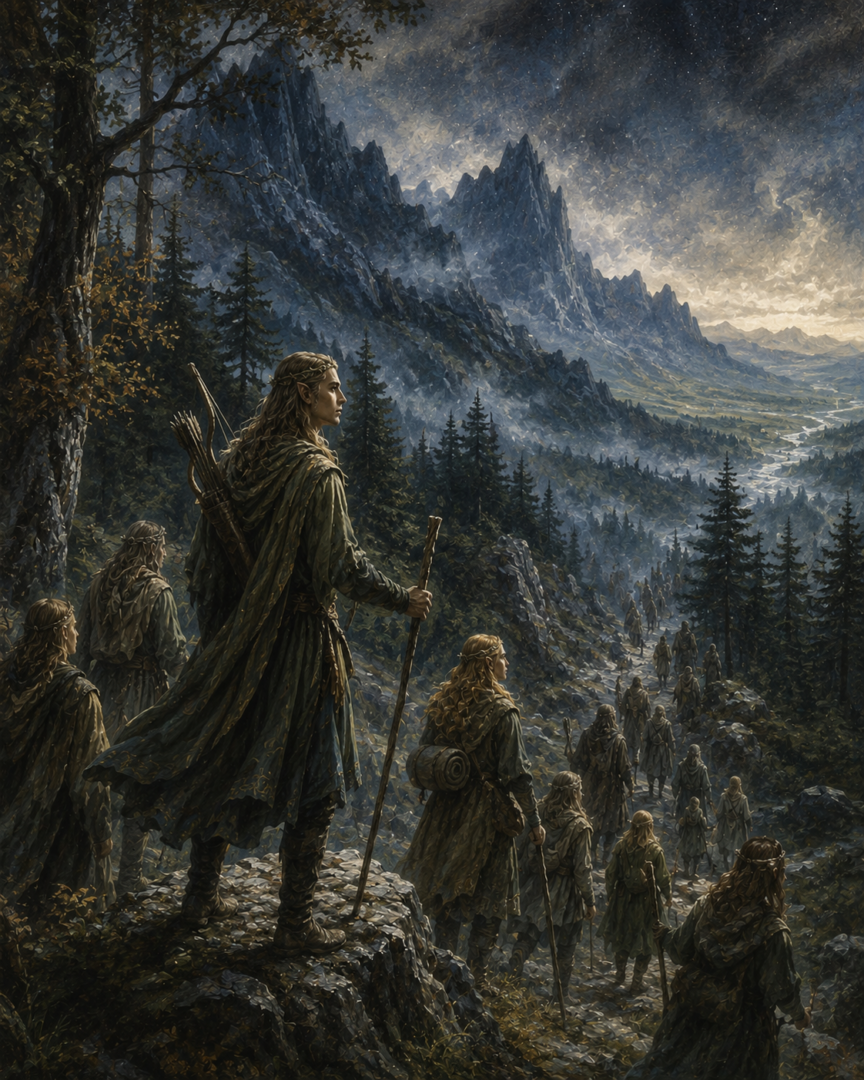
The Teleri were already the most reluctant and divided of the three great hosts of the Eldar. During their westward migration, some of them reached the Misty Mountains and became afraid of those enormous barriers.
Among them was Lenwë.
Rather than continue west across the mountains, Lenwë led a portion of the Teleri southward down the River Anduin. These followers became known as the Nandor.
This was the first decisive break.
They had accepted the summons to journey west, so they belonged to the Eldar in that historical sense, but they did not complete the journey to Aman. Instead, they dispersed through the lands around the Anduin and beyond.
Their separation also changed them.
The account in The Silmarillion emphasizes their knowledge of living things. They loved running water and became especially learned concerning trees, herbs, birds, and beasts.
Long before anyone called Denethor’s people Green-elves, therefore, the Nandor had already developed a way of life intimately connected to the wild landscapes of Middle-earth.
Yet the Nandor did not remain one united population.
Their first migration had ended. Their scattering had begun.
Denethor Chose the West Again
Generations of later history can make the Green-elves appear simply to be the Nandor of Beleriand. The distinction is more precise than that.
Only some of the Nandor entered Beleriand.
Much later than Lenwë’s departure from the Great Journey, his son Denethor gathered many of the scattered Nandor and led them westward. The primary account connects this movement with growing dangers in the lands east of the Blue Mountains and with reports of the peace and power associated with Thingol’s realm.
This was not a resumption of the original journey to Aman. Denethor was not taking his people to the Blessed Realm.
He was nevertheless moving them west again.
They crossed the mountains and entered Beleriand, where Thingol welcomed them as kindred. Denethor’s people then settled in Ossiriand, the beautiful country between the River Gelion and the Blue Mountains, crossed by the rivers descending from Ered Luin.
Here the distinction between Nandor and Green-elves becomes important.
The Nandor were the larger historical people created by Lenwë’s earlier separation.
The Green-elves were the branch of those Nandor who eventually followed Denethor into Ossiriand.
The names therefore describe related but not identical groups.
Ossiriand Created a New Identity
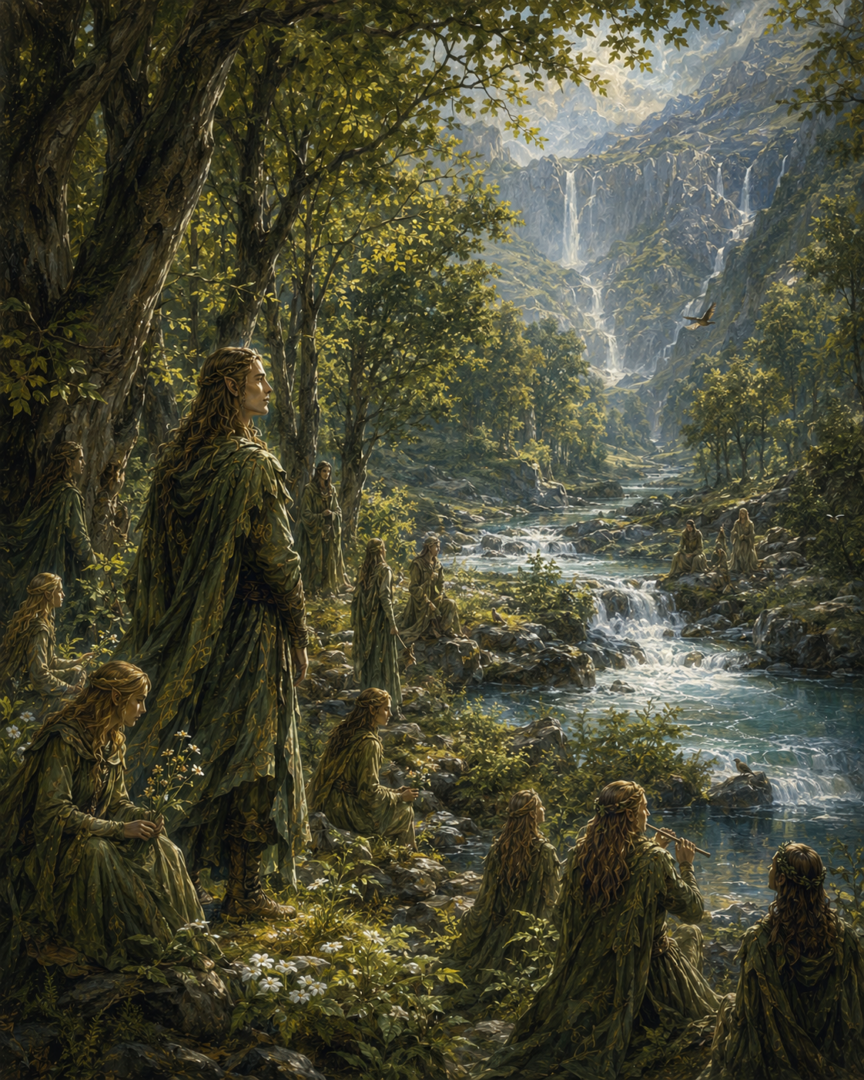
Ossiriand was unusually suited to the character the Nandor had developed during their long life in Middle-earth.
It was a green land of woods and many rivers. The Sindar called it Ossiriand, the Land of Seven Rivers. Later the Noldor called the country Lindon because of the singing they heard across Gelion.
Denethor’s people adapted themselves closely to this landscape.
The Silmarillion describes them as wearing clothing of the colour of leaves. From this association came their identity as the Green-elves: in Quenya, Laiquendi. Sindarin forms associated with the people include Laegrim.
Their “greenness,” then, was not simply a poetic label for all Nandor everywhere.
It belonged particularly to the Elves of Ossiriand.
That makes their transformation partly geographical. The people who had once turned aside near the Misty Mountains had spent long ages scattered through Middle-earth. One branch then crossed westward under a new leader, entered a particular land, and became identified so completely with it that geography, clothing, culture, and name converged.
They had not ceased to be Nandor by ancestry.
But they had become something more specific.
They were the Laiquendi.
The Cruel Irony of Denethor’s Migration
Denethor had brought his people toward a land associated with greater safety.
They arrived shortly before Beleriand became a battlefield.
When Morgoth returned to Middle-earth and his forces attacked Beleriand, Thingol called upon his allies. Denethor answered.
The result was catastrophic for the Green-elves.
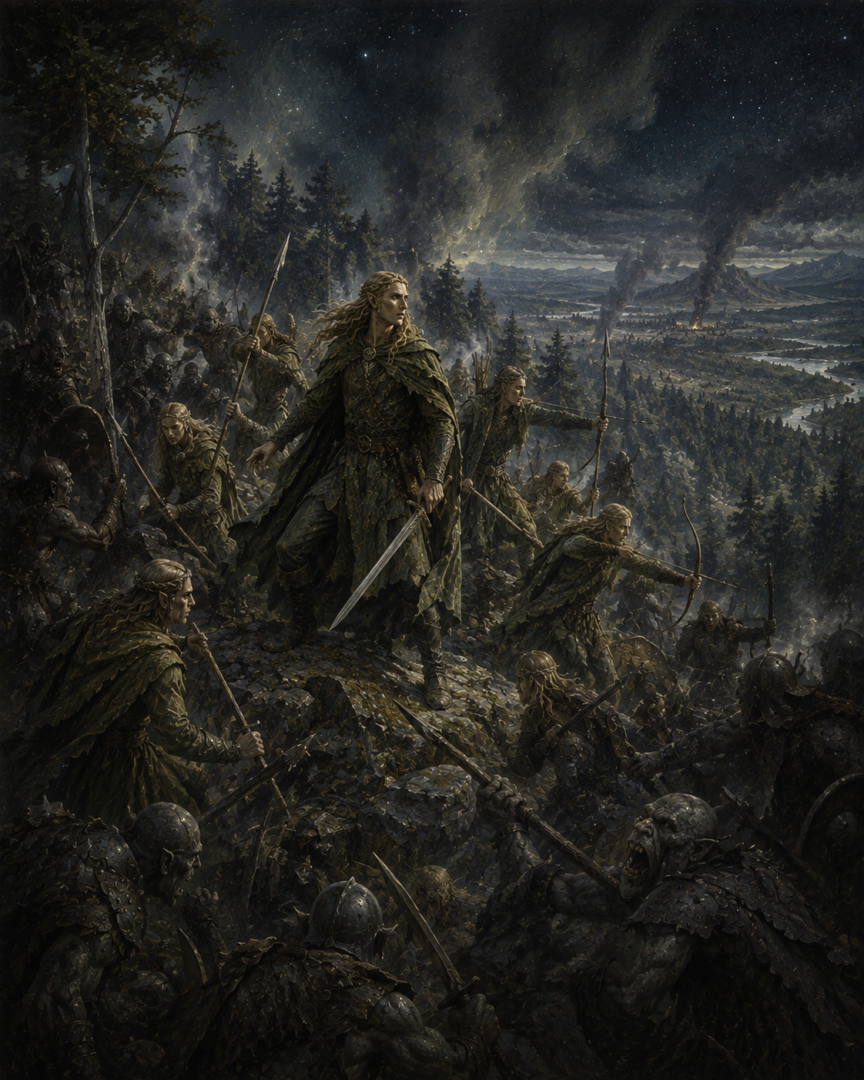
The Laiquendi were lightly armed. They had not developed the military strength possessed by some of the other Elvish peoples, and in the First Battle of Beleriand they suffered heavily.
Denethor was surrounded on Amon Ereb and slain before Thingol could come to his aid.
The battle was ultimately won, but victory did not undo what had happened.
The leader who had gathered scattered Nandor and brought them into Beleriand was dead.
And the people he had led west would never be politically the same again.
After Denethor, the Green-elves Became a Hidden People
The death of Denethor marks another transformation.
Some of his surviving people went to Doriath and mingled with Thingol’s people. Those who remained in Ossiriand became increasingly secretive.
They chose no king after Denethor.
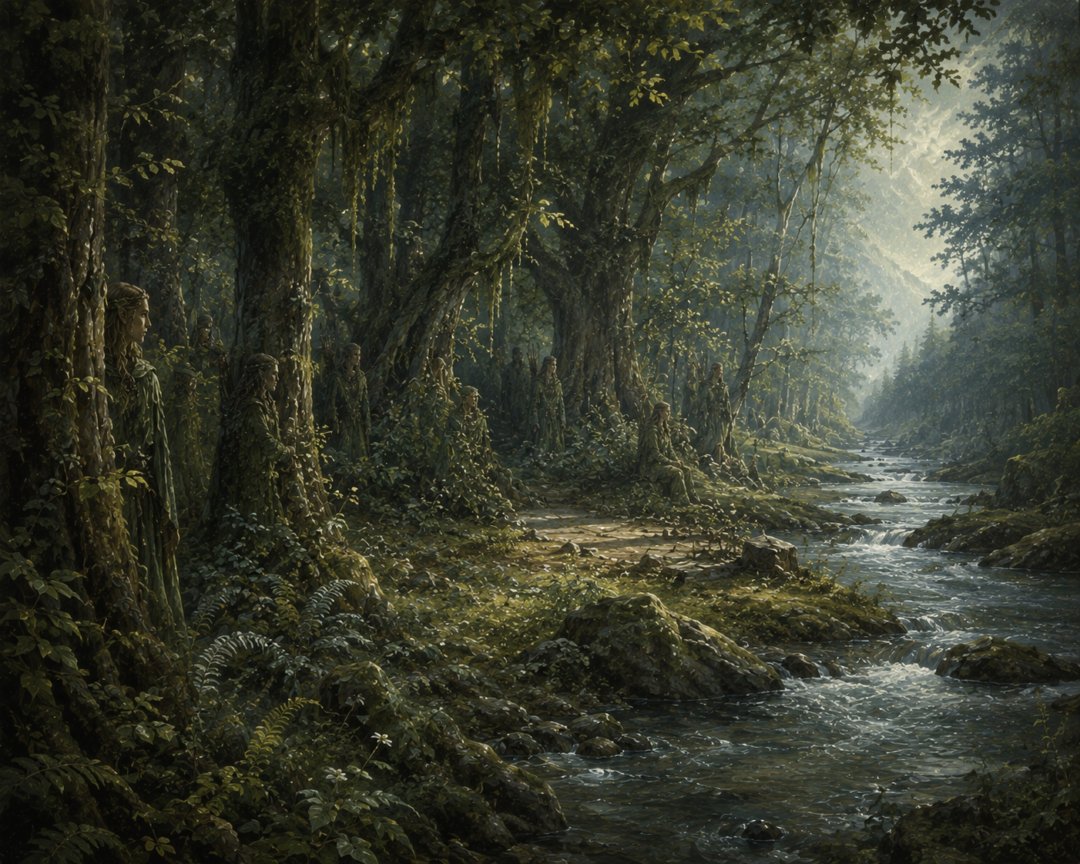
Their ability to remain unseen became one of their defining characteristics. Their clothing blended with the leaves, and their knowledge of the land allowed them to move through it with extraordinary secrecy.
This later isolation can make the Green-elves seem timeless—as though they had always been hidden woodland Elves.
But their history shows otherwise.
Their secrecy was not merely an ancient racial characteristic. At least in the form described after the First Battle, it was intensified by historical catastrophe.
They had migrated in search of a better refuge.
They had entered the wars of Beleriand.
Their king had been killed.
Afterward, they withdrew.
The hidden culture encountered later in the First Age therefore carries the memory of disaster behind it.
Not Every Nando Became a Green-elf
This is the point most easily lost when the Elvish family tree is simplified.
“Nandor” and “Green-elves” are not interchangeable names for precisely the same population.
The Nandor were those Teleri who followed Lenwë away from the main Great Journey and did not cross the Misty Mountains with the other Eldar at that time.
Denethor later led only part of this people into Beleriand.
Those who remained east of the mountains belonged to other strands of Nandorin history. In later ages, Nandorin and related populations formed much of the underlying Elvish population associated with the woodland realms east of the Misty Mountains, though the history and terminology of these groups developed across different textual traditions.
The Green-elves, by contrast, are specifically associated with Denethor’s migration and Ossiriand.
So the sequence is best understood not as:
Teleri → Green-elves.
It is closer to:
Teleri → Nandor → Denethor’s westward branch → Green-elves of Ossiriand.
That extra stage explains why the Laiquendi occupy such an unusual position among the peoples of Beleriand.
They arrived there neither with the Sindar who had long inhabited the region nor with the returning Noldor from Aman.
They came by another road entirely.
They Went West Without Ever Reaching the West
There is a strange symmetry in their history.
Lenwë’s people had once refused to continue west because the journey had become too daunting. Ages later, Denethor led some of their descendants westward again.
Yet even this second movement stopped short.
They crossed into Beleriand, but they did not cross the Sea.
They entered the western story without entering Aman.
That makes the Green-elves an especially clear example of how misleading the great Elvish categories can become if treated as fixed racial boxes. Elvish identities in the Elder Days were shaped by decisions: who answered the summons, who continued travelling, who remained behind, who crossed mountains, who crossed the Sea, and who later moved again.
Denethor’s people inherited one ancient choice and then made another.
They were Nandor because Lenwë had turned aside.
They became the Green-elves of Ossiriand because Denethor did not remain where his father had stopped.
The Green-elves Were Born From Movement, Not Stillness
The lasting image of the Laiquendi is one of concealment.
Leaf-coloured clothing. Forests. Rivers. Songs heard from afar. A people who could vanish into their own country.
Yet behind that stillness lies an extraordinary history of movement.
Their ancestors left Cuiviénen with the Eldar. They turned aside at the Misty Mountains. They wandered and settled around the Anduin. They became the Nandor. Much later, Denethor gathered a portion of that scattered people and carried them west again, across mountains their ancestors had once refused to cross.
Only after that second migration did Ossiriand give this branch its distinctive place in the history of the Elder Days.
And almost immediately, war took away the king who had brought them there.
That is the hidden contradiction at the heart of the Green-elves.
One of Middle-earth’s most elusive and rooted woodland peoples existed because their ancestors repeatedly moved.
Their identity was born not when the journey ended the first time, but when Denethor chose to begin another.
Sources & Notes
- The Encyclopedia of Arda — Nandor: overview of the Telerin group that turned aside from the westward journey and later divided again — https://www.glyphweb.com/arda/n/nandor.html
- The Encyclopedia of Arda — Lenwë: reference on the leader under whom the Nandor first left the Great Journey — https://www.glyphweb.com/arda/l/lenwe.html
- The Encyclopedia of Arda — Laiquendi: reference for the Green-elves who entered Beleriand from beyond the mountains — https://www.glyphweb.com/arda/l/laiquendi.html
- The Encyclopedia of Arda — Green-elves: overview of the name acquired by the Nandorin people settled in Ossiriand — https://www.glyphweb.com/arda/g/greenelves.html
Sources document the key people, places, institutions, and chronology used in this interpretation.