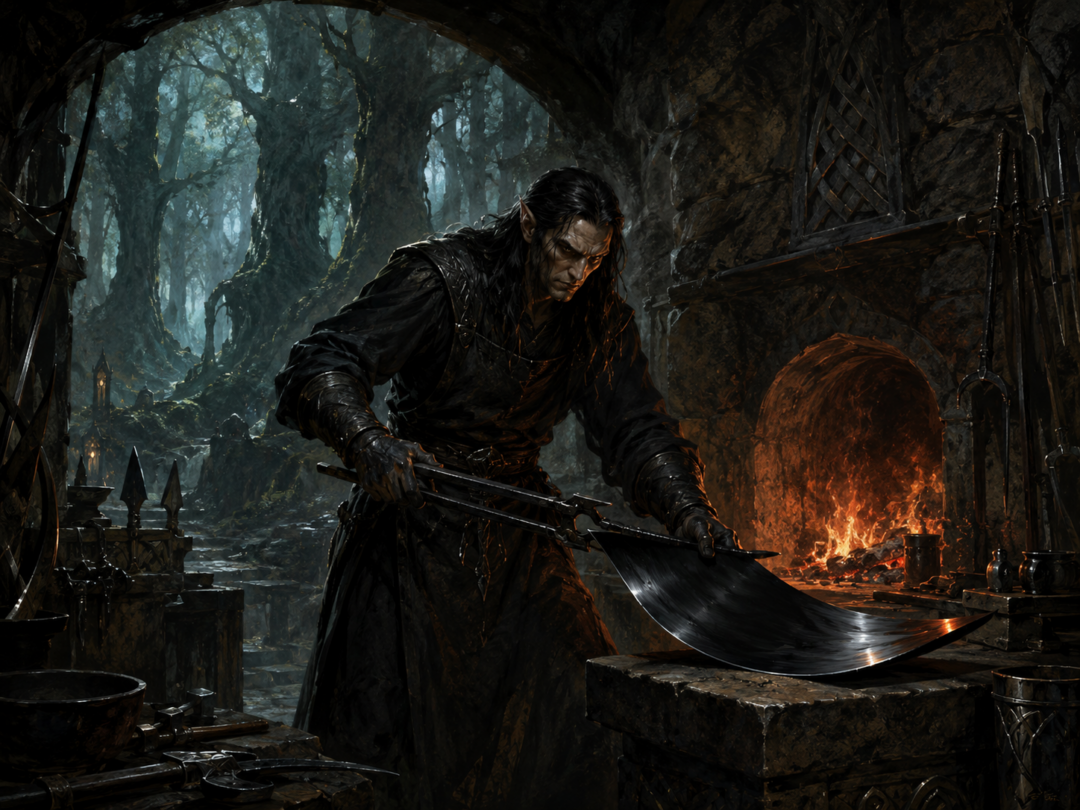
Few substances in Middle-earth sound more like a fantasy “supermetal” than galvorn.
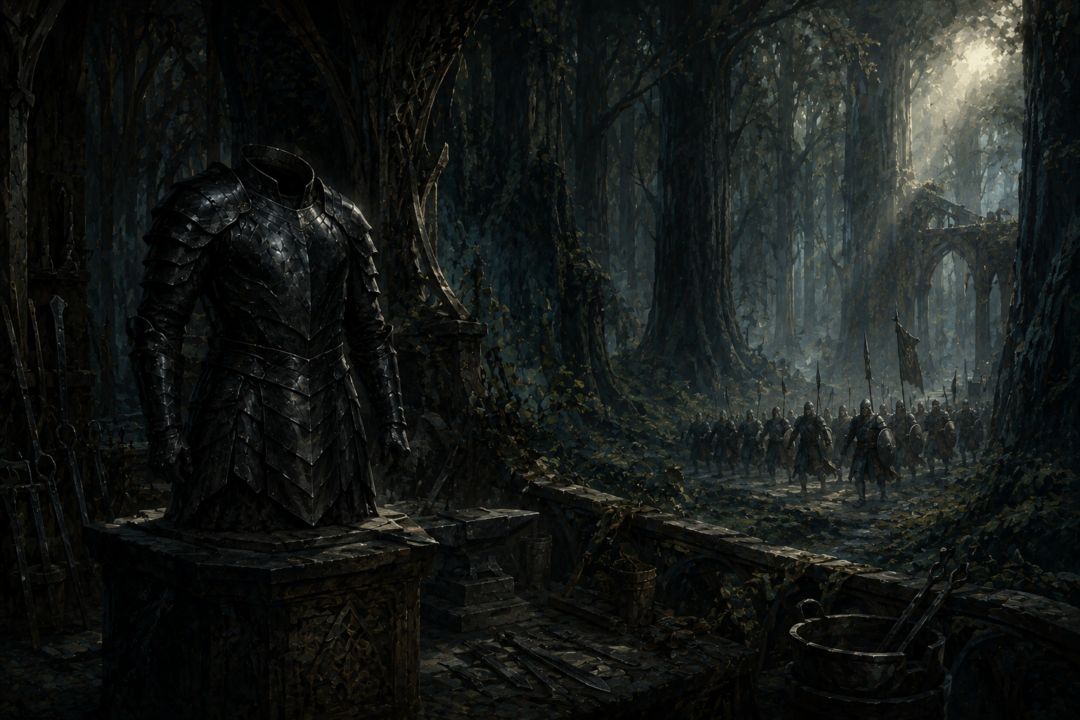
Eöl the Dark Elf devised it in the deep shadows of Nan Elmoth. It was black and shining like jet, as hard as the steel of the Dwarves, yet capable of being made thin and supple while remaining resistant to blades and darts. Eöl even wore armour of it whenever he travelled abroad.
On the surface, the conclusion seems obvious: Eöl had invented one of the greatest materials in the history of Middle-earth.
That is probably true.
But a much stronger claim—that galvorn was simply better than every other metal for every conceivable purpose—is not supported by the texts.
What makes galvorn fascinating is precisely the narrower possibility. Eöl appears to have solved an unusually difficult material problem. He combined properties that normally work against one another. Yet the legendarium never turns that achievement into a universal technological upgrade.
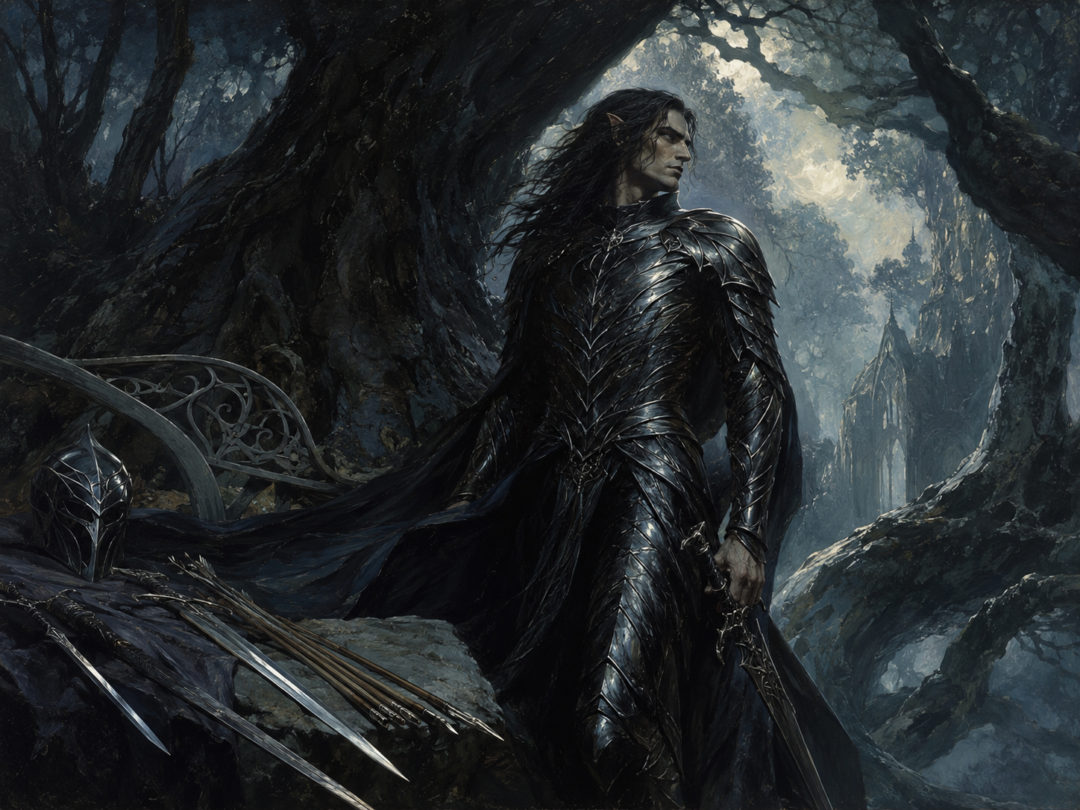
Eöl Was an Innovator, Not Merely a Skilled Smith
Eöl’s craftsmanship did not develop in isolation.
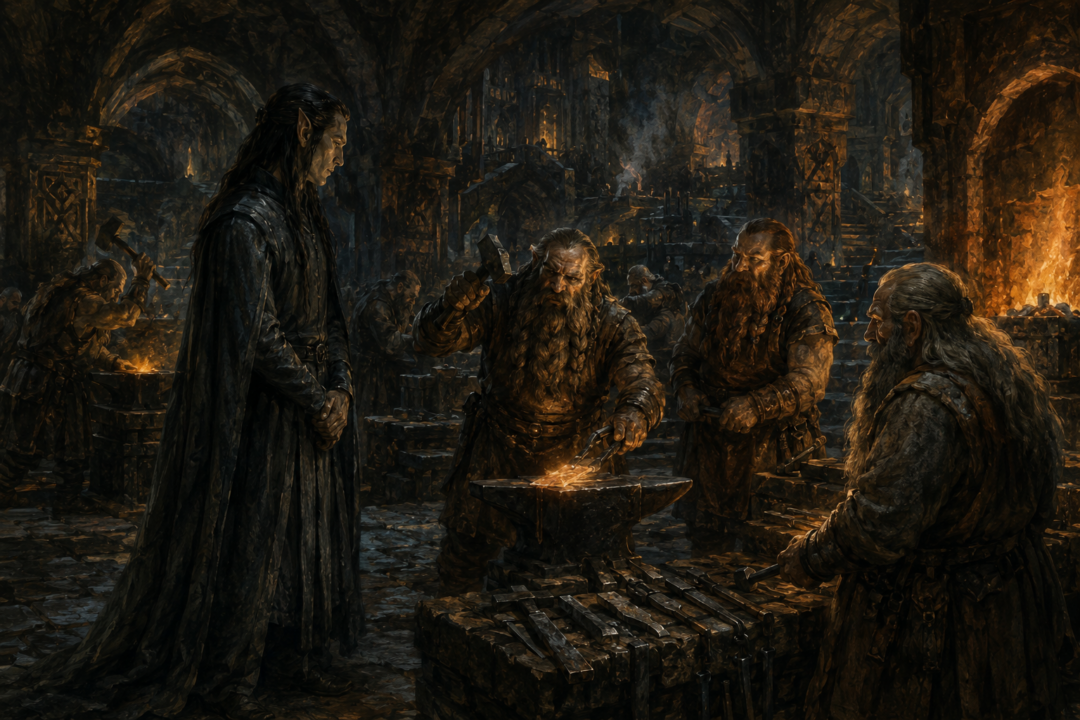
Although an Elf, he had an unusually close relationship with the Dwarves of the Blue Mountains. He travelled to Nogrod and Belegost and learned much of metalworking from them. This matters because Dwarven smithcraft already represented an extremely high standard.
The description of galvorn measures Eöl’s achievement against that standard.
The metal was said to be as hard as Dwarven steel. But hardness alone was not what made it remarkable. Eöl could work it so that it became thin and supple while still resisting weapons.
That combination is the crucial point.
Galvorn was not impressive simply because it was “very hard.” Middle-earth contains many extraordinary weapons and materials. Galvorn’s unusual quality was that Eöl seems to have obtained several desirable properties simultaneously.
Hardness could provide resistance against penetration or cutting. Thinness and suppleness could make armour less restrictive than thick rigid protection. The text does not give engineering measurements, so it would be wrong to calculate exactly how galvorn behaved. But the intended contrast is clear: Eöl had created something with an exceptional combination of strength and workability.
That makes galvorn a genuine material innovation.
What the Text Actually Claims
The safest way to understand galvorn is to stay very close to the properties explicitly attributed to it.
It is black.
It shines like jet.
It is comparable in hardness to the steel of the Dwarves.
Eöl can make it thin and supple.
Despite that thinness and suppleness, it remains resistant to blades and darts.
And Eöl uses it for his own armour.
Those statements are already extraordinary. They do not need exaggeration.
Nothing in the description says galvorn is indestructible. Nothing says no weapon can penetrate it. “Resistant” is not the same as invulnerable. Nor are we told that it resists fire, crushing force, corrosion, supernatural weapons, or every other danger found in Middle-earth.
Most importantly, the text does not establish galvorn as categorically superior to every other metal.
Its excellence is specific.
Galvorn Should Not Be Confused with Eöl’s Meteoric Swords
One especially important distinction is often blurred in discussions of Eöl.
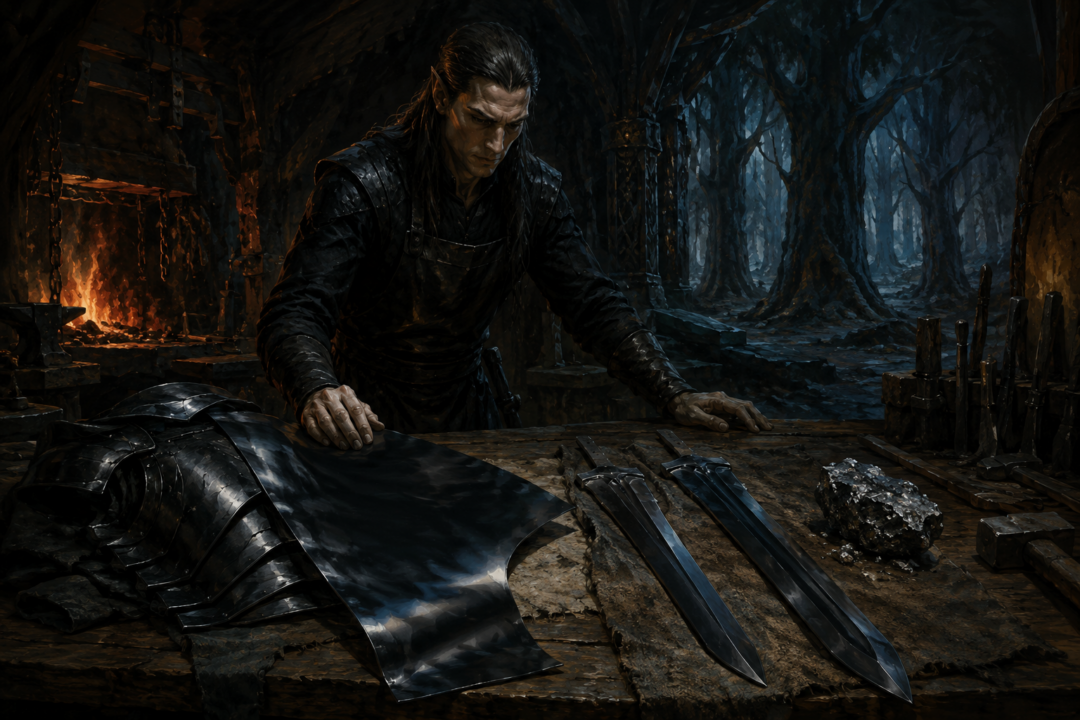
Eöl also forged Anglachel and Anguirel, two black swords made from iron that had fallen from heaven.
Anglachel, later reforged as Gurthang, is explicitly described as having been made from this meteoric iron, with extraordinary ability against ordinary earth-delved iron. Anguirel was its mate, made from the same material by the same smith.
But the account of galvorn does not explicitly say that galvorn itself was made from that meteoric iron.
Because both creations belong to Eöl, both are dark in appearance, and both involve extraordinary metallurgy, it is tempting to merge them into a single technology. Some secondary discussions have done exactly that.
The primary text does not require that conclusion.
The conservative reading is therefore to keep them separate unless further evidence proves otherwise: Eöl devised galvorn, and Eöl also forged two swords from meteoric iron.
They may demonstrate the same extraordinary metallurgical mind without being the same substance.
Why Eöl’s Armour Is the Most Important Clue
The one explicit finished product made from galvorn is Eöl’s armour.
That tells us something about the material’s practical strength.
Armour presents competing demands. It needs to resist penetration, but protection that becomes excessively rigid or cumbersome creates problems of its own. Galvorn’s combination of hardness, thinness, and suppleness therefore makes particular sense in protective equipment.
Eöl apparently understood this advantage well enough to trust the material personally. When he left Nan Elmoth, he wore it.
Yet the text does not describe entire Elven hosts equipped with galvorn armour.
There are no galvorn-clad armies marching from Doriath, Gondolin, or Nargothrond. There are no galvorn gates, shields, tools, or mass-produced weapons described elsewhere in the histories.
That silence does not prove such objects could never have existed. But it prevents us from claiming that galvorn became a widespread military technology.
Its importance remains intensely connected to its maker.
Innovation Does Not Automatically Mean Scalability
This distinction explains why galvorn is better understood as an invention than as the beginning of an industrial revolution.
A material can possess exceptional properties while still being difficult to produce, dependent upon specialized knowledge, or simply unknown outside a narrow circle.
The texts never explain galvorn’s production process.
We are not told which ores Eöl used, how many stages were involved, whether unusual temperatures were necessary, whether the Dwarves knew his method, or whether anyone besides Eöl could reproduce it.
Therefore claims that the formula was definitely lost with his death go beyond what is explicitly stated.
What we can say is more modest: later narratives do not show galvorn becoming a commonly used material.
That absence is significant without needing to invent an explanation for it.
Eöl’s achievement may have been technologically remarkable while remaining personally concentrated.
Galvorn Is Not “Better Mithril”
Mithril provides a useful comparison precisely because it demonstrates why Middle-earth’s remarkable materials should not be flattened into a single ranking.
Mithril is famously light, extraordinarily strong, beautiful, valuable, and capable of being worked by great smiths. By the Third Age it had become immensely rare because Moria’s accessible supply had effectively disappeared after the awakening of the Balrog.
Galvorn is described differently.
Its defining qualities are blackness, Dwarven-steel-like hardness, malleability sufficient to become thin and supple, and resistance to blades and darts.
The texts never compare galvorn and mithril directly.
Therefore there is no lore-grounded answer to questions such as whether a galvorn coat would outperform Frodo’s mithril shirt, whether mithril was lighter, or which material was “stronger” under every form of stress.
They occupy different narrative and material categories.
Calling galvorn superior to mithril would require evidence the story never supplies.
Eöl’s Greatest Skill May Have Been Combining Traditions
There is also something revealing about where galvorn comes from culturally.
Eöl is an Elven smith whose knowledge was deepened through contact with Dwarven craftsmen. He is not simply copying them: after learning much of metalwork in Nogrod and Belegost, he devises a metal of his own.
Galvorn therefore represents exchange followed by innovation.
The Dwarves provide a benchmark of technical excellence. Eöl reaches that level of hardness and then produces something with additional properties useful for flexible protection.
One reading is that this makes his smithcraft unusually hybrid: rooted in the traditions of the Sindar yet strongly shaped by knowledge acquired from the Dwarves.
The text does not describe the exact techniques he borrowed or invented, so that interpretation should not be pushed too far. But his relationship with Dwarven craft is explicitly part of the background immediately surrounding his metallurgical mastery.
The Limits Are What Make Galvorn Interesting
Fantasy materials often become less interesting once they are treated as simple numerical upgrades.
If galvorn is merely “the strongest metal,” there is little left to investigate.
The actual description offers something richer.
Eöl discovered—or devised—a material with an unusual balance of properties. It could rival Dwarven steel in hardness while being fashioned into something thin and supple, yet still provide serious protection against blades and missiles.
That is a specific technological triumph.
But Middle-earth never establishes galvorn as indestructible, universally superior, identical to Eöl’s meteoric sword-metal, or suitable for every possible application. Nor does it show the substance spreading across Beleriand as a replacement for ordinary steel.
Galvorn therefore sits in a fascinating middle ground.
It is not ordinary metal.
It is not a magical answer to every material problem.
It is the work of an extraordinary craftsman who learned from some of the finest smiths in Middle-earth and then created something distinctly his own.
And perhaps that is why galvorn feels so believable within the deeper history of the First Age. Its wonder lies not in having no limits, but in solving one difficult problem exceptionally well.
Sources & Notes
- Tolkien Gateway, “Galvorn” — https://tolkiengateway.net/wiki/Galvorn
- Tolkien Gateway, “Eöl” — https://tolkiengateway.net/wiki/E%C3%B6l
- Tolkien Gateway, “Anglachel” — https://tolkiengateway.net/wiki/Anglachel
- The Encyclopedia of Arda, “Galvorn” — https://www.glyphweb.com/arda/g/galvorn.php
- The Encyclopedia of Arda, “Eöl” — https://www.glyphweb.com/arda/e/eol.php
References for galvorn’s stated properties and use as armour, Eöl’s Dwarven-taught metalcraft, and the distinct meteoric origin of Anglachel and Anguirel.