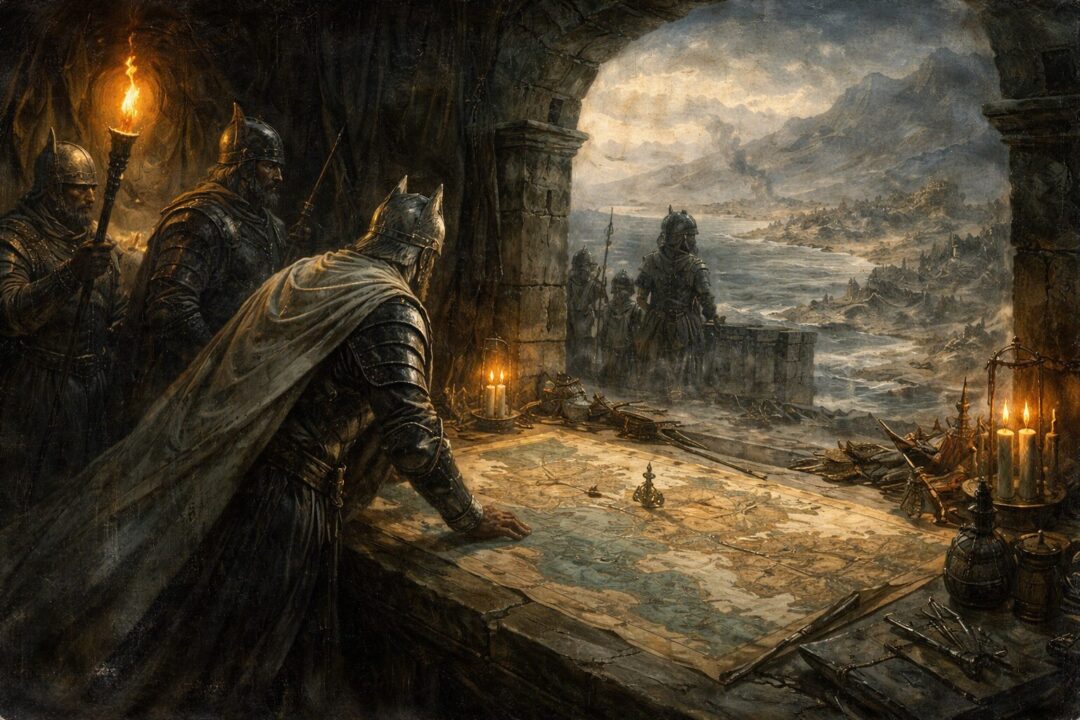
Most people picture the Black Númenóreans in one place.
Umbar.
That is understandable. Umbar is the southern power that remains visible in the histories of Gondor. It appears in the wars of the Third Age, in the struggle for the sea, and in the inherited hatred between the King’s Men and the heirs of Elendil. If you only followed the better-known narrative threads, you could easily come away with the impression that Black Númenórean power was essentially an Umbarean story.
But the texts suggest something wider, and more difficult to pin down.
The Black Númenóreans were not confined to one harbor. Their roots in Middle-earth reach back into the older expansion of the King’s Men, when Númenórean power had already spread down the coasts of the South. The deeper question is not whether they lived in Umbar.
It is whether Umbar was only the nearest and most famous remnant of a much broader southern presence.
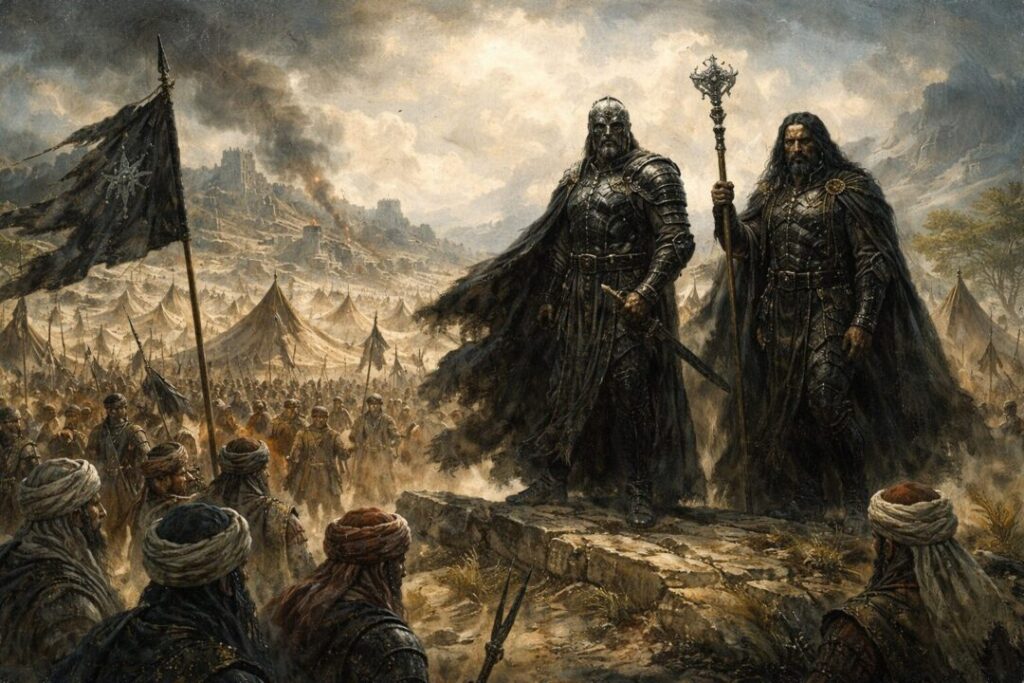
Umbar Was Their Chief Haven, Not Their Only Southern Presence
The clearest fixed point is Umbar.
In the tradition preserved in the appendices, Umbar had long been a Númenórean possession and specifically a stronghold of the King’s Men, the faction that later became known as the Black Númenóreans. Even after the Downfall, it remained in their hands and stood in effect as a southern realm in exile, hostile to Gondor and to the legacy of Elendil.
This matters because Umbar is not described as some accidental refuge seized late in history.
It is presented as an established center of their power.
That makes it the most secure answer to the question. If someone asks where Black Númenóreans resided, Umbar is the first place that canon lets us name without hesitation. It is the chief haven, the best-attested seat of their later identity, and the southern base most often remembered in the political history of the Third Age.
But “chief haven” is not the same thing as “only haven.”
And that distinction changes everything.
The King’s Men Had Already Settled Far to the South
The wider background comes from the older expansion of Númenórean power.
As Númenor grew wealthier and more imperial, the King’s Men established lordships and strongholds along the coasts of Middle-earth. The tradition summarized in reliable lore references from the primary texts places those settlements not only at Umbar, but in Harad and in many other places on the coasts.
That means the southern story begins before the label “Black Númenórean” is even fully useful.
First there are the King’s Men, increasingly estranged from the Faithful and increasingly dominant in the South. After the Downfall, the surviving branches of these same southern settlers are remembered as Black Númenóreans, especially because they continued in Sauron’s service. So when we ask how far south the Black Númenóreans resided, the answer cannot be reduced to one post-Downfall city. It has to include the earlier southern arc of King’s Men settlement that fed into their later identity.
The important point is that the lore explicitly pushes them southward along the coast.
It does not confine them to the latitude of Umbar.
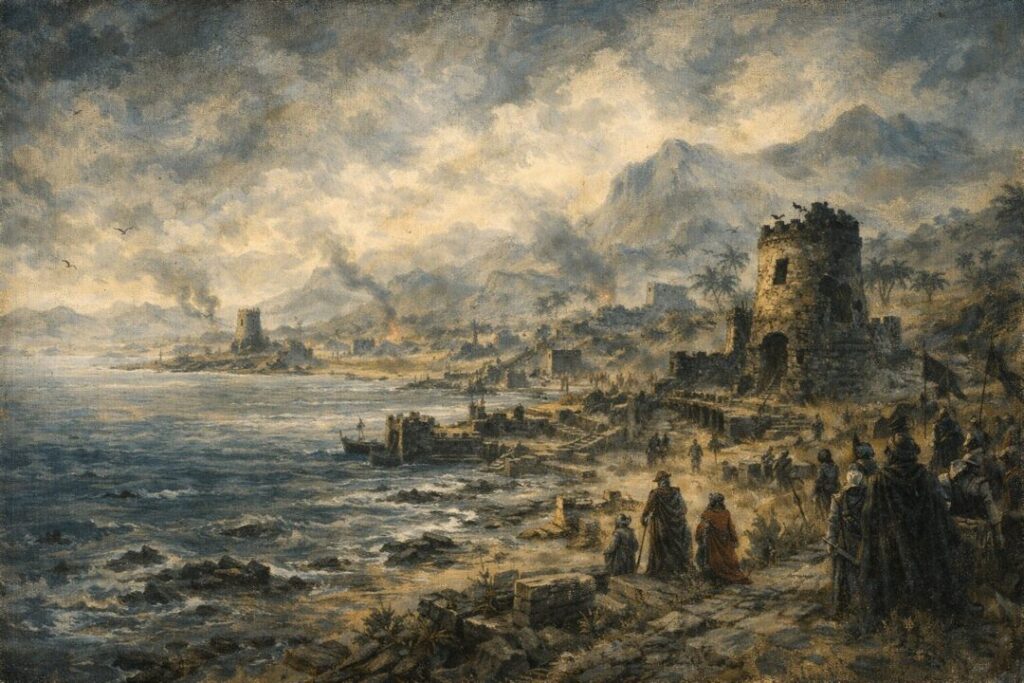
Harad Is Certain, Even If Its Full Extent Is Not
The next secure step beyond Umbar is Harad.
The texts preserve the memory that Númenóreans living in Harad survived the drowning of Númenor and were later called Black Númenóreans in Gondor because they still served Sauron after the Downfall. Two figures in particular, Herumor and Fuinur, rose to power among the Haradrim. In the older tradition behind this, the Haradrim are described as dwelling in the wide lands south of Mordor beyond the mouths of Anduin.
This is a crucial anchor.
It means Black Númenórean influence was not limited to a coastal enclave detached from the peoples inland. At least some of them became rulers or dominant figures among the Haradrim themselves. So the lore supports their presence not just at Umbar’s haven, but within the broader southern zone stretching below Gondor and south of Mordor.
Still, we should be careful here.
“Harad” is a broad geographical term. It does not by itself tell us a precise southern endpoint. It confirms direction and region, not a final border. The canon shows Black Númenóreans in Harad, but it does not provide a neat map that says, “Here is the southernmost Black Númenórean city.”
The Most Important Clue Is the Phrase “Beyond Umbar”
The strongest evidence that their range extended farther still is the later statement about Númenórean settlements “beyond Umbar.”
This is where the question becomes more interesting.
In late commentary tied to Gandalf’s southern name, the tradition states that before Númenor’s fall, its mariners had explored the coasts of Middle-earth far southward, but that their settlements beyond Umbar had later been absorbed, or had become hostile, and parts of Sauron’s dominions. That wording is immensely valuable because it confirms two things at once: first, that Númenórean settlement extended farther south than Umbar; second, that by later ages those farther settlements were no longer clearly separate or visible in the way Umbar remained visible.
This is exactly the sort of detail that can be missed if you focus only on the major narratives.
Umbar remains in the record because Gondor fought over it. Settlements beyond Umbar fade because they were absorbed into the South itself. That does not make them unimportant. In some ways, it makes them more revealing. It suggests that the southern spread of the King’s Men once ran deeper down the coast than the surviving political map of the Third Age allows us to see clearly.
So how far south did Black Númenóreans reside?
The cautious answer is this: certainly as far as Harad, and very likely farther south along the coasts in settlements beyond Umbar. But the texts stop short of giving us a named farthest point.
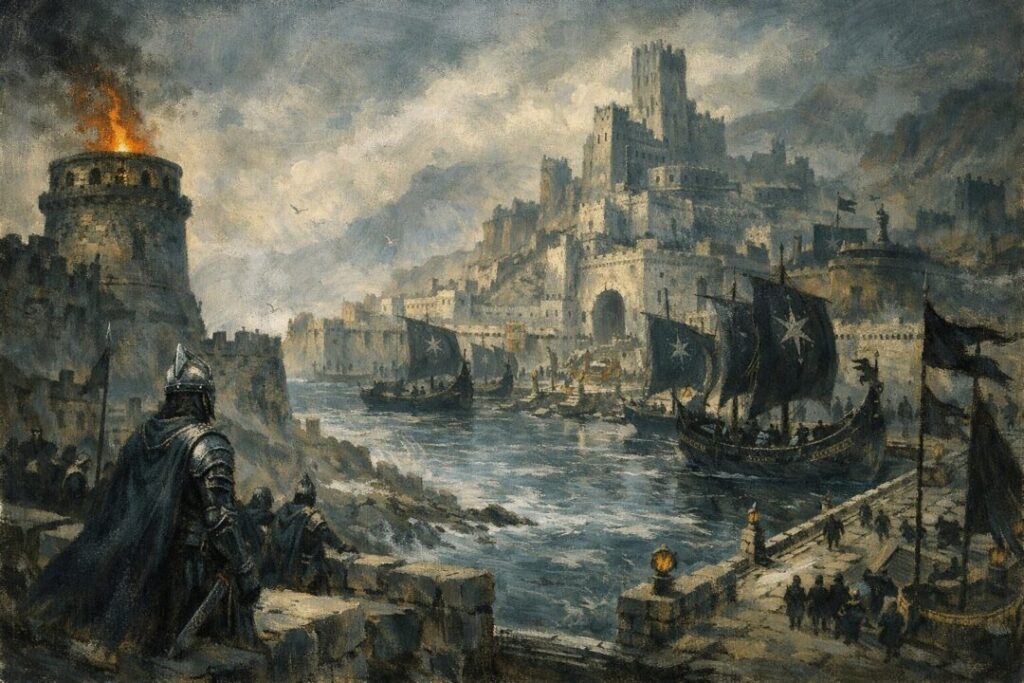
Why the Lore Becomes Unclear the Farther South You Go
There is a reason the record grows dim.
Northwestern Middle-earth is where the major histories were preserved most fully. Gondor, Arnor, Rivendell, the Shire, Rohan, and the great wars against Sauron dominate the surviving narratives. The farther south one moves, the more often the lore becomes indirect, fragmentary, or seen only through the memory of conflict.
That affects the Black Númenóreans especially.
Umbar enters the histories because it remains an active enemy of Gondor. But settlements farther south become harder to track because they ceased to stand apart. Some were absorbed. Some became hostile powers within Sauron’s wider sphere. Some may have merged with local populations over time. The tradition does not sort these outcomes neatly for us.
And that is exactly why overconfident answers go wrong.
Once someone starts naming specific far-southern kingdoms or tracing a detailed Black Númenórean map deep into the South, they are usually moving beyond what canon securely says. The texts imply breadth, but not precision. They suggest extension, but not a complete southern atlas.
What We Can Actually Say With Confidence
A lore-accurate answer has to separate certainty from implication.
What is certain is that Umbar was a major and enduring stronghold of the King’s Men and later the Black Númenóreans. It is also certain that Black Númenóreans were present in Harad, and that figures such as Herumor and Fuinur rose among the Haradrim south of Mordor. And it is strongly supported by the texts that Númenórean settlements extended farther south still, beyond Umbar, along coasts explored far southward before the Downfall.
What is not certain is the exact southernmost point.
No canonical passage gives a final coordinate, a named terminal colony, or a statement that the Black Númenóreans ruled all the way into the deepest reaches of Far Harad as a distinct surviving people. We may infer that their reach once extended farther than Umbar because the texts say so. We may not pretend that the lore gives us a complete boundary line.
That restraint matters.
Middle-earth often feels richest where the map is not fully closed.
The Real Answer
So how far south did the Black Númenóreans reside?
Farther south than Umbar.
That is the simplest correction.
They certainly held Umbar, certainly existed in Harad, and almost certainly descended from or overlapped with a broader network of southern coastal settlements founded by the King’s Men. The lore even preserves the memory of settlements beyond Umbar that disappeared into absorption, hostility, or Sauron’s dominion.
But if the question is asking for the furthest named southern point, the canon does not give one.
And that is the real answer most people are not expecting.
The Black Númenóreans reach deeper into the South than the familiar map suggests, but the last edge of that reach is left in shadow. Umbar is the haven we can point to. Harad is the region we can confirm. Beyond that, the texts deliberately become less exact.
Which may be the most revealing thing of all.
Because in Middle-earth, the most dangerous powers are not always the ones fully charted.
Sometimes the darker truth is that Gondor knew the nearest harbor of that old corruption — and not the full depth of the coast behind it.
Sources & Notes
- J.R.R. Tolkien, The Lord of the Rings, Appendix A, “Gondor and the Heirs of Anárion” — Umbar is treated as the great southern haven and fortress tied to Númenórean power, later contested by Gondor and the heirs of the King’s Men.
- J.R.R. Tolkien, The Silmarillion, “Akallabêth” — the King’s Men establish havens and lordships on Middle-earth’s coasts before the Downfall, giving the wider background for southern Númenórean settlement beyond a single port.
- J.R.R. Tolkien, The Silmarillion, “Of the Rings of Power and the Third Age” — after Númenor’s fall, surviving Black Númenóreans remain aligned with Sauron, and Herumor and Fuinur rise to power among the Haradrim.
- J.R.R. Tolkien, Unfinished Tales, “The Istari” — the note on Gandalf’s southern name preserves the tradition of Númenórean exploration and settlements far southward, including settlements beyond Umbar that were later absorbed or hostile.
- J.R.R. Tolkien, The Lord of the Rings, Appendix F, “The Languages and Peoples of the Third Age” — Harad is framed broadly as the South beyond Gondor and Mordor, supporting caution about treating it as a precise southern boundary.