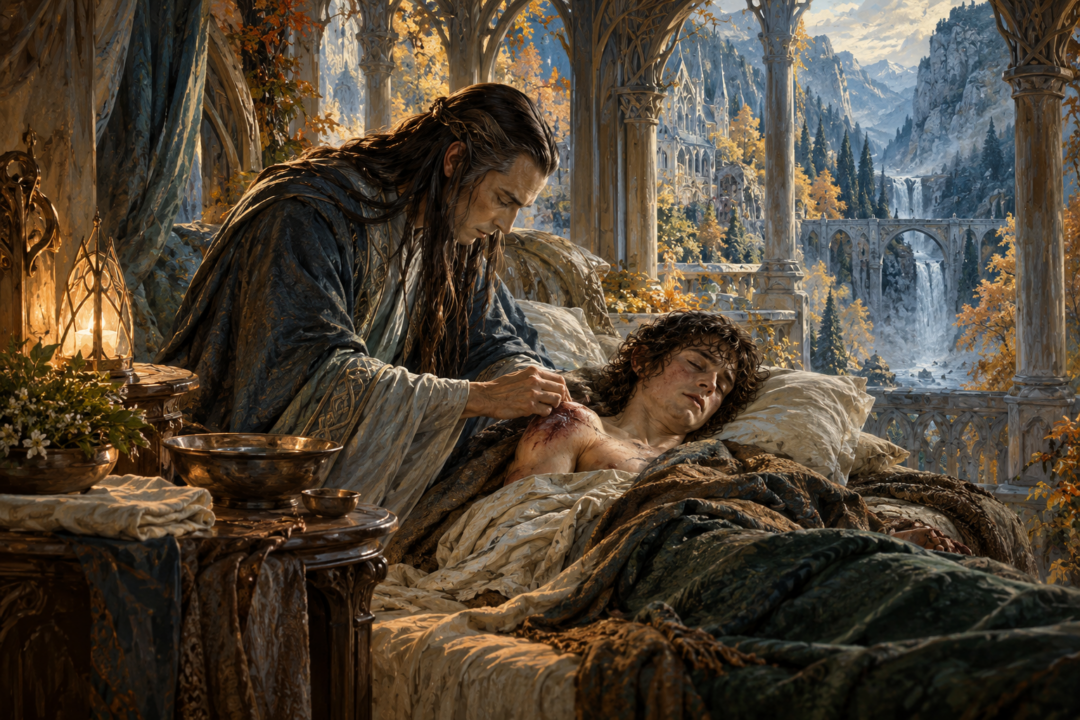
When Frodo Baggins reaches Rivendell, he is not merely wounded. Something is inside him.
Seventeen days earlier, on Weathertop, the Lord of the Nazgûl struck him with a Morgul-knife. The visible weapon is gone, but a fragment of its point remains buried in Frodo’s shoulder. It is slowly working inward, and the danger is far stranger than bleeding, fever, or infection: Frodo is beginning to fade from the ordinary world.
That makes his treatment in Rivendell one of the clearest examples of what “healing” actually means in Middle-earth.
Elrond does not simply possess a stronger medicine than Aragorn. Frodo’s case has passed beyond ordinary injury. His body, will, and very relationship with the Seen world are all under attack.
And Rivendell’s answer reveals something important: when ordinary healing reaches its limit, the Wise first have to understand what kind of wound they are actually facing.
Aragorn Can Help the Wound, but He Cannot Cure It
The first treatment happens long before Frodo reaches Rivendell.
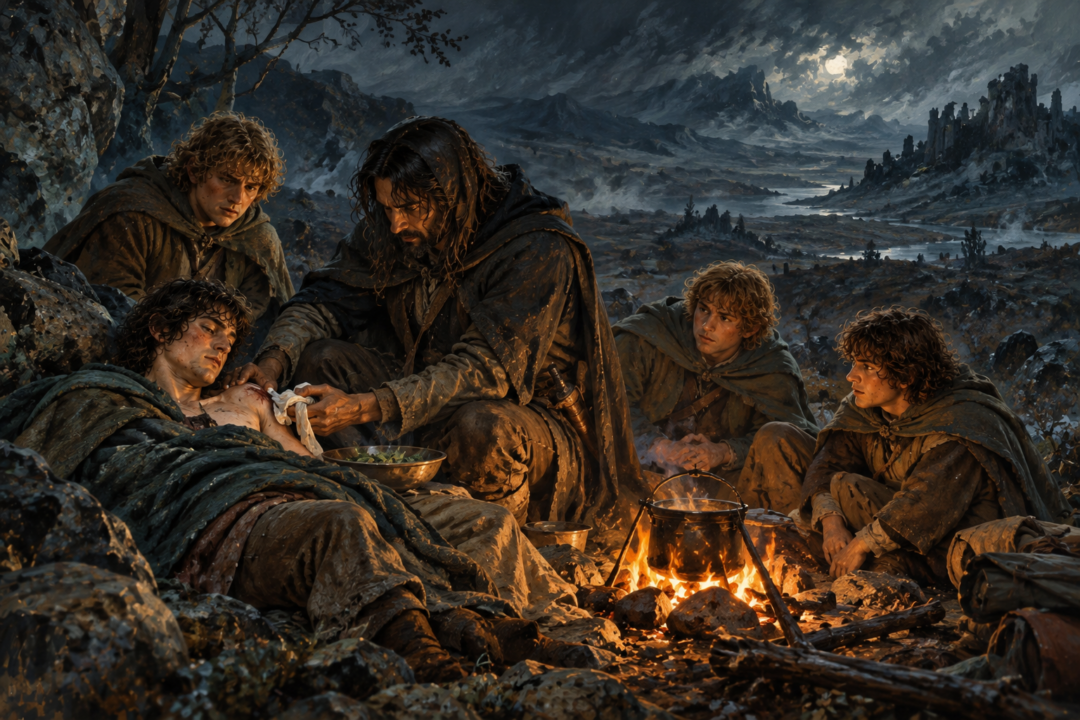
After the attack on Weathertop, Aragorn examines Frodo and discovers that the knife-point has broken off. He understands enough to recognize the terrible danger. He uses athelas, or kingsfoil, crushing the leaves and putting them into heated water before bathing Frodo’s shoulder.
The treatment helps.
Frodo feels some relief from the freezing pain of the wound. But Aragorn does not pretend that the problem has been solved. The shard remains within him.
That distinction matters.
Athelas is associated repeatedly with healing, most dramatically when Aragorn later treats Faramir, Éowyn, Merry, and others in the Houses of Healing. Yet Frodo’s condition after Weathertop demonstrates that even a powerful healer may be able to relieve an affliction without removing its underlying cause.
The company therefore does the most important thing available to them: they keep moving toward Rivendell.
The journey itself becomes part of the struggle to save Frodo.
Glorfindel Recognizes That the Danger Is Deeper
When Glorfindel finally finds Aragorn and the hobbits, Frodo has deteriorated badly.
Glorfindel examines him and also recognizes the nature of the wound. His intervention brings some relief, but he does not claim that his own healing ability is sufficient. Rivendell remains the destination because Elrond possesses knowledge and power beyond what the travelers can bring to bear in the wilderness.
Meanwhile, Frodo is changing.
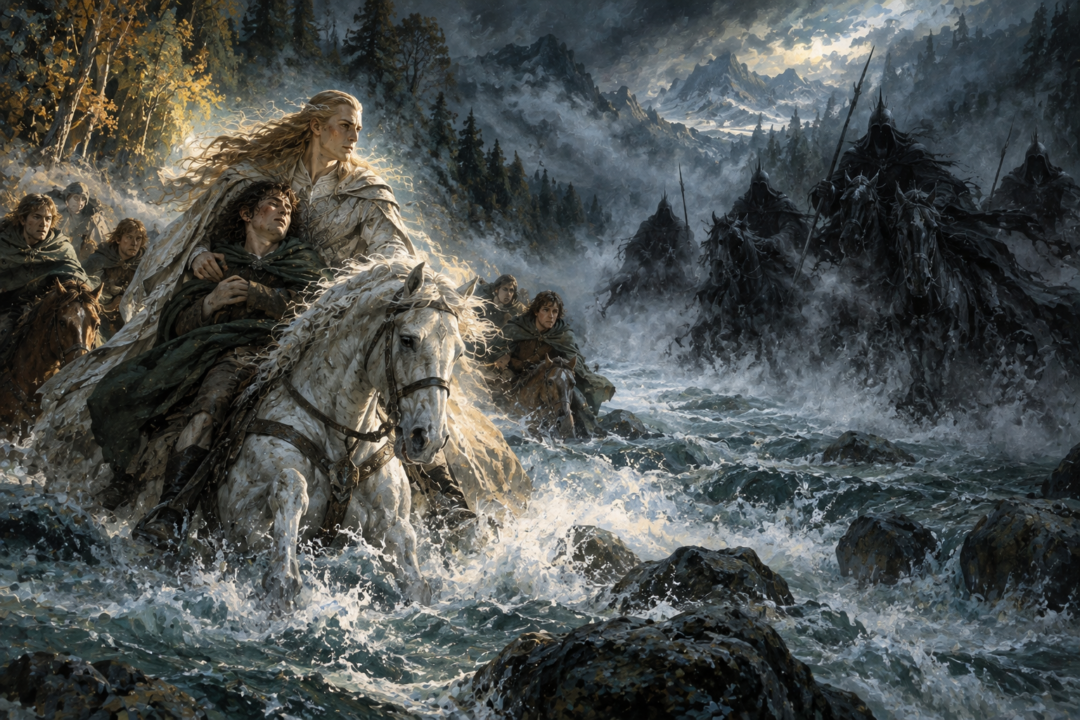
The world around him becomes increasingly shadowy. At the Ford of Bruinen, he perceives the Ringwraiths with frightening clarity, and Glorfindel appears to him in a form connected with the Unseen world.
This is not presented as a normal consequence of physical trauma.
The shard is drawing Frodo toward the condition of a wraith.
Gandalf later explains the danger plainly in Rivendell: if the fragment had reached Frodo’s heart, its work would have been completed. Frodo would have become a wraith under the domination of the Dark Lord.
So the central medical problem is almost metaphysical.
The patient is not merely dying.
He is being changed.
Elrond Treats the Cause, Not Just the Symptoms
Frodo crosses the Ford on October 20, 3018, and awakens in Rivendell on October 24.
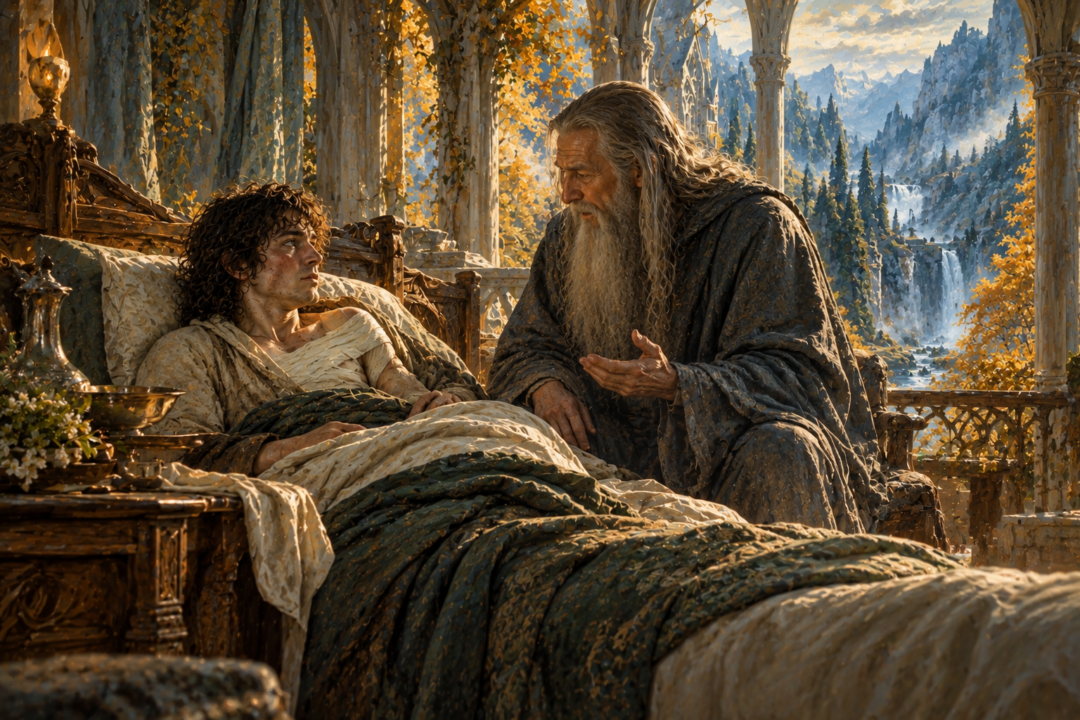
When he wakes, Gandalf explains what happened during the missing days.
Elrond has been tending him, and the crucial achievement came only the previous night: the splinter of the Morgul-knife was finally found and removed.
The text does not provide a clinical description of Elrond’s procedure. We are not told exactly how he locates the fragment, what instruments he uses, or what words or powers accompany the treatment.
That absence is important.
It is tempting to fill the scene with invented Elvish surgery or magical ritual, but the story does not give us those details. What it establishes is the difficulty of the task. The fragment had been buried within Frodo for seventeen days and was moving inward. Elrond succeeds where lesser healing could only delay the consequences.
This suggests a useful distinction in the healing of Middle-earth.
Aragorn can recognize the evil and ease its immediate effects. Glorfindel can strengthen Frodo sufficiently for the desperate final journey. But Elrond can finally remove the source of the corruption.
Healing begins with diagnosis, but survival requires reaching someone capable of dealing with the true nature of the wound.
Why Elrond Is Different
Elrond is unusually suited to such a case.
He is not simply the master of a comfortable refuge. By the end of the Third Age he has lived through thousands of years of Middle-earth’s wars and disasters. He is counted among the Wise, and Rivendell is a place where knowledge of the Elder Days has survived while much of the outside world has forgotten it.
His ancestry also joins several of Middle-earth’s great histories: Elves, Men, and the line associated with the great struggles against the Shadow.
None of this gives us a neat rule saying that Elrond can automatically cure supernatural injuries. Tolkien’s world rarely reduces power to such a mechanical system.
What the narrative does establish is that Elrond possesses exceptional healing knowledge and is capable of removing the Morgul fragment when others cannot.
Rivendell therefore functions as more than a sanctuary from pursuing enemies.
It is a sanctuary of preserved knowledge.
When an ordinary wound becomes something older and darker, survival may depend upon someone who still remembers what that darkness is.
Rivendell Does Not Undo Everything
Here the story becomes more troubling.
Elrond saves Frodo’s life. He removes the shard. Frodo recovers his strength. His shoulder becomes usable again.
But the wound is not erased from his existence.
Exactly one year after the attack on Weathertop, as the hobbits travel home, Frodo becomes ill again. His shoulder hurts, and the memory of darkness returns. On the second anniversary, back in the Shire, he is again afflicted.
The Morgul fragment is gone.
Its consequences are not.
This is one of the most important distinctions in the story’s treatment of healing. A person can survive an evil and still carry its effects afterward.
Rivendell can stop Frodo from becoming a wraith. It cannot restore him to the untouched hobbit who left Bag End.
And the Morgul wound is not his only burden. Frodo later suffers the sting of Shelob, prolonged exhaustion, and above all the spiritual damage associated with bearing the One Ring.
By the time he returns to the Shire, his problem cannot be reduced to a single injury that one sufficiently skilled healer might repair.
The Houses of Healing Reveal the Same Principle
The later events in Minas Tirith provide a useful comparison.
After the Battle of the Pelennor Fields, Faramir, Éowyn, and Merry lie gravely ill. Their conditions differ, but the Black Breath of the Nazgûl is central to their peril. Gondor possesses trained healers, yet ordinary treatment is not enough.
Aragorn recognizes what is happening.
He calls for athelas and uses it in hot water. Its fragrance fills the rooms, and those under the Shadow respond to it. Faramir awakens; Aragorn also tends Éowyn and Merry.
The scene does not mean that athelas is a universal magical antidote. Aragorn’s knowledge and identity matter, and the patients themselves have different wounds and different paths of recovery.
But the episode reinforces what Frodo’s treatment already showed.
Some injuries caused by the Shadow cannot be understood purely as damage to flesh.
They attack courage, consciousness, hope, and the victim’s hold upon life.
The healer therefore needs more than medicine. The healer needs knowledge of the enemy that caused the wound.
Healing Also Depends on the Patient
There is another element in Frodo’s survival that should not be overlooked.
Gandalf is astonished that Frodo resisted the Morgul wound for so long. He credits the toughness of hobbits and Frodo’s own remarkable endurance.
Elrond saves him, but Frodo is not merely a passive object being repaired.
For seventeen days he carries something within his body that is actively drawing him away from ordinary life. He continues through cold, fear, exhaustion, and pursuit. At the Ford, desperately weak, he still resists the Nazgûl.
That does not mean willpower alone could have cured him. The text makes clear that the shard had to be removed.
But it does mean that healing in this world often involves cooperation between the healer’s power and the sufferer’s resistance.
Frodo has to remain Frodo long enough for Elrond to reach him.
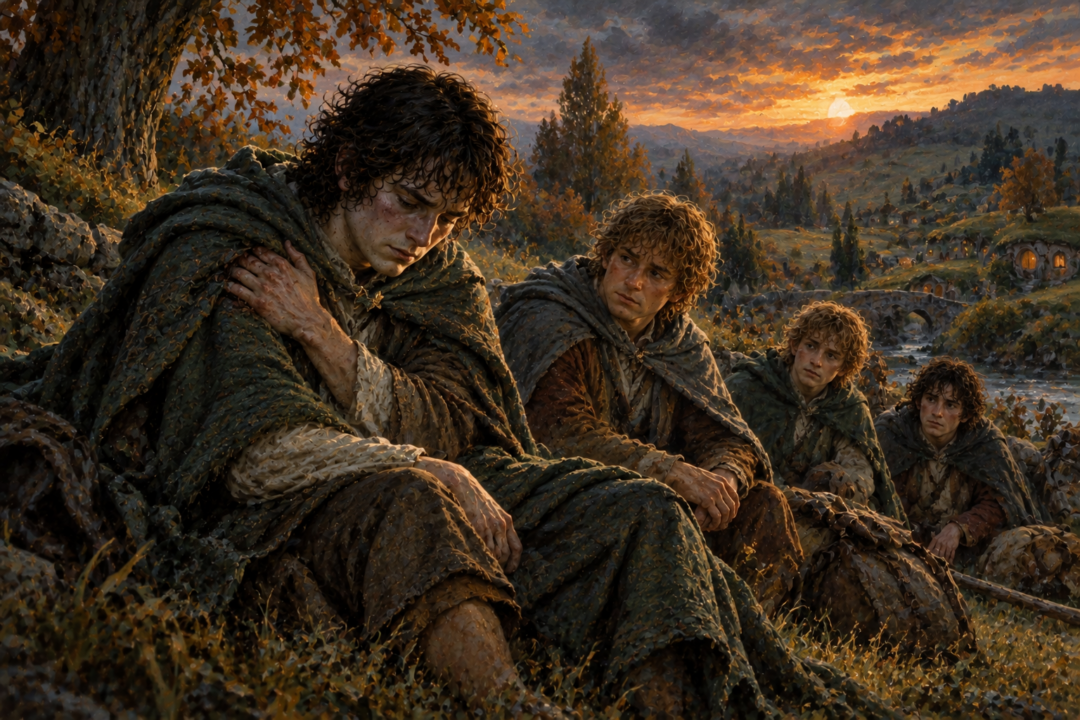
Rivendell’s Greatest Healing Has a Limit
There is a poignant symmetry in Frodo’s story.
Rivendell saves him near the beginning of his quest, but after the quest is over, even Middle-earth no longer seems able to make him wholly well.
When Frodo eventually leaves from the Grey Havens, his departure is connected with the possibility of healing beyond the lands in which he suffered.
That does not mean the West simply grants immortality to mortals; Frodo remains mortal. Nor are the precise mechanics of his final healing explained.
The significance is quieter.
There are wounds that can be closed.
There are poisons that can be removed.
There are shadows from which a patient can be called back.
And then there are experiences whose marks remain even after the immediate danger has passed.
Rivendell handles the impossible patient by refusing to confuse relief with cure. Aragorn eases Frodo’s pain. Glorfindel helps him endure the final road. Elrond removes the hidden weapon. Rivendell gives him rest and recovery.
Yet none of them pretend that surviving evil means becoming exactly what one was before encountering it.
That may be the deepest thing Rivendell teaches about healing.
Its wisdom is formidable, but its mercy is not based on the promise that every hurt can be erased.
Sometimes healing means removing the darkness before it claims the patient.
Sometimes it means giving someone enough strength to continue.
And sometimes the wisest healers recognize that a wound has gone beyond anything their world can completely mend.
Sources & Notes
- Tolkien Gateway, “Morgul-knife” — The buried shard and Elrond’s extraction at Rivendell. https://tolkiengateway.net/wiki/Morgul-knife
- Tolkien Gateway, “Morgul-wound” — Wraith-like danger of Frodo’s injury. https://tolkiengateway.net/wiki/Morgul-wound
- Tolkien Gateway, “Elrond” — Elrond’s role as healer at Rivendell. https://tolkiengateway.net/wiki/Elrond
Sources document Morgul-knife, Morgul-wound, Elrond. Interpretive claims remain distinguished from the primary narrative.