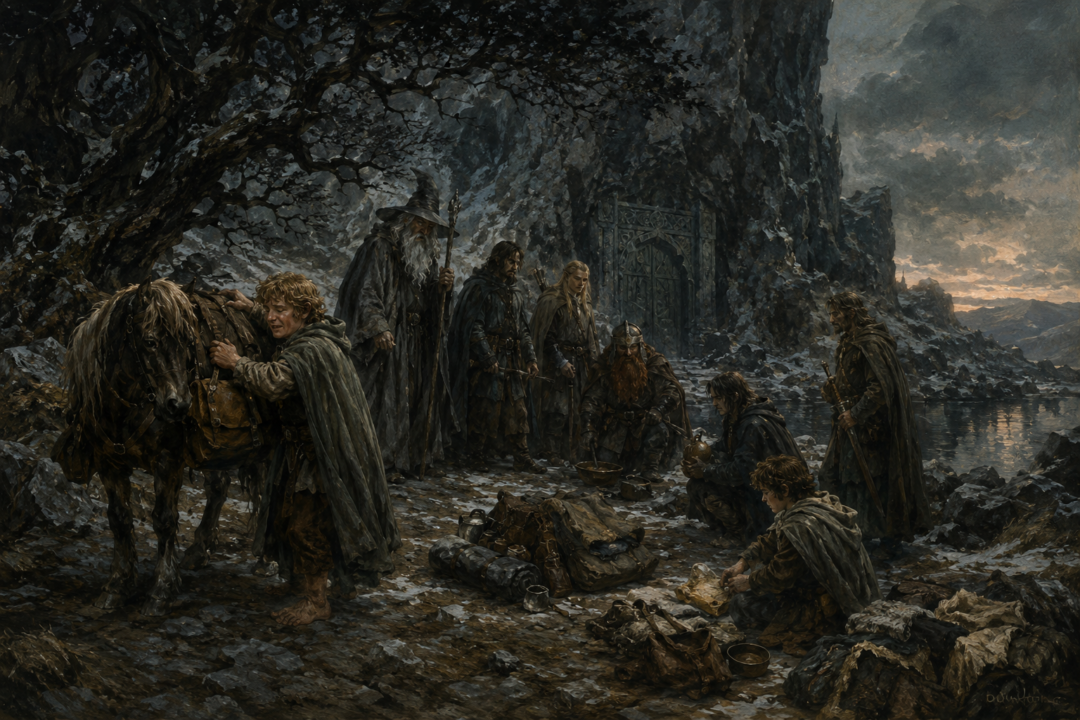
Bill the Pony seems, at first, like one of the least important members of the Fellowship’s journey. He carries packs. Sam fusses over him. He does not fight Orcs, decipher runes, or advise Frodo about the Ring.
Yet when the Company reaches the West-gate of Moria, Bill suddenly becomes the center of a very practical crisis.
Nine travelers are about to enter an underground road where a pony cannot sensibly follow. Their food, water-skins, and much of their cold-weather equipment have been riding on Bill’s back. Once he is gone, the Fellowship will have no pack animal at all.
The interesting detail is that they do not simply lose Bill and discover that all their baggage has vanished with him. The book is more careful than that. Before entering Moria, they deliberately unload him, abandon what they can spare, and distribute the essentials among themselves.
From that moment onward, the logistics of the Quest change completely.
And when the survivors finally reach Lothlórien, the Elves do not merely replace a few missing provisions. They give the Fellowship an entirely new way of travelling.
Bill Was Their Pack Animal, Not Just Sam’s Companion
Bill had joined the hobbits at Bree after their original ponies disappeared during the attack on the Prancing Pony’s stables. Bought from Bill Ferny in miserable condition, he recovered under Sam’s care and eventually travelled south from Rivendell with the Fellowship.
His practical purpose was obvious.
The Company left Rivendell in winter, crossing wild country with no dependable settlements along their intended route. Bill therefore carried equipment and supplies that the nine walkers did not have to bear themselves.
That mattered especially during the failed attempt to cross the Redhorn Gate. The Fellowship had prepared for bitter weather, and those preparations meant additional weight.
When Gandalf finally turns toward Moria, however, the very equipment that had helped them survive the mountains becomes a burden.
At the Doors of Durin, he tells the Company to prepare for entering the Mines. Much of the gear brought for severe winter conditions can be left behind, he believes, because they will not need it underground and, if all goes well, will emerge into warmer country farther south.
More importantly, the pony cannot come.
The Fellowship therefore faces its first major reduction of baggage.
They Did Not Lose All Their Supplies When Bill Left
This distinction is easy to miss.
Bill does not gallop away carrying the Fellowship’s food.
Before the Doors of Durin are opened, Sam unloads his packs. The Company sorts everything on the ground, makes a pile of articles they can afford to abandon, and divides the remainder among themselves.
Gandalf specifically emphasizes the things that must be retained: food and water-skins.
So the Fellowship’s response to losing its pack animal is immediate and brutally simple.
They become their own pack animals.
Every member now carries part of what Bill had been carrying. Less essential equipment is sacrificed so that necessities can remain with them.
The text does not provide an inventory of every object discarded, and it would be unsafe to invent one. What it does explicitly tell us is that much of the equipment associated with bitter weather was judged expendable, while food and water received priority.
This is not a complete replenishment problem yet. It is an emergency redistribution problem.
The Company enters Moria with fewer possessions but with the supplies Gandalf considers essential.
The Escape From Moria Makes the Problem Worse
Even that reduced arrangement soon comes under enormous strain.
The Fellowship must travel through Moria on foot, carrying its own loads through darkness and exhaustion. Then the situation becomes catastrophic.
They are attacked in the Chamber of Mazarbul, flee through the mines, and lose Gandalf at the Bridge of Khazad-dûm.
When the eight survivors finally emerge from the East-gate, Aragorn does not allow them a long period of recovery. Orcs may still pursue them, and the company must put distance between itself and Moria.
Their condition is grim enough that their material losses become part of a wider crisis: they are exhausted, grieving, without their wizard, without a pack animal, and still carrying whatever essential provisions survived the journey through the mountain.
There is no convenient town where Aragorn can buy another pony and refill the packs.
Their salvation lies ahead in the Golden Wood.
Lothlórien Becomes the Fellowship’s Great Resupply Point
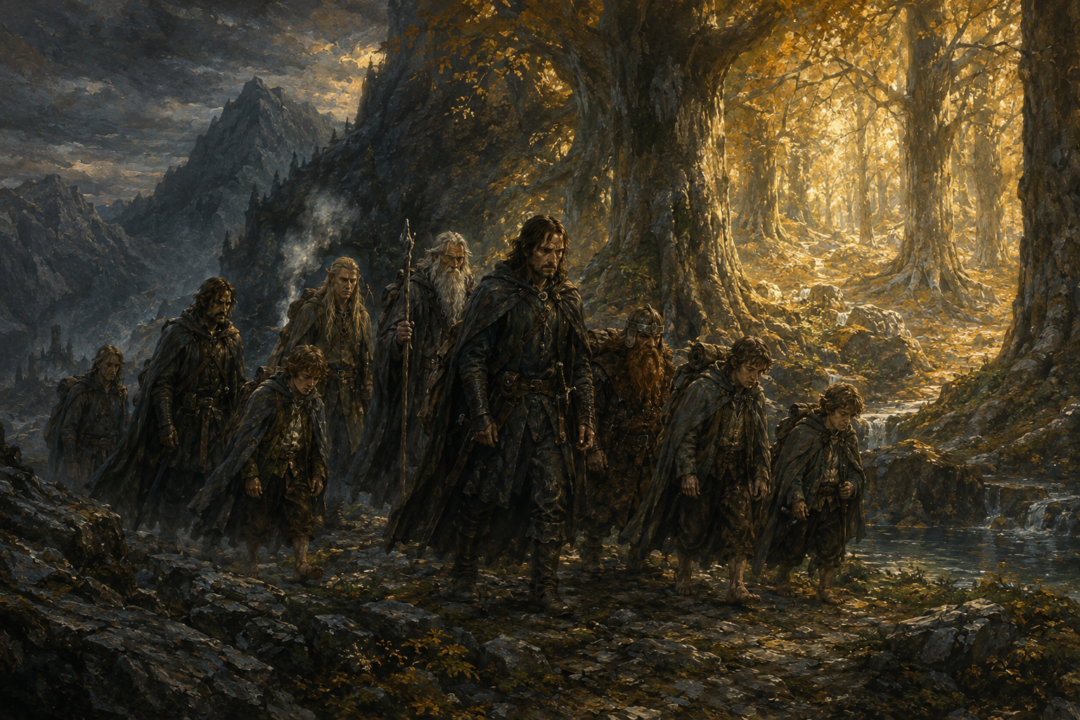
Once the Company reaches Lothlórien, the logistical pressure temporarily disappears.
The Galadhrim shelter them, and the Fellowship eventually stays within the realm rather than immediately continuing south. The narrative does not give us an itemized account of ordinary meals consumed during their entire stay, so there is no need to imagine warehouses, ration lists, or formal provisioning systems that are never described.
What matters is clear: Lórien gives the travellers safety, rest, food, and time before their journey resumes.
By the time they leave, the survivors are no longer simply carrying the diminished remains of the Rivendell expedition.
They have been re-equipped for the next stage of the Quest.
And the new equipment is remarkably well suited to travellers who no longer have Bill.
Lembas Solves the Most Dangerous Supply Problem
The most important provision given to the Fellowship is lembas, the Elvish waybread.
The Galadhrim explain that it is intended for travellers and that it remains fresh for a long time. A small amount can sustain someone through substantial exertion.
That makes it almost perfectly suited to the Fellowship’s new circumstances.
Ordinary provisions create a relentless problem on a journey through wilderness: food is heavy, and the people carrying it must eat some of that food merely to possess the strength to carry the rest.
Lembas dramatically reduces that burden.
The Fellowship can carry useful stores of nourishment without needing another heavily laden pack animal.
Its importance only increases after the Company breaks apart.
Frodo and Sam eventually take their share eastward toward Mordor, where reliable sources of food become increasingly scarce. By the final approach to Mount Doom, lembas has become one of the central means by which they continue at all.
That later survival begins with the re-provisioning in Lórien.
Bill had once carried ordinary supplies for them. The Elves give them food designed to be carried by travellers themselves.
The Elven Cloaks Replace Bulk With Something Better Suited to Secrecy
The Company had discarded some of its winter equipment before entering Moria.
In Lórien, each surviving member receives a hood and cloak woven by the Galadhrim.
These are not described merely as magical invisibility cloaks. Their qualities are subtler. Their colours appear differently according to light and surroundings, and the Elves explain that the garments can help conceal their wearers from unfriendly eyes.
They are also light and warm.
That combination matters.
The Fellowship is no longer primarily preparing to survive a mountain blizzard. Its central problems are now speed, concealment, and travelling light through territory increasingly exposed to the Enemy.
The Lórien cloaks fit that need far better than bulky winter equipment would.
It would go beyond the text to claim that they were specifically manufactured as replacements for every item abandoned outside Moria. But functionally, they contribute to the same transformation: the Fellowship leaves Lórien better equipped while remaining mobile.
The Boats Replace Bill’s Carrying Power in a Different Way
Perhaps the most overlooked replacement for Bill is not another animal at all.
It is the three boats supplied by the Elves.
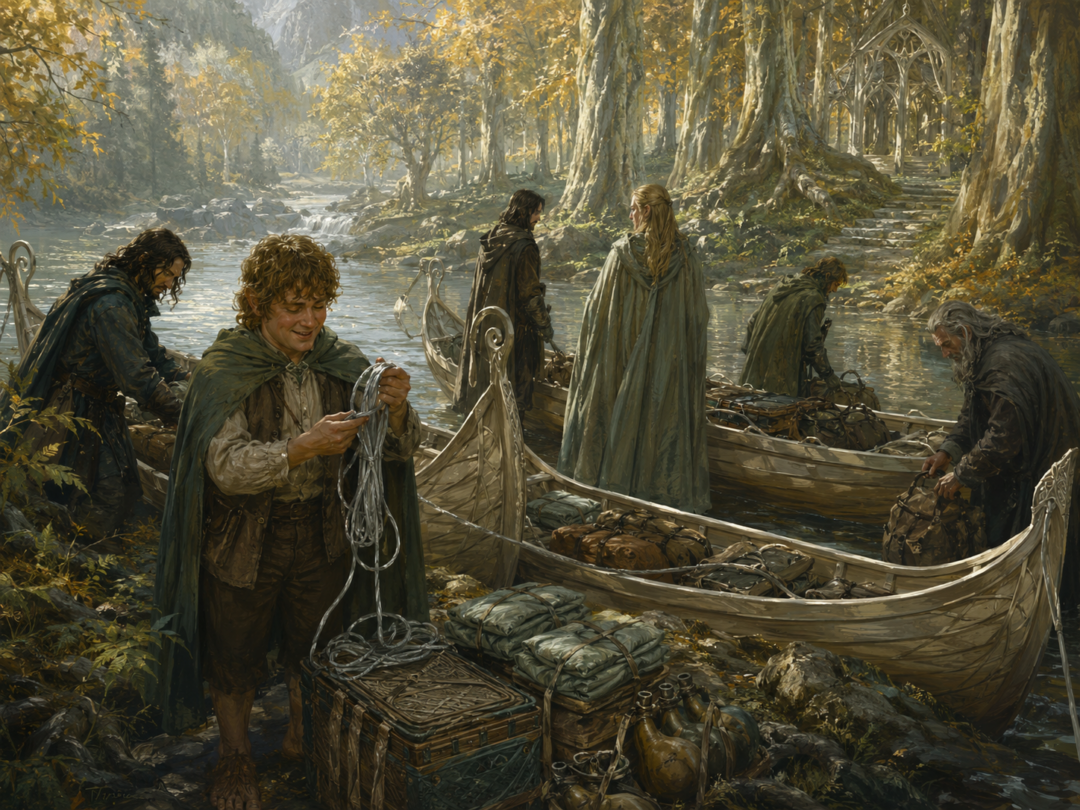
Celeborn advises the Fellowship concerning the lands ahead, and boats are provided so that they can travel down the Silverlode and then the Anduin.
This solves several problems simultaneously.
The Company no longer has to carry every possession on its back while travelling. Their goods can be stowed in the boats. The river also lets them cover distance without taking the roads, while postponing the dangerous decision of whether ultimately to head east toward Mordor or continue toward Minas Tirith.
Bill’s value had been that he converted a walking expedition into one with significant carrying capacity.
The Elven boats restore that capacity in another form.
They are not a literal one-for-one replacement for the pony, but in practical terms the Fellowship again gains transport capable of bearing both people and baggage.
For the stage between Lórien and the Falls of Rauros, their entire logistical system changes from pack travel to river travel.
Sam Finally Gets the One Thing He Had Regretted Forgetting
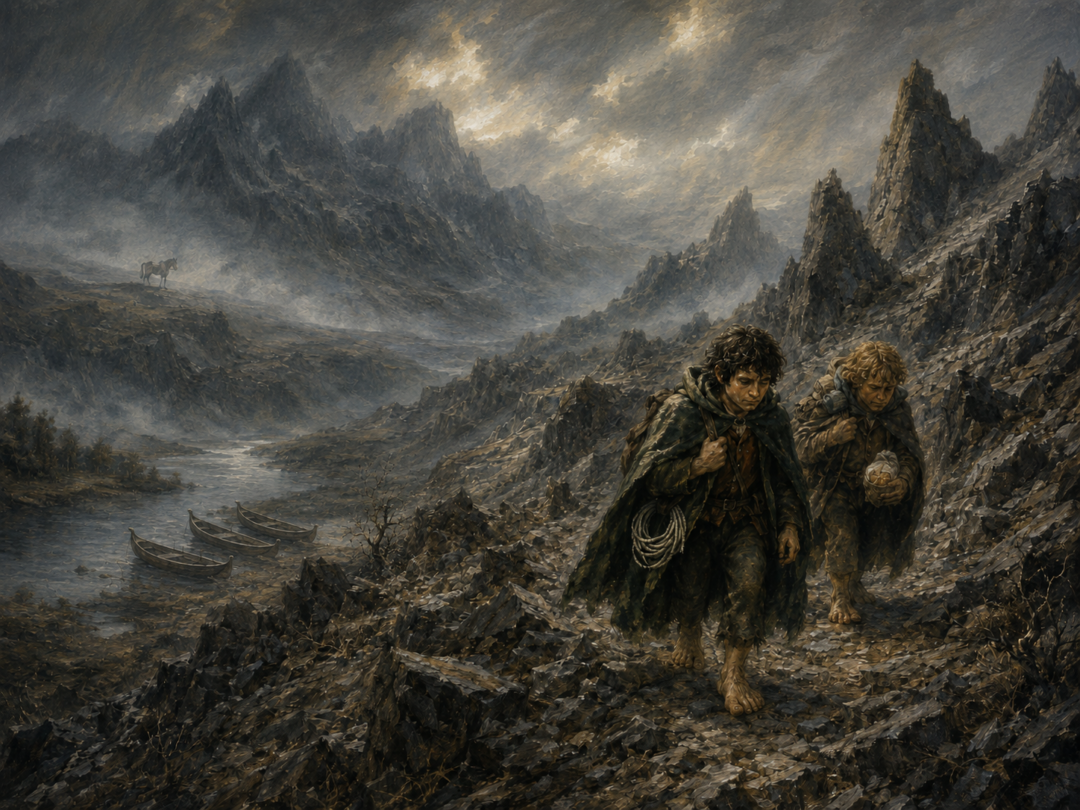
Among the equipment placed with the boats are coils of Elven rope.
This produces one of the small practical moments that make the Fellowship’s journey feel unusually real.
Sam had already regretted setting out without rope. When he discovers the Galadhrim have provided it, he is delighted.
The Elves themselves treat rope as an obvious traveller’s necessity: light, strong, and useful in countless situations.
That judgment later proves correct.
After Frodo and Sam leave the Fellowship and descend into the Emyn Muil, Sam’s Elven rope becomes essential for negotiating the cliffs. Its usefulness continues deeper into their journey.
Once again, Lórien does not merely replace something explicitly recorded as lost outside Moria. It corrects weaknesses in the Company’s equipment.
The Fellowship leaves the Golden Wood better supplied than simple replacement would require.
Lórien Did More Than Refill the Packs
That is the larger answer to what happened after Bill was lost.
There was no single moment when somebody produced another pony, bought replacement baggage, and restored the Fellowship to its original condition.
Instead, the process happened in stages.
At Moria, the Company unloaded Bill before releasing him. They deliberately discarded unnecessary equipment and divided the essential food and water among themselves.
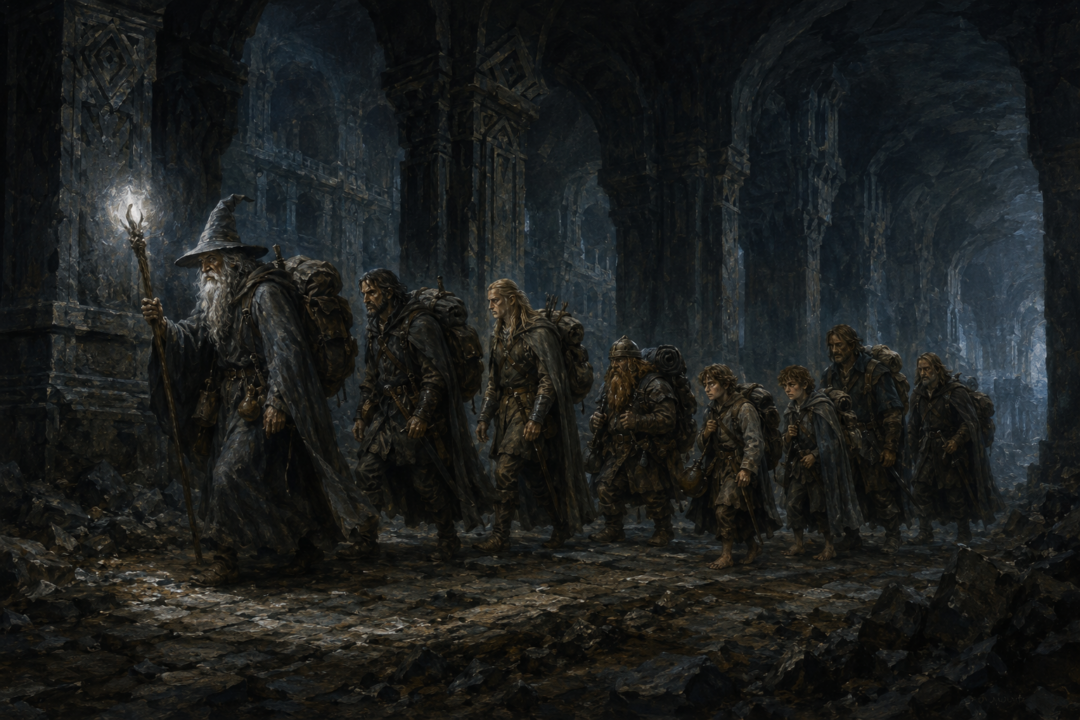
Through Moria and into Lórien, they survived by carrying those reduced loads personally.
Then the Galadhrim transformed their travelling system.
They received concentrated travelling food in the form of lembas. They received light, warm, concealing cloaks. They found strong rope with the boats. And most importantly for the next leg of the journey, they received three vessels that could carry both the travellers and their goods down the Anduin.
The change is easy to overlook because it happens amid some of the greatest events in the story: the terror of Moria, Gandalf’s fall, Galadriel’s temptation, and the approaching breaking of the Fellowship.
But beneath those events is a convincing practical progression.
The Quest begins with a pony carrying the burdens of nine companions.
After Moria, the companions carry those burdens themselves.
After Lórien, Elvish craft makes the burden lighter.
And eventually, when Frodo and Sam walk alone into Mordor, almost all of that support falls away again. No pony. No boat. No secure refuge ahead.
What remains is what they can carry on their own backs.
Among those few surviving necessities is the waybread of Lórien—proof that the Fellowship’s most important resupply did not simply replace what Bill once carried.
It prepared the Ring-bearer for the day when there would be no Fellowship left to carry anything for him.
Sources & Notes
- The Encyclopedia of Arda — West-gate of Moria: context for the point where the Fellowship released Bill and continued without its pack animal — https://www.glyphweb.com/arda/w/westgateofmoria.html
- The Encyclopedia of Arda — Lórien: reference for the refuge where the Company rested and was provisioned after Moria — https://www.glyphweb.com/arda/l/lorien.html
- The Encyclopedia of Arda — Waybread: overview of the compact, sustaining lembas supplied to the Fellowship — https://www.glyphweb.com/arda/w/waybread.html
- The Encyclopedia of Arda — Galadriel: background on the giver who equipped the departing Company with food, cloaks, boats, and other gifts — https://www.glyphweb.com/arda/g/galadriel.html
Sources document the key people, places, institutions, and chronology used in this interpretation.