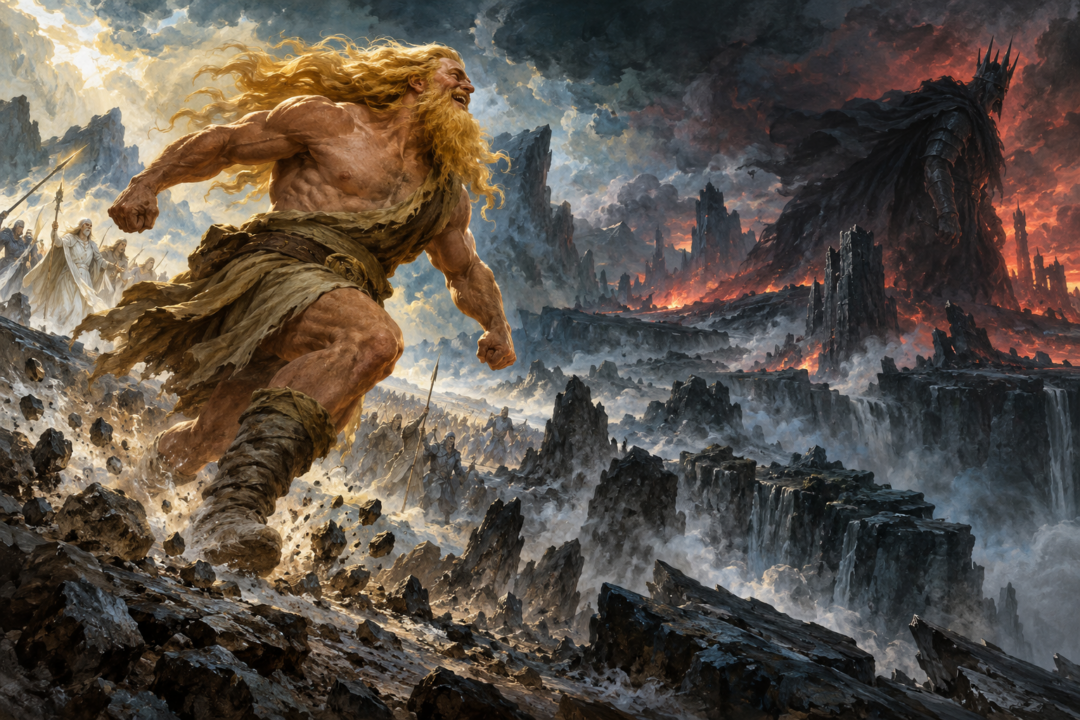
Among the Valar, few figures make a stronger first impression than Tulkas.
He comes into Arda because there is a war. He needs no sword. He needs no horse. He delights in wrestling and contests of strength, and even Melkor—the greatest rebel among the Ainur—learns to fear his arrival. When the Valar finally overthrow Melkor’s fortress of Utumno, it is Tulkas who physically grapples with him in the account given in The Silmarillion.
Yet Tulkas is not King of the Valar.
That position belongs to Manwë.
At first this can seem strange. If Tulkas is the greatest of the Valar in strength and deeds of prowess, why does supreme authority rest with someone else?
The answer reveals an important distinction in the mythology of Middle-earth: the qualities required to defeat an enemy are not necessarily the qualities required to govern a world.
Tulkas Enters Arda as a Warrior
Tulkas is unusual even among the Valar because his entrance into Arda is directly associated with conflict.
The Valaquenta describes him as the greatest in strength and deeds of prowess and says that he came last to Arda, specifically to aid the Valar in their first battles against Melkor.
His arrival changes the balance.
During the earliest struggles over the shaping of Arda, Melkor had repeatedly opposed the other Powers. The coming of Tulkas gives the Valar a champion whose defining gifts are almost perfectly suited to direct confrontation.
That role is reflected in nearly every detail of his description.
Tulkas delights in wrestling and contests of strength. He is tireless. He can outrun creatures that travel on foot and therefore has no need of a steed. His weapons are simply his hands.
Even his temperament in battle is striking. Tulkas laughs in sport and in war, and he laughs even in the face of Melkor.
He is therefore not presented primarily as a commander calculating campaigns from afar. He is the power that enters the struggle personally.
When force is necessary, Tulkas is extraordinarily well suited to applying it.
The Fall of Melkor Shows Tulkas at His Best
The clearest example comes in the War of the Powers.
After the awakening of the Elves, the Valar determine that Melkor's domination of Middle-earth cannot simply be allowed to continue. They go to war, break his power in the north, and eventually assault Utumno.
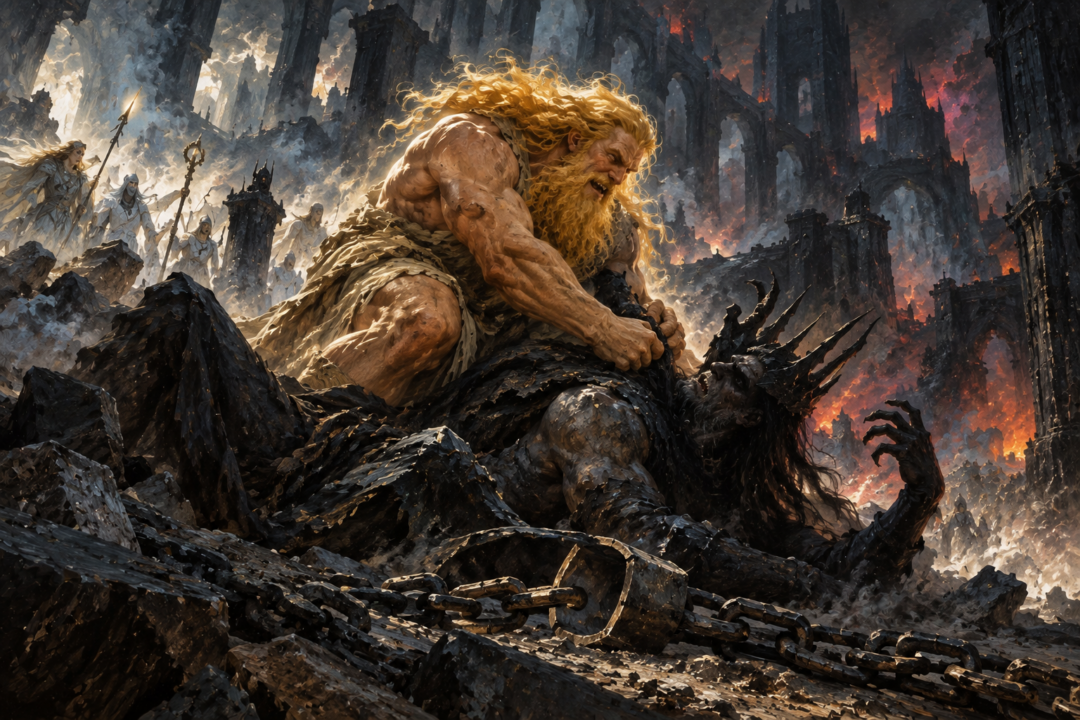
In the published Silmarillion account, when Melkor is finally cornered, Tulkas steps forward.
He wrestles with Melkor and casts him down. Melkor is then bound with Angainor, the chain made by Aulë, and taken captive.
It is difficult to imagine a scene more perfectly fitted to Tulkas.
A cosmic tyrant who has resisted the ordering of Arda is finally reduced to a physical prisoner, and the Vala whose greatest gift is bodily strength is the one who overcomes him.
But what happens afterward is just as revealing.
Once Melkor is defeated, the problem changes.
The Valar no longer need someone capable of wrestling him to the ground. They must judge him, imprison him, decide what should eventually be done with him, and consider the consequences of those decisions for the whole world.
Those are different responsibilities.
And Tulkas is explicitly described as poorly suited to them.
His Greatest Limitation Is Stated Directly
The Valaquenta gives Tulkas one of the most important limitations attached to any of the Valar.
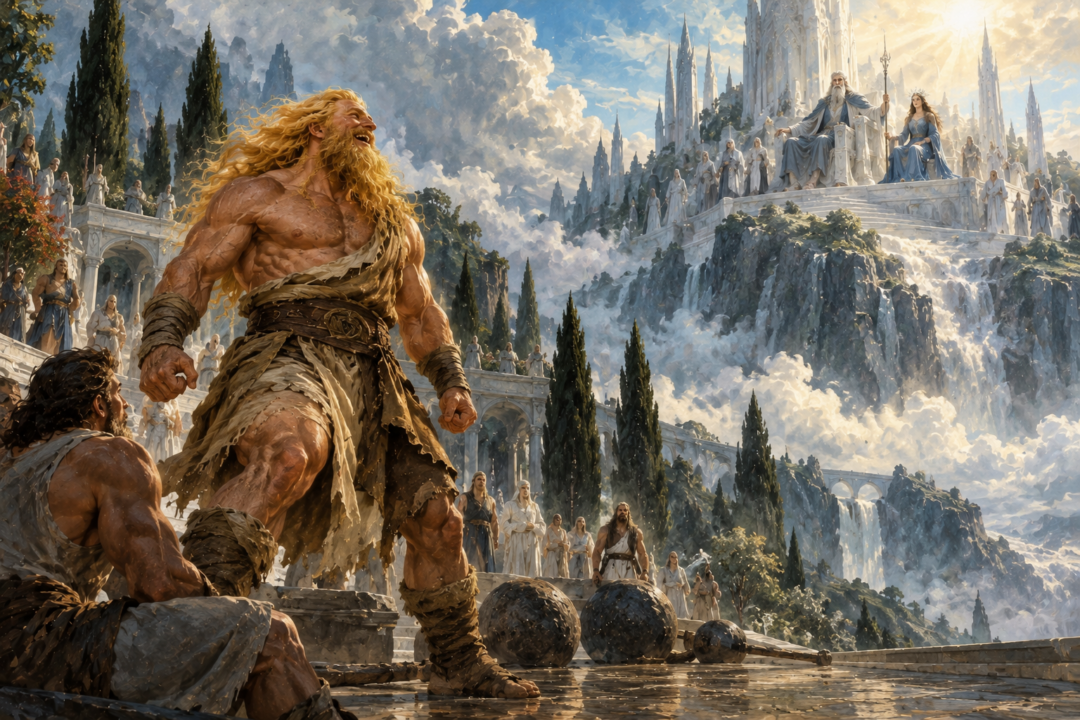
He gives little attention to either past or future and is said to be of no avail as a counsellor.
That statement explains much about his place among the Powers.
Tulkas is not unintelligent in the simple sense, nor is he portrayed as foolish or corrupt. He is a faithful and formidable ally—a “hardy friend,” as the text describes him.
The problem is that rule requires qualities extending beyond courage and immediate action.
A ruler must remember what has happened before. A ruler must consider what may happen afterward. Decisions must often be made when the correct response is not obvious and when every available choice carries consequences.
Tulkas naturally belongs to the moment of action.
That makes him invaluable when action is exactly what is required.
It does not make him the natural ruler of Arda.
Why Manwë Is King Instead
Manwë's authority is founded on an entirely different basis.
He is appointed as ruler of Arda and stands as the chief authority among the Valar. His kingship is therefore not something won through physical superiority.
Indeed, the legendarium repeatedly separates authority from sheer might.
Melkor originally possessed immense power, yet his desire for domination becomes part of his fall. Tulkas possesses extraordinary strength, yet that strength does not make him king. Manwë's authority rests instead within the ordering entrusted to the Valar.
This matters because kingship in Arda is not supposed to mean being the strongest being in the room.
Proper authority exists to preserve order rather than glorify the ruler.
Manwë is certainly not infallible in judgment. His inability fully to comprehend Melkor's malice becomes enormously consequential. But the important point is that the office of king demands judgment, responsibility, and concern for the whole order of Arda rather than excellence in one particular form of power.
Tulkas is extraordinarily specialized.
Manwë must govern.
Tulkas Understands Melkor in One Important Way
There is nevertheless an irony in the contrast.
Tulkas's distrust of Melkor proves significant.
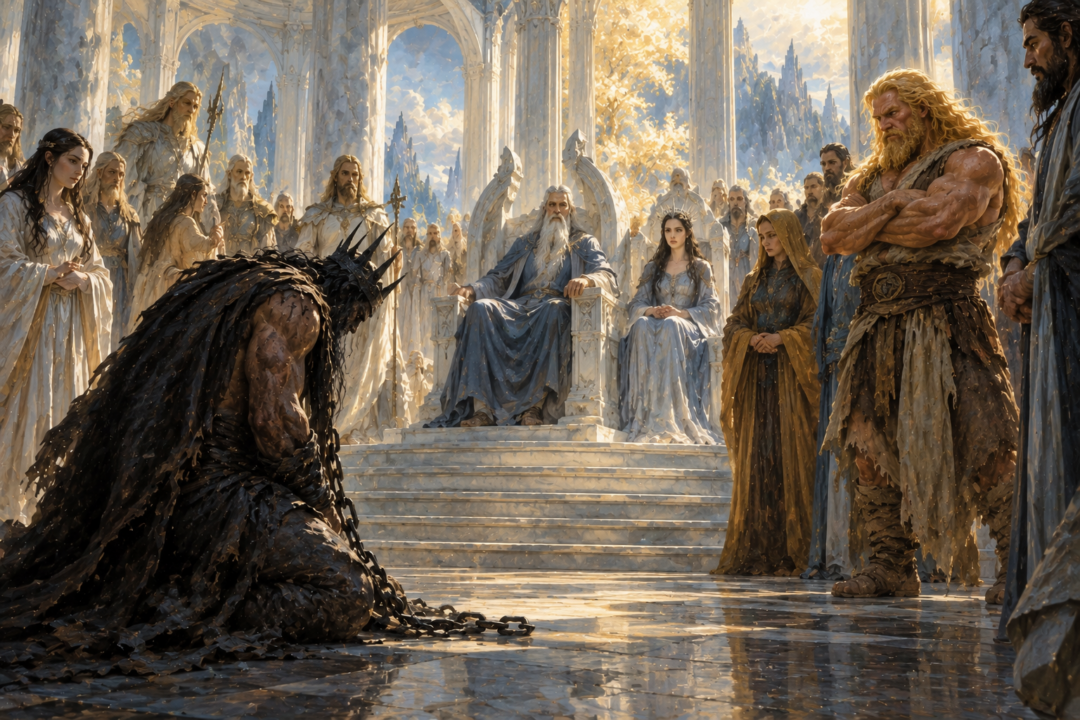
After Melkor has endured his appointed term of imprisonment, he appears to humble himself before the Valar. Manwë eventually grants him pardon, while Tulkas is among those who do not trust him.
Melkor's repentance is false.
He begins corrupting the peace of Valinor, spreading lies among the Noldor and eventually setting in motion the catastrophe that leads to the destruction of the Two Trees, the murder of Finwë, and the theft of the Silmarils.
Tulkas's suspicion therefore looks perceptive in retrospect.
But this does not automatically mean that Tulkas would have made the better ruler.
Recognizing one dangerous enemy is not the same thing as possessing the wisdom required for universal government. The text can simultaneously show that Manwë's mercy was exploited and that Tulkas is poorly suited to counsel.
That tension is more interesting than a simple contest over which Vala was “right.”
Tulkas sees clearly what Melkor is capable of because his instinct toward the Enemy is uncompromising. Kingship, however, cannot consist entirely of treating every problem as though it were Melkor waiting to be wrestled into chains.
Strength Cannot Solve Every Crisis
Later events reinforce the limitation of physical power.
When Melkor and Ungoliant destroy the Two Trees and flee from Valinor, Tulkas joins the pursuit. Yet Ungoliant's darkness confounds the hunters.
Here the champion's strength cannot simply end the crisis.
The problem is no longer an opponent standing before him in a contest of force. Darkness, deception, distance, divided loyalties, grief, and catastrophic choices now dominate the story.
This pattern becomes increasingly important throughout the history of Arda.
Some evils can be fought directly.
Others spread through fear, possessiveness, pride, lies, and corrupted desire. No wrestler, however mighty, can simply seize such things by the throat.
Tulkas remains one of the great enemies of Melkor precisely because confrontation is his natural sphere.
But Arda needs more than a champion.
Even the Valar Are Not Interchangeable
Tulkas also demonstrates something fundamental about the Valar themselves.
Their differences are meaningful.
Ulmo's relationship with water is unlike Aulë's concern with the substances of the earth. Oromë is the hunter who ranges through Middle-earth. Mandos has his own grave responsibilities. Nienna understands grief and pity in a manner that belongs particularly to her.
Tulkas likewise has his proper excellence.
He embodies strength, courage, physical action, endurance, and the joy of contest without sharing Melkor's lust for domination.
That last distinction matters enormously.
Tulkas is immensely powerful, but there is no suggestion that he therefore believes everything should belong to him.
His strength remains strength in service.
When the Valar require a champion, he fights.
When authority belongs elsewhere, he does not attempt to seize it.
That may be one of the strongest signs that his power has not corrupted him.
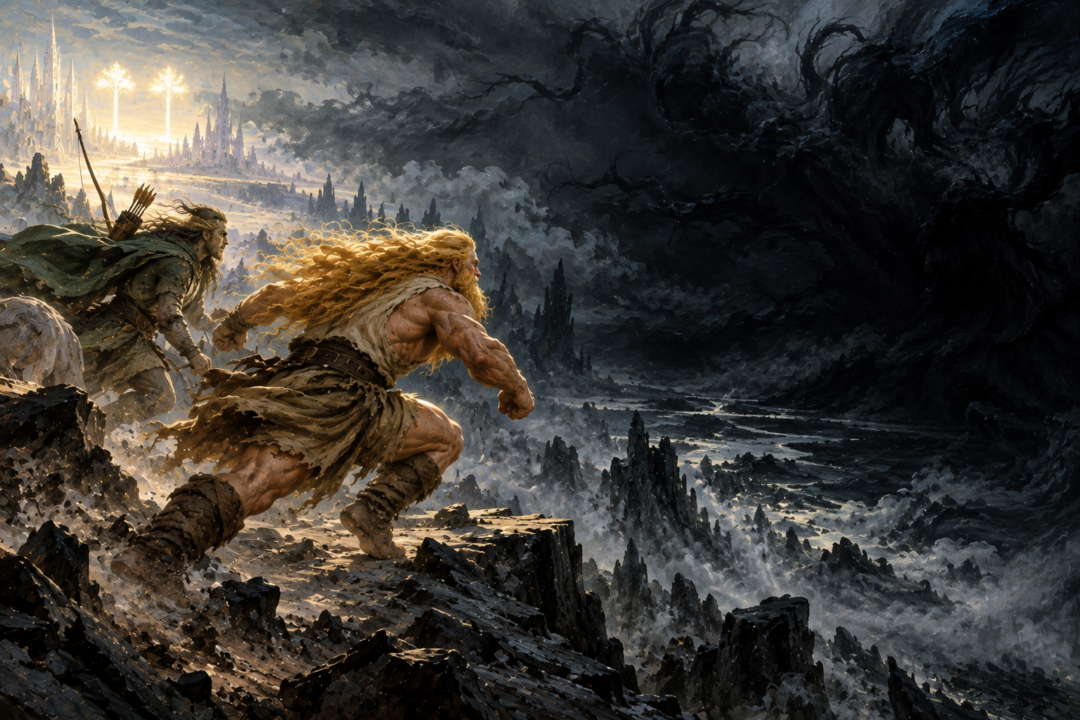
The Champion Does Not Need the Crown
It is tempting to assume that the being capable of defeating the greatest enemy should naturally become the ruler afterward.
Tulkas challenges that assumption.
His greatness does not depend upon becoming king.
He does not need a throne to justify his strength, because his strength already has a proper purpose. He can accomplish something that Manwë is not primarily defined by accomplishing, while Manwë bears responsibilities for which Tulkas is explicitly unsuited.
The contrast is therefore not simply between a stronger Vala and a weaker one.
It is between two different forms of responsibility.
Tulkas is built for the decisive moment: the charge into battle, the pursuit of the Enemy, the contest where courage and strength must finally become action.
Kingship demands something broader—the burden of memory, foresight, judgment, mercy, order, and consequences extending far beyond the immediate struggle.
Tulkas has little concern for past or future.
That weakness in council becomes almost the mirror image of his greatness in battle. He is overwhelmingly present in the moment when something must be done.
And when Melkor stands before the Powers and strength is finally required, few beings in Arda are better suited to that moment.
Tulkas does not need to be King of the Valar.
He is their champion.
And those are not the same calling.
Sources & Notes
- Tolkien Gateway, “Tulkas” — His strength, wrestling Melkor, and limited inclination for counsel. https://tolkiengateway.net/wiki/Tulkas
- Tolkien Gateway, “Manwë” — King of the Valar and interpreter of Ilúvatar’s will. https://tolkiengateway.net/wiki/Manw%C3%AB
- Tolkien Gateway, “Valar” — The Powers’ distinct roles and governance of Arda. https://tolkiengateway.net/wiki/Valar
Sources document Tulkas, Manwë, Valar. Interpretive claims remain distinguished from the primary narrative.