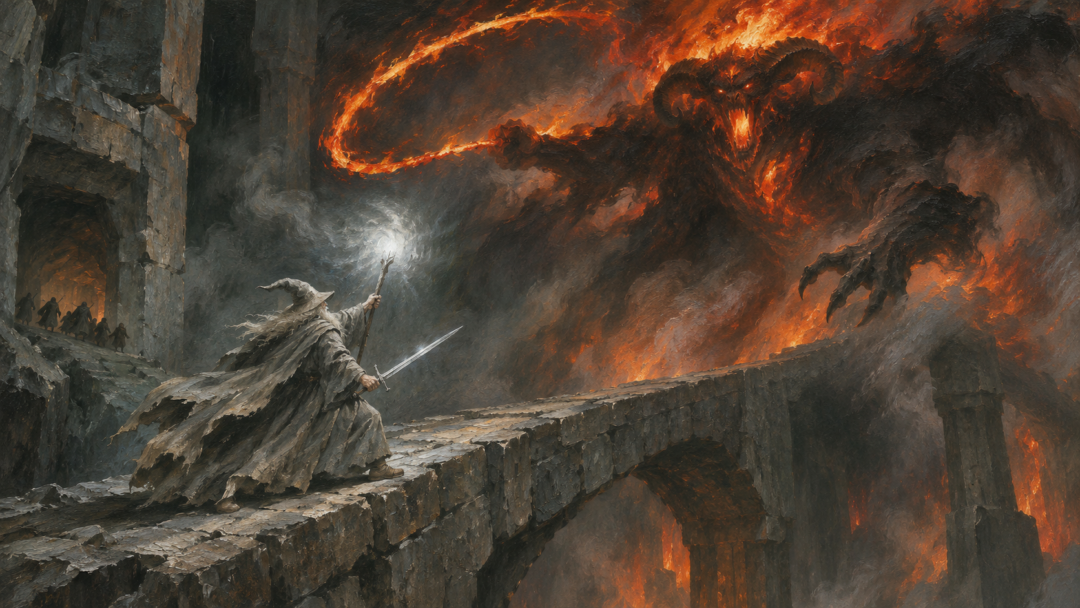
On the Bridge of Khazad-dûm, the Fellowship is almost free of Moria when a figure of fire and shadow blocks the way. Gandalf stays behind, breaks the bridge beneath the Balrog, and is dragged into the abyss with it. His companions believe they have lost him. Yet the wizard eventually returns in white after a battle stretching from the roots of the mountains to a snowbound summit. It's easy to see why this story invites comparison with ancient religious myths.
But is it specifically a parallel to Mithras, supposedly a god who battles a demon, dies, and is reborn? There is no demonstrated intentional connection, and the comparison has a more basic problem: that proposed sequence is not an established origin story in the evidence for Roman Mithraism. Gandalf's death and return are explicit events in Middle-earth. The matching Mithraic narrative is much harder to find.
From the bridge to the Battle of the Peak
The confrontation begins as protection, not a quest for a supernatural adversary. The Fellowship must escape Moria, and Gandalf holds the narrow bridge while the others flee. When the Balrog falls, its whip catches him and pulls him down. The moment looks like a final sacrifice, but their struggle is only beginning. Both survive the plunge, and Gandalf is burned and battered by the descent.
In The Two Towers, Gandalf tells Aragorn, Legolas, and Gimli what followed. Far beneath Moria, the enemies reach deep water that extinguishes the Balrog's flames. It flees through forgotten passages, Gandalf pursuing until they find the Endless Stair, a route thought lost even by the Dwarves. The climb leads to Durin's Tower on the summit of Zirakzigil, also called Celebdil or the Silvertine. Their passage from darkness to daylight feels almost like movement between worlds.
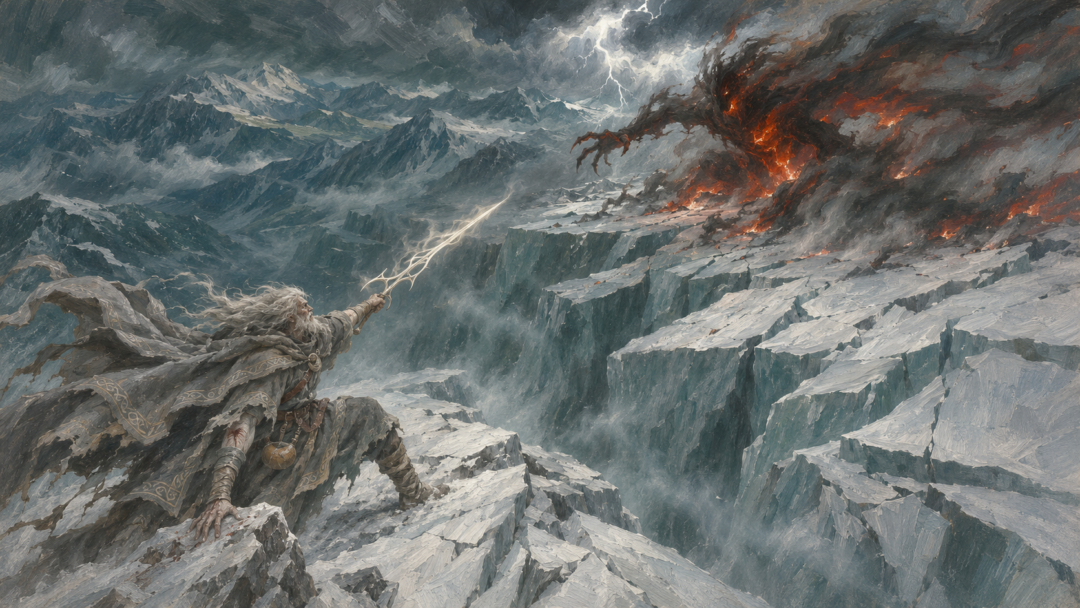
At the peak, the Balrog bursts into fire again. Their final combat becomes the Battle of the Peak, amid smoke, lightning, and ice that people far below perceive as a storm. Gandalf finally throws down his enemy, leaving the mountainside scarred. Then his strength fails. The Encyclopedia of Arda traces the sequence, but the essential account comes from Gandalf's recollection in The Two Towers: victory does not spare him death.
Gandalf is sent back into life, found on the mountain by Gwaihir the Eagle, and carried to Lothlórien. He returns as Gandalf the White, with greater authority than before. This is not merely a costume upgrade or a revelation that he survived unnoticed. In Letter 156, Tolkien makes clear that Gandalf genuinely died and underwent a real change. His return does not erase what his sacrifice cost.
What Roman Mithraism actually shows
To test the parallel, begin with Mithraism rather than a reconstructed story that already resembles Gandalf's. Roman Mithraism was a mystery cult whose remains include cave-like sanctuaries, carved reliefs, and images of the god Mithras. It had connections to the older Iranian name and traditions of Mithra, but Roman practice should not be treated as an unchanged form of Iranian worship. Its surviving evidence raises questions of its own.
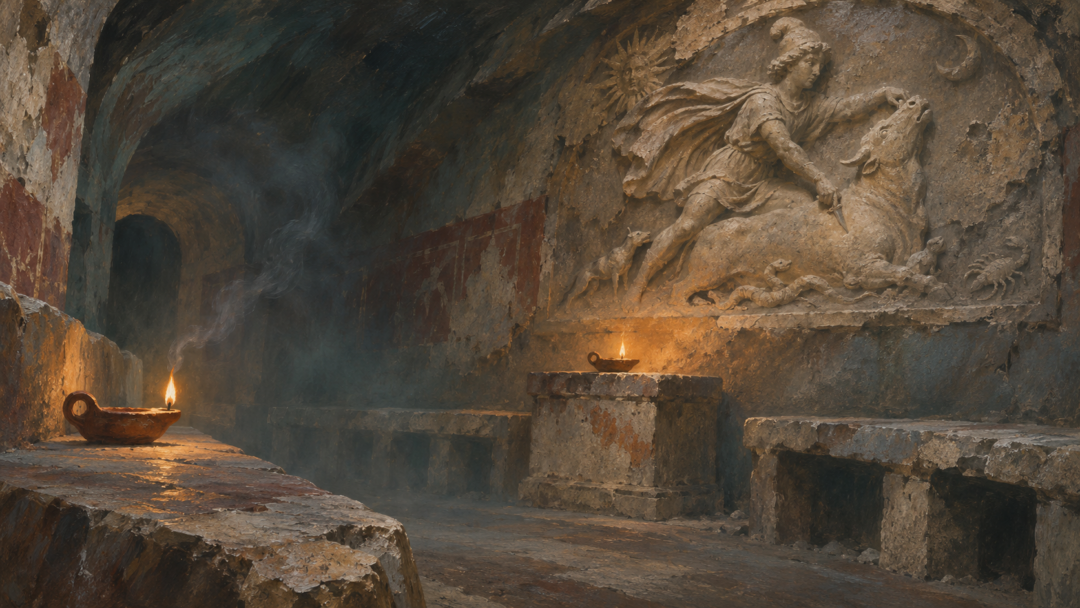
The central image is the tauroctony: Mithras killing a bull, typically surrounded by animals and celestial figures. In Roger Beck's Encyclopaedia Iranica account, bull-killing is central to Mithraic mythology and imagery. It is not ordinarily depicted as a duel against a demon. The bull is not the Balrog in different clothes, and the act cannot be assigned the same purpose as Gandalf's defense of his companions without further evidence.
The sanctuary matters too. Mithraic meeting places, or mithraea, evoked caves, and communal meals formed a major part of the cult's activity. Beck describes feasting among initiates and a sacred meal associated with Mithras and the Sun god. The cave carried cosmic significance, connected with the soul's descent and departure. Those elements invite symbolic interpretation, but they do not establish a story in which Mithras defeats a demon, dies, and is restored to life.
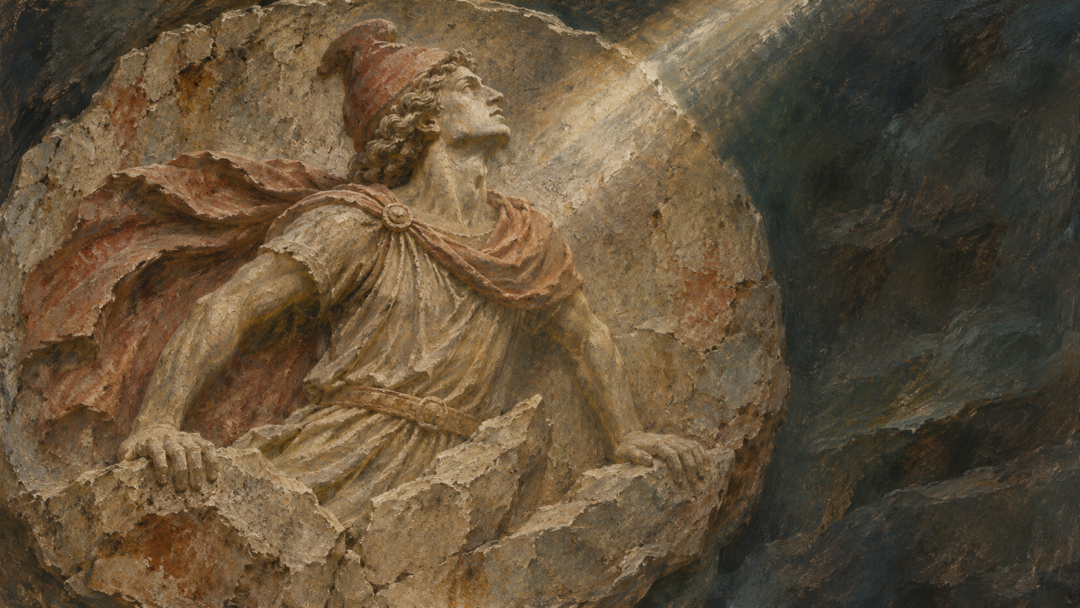
Another familiar image shows Mithras emerging from rock, already youthful rather than an infant. It is a birth or emergence motif: the rock itself is represented as the source of the god's appearance. It may look suggestive beside Gandalf's emergence from mountain depths, especially when the stories are viewed as pictures. Yet coming from a rock is not rising from the dead. Surviving Mithraic images offer distinctive scenes, not a complete, universally agreed narrative connecting each scene to a death and resurrection.
A remarkable frieze—and an easy mistake
One archaeological example shows how this mistake could arise. An account of the mithraeum at Hawarte in the Journal of Roman Archaeology describes paintings including Zeus battling snake-headed monsters, Mithras emerging from rock, and the bull-slaying image. Read as a quick list, they sound close to a god defeating something monstrous and being reborn. But that impression requires combining separate images in a way the evidence does not justify.
The figure fighting the snake-headed monsters is Zeus, not Mithras. The figure emerging from rock is Mithras, but the scene depicts his appearance, not recovery after death. The bull-slaying is a third subject. Joining these into one tale of Mithras battling a demon, dying, and returning would switch protagonists and invent links between events. Pictures appearing alongside one another do not necessarily establish a chronological story.
The Hawarte paintings are fascinating because some imagery is unusual and has prompted debate about religious influences around that community. But this is one decorated sanctuary, not a doctrinal handbook for Mithraists across the Roman world. We can observe what was painted without knowing exactly how every worshipper understood it. A striking visual match should encourage closer examination, not license the invention of missing episodes.
Where the resemblance is real
There are meaningful reasons to put the traditions side by side. Both use places outside everyday life: deep caves, hidden passages, and boundaries between light and darkness. In Middle-earth, the abyss beneath Moria lies beyond the Fellowship's knowledge, while the ascent brings Gandalf and the Balrog into daylight. In Mithraic art and architecture, the cave similarly invites thought beyond the ordinary world, though in a different religious setting.
Supernatural power is another shared language. Gandalf and his opponent are not just a man and a monster. Both are Maiar, spiritual beings within the created world; the Balrog served Morgoth, while Gandalf came as one of the Wizards to oppose Sauron. Their clash is more than a contest of weapons. But the combatants' identities matter: two beings with opposing loyalties are not interchangeable with Mithras and the bull in the central cult image.
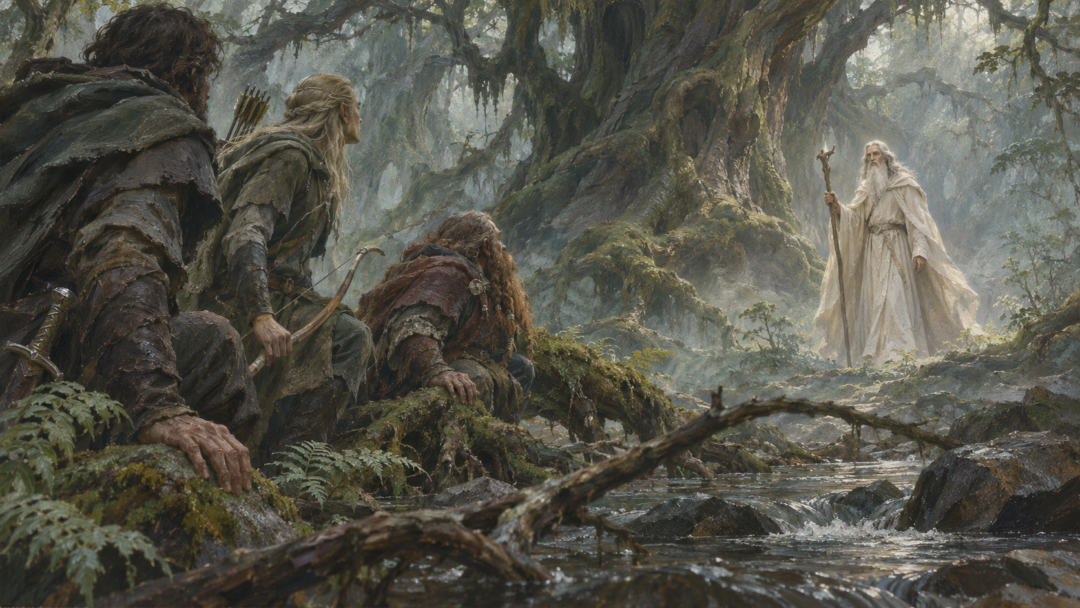
The strongest emotional resemblance may be the transformation surrounding a confrontation with darkness. Readers know the Grey Pilgrim as a guide who can be impatient, humorous, secretive, and reassuring. After Moria, his friends encounter someone recognizably Gandalf but harder to comprehend; Aragorn, Legolas, and Gimli initially struggle to identify him in Fangorn Forest. His changed role in the war matters more than his new clothing. An ancient image of divine emergence can resonate with this transformation without being its source.
Why Gandalf returns as the White
Letter 156 gives a stronger guide to Gandalf's fate than a proposed borrowing from a distant cult. The Wizards were messengers sent under restrictions: they were to encourage resistance to Sauron, not conquer Middle-earth by dominating its peoples. Gandalf's stand in Moria accords with that purpose. He risks himself so others can continue, relinquishing any personal assurance that he will finish the mission. His sacrifice is an act within a larger moral order.
That order explains why Gandalf cannot simply revive himself at will. His return is granted by authority beyond the Wizards' mandate. The Valar, the Powers of the West, had sent the Istari, but the power behind his restoration is higher still. Sent back because his task remains unfinished, Gandalf returns with greater wisdom and strength. He remains a guide rather than a ruler: he helps Théoden and confronts Saruman, but does not take the choices of Middle-earth's peoples away from them.
Letter 142 provides broader context. Tolkien called The Lord of the Rings fundamentally religious and Catholic, explaining that its religious meaning was absorbed into story and symbolism rather than expressed through overt worship or systematic allegory. Sacrifice, providence, and renewed life are therefore relevant ideas to consider. That does not make every detail exclusively Christian in origin or rule out other mythic traditions. It offers direct evidence about the writer's stated framework, not a key to every image.
Neither letter identifies Mithraism as the model for the Balrog episode. That absence cannot exclude every remote influence; literature rarely works so neatly. But intentional borrowing would require something more specific than caves, an adversary, and a changed return: perhaps a textual echo, an identifiable Mithraic story with the proposed sequence, or evidence linking the writer to that tradition. These sources provide none of those links, while the novel and letters offer the scene a purpose of its own.
Gandalf's story is remarkable enough without supplying Mithras with an unverified resurrection. Readers can notice echoes across traditions without treating them as evidence of borrowing. On the mountain above Moria, the tower lies broken, the Balrog is gone, and Gwaihir comes to lift the returned wizard into the sky. The battle's meaning remains bound to those who escaped the bridge below, and to the unfinished journey Gandalf is allowed to rejoin.
Sources & Notes
This article is based on close reading and interpretation of Tolkien's published works and related source material where relevant.