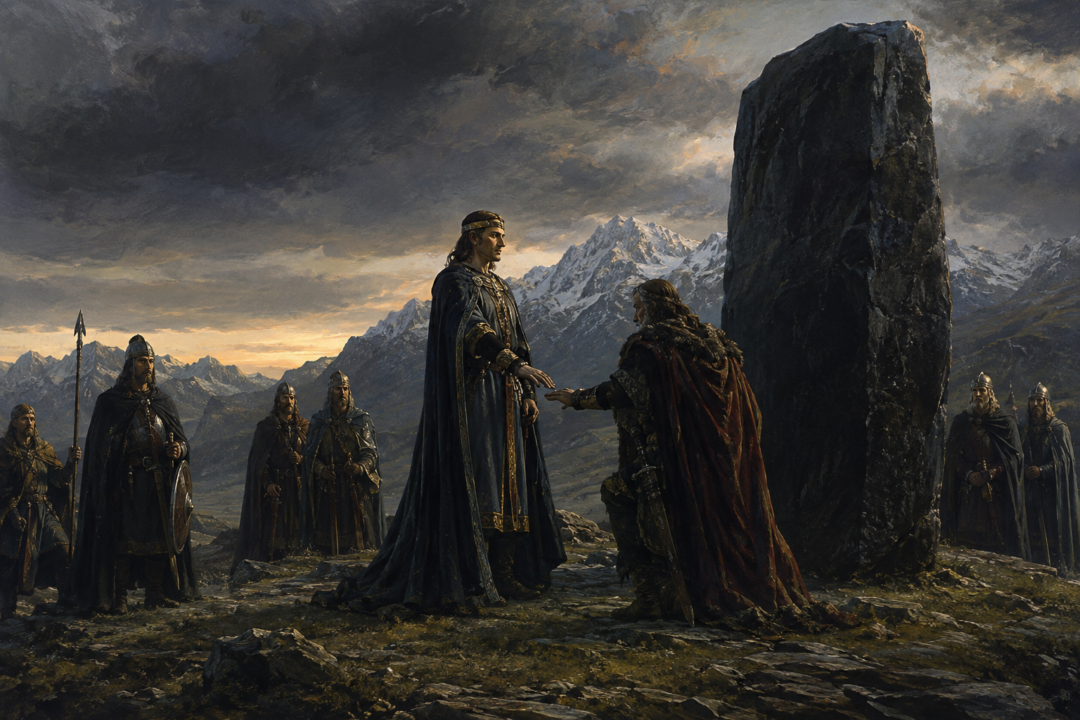
Isildur’s curse upon the Men of the Mountains is easy to remember as a supernatural punishment: they swore to fight Sauron, broke their oath, and were condemned to remain among the living until they fulfilled it. Yet the episode becomes stranger when we look at how the curse actually works.
The Dead are not simply waiting for another battle. They are bound to an oath sworn to a king, at a particular stone, within a political order that survives the man who pronounced their doom. Thousands of years later, they do not answer Gandalf, Gondor’s Steward, or any captain desperate enough to demand their service. They answer Aragorn.
That distinction matters.
The texts never give a technical explanation of the supernatural mechanism behind Isildur’s curse. We are not told that Númenórean kings possess a general magical ability to imprison the spirits of Men. But the story repeatedly connects the oath with three things: legitimate kingship, solemn witness, and a place that preserves the memory of what was sworn.
Seen that way, the Paths of the Dead are not merely a ghost story. They are the terrible afterlife of a broken covenant.
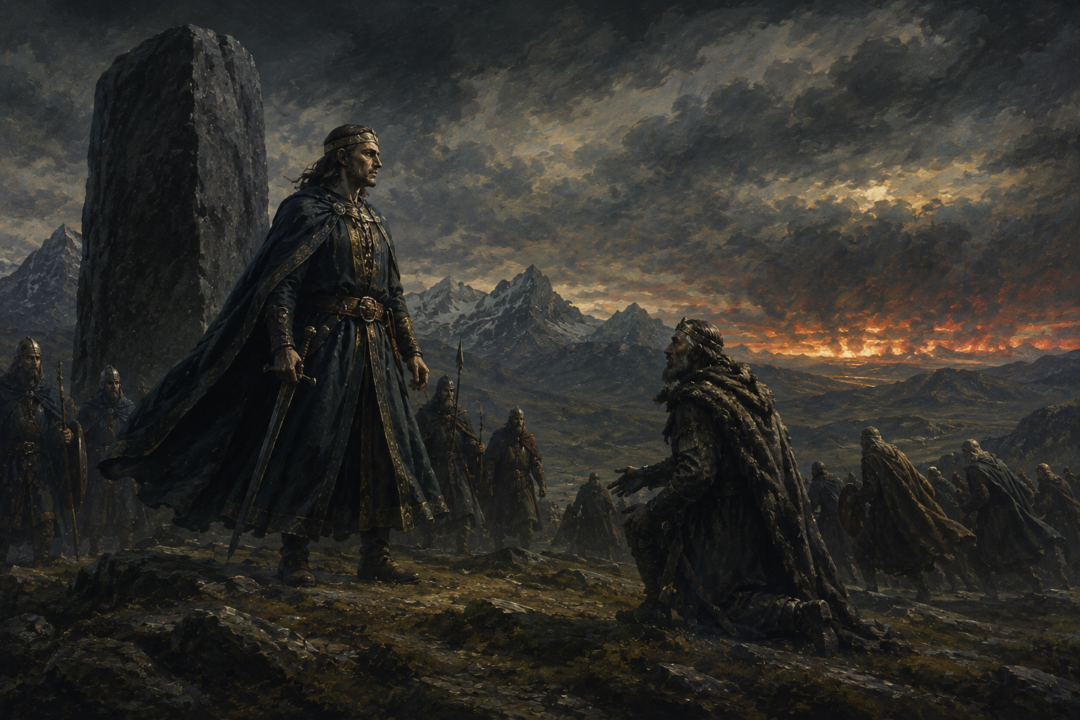
The Oath Was Made to Isildur as King
Near the beginning of Gondor, the King of the Mountains swore allegiance to Isildur upon the great black Stone of Erech. Aragorn later explains that when Sauron returned to strength, Isildur summoned these Men to fulfill their promise.
They refused.
Their refusal was especially grave because they had worshipped Sauron during the Dark Years. Isildur therefore pronounced judgment: their king would be the last king of his people, and if the West proved stronger than Sauron, they would find no rest until their oath had been fulfilled.
The important point is that this is not presented as a private quarrel between two individuals.
The King of the Mountains had sworn allegiance in the beginning of the realm of Gondor. Isildur called upon him in the struggle against Sauron, and the oath bound not merely the king personally but his people. The curse likewise falls upon the king and his folk.
This makes kingship central to the episode. Isildur is acting as a ruler claiming the service that had been solemnly promised to him.
And when the ancient obligation is finally called in, the same political structure reappears.
Why Aragorn Can Command the Dead
Malbeth the Seer’s prophecy does not say that a sufficiently powerful warrior will awaken the Oathbreakers. It identifies their summoner by descent and right: the one who comes will be the heir of the man to whom they swore.
That is exactly how Aragorn confronts them.
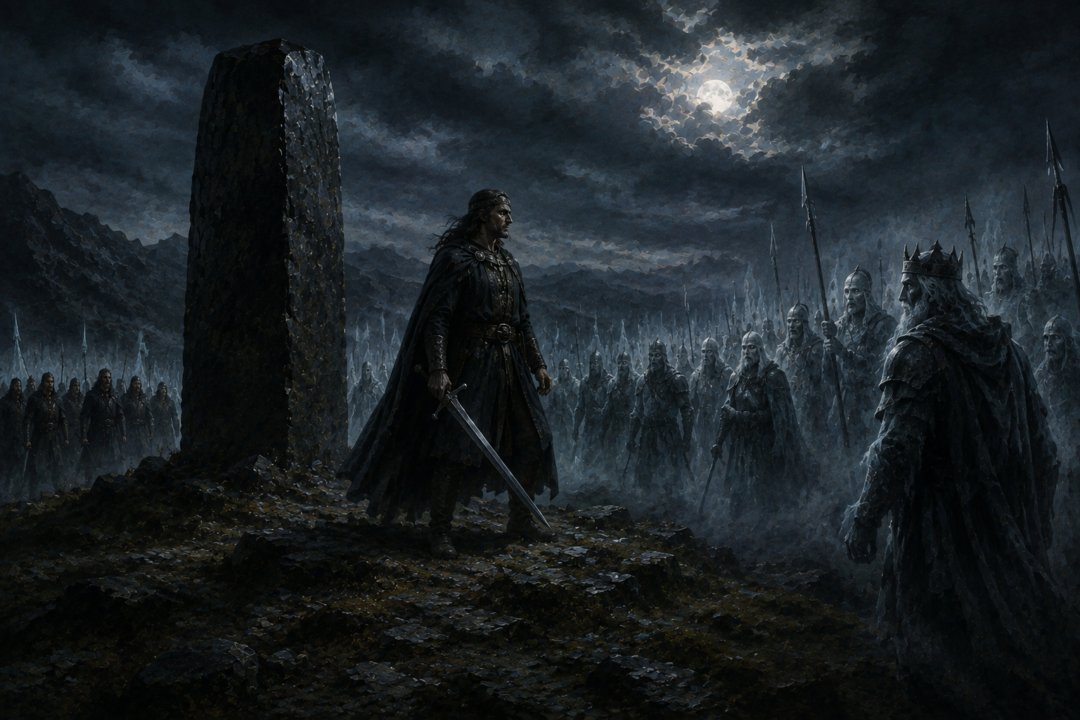
After passing through the Paths of the Dead, he summons them to the Stone of Erech. There he identifies himself through Isildur’s line and demands that they fulfill their oath.
This is one of the strongest indications that the authority involved is hereditary and royal rather than simply supernatural power.
Aragorn does not learn a spell capable of controlling ghosts. Nor does the narrative suggest that possession of Andúril by itself gives him dominion over them. His authority rests upon being Isildur’s heir—the legitimate successor of the person to whom the oath was originally given.
The Dead recognize that claim.
Their obedience therefore becomes part of Aragorn’s larger return to kingship. Before he publicly takes the crown of Gondor, he exercises an authority that neither ordinary Men nor Gondor’s ruling Stewards have exercised over these ancient oathbreakers.
The forgotten past effectively recognizes the king before Minas Tirith does.
The Stone of Erech Is More Than Scenery
The geography of the story is equally deliberate.
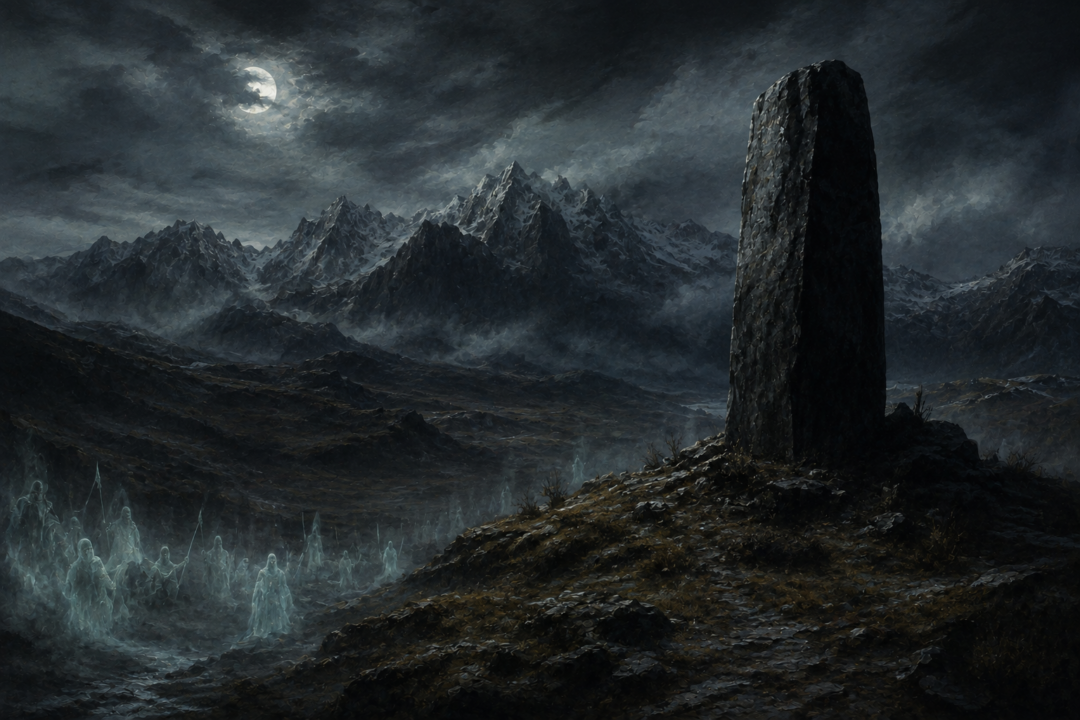
The original oath was sworn upon the Stone of Erech, a great black stone brought from Númenor by Isildur and set upon the hill. Long afterward, the surrounding country became associated with the terror of the Sleepless Dead.
When Aragorn comes through the mountain, he does not simply order the Dead directly to Pelargir. He summons them to Erech.
At midnight they gather around the same ancient landmark connected with their original promise.
The text does not explicitly state that the Stone possesses magical power, and it would go beyond the evidence to claim that it mechanically enforces the oath. Its significance is nevertheless unmistakable. Erech is where the obligation was established and where Aragorn formally calls the Oathbreakers back into service.
The place preserves continuity.
Kingdoms have changed. Isildur has been dead for three millennia. The Men who originally swore the oath have dwindled into legend. Yet the Stone remains.
In Middle-earth, memory is often attached to physical places: tombs, hills, ruins, swords, trees, and stones carry the weight of earlier ages. Erech functions in this way. The landscape itself seems to retain the history that living societies have nearly forgotten.
Witness Makes an Oath Larger Than Private Intention
Another Tolkien tradition helps illuminate the seriousness of such promises.
In Unfinished Tales, Cirion and Eorl swear their famous oaths at the hallowed tomb of Elendil on Amon Anwar. Cirion invokes the Valar and ultimately the One above all thrones as witnesses. The account stresses the exceptional solemnity of this invocation and its connection with the authority traditionally belonging to the kingship.
The oath of the Men of the Mountains is not described with the same theological detail. We should therefore not assume that Isildur used precisely the same formula or explicitly invoked Eru at Erech.
But the comparison establishes something important about Númenórean tradition: the greatest oaths of rulers were not casual political promises. Witness, legitimate authority, memory, ancestry, and hallowed places could give them extraordinary weight.
That helps explain why Isildur’s curse should not be reduced to “powerful Númenórean magic.”
The texts give us no system in which kings cast curse-spells according to predictable rules. What they show instead is a world where words spoken under the gravest conditions can have consequences far beyond the speaker’s lifetime.
The Curse Does Not Let Isildur Rewrite the Oath
There is also a revealing limit on the curse.
The Oathbreakers are not condemned to serve Isildur’s descendants forever. They must fulfill the promise they originally broke.
Aragorn himself understands the obligation in those terms. Their oath had been to fight against Sauron, and therefore service against Sauron’s forces can finally satisfy it.
During the War of the Ring, Aragorn leads them against the enemies threatening southern Gondor. At Pelargir, the terror of the Dead overwhelms the Corsairs and their allies. Once their promised service has been rendered, Aragorn releases them.
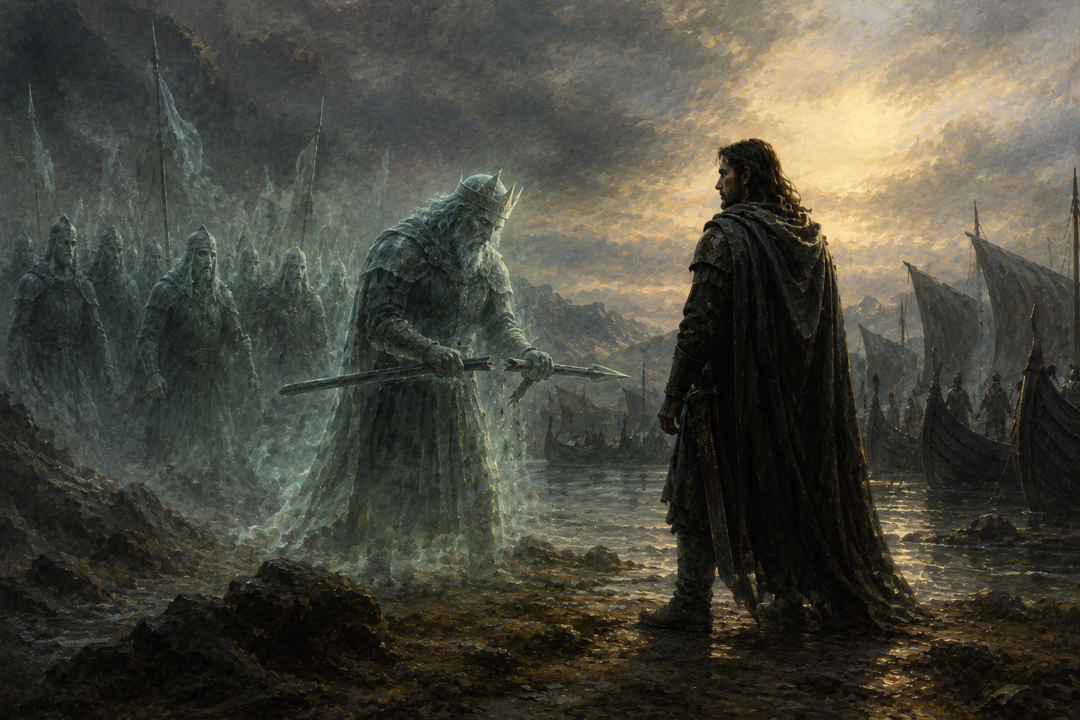
The King of the Dead breaks his spear and bows. The host disappears.
That ending is crucial.
Aragorn does not keep an invincible spectral army because it would be useful at Minas Tirith. He declares their oath fulfilled and allows them to depart.
Royal authority here is therefore not unlimited domination. The heir can demand what is owed, but when the debt has been paid, he releases the debtor.
The curse is bounded by the oath.
Isildur’s Heir Must Also Be a Just Judge
This gives Aragorn’s encounter with the Dead a moral dimension that can disappear beneath the spectacle.
He inherits Isildur’s claim, but he also inherits responsibility for judging when that claim has been satisfied.
That is a test of kingship.
A tyrant might interpret an ancient oath as permission for endless servitude. Aragorn does not. He calls the Dead because Gondor faces desperate need; he requires them to act against Sauron’s servants; and when their task is complete, he holds the oath fulfilled.
The episode therefore presents legitimate authority as something constrained by justice.
The Dead must answer for their faithlessness. But the king must also honor the terms of the obligation.
This balance helps distinguish Aragorn’s authority from the domination practiced by Sauron. Sauron seeks to make wills permanently subordinate to his own. Aragorn exercises inherited authority and then relinquishes it when its rightful purpose has been achieved.
The difference is fundamental.
Why the Dead Could Not Simply Repent Earlier
A disturbing question remains: why did the Oathbreakers have to wait so long?
The texts do not explain the metaphysics of their condition in detail. We should be cautious about claiming exactly what prevented their spirits from departing or whether they could have acted differently during the intervening centuries.
What is clear is that Isildur’s pronouncement anticipates a future summons. Their unrest lasts until the broken oath can finally be fulfilled, and Malbeth’s prophecy specifically associates that moment with Isildur’s heir.
Their release therefore requires more than regret.
It requires fulfillment.
That is one of the harsher moral patterns in the story. Some promises cannot be repaired merely by wishing they had never been broken. The consequences continue until the neglected duty is finally performed.
For the Men of the Mountains, that opportunity arrives only when the rightful heir returns.
Kingship, Witness, and Place Meet Again at Erech
The most compelling reading of Isildur’s curse is therefore not that he possessed a mysterious spell called “the curse of the Oathbreakers.”
The texts never define such a power.
Instead, several layers reinforce one another.
There is kingship: the oath is sworn to Isildur, and only his heir ultimately calls it due.
There is witness and solemn obligation: broader Númenórean traditions show that the greatest political oaths could be treated as sacred acts rather than disposable agreements.
And there is place: the Stone of Erech survives as the physical center of both the promise and its final reckoning.
At Erech, past and present become almost indistinguishable. A stone carried from drowned Númenor stands beneath the night sky. A king who has been dead for thousands of years is represented by his heir. A people who tried to escape their promise discover that history has outlived them.
Then something remarkable happens.
Aragorn does not merely inherit Isildur’s curse.
He completes it.
The heir restores the broken relationship between promise and deed, receives the service that was owed, and then ends the punishment. The Dead finally depart because the ancient words have at last been matched by action.
That may be the deepest significance of the episode. In Middle-earth, rightful kingship is not simply the power to command the living. It is the responsibility to remember what was promised, to uphold what remains binding, and—when justice has finally been satisfied—to know when a debt must end.
Sources & Notes
- https://www.encyclopedia-of-arda.com/o/oathbreakers.php — The Encyclopedia of Arda: Oathbreakers (the Men of the Mountains, their broken allegiance to Isildur, and their release by Aragorn).
- https://www.encyclopedia-of-arda.com/s/stoneoferech.php — The Encyclopedia of Arda: Stone of Erech (the Númenórean landmark where the oath was sworn and later called due).
- https://www.encyclopedia-of-arda.com/p/pathsofthedead.php — The Encyclopedia of Arda: Paths of the Dead (the haunted route and prophecy associated with Isildur’s heir).
- https://www.encyclopedia-of-arda.com/a/aragorn.php — The Encyclopedia of Arda: Aragorn (his hereditary claim as Isildur’s heir and his summons of the Dead).
Sources checked for relevance and availability.