The Watchful Peace Was Never Truly Peaceful
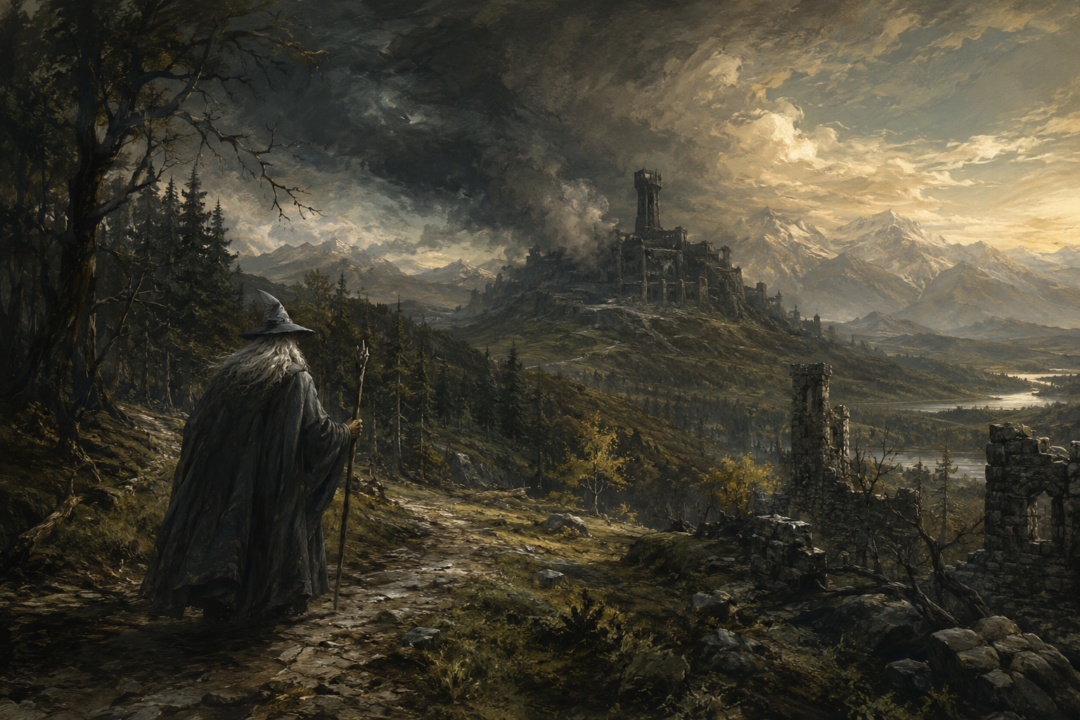
When Gandalf entered Dol Guldur in the year 2063 of the Third Age, the darkness withdrew before him. The mysterious power occupying the fortress fled into the East, and for centuries afterward the Nazgûl remained quiet in Minas Morgul. Middle-earth entered the period remembered as the Watchful Peace.
The name sounds reassuring.
It should not.
The Watchful Peace lasted until 2460, nearly four centuries in which Sauron was absent from Dol Guldur and the great powers of the Enemy seemed strangely inactive. Yet this was not an age of restoration. The kingdoms of the Dúnedain had already been broken or diminished. Minas Ithil was already lost. Moria was already abandoned. And beyond the borders of the great histories, other dangers were taking shape.
The remarkable thing about the Watchful Peace is therefore not that nothing happened.
It is that several of Middle-earth's future crises were developing at the same time, while the central enemy appeared to be gone.
Sauron Retreats, but He Is Not Defeated
The Watchful Peace began because the Wise had become increasingly suspicious of Dol Guldur.
By 2060, the power there had grown sufficiently that the Wise feared Sauron might again be taking shape. Three years later Gandalf went personally to investigate. The shadow fled before him, and Sauron concealed himself in the East.
That distinction matters.
There was no battle in which Sauron was destroyed. His fortress was not permanently cleansed by some decisive victory. He simply withdrew rather than reveal himself before he was ready.
Appendix B of The Lord of the Rings marks this as the beginning of the Watchful Peace and notes that the Nazgûl remained quiet in Minas Morgul. When Sauron returned to Dol Guldur in 2460, he came with increased strength.
The entire period can therefore be read as a strategic silence.
The Free Peoples experienced a genuine reduction in open pressure, but the cause of that relief was temporary concealment rather than the elimination of the threat.
That is what makes the word “watchful” more important than “peace.”
Gondor Has Peace Beside a Captured City
Nowhere is the contradiction clearer than in Gondor.
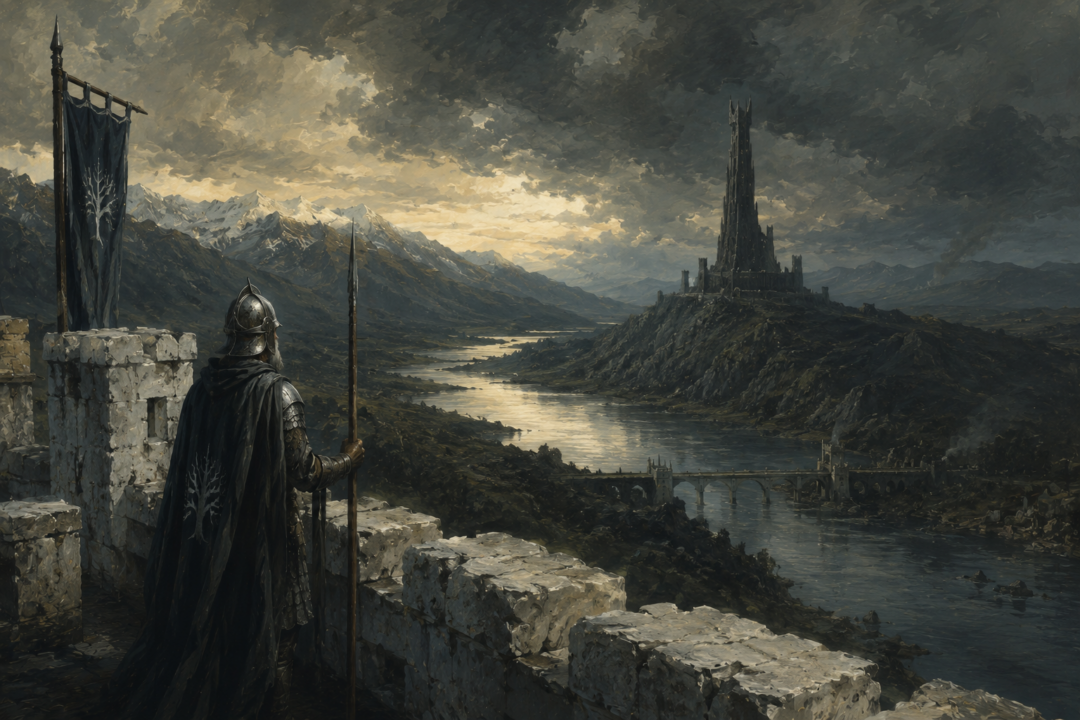
Only decades before the Watchful Peace began, Gondor had suffered one of the most consequential disasters in its later history. Minas Ithil fell to the Nazgûl in 2002 after a two-year siege. The beautiful eastern city became Minas Morgul, a fortress of the Enemy directly opposite Gondor's remaining defenses.
Then came another blow.
King Eärnur disappeared after riding to Minas Morgul in 2050 to answer the challenge of the Witch-king. He left no heir. Mardil the Steward governed in the king's name, beginning the long rule of the Ruling Stewards.
Thus the Watchful Peace did not begin with Gondor secure and triumphant. It began with Gondor already living beside an occupied stronghold and without a king.
The early reigns of the Stewards were comparatively quiet because Sauron had withdrawn and the Ringwraiths remained concealed in the Morgul Vale. Tolkiendil But Minas Morgul had not been recovered.
This is one of the defining conditions of the period: the enemy's silence could resemble safety even when the enemy already possessed strategically vital ground.
Gondor could recover strength.
It could not undo what had happened.
The North Is Already a Ruin
The same deceptive calm appears in Eriador.
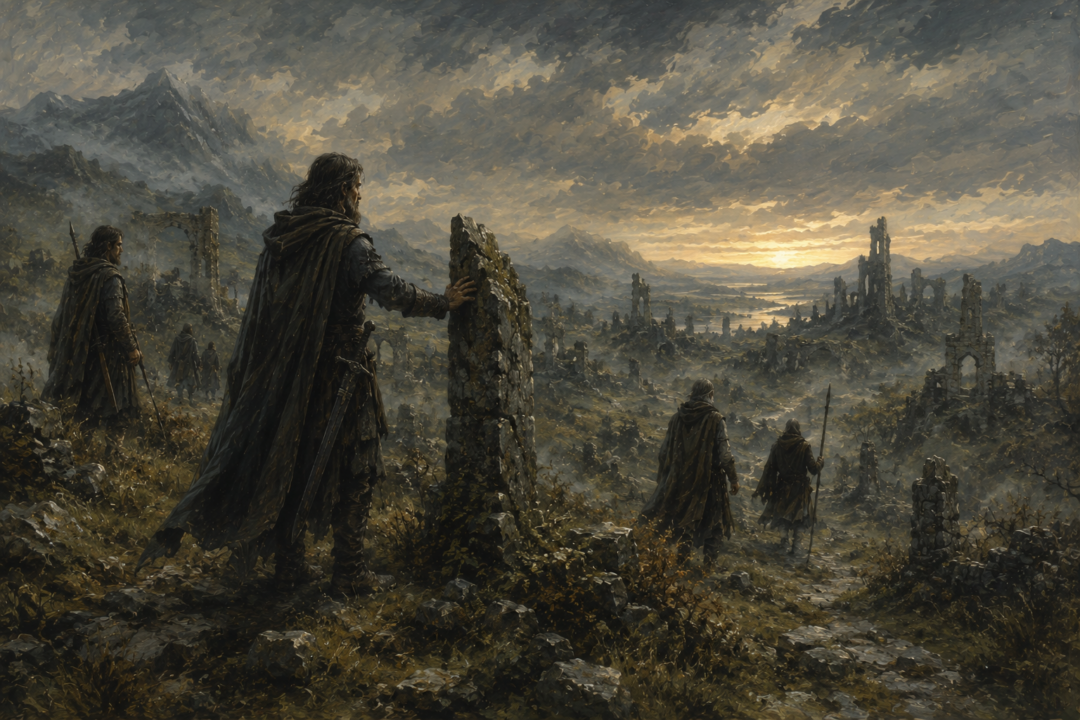
There was no northern kingdom waiting to enjoy the Watchful Peace. Arnor's successor realms had already fallen, and the Witch-king's wars had destroyed Arthedain in 1974. Although Angmar itself was defeated the following year, the northern Dúnedain did not restore their kingdom.
Aranarth, son of the last king Arvedui, became the first Chieftain of the Dúnedain rather than a crowned king.
During the Watchful Peace, a succession of Chieftains quietly preserved the line of Isildur.
This is not political recovery in the ordinary sense. It is survival after collapse.
The North contains one of the great recurring patterns of the later Third Age: important things endure in diminished forms. A royal house becomes a hidden line of chieftains. Former realms become ruins and memories. Authority survives without the visible kingdom that once expressed it.
Meanwhile, the Shire prospered.
That contrast is important. Hobbit life could grow in relative security while the political world surrounding it remained profoundly diminished. The peace experienced by ordinary inhabitants did not mean that the older defenses of the West had been restored.
Beneath the Mountains, an Older Terror Remains
Another crisis was already present before the Watchful Peace began.
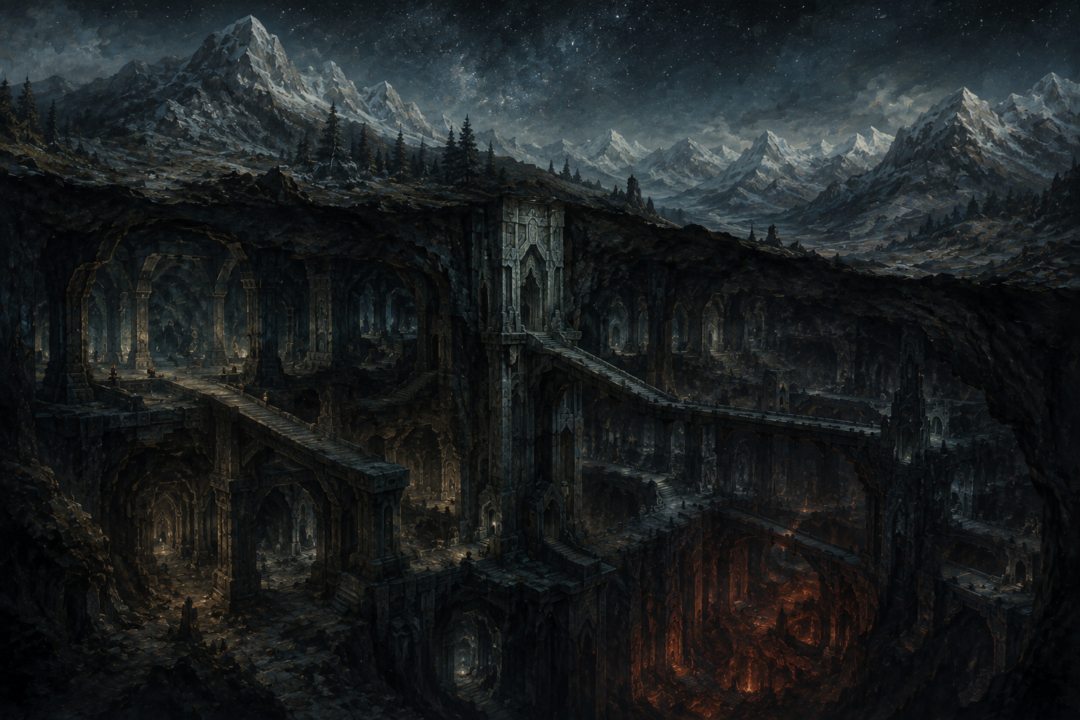
In 1980, the Dwarves of Khazad-dûm awakened the being later called Durin's Bane. King Durin VI was slain, his son Náin I died the following year, and the Dwarves abandoned their ancient home.
The creature was a Balrog of Morgoth.
But that knowledge was not available to the peoples of the Third Age at the time. Even centuries later, when the Fellowship entered Moria, the truth of Durin's Bane remained a terrible revelation.
This makes Moria different from Sauron's hidden movements.
Sauron was deliberately concealing himself. The Balrog was a surviving evil from a far older age, hidden beneath the mountains and largely outside the political calculations of Gondor, the Dúnedain, or the Wise.
During the Watchful Peace, therefore, one of the greatest terrors remaining in Middle-earth was already occupying the central passage beneath the Misty Mountains.
No army was marching from Moria.
No Dark Lord was proclaiming dominion there.
The danger simply existed, waiting in darkness.
The Dwarves Are Moving Toward Another Disaster
Durin's Folk survived the loss of Khazad-dûm and eventually established new centers elsewhere.
Thráin I founded the Kingdom under the Mountain at Erebor. His son Thorin I later left Erebor and went to the Grey Mountains, where many of Durin's Folk were gathering. This movement occurred during the Watchful Peace.
At this point, however, it is important not to project later events backward.
Smaug's attack on Erebor did not occur during the Watchful Peace; it came much later, in 2770. The wars with the dragons of the Grey Mountains likewise belong after the Watchful Peace.
But the geography of the later Dwarven tragedy was already being established.
Durin's Folk had lost Moria and were rebuilding their fortunes in northern strongholds. Their civilization had survived, but it had become displaced.
This is another form of hidden fragility.
A people can be wealthy, organized, and expanding while still living with the consequences of an earlier catastrophe.
The Watchful Peace did not reverse the Dwarves' great loss. It merely occupied the long interval between disasters.
Somewhere by the Gladden Fields, Sméagol Is Born
Perhaps the most extraordinary development of the entire period happens far from kings, fortresses, and councils.
Around the later years of the Watchful Peace, Sméagol was born among a Hobbit-like people associated with the upper reaches of the Anduin.
Nothing about his birth would have appeared historically important.
Yet the One Ring was still in the world.
Isildur had lost it in the Anduin more than two thousand years earlier. It had vanished from the knowledge of the great. Kingdoms had risen and fallen while it remained undiscovered.
Soon after the Watchful Peace ended, in 2463, Déagol found the Ring while fishing. Sméagol murdered him and took it.
The same year, the White Council was formed.
The juxtaposition is striking even though the texts do not present it as a deliberate causal connection.
While the Wise were beginning a more organized resistance to the returning Shadow, the object upon which Sauron's ultimate power depended had passed into the possession of an obscure creature who would hide beneath the Misty Mountains for centuries.
The greatest powers in Middle-earth were watching Sauron.
Almost no one was watching the Ring.
The Real Crisis Was Fragmentation
The Watchful Peace reveals something deeper about the Third Age.
Middle-earth's problems were no longer concentrated in one visible war.
Gondor faced Minas Morgul and the long consequences of dynastic failure. The northern kingdom was gone, leaving the Dúnedain scattered. Khazad-dûm belonged to an unidentified terror. Durin's Folk lived in displacement. The One Ring remained lost. Sauron himself was concealed beyond the immediate reach of the Wise.
These were not necessarily coordinated parts of one master plan.
That distinction matters for lore accuracy. The texts do not say that Sauron engineered every misfortune of the period, and several of these crises had independent origins.
What united them was their effect.
The West was fragmented.
Its peoples still possessed courage, wisdom, wealth, and strongholds, but the great political and military structures of earlier centuries had been reduced. There was no restored Arnor. There was no king in Gondor. There was no Dwarven kingdom in Moria. The Elves themselves were living in a world whose older powers were passing away.
The apparent peace rested upon a wounded landscape.

Why the Watchful Peace Matters
Sauron's return to Dol Guldur in 2460 ended the Watchful Peace.
Three years later the White Council was established. In that same year, according to the chronology in Appendix B, Déagol found the One Ring and was murdered by Sméagol.
The quiet centuries had ended.
But the dangers that followed were not suddenly created in 2460. Many had been waiting beneath the surface.
That is why the Watchful Peace is one of the most revealing periods in the history of Middle-earth.
It demonstrates that the absence of open war is not the same thing as recovery.
Sauron could disappear and still return stronger. The Nazgûl could remain quiet while Minas Morgul stayed in their hands. Gondor could know generations of comparative calm while remaining kingless. The Dúnedain could preserve Isildur's bloodline while their kingdom remained a memory. A Balrog could sleep beneath abandoned halls. And the Ring itself could lie forgotten while the Wise watched for its master.
For almost four hundred years, Middle-earth seemed to breathe more easily.
Yet beneath that silence, the conditions of the next great struggle were already assembling.
The Watchful Peace was real.
So were the crises hiding inside it.
Sources & Notes
- https://www.encyclopedia-of-arda.com/w/watchfulpeace.php — The Encyclopedia of Arda: Watchful Peace (the Third Age interval begun by Sauron’s retreat and ended by his return to Dol Guldur).
- https://www.encyclopedia-of-arda.com/d/dolguldur.php — The Encyclopedia of Arda: Dol Guldur (the stronghold Sauron temporarily abandoned rather than lost).
- https://www.encyclopedia-of-arda.com/m/minasmorgul.php — The Encyclopedia of Arda: Minas Morgul (the captured Gondorian city that remained an enemy fortress throughout the apparent peace).
- https://www.encyclopedia-of-arda.com/a/arthedain.php — The Encyclopedia of Arda: Arthedain (the northern kingdom destroyed shortly before the Watchful Peace, leaving no restored realm).
Sources checked for relevance and availability.