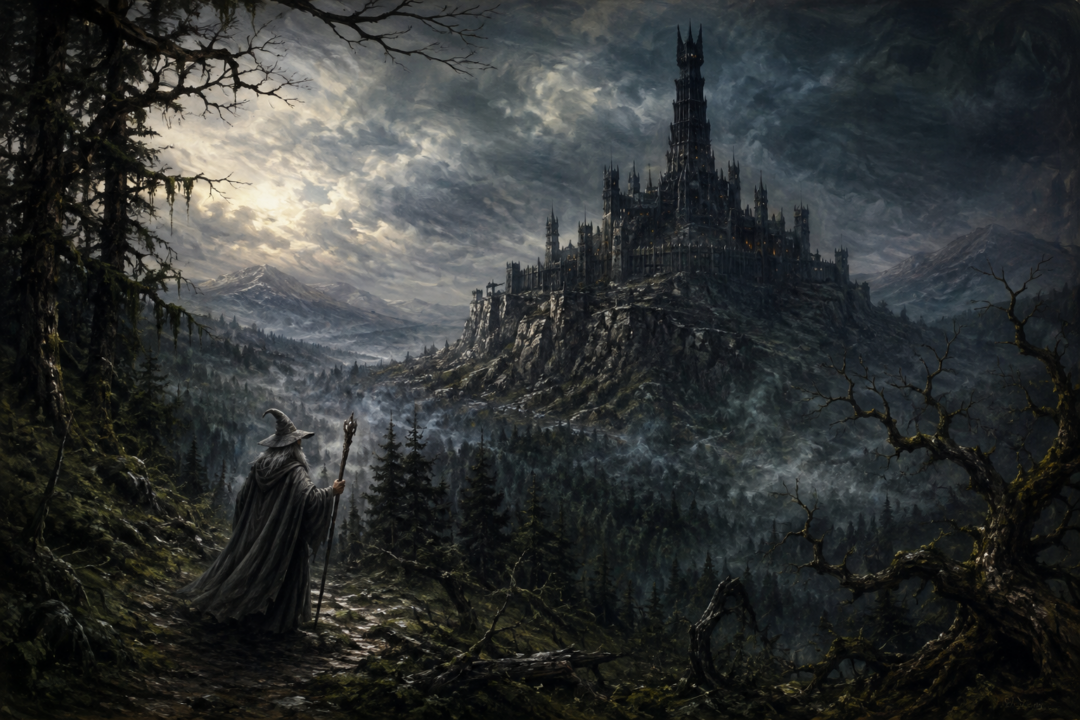
Long before Frodo saw Mordor, before the Black Riders crossed the Shire, and before anyone in Bilbo’s adventure understood the importance of the ring beneath the Misty Mountains, there was already a shadow in the south of Mirkwood.
Bilbo knew almost nothing about it.
To him, the Necromancer was part of the dangerous world beyond the Shire: a sinister figure associated with a place so dreadful that even Gandalf treated it seriously. In The Hobbit, that is almost enough. The Necromancer helps make Middle-earth feel larger than Bilbo’s adventure.
But once Sauron became the great enemy of The Lord of the Rings, those apparently distant references changed.
The mysterious sorcerer in Mirkwood was no longer merely something happening elsewhere.
He was Sauron.
And suddenly Gandalf’s unexplained absences, the darkness gathering around Mirkwood, the White Council’s intervention, and even Bilbo’s accidental discovery of a ring became pieces of the same catastrophe.
The Necromancer Originally Lived at the Edge of Bilbo’s Story
The Necromancer never steps onto the stage in The Hobbit. His importance is mostly indirect.
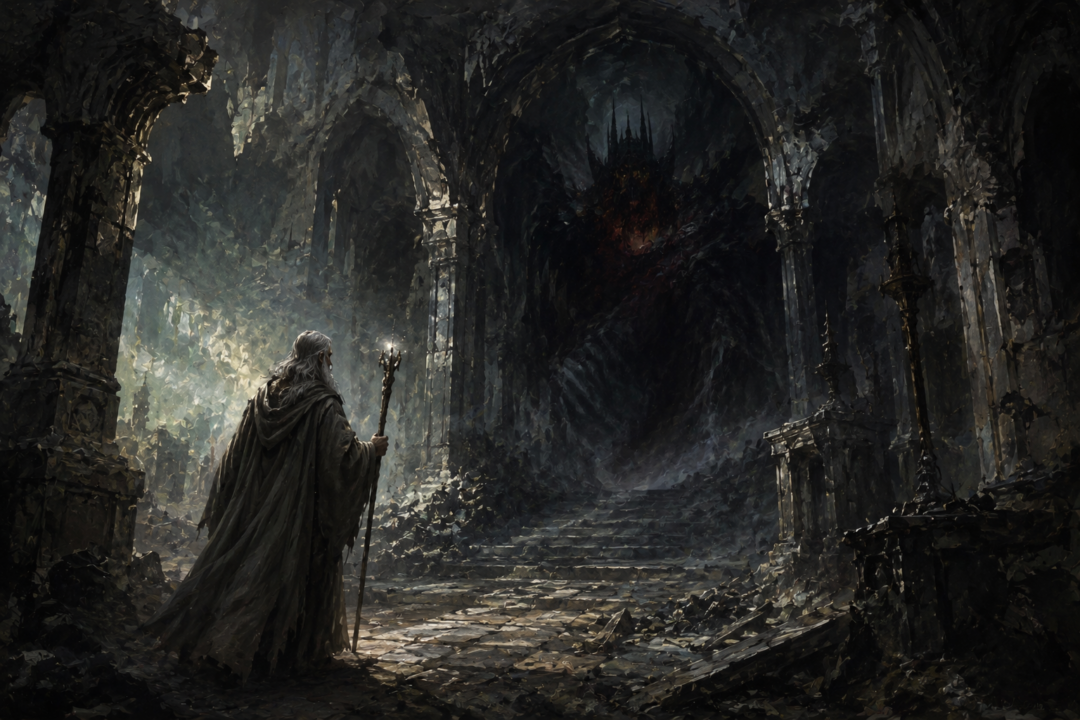
When Gandalf discusses the fate of Thráin, Thorin’s father, he explains that entering the Necromancer’s stronghold would be extraordinarily dangerous. Later, Gandalf leaves Thorin and Company before their passage through Mirkwood because he has other urgent business.
Only near the end do readers learn more. Gandalf tells Bilbo that the White Council had driven the Necromancer from his dark hold in southern Mirkwood.
Within the immediate structure of The Hobbit, this solves an important narrative problem: Gandalf must disappear so that Bilbo is forced to survive without him.
The Necromancer therefore belongs to the margins of the adventure. Bilbo is trying to reach Erebor. Thorin wants his ancestral kingdom. Smaug is the obvious great danger.
Far away, powerful people are dealing with something darker.
That distance is part of the effect.
The world does not stop because Bilbo Baggins has gone on an adventure.
Sauron Turns Background Darkness Into the Main War
The Lord of the Rings transforms the reader’s understanding of those events.
The appendices provide the crucial chronology.
The shadow at Dol Guldur had appeared many centuries before Bilbo’s journey. The Wise initially feared that some Nazgûl might be responsible. Eventually suspicion grew that the power dwelling there was Sauron himself.
Gandalf entered Dol Guldur and discovered the truth in Third Age 2850.
The Necromancer was Sauron.
That revelation radically changes the scale of the earlier story.
While Bilbo and the Dwarves were worrying about trolls, goblins, spiders, Wood-elves, and eventually Smaug, the greatest surviving servant of Morgoth was rebuilding his strength.
The adventure to Erebor and the struggle against Sauron were not originally presented as one tightly unified campaign. Yet in the larger chronology they occur within the same increasingly dangerous political landscape.
What looked like background menace becomes part of the central history of the Third Age.
Gandalf’s Disappearance Becomes Far More Important
This change is especially striking when we reconsider Gandalf.
In The Hobbit, his departure before Mirkwood can feel almost frustrating. Thorin and Company are approaching one of the most dangerous portions of their journey, and their wizard suddenly leaves.
The later history gives that departure enormous weight.
Gandalf was involved with the White Council’s struggle against the power in Dol Guldur. By 2941, the year of the Quest of Erebor, the Council finally moved against Sauron.
But even their apparent victory was less complete than it seemed.
Appendix B explains that Sauron had prepared his plans and abandoned Dol Guldur. He subsequently returned to Mordor, where his power could emerge more openly.
So Gandalf was not simply attending to another magical inconvenience.
While Bilbo was becoming a burglar, Gandalf was participating in an attempt to dislodge the Dark Lord.
The two stories almost touch without Bilbo understanding what that means.
The Ring Makes the Irony Much Darker
Nothing changes the Necromancer references more than the identity of Bilbo’s ring.
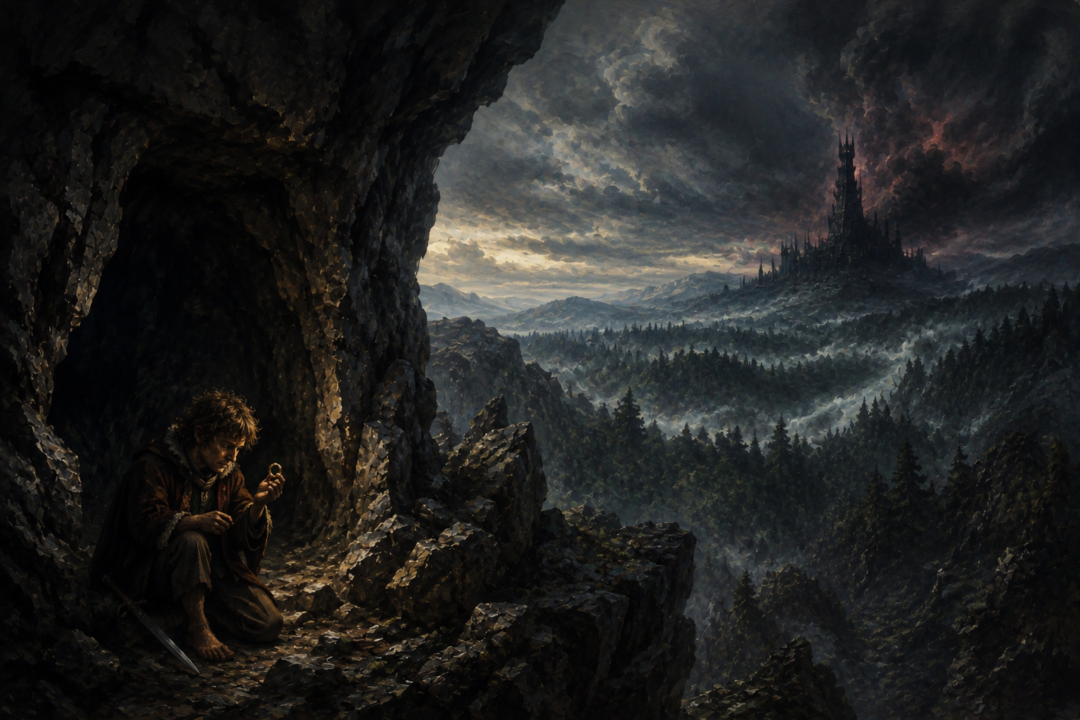
In the original adventure, Bilbo finds a magical ring beneath the Misty Mountains and uses its invisibility to survive. Its immediate narrative function is personal and practical.
In The Lord of the Rings, that object becomes the One Ring.
This creates one of the great retrospective ironies of Middle-earth.
During the same general period in which the Wise were moving against Sauron at Dol Guldur, Bilbo was carrying away the object Sauron most desired to recover.
Neither Bilbo nor the Dwarves understood what he had found.
Sauron did not know that Bilbo possessed it.
Even Gandalf did not yet know that Bilbo’s ring was the One.
The reader who returns to The Hobbit after The Lord of the Rings, however, does know.
That knowledge changes everything.
The apparently small story now contains the hidden instrument upon which the fate of Sauron will eventually turn.
Saruman’s Delay Gains a Sinister Meaning
The later chronology also complicates the White Council’s response.
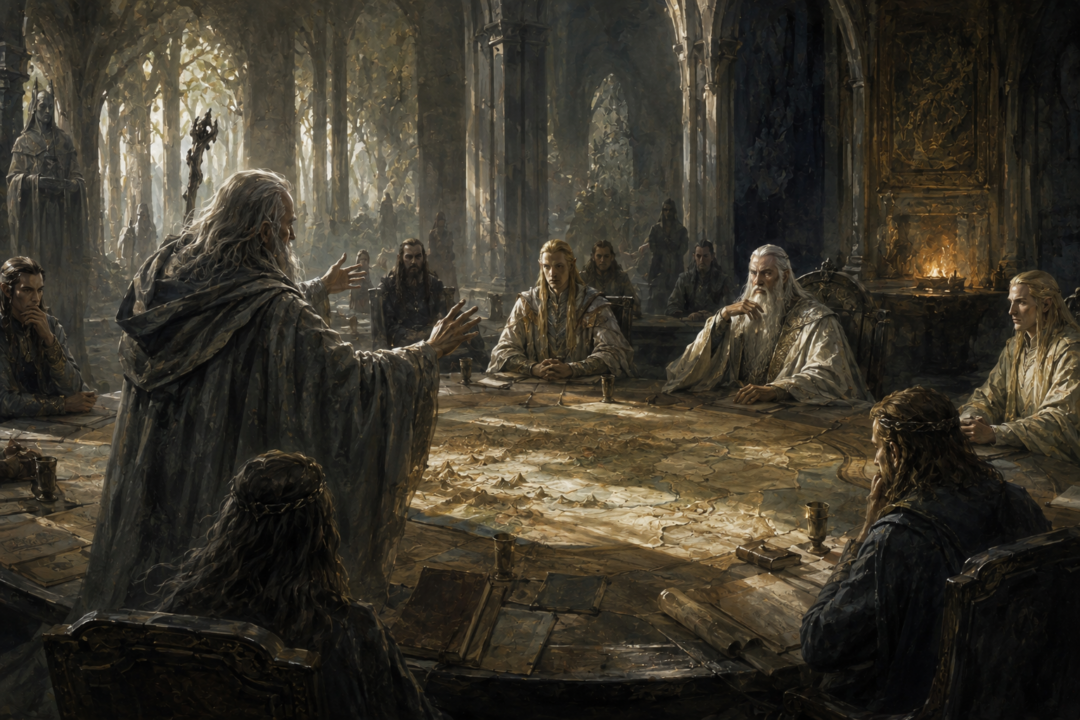
After Gandalf confirmed Sauron’s identity, he urged action against Dol Guldur. Saruman opposed him.
That delay was not merely a disagreement over strategy.
Appendix B connects Saruman’s behavior with his own interest in the One Ring. He hoped the Ring might reveal itself as its master’s power increased, and he had begun searching around the Gladden Fields.
By 2939, Saruman learned that Sauron’s servants were also searching the region.
Only then did his calculations change.
In 2941 he agreed to the attack on Dol Guldur, partly because he wanted to prevent Sauron from searching the River.
This makes the White Council episode much darker than the brief references in The Hobbit suggest.
The Wise were opposing Sauron, but one of their greatest members was already pursuing a private ambition.
The shadow was not merely returning from outside.
Desire for the Ring was already compromising resistance from within.
Erebor Was Part of a Larger Strategic Problem
The later writings add another important connection.
In Unfinished Tales, in “The Quest of Erebor,” Gandalf reflects on the danger posed by Smaug in the north. He feared what might happen if Sauron used the dragon in a future war.
This does not mean Thorin’s expedition was secretly just a military operation against Sauron. The Dwarves had their own motives, especially the recovery of Erebor and their treasure.
But Gandalf saw consequences beyond Thorin’s personal quest.
A hostile dragon occupying the Lonely Mountain was a potentially disastrous factor if Sauron launched a major war.
This places the Quest of Erebor and the attack on Dol Guldur within the same strategic horizon.
Bilbo thought he was helping thirteen Dwarves recover their home.
Gandalf understood that the balance of power in the North also mattered.
The difference between those perspectives is enormous.
“Necromancer” Also Fits an Older Sauron
The title itself becomes more meaningful once connected with Sauron’s deeper history.
Sauron was associated with sorcery and the domination of spirits long before the War of the Ring. In earlier forms of the legends, the figure who developed into Sauron is explicitly associated with necromancy.
Later writings concerning the spirits of the dead also connect Sauron with dark practices involving houseless spirits, although the published narratives do not provide a simple scene in which Sauron performs stereotypical “necromancy” at Dol Guldur.
That distinction matters.
The title should not be treated as proof that Sauron was literally raising armies of corpses beneath Mirkwood. The texts do not describe such an event.
Instead, “Necromancer” belongs naturally to Sauron’s identity as a master of sorcery, deception, domination, and terror.
Once his identity is known, the name stops sounding like a generic fairy-tale villain and starts sounding like another mask worn by an ancient enemy.
Dol Guldur Was Not the End of the Threat
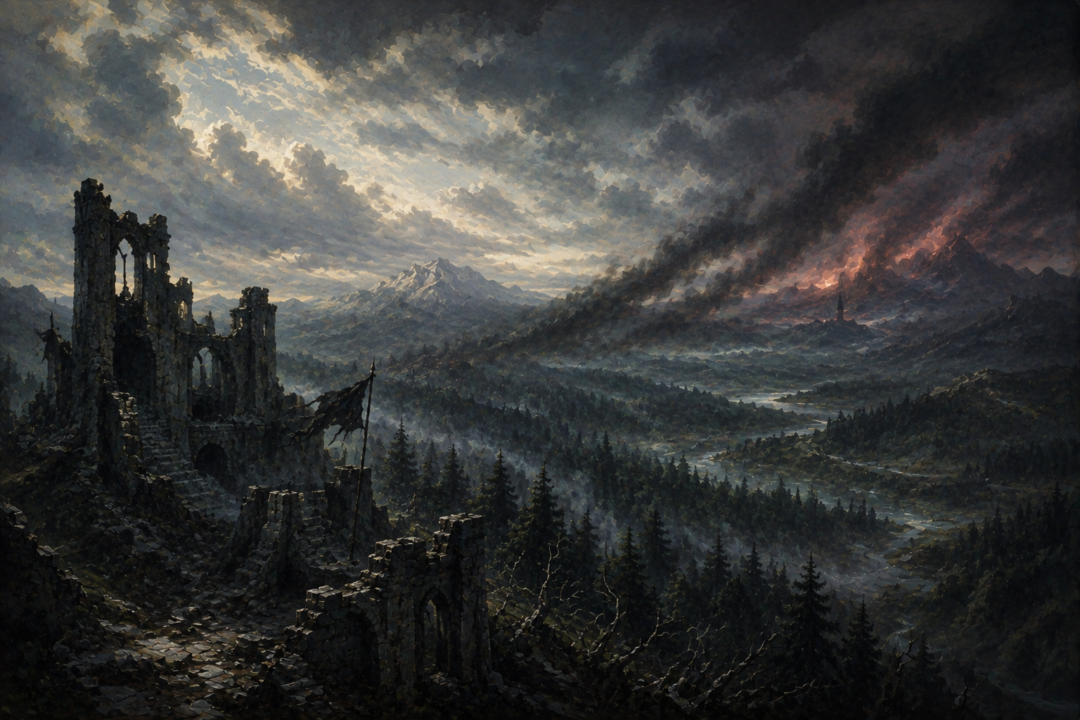
The White Council drove Sauron from Dol Guldur in 2941, but the victory was deceptive.
Sauron had already prepared for the move.
The following year he returned secretly to Mordor. In 2951 he declared himself openly and began rebuilding Barad-dûr.
Dol Guldur itself was not rendered permanently harmless. Sauron later sent forces back there, and during the War of the Ring armies from Dol Guldur attacked Lórien and threatened the Woodland Realm.
The place that had seemed like a sinister side note in Bilbo’s journey remained part of Sauron’s war.
That gives the Necromancer episode a grim afterlife.
The darkness had not been destroyed.
It had changed position.
The Hobbit Becomes a Different Story When Read Backwards
This is why the Necromancer references feel so different after The Lord of the Rings.
Bilbo’s adventure remains what it always was: the story of an unlikely hobbit leaving home, facing danger, discovering courage, and returning changed.
But another story is moving underneath it.
Sauron is gathering strength.
Saruman is beginning to pursue the Ring for himself.
Gandalf is trying to counter dangers whose full shape Bilbo cannot see.
Smaug occupies a strategically dangerous position in the North.
And in the tunnels beneath the Misty Mountains, a hobbit reaches into the darkness and finds the One Ring.
Bilbo does not know what has happened.
Sauron does not know what has happened.
For decades, even Gandalf does not know exactly what has happened.
That ignorance may be the most powerful part of the connection.
The great turning points of Middle-earth do not always announce themselves with armies and banners. Sometimes the Dark Lord is still hiding behind the name “Necromancer.”
And sometimes the weapon that will eventually destroy him is sitting unnoticed in a hobbit’s pocket.
Sources & Notes
- https://www.glyphweb.com/arda/n/necromancer.html
- https://www.glyphweb.com/arda/d/dolguldur.html
- https://www.glyphweb.com/arda/w/whitecouncil.html
- https://www.glyphweb.com/arda/s/sauron.html
- https://www.glyphweb.com/arda/q/questoferebor.html
Sources on the Necromancer’s identification as Sauron, Dol Guldur, the White Council, and the Quest of Erebor chronology.