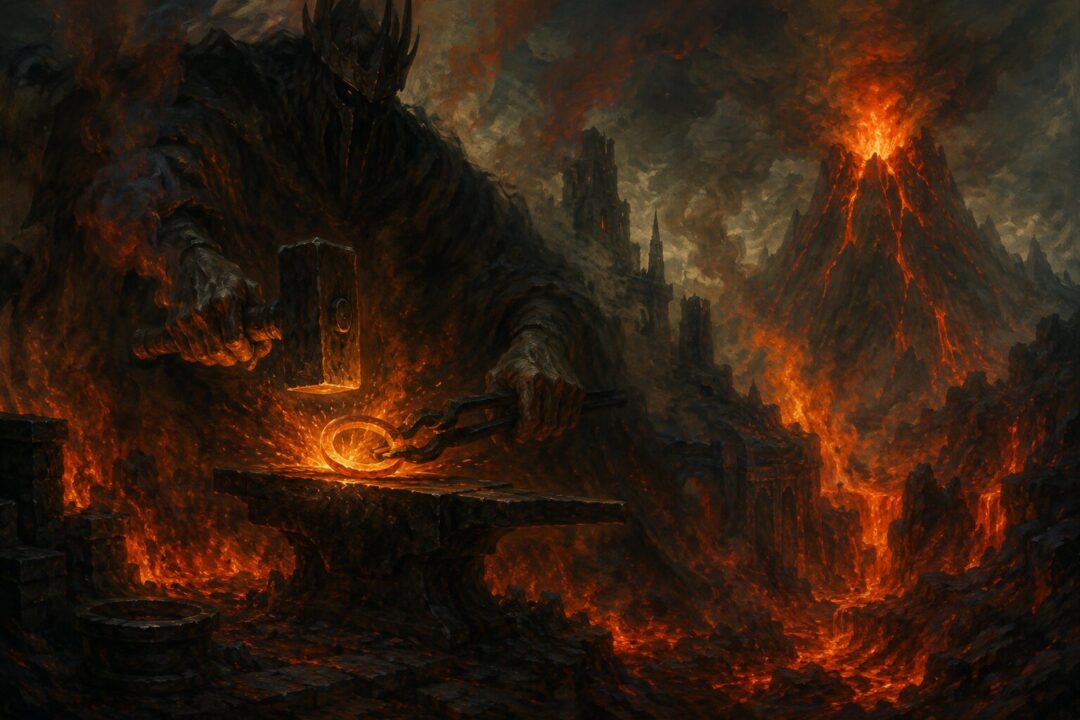
The One Ring looks, at first, like the sort of object a great smith might replace. It is gold. It has an inscription. It was forged in fire. Sauron made it once in Orodruin, the Mountain of Fire, so the tempting question follows naturally: when Isildur took it from him, why did Sauron not simply return to the furnace and make another?
The answer is not that Sauron forgot the craft. Nor is it that Mordor lacked fire, metal, or cruelty. The deeper reason is far more dangerous: the One Ring was not merely a weapon Sauron owned. It was a transfer of Sauron’s own being into an object. To make it, he put into it a great part of his native power, his strength, and his will. That act gave the Ring its terrible authority, but it also made the Ring irreplaceable.
A second One Ring would not be a spare key. It would require a second sacrifice of the same kind. And the first sacrifice was already locked inside the first Ring.
The Ring Was Not Just Forged — It Was Invested
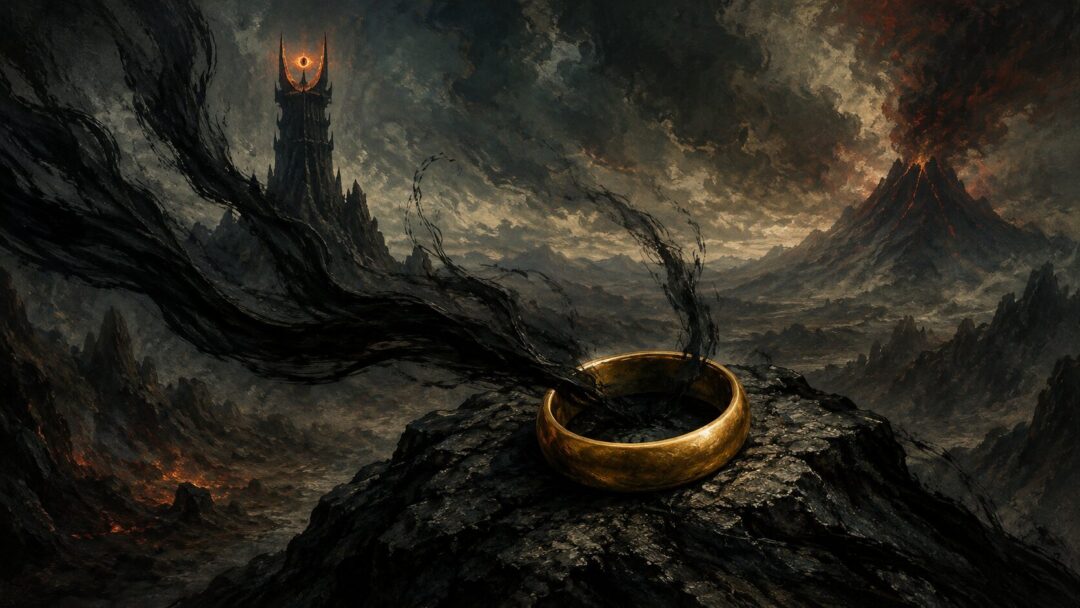
The most important fact about the One Ring is that it was not powerful simply because Sauron was a master craftsman. Many things in Middle-earth are made with skill: swords, jewels, doors, towers, and rings. But the One was different because Sauron poured much of himself into it.
In the account of the Rings of Power, the Ring’s purpose is stated plainly: it was made to rule the other Rings. To do this, it had to be greater than them. The text says that much of Sauron’s strength and will passed into the One Ring, because the thing that would govern the other Rings needed to be of surpassing potency. While he wore it, he could perceive what was done by means of the lesser Rings, and could see and govern the thoughts of those who wore them. Tolkien Essays
That is the first key. The Ring’s power was not an independent engine. It was Sauron’s power, externalized and concentrated.
This is why the Ring could survive the loss of his body and still remain bound to him. It was not merely “magic jewelry.” It was a hidden extension of the maker. One careful way to phrase it is this: the texts imply that Sauron made the Ring by placing into it a portion of the power by which he dominated, preserved, perceived, and ruled. It was not all of him, but it was enough of him that its destruction would ruin him.
Why Losing the Ring Did Not Immediately Destroy Him
This is where the matter becomes subtle. If Sauron had placed so much of his power into the Ring, why did he not vanish when Isildur cut it from his hand?
The answer is that the Ring was lost, not destroyed.
The distinction matters. As long as the Ring existed, the power inside it still existed too. It was separated from Sauron’s hand, but not removed from the world. Tolkien’s letters explain the idea carefully: even when Sauron did not wear the Ring, the power placed in it remained in “rapport” with him; he was not simply emptied or diminished in the same way he would be if the Ring were unmade.
That is why Sauron could slowly rise again. He did not have the Ring in his possession, but the great act of investment had not been undone. His power was still anchored in the world through the Ring’s continued existence.
This also explains his obsession. He did not merely want back a useful tool. He wanted back the concentrated instrument through which his domination would become complete again. He could rebuild armies, fortresses, servants, fear, and policy. But the One Ring was the missing center of his whole design.
A Second Ring Would Require Power He Had Already Spent
The simple answer to “why not make another?” is this: because the power needed to make the One was already in the One.
Sauron could not duplicate himself like a coin stamped twice. The original Ring was made by a unique act of self-investment. If he tried to create another ruling Ring of equal authority, he would need to invest another great portion of his native power. The texts never describe such an attempt, and they give us no reason to think he had a second untouched reserve equal to the first.
This is the crucial difference between craft and self-expenditure.
A swordsmith can make another sword if he has iron, heat, and skill. A ruler can mint another seal if the first is lost. But Sauron’s Ring was closer to a wound made into a weapon. He did not simply shape gold; he committed himself into gold.
So the problem is not that Mount Doom had become unusable. Nor is it that Sauron lacked memory of the process. The problem is metaphysical and moral: he had already placed the necessary ruling potency elsewhere. To make another One, in the same sense, would require what he no longer possessed freely.
The One Ring Was Built for a Specific System
There is another overlooked point: the One Ring was not a random artifact of power. It was designed in relation to the other Rings of Power.
The Rings made by the Elven-smiths of Eregion were already in existence when Sauron forged the One. His purpose was to bring them under one ruling will. That is why the Ring’s inscription is not merely a boast. “One Ring to rule them all” describes the architecture of domination. It was the master-ring over a network of lesser Rings.
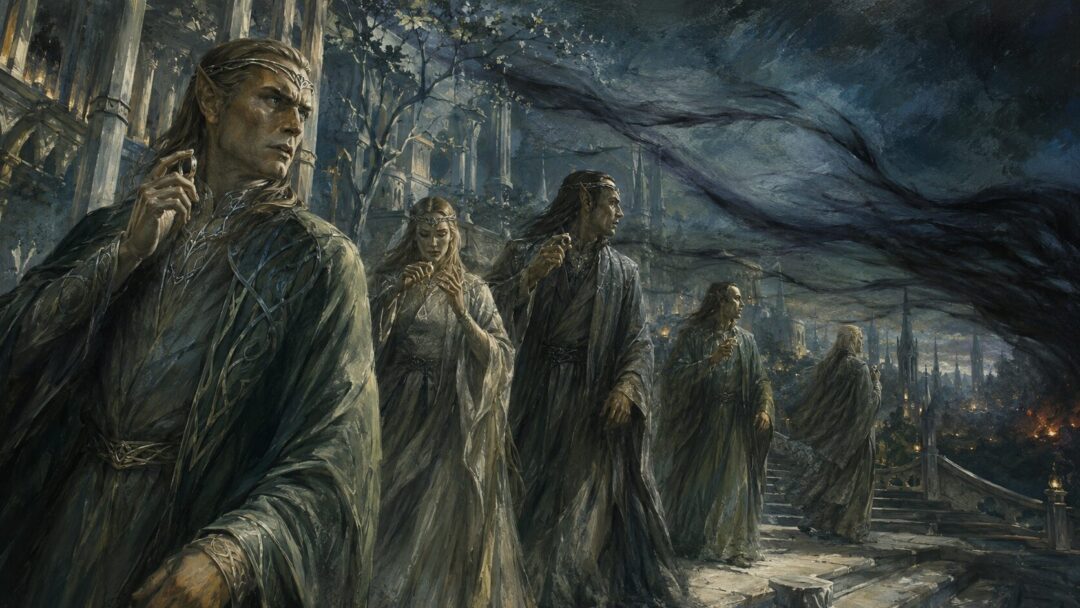
When Sauron put on the One, the Elves became aware of him and took off their Rings. That failure mattered. His plan had been secret mastery, not open war. The One was meant to bind the bearers before they fully understood what had happened.
A later replacement would not simply recreate the original strategic moment. The Elves already knew the danger. The Three had been hidden. The Seven and the Nine had their own grim histories. The world had changed.
That does not mean Sauron could never forge any powerful object again. The texts do not give us a rule that he became incapable of all craft. But “another One Ring” means another master-ring with the same ruling relationship to the Rings of Power and the same invested authority. That is the thing the story gives us no support for.
The original One was not just a product. It was the central knot in a trap already laid.
Why He Did Not Need Another While the First Still Existed
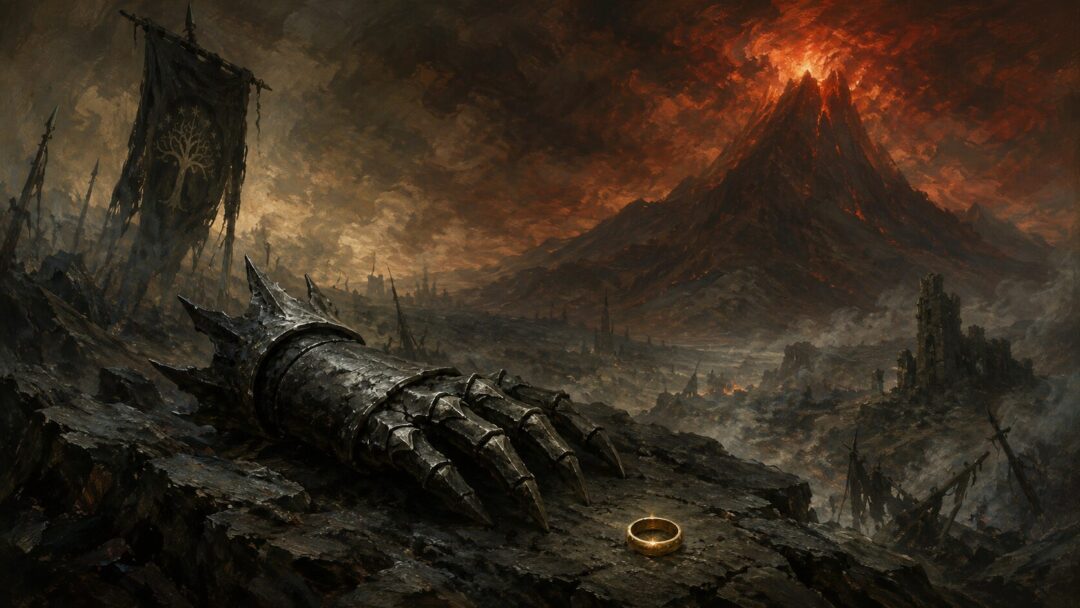
There is also a practical answer: as long as the One Ring existed, Sauron’s best hope was always to recover it.
Making another would not solve the central problem. The original Ring still contained his committed power. If anything, a second attempt would risk further division of himself without restoring what he had lost. The first Ring was not obsolete. It was missing.
This is why Sauron searches, threatens, deceives, and wages war rather than beginning a new forging project. From his point of view, the Ring is still in play. It has not been destroyed. It may be found. It may come to him.
He also cannot imagine that anyone would truly seek to destroy it. This is one of the great ironies of the War of the Ring. Sauron understands domination very well, but he fails to understand renunciation. He expects the Wise to use the Ring against him. He fears a rival Ring-lord more naturally than he fears a small company carrying the Ring into Mordor to unmake it.
That blindness is not stupidity. It is corruption. Sauron measures others by the logic of power, and the Ring itself strengthens that logic in those who come near it.
Destruction Was Different from Loss
The Council of Elrond turns on one terrifying truth: the Ring cannot simply be hidden safely forever. If it remains, Sauron remains a threat. If he regains it, his victory is nearly certain. But if it is destroyed, he is broken.
That is because destruction does what loss never did. Loss separates Sauron from the Ring. Destruction removes the invested power from the world.
The texts are careful here. Sauron is a spiritual being and is not annihilated in the simple bodily sense. But the destruction of the Ring reduces him so completely that he can no longer take shape or grow again into a power able to dominate Middle-earth. His ability to act as a Dark Lord is ended.
This is why he could not make another after Mount Doom. Once the Ring was unmade, the very power needed to repeat the act was gone with it. Before destruction, the power was unavailable because it was already committed to the Ring. After destruction, it was no longer available at all.
That is the trap Sauron made for himself. The Ring made him stronger while it endured, but it also made his fate depend upon something outside himself.
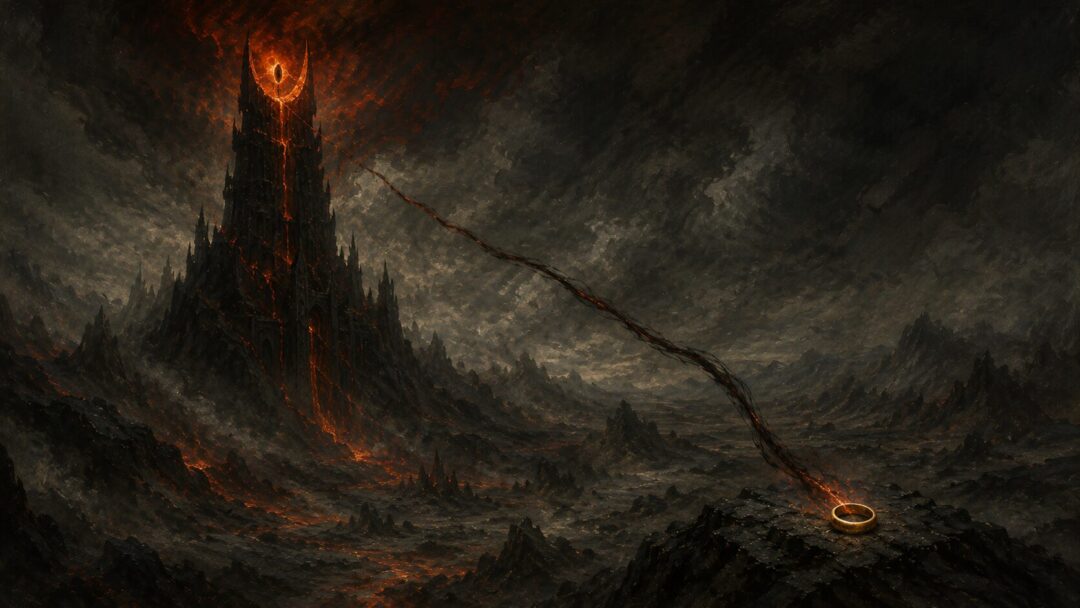
The Tragic Irony of Sauron’s Greatest Craft
The One Ring is often described as Sauron’s masterwork, and rightly so. It allowed him to extend his will beyond ordinary command. It gave him a means to dominate the bearers of the other Rings. It preserved his invested power even when he lost bodily form. It was, in one sense, a brilliant act of control.
But it was also an act of dependence.
Sauron’s deepest desire was mastery: to order the wills of others beneath his own. Yet in making the Ring, he made himself vulnerable to a thing that could be taken, hidden, lost, or destroyed. He sought to bind others, and bound his own fate to the object of binding.
That is why “just make another Ring” misunderstands the whole moral structure of the story. The One Ring is not a replaceable machine. It is domination made visible, and domination always has a cost. Sauron paid that cost up front. For a long time, it seemed to make him greater. In the end, it made him destructible.
The Ring’s power came from the fact that it was Sauron’s own power. That is exactly why there could not simply be another.
Sources & Notes
- Tolkien Gateway, "One Ring" — https://tolkiengateway.net/wiki/One_Ring
- Tolkien Gateway, "Sauron" — https://tolkiengateway.net/wiki/Sauron
- Tolkien Gateway, "Mount Doom" — https://tolkiengateway.net/wiki/Mount_Doom
Sources added for article-specific Tolkien reference context.