The One Ring looks simple in hobbit hands: a plain gold band, too small a thing to explain armies, kings, wraiths, and the fall of towers. Bilbo uses it to disappear. Frodo hides with it on Weathertop. Sam bears it briefly in Mordor and feels a strange, swollen fantasy of becoming “Samwise the Strong,” but the vision collapses against his plain hobbit sense.
So it is tempting to ask: if Frodo had kept the Ring, would he have become another Dark Lord?
The strongest lore-grounded answer is more unsettling than a simple yes or no. Frodo could be broken by the Ring. He could be possessed by it, exposed by it, claimed by it, and eventually destroyed through it. But the Ring could never make Frodo dangerous in the same way it could make Gandalf dangerous, because the Ring did not create greatness from nothing. It worked through the nature, stature, desires, and native power of the bearer. Tolkien’s own explanatory letter on the matter says Gandalf as Ring-lord would have been “far worse than Sauron,” not because Gandalf was secretly evil, but because his wisdom, pity, and authority could be twisted into a tyranny that still called itself good.
The Tolkien Estate
The Ring Was Not Just a Key to Invisibility
For hobbits, the most visible effect of the Ring is invisibility. That has misled many readers into thinking the Ring’s “power” is mainly a stealth trick. But invisibility is not the heart of the Ring. It is a side-effect experienced by mortal bearers who are drawn partly into the unseen world.
The deeper purpose of the One Ring was domination. It was made by Sauron to control the other Rings of Power and, through them, the wills of their bearers. Lore summaries rooted in the Rings of Power tradition describe the One as Sauron’s ruling instrument, into which he placed a great portion of his own power. It enhanced the natural powers of its bearer, but it did not give every bearer the same result.
That distinction matters. The Ring magnifies what is already there. In Gollum it sharpened secrecy, malice, suspicion, and appetite. In Bilbo, who began his ownership with pity rather than murder, it still lengthened life and burdened him, but did not immediately turn him into a monster. In Sam it offered a ridiculous and grandiose dream of remaking Mordor into a garden, but Sam’s own humility helped him reject it.
Frodo’s danger, therefore, was real. But it was not the danger of a mighty ruler suddenly armed with a cosmic weapon. It was the danger of a small, suffering person being consumed by a burden too great for any mortal will at the place of its making.
Frodo Could Be Corrupted, But Not Crowned
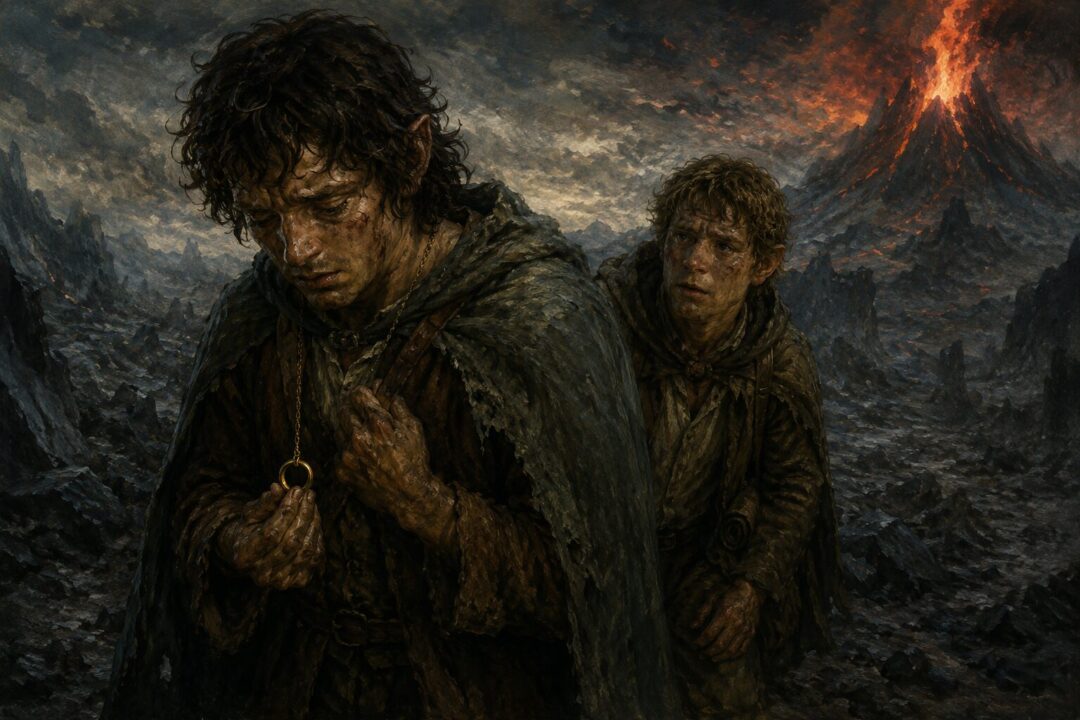
Frodo’s failure at the Cracks of Doom is not a failure of casual weakness. By the time he reaches Orodruin, he has been hunted, stabbed, poisoned, starved, stripped, and spiritually worn down. At the final moment he cannot surrender the Ring. He claims it.
That act is catastrophic, but it does not instantly make him a new Sauron. The text and later explanation imply something more limited and more tragic. Frodo’s claim reveals him to Sauron, shakes the Dark Tower with sudden fear, and makes the Ring impossible for him to relinquish by ordinary strength. But Frodo is not shown commanding armies, mastering Ringwraiths, overthrowing Mordor, or bending the Wise to his will.
In a later reflection on the scene, Tolkien explained that if Frodo had not been immediately attacked by Gollum, he would probably have been unable to give up the Ring and might have had to cast himself into the fire with it. He also says Frodo had no time to become a real wielder of the Ring’s power.
The Tolkien Estate
That is the key difference. Frodo can claim. Frodo can be claimed. But Frodo cannot suddenly master.
Gandalf Had the Stature the Ring Needed
Gandalf is a different case entirely. He is not simply an old wanderer with fireworks and good advice. In the deeper lore, he is one of the Istari, beings sent into Middle-earth to aid the Free Peoples against Sauron. The Wizards were Maiar, though embodied in the forms of old men and limited in how they were meant to act. Gandalf’s role was not to dominate the peoples of Middle-earth, but to counsel, encourage, awaken courage, and bring others to resistance.
That makes the Ring’s temptation almost perfectly aimed at him.
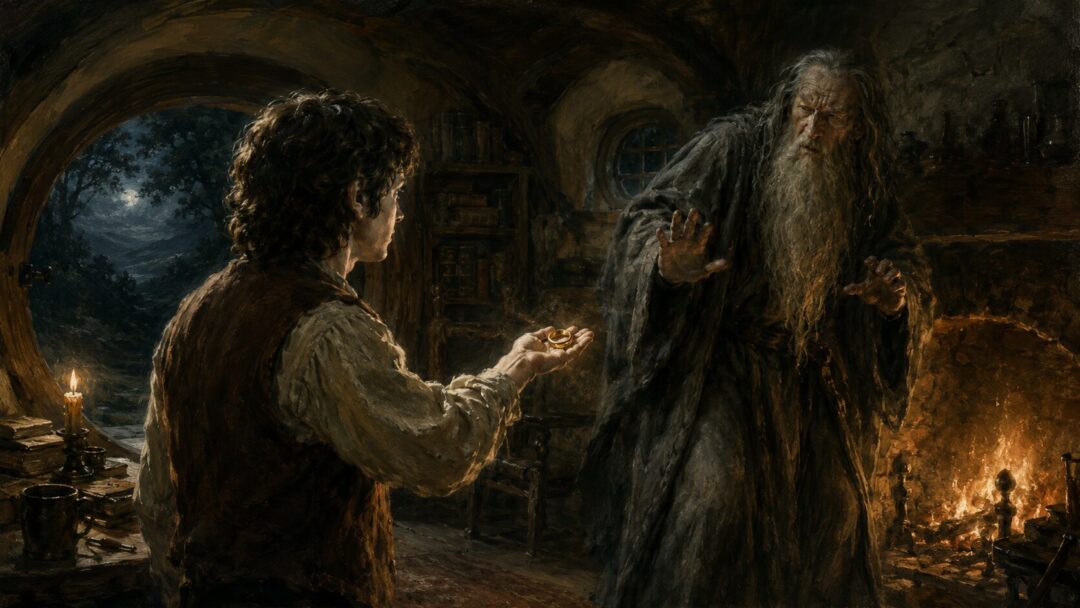
Frodo’s weakness before the Ring is exhaustion, fear, pity, and the natural possessiveness of the burdened bearer. Gandalf’s temptation is far more dangerous: pity for weakness and the desire for strength to do good. In Bag End, when Frodo offers him the Ring, Gandalf refuses violently. He understands that the Ring would not approach him merely through greed. It would reach him through mercy, responsibility, and the wish to save others. Goodreads
That is why Gandalf is terrifying as a possible Ring-bearer. He would not begin by saying, “I want to enslave the world.” He would begin by saying, “I can prevent suffering. I can stop Sauron. I can order things better than fools, cowards, kings, and broken peoples can.”
And he might be right for a while.
The Horror of Righteous Power
Sauron’s evil is clear. Mordor declares itself in ash, iron, slavery, fear, and worship of power. Even those who serve him often do so from terror. His rule leaves “good” visible by contrast: pity, mercy, freedom, friendship, and refusal.
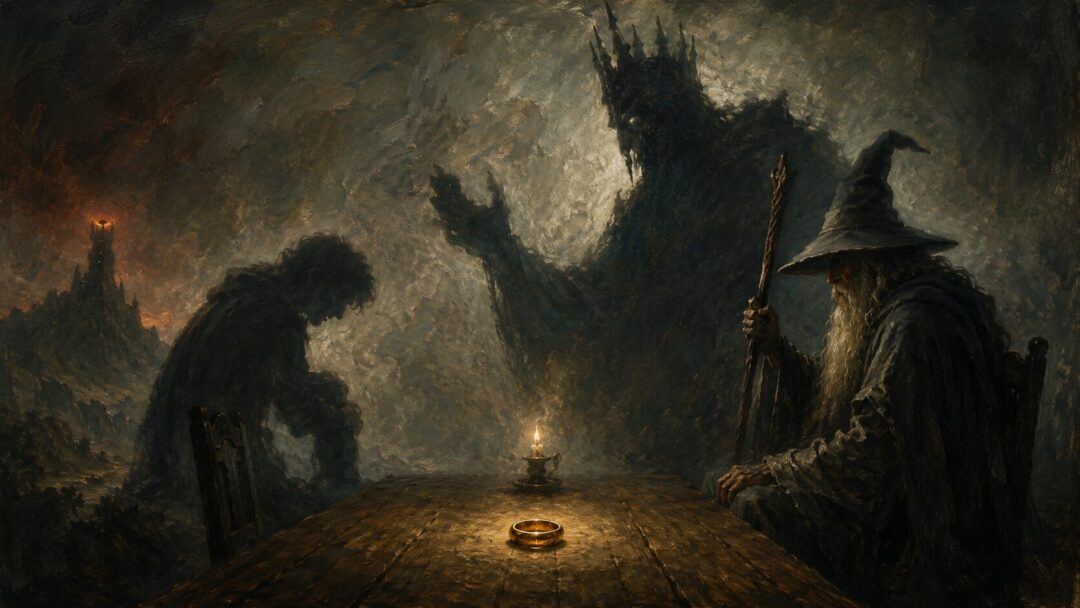
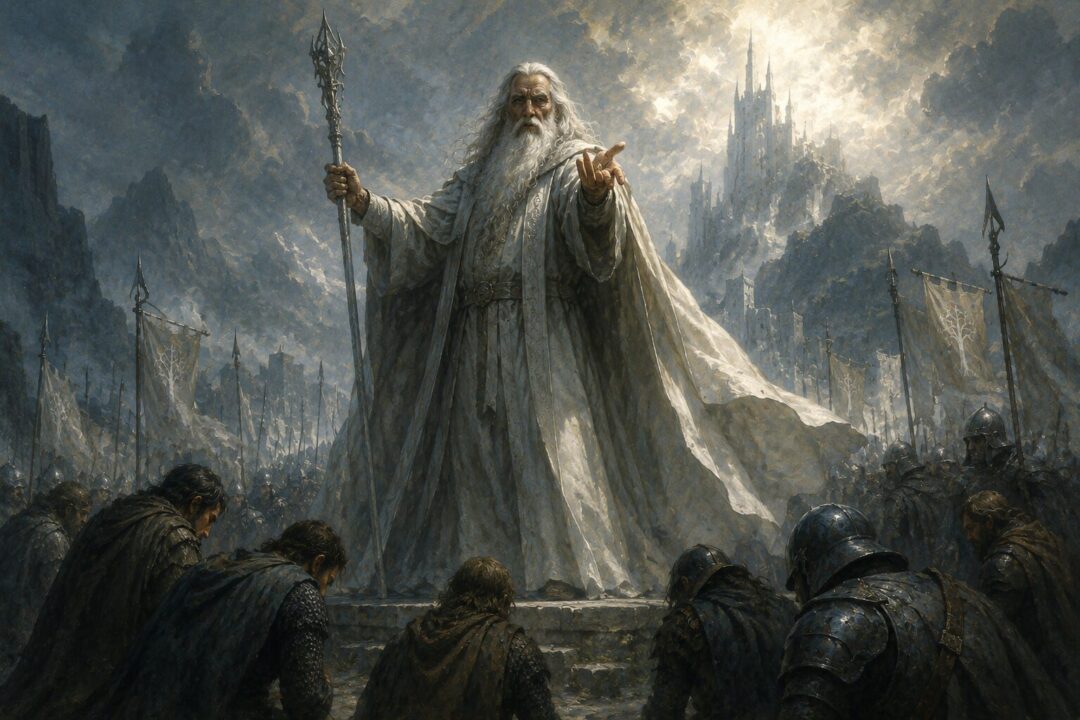
Gandalf with the Ring would be a more poisonous paradox. Tolkien’s letter says that if Gandalf became Ring-lord, he would have remained “righteous,” but self-righteous. He would continue to rule for “good,” according to his wisdom, which would still be great. Yet the Ring and all its works would endure, and in the end it would be the master.
The Tolkien Estate
This is not a small point about power levels. It is a moral nightmare.
A Gandalf corrupted by the Ring might defeat Sauron and still leave Middle-earth enslaved. He might heal disorder by removing choice. He might forbid cruelty by crushing freedom. He might make resistance look wicked because resistance would appear to oppose wisdom, peace, and benevolent order. Sauron’s tyranny is naked. Gandalf’s would risk becoming sacred.
That is why Frodo with the Ring is tragic, but Gandalf with the Ring is civilizationally catastrophic.
Why Frodo Was the Right Bearer Anyway
This does not mean Frodo was immune. He was not. The Ring defeats him at the end in the narrow sense that he cannot choose to destroy it. But Frodo is still the right bearer because the Quest is not based on his ability to wield the Ring. It is based on his ability not to wield it for as long as possible.
A great lord, warrior, wizard, or queen would face the constant temptation to use the Ring “just once” for a good purpose. Boromir’s argument at the Council of Elrond is precisely this: why not use the Enemy’s weapon against him? The Council rejects that path because the Ring is bound to Sauron’s evil and cannot be turned into a clean instrument of liberation.
Frodo’s smallness becomes part of the strategy. He does not march to Mordor as a rival Dark Lord. He does not attempt to master the Ring. He carries it as a burden. That is not safety, but it is the least disastrous available path.
The Ring can work on him inwardly, but it has little imperial material to work with. Frodo has no army. He has no throne. He has no tradition of command over nations. He has courage, courtesy, pity, endurance, and a terrible capacity to suffer. The Ring can corrupt these, but it cannot instantly turn them into a machinery of world-rule.
Mercy Was Stronger Than Mastery
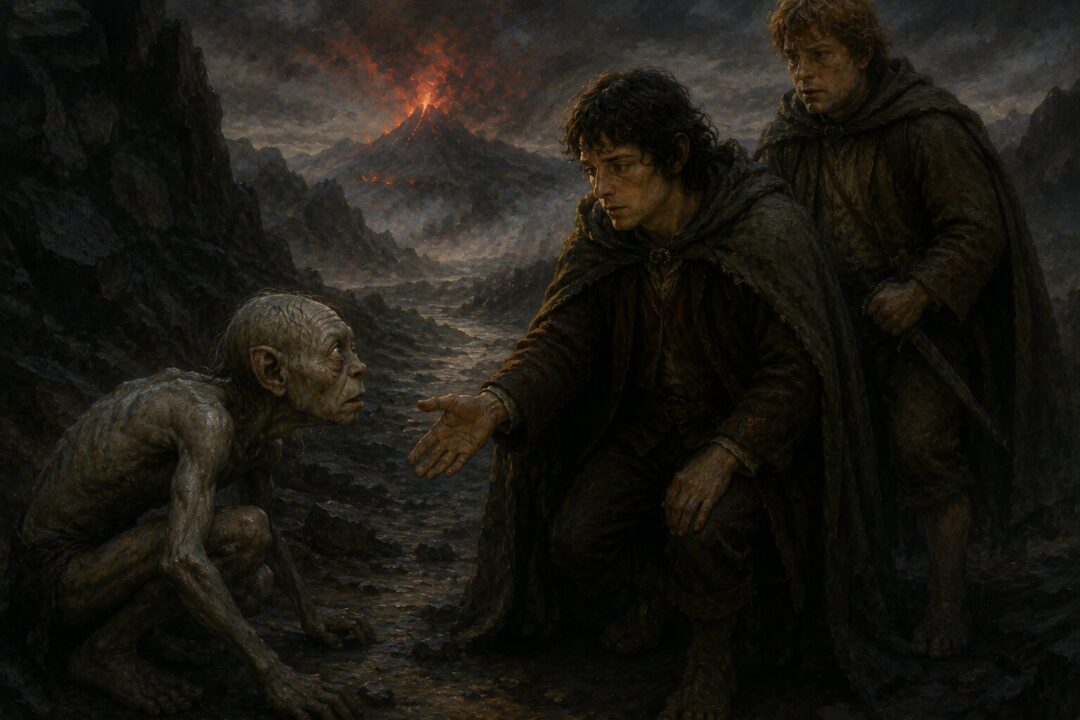
The hidden irony is that Frodo’s greatest contribution is not strength over the Ring, but mercy toward the one creature most ruined by it.
Gandalf warns Frodo early not to be too eager to deal out death in judgment, especially regarding Gollum. The story later proves this warning essential. Gollum’s survival, made possible by Bilbo’s pity and Frodo’s later restraint, becomes the unexpected means by which the Ring is destroyed. Tolkien Gateway’s summary of “The Shadow of the Past” preserves the importance of Gandalf’s warning about pity and judgment in that early conversation.
This is another reason Frodo differs from Gandalf. Gandalf with the Ring would act. Frodo, again and again, refrains. He spares. He delays judgment. He endures the presence of Gollum when killing him would be easier to understand. That mercy does not make Frodo powerful in the usual sense, but it keeps open the one path power could not imagine.
The Ring is destroyed not because Frodo becomes strong enough to master it, but because the story’s moral pattern refuses mastery as the answer.
The Ring Needed a Great Soul to Make a Great Tyrant
The Ring could ruin Frodo. It could devour his peace, isolate him from his friends, and leave wounds that never fully healed in Middle-earth. It could make him possessive, fearful, commanding, and finally unable to surrender what he carried. But it could not make him dangerous the way it could make Gandalf dangerous, because Frodo did not possess Gandalf’s native authority, spiritual stature, wisdom, or capacity to organize the world under his will.
Gandalf’s danger was not that he would become a crude copy of Sauron. It was that he might become something more seductive: a savior who no longer allowed anyone to be free.
Frodo’s smallness did not save him from suffering. But it helped save Middle-earth from a worse temptation: the belief that evil can be defeated safely by borrowing its instrument, so long as the hand that wears it means well.
Sources & Notes
- https://tolkiengateway.net/wiki/One_Ring — explains the Ring’s purpose as Sauron’s ruling instrument, its domination of other Rings, and its effects on bearers.
- https://tolkiengateway.net/wiki/Letter_246 — summarizes Tolkien’s remarks on Frodo at Mount Doom and the far greater danger of Gandalf becoming a Ring-lord.
- https://tolkiengateway.net/wiki/Gandalf — background on Gandalf’s nature as one of the Istari/Maiar and why his wisdom and authority would give the Ring a much more dangerous instrument.
- https://tolkiengateway.net/wiki/Frodo_Baggins — supports Frodo’s role as Ring-bearer, his suffering under the burden, and his claim of the Ring at the Cracks of Doom.
Sources cover the One Ring, Tolkien’s Letter 246, Gandalf’s nature, and Frodo’s burden and failure at Mount Doom.