The Rings of Power Season 1: Triumph or Disappointment?
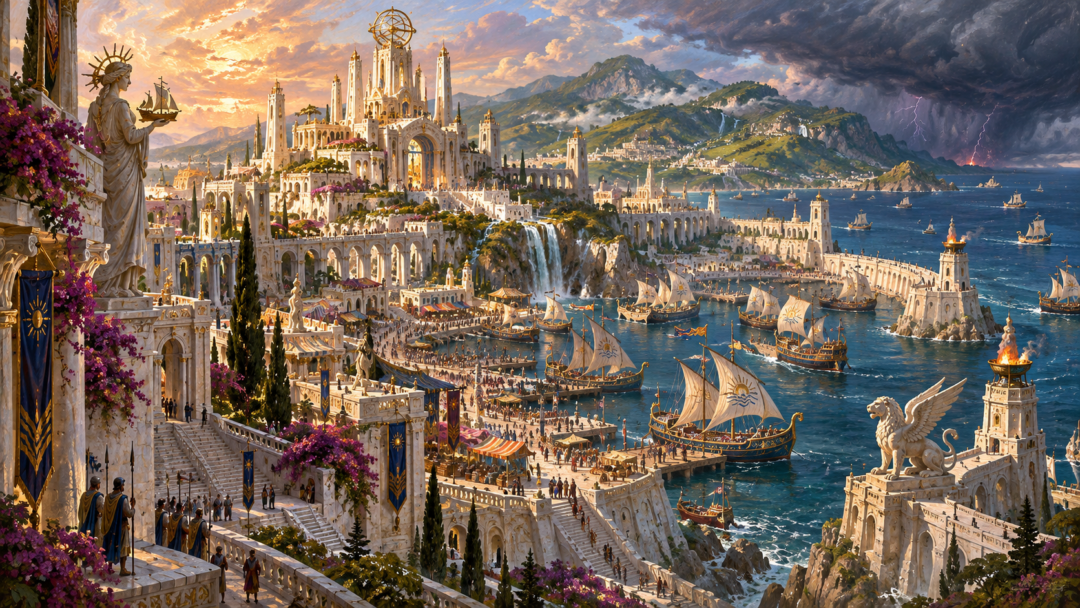
Amazon’s The Rings of Power arrived with an advantage most fantasy series would envy: a world audiences already loved, a mythology rich enough to sustain generations of stories, and the resources to make Middle-earth look extraordinary. Its first season delivered the last of those almost beyond dispute. The cities shimmered, the mountains towered, and the landscapes regularly looked like paintings brought to life.
But beautiful Middle-earth is not necessarily convincing Middle-earth.
**Season 1 was ultimately a disappointment, although a fascinating and occasionally impressive one.** Its strongest moments understood Tolkien’s fascination with friendship, mortality, temptation, and the slow corruption of good intentions. Its weakest moments sacrificed those ideas to mystery-box plotting, compressed mythology, and conveniences that made consequential events feel strangely easy.
The problem was not simply that the writers changed Tolkien. Peter Jackson changed Tolkien, too. The problem was what those changes accomplished, and what they cost.
A World Worth Looking At
Start with what the series unquestionably achieved: spectacle with a genuine sense of historical scale.
The island kingdom of Numenor is magnificent. Its monumental architecture, crowded harbor, and maritime culture suggest a civilization powerful enough to believe its own greatness might last forever. Khazad-dum is equally memorable, but in a different register. Its vast halls are not merely underground caverns. They communicate the ambition and artistry of a people who regard stone as something to be understood and shaped.
These locations do more than supply expensive backgrounds. They give the audience a glimpse of civilizations that exist in Tolkien’s history but have largely vanished by the time of The Lord of the Rings.
Peter Jackson’s films achieved something similar with Rivendell, Minas Tirith, and the Argonath. Their architecture made the past feel present. The Rings of Power occasionally reaches that standard, particularly when its environments are allowed to dominate the frame.
Bear McCreary’s music also deserves credit. The score supplies distinct identities and emotional force to cultures that the writing does not always develop adequately.
Yet impressive production design creates an expectation. If a civilization looks ancient, its behavior should reflect the weight of that history. Too often, the series builds environments of enormous sophistication and then fills them with surprisingly convenient decisions.
Elrond and Durin Show What Works
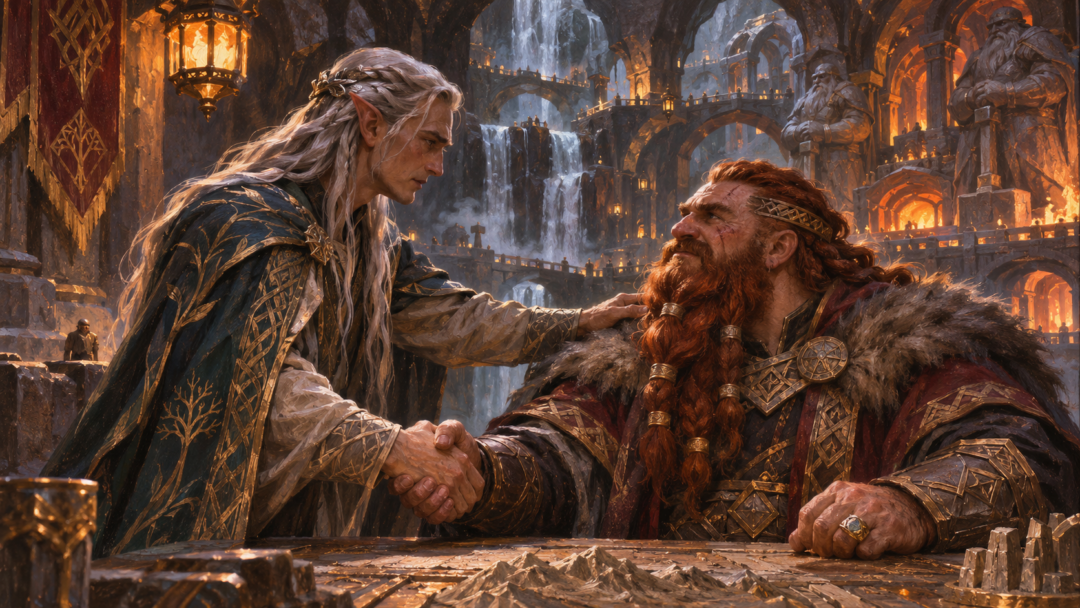
The friendship between Elrond and Prince Durin IV offers the clearest evidence that this series could have been excellent.
When Elrond visits Khazad-dum, Durin resents his absence from important events in Durin’s life. For an immortal Elf, years can disappear almost unnoticed. For a mortal Dwarf, those same years contain marriages, children, and milestones that cannot be recovered.
That disagreement turns an abstract Tolkien theme into recognizable emotional conflict. Neither character needs to deliver a lecture about immortality. Their friendship makes the difference between their experiences painfully obvious.
Durin’s relationship with his father adds another layer. The discovery of mithril promises extraordinary benefits but threatens consequences the elder king refuses to dismiss. The younger Durin sees a chance to help his friend; his father sees the responsibility of protecting an entire kingdom.
This is exactly the kind of moral tension Middle-earth should contain. Personal loyalty competes with inherited duty. Good intentions do not guarantee good outcomes.
The books repeatedly explore such conflicts. Gimli and Legolas overcome inherited hostility through friendship, while characters such as Boromir demonstrate how apparently noble motives can become dangerous.
Elrond and Durin belong comfortably in that tradition. Their scenes rely on character rather than concealed identities, and consequently feel more substantial than several supposedly larger storylines.
Galadriel Is an Interesting Idea With Uneven Execution
Making Galadriel a fierce, embittered warrior was not inherently a mistake.
Tolkien’s Galadriel is no passive ornament. She is ancient, proud, perceptive, and powerful. Her rejection of the One Ring in The Fellowship of the Ring matters precisely because she recognizes the temptation to rule through overwhelming strength.
A younger Galadriel struggling with pride and vengeance could therefore provide a compelling dramatic foundation. Season 1 begins with her fixation on finding Sauron, long after others want to abandon the search.
The difficulty lies in how that obsession develops.
She repeatedly treats disagreement as weakness or blindness. Her certainty often drives events forward without creating the sustained self-examination that would make her transformation convincing. Characters resist her, circumstances change, and she continues pushing toward the next confrontation.
The discovery that Halbrand is Sauron should be devastating, not simply because he deceived her, but because her own confidence helped place him near the people and powers he wanted to influence.
The finale recognizes this vulnerability. Unfortunately, the season has invested so heavily in preserving its central mystery that Galadriel’s reckoning feels compressed.
Compare her story with Boromir’s in Jackson’s Fellowship of the Ring. His desire to use the Ring grows from a comprehensible fear for Gondor. When temptation defeats him, his subsequent sacrifice gives that moral failure emotional completion.
Galadriel’s story aims for similarly tragic irony but postpones too much of the emotional consequence. The concept is promising. The execution is less persuasive.
The Sauron Reveal Is Clever Television, But Costly Mythology
Halbrand’s identity gives Season 1 its most consequential twist.
The disguised Sauron exploits Galadriel’s assumptions, gains access to Eregion, and offers Celebrimbor useful advice. As a television mystery, the revelation has genuine dramatic potential. The audience is invited to reconsider the apparent refugee and his unlikely ascent toward power.
But the disguise also changes the nature of Sauron’s corruption.
In Tolkien’s account, particularly Appendix B of The Lord of the Rings and the account of the Rings in The Silmarillion, Sauron’s influence over the Elven smiths is a prolonged process. The figure known as Annatar offers knowledge and assistance. His appeal lies in the dangerous intimacy between craftsmanship, ambition, and manipulation.
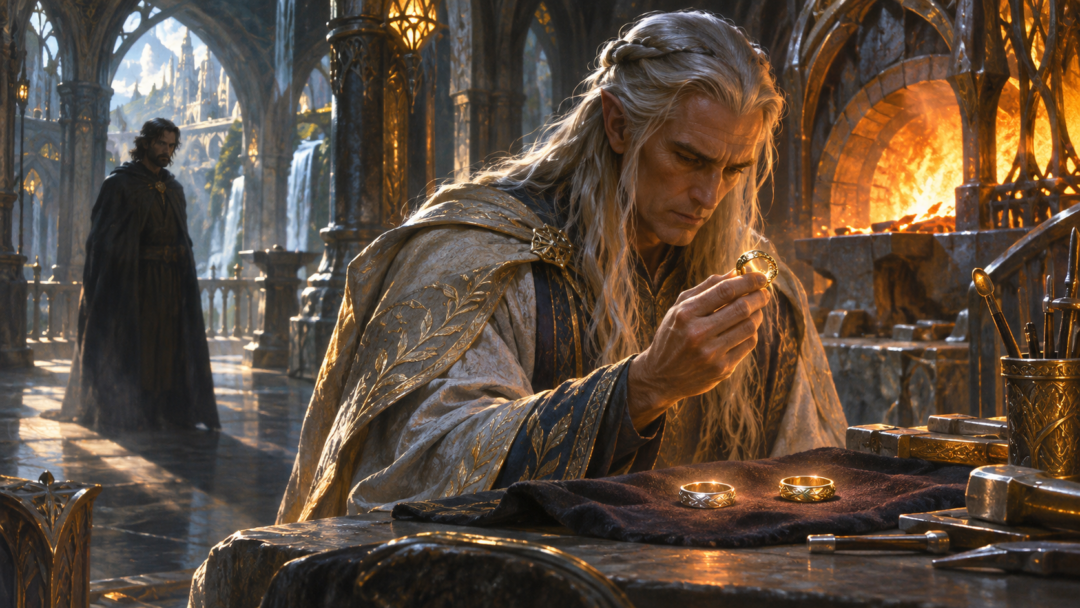
The Elves do not simply encounter a suspicious visitor who knows a useful technique. Their desire to preserve and improve what they love makes them receptive to instruction that will eventually compromise their work.
Season 1 reduces much of this development to a short visit and a few decisive suggestions.
That creates a surprisingly small foundation for an event that should reshape Middle-earth. Celebrimbor, one of the great craftsmen of his age, appears dependent on an outsider’s relatively elementary intervention.
The revelation makes Halbrand more interesting retrospectively, but it makes the forging process less impressive. The narrative earns a twist at the expense of the deeper tragedy behind the Rings.
The Rings Themselves Deserved More Time
This is where the adaptation’s structural problems become hardest to ignore.
Tolkien’s Second Age spans 3,441 years. Appendix B places the beginning of the forging of the Rings around Second Age 1500, the completion of the Three around 1590, and Sauron’s forging of the One around 1600.
The television series compresses these enormous historical intervals so that characters and events can coexist within one ongoing drama. That decision is understandable. A literal chronology would require major changes of human casts and a very different storytelling structure.
Compression, however, should preserve the significance of what it compresses.
In the books, the Three are special partly because Celebrimbor makes them without Sauron’s direct participation, although they remain subject to the One Ring’s power. Their creation belongs to an extended history of Elven skill, ambition, and vulnerability.
In Season 1, the Three are forged rapidly after Halbrand’s brief involvement and exposure. The work becomes an urgent solution to the Elves’ fading rather than the culmination of a long and dangerous pursuit.
The mithril storyline compounds this difficulty. The series connects the metal to a potential cure for Elven decline through a contested legend about the Silmarils and introduces an immediate deadline for departure from Middle-earth.
Tolkien certainly connects the Elven Rings with preservation and resistance to the weariness of time. But the show’s particular mechanism makes their crisis resemble an emergency engineering problem.
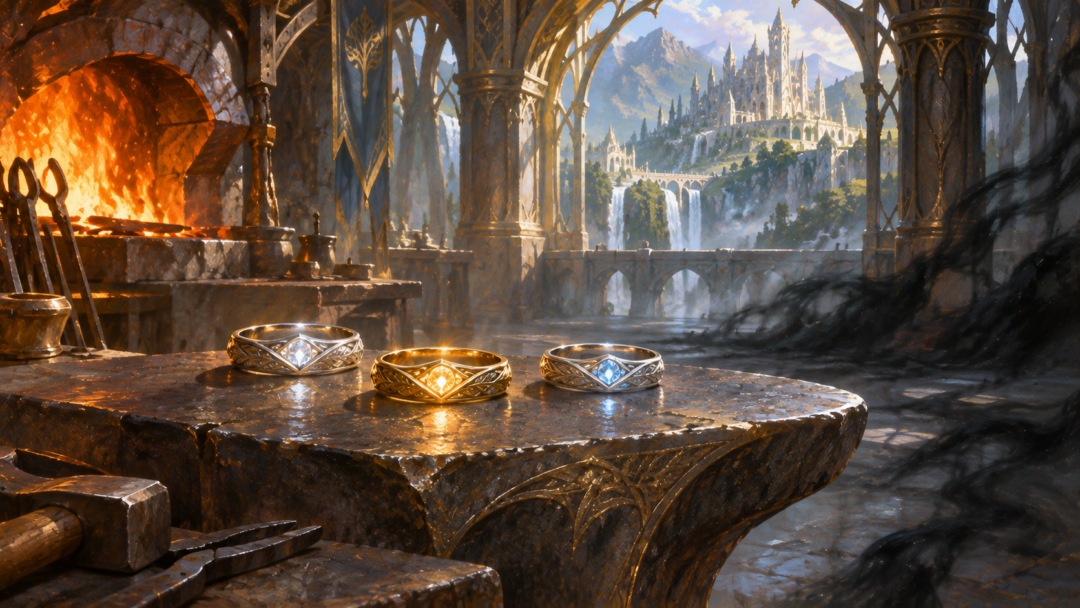
The result is an unfortunate paradox: a series named for the Rings of Power gives the actual forging comparatively little dramatic space.
Mordor Delivers the Season’s Best Payoff
The Southlands storyline is uneven, but its climax demonstrates how effectively the series can combine spectacle with consequence.
Arondir and Bronwyn’s defense of the village gives ordinary people a stake in events much larger than themselves. Adar is a particularly effective addition because his relationship with the Orcs introduces moral discomfort without excusing their brutality.
He treats them as beings with grievances and a desire for a home. That complicates the familiar depiction of Orcs as nothing more than interchangeable enemies, while keeping their violence visible.
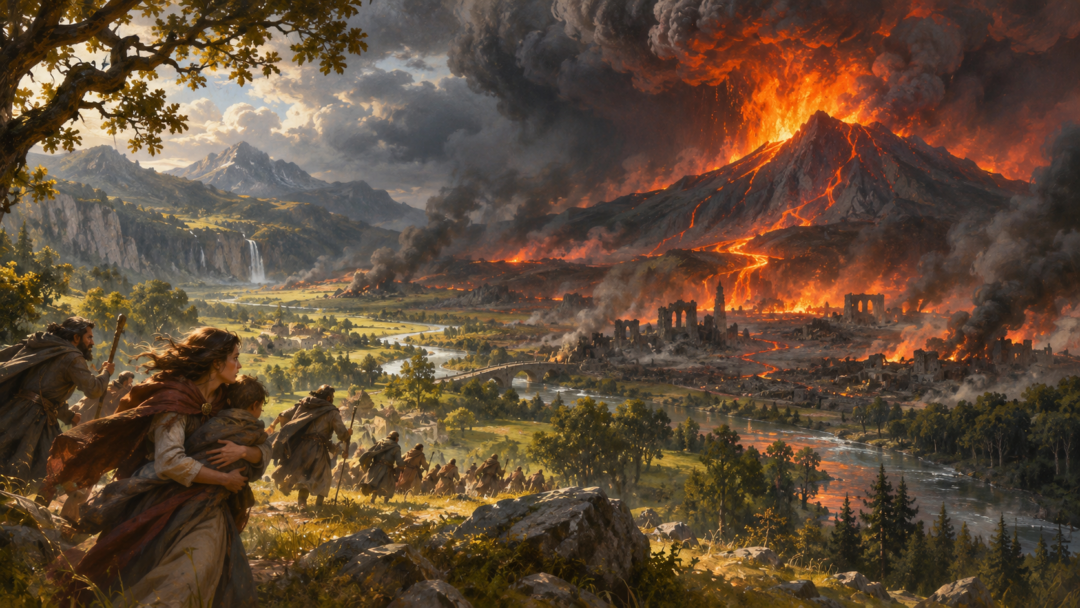
The mechanism that triggers Mount Doom’s eruption is elaborate, and the survival of characters exposed to the catastrophe strains credibility. Nevertheless, the transformation of the Southlands into Mordor has real dramatic weight.
An apparently local struggle produces a lasting geographic and historical disaster.
Unlike the forging sequence, this development receives substantial preparation. The tunnels, the mysterious object, and Adar’s strategy eventually converge into one destructive outcome.
The spectacle matters because the landscape and the fate of its inhabitants change. That is the sort of payoff an epic narrative needs.
Numenor Looks Greater Than Its Politics Feel
Numenor presents a different failure of proportion.
In Tolkien’s history, the kingdom’s downfall grows from resentment of mortality, growing estrangement from the Elves, imperial pride, and Sauron’s eventual manipulation. Its tragedy is rooted in a civilization unable to accept the limits placed upon human life.
Season 1 introduces important ingredients: Queen Regent Miriel, Pharazon’s influence, Elendil’s loyalty, and public suspicion toward the Elves.
Yet the political conflicts often feel hurried or insufficiently developed. The island’s immense grandeur promises a sophisticated society with centuries of institutional memory. Its debates sometimes operate with the simplicity of a much smaller contemporary dispute.
The expedition to the Southlands creates action and brings major characters together, but it also diverts attention from the kingdom’s defining spiritual problem.
Elendil remains compelling because his conduct suggests a deeper understanding of service and duty. Miriel likewise gains substance when she accepts personal cost. These moments indicate the stronger drama available beneath the surface.
The series establishes Numenor’s physical greatness much more convincingly than the ideological tensions destined to destroy it.
The Harfoots Have Heart, But Not Enough Purpose
Nori’s relationship with the Stranger supplies moments of warmth and wonder. Her willingness to help someone frightening and unfamiliar reflects the compassion that repeatedly matters in Tolkien’s work.
That resemblance to the Hobbits’ moral significance is valuable. Frodo and Sam accomplish what greater warriors cannot because courage, loyalty, and pity matter more than dominance.
However, the Harfoot storyline spends much of the season separated from the central political and historical conflicts. Its mystery surrounding the Stranger becomes another identity puzzle competing for the audience’s attention.
The Harfoots’ harsh treatment of vulnerable members also sits awkwardly beside the warmth the series wants their community to represent. A wandering society can have severe survival customs, but the writing needs to confront that contradiction more consistently.
Nori remains sympathetic. The problem is that her story often feels like preparation for another adventure rather than a necessary part of this one.
Jackson’s Films Offer the Fairer Comparison
Criticizing The Rings of Power for departing from Tolkien while excusing Peter Jackson would be inconsistent.
Jackson removed Tom Bombadil, substantially changed Faramir’s temptation, and gave the Battle of Helm’s Deep an Elven contingent absent from the novel. His films made major structural and character choices.
Yet their strongest departures generally served identifiable dramatic purposes. Removing Bombadil preserved momentum. Expanding Helm’s Deep created a sustained cinematic climax. Not every alteration succeeded, but the trilogy maintained a powerful narrative progression toward a central moral conflict.
Season 1 struggles to achieve comparable unity. It moves among multiple locations and hidden identities, sometimes emphasizing the anticipation of future revelations over present character decisions.
Jackson’s Fellowship ends with a broken company and an unmistakable new direction. The Rings of Power ends with several promising pieces on the board, but too many of its most important relationships and choices remain underdeveloped.
This distinction matters more than whether a particular costume, character, or historical date matches the source exactly.
Final Verdict: An Epic That Mistakes Scale for Depth
The Rings of Power Season 1 is not devoid of Tolkien’s spirit. Elrond and Durin’s friendship, Adar’s unsettling perspective, Nori’s compassion, and the visual grandeur of ancient kingdoms demonstrate considerable artistic potential.
Its disappointment is more specific than the familiar accusation that adaptations must never change the books.
The season repeatedly chooses immediate mystery over gradual corruption, urgent plot mechanisms over historical weight, and future possibilities over completed emotional consequences.
Its finest scenes understand that Tolkien’s world becomes powerful when ordinary choices carry extraordinary moral significance. Its weakest scenes assume that recognizable names, magnificent architecture, and dramatic revelations can supply that significance automatically.
They cannot.
**Season 1 succeeds as an introduction to a visually extraordinary Second Age, but disappoints as a dramatic account of the choices that made that age tragic.** It gives Middle-earth a remarkable appearance. What it too often lacks is the patience to let its greatest events earn their importance.
Sources & Notes
This article is based on close reading and interpretation of Tolkien's published works and related source material where relevant.