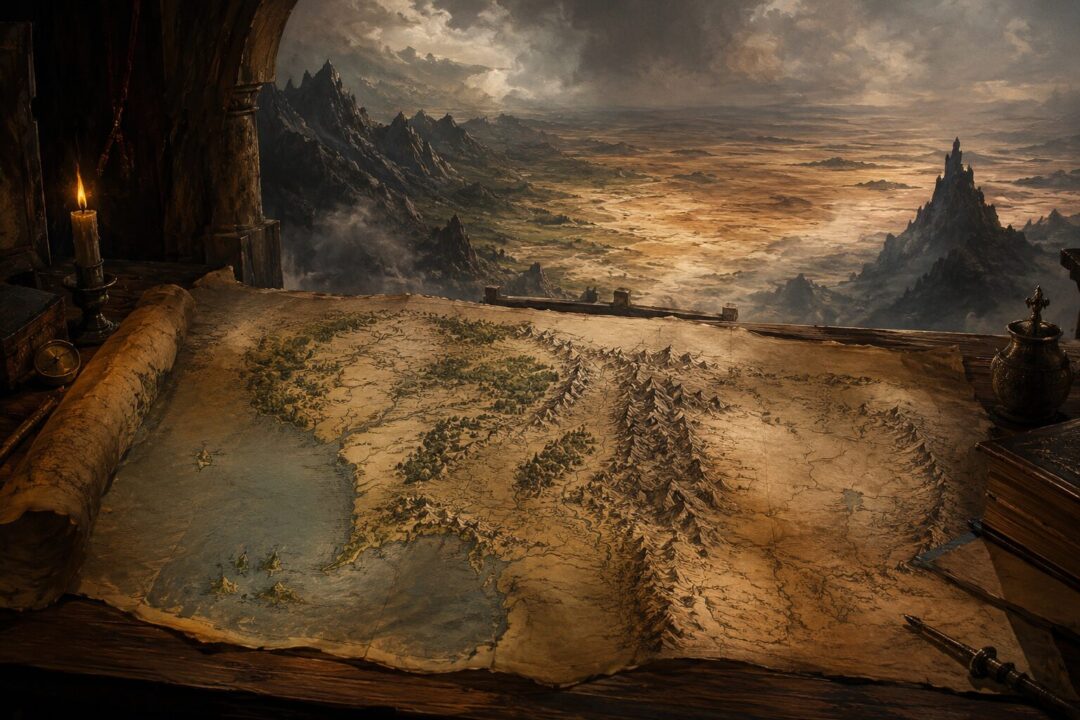
The War of the Ring is usually remembered through familiar places: the Shire, Rivendell, Rohan, Gondor, and Mordor. Yet when the armies gather before Minas Tirith and later at the Black Gate, they arrive from lands most readers never truly visit. Harad sends warriors beneath scarlet banners and mighty mûmakil. Khand sends the Variags. Easterlings march from Rhûn. Their appearance raises a fascinating question that the story only briefly answers.
What was happening across the rest of Middle-earth while Frodo carried the Ring?
The surviving texts never provide a complete history of Khand or Harad, and they remain intentionally mysterious. Even so, scattered passages reveal something important. The War of the Ring was never simply a struggle between Gondor and Mordor. It was a conflict whose political, military, and moral consequences stretched far beyond the lands shown in the familiar map.
Rather than empty spaces waiting to be filled, Khand and Harad remind us that Middle-earth is much larger than the story's central stage.
The Map Shows Only One Corner of a Larger World
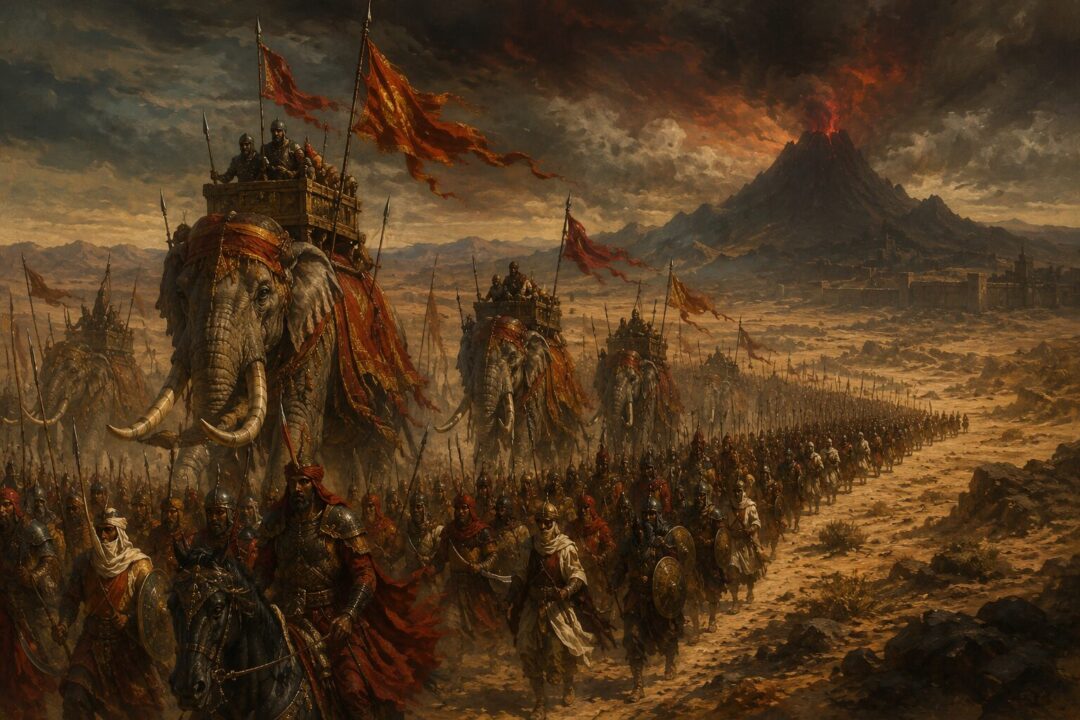
The maps accompanying The Lord of the Rings focus almost entirely on the northwestern regions of Middle-earth. This is where Hobbits live, where the Elves maintain their last realms, and where the heirs of Númenor endure.
Beyond those boundaries lie immense territories that receive only brief descriptions. South of Gondor stretches Harad, itself divided into Near Harad and Far Harad. Southeast of Mordor lies Khand, home of the Variags. Farther east extends Rhûn and lands beyond it.
The narrative rarely travels into these regions because the story follows the Fellowship rather than attempting to describe the whole world. The absence of detail should not be mistaken for insignificance. The military forces arriving from these distant lands demonstrate that Sauron's influence extended across enormous distances.
Harad Was Never a Single Kingdom
One common misconception is that Harad functioned as one united nation under a single ruler. The texts do not support this.
Instead, Harad appears to have been a vast region inhabited by many different peoples. Gondorian traditions refer broadly to the Haradrim or Southrons, but these names describe geography more than political unity. Various tribes, kingdoms, and peoples likely existed across an immense territory whose climates ranged from deserts to forests.
The evidence also suggests that relationships between these peoples were not necessarily peaceful. Some references imply internal divisions rather than complete unity. Sauron's achievement may therefore have involved bringing together numerous rulers and peoples whose interests would not otherwise have aligned.
That possibility makes the scale of his diplomatic and military influence even more remarkable.
Khand Remains One of Tolkien's Greatest Mysteries
If Harad receives only limited attention, Khand receives even less.
The name appears on maps, and the people of Khand appear during the Battle of the Pelennor Fields as the Variags. Beyond this, almost nothing is explicitly stated.
The texts never describe their cities, language, government, religion, or culture. Nor do they explain precisely how their alliance with Mordor developed. They simply appear as one component of Sauron's enormous coalition.
This silence has encouraged generations of speculation, but careful reading requires restraint. We cannot confidently reconstruct Khand's history because Tolkien never supplied those details.
Sometimes what remains unknown tells us almost as much as what is explained.
Sauron's Power Reached Far Beyond Fear Alone
It is tempting to imagine that every nation serving Mordor did so because it had been conquered directly.
The texts suggest a more complicated picture.
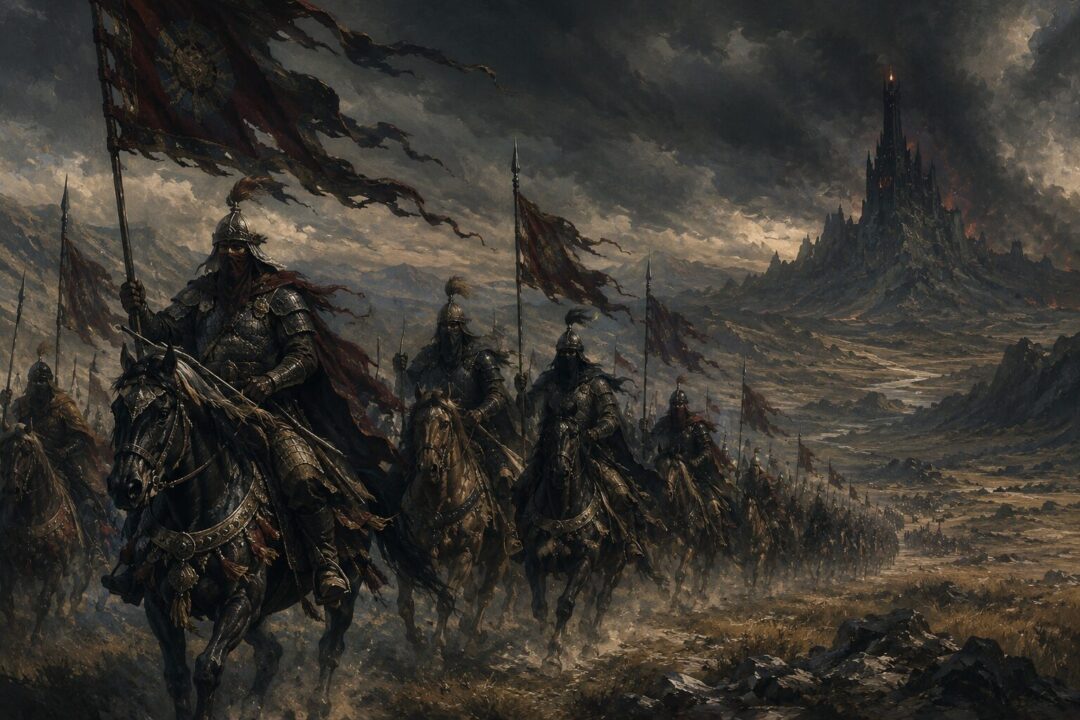
Some peoples certainly feared Sauron. Others may have been his allies through long political relationships, ancient loyalties, promises of power, or generations of dependence. The Silmarillion notes that in parts of the East and South Sauron was regarded as both king and god, indicating a form of domination that extended beyond military occupation.
Such influence would have required decades—perhaps centuries—of careful cultivation.
Unlike the rapid campaigns often associated with war, Sauron's greatest victories may have come through patient political expansion. By the end of the Third Age, entire peoples marched beneath his banners without needing to be driven there by Orcs.
Gondor's History Also Shaped the South
Another overlooked aspect is Gondor's own relationship with Harad.
During different periods of the Third Age, Gondor defeated southern kingdoms, expanded its influence, and claimed territory extending to the River Harnen. Some southern rulers became tributaries, while control later weakened as Gondor declined.
Earlier still, Númenórean settlements along the coasts of Harad brought both knowledge and exploitation. In later centuries many Númenóreans became oppressive rulers, demanding tribute and enslaving local peoples before the Downfall of Númenor.
These events matter because they complicate any simple division between heroes and villains.
The peoples who later fought beside Mordor may have remembered generations of conflict with Gondor or its Númenórean predecessors. The texts never claim that every Haradrim warrior willingly embraced evil. Political memory and historical grievance almost certainly played a role, even if individual motives remain unstated.
Frodo Sees an Enemy as a Human Being
One of the most revealing moments comes not during a battle but immediately afterward.
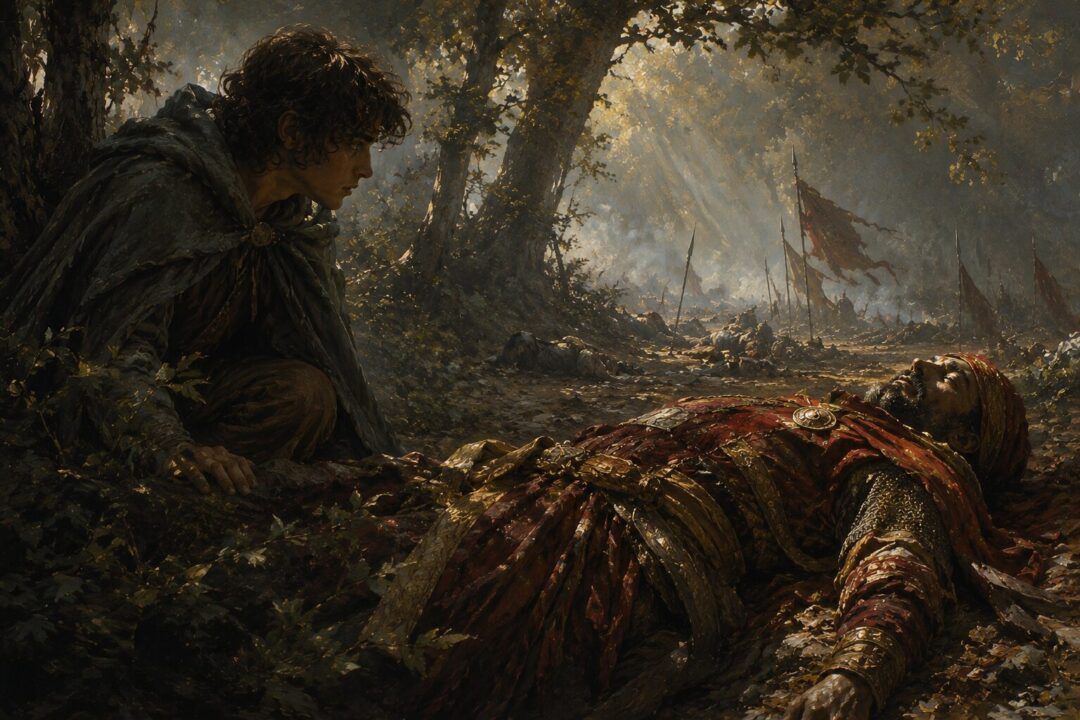
When a Southron warrior falls near Frodo and Sam in Ithilien, Frodo wonders who the man truly was. He asks whether he had been evil in heart, what lies or threats had brought him so far from home, and whether he would rather have remained in peace.
The narrative deliberately refuses to answer.
Instead, it invites readers to recognize that war reduces individuals to enemies while hiding their personal histories.
This passage is among the clearest reminders that many of Sauron's soldiers were still Men rather than monsters. Whatever political systems ruled their lands, individual choices were shaped by circumstances readers never fully witness.
The mystery surrounding Harad therefore serves an ethical purpose as much as a geographical one.
The War Extended Far Beyond Minas Tirith
Although the story focuses on Gondor, major campaigns occurred elsewhere.
Appendix B records attacks against Lórien, assaults on Dale and Erebor, and battles throughout northern Middle-earth. The victory over Sauron depended upon resistance across multiple fronts rather than a single decisive engagement.
It is reasonable to conclude that similar military activity affected regions farther east and south, though the texts rarely describe it directly.
Large armies marching from Harad and Khand would have required supply systems, political organization, and secure routes extending across thousands of miles. Those regions did not suddenly awaken when the siege of Minas Tirith began. They had already been participating in a much wider struggle whose local histories remain mostly untold.
This reinforces one of Middle-earth's greatest strengths: every visible event hints at countless unseen stories.
Victory Did Not Instantly Change Every Land
The destruction of the One Ring ended Sauron's power, but it did not automatically transform the political landscape beyond Gondor.
The texts describe the restoration of peace with many former enemies, including embassies and renewed relations during the reign of King Elessar. However, they do not provide detailed accounts of how Harad or Khand themselves changed after the fall of Barad-dûr.
Some rulers may have regained independence.
Others may have faced internal struggles after losing the central authority that had unified them.
Still others may have sought entirely new relationships with Gondor.
These possibilities remain informed interpretations rather than explicit historical accounts because the surviving texts simply do not say.
That silence preserves the sense that Middle-earth continues beyond the final page.
Why Tolkien Left So Much Unexplained
Modern fantasy often seeks exhaustive world-building in which every kingdom possesses complete histories, dynasties, and languages.
Middle-earth works differently.
The unknown regions give the world genuine depth. Real civilizations rarely understand every distant culture in perfect detail, and neither do the peoples of Gondor or the Shire. Readers encounter Harad much as Hobbits would: through rumors, distant travelers, scattered battles, and incomplete knowledge.
This restraint creates realism rather than incompleteness.
Khand especially functions almost like a horizon. It reminds readers that the familiar map is not the whole world but only the portion where this particular story unfolds.
A War That Truly Spanned a Continent
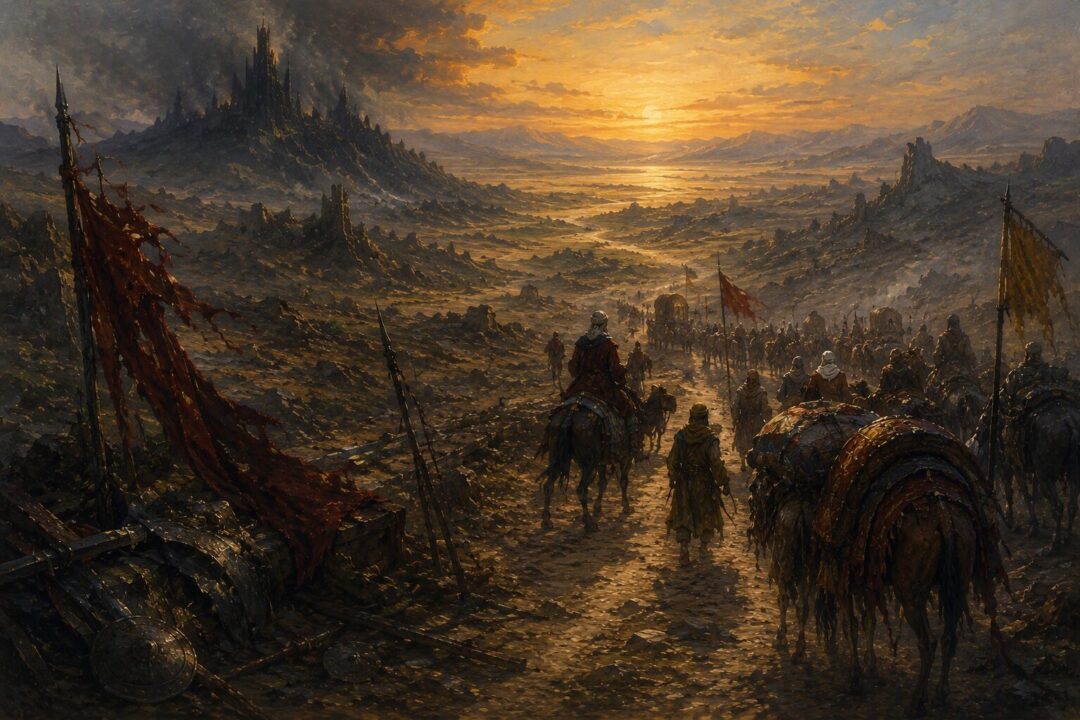
The armies from Harad and Khand appear only briefly, yet their presence quietly changes the scale of the entire narrative.
They reveal that Sauron's influence reached across continents rather than kingdoms. They suggest centuries of diplomacy, fear, conquest, and political manipulation beyond the view of the main characters. They also remind readers that many who fought against the West possessed histories, loyalties, and lives that the central narrative never follows.
The War of the Ring was therefore larger than the journey of the Fellowship, larger than Gondor's defense, and larger even than Mordor itself.
The map ends, but Middle-earth does not.
Khand and Harad stand at its edges not as empty blanks, but as enduring reminders that every great story leaves room for worlds still unseen.
Sources & Notes
- Tolkien Gateway, “Harad” — outlines Harad as the southern lands beyond Gondor, including Near and Far Harad, the Haradrim/Southrons, mûmakil, and their role among Sauron’s allies. https://tolkiengateway.net/wiki/Harad
- Tolkien Gateway, “Khand” — summarizes the sparse canonical information about Khand, its location southeast of Mordor, and its association with the Variags who fought for Sauron. https://tolkiengateway.net/wiki/Khand
- Tolkien Gateway, “Variags” — documents the Variags of Khand as warriors appearing in Sauron’s forces at the Battle of the Pelennor Fields, supporting the article’s point that Khand remains largely mysterious. https://tolkiengateway.net/wiki/Variags
- Tolkien Gateway, “Easterlings” — provides comparative context for peoples from Rhûn and the East in Sauron’s wars, helping frame Khand and Harad as part of a wider eastern and southern coalition. https://tolkiengateway.net/wiki/Easterlings
- Tolkien Gateway, “Sauron” — covers Sauron’s long influence over Men in the East and South and the religious-political domination that made distant peoples part of Mordor’s war machine. https://tolkiengateway.net/wiki/Sauron
Sources selected to document Harad, Khand, the Variags, and Sauron’s wider eastern/southern alliances beyond the main War of the Ring map.