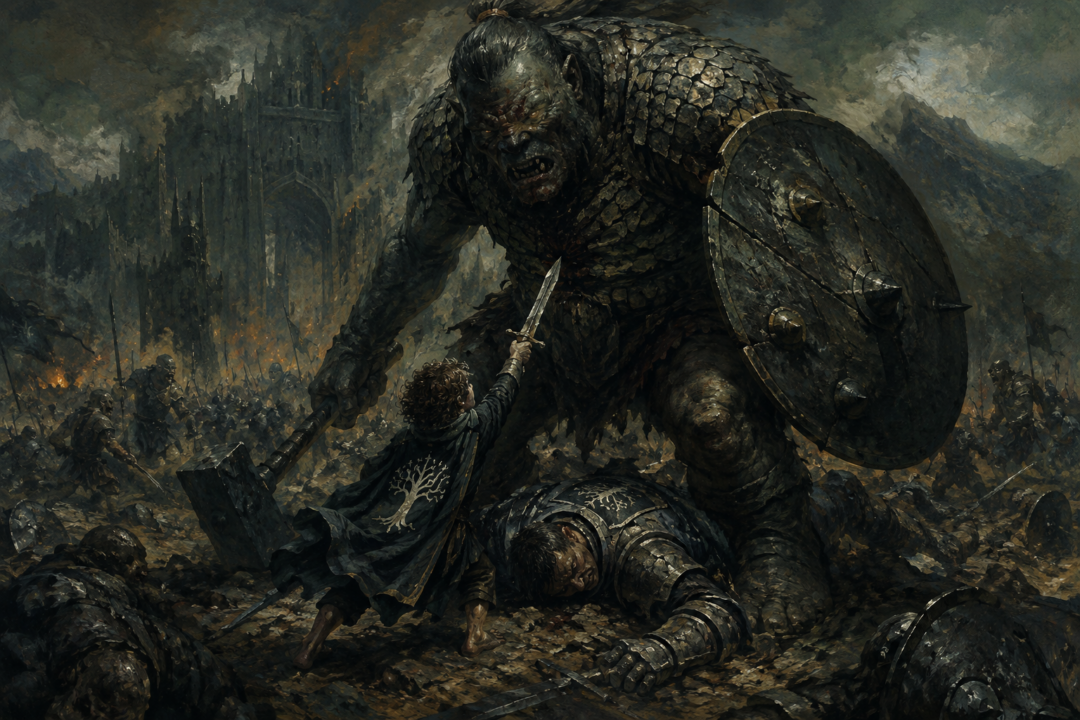
Pippin’s greatest battlefield feat is also the moment he becomes convinced that his own story is over.
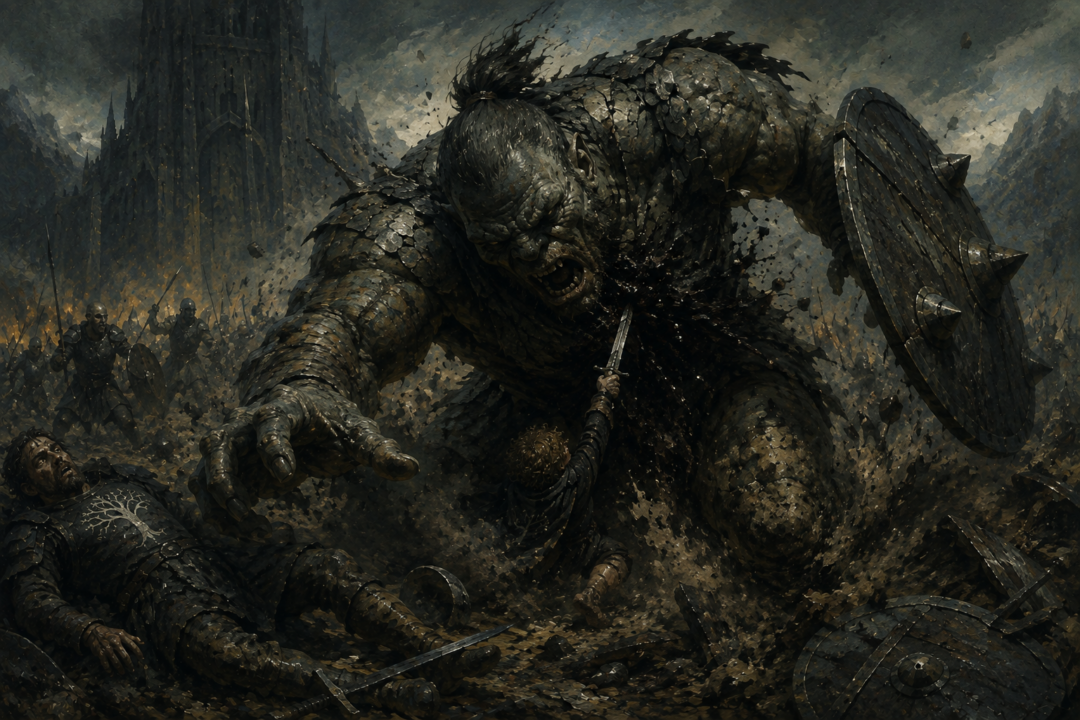
At the Black Gate of Mordor, Peregrin Took—hobbit of the Shire, Guard of the Citadel, and one of the smallest soldiers in the Host of the West—kills the great troll-chief attacking Beregond. It is an extraordinary achievement. But there is no victorious pause afterward. The dying creature crashes directly onto Pippin, burying him beneath its enormous body.
His reward for killing the troll is immediate: crushing pain, darkness, and what he believes to be death.
That detail changes the meaning of the scene. Pippin does not defeat a monster and stand triumphant over it. His act of courage nearly kills him at the exact moment it succeeds.
The Battle Pippin Does Not Expect to Survive
By the time Pippin reaches the Morannon, the Captains of the West understand that their military position is desperate.
Their march to the Black Gate is not an attempt to conquer Mordor by force. Aragorn, Gandalf, and the others hope to draw Sauron’s attention away from Frodo and Sam. The success of the larger plan depends on Sauron believing that his enemies possess the Ring and are foolish or desperate enough to challenge him openly.
The soldiers themselves do not know whether Frodo is still alive.
Pippin therefore enters the battle without any assurance that victory is possible. In “The Black Gate Opens,” his thoughts turn toward the Shire, Merry, sunlight, and green grass. He knows the enemy surrounding them vastly outnumbers the Host of the West.
Then the assault begins.
Orcs attack the defensive positions, but something more terrible comes through them: hill-trolls out of Gorgoroth.
The text describes them as taller and broader than Men, equipped with great black bucklers and heavy hammers. Their bodies are protected by what appears to be close-fitting mesh made of horny scales—or perhaps that appearance is simply their hide.
The narrative does not call these particular creatures Olog-hai in the battle scene itself. The Appendix on trolls, however, describes the Olog-hai as a formidable troll-kind appearing near the end of Sauron’s power, and the identification of the Morannon trolls with them is a reasonable reading. It is safer, however, to retain the story’s own description: hill-trolls of Gorgoroth.
Against creatures like these stands Pippin.
Why Pippin Attacks
The crucial detail is that Pippin does not kill the troll while seeking glory.
He attacks because Beregond has fallen.
That makes the moment part of a relationship established much earlier in Minas Tirith. Beregond is one of the first men of Gondor to become Pippin’s friend. He talks with him, explains the city to him, and treats the strange halfling from the North with warmth.
Their lives also become entangled during Denethor’s attempt to burn himself and Faramir.
Pippin seeks Gandalf when he realizes what Denethor intends. Beregond, meanwhile, abandons his assigned post and ultimately fights to prevent Faramir from being burned alive. Their actions help preserve Faramir until Gandalf arrives.
At the Morannon, the situation is reversed.
Beregond is struck down.
The troll-chief bends over him.
The text adds a horrifying reason for the creature’s movement: these trolls bite the throats of enemies they have thrown down.
Pippin has almost no time.
He strikes upward.
The Small Blade That Reaches the Troll’s Vitals
Pippin is armed with one of the blades recovered from the Barrow-downs much earlier in the journey.
These weapons are not ordinary Shire knives. They were made in the vanished North-kingdom and carry the history of the wars against Angmar. Merry’s related blade becomes crucial on the Pelennor Fields, where its stroke helps break the power protecting the Witch-king before Éowyn delivers the final blow.
Pippin’s blade has a different fate.
At the Black Gate, he drives it through the troll’s protection and deep into its vitals.
Black blood pours from the wound.
The troll-chief falls.
For a moment, the scale of the achievement is astonishing: a hobbit has brought down a creature physically enormous compared with himself.
But the physics of the victory immediately become the danger.
The troll falls forward.
And Pippin is underneath it.
The Victory Literally Buries Him
There is a brutal simplicity to what follows.
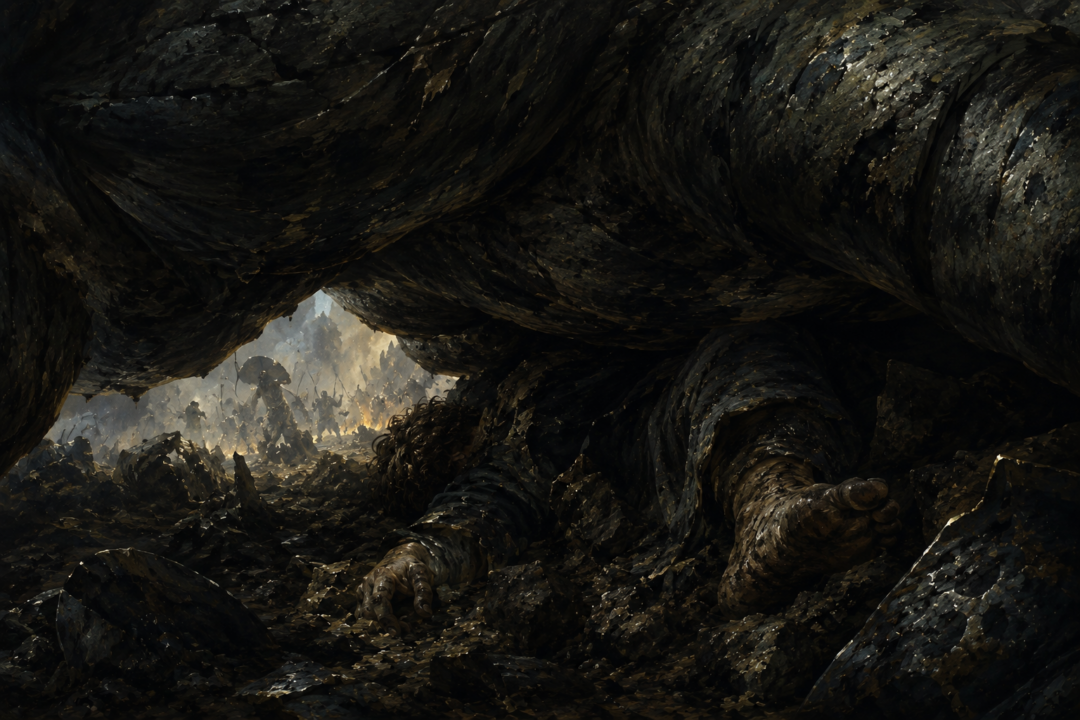
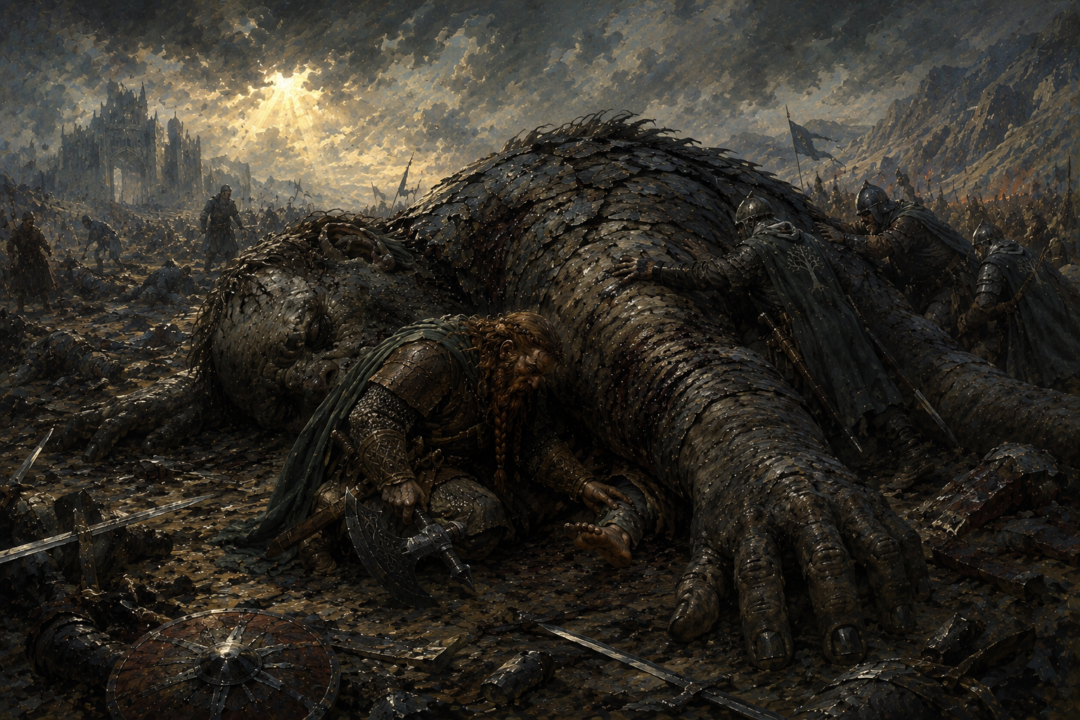
The troll comes down like a falling rock and buries those beneath it. Pippin experiences darkness, foulness, crushing pain—and then loses consciousness.
There is no suggestion that he simply faints from excitement or exhaustion. The enormous dead creature has physically fallen on him, and Pippin believes he is dying.
That is the immediate cost of his troll kill.
He saves Beregond, but apparently sacrifices himself in doing so.
And because Pippin cannot see what happens afterward, the reader temporarily shares his uncertainty. The battle continues somewhere beyond the weight pinning him down. The fate of the West remains unknown.
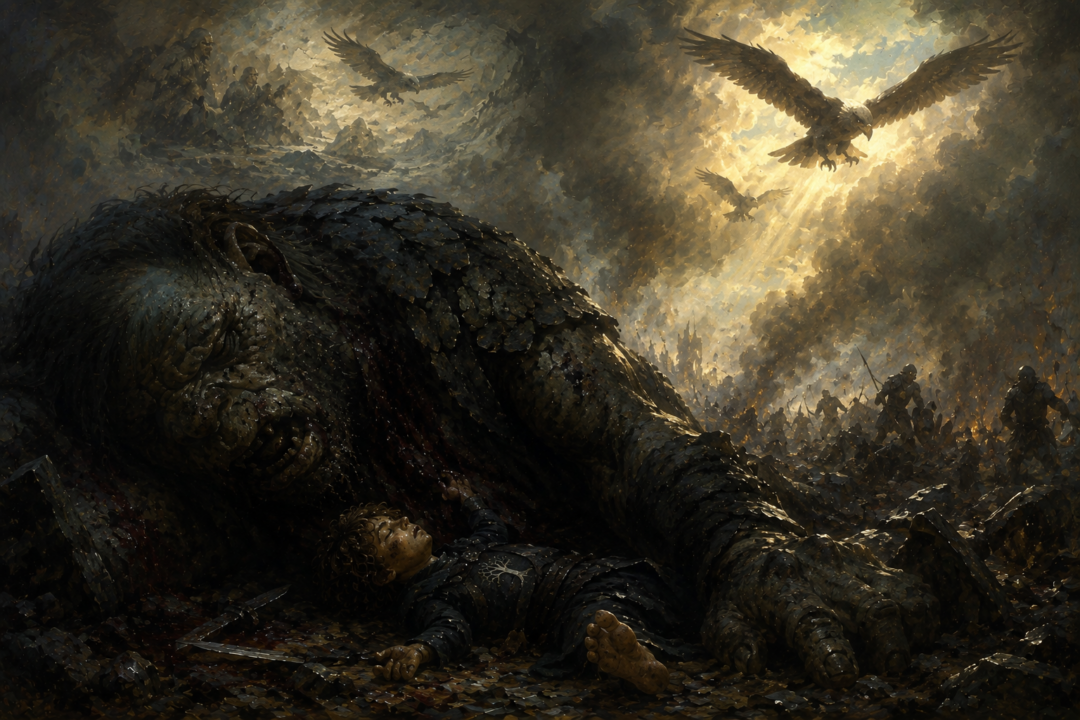
Then, through the fading edges of consciousness, Pippin hears something extraordinary.
Voices are crying that the Eagles are coming.
Why Pippin Thinks of Bilbo
Pippin’s response is one of the most quietly revealing moments in the final battle.
The cry of the Eagles reminds him of Bilbo’s adventure.
At the Battle of Five Armies in The Hobbit, Bilbo also hears the arrival of the Eagles during a seemingly hopeless battle—and he too loses consciousness before learning the outcome.
Pippin recognizes the resemblance.
But his thought does not reassure him.
Instead, he distinguishes Bilbo’s tale from his own. Bilbo survived to tell his story; Pippin assumes that his own has now reached its ending.
That distinction matters because Pippin has no access to the reader’s certainty that important characters usually survive long enough to see victory. From his perspective, everything points toward death.
The Eagles have arrived, but he cannot know what their arrival means.
Frodo’s mission remains unresolved.
Sauron still appears overwhelmingly powerful.
Pippin simply lets go.
There is even a strange lightness in his final conscious thoughts. The text presents him as almost relieved to be free at last from fear, uncertainty, and care.
It is not a celebration of death. Rather, it shows how completely Pippin believes he has spent everything he had left to give.
The Courage Hidden Inside the Troll Kill
It is tempting to treat the troll-chief as Pippin’s final proof that he has become a warrior.
That is true only in a limited sense.
His development is not primarily about becoming physically formidable. Even after drinking Ent-draught and growing unusually tall for a hobbit, Pippin remains tiny beside the creatures attacking Gondor.
What changes is his willingness to act despite fear.
Earlier in the story, Pippin’s curiosity can produce disastrous consequences, most famously when he looks into the palantír. Yet his impulsiveness is not simply erased. It matures into the ability to act immediately when another person is in danger.
He does it for Faramir.
He does it for Beregond.
At the Morannon, there is no council and no time for calculation. His friend is down, the troll is reaching for him, and Pippin strikes.
The courage lies less in killing something enormous than in acting when hesitation would probably mean Beregond’s death.
He Does Not Know His Sacrifice Has Worked
The irony becomes greater because Pippin loses consciousness almost at the exact moment the entire war is about to change.
While the Host of the West fights at the Morannon, Frodo and Sam have reached Mount Doom. The Ring is destroyed when Gollum falls into the fire with it, and Sauron’s power collapses.
Pippin sees none of this.
His apparent final moment occurs on the wrong side of knowledge.
He thinks the battle may be lost.
He thinks his own life is ending.
He cannot know that the impossible mission has succeeded.
Nor can he know that he will survive.
After the battle, Gimli finds him beneath the troll, recognizing the hobbit partly because his feet are visible. Pippin is recovered alive.
The monstrous body that seemed to mark his grave becomes instead the place from which his friends rescue him.
The Troll Becomes Part of Pippin’s Identity
Pippin does not forget the encounter once he returns home.
During the confrontation with the ruffians in the Shire, he refers to his sword as “troll’s bane.”
That small detail reveals how far he has travelled.
The weapon began as an ancient blade from the Barrow-downs, carrying memories of a northern kingdom and forgotten wars. At the Morannon, Pippin gives it a new history.
And Pippin himself returns with a new history too.
The hobbit who once seemed almost comically unprepared for the dangers beyond the Shire has stood beneath the Black Gate, watched a friend fall, and killed a troll-chief to save him.
Yet the scene refuses to become a simple heroic trophy.
Pippin’s victory hurts.
It crushes him beneath the enemy he has defeated. It takes away his senses. It leaves him certain that he will never see the Shire, Merry, or his friends again.
That is why the troll kill matters.
Pippin does something worthy of song, but from inside the moment it does not feel like legend.
It feels like the end.
And perhaps that is one of the clearest measures of his growth: at the decisive instant, Pippin does not know that anyone will remember what he has done.
He does it anyway.
Sources & Notes
- https://www.glyphweb.com/arda/p/peregrintook.php — Encyclopedia of Arda: Pippin’s service to Gondor, Troll-slaying at the Morannon, and battlefield injuries
- https://www.glyphweb.com/arda/t/trolls.php — Encyclopedia of Arda: Troll kinds, physical power, and participation in Sauron’s forces
- https://www.glyphweb.com/arda/b/blackgate.php — Encyclopedia of Arda: the Morannon and the final battle fought before it
Sources document Pippin, Trolls, and the Black Gate battlefield where his immediate injury occurs.