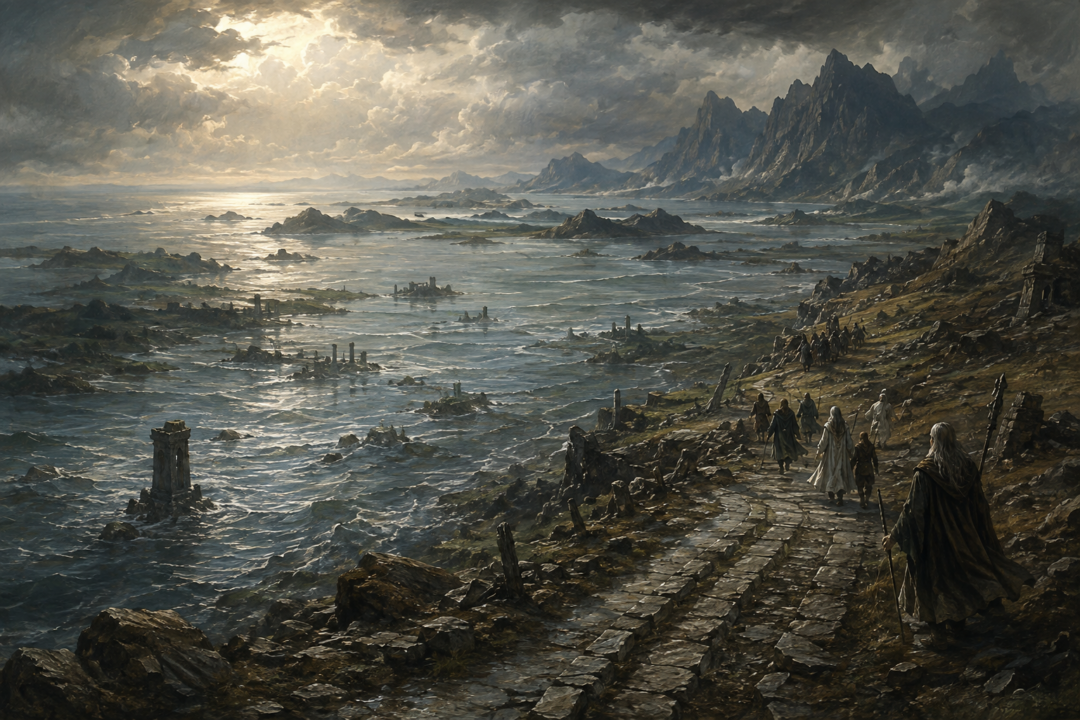
Imagine the old Dwarf-road running west from the Blue Mountains.
In the First Age it was not merely a line on a map. It connected the Dwarven cities of Nogrod and Belegost with the lands beyond the mountains, crossed the Gelion at Sarn Athrad, and formed part of the route by which peoples, goods, and news moved through East Beleriand. The first generations of Men entering Beleriand from the east also used routes associated with this passage through the Ered Luin.
Then the First Age ended, and the geography itself ceased to exist.
Most of Beleriand was broken in the War of Wrath and overwhelmed by the Sea. Rivers vanished beneath the waves. Plains became seabed. The Blue Mountains were themselves breached, and the Gulf of Lhûn opened through what had once been an inland mountain barrier.
That transformation raises a fascinating question: what happened to the people whose world had been organized around those vanished roads?
The surviving texts do not give us a detailed account of columns of refugees marching eastward while Beleriand sank. We should therefore resist imagining a migration chronology that is never actually described. Yet when the First Age and early Second Age are read together, the changed landscape reveals something important.
Beleriand did not simply lose territory. It lost the physical network that had connected its civilizations.
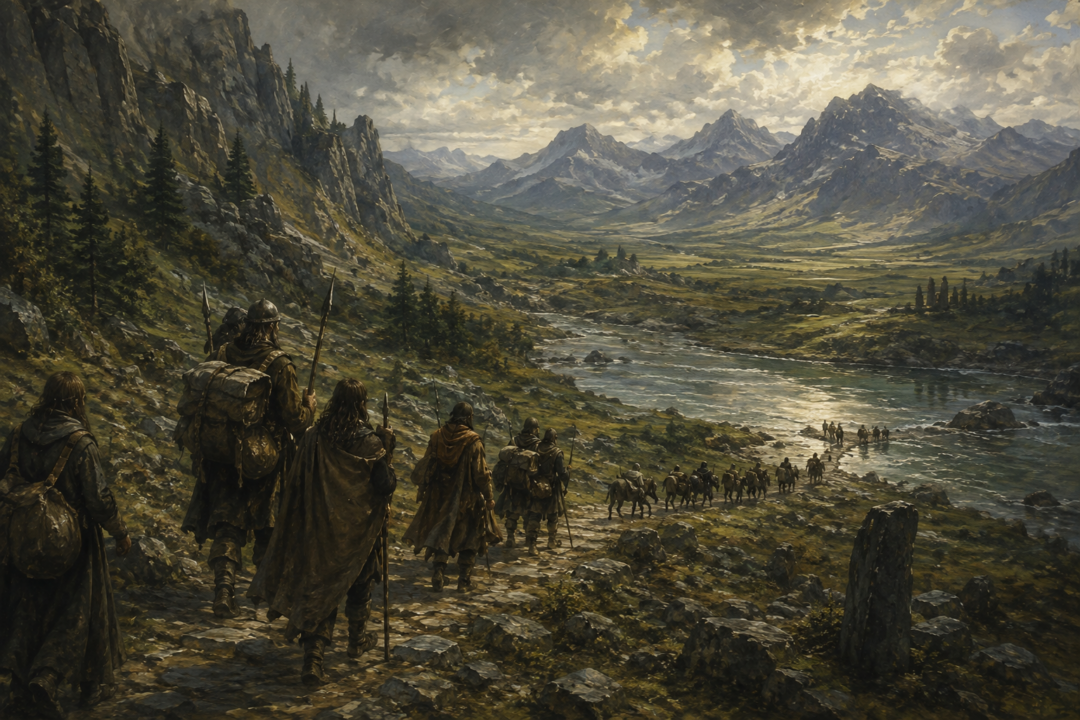
Beleriand Had Already Become a Refugee World
The destruction of Beleriand did not suddenly create displacement. By the time of the War of Wrath, displacement had been reshaping the western lands for generations.
The Dagor Bragollach shattered the long containment of Morgoth. The Nirnaeth Arnoediad destroyed much of the remaining organized resistance in the north. Nargothrond fell. Doriath was ruined through violence connected with the Silmaril and later attacked by the sons of Fëanor. Gondolin was destroyed.
Survivors repeatedly moved southward.
After Gondolin fell, Tuor, Idril, Eärendil, and other survivors eventually reached the Mouths of Sirion. Refugees from other ruined peoples gathered there as well. The Havens of Sirion thus became something more than another Elvish settlement: they were one of the last concentrations of survivors from societies that had already disappeared.
Even that refuge was attacked.
After the assault by the sons of Fëanor, survivors were associated with Círdan and the Isle of Balar. By the eve of the War of Wrath, therefore, much of the surviving population of the western wars had already undergone repeated migration.
The drowning of Beleriand was the final geographical consequence of a much longer process of collapse.
The Roads Tell Us Where Movement Had Once Been Possible
The old roads matter because they show that Beleriand was not isolated from the rest of Middle-earth.
The Dwarf-road is especially revealing. It ran from the Dwarven settlements in the Blue Mountains into East Beleriand, crossing Gelion at Sarn Athrad. In the accounts of the coming of Men, Finrod encounters the people of Bëor after they have crossed the mountains into Beleriand, and later groups of Men likewise enter the western lands from the east.
The Ered Luin were therefore a frontier, but not an absolute wall.
There were known passages through them. Dwarves maintained commercial connections across them. Men had crossed them. News and travellers could move between Beleriand and the enormous, much less fully described world to the east.
That matters when considering the end of the First Age.
People living in Beleriand did not inhabit a sealed continent whose only possible escape was by ship. Eastward routes had existed for centuries.
But Tolkien’s surviving narratives do not explicitly tell us that the population of Beleriand escaped en masse along those roads during the War of Wrath. The existence of a road demonstrates possibility and historical connection, not a documented evacuation.
That distinction is important.
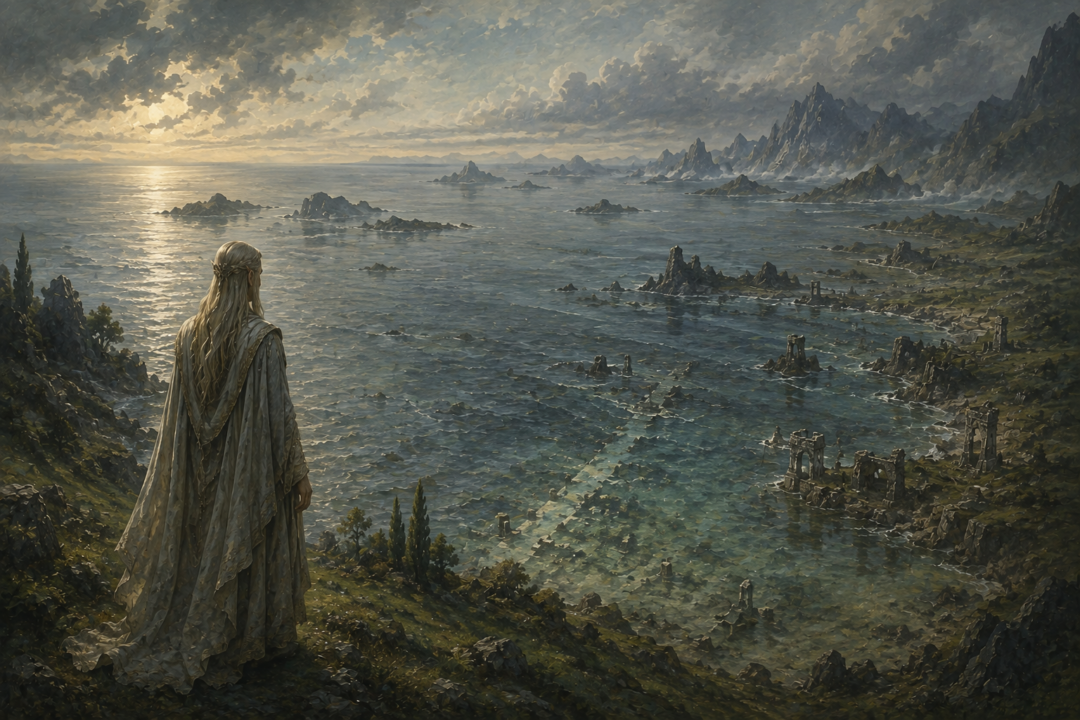
Then the Map Was Physically Rewritten
The War of Wrath did something that the earlier wars had not.
It destroyed the landscape on a continental scale.
Most of Beleriand was submerged. Ossiriand, the easternmost region lying against the Blue Mountains, survived in altered form as Lindon. Parts of the Ered Luin remained, but the Sea broke through the range and formed the Gulf of Lhûn.
This means that some of the old First Age geography became literally unusable.
A traveller in the Second Age could not retrace a journey from the Blue Mountains across Gelion toward Doriath, because Gelion and Doriath no longer existed as accessible lands. The ancient road system had not simply fallen into disrepair. Large portions of the country through which those routes passed were beneath the Sea.
The result was a remarkable reversal.
During the First Age, Ossiriand stood on the eastern margin of Beleriand.
After Beleriand’s destruction, that surviving margin became the western shore of Middle-earth.
The frontier had become a coast.
Lindon Looks Like a Refuge Created by Geography
At the beginning of the Second Age, Lindon became the principal Elvish realm in the surviving western lands, ruled by Gil-galad. Círdan established new havens there, most famously Mithlond, the Grey Havens, on the newly formed Gulf of Lhûn.
That location is enormously suggestive.
Círdan had already been repeatedly displaced. His ancient Havens in the Falas had been destroyed during the First Age. His people later maintained refuge around Balar and the Mouths of Sirion. When Beleriand itself was lost, the Shipwright’s new havens stood beside a body of water that had not existed in the old geography.
The catastrophe created the coast on which one of Middle-earth’s most important ports would stand.
Lindon consequently became both remnant and departure point.
Elves who remained in Middle-earth could dwell under Gil-galad. Elves who accepted the opportunity to depart could sail into the West.
This was not simply political reorganization after Morgoth’s defeat. It was adaptation to a world in which the old western homeland had physically disappeared.
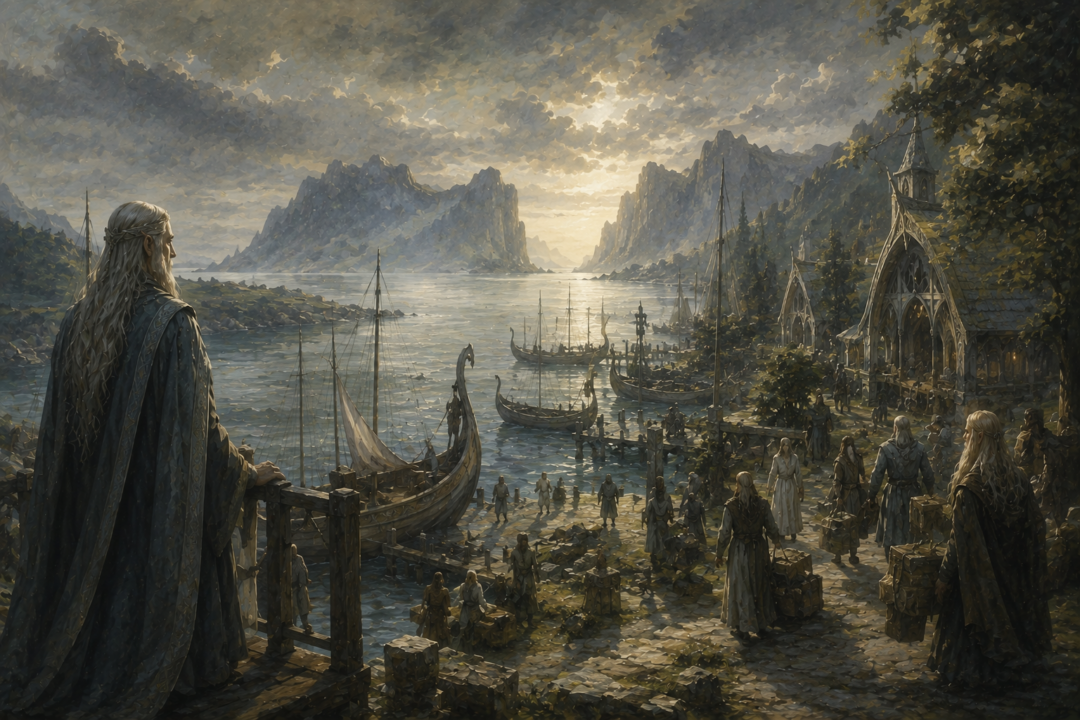
Not Everyone Took the Same Road Out
The end of Beleriand did not produce one single migration.
Different peoples followed radically different futures.
Many of the Eldar departed over Sea. Others remained, especially in Lindon, while in the course of the Second Age Elvish populations and realms also existed farther east, including Eregion and the woodland communities beyond the Misty Mountains.
The Edain who survived the wars received an entirely different destination. They were granted the island of Elenna and became the Númenóreans under Elros.
The Dwarves experienced another form of displacement. Nogrod and Belegost, their ancient cities in the Blue Mountains, passed out of their former importance after the upheavals at the end of the First Age. Appendix A of The Lord of the Rings states that many Dwarves of those ruined ancient cities went to Khazad-dûm and increased its numbers.
That is one of the clearest explicitly recorded eastward population movements connected with the destruction of the old western world.
The pattern is therefore not “Beleriand fled east.”
It is fragmentation.
Some went West over the Sea. Some remained on Beleriand’s surviving edge. The Edain moved to Númenor. Dwarven survivors moved toward Khazad-dûm. Other peoples and individuals remained in Middle-earth.
The destruction scattered the heirs of Beleriand into different geographical destinies.
The Drowned Roads Mark a Broken Human Geography
This is where the drowned roads become more than a cartographic curiosity.
A road exists because two places have reason to communicate.
The Dwarf-road connected civilizations. The crossings of the Blue Mountains connected eastern peoples with Beleriand. Rivers, fords, passes, havens, and roads formed a network through which the First Age world functioned.
When Beleriand drowned, that network was severed.
The people who survived could preserve names, languages, memories, heirlooms, and genealogies. They could not preserve the landscape that had given those things their original context.
Elrond could remember descent from the houses of Gondolin and Doriath, but there was no Gondolin or Doriath to return to.
Galadriel could remember the great western lands, but much of that world lay beneath the Sea.
Círdan could build another haven, but not on the old coast of the Falas.
This helps explain one of the defining emotional qualities of the later Ages: the past is not merely distant. Much of it is physically inaccessible.
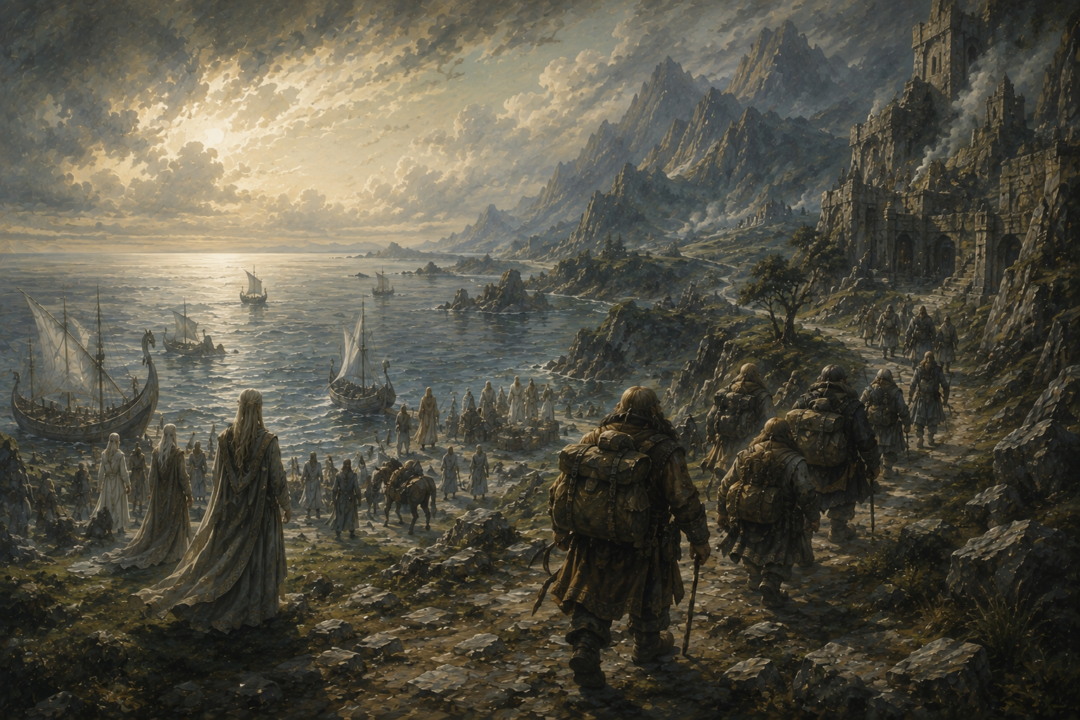
The Second Age Begins With Survivors Facing Different Directions
There is a striking symbolic geography in what follows.
At Lindon, the surviving Elves stand at the western edge of Middle-earth, looking across the Sea toward Aman.
The Edain leave Middle-earth altogether for Númenor, though not for the Undying Lands.
Dwarves from the ruined cities of the Blue Mountains move east toward Khazad-dûm.
And behind all of them lies a country that can no longer be crossed.
The texts never provide a complete demographic account of the evacuation of Beleriand, and we should not manufacture one. We cannot map every refugee route or determine exactly when every surviving community moved.
But the geography allows a more conservative conclusion.
The end of the First Age transformed migration from movement between places into movement away from a vanished world.
Before the catastrophe, roads through Beleriand connected kingdoms.
Afterward, those same routes terminated beneath the Sea.
That may be the deepest implication of the drowned roads. The survivors of Beleriand were not simply exiles whose homeland had been conquered. For many of them, there was eventually no homeland left to reconquer.
The old road west did not lead home anymore.
It led underwater.
Sources & Notes
- https://www.encyclopedia-of-arda.com/b/beleriand.php — The Encyclopedia of Arda: Beleriand (the First Age lands largely submerged after the War of Wrath, leaving Lindon west of the Blue Mountains).
- https://www.encyclopedia-of-arda.com/d/dwarfroad.php — The Encyclopedia of Arda: Dwarf-road (the route from the Blue Mountains across East Beleriand and the Gelion at Sarn Athrad).
- https://www.encyclopedia-of-arda.com/h/havensofsirion.php — The Encyclopedia of Arda: Havens of Sirion (the refuge where survivors of ruined Elvish realms gathered late in the First Age).
- https://www.encyclopedia-of-arda.com/w/warofwrath.php — The Encyclopedia of Arda: War of Wrath (the cataclysm that ended the First Age and destroyed most of Beleriand).
- https://www.encyclopedia-of-arda.com/l/lindon.php — The Encyclopedia of Arda: Lindon (the surviving remnant of Ossiriand and the new coastal geography around the Gulf of Lhûn).
Sources document Beleriand’s road network, successive refugee centers, the War of Wrath, and the altered geography that survived as Lindon.