Why did Dwarves and Elves distrust each other for so much of Middle-earth’s history?
Many fans remember the sharp exchanges between Legolas and Gimli during the War of the Ring. Others think immediately of the Elvenking’s imprisonment of Thorin’s company in Mirkwood. Yet those moments were only the visible surface of a much older wound.
The tension between Elves and Dwarves was never caused by a single betrayal, a single war, or a simple prejudice. Instead, it grew from several different sources: conflicting origins, cultural misunderstandings, disputed treasures, ancient killings, and very different ways of seeing the world itself.
What makes their story so fascinating is that neither side was entirely innocent. The tragedy of Elves and Dwarves is not that one people was good and the other bad. It is that both carried real grievances, remembered old injuries, and often failed to understand the values of the other.
By the end of the Third Age, friendship could still emerge between individuals such as Legolas and Gimli. But the road to that reconciliation stretched across thousands of years of distrust.
Different Creations, Different Purposes
One reason for the divide reaches back to the very beginning of their existence.
The Elves were the Firstborn Children of Ilúvatar, destined to awaken before Men and to remain tied to the life of Arda until its end. They were deeply connected to memory, preservation, beauty, and the long history of the world.
The Dwarves had a different origin. They were fashioned by Aulë the Smith before the coming of the Children of Ilúvatar. Although Aulë acted without permission, Ilúvatar accepted the Dwarves and granted them independent life. Even so, they remained distinct from both Elves and Men.
This difference mattered.
The Elves often viewed themselves as the elder people of Middle-earth. Dwarves, meanwhile, were proud, independent, and deeply protective of their own traditions. They did not see themselves as needing Elven approval or guidance.
The texts do not suggest that all Elves looked down on all Dwarves. There were important friendships and alliances. Yet from the beginning, these peoples possessed different identities and priorities, making mutual understanding more difficult.
The Problem of Secrecy
Dwarven culture was famously private.
They guarded the locations of many of their halls. Their language, Khuzdul, was rarely taught to outsiders. Even their true names were normally concealed from non-Dwarves.
To Dwarves, this secrecy was natural and necessary. Their survival often depended upon protecting their homes, wealth, and traditions.
To outsiders, however, such behavior could appear suspicious.
The Elves tended to be more open about their history, songs, and lineages. Their cultures preserved vast memories stretching back through the Ages. Dwarven reserve sometimes made Elves feel excluded from knowledge they believed should be shared among allies.
At the same time, Dwarves could view Elven curiosity as intrusive. What Elves saw as interest, Dwarves could interpret as interference.
Neither side necessarily intended offense, yet their cultural habits frequently produced mistrust.
Beauty and Craft Were Not the Same Thing
Another overlooked source of tension was their different relationship with craftsmanship.
Both peoples loved making things, but they valued different qualities.
The Elves often pursued beauty, memory, preservation, and harmony with the world around them. Their greatest works frequently reflected these ideals.
Dwarves were master builders, miners, smiths, and stoneworkers. Their achievements emphasized endurance, skill, structure, and material excellence.
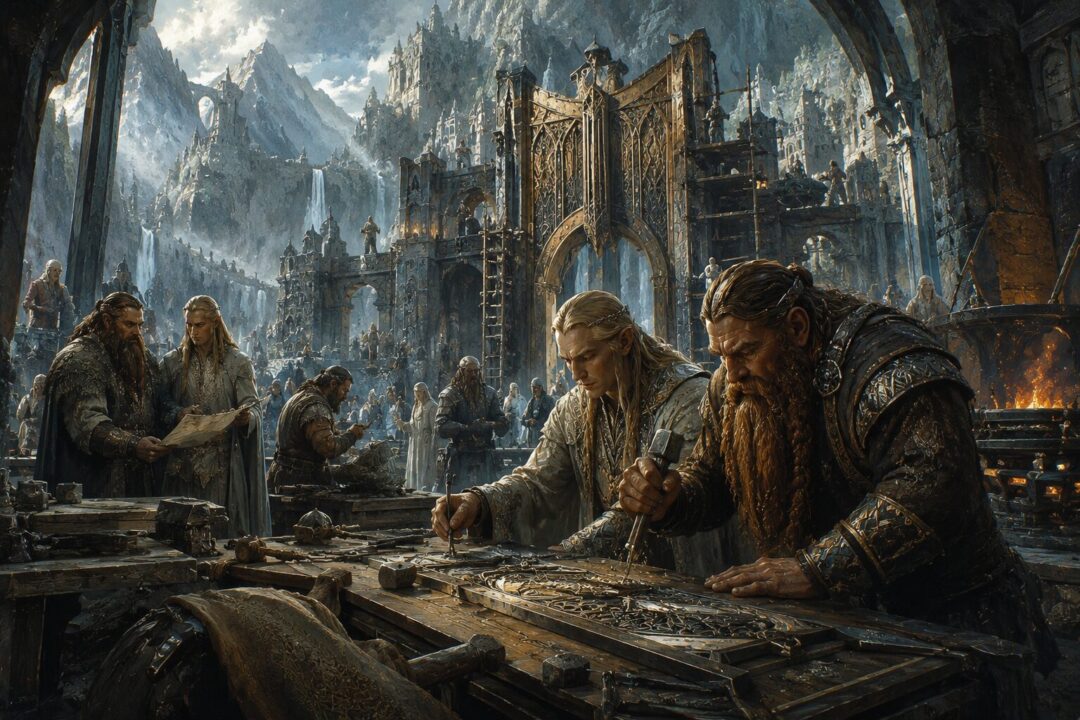
These priorities occasionally complemented one another. The greatest example was the friendship between the Dwarves of Khazad-dûm and the Elves of Eregion during the Second Age. Together they created one of the most remarkable partnerships in Middle-earth’s history.
Yet differences remained.
The texts sometimes suggest that Elves and Dwarves admired one another's craftsmanship while simultaneously failing to appreciate why the other valued it. Respect for skill did not always become understanding of culture.
The First Great Bloodshed
The most serious early rupture came during the First Age in Beleriand.
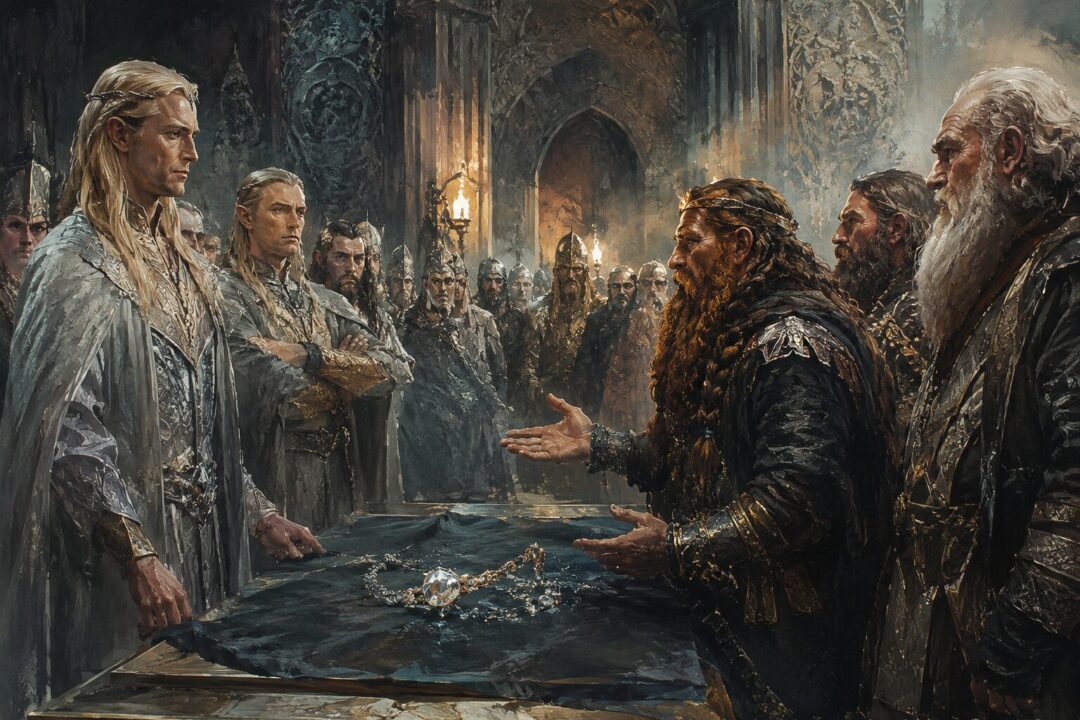
The kingdom of Doriath possessed the Nauglamír, a magnificent necklace eventually set with a Silmaril. After the death of Thingol, craftsmen from Nogrod became involved in disputes surrounding the treasure.
The conflict escalated catastrophically.
According to The Silmarillion, the Dwarves of Nogrod killed Thingol and later sought to seize the Nauglamír. Fighting followed between Doriath and the Dwarves, leading to deaths on both sides and eventually the sack of Doriath.
This event left scars that endured for generations.
Importantly, Tolkien does not portray all Dwarves as responsible. The actions were associated with specific Dwarven groups and leaders. Nevertheless, collective memory rarely works with such precision. Elves remembered a beloved king slain by Dwarves. Dwarves remembered their own losses in the resulting wars.
Once bloodshed enters a relationship, old grievances become far harder to forget.
The Curse of Valuable Things
One recurring theme throughout Middle-earth is that beautiful treasures often bring division.
The dispute over the Nauglamír and the Silmaril was not merely political. It involved ownership, pride, craftsmanship, and competing claims to something immensely valuable.
This pattern appears repeatedly in Tolkien’s world.
The Silmarils divide Elves and kingdoms. The Arkenstone contributes to conflict around Erebor. The One Ring corrupts nearly everyone who seeks to possess it.
The Dwarves and Elves were especially vulnerable to disputes involving crafted treasures because both peoples deeply appreciated great works of skill.
That appreciation was not evil. Indeed, many of the noblest creations in Middle-earth came from Elven and Dwarven hands.
Yet when pride attached itself to ownership, admiration could become rivalry.
The tragedy of Doriath demonstrates how quickly respect for craftsmanship could become violence when mixed with greed, anger, and wounded honor.
The Elvenking and the Dwarves of Erebor
By the Third Age, the old tensions had not disappeared.
The relationship between the Elvenking of Mirkwood and the Dwarves of Erebor illustrates how distrust continued long after the ancient wars.
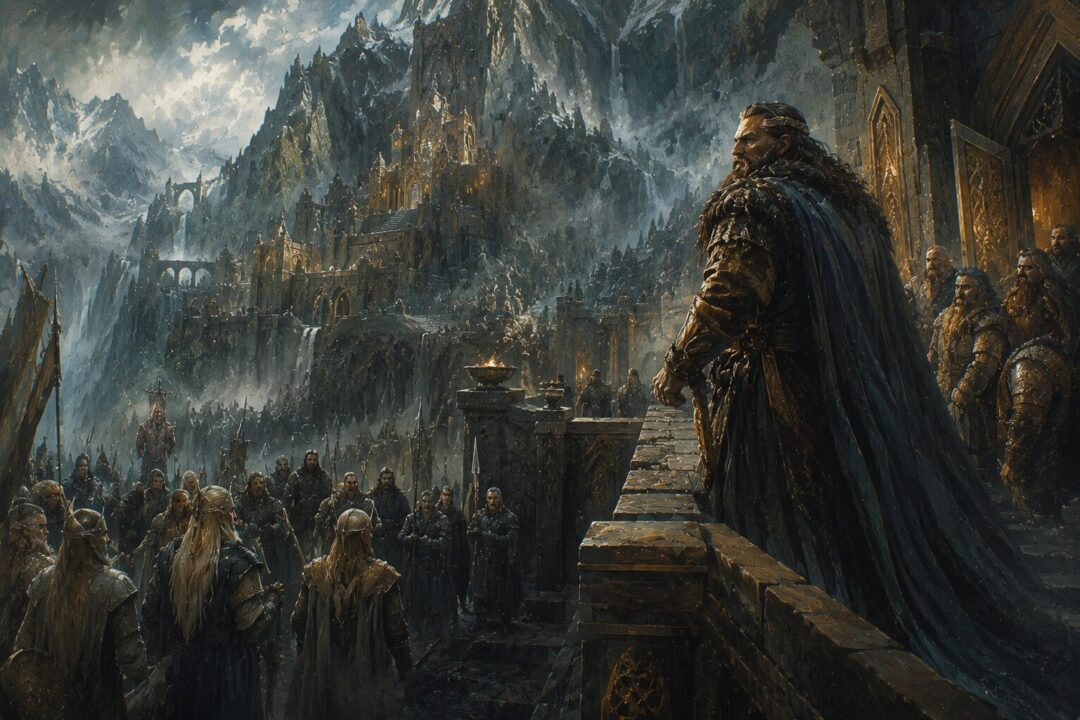
In The Hobbit, Thorin Oakenshield and his companions are imprisoned after entering the Elvenking’s realm without permission and refusing to explain their purpose.
From the Dwarves’ perspective, this treatment seemed hostile and unjust.
From the Elvenking’s perspective, armed strangers had entered his woodland kingdom while concealing their intentions.
Neither side trusted the other enough to assume good faith.
Later, during the crisis surrounding the Lonely Mountain, disagreements over treasure nearly led to war between Dwarves, Elves, and Men. Only the arrival of a greater threat united them at the Battle of Five Armies.
The episode reveals a recurring pattern: suspicion often caused both sides to interpret the actions of the other in the worst possible light.
Pride Was the Real Enemy
When examining these conflicts, one factor appears again and again.
Pride.
Dwarves were famously proud of their ancestry, achievements, and rights. Elves were equally conscious of their ancient heritage and wisdom.
Pride itself was not necessarily a flaw. Both peoples had accomplished extraordinary things.
The problem emerged when pride prevented understanding.
The Dwarves of Nogrod refused to abandon their claim to the Nauglamír. Thingol himself is often interpreted as contributing to the dispute through his own pride and harsh treatment of the Dwarven craftsmen. Thorin's judgment became clouded by possessiveness during the events at Erebor. Elven rulers could also become inflexible when convinced of the justice of their position.
The texts repeatedly show that conflicts rarely arose because one side was entirely right.
More often, tragedy emerged because several parties allowed pride to overcome wisdom.
Why Legolas and Gimli Matter So Much
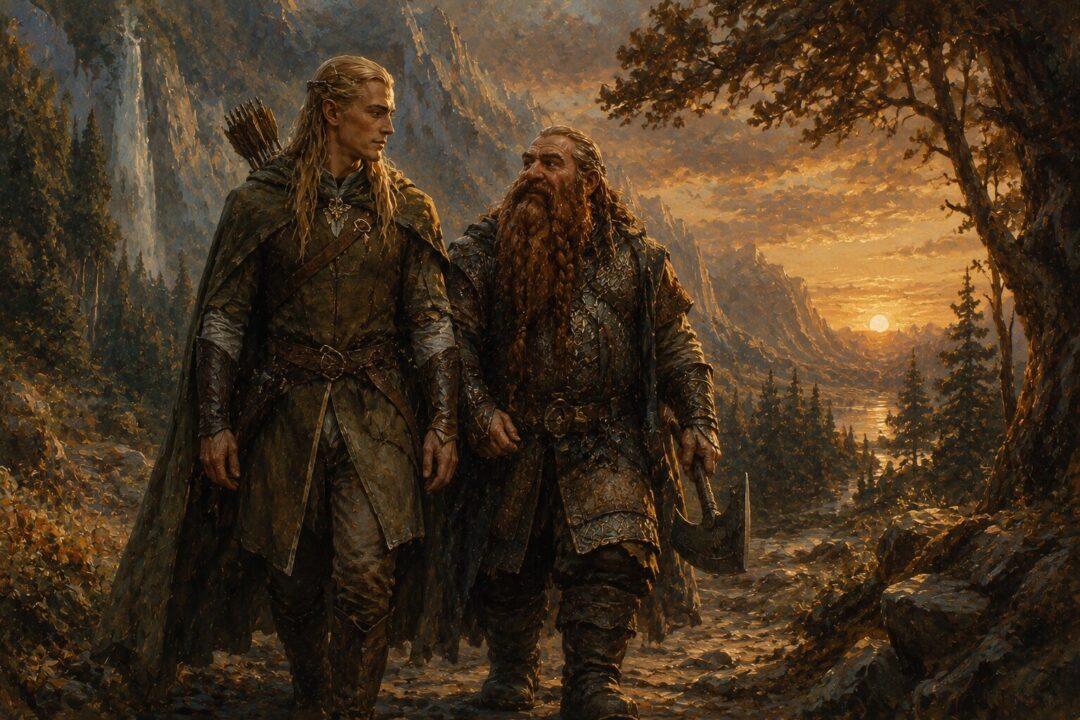
This long history explains why the friendship between Legolas and Gimli carries such significance.
At the Council of Elrond, ancient grievances are still remembered. Distrust between Elves and Dwarves remains real.
Yet through shared hardship, the two come to admire one another.
Gimli gains a profound respect for Galadriel. Legolas begins to see the beauty of Dwarven craftsmanship in places such as the Glittering Caves. Their friendship survives battles, distance, and cultural difference.
What makes this remarkable is that neither abandons his identity.
Legolas does not become less Elvish. Gimli does not become less Dwarvish.
Instead, each learns to value what the other values.
Their friendship suggests that the ancient conflict was never inevitable. The hatred between peoples had been sustained by memory, fear, misunderstanding, and pride—but it could be overcome by loyalty and genuine respect.
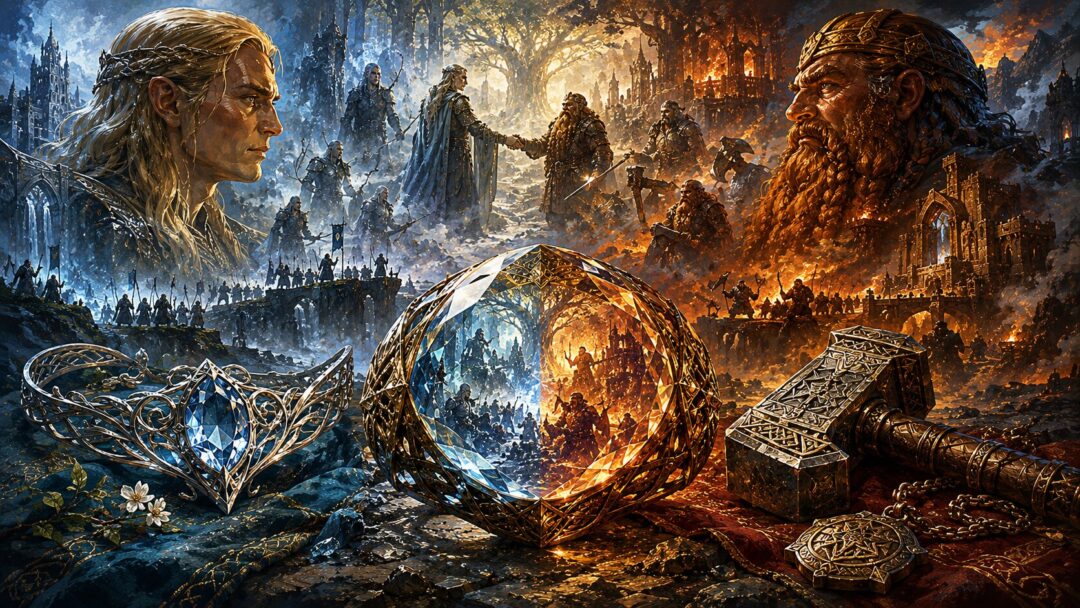
More Than One Reason, More Than One Solution
The distrust between Elves and Dwarves lasted for centuries because it was never caused by a single event.
Their different origins created distance. Their cultures encouraged misunderstanding. Ancient wars left lasting wounds. Treasures sparked deadly disputes. Pride hardened positions on both sides. Collective memory preserved every grievance.
Yet Tolkien’s legendarium also refuses to leave the story there.
Alongside the conflicts stand examples of cooperation: the friendship between Khazad-dûm and Eregion, alliances in times of war, shared admiration for craftsmanship, and ultimately the bond between Legolas and Gimli.
That is what makes the relationship so compelling. The history is not simply a tale of hatred. It is a study of how old wounds endure—and how they can eventually heal.
The Elves and Dwarves distrusted each other for many reasons. But in the end, the most hopeful lesson of their story is that understanding required more than treaties or shared enemies. It required individuals willing to see past centuries of inherited suspicion and recognize the worth of someone different from themselves.
Sources & Notes
- J.R.R. Tolkien, The Silmarillion, “Of Aulë and Yavanna” — Dwarves are made by Aulë, accepted by Ilúvatar, and set apart from Elves and Men.
- J.R.R. Tolkien, The Silmarillion, “Of the Ruin of Doriath” — Thingol, the Nauglamír set with the Silmaril, the Dwarves of Nogrod, and the bloodshed at Doriath.
- J.R.R. Tolkien, The Silmarillion, “Of the Rings of Power and the Third Age” — the Second Age friendship of Eregion with the Dwarves of Khazad-dûm.
- J.R.R. Tolkien, The Hobbit, chs. 8–9, “Flies and Spiders” and “Barrels Out of Bond” — Thorin’s company and the Elvenking’s suspicion and imprisonment in Mirkwood.
- J.R.R. Tolkien, The Lord of the Rings, “The Council of Elrond” and “The Field of Cormallen”; Appendix A, “Durin’s Folk” — lingering Elf-Dwarf grievances and the significance of Legolas and Gimli’s friendship.