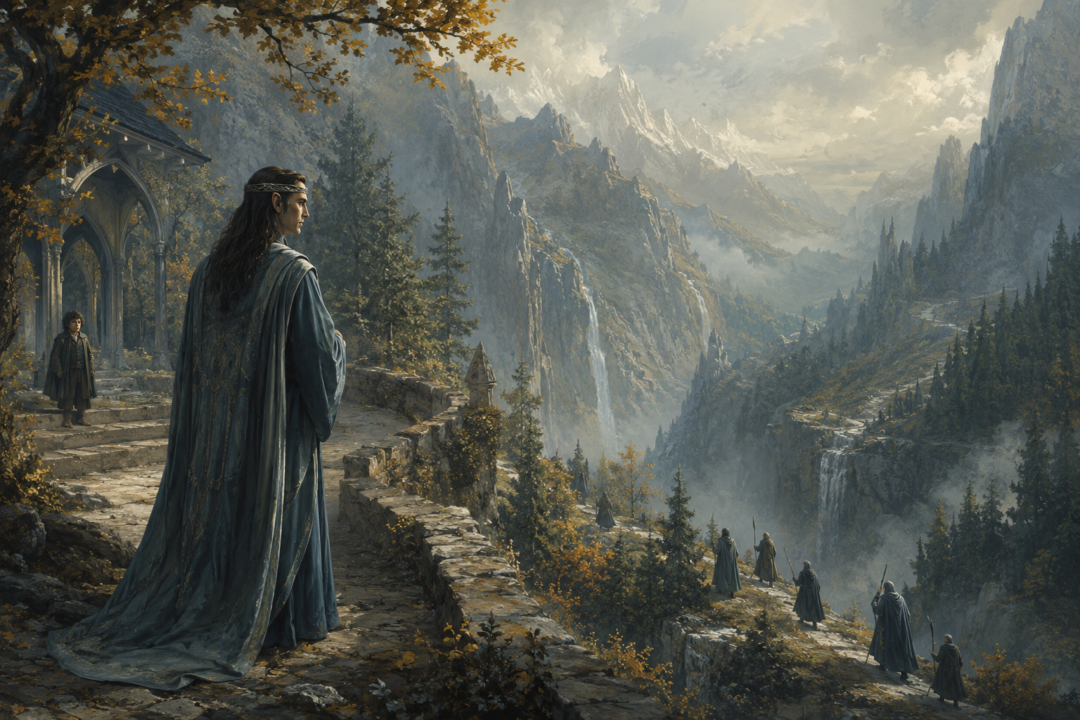
The Council of Elrond reaches its terrible conclusion on October 25, 3018: the One Ring cannot safely be used, hidden, or sent away. It must be taken into Mordor and destroyed in the fire where it was made.
Frodo accepts the burden.
Yet the Fellowship does not immediately ride south.
Instead, weeks pass in Rivendell. Winter deepens. Scouts leave the hidden valley in several directions. Only after they return does Elrond complete the Company and permit the Ring-bearer to depart.
At first glance, the delay can seem strangely passive. Sauron is growing stronger. War is approaching. The Ring has already been hunted almost to Rivendell's doorstep. Why spend nearly two months waiting after deciding that the quest is necessary?
The answer reveals something important about Elrond's strategy. The Council settles what must be done. It does not settle whether the road outside Rivendell is safe enough for the attempt to begin.
Elrond is not delaying because he doubts the quest.
He is delaying because the enemy has just lost the Ring's trail—and he intends to make sure Frodo does not immediately give it back.
The Council Ends One Problem, Not the Hunt
The Ring reaches Rivendell only after an extraordinarily narrow escape.
The Nazgûl have followed Frodo across Eriador. Frodo has been wounded by a Morgul-knife at Weathertop. Near the Ford of Bruinen, the pursuing Riders are finally overwhelmed when the river rises against them.
That defeat is significant, but it does not mean that the Nine have ceased to exist.
Their horses are lost, and their physical ability to continue the pursuit has been badly disrupted. But the Ringwraiths themselves are servants whose fate is bound to Sauron's power. Elrond therefore has every reason to treat the aftermath of the Ford as an uncertain military situation rather than a decisive victory.
The Ring is safe in Rivendell for the moment.
What nobody yet knows is what remains outside.
The Council can decide to send the Ring toward Mount Doom in a single day. It cannot know in a single day whether the servants who pursued Frodo are still somewhere nearby.
That uncertainty explains what happens next.
Elrond Sends Scouts Before He Sends the Ring
After the Council, Elrond's people begin searching beyond Rivendell.
Some scouts travel north and west. Others range east and south. The search extends across a remarkable portion of the surrounding lands. Elrond's sons, Elladan and Elrohir, journey far enough to cross the Silverlode and return from the direction of Lórien. Other scouts cross the Misty Mountains and visit Rhosgobel, where they do not find Radagast.
Their immediate concern includes the fate of the Ringwraiths.
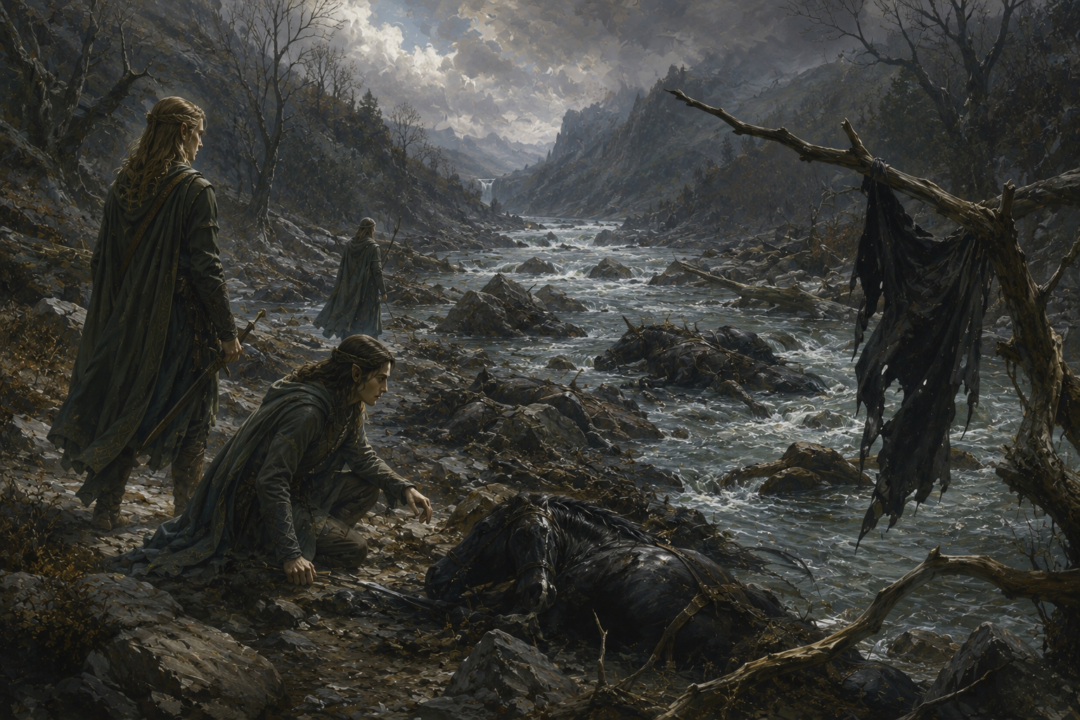
Eventually evidence is discovered of the catastrophe at the Bruinen. The bodies of eight of the Nazgûls' horses are found, and a torn black cloak is recovered. Gandalf concludes that eight of the Nine can at least be accounted for in this sense and expresses hope that the Riders have been scattered and forced to return toward Mordor without their mounts.
Importantly, this is cautious confidence, not perfect knowledge.
The scouts do not capture the Nazgûl. They do not produce proof that every Ringwraith is safely back in Mordor. The search reduces uncertainty enough for the quest to begin.
That distinction matters.
Elrond is not waiting for an impossible guarantee of safety. He is waiting for enough information to avoid sending the Ring directly into an enemy net.
Secrecy Is the Fellowship’s Real Protection
The Fellowship is powerful by ordinary standards.
Gandalf travels with it. Aragorn is among the greatest living Men. Legolas represents the Elves, Gimli the Dwarves, and Boromir is already a renowned warrior of Gondor.
But the Company is not designed as an army.
That is one of the central principles behind the entire quest.
Sauron possesses military strength far beyond anything nine travellers could defeat by force. If the Ring-bearer's movements become known, even the greatest warriors in the Company cannot protect Frodo indefinitely.
Their advantage is that Sauron does not fully understand their intention.
The Enemy desires the Ring and expects his opponents to desire its power as well. The attempt to carry it secretly into his own land and destroy it depends upon avoiding attention for as long as possible.
Elrond therefore tells the Company that they should travel secretly and, where possible, under cover of darkness. Their hope lies in concealment rather than open battle.
Seen this way, the weeks spent scouting are part of the same strategy.
Before a secret mission begins, Elrond first needs to know whether the enemy's most dangerous hunters are still circling the point of departure.
The Nazgûl Had Already Proven How Dangerous They Were
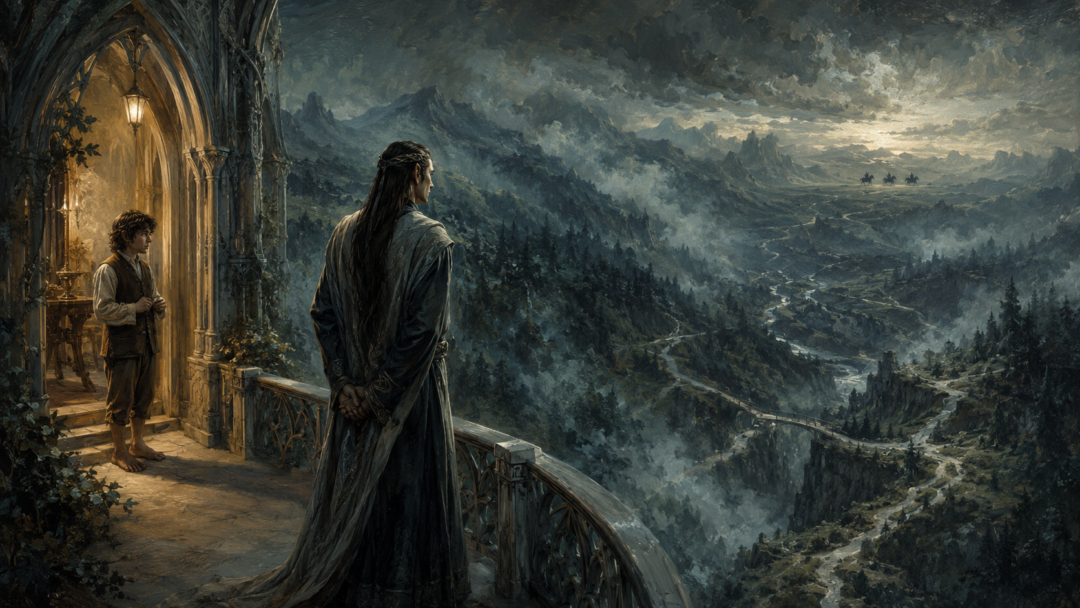
The caution is especially understandable because the Black Riders have already demonstrated their effectiveness.
They found their way into the Shire, a country so obscure to the great powers that even its location had required investigation. They questioned inhabitants of Eriador, pursued the hobbits through increasingly dangerous country, attacked at Weathertop, and nearly overtook Frodo again at the Ford.
Frodo survived partly because he received help repeatedly along the road.
Had the Nazgûl remained mounted and organized near Rivendell, sending the Ring-bearer immediately south could have been disastrous.
There is also another consideration: once the Fellowship leaves Rivendell, Elrond can no longer shelter it.
Rivendell is one of the remaining strong places of the Free Peoples, guarded by Elrond's power and by its hidden position. The road south offers no comparable protection. The Company will eventually cross empty lands, face the mountains, and enter territories in which friendly aid becomes increasingly uncertain.
The moment of departure therefore matters enormously.
Leaving quickly is not automatically the same thing as acting wisely.
Elrond Is Buying Information, Not Comfort
Nothing in the text suggests that Elrond keeps Frodo in Rivendell simply because he is reluctant to expose him to danger.
The entire logic of the Council rejects that possibility.
Keeping the Ring permanently in Rivendell would eventually bring ruin there. Sending it to another refuge would only move the problem. Using it against Sauron carries its own terrible danger. The only path that offers a final victory is destruction.
Elrond has accepted that Frodo must leave.
What he refuses to do is confuse urgency with recklessness.
This is one of the subtler strategic ideas in the story. Sometimes delay benefits the Enemy. But sometimes immediate movement benefits the Enemy even more.
Sauron's servants know that the Ring reached the region of Rivendell. If Frodo had departed almost at once while the pursuit was still active, his enemies might only have needed to continue watching the surrounding roads.
By the time the Fellowship finally leaves, the immediate hunt has been disrupted. The Ringwraiths have lost their horses, their pursuit has been broken, and Rivendell's scouts have searched widely for signs of them.
The Fellowship begins its journey after that immediate pressure has eased.
The Waiting Period Also Allows the Company to Take Shape
The final membership of the Fellowship is not simply announced at the Council itself.
Frodo volunteers to carry the Ring, and Sam's place beside him quickly becomes inevitable, but Elrond continues considering the composition of the Company afterward.
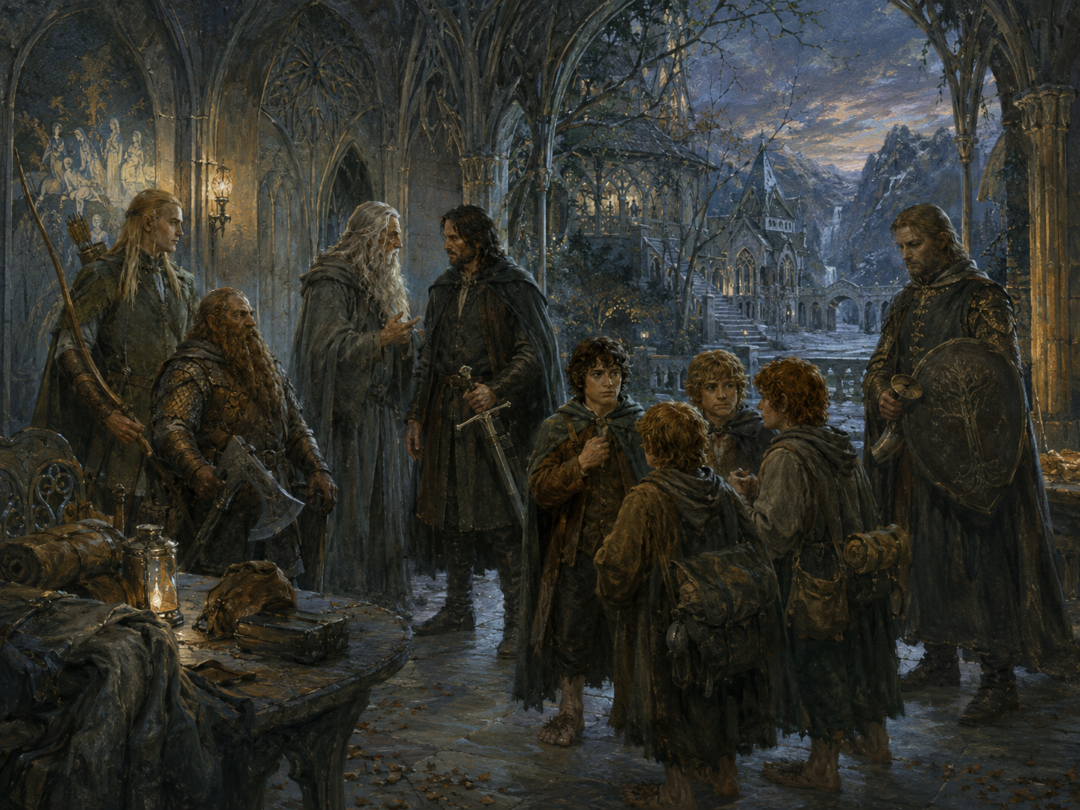
Eventually nine walkers are chosen to oppose the Nine Riders: Frodo, Sam, Merry, Pippin, Gandalf, Aragorn, Boromir, Legolas, and Gimli.
Even here Elrond remains cautious.
He initially has reservations about including the younger hobbits, especially Pippin, and considers whether someone should instead return toward the Shire to warn its people of growing danger. Gandalf argues in Pippin's favor, believing that friendship and loyalty may matter more than Elrond's calculations anticipate.
That exchange shows that the delay is not empty time.
The nature of the mission is being translated from a decision into an actual travelling company.
Weapons and supplies must be prepared. Aragorn's broken sword is reforged as Andúril. Frodo receives Sting and the mithril coat from Bilbo. The members of the Company make themselves ready for a journey whose destination is known but whose route remains uncertain.
Elrond Cannot Plan the Entire Quest
For all his wisdom, Elrond does not send the Fellowship away with a complete route to Mount Doom.
This is deliberate.
He can gather intelligence about the lands around Rivendell. He can choose companions. He can offer counsel. But Middle-earth is already moving toward war, and no plan made in a hidden valley can predict every obstacle ahead.
The Fellowship will soon discover this.
Their attempted crossing of Caradhras fails. Their journey turns toward Moria. Gandalf falls. The Company reaches Lórien, travels down the Anduin, and finally breaks apart at Amon Hen.
None of those events can be solved beforehand by another week of discussion in Rivendell.
Elrond's caution therefore has limits.
He waits while information can still materially improve their chances. Once the scouts have returned and the Company is prepared, further delay would provide diminishing benefit while Sauron's strength continues to grow.
Then the Fellowship goes.
The Departure Is Quiet Because the Mission Must Remain Small
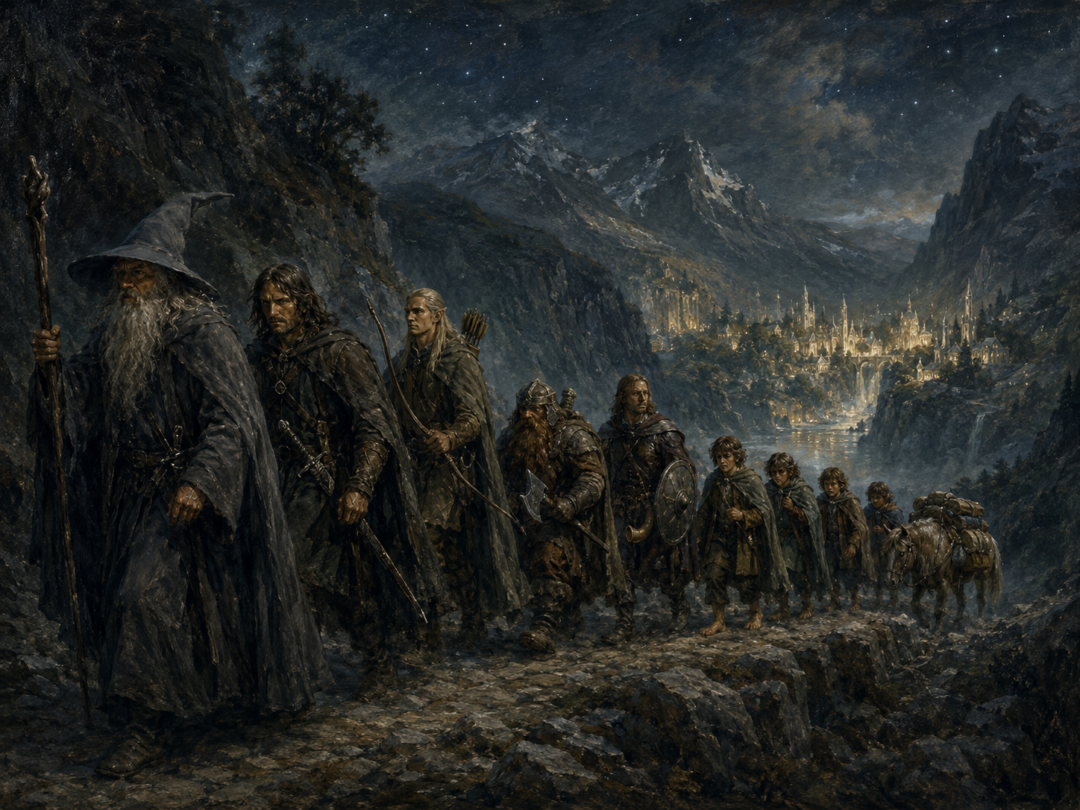
On December 25, the Company leaves Rivendell.
There is no army marching behind Frodo. No banners announce the beginning of the great attempt against Sauron. The Fellowship departs quietly into the night.
That image explains the entire period between Council and departure.
Elrond's strategy is built around the fact that the quest cannot succeed through visible strength. Its greatest protection is that the Enemy does not know where the Ring is going or what its bearer intends to do with it.
The scouts reduce the chance that the Nazgûl are waiting nearby. The weeks of preparation allow the Company to be chosen. Travelling at night helps conceal their movement. Their small number prevents the mission from becoming an obvious military expedition.
Every choice serves secrecy.
And secrecy requires patience.
Elrond’s Delay Is the First Test of the Quest’s Logic
The temptation after the Council is to think that courage means leaving immediately.
Elrond understands something more difficult.
Once the Ring has been identified and the road to its destruction accepted, Frodo's greatest danger is not merely hesitation. It is exposure.
The Ringwraiths have just been thrown from the hunt. Sauron has temporarily lost direct contact with his quarry. For perhaps the first time since the Black Riders entered the Shire, the Ring-bearer possesses something more valuable than speed: uncertainty in the mind of the Enemy.
Elrond does not waste that advantage.
He sends others into danger first. They search the roads, mountains, and distant lands. They return with enough evidence for Gandalf and Elrond to believe that the immediate pursuit has been broken.
Only then does the Ring move again.
The nearly two-month pause in Rivendell is therefore not a gap between the decision and the story's real action.
It is part of the action.
Before the Fellowship can attempt the impossible task of entering Sauron's realm unnoticed, Elrond makes one final effort to ensure that they can leave his house unnoticed.
The Council determines the fate of the Ring.
The waiting afterward gives that decision its first chance to succeed.
Sources & Notes
- https://www.glyphweb.com/arda/c/councilofelrond.php — Encyclopedia of Arda: the Council’s decisions and the quest established at Rivendell
- https://www.glyphweb.com/arda/f/fellowshipofthering.php — Encyclopedia of Arda: the Company’s selection, preparation, departure, and route
- https://www.glyphweb.com/arda/e/elrond.php — Encyclopedia of Arda: Elrond’s counsel, household, foresight, and role in organizing the quest
- https://www.glyphweb.com/arda/r/rivendell.php — Encyclopedia of Arda: the refuge where the Council met and the Fellowship prepared
Sources document the Council, Elrond’s preparations, Rivendell, and the Fellowship formed there.