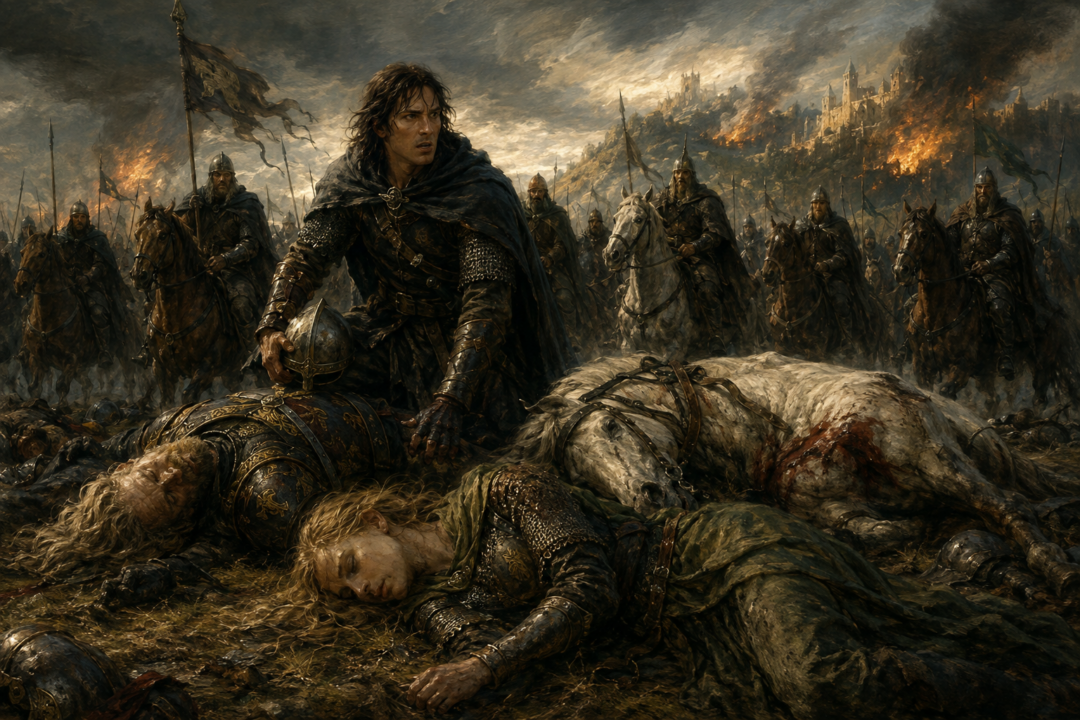
Few moments on the Pelennor Fields feel more fiercely Rohirric than Éomer’s cry after he finds Éowyn lying among the fallen.
Théoden is dying. Éowyn appears dead. The young marshal has effectively lost his king and, as far as he knows, his sister almost at once. Grief turns immediately into wrath. He calls the Riders forward, and the Rohirrim surge southward with a terrible cry of death.
It is magnificent.
It is also dangerously close to becoming a military catastrophe.
The crucial detail in The Return of the King is not simply that Éomer becomes furious. It is that his fury temporarily overwhelms the judgment expected of the man who has just inherited command of Rohan. The text explicitly emphasizes that he acts without taking counsel or waiting for the forces coming from Minas Tirith.
Éomer’s charge does enormous damage to the enemy. But it also carries the Rohirrim deep into a battlefield where cavalry cannot solve every problem, fresh enemy forces are arriving, and Gondor’s defenders have not yet fully joined them.
His courage never fails.
For a dangerous stretch of the Battle of the Pelennor Fields, however, courage is no longer the same thing as strategy.
Théoden Had Already Shown What Controlled Fury Could Do
The contrast with Théoden is important.
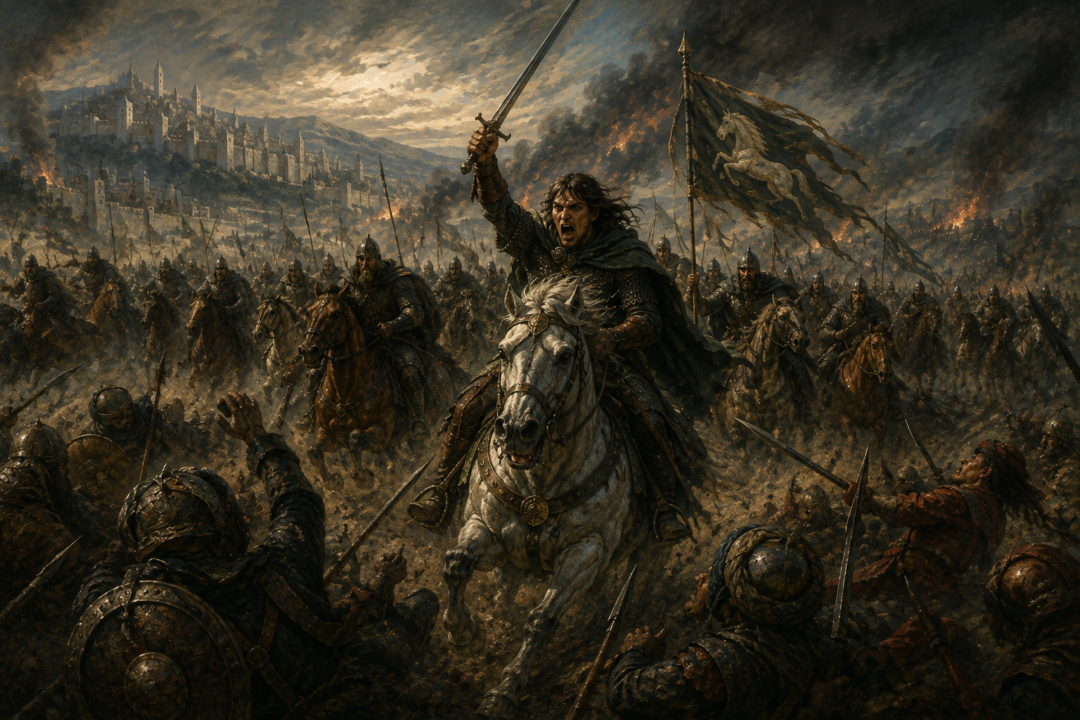
When the Rohirrim arrive at dawn, Théoden does not enter the battle timidly. His charge is one of the most aggressive actions in the entire War of the Ring. The Riders smash into the northern part of the enemy host, and Théoden himself eventually confronts the horsemen of Harad.
When the Haradrim chieftain advances beneath the standard of a black serpent upon scarlet, Théoden meets him in battle. The king casts him down and cuts down the standard-bearer.
This is wrath harnessed to battlefield purpose.
Théoden is certainly carried by something almost beyond ordinary strength in his final charge, but his violence remains directed. The Rohirrim have achieved surprise. Their mounted strength is being used where it can have devastating effect, and the king maintains command of the assault.
Then the Witch-king intervenes.
Snowmane falls upon Théoden, mortally injuring him. Éowyn and Merry defeat the Lord of the Nazgûl nearby, but Éowyn herself collapses.
When Éomer finally reaches the place, the structure of his world appears to have been destroyed.
Éomer Becomes King in the Worst Possible Moment
Théoden names Éomer his heir before dying.
That means Éomer does not merely lose an uncle and king on the Pelennor. At that instant, responsibility for Rohan passes to him.
Then he sees Éowyn.
He does not know that she still lives. Indeed, Éomer believes he is looking upon his sister’s corpse.
His reaction is immediate and devastating.
The text describes a cold fury coming over him. He calls out for Éowyn, then turns his grief outward in a cry of death and destruction. Most importantly from a military perspective, he does not pause to coordinate with the forces of Gondor approaching from the City.
He drives back toward the front and orders the attack.
That sentence matters because it distinguishes Éomer’s action from a calculated cavalry offensive. This is not merely a commander recognizing an opportunity and exploiting it aggressively.
His judgment has been wounded by grief.
The Rohirrim follow him.
Their songs cease.
They ride southward.
The Charge Works — Which Makes It More Dangerous
Éomer’s fury is not useless.
That is what makes the episode more interesting than a simple warning against anger.
The Rohirrim become terrifying.
They tear through their enemies, and Éomer personally fights with extraordinary ferocity. The momentum of mounted warriors already inflamed by the death of Théoden becomes a weapon in itself.
But tactical success can create strategic danger.
Every successful push carries Éomer farther from the more secure northern part of the battlefield and deeper toward the southern and eastern struggle. Meanwhile the enemy is not finished.
The forces of Mordor and its allies still possess reserves.
More troops enter the battle from Osgiliath: Easterlings, Variags of Khand, Haradrim, and other forces. These fresh enemies are able to threaten the Rohirrim and interfere with the attempt of Gondor’s forces to join them.
Éomer has struck hard.
But he has not destroyed the enemy army.
And now his own force is increasingly exposed.
The Mûmakil Reveal the Limits of Rohirric Power
The Rohirrim’s greatest battlefield advantage is obvious: horses.
Speed allows them to strike with extraordinary force, change position rapidly, and overwhelm formations before those formations can respond effectively.
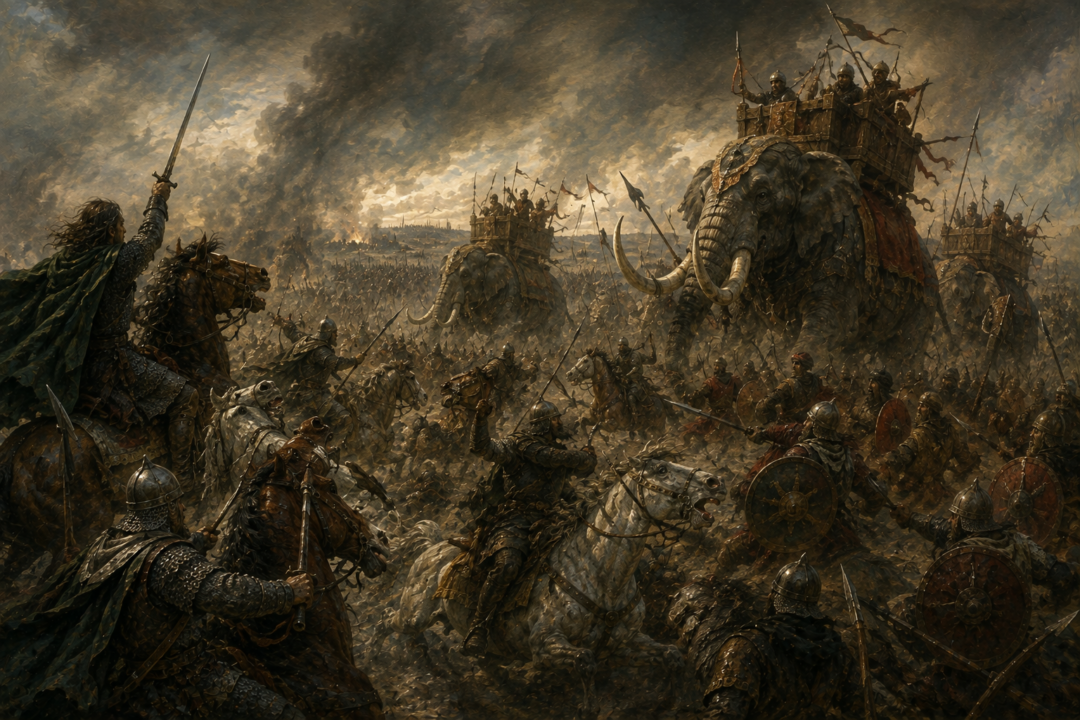
Against the Mûmakil, that advantage is drastically reduced.
The horses will not willingly approach the enormous beasts.
The Haradrim can therefore gather around the Mûmakil as points of resistance that the Rohirrim cannot simply ride down. The cavalry’s momentum begins to lose its decisive character.
This is the hidden problem behind Éomer’s fury.
He is commanding one of Middle-earth’s most formidable mounted forces, but the Pelennor is becoming a battlefield where mounted aggression alone cannot guarantee victory.
His enemies can anchor themselves around the Mûmakil. Fresh forces are arriving. Éomer’s Riders have already been fighting hard.
And their king has driven them forward under the assumption that death is now the likely end.
Heroically, that produces astonishing courage.
Strategically, it is terrifying.
Gondor and Rohan Risk Being Prevented From Joining
Another important development is happening closer to Minas Tirith.
Prince Imrahil leads the men of the City outward.
This should be the moment when the two allied forces reinforce one another: Gondor pushing from the City while Rohan attacks across the field.
But the enemy responds.
Fresh forces move to prevent the union of the Rohirrim and Gondor’s troops. Éomer is increasingly isolated amid a battle that is no longer defined by the unstoppable momentum of Théoden’s first charge.
The danger is not that Éomer suddenly becomes incompetent.
It is that he has surrendered something commanders desperately need: patience.
He has allowed grief to dictate the scale of risk he is willing to accept.
Earlier, victory mattered.
Now glorious death is becoming acceptable.
That changes everything.
Éomer Eventually Regains His Clarity
One of the most easily overlooked details of the episode is that Éomer does not remain consumed by battle madness.
His mind clears.
By the time his position has become desperate, he recognizes the tactical reality.
The Rohirrim cannot simply continue charging forever.
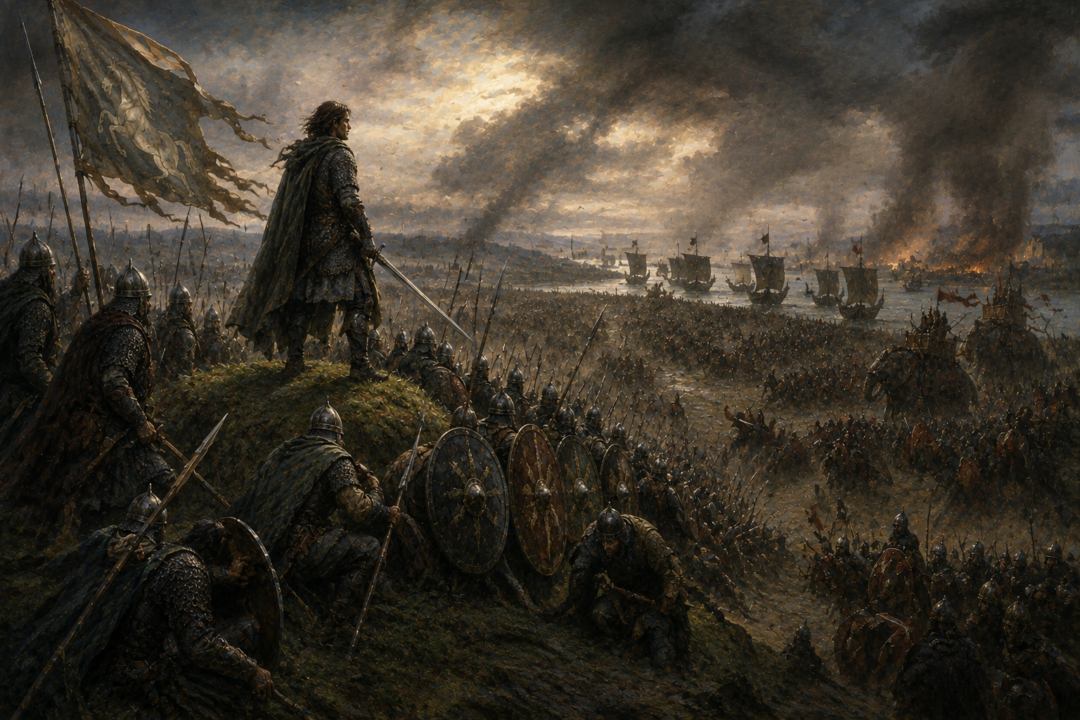
So Éomer rallies as many men as he can and prepares a defensive position. He chooses a green hillock, plants his banner there, and intends to form a shield-wall and fight on foot if necessary.
This is a profound change.
The mounted offensive has effectively reached its limit. Éomer stops behaving as though momentum alone can save them and begins preparing for a disciplined final defense.
His courage remains unchanged.
His judgment has returned.
Yet the situation is grim enough that he expects this stand may become the end of the Rohirrim on the field.
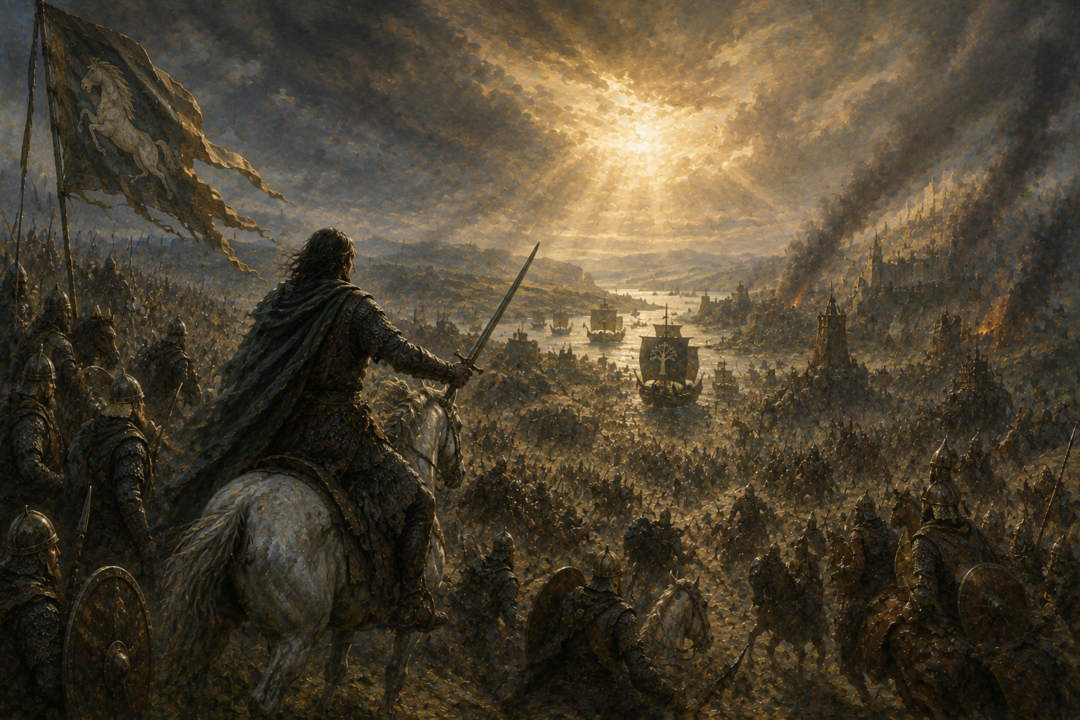
Then he sees the ships.
The Black Sails Seem to Confirm His Doom
Ships are coming up the Anduin.
To the defenders, they appear to be the Corsair fleet from the south.
From Éomer’s position, this looks like the final disaster.
The enemy already presses around him. Gondor is hard beset. His Riders have been driven into a desperate position. Now what appears to be another hostile army is arriving by river.
Éomer laughs.
Not because the situation is amusing, but because hope appears exhausted. He answers apparent doom with defiance and prepares to make his final stand.
Then the banner breaks upon the wind.
The ships do not carry Corsairs.
Aragorn has come.
With him are Legolas and Gimli, the Grey Company, the sons of Elrond, and fighting men gathered from Gondor’s southern lands after the Corsairs were defeated.
Suddenly Éomer’s exposed position changes meaning.
What had threatened to become an isolated last stand becomes one side of a converging attack.
Aragorn Turns Éomer’s Dangerous Advance Into an Advantage
Éomer could not have planned what happens next.
That distinction matters.
Once Aragorn’s force lands at the Harlond and attacks northward, the enemy is caught between converging forces. Gondor presses outward, Éomer’s Rohirrim remain active on the field, and Aragorn advances from the south.
The strategic situation transforms.
Éomer’s deep advance, which had helped place him in danger of encirclement, now puts his Riders in position to cooperate with Aragorn’s unexpected relief force.
The two eventually meet amid the battle.
But this does not mean Éomer’s earlier fury was secretly brilliant strategy.
The rescue depended upon information Éomer did not possess.
He did not know Aragorn had captured the Corsair ships.
He did not know reinforcements from southern Gondor were coming aboard them.
Indeed, when he first sees the sails, he assumes the opposite.
His position is saved not because his despair correctly anticipated events, but because hope arrives from beyond his knowledge.
The Real Danger Was Not Anger, but Despair
Éomer’s battle fury is often remembered because it is spectacular.
Yet beneath the heroic surface lies something darker.
The most dangerous change in Éomer is not that he becomes angry.
Rohan’s warriors repeatedly fight with fierce emotion, and wrath can strengthen rather than weaken them.
The danger is that Éomer temporarily stops valuing survival.
After believing Éowyn dead, he is willing to ride toward ruin. His personal despair becomes a military decision affecting thousands of Riders who now depend upon him as their king.
That is why his later recovery of clarity matters so much.
He rallies his scattered warriors.
He chooses ground.
He prepares a shield-wall.
He resumes command.
Éomer does not cease being heroic when the charge ends. In some ways, his more important act of leadership comes afterward, when he masters his despair sufficiently to organize what he believes will be Rohan’s final defense.
And then the battlefield changes again.
Aragorn arrives beneath a banner that turns apparent catastrophe into hope.
The Pelennor Fields therefore give Éomer one of the harshest lessons of kingship imaginable. Within a matter of hours he loses Théoden, believes Éowyn dead, inherits a kingdom, drives his army into a furious offensive, faces encirclement, prepares for annihilation, and then discovers that unexpected allies have transformed the battle.
His wrath nearly carries him beyond strategy.
His courage keeps him fighting.
But it is the return of clear judgment — combined with help he could never have foreseen — that allows the new King of the Mark to survive his first battle as king.
Sources & Notes
- https://www.encyclopedia-of-arda.com/e/eomer.php — The Encyclopedia of Arda: Éomer (his succession to Théoden, grief-driven charge, and command on the Pelennor).
- https://www.encyclopedia-of-arda.com/b/battleofthepelennorfields.php — The Encyclopedia of Arda: Battle of the Pelennor Fields (the battle’s phases, reinforcements, and changing tactical situation).
- https://www.encyclopedia-of-arda.com/e/eowyn.php — The Encyclopedia of Arda: Éowyn (her fall after defeating the Witch-king and Éomer’s mistaken belief that she was dead).
- https://www.encyclopedia-of-arda.com/t/theoden.php — The Encyclopedia of Arda: Théoden (his final controlled charge, death, and transfer of command to Éomer).
Sources checked for relevance and availability.