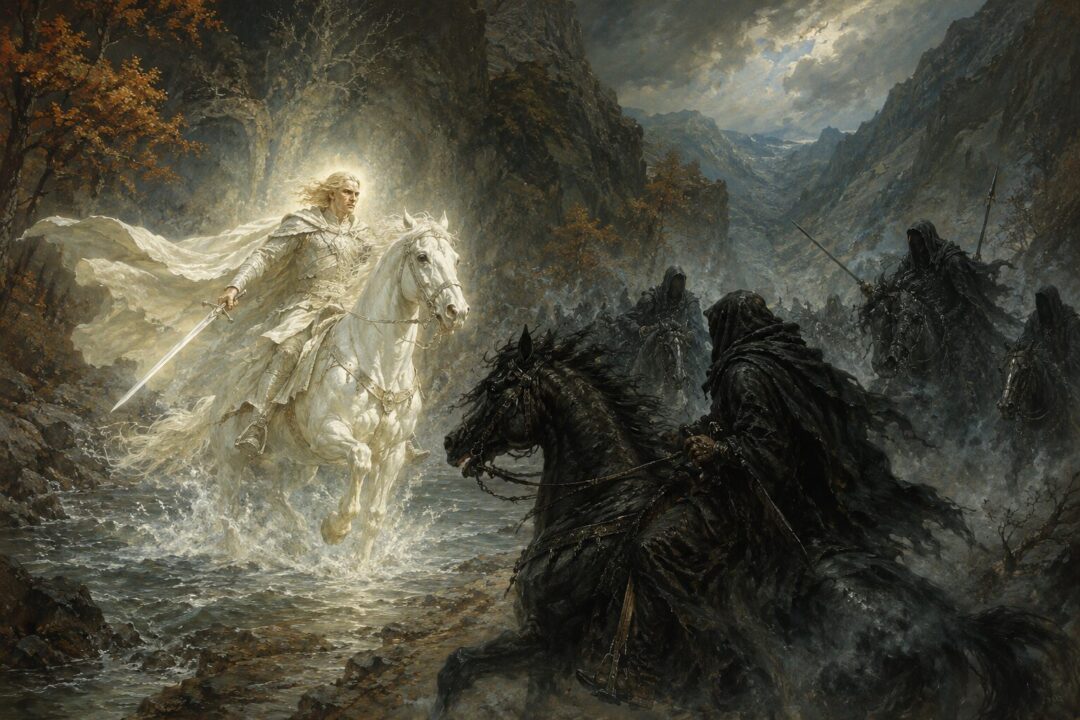
When the Nine Riders closed in on the fleeing Ring-bearer, few living beings in Middle-earth could meet them without fear. Yet one Elf not only faced them openly but drove them back. Glorfindel, radiant with a power the Nazgûl themselves dreaded, escorted Frodo toward Rivendell and helped force the Black Riders into retreat at the Ford of Bruinen. Later, at the Council of Elrond, he was even suggested as a possible bearer of the One Ring.
So why did Glorfindel never join the Fellowship?
At first glance, it seems like an obvious mistake. If a single Elf-lord could frighten servants of Sauron that had terrified kingdoms for centuries, why not send him straight into Mordor?
The answer reveals one of the deepest themes in The Lord of the Rings: victory against evil depends less on overwhelming strength than on wisdom, humility, secrecy, and the right people carrying the right burdens.
Glorfindel Was Far More Than an Ordinary Elf
To understand why Glorfindel remained behind, it is first necessary to understand who he truly was.
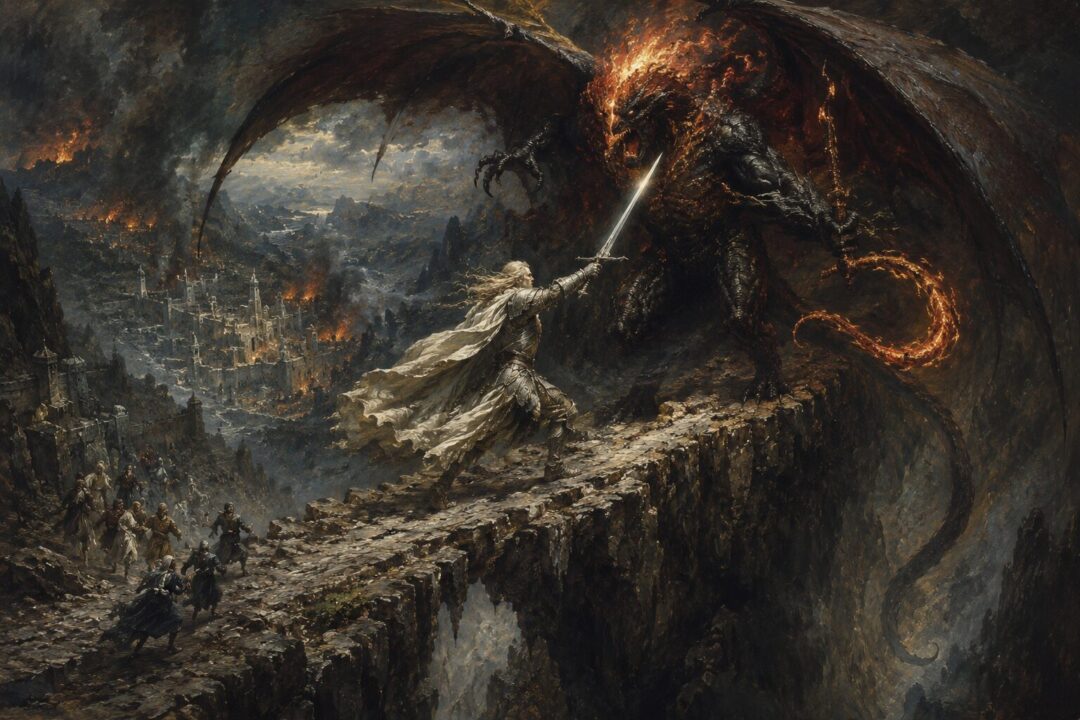
Glorfindel was one of the great Elves of the Elder Days. During the Fall of Gondolin in the First Age, he famously fought a Balrog upon a mountain pass while protecting refugees fleeing the ruined city. The battle ended with both combatants falling to their deaths, but Glorfindel’s sacrifice allowed many survivors—including Idril, Tuor, and the young Eärendil—to escape.
Unlike most Elves who departed Middle-earth after death, Glorfindel was eventually restored to life in the Blessed Realm. The published texts do not explain this process in detail, but later writings indicate that he returned to Middle-earth during the Second Age, already spiritually strengthened by his time in Aman.
By the end of the Third Age, Glorfindel was therefore no ordinary lord of Rivendell. He had experienced death, renewal, and centuries of service against darkness. His spiritual presence reflected this extraordinary history.
Why the Nazgûl Feared Him
One passage in The Lord of the Rings hints that Frodo, while wearing the Ring, saw Glorfindel differently than ordinary eyes could.
Instead of merely seeing an Elf upon a white horse, Frodo perceived him as a shining figure of brilliant white light.
This moment is significant because the Nazgûl themselves exist largely within the Unseen world. They are not simply cloaked warriors but beings whose greatest strength lies in that invisible realm. Glorfindel’s spiritual radiance was therefore especially visible—and especially threatening—to them.
Elsewhere, later explanatory writings describe Glorfindel as one whose power in the spiritual realm had become exceptionally great after his return from Aman. These writings help explain why the Witch-king and the other Ringwraiths treated him with unusual caution.
This does not mean Glorfindel could destroy the Nine single-handedly or that they fled him under all circumstances. Rather, the texts show that they respected his power and avoided direct confrontation when they lacked advantage.
At the Ford of Bruinen, their hesitation gave precious time for Elrond’s flood to sweep them away.
The Council Never Ignored Glorfindel
It is sometimes assumed that Glorfindel was simply overlooked when the Fellowship was formed.
The text shows the opposite.
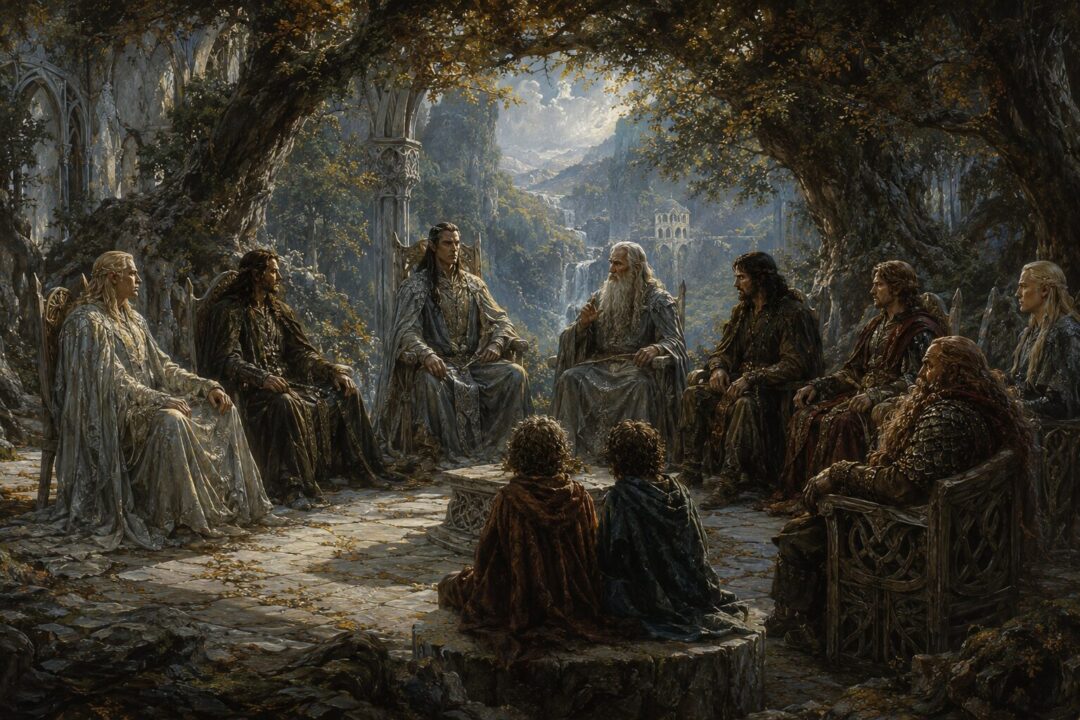
During the Council of Elrond, his name was explicitly raised as someone who might accompany the Ring.
This was no casual suggestion. Among those gathered in Rivendell, Glorfindel ranked among the wisest and strongest available.
Yet Elrond rejected the idea—not because Glorfindel lacked courage or power, but because the entire strategy of the quest demanded something different.
Strength Was Not the Mission
The central objective was never defeating Sauron’s armies in battle.
No force remaining in Middle-earth could accomplish that.
Even if Glorfindel had joined Aragorn, Gandalf, and the greatest warriors of every Free People, they could not have marched into Mordor and won through military strength.
The Council understood that Sauron vastly outmatched them in conventional war.
Their only hope lay in destroying the One Ring without Sauron realizing where it had gone until it was too late.
This required stealth rather than glory.
Every additional display of overwhelming power risked drawing the Enemy’s attention.
In this context, Glorfindel’s greatness could become a disadvantage rather than an advantage.
Elrond Explained the Real Danger
Elrond’s reasoning is remarkably practical.
He warns that powerful individuals would naturally become the focus of Sauron’s attention.
The Enemy expected resistance from kings, captains, mighty Elves, and renowned warriors. Such figures fit his understanding of how power operates.
A hidden Hobbit carrying the Ring toward Mount Doom did not.
This mismatch between Sauron’s expectations and reality became one of the quest’s greatest strengths.
Glorfindel’s presence would not necessarily have revealed the mission immediately, but an Elf-lord of his stature traveling across Middle-earth would have been far harder to conceal than several humble companions.
The Fellowship deliberately balanced wisdom, skill, endurance, and obscurity.
Its composition reflected strategy rather than military rank.
The Ring Would Have Tested Glorfindel Too
It is tempting to imagine Glorfindel as immune to corruption because of his holiness and long history.
The texts never make that claim.
One of the consistent lessons of the legendarium is that no embodied person should willingly possess the One Ring.
Gandalf refused it.
Galadriel refused it.
Aragorn never claimed it.
Even Elrond did not propose wielding it.
Their wisdom lay partly in recognizing their own vulnerability.
The Ring tempted individuals according to their strength and their desire to accomplish good. The greater the person, the greater the possible catastrophe if corruption succeeded.
Nothing in the primary texts suggests Glorfindel stood outside this danger.
If anything, his immense abilities would have made the consequences of corruption even more terrible.

The Fellowship Needed More Than Warriors
Looking only at combat ability can make some members of the Fellowship seem surprisingly weak.
Why include Merry and Pippin?
Why send Sam?
Why not replace them with another mighty Elf?
The story itself answers these questions.
Sam ultimately proved indispensable to Frodo’s success.
Merry helped bring about the fall of the Witch-king.
Pippin played crucial roles in Gondor and the defense of Minas Tirith.
Their courage mattered precisely because it appeared insignificant.
Again and again, seemingly small choices accomplished what overwhelming force could not.
Glorfindel undoubtedly possessed greater martial power than any Hobbit.
But the quest was never simply a military expedition.
Glorfindel’s Greatest Victory Had Already Been Won
Another overlooked aspect of Glorfindel’s story is that his defining triumph was never about defeating enemies.
His greatest deed came through self-sacrifice.
On the mountain pass outside Gondolin, he knowingly faced a Balrog so others could escape.
His victory lay not in surviving but in giving his own life for the preservation of hope.
That pattern echoes throughout The Lord of the Rings.
The greatest heroes repeatedly succeed by accepting sacrifice rather than seeking domination.
Glorfindel had already embodied this ideal centuries before Frodo ever left the Shire.
His wisdom therefore fits naturally with Elrond’s decision.
There is no indication that Glorfindel objected or sought greater glory.
Instead, he accepted the role assigned to him.
His Duty Was Still Vital
Remaining in Rivendell did not mean becoming irrelevant.
Rivendell remained one of the last great refuges of the Free Peoples.
It guarded ancient knowledge, sheltered travelers, and served as a strategic center throughout the War of the Ring.
Although the narrative follows the Fellowship, much of Middle-earth continued fighting elsewhere.
The texts provide only limited detail about Glorfindel’s specific activities after the Fellowship departed. It is therefore best not to invent campaigns or battles involving him.
What can safely be said is that powerful guardians remained necessary while the quest unfolded.
Not every victory occurred on the road to Mordor.
Some consisted simply of preserving the places from which hope could endure.
A Victory Sauron Could Never Imagine
Perhaps the strongest reason Glorfindel stayed behind lies in understanding Sauron’s own mind.
Sauron expected powerful rivals because he himself measured others through power.
He assumed that anyone who gained the Ring would eventually attempt to challenge him openly.
This assumption shaped his entire strategy.
The Fellowship exploited that blind spot.
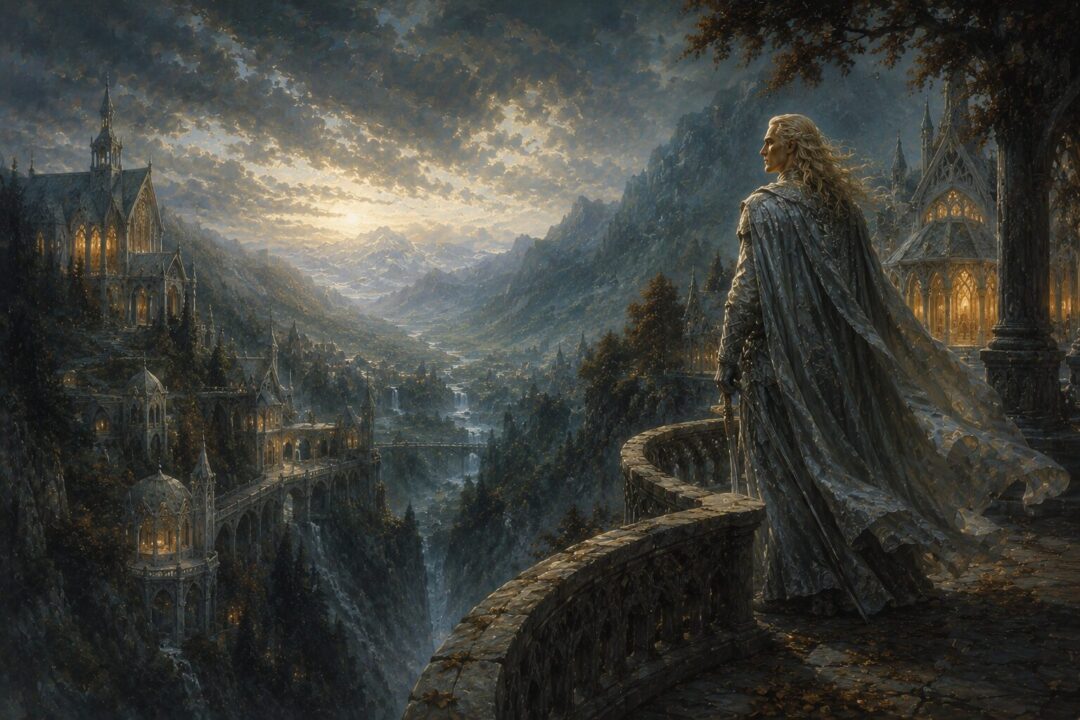
Instead of sending its brightest spiritual champion into Mordor, it entrusted the Ring to the smallest and least threatening member of the Free Peoples.
The greatest Elf remained where his gifts served the wider struggle, while an ordinary Hobbit carried the burden no mighty lord should bear.
This reversal is not an accident.
It reflects one of the central moral patterns running through the entire story: pride expects greatness to save the world, while hope often arrives through humility.
Glorfindel could terrify the Nazgûl because he possessed immense spiritual authority. Yet that very greatness made him unsuited to the secret mission upon which all other victories depended.
The irony is profound. One of Middle-earth’s mightiest champions did not fail to join the Fellowship because he was too weak.
He stayed behind because, for the quest that truly mattered, he was almost too great.
Sources & Notes
- Tolkien Gateway overview of Glorfindel, including his power and return to Middle-earth. https://tolkiengateway.net/wiki/Glorfindel
- Tolkien Gateway summary of Flight to the Ford, where Glorfindel confronts the pursuit of the Nazgul. https://tolkiengateway.net/wiki/Flight_to_the_Ford
- Tolkien Gateway overview of the Nazgul and their vulnerability before figures of great spiritual power. https://tolkiengateway.net/wiki/Nazg%C3%BBl
Sources selected to support the Tolkien textual/lore context discussed in this article.