At first, the idea seems almost obvious.
If the One Ring had to be carried into Mordor, why not give it to a Dwarf?
Dwarves were famously hard to dominate. The Rings of Power given to the Dwarf-lords did not turn them into Ringwraiths. They did not become pale servants like the Nazgûl. Their wills could not be bent in the same way as Men, and their inner thoughts were difficult for outside powers to master.
So why entrust the fate of Middle-earth to Frodo Baggins?
Why not send Gimli?
Or another Dwarf of great endurance, secrecy, and courage?
On the surface, this sounds like one of the great missed chances of the War of the Ring. The Wise needed someone who could resist Sauron’s power. The Dwarves had already shown unusual resistance to Rings of Power. Therefore, a Dwarf should have been the safest bearer.
But that argument rests on one dangerous misunderstanding.
The Dwarves were resistant to domination.
They were not immune to corruption.
And the difference between those two things is everything.
The Dwarves Were Hard to Dominate
The lore of the Seven Rings is essential here.
Sauron’s design for the Rings of Power was domination. Through the One Ring, he intended to control the bearers of the others. This worked most completely with Men. The Nine became the Nazgûl: enslaved, diminished, and bound to the will of the Dark Lord.
The Dwarves were different.
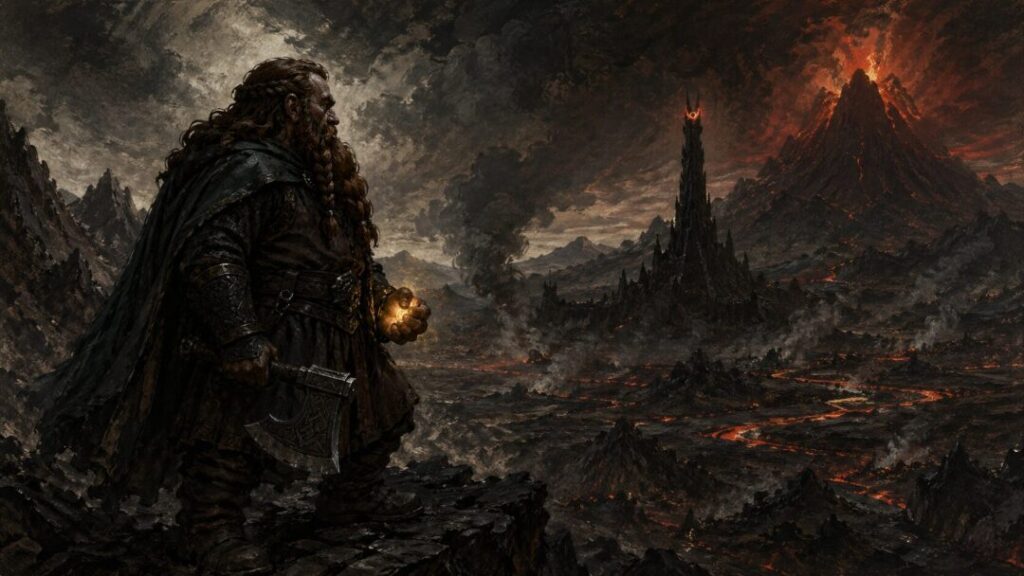
The Seven Rings did not make them wraiths. They did not draw them into that same shadowy existence. The Dwarves were too stubborn, too inward, too hard to tame. Their hearts were not easily opened to the will of another.
This is the strongest argument for choosing a Dwarf.
If Sauron could not simply seize control of a Dwarf-lord through one of the Seven, perhaps the One Ring would be safer in Dwarven hands than in the hands of a Man, an Elf, or even a Hobbit.
But the texts never say that the Rings had no effect on Dwarves.
They say something much more troubling.
The Seven Still Corrupted Them
The Seven Rings did not enslave the Dwarves in the way Sauron intended.
But they still worked evil.
They inflamed greed. They stirred desire for gold and precious things. They turned wealth into obsession, and loss into wrath. The Dwarves who bore them did not become servants of Sauron, but their treasure-hoards grew, and with them came ruin, conflict, and destruction.
This matters because the One Ring was not merely a tool of direct control.
It was a temptation.
It found desire and enlarged it.
It offered power according to the shape of the bearer’s own heart.
To Boromir, it suggested victory and strength for Gondor. To Galadriel, it revealed the terrible possibility of becoming a queen both beautiful and dreadful. To Sam, for a brief moment, it offered the image of a transformed Mordor, made into a garden by his command.
The Ring did not tempt everyone in exactly the same way.
That was part of its danger.
A Dwarf might not be turned into a wraith. He might not become a puppet. He might not kneel to Sauron in the manner of the Nine.
But he could still desire the Ring.
And for the Quest, that would be fatal.
The One Ring Was the Most Dangerous Treasure in the World
The Dwarves’ weakness under the Seven was bound especially to treasure.
Gold.
Precious things.
Possession.
The making and guarding of hoards.
This does not mean Dwarves were evil. Far from it. The Dwarves show loyalty, courage, craftsmanship, endurance, and deep love for their own people. Gimli himself becomes one of the noblest figures in the Fellowship.
But the Ring does not need its bearer to be evil.
It only needs something to work with.
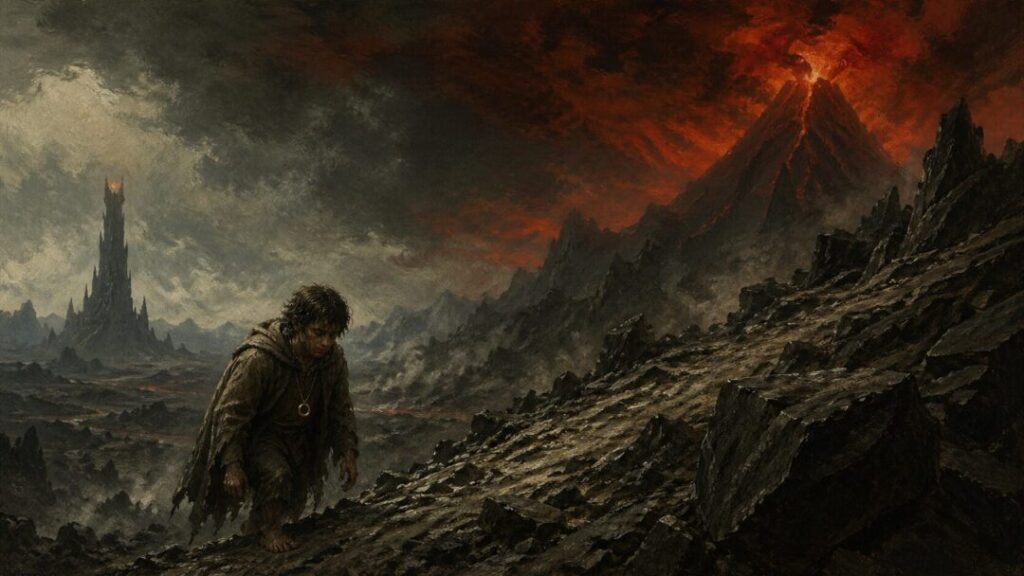
And the One Ring was not just another object of power. It was the most perilous “precious” thing in Middle-earth.
That word matters.
Gollum’s entire existence is shaped around possession. Bilbo is stretched by it. Frodo is slowly worn down by it. Even those who mean well cannot safely claim it. The Ring makes keeping it feel reasonable, then necessary, then impossible to surrender.
A Dwarf entrusted with the Ring might resist Sauron’s direct command.
But what if he simply would not give it up?
What if the Ring became the treasure beneath the mountain?
What if the mission to destroy it turned into the desire to hide it, guard it, or use it for the defense and enrichment of one’s own people?
That is not stated as a thing that would certainly happen to Gimli or to every Dwarf. It is an interpretation based on what the Rings are shown to awaken in Dwarven bearers.
But it is exactly the kind of risk the Wise could not take.
The Quest Was Not About Strength
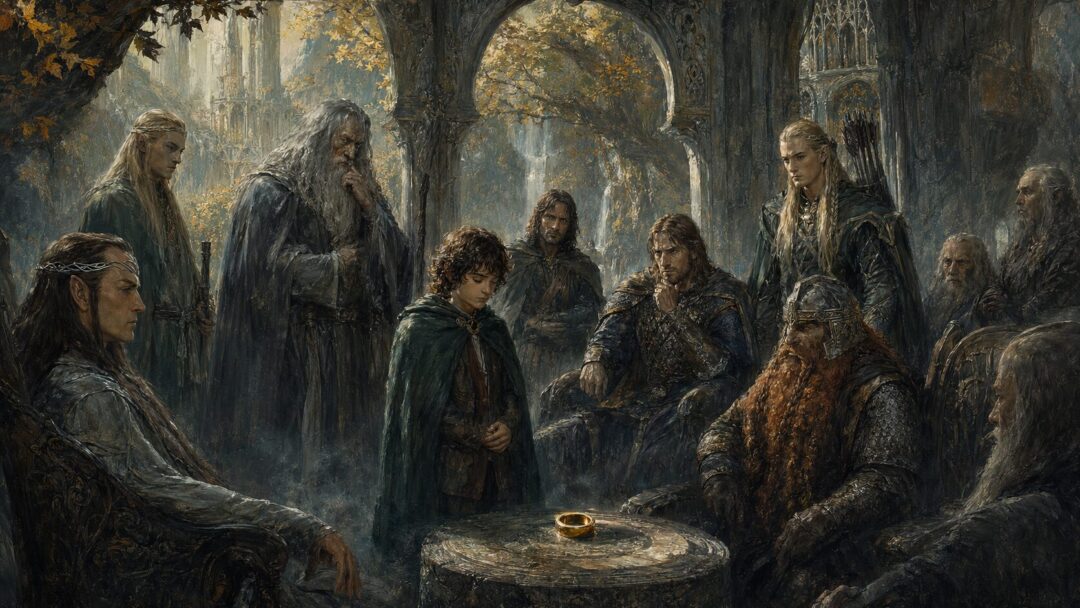
The Council of Elrond did not choose a Ring-bearer by asking who was strongest.
That is one of the quietest and most important points in the story.
If strength were the answer, the Ring might have gone to Glorfindel, Gandalf, Aragorn, or another great figure of power. But the Wise understand that power is precisely the trap. The Ring would be most dangerous in the hands of someone capable of using it greatly.
The mission was not to master the Ring.
It was to unmake it.
That required secrecy, humility, endurance, and the willingness to carry a burden without claiming it as a weapon.
A Dwarf could certainly have courage. Gimli proves this many times. He walks through Moria, enters Lothlórien, stands before the hosts of Mordor, and remains faithful to the Fellowship. Nothing in the story suggests he lacks bravery.
But courage alone is not the issue.
The Ring does not defeat people only by making them afraid.
It defeats them by making them want.
Why Frodo Was Different
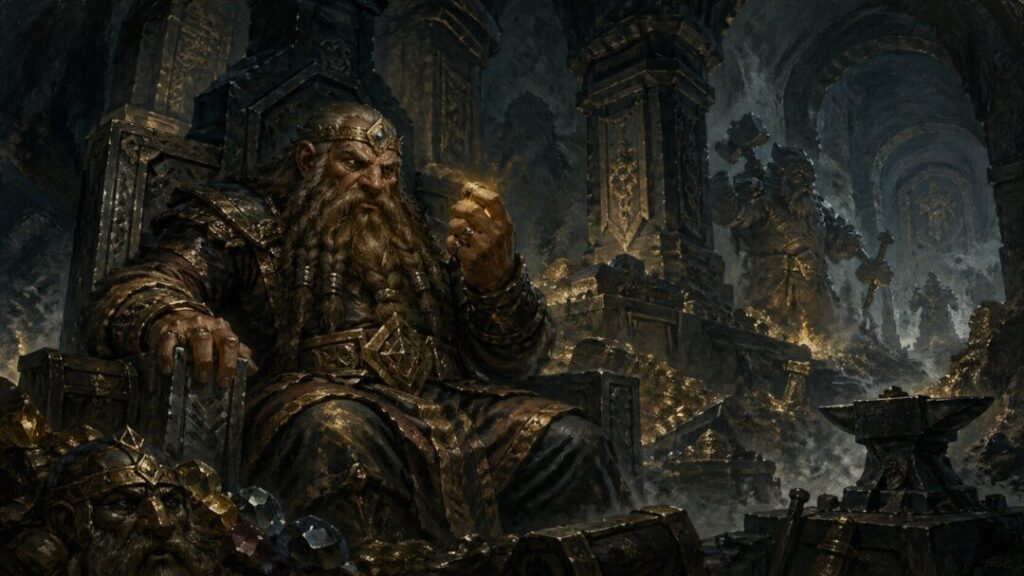
Frodo was not chosen because Hobbits were magically immune.
They were not.
Bilbo was affected by the Ring. Frodo was affected by it. Gollum was consumed by it. Hobbits could be corrupted, stretched, and broken. The story is very clear about that.
But Hobbits had qualities that made them unusually suited to the early stages of the burden.
They were small in the politics of the world. They did not rule kingdoms. They did not command armies. They did not dream naturally in terms of conquest or dominion. Their ordinary desires were for food, home, peace, gardens, birthdays, and familiar roads.
That did not make them safe.
It made the Ring’s work slower.
Frodo’s strength was not that he could not be tempted. His strength was that he could carry the Ring for a long time without turning immediately toward domination. He could pity Gollum. He could spare him. He could continue when the great would have been more tempted to use the Ring for some vast purpose.
Even so, Frodo failed at the end.
That is crucial.
At the Cracks of Doom, when the Ring was finally at the place of its making, Frodo claimed it. He did not throw it away by an act of perfect will. The Quest succeeded through a chain of mercy, pity, and providence that brought Gollum there at the last moment.
If Frodo could not finally surrender it by strength alone, then no one should be treated as a simple “better candidate.”
Not even a Dwarf.
Gimli Was Needed Elsewhere
There is also a simpler narrative truth.
Gimli was not useless to the Quest because he did not carry the Ring.
He was essential in another way.
The Fellowship was not merely a guard around Frodo. It was a living answer to the divisions of Middle-earth. Men, Elves, Dwarves, Hobbits, and a Wizard set out together against the Shadow. Gimli’s place in that company mattered deeply.
His friendship with Legolas heals, in miniature, an old estrangement between Elf and Dwarf. His reverence for Galadriel complicates every simple idea of Dwarven pride. His loyalty to Aragorn and the Hobbits helps bind the Fellowship even after it is broken.
Gimli did not need to carry the Ring to serve the destruction of Sauron.
He helped carry the hope of a reunited Free Peoples.
That may sound less dramatic than being the Ring-bearer, but in the structure of the story it matters greatly.
The War of the Ring is not won only by the person who reaches Mount Doom. It is won by a web of faithfulness: by those who fight, delay, mislead, defend, guide, and endure.
The Real Danger of a Dwarf Ring-bearer
So why not let a Dwarf carry the One Ring?
Because Dwarves were not immune to Rings of Power.
They were resistant to one particular outcome: domination into wraith-like servitude. That is not the same as being free from temptation, greed, wrath, possessiveness, or the desire to use power.
The Seven proved that Rings could work on Dwarves in a Dwarven way.
Not by making them ghostly slaves.
But by turning treasure into hunger.
And the One Ring was the most dangerous treasure ever made.
A Dwarf might have resisted Sauron’s voice and still fallen to the Ring’s possession. He might have refused to serve the Dark Lord and still refused to destroy the Ring. He might have kept it not for Mordor, but for his people, his halls, his vengeance, or his hoard.
That is the terrible subtlety of the Ring.
It does not need every fall to look the same.
The Smallest Bearer Was the Right One
The answer is not that Dwarves were weak.
It is not that Gimli was unworthy.
It is not even that Frodo was immune.
The answer is that the Ring was never a problem that could be solved by choosing the race with the hardest will.
A hard will can still cling.
A proud heart can still justify.
A treasure-loving hand can still close around the thing it was meant to cast away.
The Quest required someone who did not begin with dreams of mastery. Someone small enough to be overlooked. Someone capable of pity. Someone who could carry the Ring not because he was stronger than everyone else, but because he was less prepared to turn it into a tool of greatness.
And even then, the Quest came within a breath of failure.
That is why the Dwarf solution fails.
Not because the Dwarves were easily conquered.
But because the Ring did not need to conquer them in the way it conquered Men.
It only needed to become precious.
Sources & Notes
- J.R.R. Tolkien, The Silmarillion, "Of the Rings of Power and the Third Age" — the Seven Rings failed to make the Dwarves wraith-servants, but intensified their desire for gold and treasure.
- J.R.R. Tolkien, The Lord of the Rings, Book II, Chapter 2, "The Council of Elrond" — the Wise reject using the Ring as a weapon, and Frodo becomes Ring-bearer because the task is destruction, not mastery.
- J.R.R. Tolkien, The Lord of the Rings, Book I, Chapter 2, "The Shadow of the Past" — Gandalf explains the Ring’s corrupting hold, Bilbo’s pity, and why keeping or using it remains perilous.
- J.R.R. Tolkien, The Lord of the Rings, Book II, Chapter 7, "The Mirror of Galadriel" — Galadriel’s refusal shows how the Ring tempts even the wise through visions of power.
- J.R.R. Tolkien, The Lord of the Rings, Book VI, Chapter 3, "Mount Doom" — Frodo finally claims the Ring, so the Quest succeeds through Gollum’s fall rather than simple strength of will.