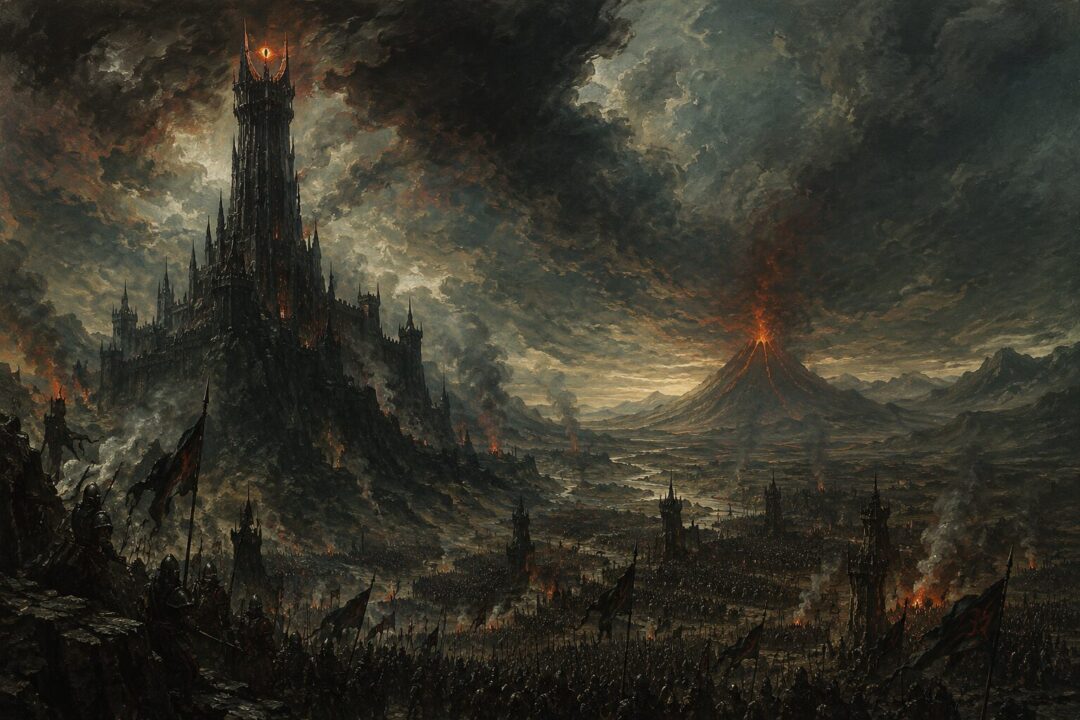
When many readers picture Sauron, they imagine a Dark Lord waiting in Barad-dûr while armies march and kingdoms fall without him ever drawing a weapon. At first glance, this seems almost strange. If he was the greatest enemy of the Free Peoples, why was he not leading every charge or standing at the head of every army?
The deeper answer reveals one of the most unsettling truths in Middle-earth: Sauron's greatest victories rarely depended on his physical presence. By the end of the Third Age, he had become something more dangerous than a battlefield commander. His true strength lay in shaping the choices, fears, and expectations of others until they fought his war for him.
Ironically, the few occasions when Sauron personally entered decisive conflict often came only after events had already turned against him. His greatest successes, by contrast, were won through domination, manipulation, overwhelming preparation, and the corruption of hearts long before swords ever crossed.
Sauron Wanted Control, Not Heroics
Unlike many fantasy villains, Sauron never sought personal glory in combat.
His central desire was order imposed through absolute domination. Throughout the history of Middle-earth, his preferred method was to command rather than to duel. Orcs, Trolls, Easterlings, Southrons, the Nazgûl, corrupted Men, spies, fear, and deception were all extensions of his will.
This reflects an important distinction in the legendarium. Heroes often prove themselves through personal courage. Sauron measured success differently. If another being could accomplish his purpose, there was little reason for him to risk himself unnecessarily.
Even Denethor recognizes this principle during the siege of Minas Tirith. When Pippin wonders whether Sauron has come himself, Denethor replies that the Dark Lord will not come until victory is secure, because wise rulers use others as their weapons. That observation aligns remarkably well with Sauron's conduct throughout the Third Age. His attention remained fixed on directing the war rather than personally fighting it.
He Had Already Built the Conditions for Victory
By the time the War of the Ring began, Sauron had spent centuries rebuilding his power.
His military strength was only one part of that achievement.
Mordor had become an immense fortress guarded by mountains, fortifications, and vast armies. Dol Guldur threatened the north. The Nazgûl had returned. Allies from Rhûn and Harad answered his call. Gondor had been weakened through generations of war, plague, political decline, and constant pressure along its borders.
None of this happened overnight.
Every campaign, every alliance, every servant represented years—or centuries—of preparation. By the final months of the Third Age, the Free Peoples were reacting to crises that Sauron himself had largely created.
From his perspective, the battlefield was simply the final stage of victories already won through strategy.
Fear Was One of His Greatest Weapons
Sauron rarely needed to convince his enemies that they had already lost.
Many reached that conclusion themselves.
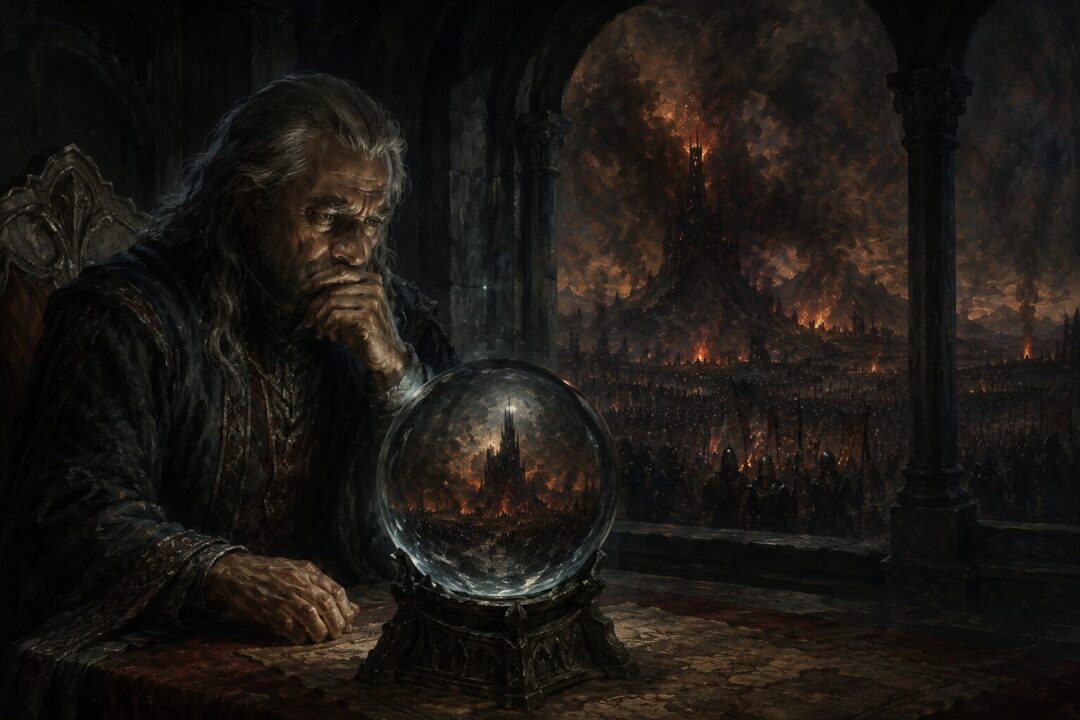
Denethor's despair illustrates this perfectly. Through the palantír, Sauron did not create false visions. Rather, he presented truthful glimpses of his overwhelming military power while allowing Denethor to draw hopeless conclusions. The stones did not lie, but selective truth became a devastating psychological weapon.
This method appears repeatedly.
Saruman abandoned wisdom because he judged resistance futile.
Many Men willingly entered Sauron's service because they believed his victory inevitable.
Even the Council after the Battle of the Pelennor Fields openly acknowledges that military victory alone is impossible. Without the destruction of the One Ring, the West could only delay defeat, not prevent it.
Sauron did not merely fight armies.
He persuaded opponents that resistance itself was irrational.
The War Was Bigger Than Any Single Battle
Readers sometimes assume that the Pelennor Fields represented Sauron's entire military effort.
The texts show otherwise.
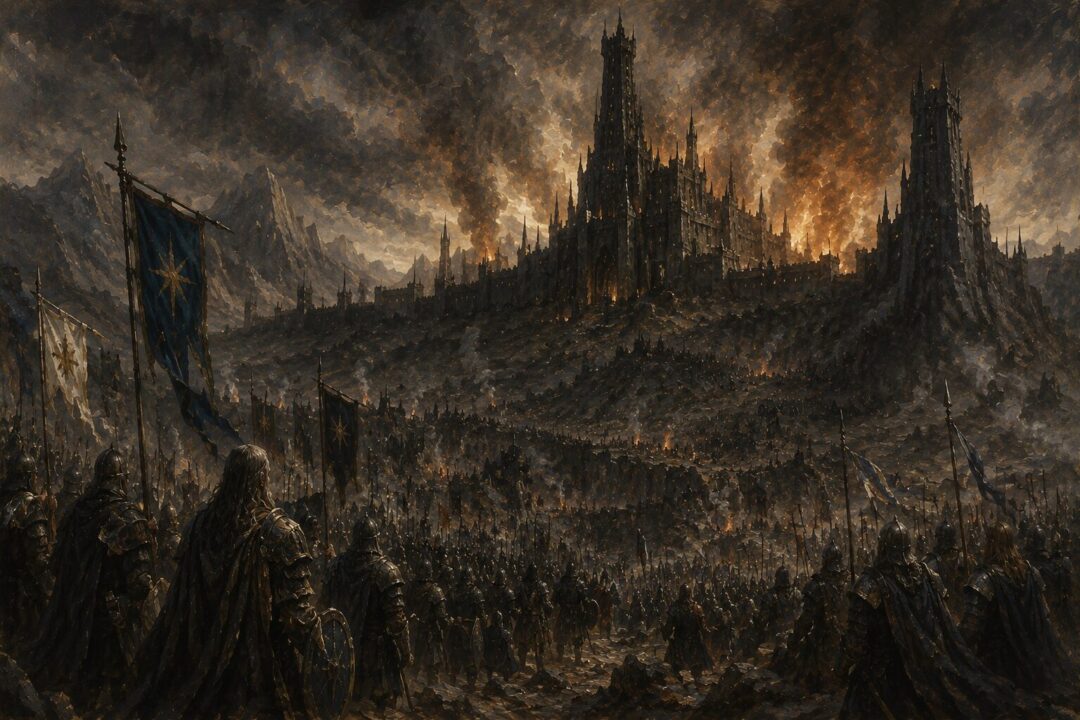
While Minas Tirith endured siege, other fronts were also under attack. Dale and Erebor faced invasion. Woodland realms fought their own desperate battles. Lórien endured repeated assaults. The conflict stretched across the northwest of Middle-earth.
This broad strategy prevented the Free Peoples from concentrating their strength in one place.
Even a victory at Minas Tirith would not have ended the war. Sauron's resources remained immense, and Gandalf openly warns that a greater assault would follow. The defenders had survived only the first blow.
That scale explains why Sauron himself had little reason to appear on any one battlefield.
He was directing an entire continental war.
His Greatest Weakness Was Also His Greatest Blind Spot
If Sauron did not need to fight personally, why did he lose?
The answer was not military failure.
It was a failure of imagination.
Everything in his strategy assumed that someone would eventually claim the One Ring.
From Sauron's perspective, this was perfectly logical.
The Ring existed to dominate.
Every powerful individual who encountered it would naturally seek to wield it.
That assumption explains nearly every major decision during the final campaign.
When Aragorn revealed himself through the palantír, Sauron interpreted it as the challenge of a rival preparing to seize the Ring.
When the Captains of the West marched toward the Black Gate with a force far too small to conquer Mordor, Sauron concluded they were attempting precisely what he himself would have done: use the Ring openly to overthrow him.
As a result, his attention shifted toward Aragorn and away from the true danger moving quietly inside Mordor.
His military reasoning was sound.
His understanding of humility was fatally incomplete.
The Few Times Sauron Fought Personally Were Moments of Necessity
The historical pattern is revealing.
During the downfall of Númenor, Sauron did not challenge Ar-Pharazôn's enormous army in battle. Instead, he surrendered because corruption offered greater opportunities than open war.
Later, after the Last Alliance defeated his armies, breached Mordor, and besieged Barad-dûr for years, Sauron finally emerged to confront Gil-galad and Elendil personally.
That duel came only after ordinary means had failed.
He was indeed formidable, killing both Gil-galad and Elendil before Isildur cut the One Ring from his hand. Yet the encounter also demonstrates that direct combat carried risks even for one of the greatest beings remaining in Middle-earth.
His physical form was destroyed.
The Ring survived.
His recovery required many centuries.
The pattern suggests that Sauron preferred personal combat only when circumstances left no better alternative.
Physical Presence Was Never the Source of His Power
One misconception is that Sauron's strength depended primarily upon standing before his armies.
The texts suggest something different.
His will extended through an enormous network of servants, fortresses, alliances, terror, and domination.
The Nazgûl carried his authority.
His captains enforced his commands.
His influence reached through the palantíri.
His diplomacy maintained alliances with kingdoms in the East and South.
Even where he was absent, his purposes continued to unfold.
This reflects a deeper theme throughout Middle-earth.
Power can become most dangerous when it no longer depends upon one visible individual. Instead, it reshapes institutions, expectations, and fears until countless others willingly carry it forward.
Sauron's empire functioned in much this way.
The Captains of the West Understood the Real Battle
After Minas Tirith, Aragorn, Gandalf, and their allies did something that appears militarily absurd.
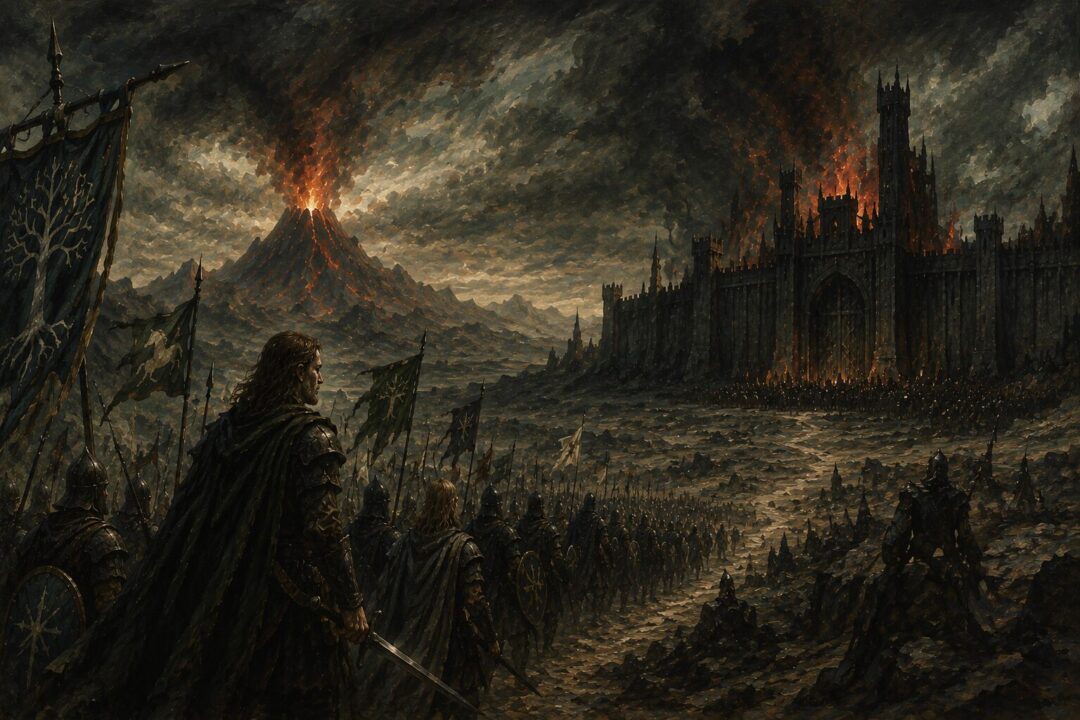
They marched directly toward the Black Gate with an army vastly smaller than Mordor's.
This was never intended as a conventional campaign.
They understood they could not defeat Sauron through force of arms.
Instead, they sought to exploit the one weakness his otherwise brilliant strategy possessed: his certainty that the Ring would eventually be used against him.
Their march functioned as a carefully crafted deception.
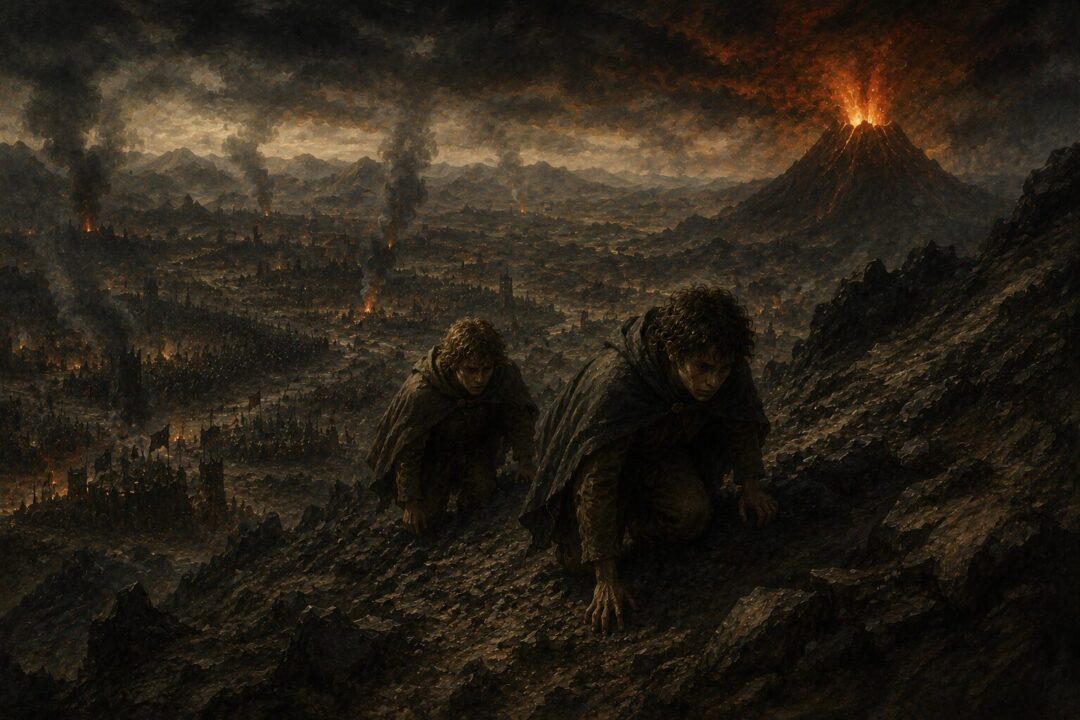
By presenting themselves as a challenger seeking mastery, they encouraged Sauron to commit his attention and forces toward the Morannon while Frodo and Sam continued almost unnoticed toward Mount Doom.
In effect, the final military campaign succeeded precisely because it accepted that military victory was impossible.
Why Sauron Was Already Winning
Perhaps the most sobering aspect of the War of the Ring is how close Sauron came to complete success without ever needing to stand on the battlefield.
His enemies were exhausted.
Their kingdoms were shrinking.
Ancient alliances had weakened.
Many had already surrendered in spirit before surrendering in fact.
Even the Wise admitted that armies alone could not defeat him.
The destruction of the One Ring did not reverse a losing war through superior tactics or greater strength. It removed the foundation upon which Sauron's entire system of domination rested.
Only then did Barad-dûr fall, his servants lose heart, and the military balance collapse almost instantly.
Until that single moment, Sauron had every reason to believe his strategy was succeeding exactly as intended.
His greatest victories had never depended upon leading a charge.
They depended upon convincing the world that resistance was already over—and for almost everyone in Middle-earth, that conclusion appeared entirely reasonable until two overlooked Hobbits quietly proved otherwise.
Sources & Notes
- https://tolkiengateway.net/wiki/Sauron — Tolkien Gateway, Sauron: overview of Sauron’s methods of domination, servants, military power, and strategic role in the Third Age.
- https://tolkiengateway.net/wiki/War_of_the_Ring — Tolkien Gateway, War of the Ring: context for Sauron’s multi-front war across Gondor, Rohan, Dale, Erebor, Lórien, and Mirkwood.
- https://tolkiengateway.net/wiki/Denethor_II — Tolkien Gateway, Denethor II: background on Denethor’s use of the palantír and the despair caused by visions of Sauron’s strength.
- https://tolkiengateway.net/wiki/Palant%C3%ADri — Tolkien Gateway, Palantíri: explains the seeing-stones and how Sauron used them to influence Saruman and Denethor.
Sources selected for Tolkien lore context on Sauron’s remote command, the War of the Ring’s wider strategy, and palantír-driven psychological pressure.