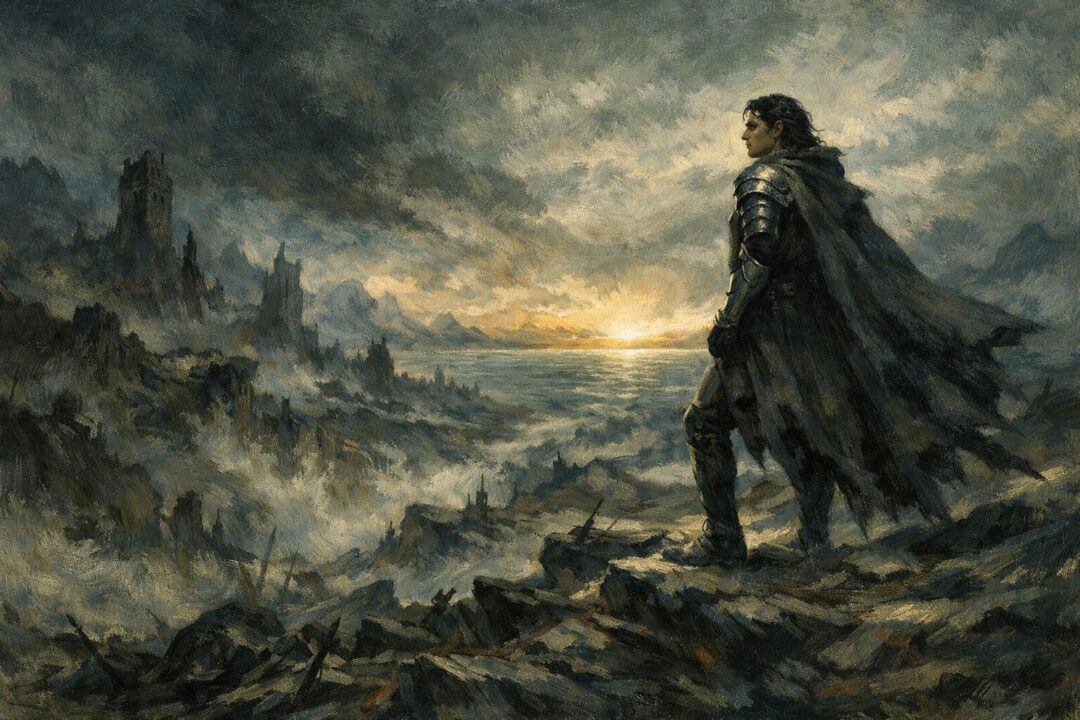
At first, the question seems almost too simple.
If Eru exists, and if the Valar are real powers within the world, then why does Sauron even attempt what he attempts?
Why forge the One Ring? Why raise Barad-dûr? Why wage war again and again in a world where the highest authority is not absent, not mythical, and not even unknown to him?
The answer begins by discarding a common assumption.
Sauron is not a rebel because he thinks the higher powers are unreal. He knows they are real. He is one of the Ainur himself, one of the same order of being as the Maiar who serve the Valar. After Morgoth’s defeat in the War of Wrath, the tradition preserved in the texts says that Sauron did indeed fear the wrath of the Valar, took on a fair form, and even approached repentance for a moment before refusing to submit to judgment and fleeing into hiding.
That detail matters more than it first appears.
It means Sauron’s evil is not built on disbelief.
It is built on refusal.
Sauron Knows the Order of the World
There is a tendency to imagine Sauron as if he were gambling against the structure of reality itself.
But the texts suggest something more precise.
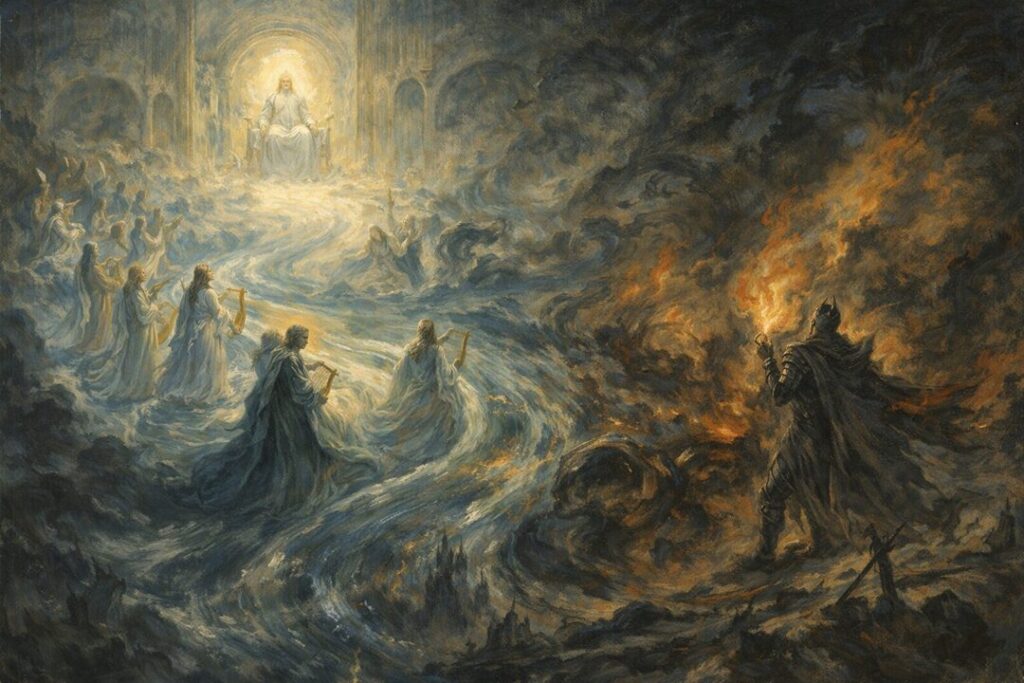
Sauron knows there is a higher order above him. He is not trying to overthrow Eru in any ultimate sense. Nothing in the legendarium suggests that Sauron imagines he can replace the Creator, unmake the world, or defeat the final authority behind it. The deeper cosmology established in the Ainulindalë makes that impossible from the beginning: Melkor’s rebellion itself is answered with the declaration that no theme can be played that does not have its uttermost source in Eru, and that even rebellion will become an instrument of a greater design.
That does not mean evil is unreal.
It means evil is not ultimate.
And Sauron, like Morgoth before him, does not need evil to be ultimate in order to pursue it.
He only needs room to dominate what lies within reach.
Evil in Middle-earth Is Temporary, Not Meaningless
This is the point many readers miss.
In Middle-earth, the existence of providence does not erase the reality of catastrophe. The fact that Eru’s design cannot be finally defeated does not mean every creature inside the world is protected from suffering, conquest, deception, or ruin. Arda is marred from its earliest history by Melkor’s rebellion, and that marring has consequences throughout the ages.
Sauron operates inside that condition.
He does not need permanent victory over the whole design of existence. A long dominion over Middle-earth is enough. He can corrupt Númenor. He can break kingdoms. He can enslave Men through Rings. He can darken whole centuries. All of that is meaningful within the story, even if it is not cosmically final.
That is what makes his rebellion dangerous.
It is not absurd because it cannot win forever.
It is dangerous because it can win for a very long time.
The Valar Do Not Simply End Every Crisis by Force
Another misunderstanding sits underneath the question.
People often assume that if the Valar exist, they should intervene directly whenever a dark power rises. But that is not how the world is ordered. The Valar are guardians and governors under Eru, not arbitrary problem-solvers who erase the freedom of Elves and Men whenever history becomes painful. Tolkien’s own internal framework, as preserved in the lore tradition, repeatedly treats the Children of Ilúvatar as beings whose wills are not to be dominated even by the highest powers in Arda.
That pattern helps explain a great deal.
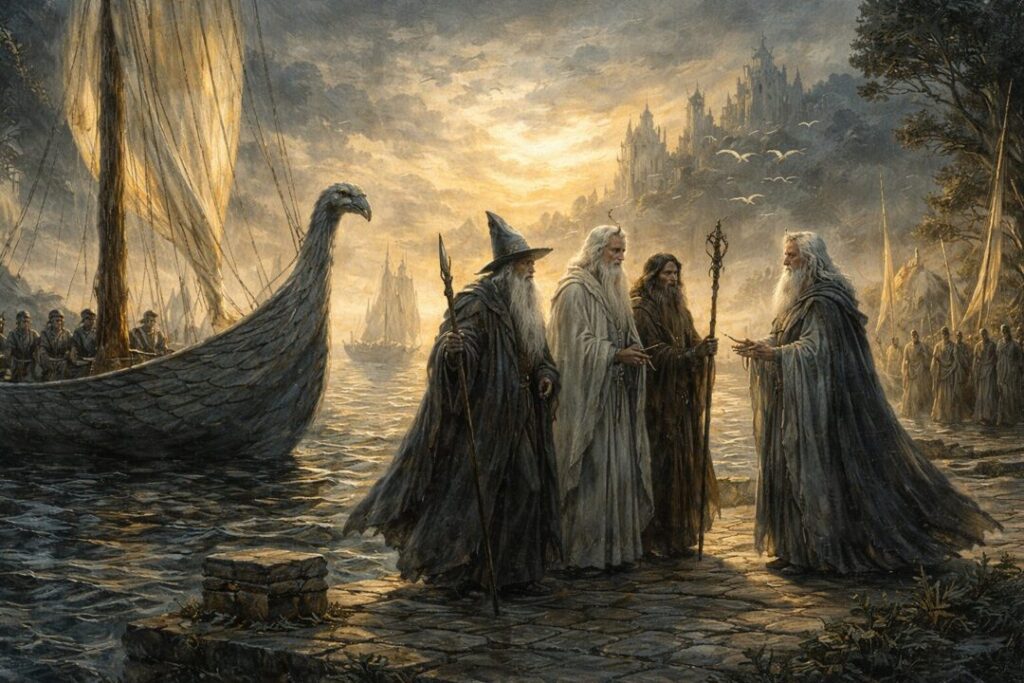
When Sauron rises again in the Third Age, the answer from the West is not an overwhelming divine assault. The Valar send the Istari. And the Istari are specifically restrained: they are to aid the peoples of Middle-earth through wisdom, encouragement, and persuasion, not through open domination or displays of coercive power.
This is crucial.
The world is governed morally, not mechanically.
The higher powers do not simply remove the need for courage, choice, endurance, or failure. They leave space for them.
And Sauron understands that space exists.
Sauron’s Goal Is Domination Within Arda
Once that is clear, his actions make more sense.
Sauron does not need to believe he can overthrow Eru. He only needs to believe that he can master peoples, lands, and histories inside the world for his own order. That fits his character across the ages. Even in the early tradition, Sauron is associated less with nihilistic destruction than with control, arrangement, and domination bent toward evil ends. He wants the world under his will.
This is one reason the One Ring matters so much.
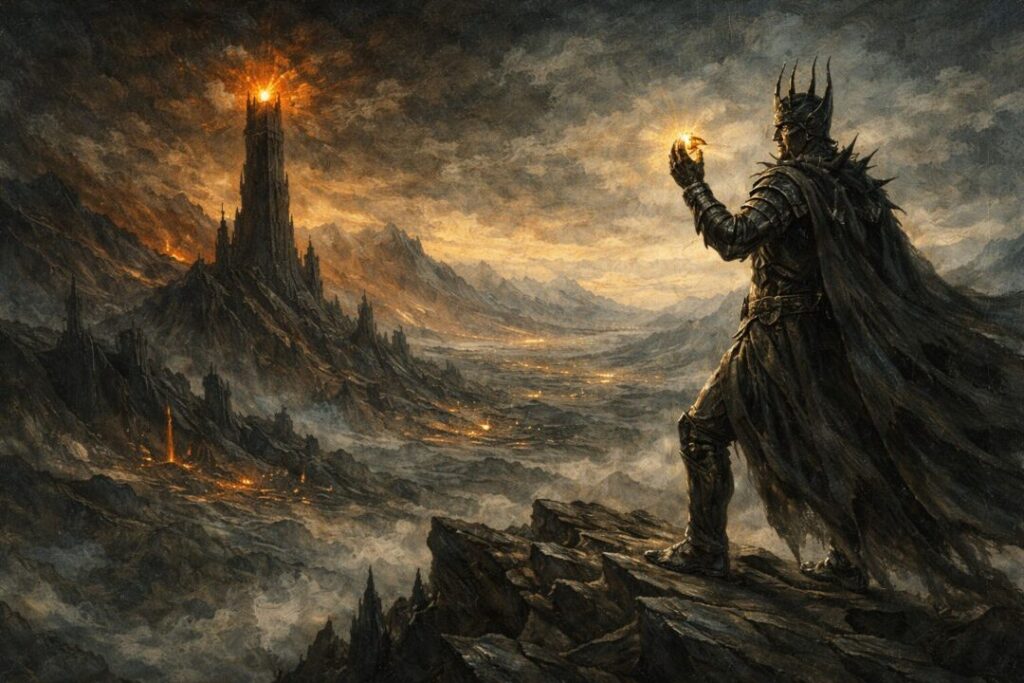
The Ring is not merely a weapon. It is an instrument of concentration and control, a way to gather Sauron’s power and extend mastery over others, especially through the network of Rings already at work among Elves, Dwarves, and Men.
He is not trying to become Creator.
He is trying to become tyrant.
And in Middle-earth, that is horrifyingly achievable for long stretches of time.
Fear of Judgment Does Not Produce Repentance
There is another layer to this.
The texts indicate that after Morgoth’s fall, Sauron feared the wrath of the Valar and came near repentance. But fear is not the same thing as repentance. What stops him is not uncertainty about the authority above him. It is pride. He will not endure humiliation. He will not submit to judgment. So he chooses self-preservation over surrender and becomes, in effect, a fugitive from rightful order.
That pattern repeats throughout his history.
When Ar-Pharazôn comes against him in overwhelming strength, Sauron does not stand and fight. He yields, is carried to Númenor, and then corrupts it from within. He is perfectly willing to change form, tactics, and posture in order to continue pursuing domination by other means.
This is why the existence of the Valar does not deter him in the way modern readers sometimes expect.
Sauron is not a character whose pride leads him to say, “There is no higher authority.”
He is the more frightening kind.
He knows there is one and rebels anyway.
Why Eru’s Existence Does Not Make the Story Easy
Once you see this, the question changes shape.
The existence of Eru does not make Middle-earth safe in any shallow sense. It means that evil cannot finally own the last word. But between beginning and ending, there is room for tragedy, devastation, temptation, and real moral struggle. Gandalf’s return after death, the Downfall of Númenor, and the final destruction of the Ring all point to a providence that is real, but rarely simplistic and almost never immediate.
That is why Sauron tries.
He tries because delay exists.
He tries because freedom exists.
He tries because domination within time is still domination.
He tries because pride would rather reign briefly than repent humbly.
And that may be the darker truth at the center of the question.
Sauron does not misunderstand the world.
He understands enough of it to know that ruin can still be made inside it.
He cannot win forever.
But for the peoples who must live through his shadow, “not forever” is still a terrible thing.
Sources & Notes
- J.R.R. Tolkien, The Silmarillion, “Ainulindalë” — gives the cosmological frame: Eru says no theme can be played that does not have its uttermost source in him, so rebellion cannot become ultimate.
- J.R.R. Tolkien, The Silmarillion, “Of the Rings of Power and the Third Age” — tells how Sauron feared the Valar after Morgoth’s fall, approached repentance, then fled rather than submit to judgment.
- J.R.R. Tolkien, The Letters of J.R.R. Tolkien, Letter 131 — describes Sauron’s particular evil as order, planning, and domination of wills, supporting the article’s focus on tyranny rather than disbelief.
- J.R.R. Tolkien, Unfinished Tales, “The Istari” — explains that the Wizards were sent to counsel and persuade, not to match Sauron with open power or dominate the wills of Elves and Men.
- J.R.R. Tolkien, The Silmarillion, “Akallabêth” — shows Sauron adapting when faced with greater force: he submits to Ar-Pharazôn outwardly, then corrupts Númenor from within.