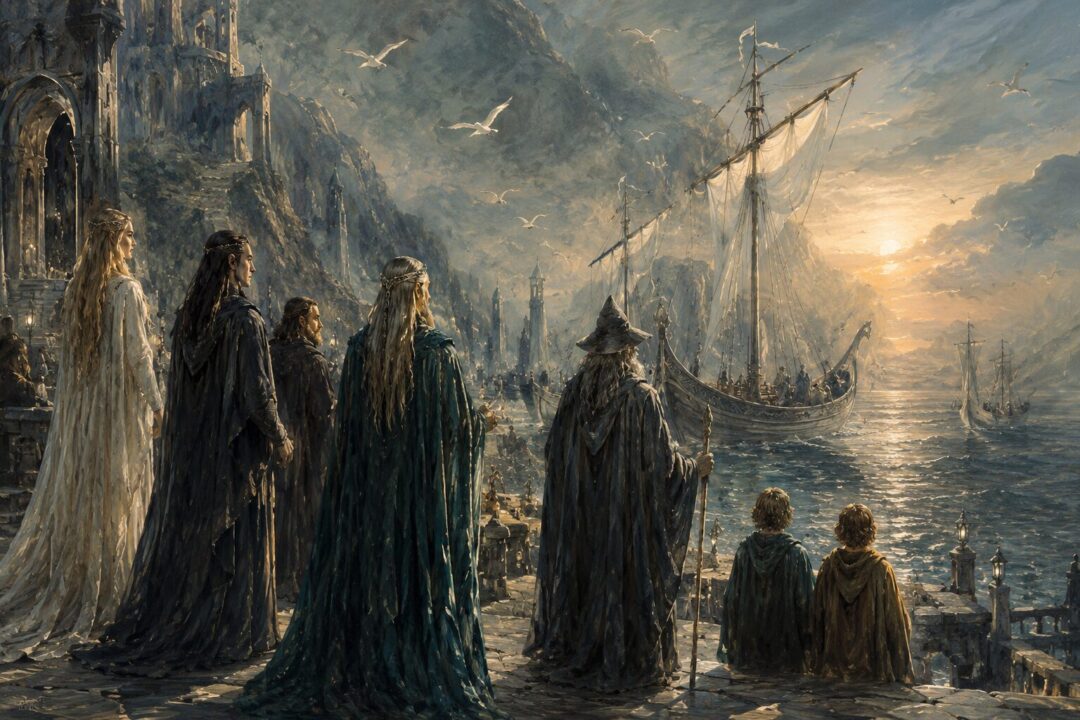
When the White Ship sailed from the Grey Havens carrying Galadriel, Elrond, Gandalf, Frodo, and Bilbo into the West, many readers naturally ask the same question: if Sauron had finally been defeated, why were the Elves leaving at the very moment of victory?
It seems like a contradiction. The greatest enemy in Middle-earth had fallen. The kingdoms of Gondor and Arnor were reunited. Peace had returned after centuries of war. Yet the oldest and wisest people of Middle-earth were departing rather than celebrating a lasting triumph.
The answer lies in one of the deepest themes running through Tolkien's legendarium. The War of the Ring was not simply about defeating Sauron. It marked the ending of an entire age. The Elves achieved the victory they had struggled toward for thousands of years, but that very victory made their own departure inevitable.
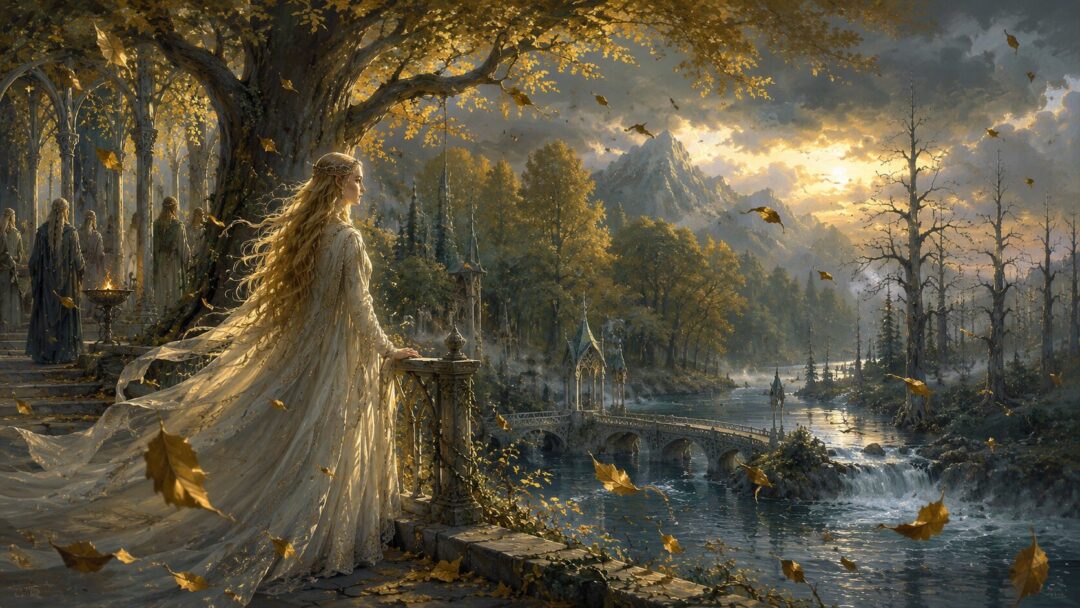
The War Was Never About Saving the Elves Forever
Throughout the Third Age, the Elves fought not because they expected to rule Middle-earth again, but because they hoped to preserve it from complete domination by darkness.
Their greatest leaders understood that history was moving toward a different future.
Elrond, Galadriel, and Círdan had lived through immense stretches of history. They remembered the Elder Days, the fall of Beleriand, the rise of Númenor, and countless wars against Morgoth and later Sauron. They were not struggling to restore the First Age. They knew that could never happen.
Instead, they sought to ensure that the Shadow did not consume everything before the time appointed for the Dominion of Men.
Victory therefore had a different meaning than many expected. It was not the restoration of an Elvish age. It was the successful handing over of Middle-earth to its next caretakers.
The Long Decline Had Already Begun
By the time of The Lord of the Rings, the Elves were already living in what feels like a long twilight.
The greatest Elvish kingdoms of the First Age—Gondolin, Nargothrond, Doriath, and many others—had long since vanished.
In the Second Age, new realms such as Eregion had also fallen.
Only a handful of great refuges remained: Lindon, Rivendell, Lothlórien, and the Woodland Realm.
Even these surviving realms reflected preservation more than expansion. The Elves were maintaining fragments of an older world rather than building a new one.
This decline was not simply the result of military defeats. It reflected a deeper condition built into the history of Arda after its marring. The texts consistently portray the Elves as increasingly weary of Middle-earth, while the world itself continued changing around them. Their victories could delay this process but not permanently reverse it.
Science Fiction & Fantasy Stack Exchange

The Three Rings Could Preserve, But Not Defeat Time
One of the most overlooked reasons for the Elves' departure is the role of the Three Rings.
Unlike the One Ring, the Three were not made for domination. Their chief power was preservation.
Under their influence, places like Rivendell and Lothlórien seemed almost untouched by ordinary time. Beauty endured. Memory remained vivid. Decay slowed. Visitors often experienced these realms as if they existed partly outside the normal passage of years.
Yet this preservation came with an unavoidable condition.
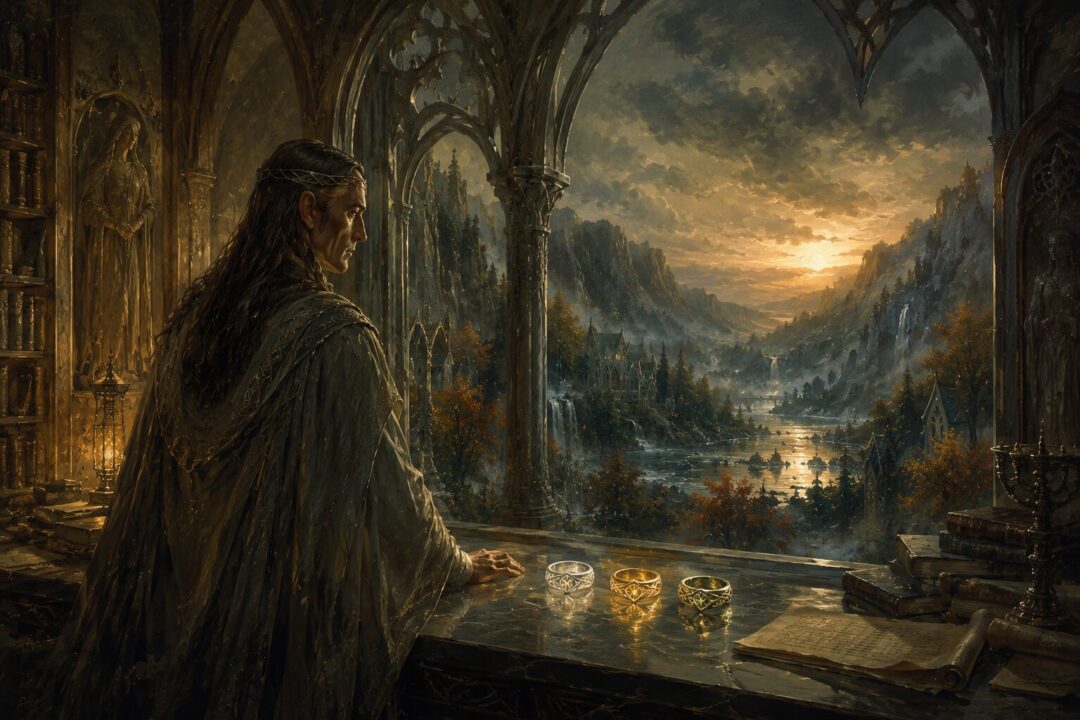
The Three Rings had been made using the same underlying craft that Sauron had taught to the Elven-smiths of Eregion. Although Sauron never touched the Three directly, their continued power remained connected to the existence of the One Ring.
At the Council of Elrond, this possibility is openly recognized: if the One were destroyed, the Three would also lose their power.
That is exactly what happened.
The victory over Sauron therefore required the sacrifice of the very instruments that had allowed the last great Elvish realms to endure.
The destruction of the One Ring did not merely remove evil. It also ended the age of preservation.
Winning Required Letting Go
This creates one of the most profound ironies in the entire story.
The Elves could have attempted to preserve their own realms indefinitely by allowing the One Ring to survive in some hidden form.
But doing so would also have allowed Sauron's existence to continue.
Instead, they chose a victory that guaranteed their own decline in Middle-earth.
Galadriel expresses this choice before the Fellowship leaves Lothlórien. She understands that if the One Ring is destroyed, her own power will fade, Lothlórien will diminish, and she herself must depart into the West.
She accepts this willingly.
In that decision lies one of the central moral themes of the legendarium: refusing domination even when surrendering power carries great personal cost.
The Fading of the Elves Was Older Than Sauron
It is tempting to think the Elves left only because Sauron was defeated.
The texts suggest something deeper.
The fading of the Elves is presented as a long process connected with the nature of Middle-earth itself after its marring. Elvish life was always bound to Arda, yet over immense ages their spirits increasingly outlasted the physical world around them.
Late writings describe this in terms of the relationship between the fëa (spirit) and hröa (body), with the spirit gradually becoming dominant as ages passed. The process was not simply punishment or magical exhaustion. It belonged to the long history of the world itself.
Science Fiction & Fantasy Stack Exchange
The Three Rings slowed this experience within certain realms.
They did not eliminate it.
Once their power ended, Middle-earth could no longer offer the same refuge against the passage of time.
Aman Was Not a Reward for Victory
Another misunderstanding is that the Undying Lands somehow granted immortality.
They did not.
Mortals did not become immortal by sailing there.
Likewise, the Elves were already immortal within the life of Arda before ever reaching Aman.
What Aman offered was healing and an unmarred land where the weariness of the long ages did not weigh upon the Elves in the same way.
For many of the Eldar, especially those who had once lived in the Blessed Realm, returning west meant returning to the place most fitting for their nature after countless centuries of struggle.
The invitation to sail West therefore was not a military reward after defeating Sauron.
It was the completion of a journey interrupted by the tragedies of earlier ages.
Not Every Elf Left Immediately
The departure was gradual rather than sudden.
Círdan remained for a time at the Grey Havens.
Celeborn stayed east of the Sea for years before eventually departing.
Legolas did not sail until after King Elessar's death, first establishing an Elvish community in Ithilien and helping restore lands damaged during the war.
The sons of Elrond also appear to have remained in Middle-earth for a time, though the texts do not clearly state when they finally departed.
Meanwhile, many Silvan Elves continued living in places such as Greenwood, now cleansed after the fall of Dol Guldur.
The Fourth Age did not instantly become empty of Elves.
Instead, their presence slowly diminished over generations until they became part of memory rather than ordinary history.
The Dominion of Men Could Finally Begin
The Elves' departure was not simply about their own fate.
It was equally about humanity's future.
Throughout the legendarium, Men possess a different destiny from the Firstborn. Their history is meant to unfold without permanent dependence upon Elvish guardians.
As long as the great Elvish realms remained dominant, Middle-earth retained something of the Elder Days.
Once they faded, responsibility passed fully into human hands.
This transfer is symbolized by Aragorn's reign.
He inherits wisdom from the Elves, receives their friendship, and preserves many of their traditions.
But he does not rule as an Elf-king.
His kingdom belongs to the Fourth Age, often called the Age of Men.
Victory over Sauron therefore did not restore the old order.
It cleared the way for a new one.
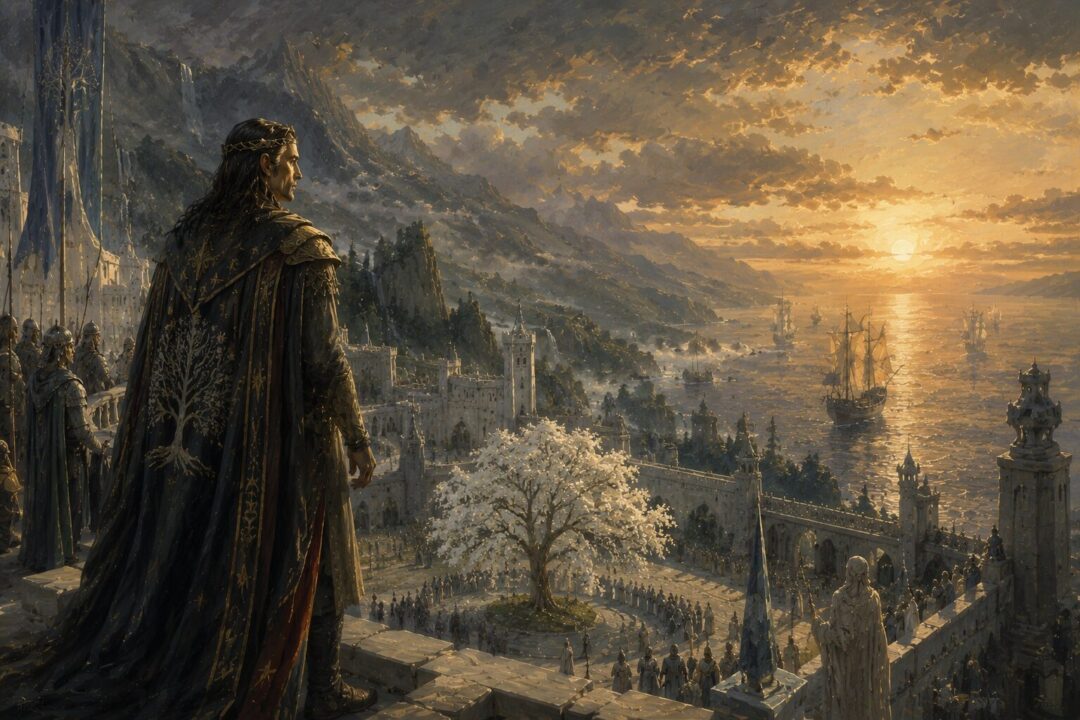
Their Greatest Victory Was Acceptance
The Elves had fought Morgoth for centuries.
They had resisted Sauron through the Second and Third Ages.
They preserved learning, beauty, languages, songs, and memory while kingdoms rose and fell around them.
Yet perhaps their greatest victory came not on a battlefield.
It came in accepting that even their own age must end.
Again and again, the legendarium warns against grasping for permanence through domination. Morgoth sought it. Sauron sought it. Even the making of the Rings reflected, in part, a desire to preserve what could not remain unchanged forever.
The wisest among the Elves ultimately chose another path.
They surrendered power rather than corrupt it.
They accepted loss rather than tyranny.
They entrusted Middle-earth to those who would come after them.
That is why their departure feels both triumphant and heartbreaking.
They won the final war against the Shadow.
But in doing so, they also accepted the passing of the world they had spent thousands of years defending.
The end of the Third Age is therefore not the failure of the Elves. It is the completion of their purpose. They preserved Middle-earth long enough for hope to survive, defeated the last great Dark Lord, and then stepped aside so history could continue without them.
Their victory was real.
Their departure was the price of making that victory complete.
Sources & Notes
- Tolkien Gateway overview of the Elves and their long decline from Middle-earth after the Third Age. https://tolkiengateway.net/wiki/Elves
- Tolkien Gateway overview of the Three Rings, whose power to preserve faded after the One Ring was destroyed. https://tolkiengateway.net/wiki/Three_Rings
- Tolkien Gateway overview of the Undying Lands, the destination of many Elves leaving Middle-earth. https://tolkiengateway.net/wiki/Undying_Lands
Sources selected to support the Tolkien textual/lore context discussed in this article.