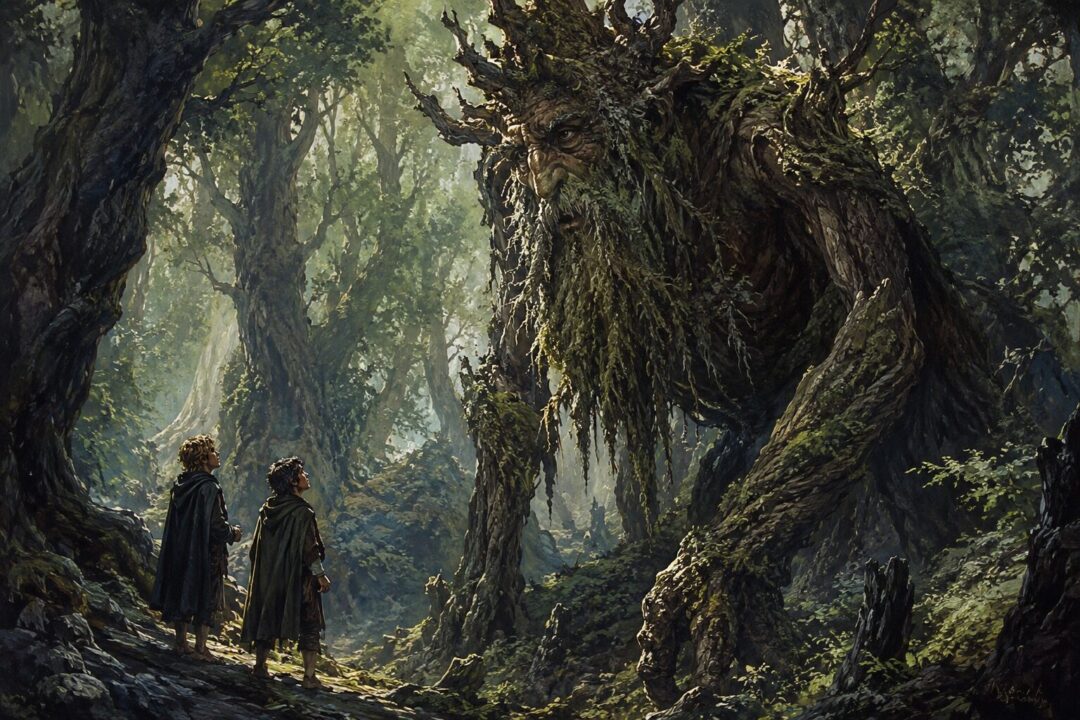
The oldest living creature in Middle-earth did not rush into battle.
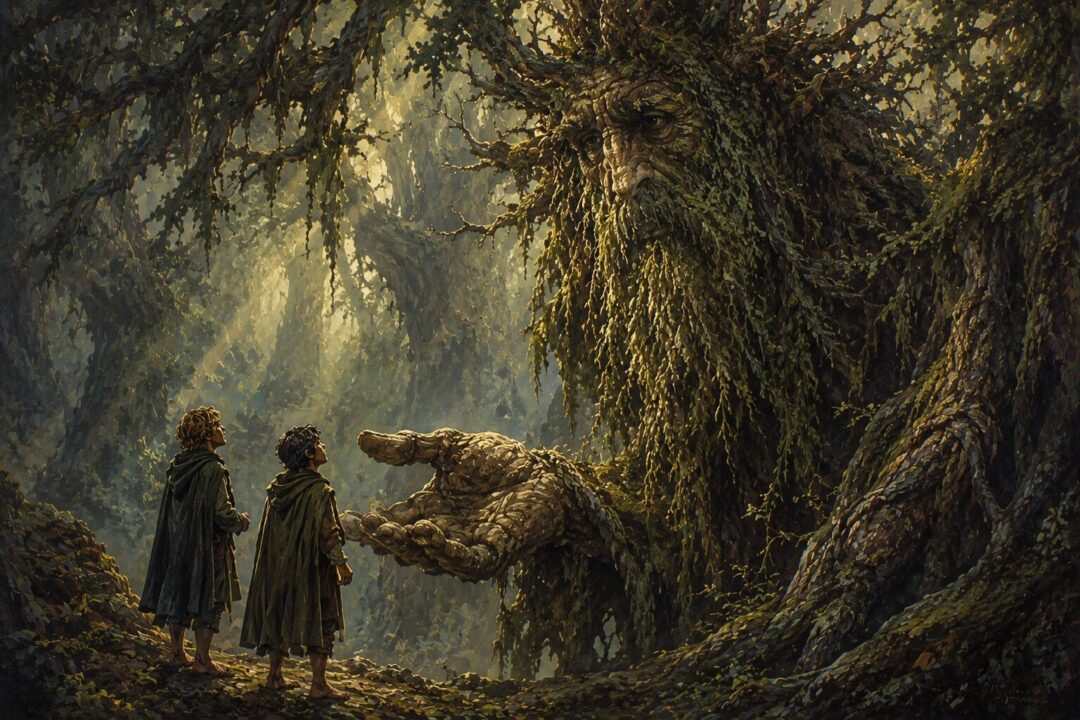
Treebeard had watched forests spread across lands that no longer existed. He remembered the first awakening of the Ents, the coming of the Elves, and ages of loss that most peoples could scarcely imagine. When Merry and Pippin met him in Fangorn Forest, they encountered immense strength—but also immense patience. That patience is one of the great surprises of The Lord of the Rings. While kingdoms were falling and armies marched, the Ents still hesitated.
At first glance, it seems strange. Saruman had already been cutting down Fangorn's trees, burning them to feed the furnaces of Isengard, and sending Orcs through the forest. Why did the Ents wait? Why did two small Hobbits become part of the turning point?
The answer is deeper than simple persuasion. Merry and Pippin did not convince the Ents to fight by clever arguments. Instead, they became witnesses, messengers, and living proof that the wider world had reached a crisis the Ents could no longer ignore. The Last March of the Ents happened because ancient patience finally met undeniable reality.
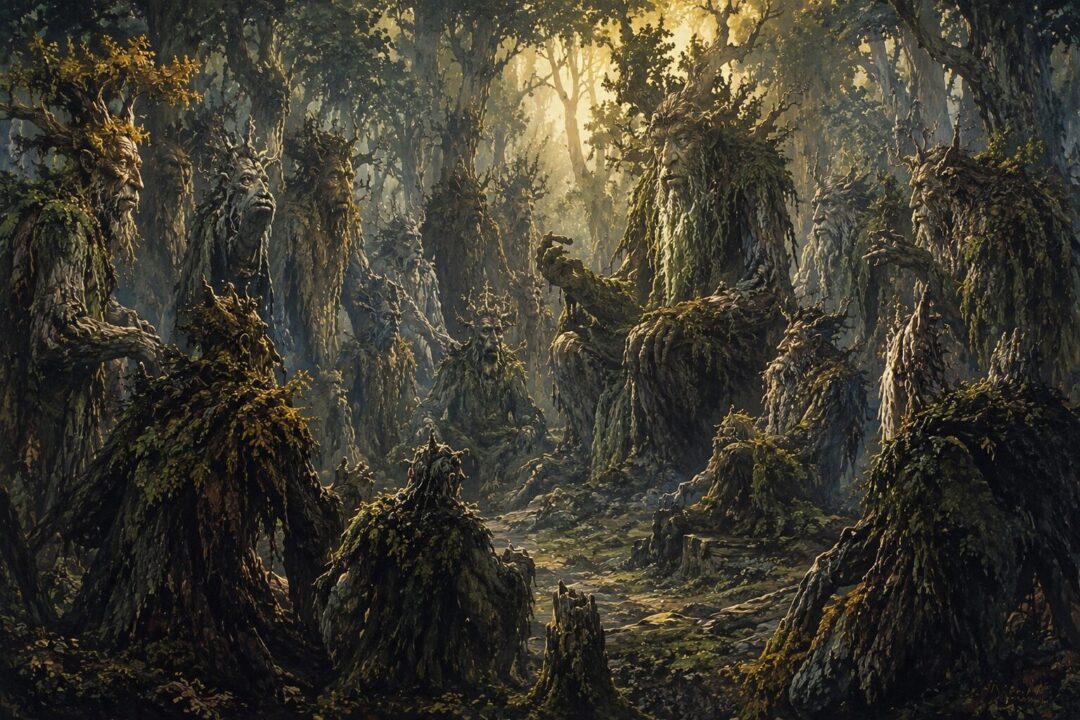
The Ents Were Never a People Eager for War
The Ents were created as the Shepherds of the Trees, guardians intended to protect forests from needless destruction. Their purpose was preservation, not conquest. The ancient traditions surrounding their origin emphasize defense rather than aggression, and Treebeard consistently speaks as someone who values growing things above victory.
This explains one of his most famous observations:
"I am not altogether on anybody's side, because nobody is altogether on my side."
This is often misunderstood as political neutrality. It is something more specific.
Treebeard is not indifferent to good and evil. He already recognizes that Saruman has changed for the worse. He openly criticizes the wizard's growing greed, secrecy, and destruction of trees. What he means is that the concerns of forests rarely become the concerns of other peoples.
Even those resisting Sauron have largely abandoned the ancient woods. The Ents have learned across centuries that others usually remember forests only when they need timber or shelter.
Their caution therefore comes from experience rather than indecision.
Treebeard Already Suspected Saruman
An overlooked detail in the text is that Merry and Pippin do not introduce Treebeard to the danger.
Treebeard already knows.
He explains that Saruman used to visit him often, asking many questions and learning much about the forests. Yet Treebeard observes that Saruman shared very little in return. Over time he realizes that Saruman has become dangerous, remarking that the wizard is plotting "to become a Power."
He is also disturbed by practical signs.
The number of Orcs moving through Fangorn has increased. Many are able to travel by daylight. Trees are being cut down in large numbers, not merely for building but to feed furnaces and engines. Something unnatural is happening around Isengard.
In other words, Treebeard has already reached the conclusion that Saruman is no longer trustworthy.
But suspicion alone does not automatically produce war.
Entish Decisions Take Time
One of the defining characteristics of the Ents is their relationship with time.
Treebeard jokes that nothing should be said quickly if it is worth saying at all. Entish itself is portrayed as a language that expands rather than compresses thought. Long life has changed not only how Ents remember but how they decide.
This slow pace is not laziness.
It is almost a moral principle.
Unlike Men, who often act under immediate pressure, or Orcs, who thrive on haste and violence, Ents prefer complete understanding before irreversible action. Once war begins, forests burn, lives end, and even victory cannot restore everything that has been lost.
The Entmoot reflects this philosophy perfectly.
It lasts for days because every voice deserves to be heard, every memory considered, and every consequence weighed.
The remarkable thing is not that the Entmoot takes several days.
The remarkable thing is that the Ents decide at all.
Merry and Pippin Brought the Outside World Into Fangorn
The Hobbits contributed something no Ent possessed.
Perspective.
Treebeard knew Saruman was dangerous, but Merry and Pippin revealed that Saruman's ambitions were part of a much larger conflict.
They tell Treebeard about the Fellowship, Gandalf's apparent fall in Moria, the breaking of the Company, the Ring-bearer's quest, and Saruman's betrayal. Treebeard immediately recognizes that the Hobbits have become caught in what he calls "a great storm."
This matters because it changes the scale of the problem.
Saruman is no longer merely a bad neighbor cutting trees.
He has become an active participant in a war that threatens the future of Middle-earth itself.
The Hobbits do not invent new evidence.
They connect isolated facts into a complete picture.
Hobbits Also Changed the Emotional Atmosphere
The relationship between Treebeard and the Hobbits develops unusually quickly.
He protects them.
He brings them to Wellinghall.
He shares Ent-draughts with them.
He listens to their stories.
Their conversations cover ancient history, the loss of the Entwives, the changing shape of Middle-earth, and the troubles of the present age. The Hobbits become trusted guests rather than frightened strangers.
This trust is significant because Merry and Pippin are unusually honest observers.
They have no kingdom to defend.
No army to command.
No political ambition.
Treebeard can accept their testimony precisely because they gain nothing by deceiving him.
Small though they are, they become reliable witnesses.
The Entmoot Was Never a Mere Formality
Readers sometimes assume that Treebeard had already decided upon war before the Entmoot.
The text supports a more careful reading.
Treebeard clearly feels increasing anger before the gathering, and he admits that something must be done. Yet he repeatedly emphasizes that the decision belongs to all the Ents.
The Entmoot therefore represents genuine deliberation.
What exactly was discussed is never revealed. Tolkien intentionally leaves those conversations private. We only learn the outcome after the gathering ends.
That restraint matters.
Rather than presenting the Ents as impulsive giants swept away by emotion, the story presents collective judgment formed after patient reflection. The decision becomes stronger precisely because it is shared.
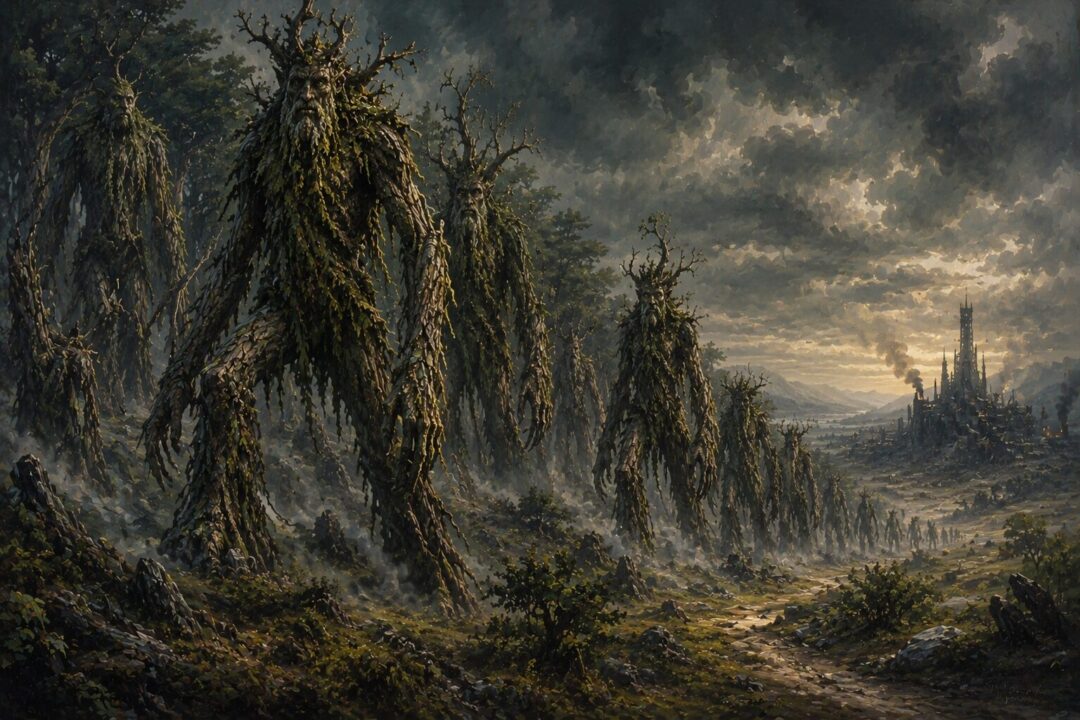
The Sight of Isengard Changed Everything
One of the most important moments occurs after the Entmoot rather than during it.
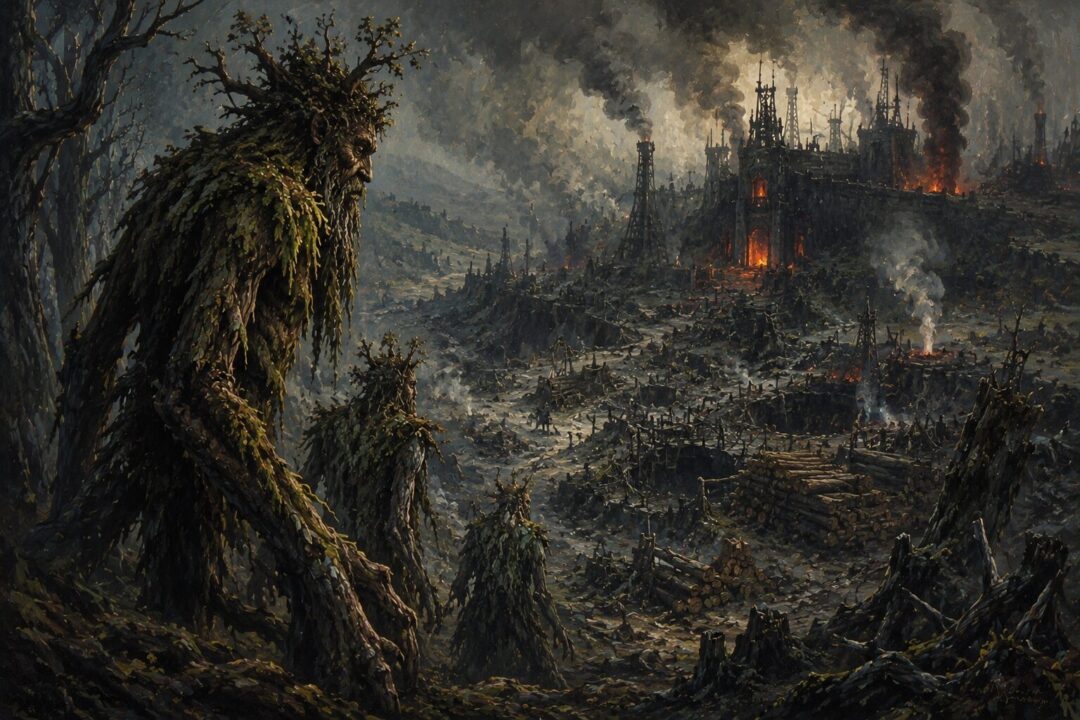
As the Ents approach Isengard, they witness the full extent of Saruman's devastation.
Treebeard later describes how many of the trees they had loved were lying cut down. Others had simply been burned. Great pits, furnaces, and machinery had scarred the valley.
The destruction was no longer distant rumor.
It stood before them.
The texts strongly suggest that this direct encounter intensified the Ents' resolve. Their anger becomes rooted in undeniable evidence rather than secondhand reports.
War was no longer theoretical.
The forests had already suffered it.
Why Hobbits Could Succeed Where Greater Powers Could Not
There is a recurring pattern throughout The Lord of the Rings.
Small people repeatedly accomplish what the mighty cannot.
The Wise understand much, yet they cannot force every heart to act.
Great kings command armies, but they cannot awaken ancient peoples.
Even Gandalf does not summon the Ents into battle through orders.
Instead, two overlooked Hobbits arrive almost by accident.
This reflects one of the central moral patterns of the story.
Providence frequently works through humble individuals whose importance is invisible at first.
Merry and Pippin never intend to recruit an army.
Their escape from the Orcs simply leads them into Fangorn at exactly the moment when the Ents are ready to hear what they have to say.
Whether one views this as providential design within the story or simply remarkable timing, the narrative consistently presents seemingly chance meetings as carrying profound significance.
The Last March Was Also an Act of Self-Defense
The march on Isengard is often remembered as nature taking revenge.
That image contains truth but not the whole truth.
The Ents do not seek empire.
They do not continue conquering after Saruman falls.
They destroy the machinery threatening Fangorn, flood Isengard's works, imprison Saruman within Orthanc, and then return to their own concerns.
Their objectives remain limited.
This restraint distinguishes them sharply from Saruman himself.
He seeks domination.
The Ents seek survival.
Even Treebeard calls the assault "the Last March of the Ents," suggesting an awareness that their people are dwindling and that such a gathering may never happen again. Their victory therefore carries sadness alongside triumph.
The Hobbits Did Not Start the War—They Made Delay Impossible
The common idea that Merry and Pippin "persuaded" the Ents oversimplifies what actually happens.
Saruman's own actions created the conditions for war.
Years of deception, industrial destruction, and violence had already brought the Ents to the edge of action.
The Hobbits arrived at the decisive moment.
They carried news that confirmed Treebeard's fears.
They revealed the true scale of the conflict.
They reminded the Ents that the fate of forests could no longer be separated from the fate of Middle-earth.
Most importantly, they represented exactly the kind of innocent life the Ents existed to protect.
The oldest shepherds of the trees did not march because they suddenly discovered courage.
They marched because patience had finally reached its rightful limit.
And fittingly for the story of the Ring, it was not a mighty warrior who showed them that moment had come.
It was two weary Hobbits, carrying little more than truth.
Sources & Notes
- Wikipedia overview of Ents, Treebeard, and Fangorn in Tolkien’s work — https://en.wikipedia.org/wiki/Ent
- Wikipedia overview of The Two Towers, including Merry and Pippin among the Ents — https://en.wikipedia.org/wiki/The_Two_Towers
- Wikipedia overview of Isengard and Saruman’s war-machine context — https://en.wikipedia.org/wiki/Isengard
Sources selected for Tolkien-lore context and reader verification.