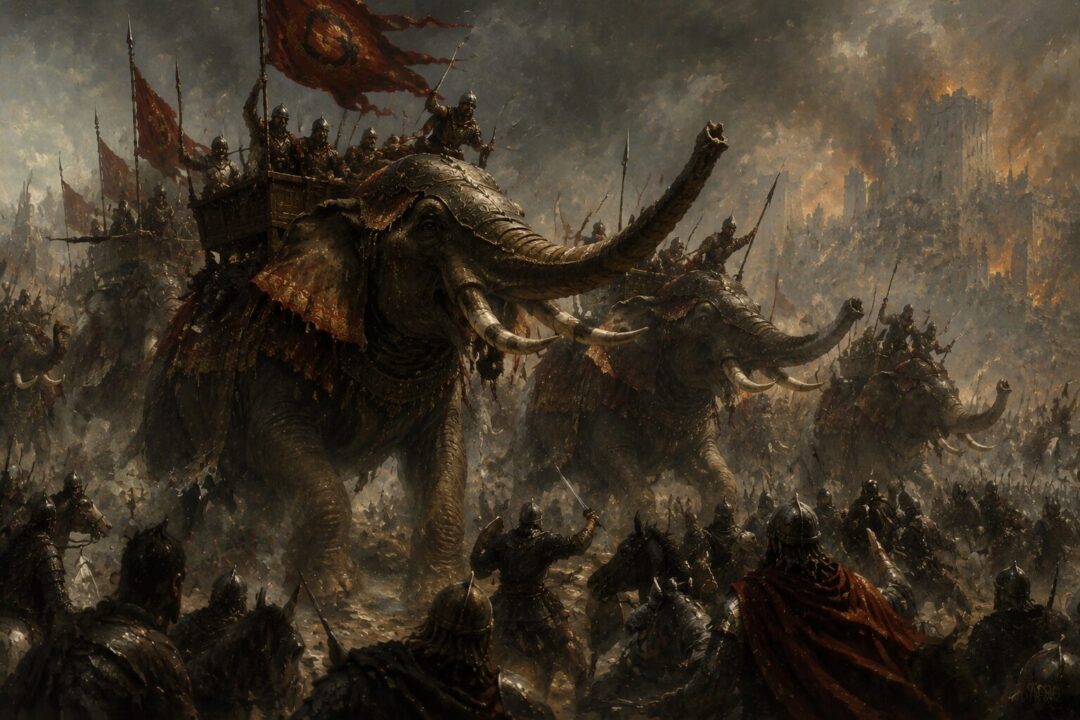
When readers first encounter the Men of Harad, they often arrive beneath scarlet banners, beside towering mûmakil, and in the service of Sauron. It is easy to remember them only as enemies charging across the Pelennor Fields or marching through Ithilien. Yet one of the most revealing moments in The Lord of the Rings happens not during a great battle, but when Frodo looks upon the body of a fallen Southron warrior and wonders a simple question: what brought this man so far from home?
That brief moment changes everything. Instead of presenting the Haradrim as faceless villains, the story quietly asks whether those fighting for the Shadow truly chose it freely. Behind the armies stands a history of conquest, fear, political domination, and inherited hatred stretching back thousands of years. The Men of Harad are not merely Sauron's soldiers. They are one of the clearest reminders that the tragedy of Middle-earth often falls upon ordinary people caught between powers far greater than themselves.
Harad Was a Vast World, Not a Single Kingdom
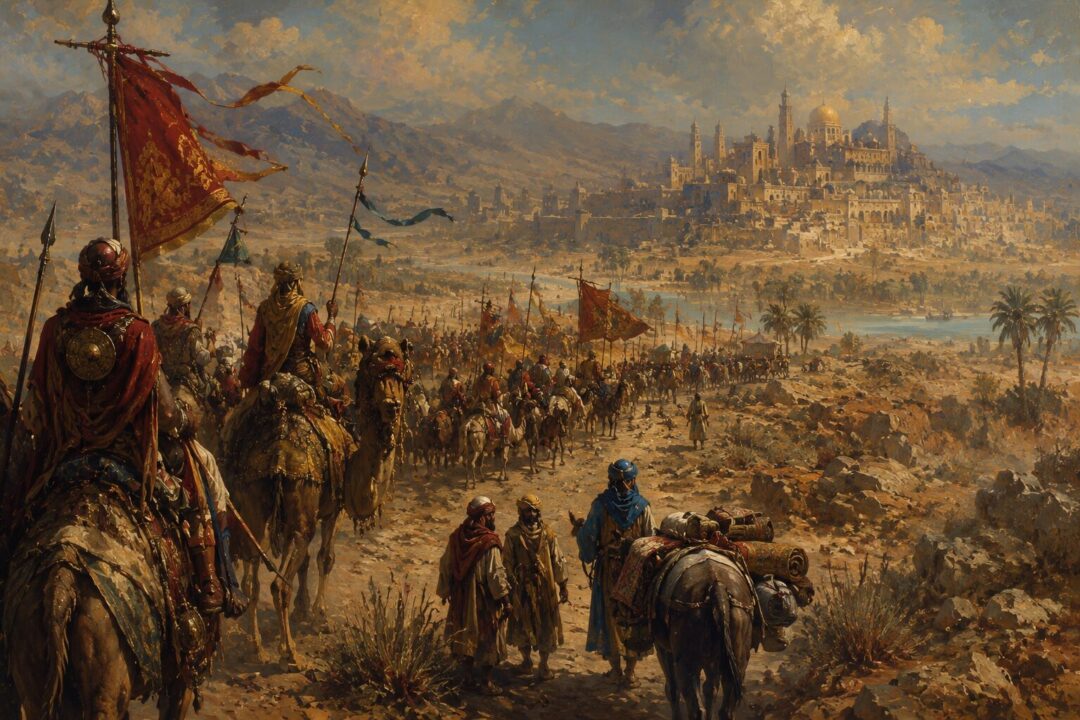
One of the first misconceptions is that Harad was a single nation ruled directly by Sauron. The texts present a much broader picture.
Harad simply refers to the immense southern lands below Gondor and Mordor. These territories contained numerous peoples and kingdoms rather than one unified state. Gondor's perspective naturally calls them "Southrons" or Haradrim, but those names describe where they come from rather than a single political identity. The peoples of Near Harad and Far Harad are distinguished in the narrative, and Tolkien never suggests every southern culture was identical.
Even within Sauron's armies, there are hints of diversity. Different banners appear, various leaders command separate forces, and warriors from distant southern regions fight alongside one another. The military alliance should not be mistaken for cultural uniformity.
This distinction matters because it reminds readers that the West often sees Harad through the narrow lens of war. The books rarely visit these lands directly, leaving much of their daily life, beliefs, and politics unknown.
A People Caught Between Two Great Powers
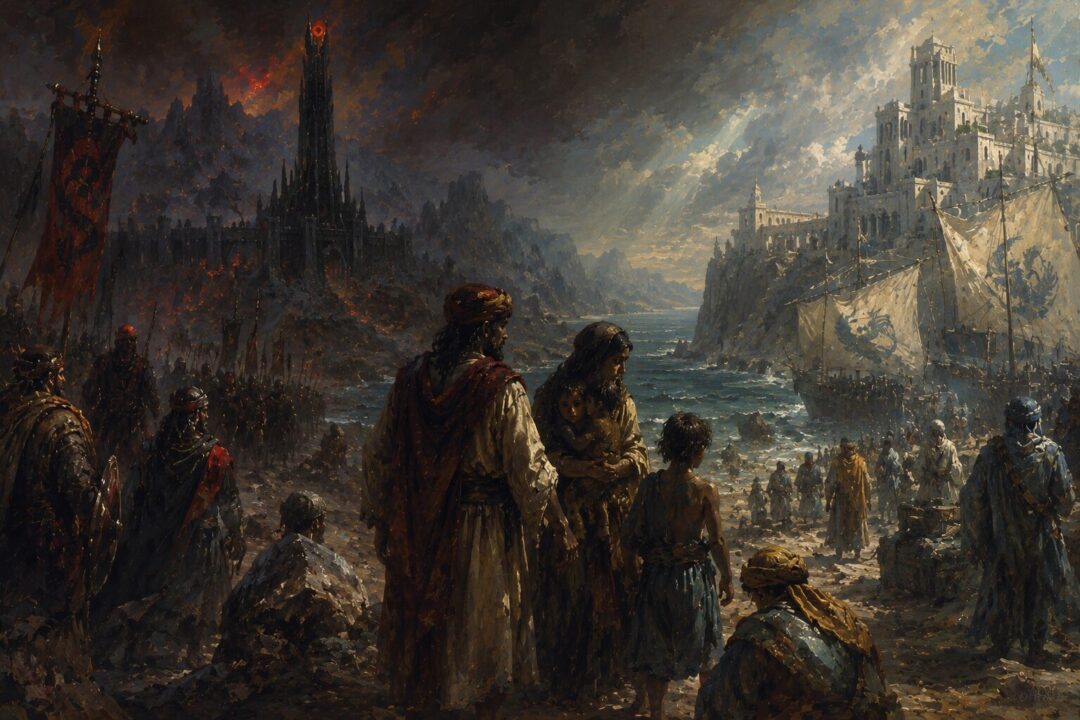
The Haradrim's history is shaped by something often overlooked: they were squeezed between the ambitions of Númenor and Sauron.
Early Númenórean voyages brought knowledge, trade, and friendship to many coastal peoples. Over time, however, that relationship changed dramatically. Later Númenórean rulers established colonies, demanded tribute, enslaved local populations, and increasingly treated the peoples of Harad as subjects rather than partners. In some places, Black Númenórean settlements became enduring centers of domination.
At the same time, Sauron expanded his influence across the South.
The result was devastating. Harad did not simply face one imperial power—it faced two.
The texts even state that to many of these peoples, Sauron became both "king and god," and that they feared him greatly. Such language suggests more than voluntary allegiance. It points toward religious domination, political coercion, and generations raised under the Shadow's authority.
Seen in this light, many Haradrim resemble subjects of a totalitarian empire rather than eager servants of evil.
Frodo Sees What War Usually Hides
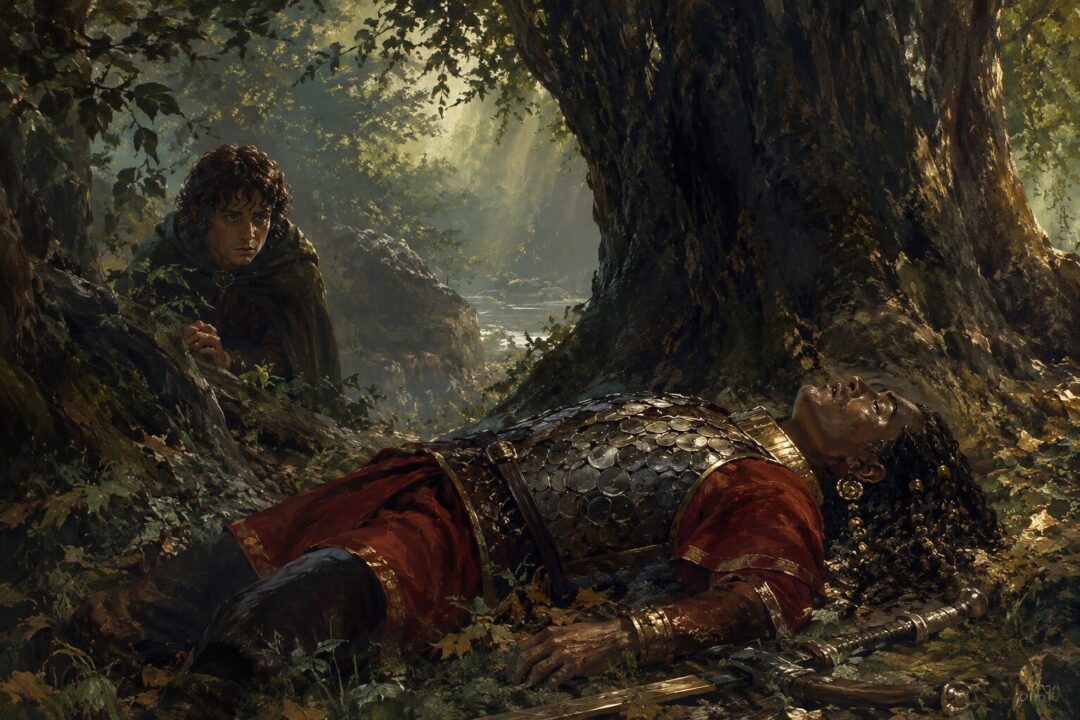
Perhaps no passage better reveals Tolkien's treatment of the Haradrim than Frodo's reaction after Faramir's Rangers ambush a Southron company in Ithilien.
A dead warrior falls near him, and Frodo does not celebrate.
Instead, he wonders who the man was. Was he truly evil? Had he been deceived? Had threats driven him into war? Would he rather have remained peacefully in his own home?
The narrative never answers those questions.
That silence is deliberate.
Instead of reducing the Southron to an enemy, the story restores his humanity. Frodo refuses to imagine him as merely another obstacle on the road to Mordor. He sees an individual whose hopes, fears, and family remain invisible to the people fighting against him.
This is one of the strongest anti-dehumanizing moments anywhere in The Lord of the Rings. The text invites readers to question easy assumptions about enemies rather than confirming them.
Sauron's Greatest Strength Was Human Allegiance
The Haradrim also reveal an important truth about Sauron's power.
His empire was never built only upon Orcs.
Again and again, the greatest armies opposing Gondor include Men—Easterlings, Haradrim, Variags, Corsairs of Umbar, and others. Sauron's military success depended heavily upon convincing, coercing, or ruling human societies.
That makes the Haradrim strategically significant rather than decorative additions to his armies.
Unlike Orcs, Men possess genuine moral agency. They can choose loyalty, fear, ambition, survival, revenge, or hope. Their presence demonstrates that evil often spreads through political influence, inherited grievances, religious domination, and promises of security—not simply through monsters.
The Haradrim illustrate this especially well because their long history gave Sauron opportunities to exploit existing resentment toward Gondor and its Númenórean heritage.
Gondor's History Was Not Morally Simple
Modern readers sometimes assume Gondor represents uncomplicated goodness while Harad represents uncomplicated evil.
The texts resist that reading.
Although Gondor becomes one of the principal defenders against Sauron, its Númenórean ancestors participated in imperial expansion across southern lands. Even after the Downfall of Númenor, Gondor fought repeated wars with Harad, sometimes ruling southern territories and demanding submission from defeated kings.
These conflicts certainly included aggression from Harad as well. The wars were real, destructive, and often initiated by alliances with Sauron.
Yet Tolkien does not erase the earlier history of Númenórean domination. Both memories could have survived for centuries.
This historical complexity helps explain why alliances against Gondor may have appealed to some southern rulers even before Sauron's influence became overwhelming. It does not justify service to the Dark Lord, but it provides historical context instead of reducing every conflict to simple malice.
The Haradrim Were Not Defined by Their Appearance
Descriptions of the Haradrim are often remembered only in terms of physical appearance.
The texts describe different peoples of Harad with varying skin tones, clothing, hairstyles, weapons, and ornaments. The fallen Southron seen by Frodo has brown skin, black hair braided with gold, a scarlet tunic, a golden collar, and brazen scale armor. Other descriptions distinguish peoples from Far Harad separately.
These details primarily establish the immense geographical diversity of Middle-earth.
Importantly, the narrative never claims that appearance itself determines moral character. The very scene with Frodo immediately undercuts any attempt to judge the Southron by outward differences alone.
His humanity matters more than his appearance.
Could the Haradrim Have Resisted?
The surviving texts leave this question partly open.
They clearly show many Haradrim serving Sauron throughout the Second and Third Ages. Yet they also indicate that not every southern people accepted his rule willingly.
Some traditions preserved in later writings suggest there were those in the South who resisted Sauron's domination, and Tolkien's later reflections on the Blue Wizards imply that their mission in the East and South weakened Sauron's influence by encouraging resistance among peoples beyond the northwestern lands familiar to readers. These later conceptions should be treated as part of Tolkien's evolving ideas rather than details fully developed within The Lord of the Rings itself.
The important point is that Harad was never portrayed as incapable of choosing differently.
Like every race of Men, its people remained morally significant because choice—even under enormous pressure—still existed.
The War Did Not End With Endless Hatred
One of the quieter outcomes of the War of the Ring concerns Harad itself.
After Sauron's defeat, King Elessar did not seek perpetual conquest.
Instead, the Reunited Kingdom made peace with the peoples of Harad, and embassies came from many lands. The texts also indicate that peace sometimes required continued effort in the South, showing that reconciliation was a process rather than an instant miracle.
This ending confirms what Frodo sensed beside the fallen Southron.
If the peoples of Harad had been inherently evil, lasting peace would have been impossible.
Instead, diplomacy replaced domination.
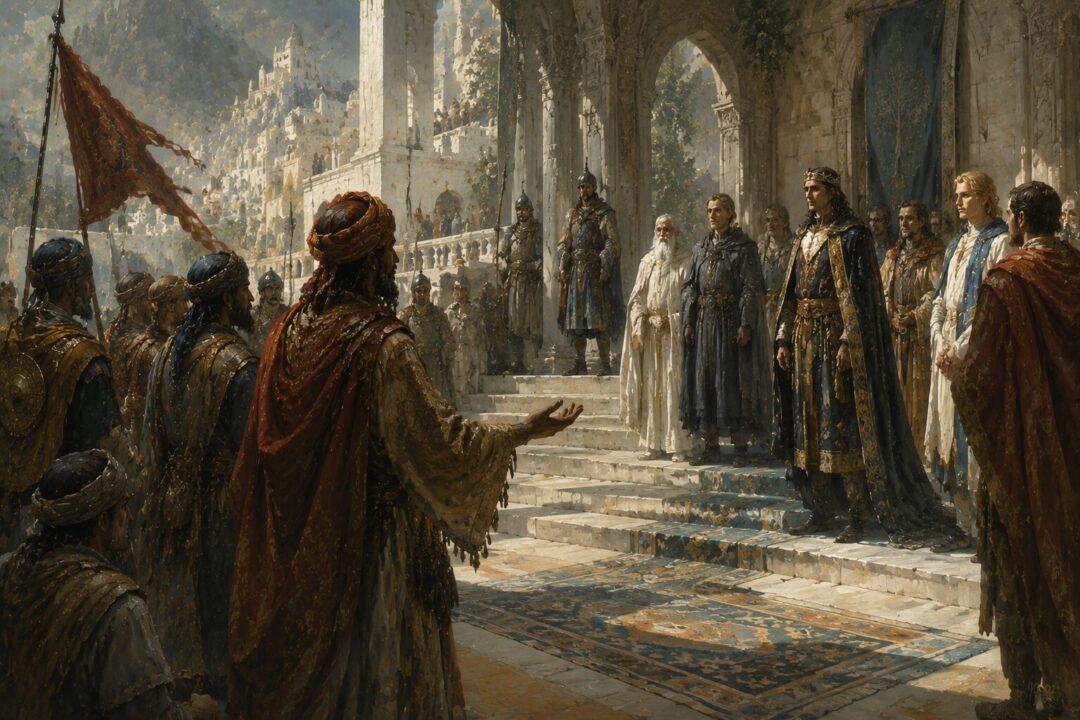
Why the Haradrim Matter
The Men of Harad occupy surprisingly little page space, yet they carry one of the legendarium's most profound ideas.
They remind readers that war hides countless individual lives.
They demonstrate that history shapes allegiance as much as personal desire.
They expose how empires—whether Númenórean or Sauron's—leave wounds that endure for generations.
Most importantly, they challenge the comforting belief that every enemy freely embraces evil.
When Frodo looks upon the fallen Southron, the story refuses to answer whether the man truly wished to fight. That unanswered question becomes the point. Mercy begins where certainty ends.
The Men of Harad are therefore far more than Sauron's background army. They are a window into the moral complexity of Middle-earth itself—a world where courage and corruption exist alongside fear, inherited injustice, and the hope that even ancient enemies may one day lay down their weapons.
Sources & Notes
- Tolkien Gateway, “Haradrim” — identifies the Southrons/Haradrim as peoples from Harad who fought for Sauron, while noting distinctions such as Near and Far Harad rather than treating them as a single faceless group. https://tolkiengateway.net/wiki/Haradrim
- Tolkien Gateway, “Harad” — outlines the southern lands beyond Gondor and Mordor, supporting the article’s point that Harad was a broad region with many peoples and a long political history. https://tolkiengateway.net/wiki/Harad
- Tolkien Gateway, “Of Herbs and Stewed Rabbit” — covers the Ithilien chapter where Frodo sees a dead Southron and wonders whether lies, threats, or coercion brought him to war. https://tolkiengateway.net/wiki/Of_Herbs_and_Stewed_Rabbit
- Tolkien Gateway, “Mûmakil” — gives background on the war-elephants associated with Harad and the Pelennor, grounding the article’s discussion of how readers first remember the Haradrim in battle. https://tolkiengateway.net/wiki/M%C3%BBmakil
- Tolkien Gateway, “Black Númenóreans” — explains the corrupted Númenórean presence in Middle-earth and the South, relevant to the article’s argument about imperial pressure, domination, and inherited hostility. https://tolkiengateway.net/wiki/Black_N%C3%BAmen%C3%B3reans
Sources selected for Harad/Haradrim, Ithilien Southron passage, mûmakil, and Black Númenórean background.