The Ring is destroyed far from the Shire, in a land of ash, fire, and ruin. The Dark Tower falls. The Captains of the West are spared. Aragorn is crowned. For a moment, it feels as if the story has reached its natural end.
But the road does not stop at Mount Doom.
It turns back toward Bag End.
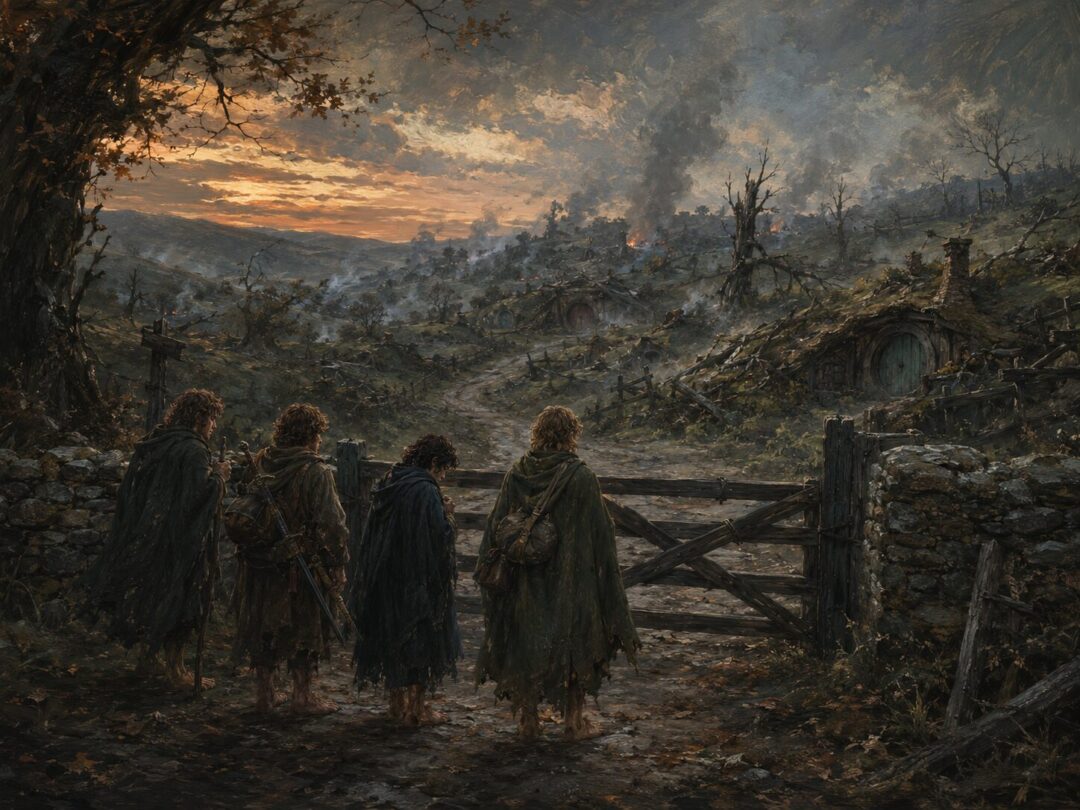
That return is one of the most important reversals in The Lord of the Rings. The Shire, the place that seemed furthest from the War of the Ring, is not waiting untouched. Its mills, trees, inns, doors, roads, and customs have been damaged. Its people have been frightened into obedience. Its old habits of neighborly life have been twisted into rules, lists, locked gates, and suspicion. Sauron has fallen, but something of his world has reached the very place the hobbits thought they were saving.
This is why the Shire had to be saved after Sauron fell: because destroying the great evil did not automatically heal the small places it had wounded.
The Shire Was Never Just a Starting Point
At the beginning of the story, the Shire looks almost too small for the fate of the world. It is a land of gardens, meals, gossip, birthdays, pipes, ale, family trees, and comfortable holes in green hills. Its power is not military. Its wisdom is not scholarly. Its people do not dream of empire.
That is exactly why it matters.
The Shire represents something ordinary and therefore vulnerable. It is not perfect, and the text never pretends that hobbits are free from pettiness, provincialism, greed, or foolishness. The Sackville-Bagginses exist long before Saruman arrives. Ted Sandyman’s resentment and appetite for machinery are not created from nothing. Lotho Sackville-Baggins’s rise depends on existing weaknesses: buying property, gathering influence, controlling supplies, and using outsiders to enforce his will.
But the Shire also preserves a kind of life that the Enemy cannot understand. It is rooted, local, unheroic, and resistant to domination precisely because it does not naturally think in terms of domination. Frodo does not leave home because the Shire is grand. He leaves because it is beloved.
If the story ended with the Ring’s destruction and the Shire untouched, the cost of the quest would remain distant. Mordor would be a nightmare elsewhere. The return home shows that the war was never only about armies. It was about whether any free and humble place could survive the shadow of power.
Sauron Fell, But His Pattern Remained
By the time the hobbits return, Sauron is gone. The ruffians in the Shire are not agents of a surviving Dark Lord. Saruman, too, is no longer the great lord of Isengard. He has lost his power, his tower, his armies, and much of his dignity.
Yet the damage in the Shire still resembles the larger moral pattern of the Enemy’s world.
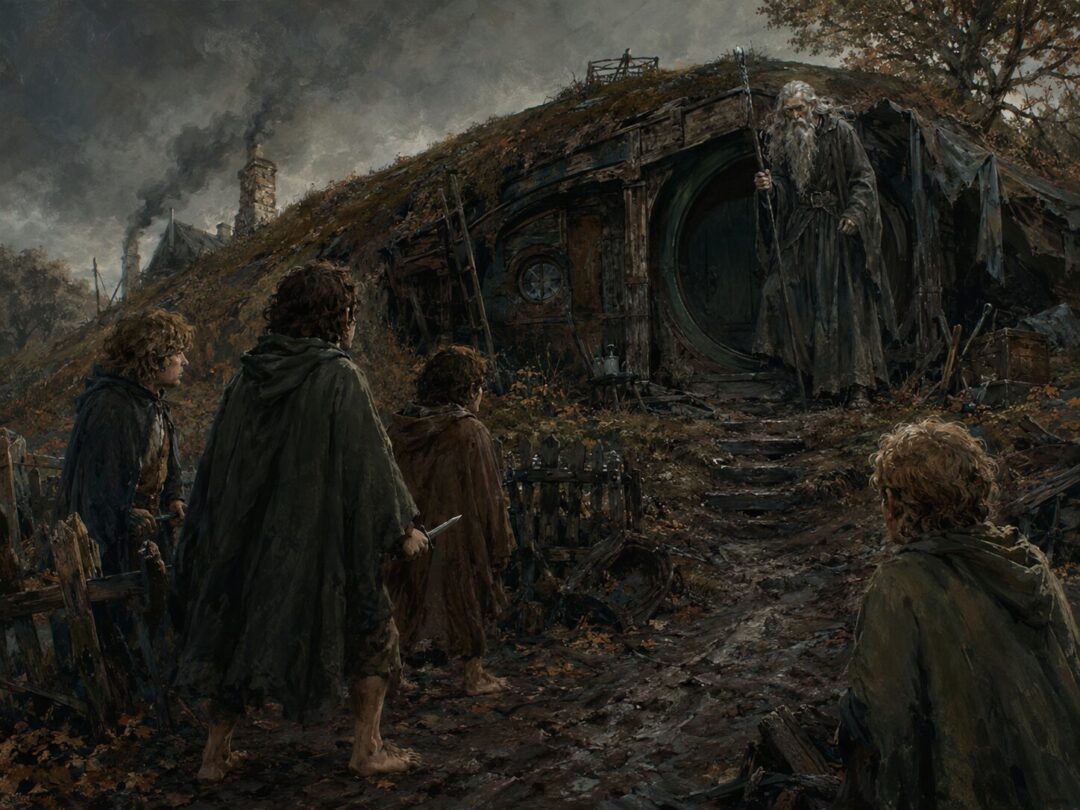
There are unnecessary rules. There are locked gates. There are “gatherers” and “sharers” who take goods in the name of order. There is surveillance, intimidation, and ugliness imposed upon a once-comfortable landscape. The old mill is replaced by a harsher, dirtier thing. Trees are cut down. Homes are damaged. The natural and social fabric of the Shire is violated.
The texts do not say that Sauron directly ordered the Scouring. The immediate evil comes through Saruman, Lotho, and the Men they bring in. But the Shire’s corruption shows how the logic of the Shadow can continue after its master falls. Domination does not need a Ring on a hand to imitate Mordor. It only needs fear, greed, resentment, and people willing to obey or profit.
That is the hidden sting of the chapter. Sauron’s defeat is necessary, but it is not enough by itself. Evil at the center has fallen. Evil at home must still be confronted.
Saruman’s Last Revenge Was Pettier Than Sauron’s War
Saruman’s presence in the Shire is one of the story’s bitterest ironies. He began as one of the Wise, sent to oppose Sauron. By the end, he has become a diminished figure whose last triumph is not conquest but spite.
He cannot rule Middle-earth. He cannot hold Isengard. He cannot break Rohan. He cannot seize the Ring. So he turns his malice toward the home of the hobbits who helped bring him low.
This does not make the Scouring small. It makes it personal.
Saruman’s evil in the Shire is not majestic. It is mean, resentful, and wasteful. He ruins what he cannot possess. He scars the Shire because he knows it is loved. His rule as “Sharkey” is a parody of lordship: the language of management and order covering theft, bullying, and destruction.
This matters because evil in Tolkien’s world often diminishes as it clings to power. Morgoth pours himself into domination and loses his original greatness. Sauron becomes bound to the Ring and to the will to control. Saruman shrinks from a great voice of persuasion into a bitter old schemer at Bag End. His fall shows that corruption does not always look like grandeur. Sometimes it looks like the pleasure of spoiling another person’s garden.
The Hobbits Had to Return Changed
The Shire could not be saved by Gondor’s armies, by the Rohirrim, or by Gandalf simply riding in and setting everything right. In fact, Gandalf deliberately does not solve the problem for the hobbits. The returning four must face it themselves.
That is not abandonment. It is completion.
Frodo, Sam, Merry, and Pippin left as provincial hobbits with little understanding of the wider world. They return as people who have seen kings, wizards, Ents, orcs, sieges, betrayal, mercy, and death. Merry and Pippin have grown into figures of courage and command. Sam has endured Mordor and carried Frodo when hope was almost gone. Frodo has passed through a suffering that the Shire can barely imagine.
Their homecoming reveals what the journey has made of them.
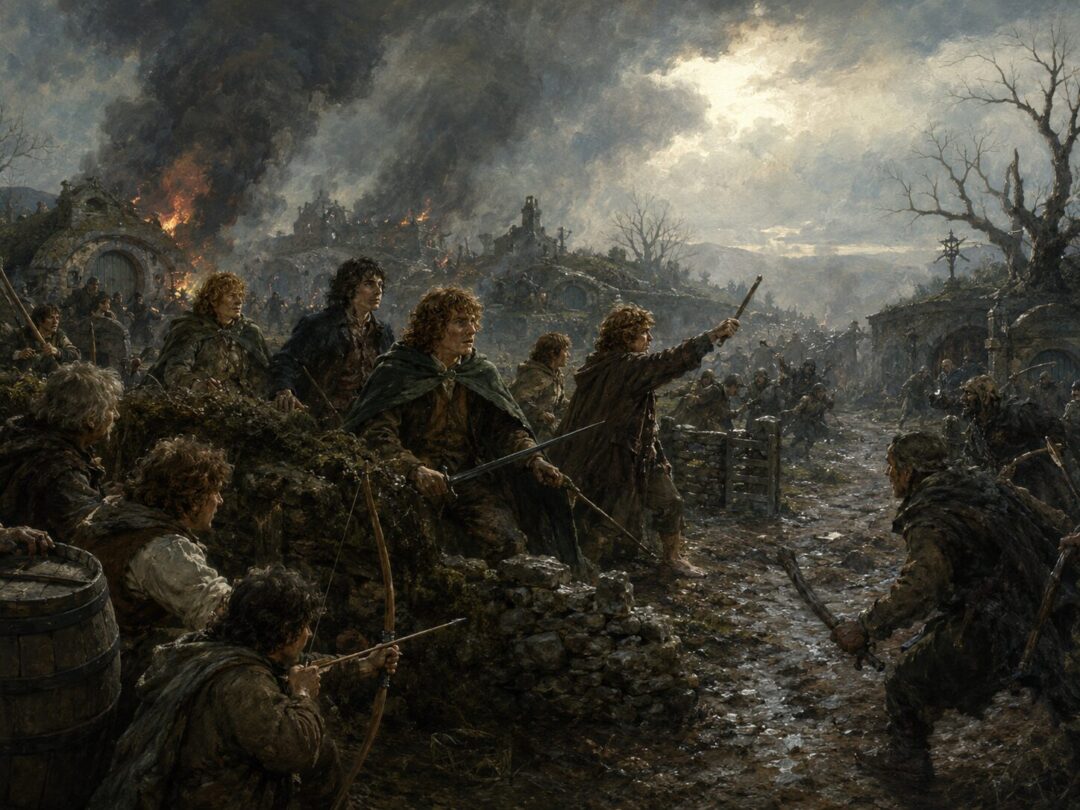
Merry and Pippin know how to organize resistance. Sam knows what has been lost in the soil and trees. Frodo understands both justice and mercy more deeply than the others around him. The Battle of Bywater is not a grand battlefield like the Pelennor, but for the Shire it is decisive. It shows that ordinary people, awakened from fear, can reclaim their own land.
The Shire had to be saved by hobbits because the whole story has been proving that the small are not helpless.
Frodo’s Mercy Is the Moral Center of the Return
One of the most striking details of the Scouring is Frodo’s restraint. He does not return as a warrior seeking revenge. He forbids unnecessary killing where he can. Even when Saruman is exposed, even after the ruin of Bag End and the Shire, Frodo does not want him slain.
This mercy is not weakness. It is one of the hardest victories in the book.
Frodo has seen what hatred and possession do to the soul. He knows that the desire to punish can become another form of bondage. His mercy toward Saruman echoes the larger moral pattern that made the destruction of the Ring possible. Bilbo’s pity spared Gollum. Frodo’s pity preserved that thread for as long as he could. At Mount Doom, the quest succeeds not because Frodo remains untouched, but because mercy has left room for providence to work through Gollum’s final act.
In the Shire, Frodo applies that same hard wisdom at home. Saruman cannot be allowed to rule, but Frodo will not become cruel in defeating him.
The result is tragic. Saruman rejects mercy. Gríma kills him, and Gríma himself is shot by hobbit archers as he tries to flee. The ending is grim, but it confirms the point: mercy can be offered without being accepted. Frodo’s goodness does not magically heal Saruman. It does, however, keep Frodo from letting Saruman define the moral terms of the victory.
The Shire’s Restoration Is Not a Simple Return to the Past
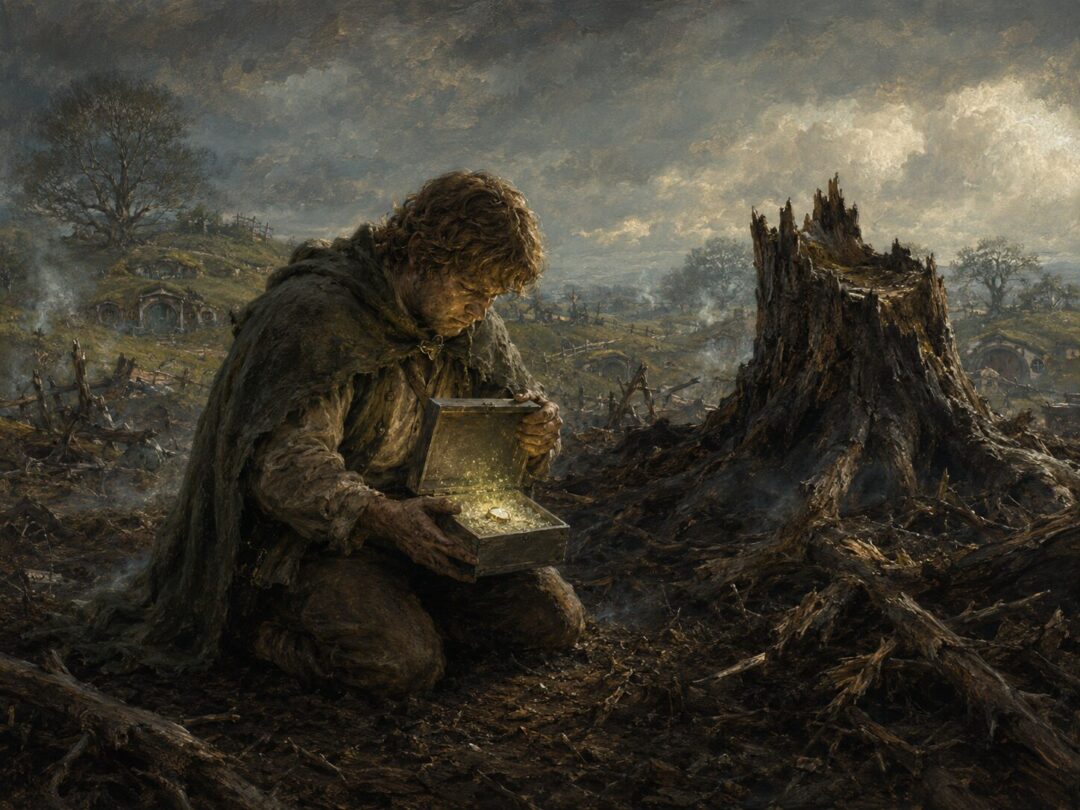
After the ruffians are defeated, the Shire is repaired. Sam’s role becomes essential. Galadriel’s gift to him—the earth from her orchard and the silver nut that becomes the mallorn tree—turns restoration into something more than ordinary rebuilding. The Shire does not merely go back to what it was. It is healed with a grace brought from beyond its borders.
That detail is easy to overlook. The Shire is saved by its own people, but its renewal is also touched by Lórien. The mallorn that grows where the Party Tree had stood becomes a living sign that what was lost has not simply been replaced. Something new and beautiful has entered the Shire through the suffering and faithfulness of its travelers.
The year after the Scouring is remembered as wonderfully fruitful. The restoration has a fairy-tale brightness, but it is not childish. It comes after fear, death, and loss. It is a harvest after ruin.
This is one reason the Scouring is not an anticlimax in the deeper structure of the story. The Ring’s destruction saves the world from enslavement. The healing of the Shire shows what salvation is for.
Not Everyone Can Be Healed by Victory
The Shire recovers. Frodo does not, at least not fully.
That contrast is heartbreaking. The land he set out to save becomes green again. Its homes are rebuilt. Its trees are replanted. Its people return to comfort. Sam marries, becomes a father, and enters the life of the restored Shire. Merry and Pippin are honored. The community goes on.
But Frodo remains wounded. The anniversary pains, the memory of Weathertop, the burden of the Ring, and the spiritual damage of the quest do not vanish with public victory. The Shire can be saved, but Frodo cannot simply become the old Frodo again.
This is not a failure of the ending. It is the cost that gives the ending its weight.
The Scouring makes Frodo’s sacrifice visible in a new way. He did not save an abstract world. He saved the possibility of gardens, weddings, children, inns, trees, and ordinary mornings. Yet he himself cannot fully dwell in the peace he preserved. That is why his departure over the Sea feels both sorrowful and fitting. The Shire is healed enough to let him go.
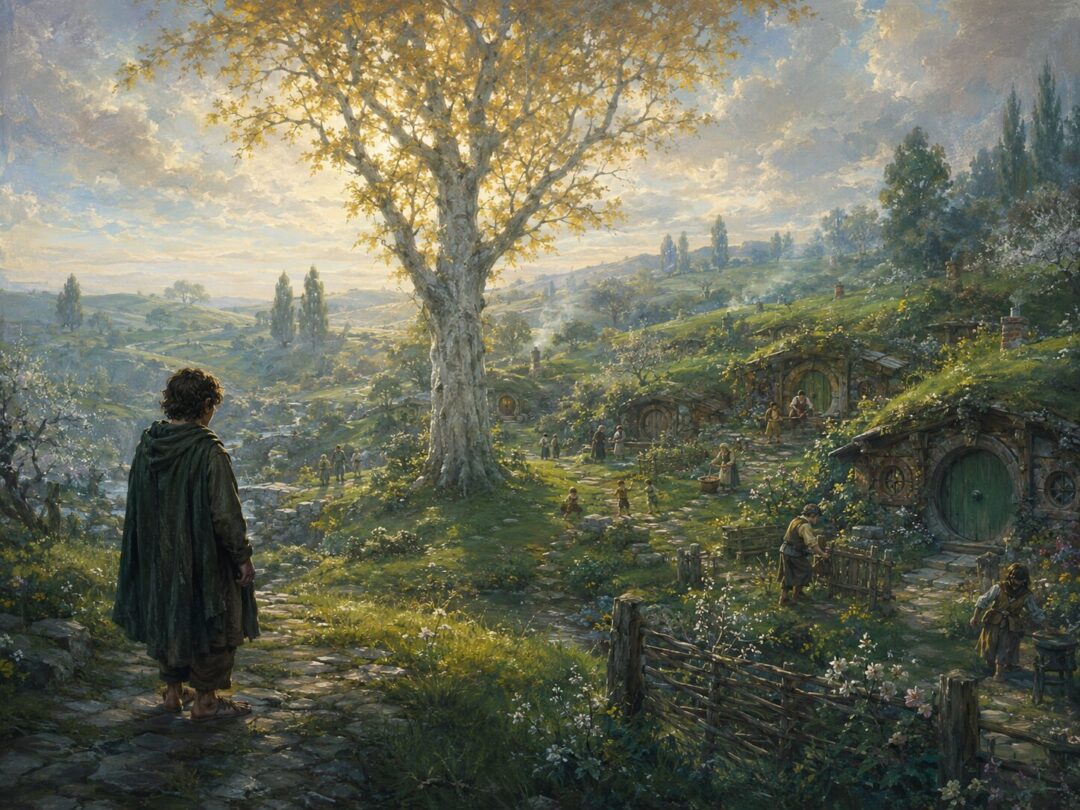
The Real Victory Had to Come Home
Sauron’s fall is the great turning point of the age, but the Scouring of the Shire asks a more intimate question: what happens after the Dark Lord is gone?
The answer is not automatic peace. The answer is responsibility.
The Shire had to be saved because evil had reached it in smaller, uglier forms. It had to be saved because the hobbits’ growth had to become service, not merely survival. It had to be saved because mercy had to be practiced at home, not only admired in epic moments far away. It had to be saved because restoration is part of victory, not an afterthought.
Most of all, the Shire had to be saved so the reader could understand what the whole war had been defending.
Not glory. Not conquest. Not the rise of one power to replace another.
A tree replanted. A door reopened. A road made safe again. A people no longer afraid in their own fields.
The Ring is destroyed in fire, but the meaning of that victory is revealed in green things growing again.
Sources & Notes
- Wikipedia overview of the Shire and its role in the closing chapters — https://en.wikipedia.org/wiki/The_Shire
- Wikipedia overview of The Return of the King, including the Scouring of the Shire ending — https://en.wikipedia.org/wiki/The_Return_of_the_King
- Wikipedia overview of Saruman, whose final damage reaches the Shire — https://en.wikipedia.org/wiki/Saruman
Sources selected for Tolkien-lore context and reader verification.