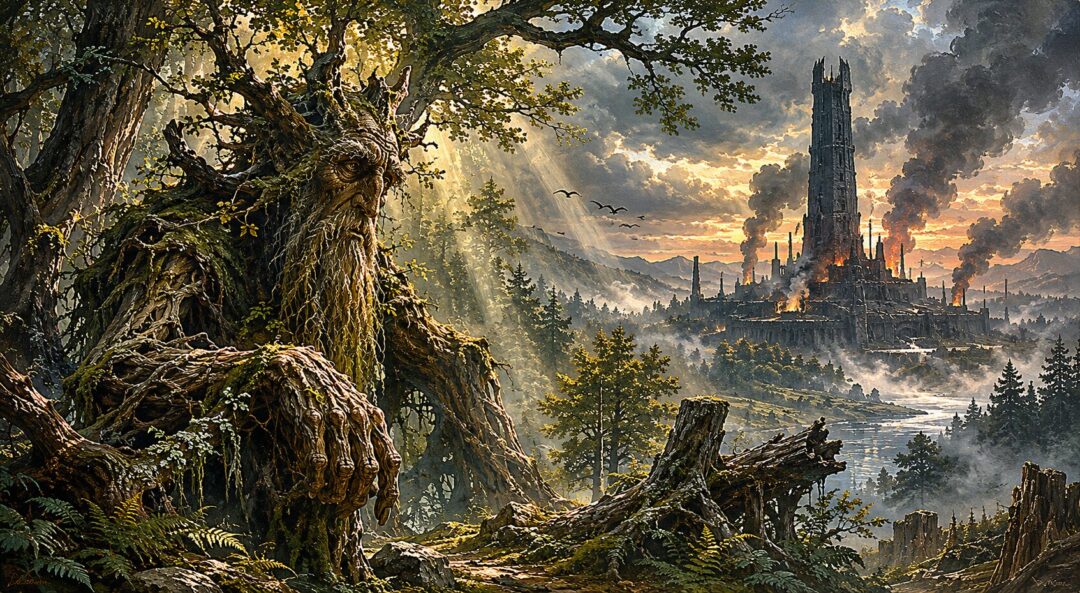
An Orc with an axe is easy for Treebeard to understand. It cuts, burns, hacks, and hates. It is noisy, brutal, and dangerous—but it is not mysterious.
Saruman is different.
When Merry and Pippin meet Treebeard in Fangorn Forest, the old Ent is not merely angry that trees have been felled. He is disturbed by what Saruman has become. Orcs can wound a wood. Saruman can teach the world to stop seeing woods as living things at all.
That is the deeper fear beneath Treebeard’s wrath: not fear of death alone, but fear of a mind that turns growing things into fuel.
The Shepherd Who Had Seen Too Much
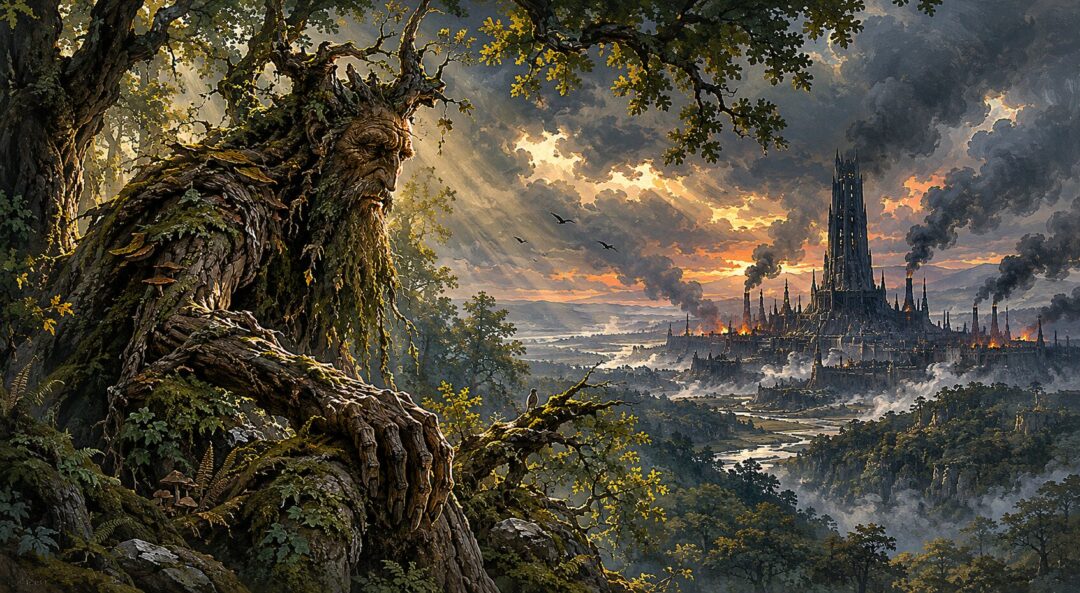
Treebeard is not just an old tree-like creature. He is one of the Ents, the “shepherds of the trees,” awakened in the Elder Days to guard growing things. His memory reaches back into a wider, greener world, when forests stretched across lands now broken, emptied, or diminished.
That matters because Treebeard does not judge Saruman as a battlefield enemy only. He judges him as someone who should have known better.
Saruman had once walked in Fangorn. Treebeard remembers him as a neighbor, a learned figure, perhaps even a being who once seemed capable of listening. That makes his corruption more terrible than the malice of Orcs. Orcs are expected to destroy. Saruman’s betrayal is the betrayal of knowledge, wisdom, and stewardship.
Orc Axes Were Violence; Saruman Was a System
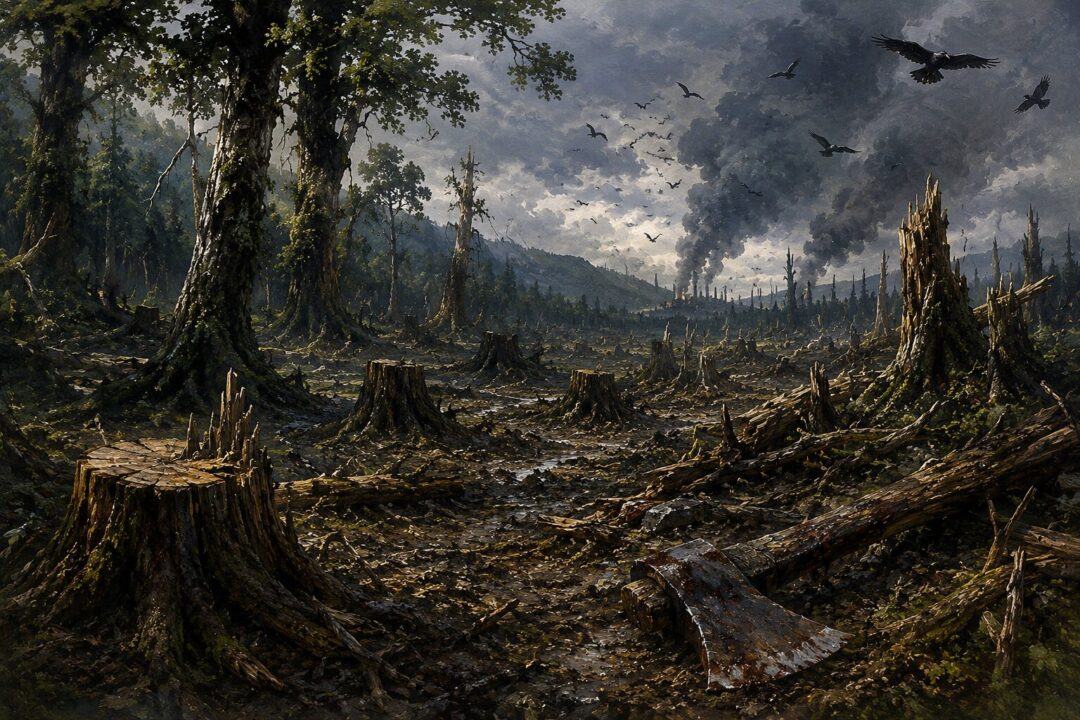
Treebeard knows Orcs are dangerous. Fangorn is old, not invulnerable. Axes can cut trees down. Fire can consume them. Orcs are part of the long sorrow of Middle-earth: creatures of hatred, fear, and destruction.
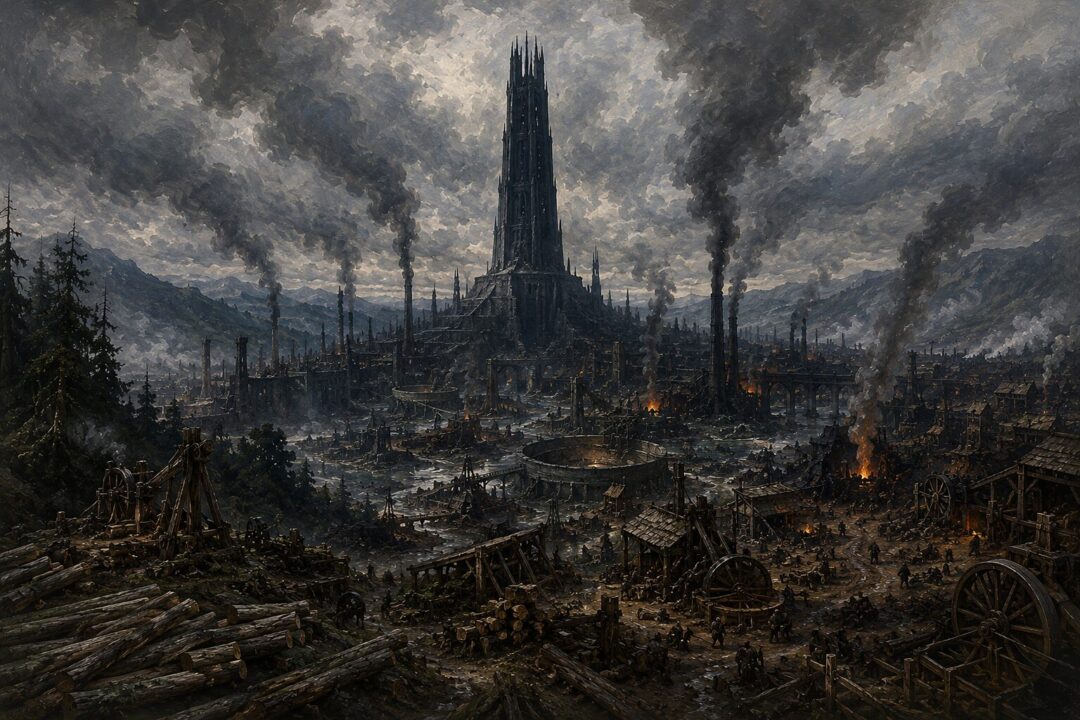
But Saruman brings something colder. His Isengard is not merely a camp of raiders. It becomes a machine of war: pits, furnaces, wheels, smoke, weapons, and organized ruin. Trees are not only killed; they are processed. The forest is no longer an enemy to be feared, but raw material to be consumed.
That is why Treebeard’s famous judgment matters so much: Saruman has “a mind of metal and wheels.” The phrase is not simply anti-technology. It is a moral diagnosis. Saruman values living things only when they serve his immediate purpose.
Orc axes destroy trees one by one. Saruman’s mind justifies destroying them endlessly.
The Horror of Usefulness
Treebeard’s deepest objection is not that Saruman uses tools. Middle-earth is full of craft: Elven smiths, Dwarven masons, Númenórean builders, Hobbit gardeners. Making things is not evil in itself.
The danger is usefulness without reverence.
Saruman sees the world as material for power. Trees become fuel. Orcs become soldiers. Men become instruments. Speech becomes manipulation. Even knowledge becomes a ladder upward. He is “plotting to become a Power,” as Treebeard realizes.
That ambition changes everything. Saruman’s destruction of trees is not random cruelty; it is part of a larger will to dominate. For Treebeard, this is worse than ordinary violence because it attacks the moral order of life. It says that living things matter only if they can be bent, burned, forged, or commanded.
Why Fangorn Waited So Long
One of the most painful parts of Treebeard’s story is that the Ents do not rush quickly into war. They are slow to decide, slow to speak, slow to change. This is not stupidity. It is part of their nature.
Ents live by long memory. They deliberate because they are ancient, rooted in patience, and reluctant to act hastily. Yet that very patience becomes dangerous in a changing world. Saruman’s machines move faster than Entish thought. His fires spread while the shepherds are still debating.
This creates one of the great tragic tensions in the story: old wisdom can see deeply, but sometimes it acts late.
Treebeard does not fear Orc axes because they are stronger than Ents. He fears Saruman because Saruman belongs to a faster, hungrier kind of evil—one that can devastate a forest before the forest has fully decided to answer.
The Trees Were Not Anonymous
Treebeard’s grief is personal. The trees cut by Saruman’s servants are not scenery to him. Some are friends. Some may have had voices. Some belonged to a living world that Men, Orcs, and even readers can too easily overlook.
This is why the attack on Fangorn is not merely environmental background. It is kinship broken.
To Treebeard, a forest is not a stockpile of timber. It is history, personality, memory, and companionship. Saruman’s crime is therefore not only destruction, but desecration. He treats a community as a resource.
That distinction explains why Treebeard’s anger feels so ancient. He is not defending property. He is mourning persons.
Saruman’s Treason Against His Own Wisdom
Saruman’s fall is especially bitter because he is not ignorant. He is one of the Wise. His evil does not come from lack of knowledge, but from knowledge turned inward toward possession and control.
This is why Treebeard’s judgment cuts so deeply. Saruman has not merely joined the side of axes and fire. He has become a thinker of axes and fire. His intelligence now serves appetite.
In Tolkien’s moral world, this kind of corruption is often more frightening than brute force. Sauron dominates openly. Orcs ravage crudely. But Saruman persuades, organizes, imitates, improves, and rationalizes. He makes ruin efficient.
Treebeard’s fear is therefore partly the fear of corrupted wisdom: the terrifying possibility that one who once understood living things can choose to reduce them to tools.
The Last March Was Not Simple Confidence
The Ents’ march on Isengard is often remembered as triumphant, and it is. Yet Treebeard does not present it as an easy victory. He speaks as though they may be going to their doom. The march is not cheerful revenge. It is a final, necessary answer.
That gives the scene its power. The Ents are not fearless because they cannot die. They are brave because they act despite the possibility that their age is ending.
Saruman has forced them into a choice they never wanted: remain patient while Fangorn is consumed, or rise and risk extinction. Treebeard’s fear of Saruman is precisely what makes the march morally urgent. Orc axes can be endured for a time. Saruman’s expanding order cannot.
Water Against Fire, Roots Against Wheels
The fall of Isengard is fitting because the Ents do not defeat Saruman by becoming like him. They do not build a greater machine. They break the ring of Isengard, release water, drown furnaces, and turn the wizard’s industrial fortress into a place of mud, ruin, and imprisoned pride.
The victory is symbolic as well as military. Saruman’s world is enclosed, hard, circular, and controlled. The Ents answer with growth, flood, patience, and force older than his devices.
Yet even here, Tolkien avoids making the victory simple. Orthanc remains unbroken. Saruman survives. His voice still has danger. Treebeard’s mercy later allows Saruman to leave Isengard, a decision Gandalf judges gravely. That, too, fits Treebeard: he is not made for suspicion as Saruman is. His goodness has its own vulnerability.
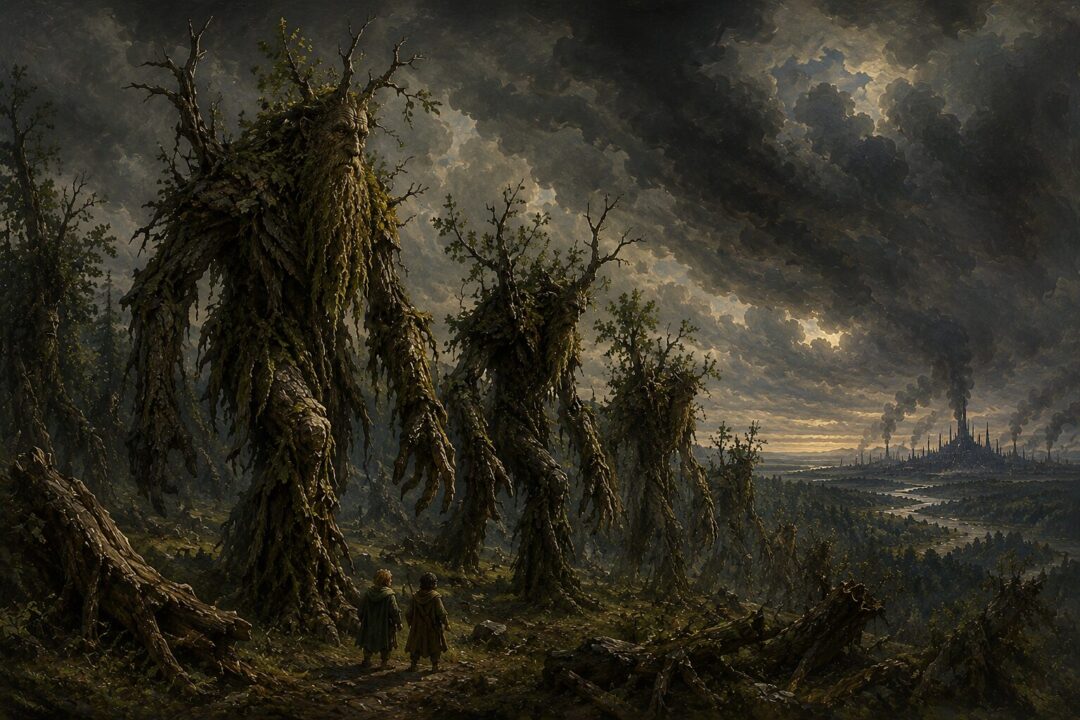
The Real Fear: A World Without Shepherds
Treebeard feared Saruman more than Orc axes because Saruman represented a future where no one remembered the trees had ever needed shepherds.
Axes are terrible, but they are honest in their violence. Saruman’s evil is more subtle. He can explain destruction as necessity. He can call domination order. He can turn living forests into fuel for a vision of power.
For an Ent, that is the nightmare: not merely that trees will die, but that their deaths will be made ordinary.
Treebeard’s wrath is therefore not just the anger of nature against industry. It is the sorrow of memory against forgetfulness. He remembers when the world was wider, greener, and more alive with voices. Saruman sees only what can be extracted from it.
That is why the Ents march.
Not because Orc axes are harmless. Not because Fangorn is safe. But because Saruman has crossed from violence into desecration—from cutting trees to denying what trees are.
And for Treebeard, oldest of the Ents, that was the greater terror.
Sources & Notes
- J.R.R. Tolkien, The Lord of the Rings, Book III, Chapter 4, “Treebeard” — Treebeard recalls Saruman’s change, the felling on Fangorn’s borders, and the “mind of metal and wheels” judgment.
- J.R.R. Tolkien, The Lord of the Rings, Book III, Chapter 4, “Treebeard” — explains the Ents as shepherds of trees whose long memories and slow deliberation shape their answer to Isengard.
- J.R.R. Tolkien, The Lord of the Rings, Book III, Chapter 8, “The Road to Isengard” — shows Isengard transformed into pits, wheels, smoke, and ordered war-industry fed by the surrounding trees.
- J.R.R. Tolkien, The Lord of the Rings, Book III, Chapter 9, “Flotsam and Jetsam” — Merry and Pippin describe the Ents’ assault, the breaking of Isengard’s works, and water drowning Saruman’s furnaces.
- J.R.R. Tolkien, The Silmarillion, “Of Aulë and Yavanna” — gives the deeper mythic background for Ents as protectors raised in answer to Yavanna’s fear for growing things.